
How do I choose between a bowrider and a deck boat for family outings in 2027?
 Curated byKory White · Fractional CRO · Maryland
 PULSEKNOWLEDGE LIBRARY
Quality
Certified
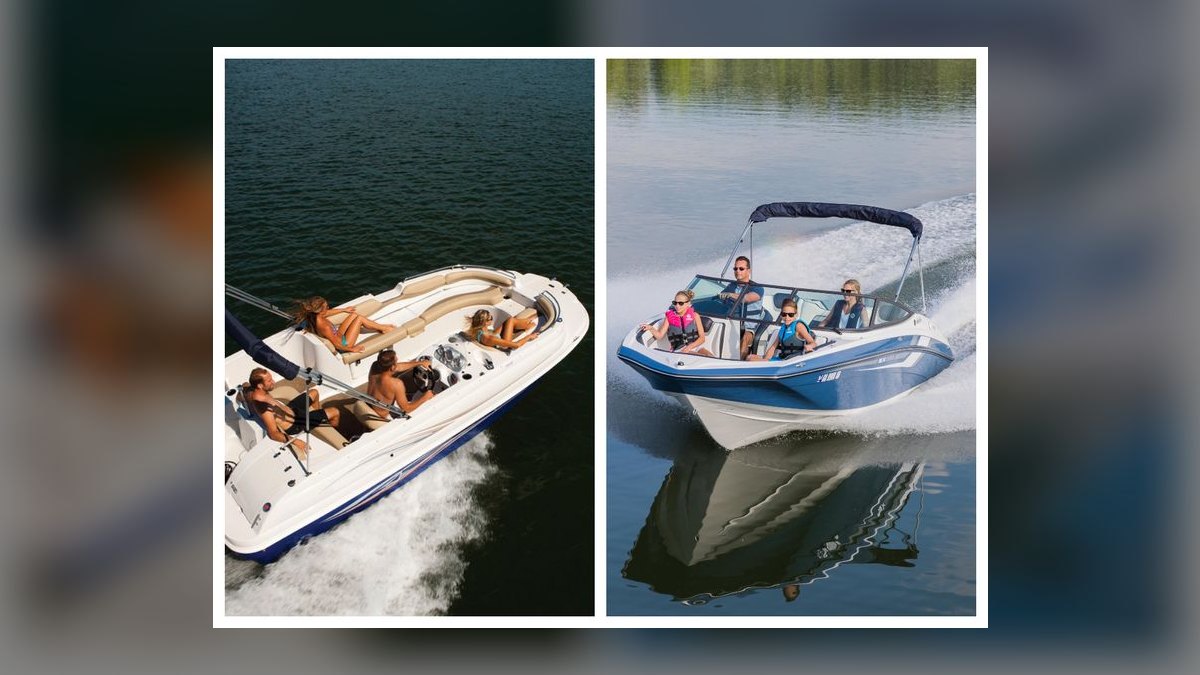
Choose a bowrider if your family prioritizes watersports, rougher open water, and sportier handling; choose a deck boat if you want maximum seating, lounging room, and shallow-water beach days. Bowriders have V-hulls that cut chop better. Deck boats use wider, blunter bows to add roughly 20–30% more usable deck space at similar lengths.
The outcome you should expect
The honest outcome of this decision is not "one boat is better." It's that you will get a boat that either matches the way your family actually spends Saturdays, or one that quietly annoys everyone for the next eight years. That's the real stake, and it's why the comparison deserves more than a dealer's thirty-second pitch.
Here's what each choice tends to deliver in practice.
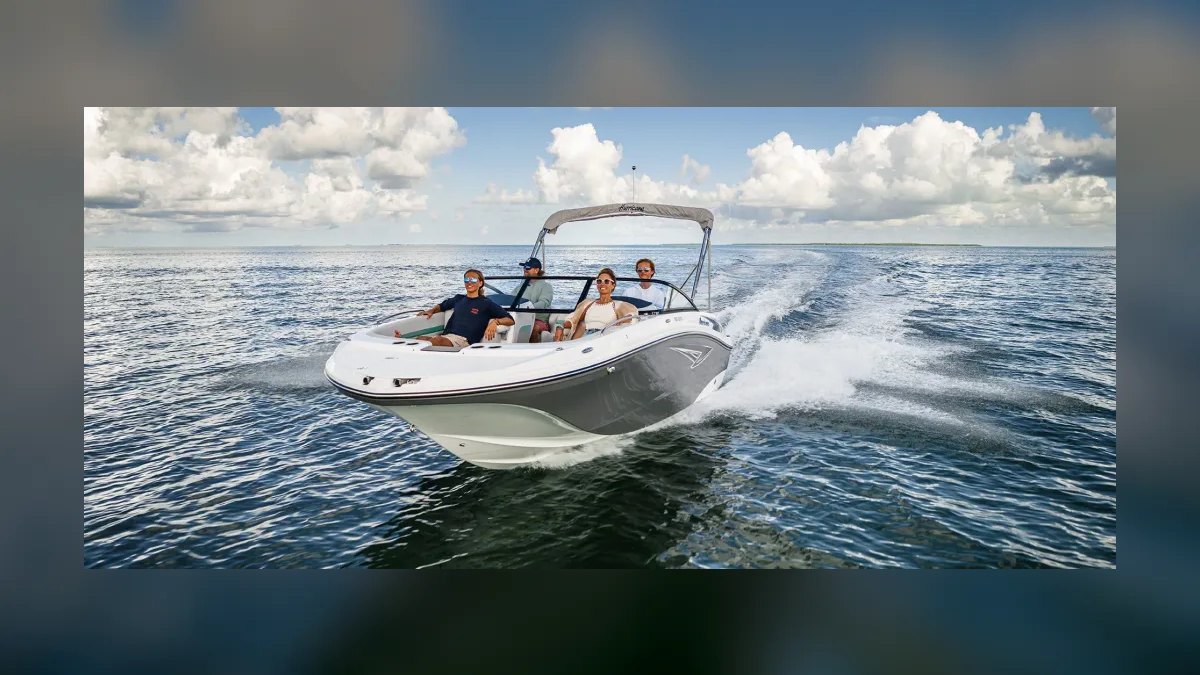
A bowrider in the 19–24 foot range gives you a modified-V or deep-V hull, a pointed bow, and a cockpit layout built around movement. The bow seating is narrow, wedge-shaped, and holds two adults or three kids comfortably. What you gain is ride quality: that V-shaped entry slices chop instead of slapping it. On a lake with weekend traffic and a two-foot afternoon wind chop, the difference is not subtle. Passengers stay drier, spines stay happier, and a thirty-minute run to the far cove doesn't feel like a punishment. You also get better tow-sports geometry — cleaner wake shape, better hole shot, and a transom layout that most manufacturers design around a ski pylon or tow tower.
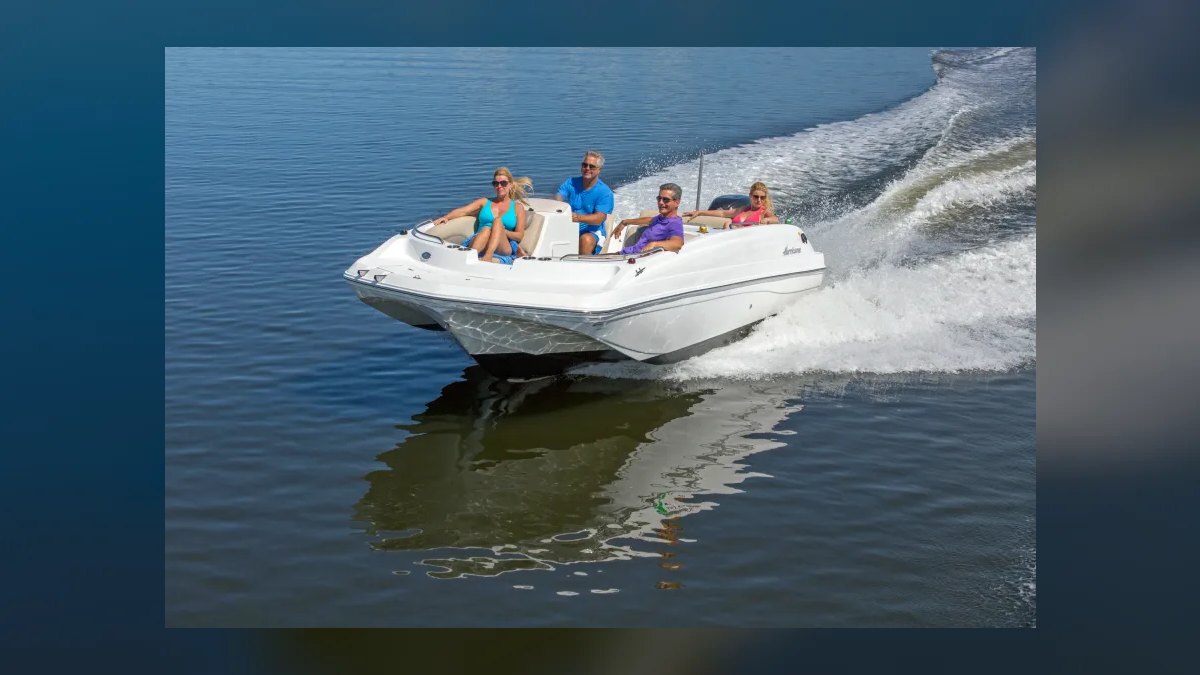
A deck boat in the same 20–26 foot range gives you a wide, blunt, nearly squared-off bow that carries beam almost all the way forward. The result is a walkable, party-sized platform. Instead of two people wedged into a triangle, you get four to six people sitting on real bench seating with actual legroom. Total capacity commonly runs 10–12 people versus a comparable bowrider's 8–10. Deck boats also tend to run shallower drafts, which matters enormously if your family's favorite activity is nosing up to a sandbar and spending four hours in eighteen inches of water.
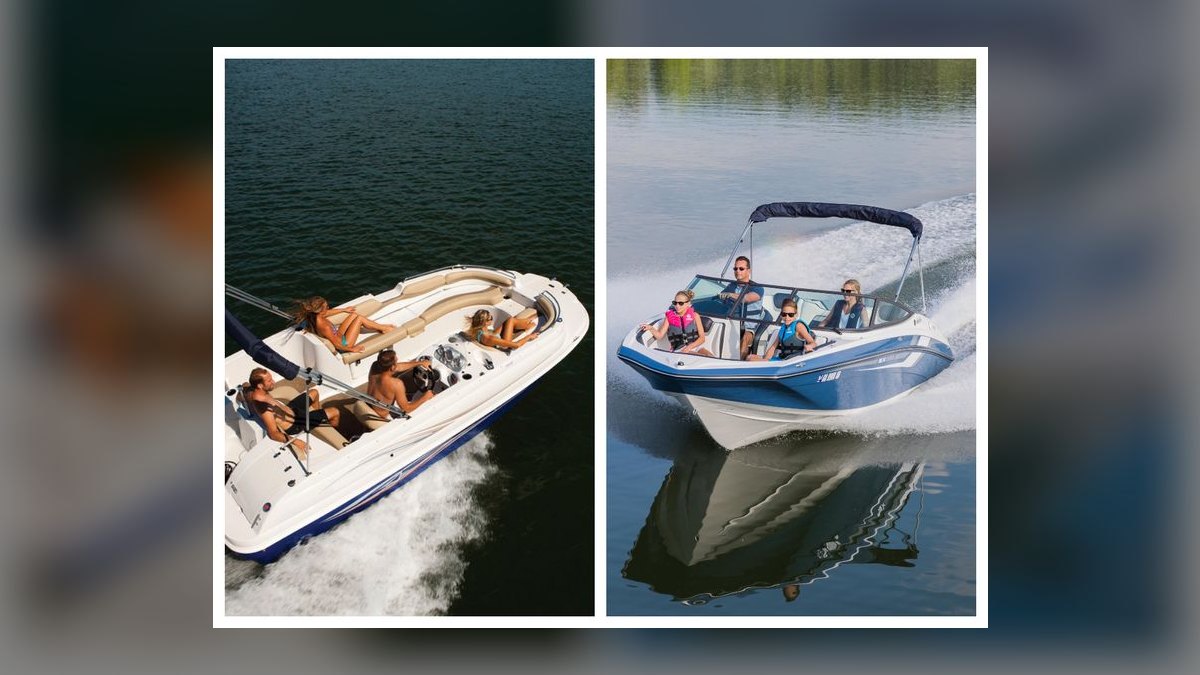
The trade is directional and consistent: the deck boat's blunt bow pounds in chop. It doesn't cut, it slaps. In flat morning water, nobody notices. In a 2-foot windblown chop at 25 mph, everybody notices.
So the outcome you should expect from choosing well is that the boat disappears — it stops being a thing you manage and becomes the thing you do. The outcome from choosing badly is that you spend the first two seasons rationalizing, then sell at a 25–35% loss and buy the other one.
There's also a third outcome worth naming: many families discover after one season that the real answer is a pontoon or a tritoon. If your honest usage is 80% cruising, floating, and eating lunch — and 20% pulling a tube once a month — a modern tritoon with a 200–300 hp outboard will out-space and out-comfort both categories, often at a lower price per seat. Don't let category loyalty override honest usage data.
What drives that outcome
Four variables drive nearly all of the satisfaction difference. Everything else is trim level and cupholder count.
Water type. This is the dominant variable and the one buyers most consistently underweight. Categorize your home water honestly: protected (small inland lake, no fetch, rarely over 1 foot), mixed (large lake, 1–2 foot afternoon chop, ferry and cruiser wakes), or open (coastal bays, sounds, Great Lakes, sustained 2–3 foot). Protected water makes the bowrider's V-hull advantage largely theoretical. Mixed water makes it noticeable. Open water makes it decisive — and pushes you toward a deep-V bowrider with 20+ degrees of transom deadrise, or out of both categories entirely toward a center console or dual console.
Crew composition and count. Count your realistic maximum, not your average. If you regularly carry six-plus, including grandparents who need a real seat with a backrest and a stable path to it, the deck boat's walkable layout is a genuine safety and comfort win. If your typical load is four — two adults, two kids — the bowrider's cockpit is plenty and the extra deck space is dead weight you're paying to push through the water.
Primary activity mix. Write down last season's outings and assign each a category: watersports, cruising, sandbar/beach, fishing, overnighting. If watersports exceed 40%, lean bowrider. If sandbar and cruising exceed 60%, lean deck boat.
Storage, towing, and slip constraints. A 24-foot deck boat with a 8'6" beam tows legally in most U.S. states without a permit, but check your state's rules — some cap non-permitted beam at 8'6", and a few wider deck boats cross it. Measure your garage, your driveway slope, and your slip width before you fall in love with a hull.
Notice what the flow does: it resolves water type first, because water type can veto everything downstream. A deck boat on a Great Lakes bay is a bad answer no matter how many cousins you're carrying. The remaining branches are preference; the first branch is physics.
One upstream effect worth planning for: whichever hull you choose constrains your engine decision. Deck boats' extra weight and wetted surface generally want more horsepower for the same performance — budget roughly 10–20% more power than a bowrider of the same length to get comparable hole shot with a full load. Underpowering a loaded deck boat is one of the most common regrets in this category.
Benchmarks and realistic ranges
Concrete numbers make this decision tractable. Treat these as planning ranges rather than quotes — actual figures vary by region, brand tier, and model year.
Length and capacity. Bowriders cluster from 17 to 27 feet; the family sweet spot is 21–24. Deck boats cluster from 19 to 27 feet, with 22–24 being the volume seller. At equal length, expect the deck boat to seat roughly 2–4 more people. A 22-foot bowrider typically plates at 8–10 persons; a 22-foot deck boat frequently plates at 10–12.
Beam. Bowriders at 22 feet commonly run 8'0"–8'6". Deck boats at the same length run 8'6"–9'0", occasionally wider. That extra foot of beam is where the interior volume comes from — and where your trailering headaches begin if you cross 8'6".
Deadrise. This is the number to ask for and the one salespeople often skip. Transom deadrise on a bowrider commonly ranges from 16 to 21 degrees; deep-V models push past 20. Deck boats commonly sit in the 12–18 degree band. Higher deadrise means softer ride in chop and more roll at rest. Lower deadrise means a flatter, more stable platform at anchor and a harder ride underway. There is no free lunch in hull design — you are trading ride comfort against at-rest stability, and your water type should decide which you'd rather have.
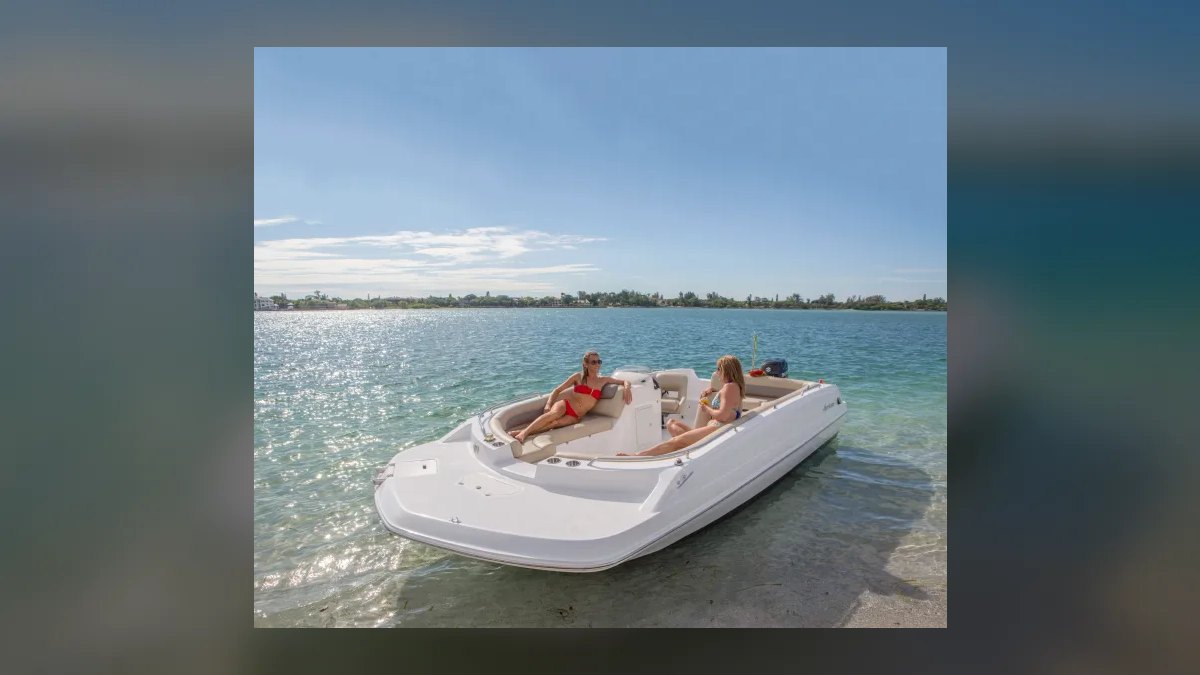
Draft. Deck boats with sterndrives frequently draft under 24 inches with the drive trimmed up; outboard models can go shallower. Deep-V bowriders often draft 30 inches or more. If your family's plan is beaching, that 6–10 inch delta is the whole ballgame.
Power. Sterndrives in the 200–350 hp range remain common in both categories, though outboards have taken meaningful share in recent model years and that trend has continued into 2027 model lineups. Outboards free up cockpit space, simplify winterizing, and are usually easier to service; sterndrives keep the transom clear for a swim platform and tend to run quieter at cruise. Fuel burn at cruise for a 22-footer with a 250 hp outboard commonly lands in the 8–14 gallons-per-hour band depending on load and speed.
Ownership cost. Beyond the purchase price, plan for annual costs in the range of 8–12% of the boat's value once you total insurance, storage, winterization, routine service, registration, and fuel. Boats in this class typically depreciate fastest in years one through three, which is exactly why buying two to four years used is the value play for most families.
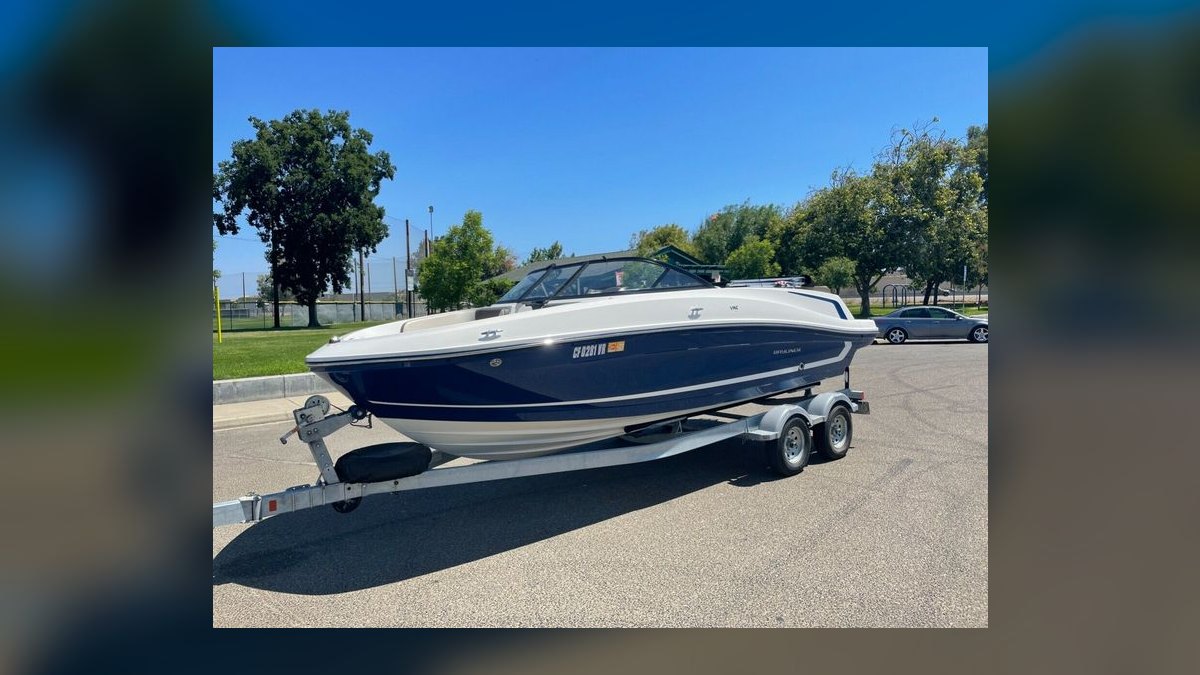
Resale. In most markets, bowriders from major manufacturers hold value slightly better than deck boats, largely because the buyer pool is wider. Deck boats sell well in warm-water, sandbar-heavy regions and less well elsewhere. If there's any chance you'll relocate, that regional liquidity difference is worth a thought.
Risks, edge cases, and failure modes
The one-weekend-a-year trap. Families routinely buy for the outlier — the once-a-summer trip with twelve people aboard — and live with the compromise for the other forty outings. Buy for your median weekend and rent, charter, or borrow for the outlier. This single reframe resolves more of these decisions than any spec sheet.
Understating rough water. Buyers assess their lake on a calm Tuesday inspection ride and forget the Saturday afternoon reality: wind against current, a hundred wakes crossing, and the run home at 4 p.m. Demand a sea trial in real conditions. If the dealer will only demo at 7 a.m. on glass, that's information.
Capacity plate misreading. The USCG capacity plate assumes an average person weight that is lower than many real adults, and it does not account for coolers, tubes, wakeboards, and a full fuel tank. Treat the plated number as a ceiling, not a target. Loading to the plate with heavy adults and full gear can put you meaningfully over the design intent.

Bow seating in chop. This is a real safety issue, not a comfort quibble. Passengers riding in the bow of any of these boats in significant chop can be thrown, and bow-riding injuries are a recurring category in recreational boating incident data. Both hull types share this exposure; the deck boat's flatter entry can make it worse because the bow decelerates harder on impact.
Sterndrive corrosion in salt. If you're in brackish or salt water, a sterndrive demands disciplined flushing and anode maintenance, and neglected drives get expensive fast. Outboards are more forgiving. Factor this into the engine choice rather than treating it as an afterthought.
Trailer and tow-vehicle mismatch. A 24-foot deck boat on a tandem-axle trailer can push 6,000–7,000 pounds loaded with fuel and gear. Confirm your vehicle's tow rating, tongue weight capacity, and brake requirements before purchase. Discovering the mismatch at the dealership on delivery day is a bad day.

Storage cost surprise. Indoor heated storage in cold climates can run a meaningful fraction of a monthly payment. Get a written quote for your specific length and beam before you commit — a 9-foot beam sometimes bumps you into a higher storage tier.
Buying new when used is right. Depreciation in years one through three is steep. A well-maintained three-year-old boat with service records and a compression test frequently delivers 85–90% of the new-boat experience at 60–70% of the price. Get a marine survey on anything used and over about 20 feet — it costs a few hundred dollars and routinely finds thousands.
Ignoring the wake question. If anyone in the family is serious about wakesurfing, neither category is the right tool. Surf-specific boats with ballast and wake-shaping systems occupy a different segment at a different price. A bowrider will pull a tube and a skier fine; it will not throw a surfable wake.
A practical rollout plan
Treat this like any structured evaluation: define requirements, gather evidence, test under real conditions, then commit.
Weeks 1–2: Document actual usage. Reconstruct last season honestly — every outing, who was aboard, what you did, how long you ran, what water you were in. If you're a first-time buyer, log the outings you take on friends' boats. This is your requirements document, and it beats every opinion you'll hear on a forum.
Week 3: Set hard constraints. Write down the non-negotiables: maximum length that fits your storage, maximum beam your state allows without a permit, maximum weight your tow vehicle handles, slip dimensions if applicable, and total budget including the trailer, first-year insurance, and storage. Anything that violates a hard constraint is eliminated regardless of how good the deal looks.
Weeks 4–6: Sea trial both categories, same week, same water. This is the step families skip and later regret. Book a bowrider and a deck boat demo within a few days of each other on your home water. Run both at cruise, at wide-open throttle, and — critically — through your own wake at 25 mph. Put your actual family aboard, not just yourself. Watch where the kids sit. Watch whether your parents can get to a seat without a hand-hold gymnastics routine.

Week 7: Verify the specs you were told. Get the deadrise, dry weight, draft, fuel capacity, and plated capacity in writing. Confirm the trailer's GVWR and the loaded tongue weight.
Weeks 8–10: Shop new versus used in parallel. Price the same configuration new and three years old. If you go used, budget for a survey and an engine compression test, and insist on service records.
Ongoing: Plan the first season. Take a boating safety course before the first outing — many states require one, and insurers frequently discount for it. Practice docking in low wind before you attempt it with an audience.
The plan's value is the sequencing. Constraints before shopping prevents falling in love with a boat that doesn't fit the garage. Sea trials before spec verification means you know what questions matter. And running new-versus-used in parallel keeps you from anchoring on a new-boat price you didn't need to pay.
Related questions
Is a deck boat safe in rough water?
A deck boat is seaworthy within its design limits, but its flatter, blunter bow rides harder in chop. In 2-foot-plus conditions, slow down, keep passengers out of the bow, and take waves at an angle rather than head-on. For routinely rough water, a deep-V hull is the better tool.
Which holds resale value better?
Bowriders from established manufacturers generally hold value slightly better because the national buyer pool is larger. Deck boats resell strongly in warm-water, sandbar-oriented markets and more slowly elsewhere. Condition, hours, and complete service records move price more than category does.
Can a bowrider handle a large family?
A 24-foot bowrider commonly plates for 10 or more, so the capacity is often there. The comfort is the issue — bow seating is wedge-shaped and tight for adults. If six-plus people ride regularly, walk both layouts with your actual crew before deciding.
Should I consider a pontoon instead?
Yes, if cruising and lounging dominate. Modern tritoons with 200–300 hp deliver more usable space per dollar and will pull tubes and skiers adequately. They give up sporty handling and rough-water ride. Many families who choose between a bowrider and a deck boat end up here.
How much horsepower do I actually need?
For a 22–24 foot family boat carrying a full load and pulling watersports, most buyers land in the 200–300 hp range. Deck boats generally want the upper end of that band because of extra weight and wetted surface. Underpowering a loaded deck boat is a common regret.
FAQ
What is the main difference between a bowrider and a deck boat?
The bow. A bowrider has a pointed, V-shaped bow that narrows to a point, which cuts chop well but limits forward seating to a wedge. A deck boat carries its beam nearly to the bow, creating a wide, walkable forward platform with substantially more seating — at the cost of a harder ride in waves.
Which is better for towing tubes and skiers?
Both will do it competently, but the bowrider generally has the edge: better hull efficiency, cleaner wake shape, and layouts more often designed around a tow pylon or tower. Deck boats tow fine for casual tubing; serious skiers usually prefer the bowrider's wake characteristics and hole shot.
Is a deck boat harder to trailer?
Modestly. The wider beam — often 8'6" to 9'0" versus a bowrider's 8'0"–8'6" — makes launching, retrieving, and garage storage tighter, and can trigger permit requirements if it exceeds your state's limit. The trailer itself is heavier. None of it is difficult, but measure everything first.
How many people can each boat actually carry comfortably?
The capacity plate is a legal ceiling, not a comfort target. As a rough guide, a 22-foot bowrider is comfortable with 6 and plated for 8–10; a 22-foot deck boat is comfortable with 8 and plated for 10–12. Coolers, gear, and heavier adults reduce both numbers.
Should I buy new or used for a first family boat?
Used, in most cases. Depreciation is steepest in the first three years, so a well-maintained three-year-old boat with service records often gives you nearly the full experience at a substantially lower price. Always get a marine survey and an engine compression test on anything used.
What should I check during a sea trial?
Run it through your own wake at cruise speed and feel the impact. Check visibility from the helm, ease of movement fore and aft, whether every seat has a real backrest, how it behaves at idle in wind, and how it planes with a full load. Bring your family — their reactions are the data.
Sources
- https://uscgboating.org/ — U.S. Coast Guard Office of Boating Safety, capacity plates, statistics, and safety regulations
- https://www.discoverboating.com/ — National Marine Manufacturers Association boat-buying guides and boat-type comparisons
- https://www.boats.com/ — Boat reviews, buying guides, and hull-type explainers
- https://www.boatus.org/ — BoatUS Foundation, safety courses, trailering guidance, and ownership cost resources
- https://www.boatingmag.com/ — Boating Magazine boat tests, hull design articles, and engine comparisons
- https://www.nmma.org/ — National Marine Manufacturers Association industry statistics and market data
- https://www.yachtworld.com/ — Listings and market pricing data for used boats
- https://www.nasbla.org/ — National Association of State Boating Law Administrators, state-by-state boating regulations
Related on PULSE
- How do I decide between an outboard and a sterndrive for a family boat?
- What does it actually cost to own a 22-foot boat for a year?
- How do I pick the right pontoon or tritoon for lake days?
- What should a marine survey cover on a used boat?
- How much horsepower do I need for family watersports?
- How do I choose a tow vehicle and trailer for a 24-foot boat?
This page will be disappearing soon. Save it to your device for $1 — or read it free while it is here.
@Kory-White- · if Venmo asks, the last 4 of my number are 2012
 pulse-boatsBest Boston Whaler Boat Models (Ranked) in 2027
 pulse-recentTop 10 Speed Boats 2018 — Best Overall + Best Value
 pulse-boatsTop 10 Boats for Lake Tahoe 2027
 boatTop 10 Personal Watercraft 2027
 pulse-recentTop 10 Intrepid Boat Models in 2027
 pulse-recentTop 10 Catamarans 2013 — Best Overall + Best Value
 pulse-boatsBest Used Fishing Boats Under $10,000 in 2027 (Ranked)
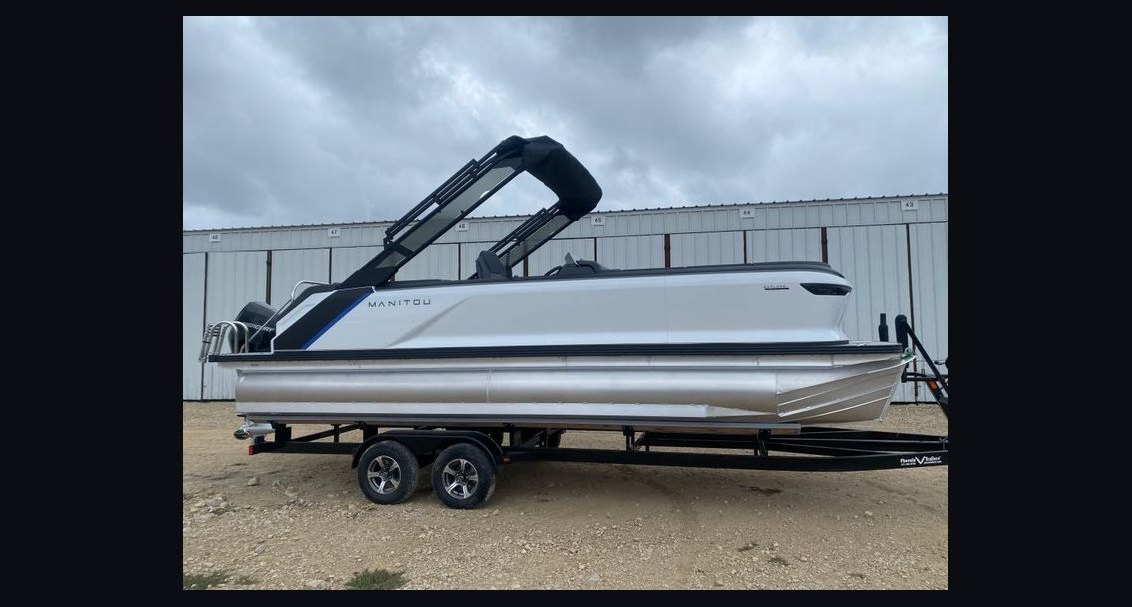 pulse-boatsBest Manitou Boat Models (Ranked) in 2027
 pulse-boatsBest Used Deck Boats Under $20,000 in 2027 (Ranked)
 pulse-boatsBest Used Yachts Under $20,000 in 2027 (Ranked)