
What Is Percentage Rent in a Retail Lease and How Do I Negotiate It Down?
 Curated byKory White · Fractional CRO · Maryland
 PULSEKNOWLEDGE LIBRARY
Percentage rent is extra rent you owe once your store's gross sales exceed a threshold called the breakpoint—typically 5% to 10% of every sales dollar above that line, on top of base rent. Negotiate it down by demanding a natural breakpoint, pushing the rate toward your category's floor, and excluding non-core revenue from gross sales.
What percentage rent actually is and why landlords want it
Percentage rent, sometimes called "overage rent," is a lease clause that hands the landlord a slice of your sales once those sales clear an agreed threshold. Critically, it sits *on top of* your base rent (also called minimum rent), never instead of it. The landlord's logic is straightforward: a well-located mall, lifestyle center, or grocery-anchored strip generates foot traffic you didn't have to buy, so the landlord wants to participate in the upside that location helps create. For in-line tenants in enclosed malls and anchored centers, percentage-rent clauses are close to universal.
Three numbers govern the entire clause, and each is a lever you can move: the rate (the percentage the landlord takes), the breakpoint (the sales floor above which the rate kicks in), and the definition of gross sales (what actually counts toward that number). A worked example makes it concrete. Say your base rent is $120,000 a year and the rate is 8%, applied above a $1.5 million breakpoint. Ring up $1.7 million in sales and you owe 8% of the $200,000 overage—$16,000—in addition to your $120,000 base, for $136,000 total. Ring up $2.1 million and the overage jumps to $600,000, so percentage rent alone is $48,000.

The trap is that the landlord's standard lease form is drafted to maximize all three levers at once: a high rate, a low breakpoint, and a sweepingly broad definition of sales. Most tenants sign it as presented without renegotiating a single one, because the clause reads like immovable boilerplate. It isn't. Every one of those three numbers is negotiable, and moving each of them is the difference between percentage rent being a manageable, capped cost and it being an open-ended tax on your own success. Understanding how the levers interact is what converts a blank check into a line item you can forecast.
The breakpoint trap: natural versus artificial
The breakpoint is simultaneously the most negotiable and the most abused number in the entire clause, so it deserves the most attention. A natural breakpoint is mathematically fair: it equals your annual base rent divided by the percentage rate. With $120,000 in base rent and an 8% rate, the natural breakpoint is exactly $1,500,000 ($120,000 ÷ 0.08). At that figure the base rent and percentage rent align perfectly—you only begin sharing sales once your own volume has effectively covered the equivalent of your base rent. Nothing is skimmed off sales you needed just to pay the fixed rent.

An artificial breakpoint is any fixed number the landlord inserts in place of that formula, and it can cut against you in two directions. Some landlords set it *low*—say $900,000 against a $1.5 million natural figure—so they start taking a share of your sales hundreds of thousands of dollars sooner than fairness would allow. At an 8% rate, that low breakpoint costs you 8% of the $600,000 gap, or $48,000 every year, for nothing you received in return. Other landlords set the breakpoint deceptively *high* to look generous, then quietly pair it with an inflated rate or a bloated gross-sales definition that recovers the difference elsewhere. Either way, any number that isn't tied to your rent is a number engineered to drift against you over the life of the term.
The defense is a single sentence written into the lease: *"Percentage Rent shall equal [rate]% of Gross Sales in excess of the Breakpoint, where the Breakpoint equals annual Minimum Rent divided by [rate]%."* Tying the two numbers together permanently matters most when your base rent escalates. If your rent steps up in year three under a scheduled increase, a formula-linked breakpoint rises automatically in lockstep, so you never pay percentage rent on sales that merely kept pace with your own rising fixed cost. If the landlord insists on a fixed artificial breakpoint anyway, make them justify the departure with comparable sales figures from similar tenants in the center. Without hard comps, there is no defensible reason to abandon the formula—so push back, and keep pushing.

Negotiating the rate down by category
The rate the landlord quotes first—usually somewhere in the 6% to 10% band—is an opening position, not a market-fixed price. Rates loosely track industry margins, so your counteroffer should be anchored to what tenants in your specific category actually pay, not to a generic average. As a rough guide seen across retail leasing, apparel and specialty retail typically land at 5%–8%, and you should push toward the 5%–6% end. Restaurants and food service run lower, often 4%–7%, because food-cost and labor margins are thinner. Jewelry and other high-ticket, low-turnover formats sit higher, around 8%–10%; if you're in that bucket, concede a little on rate and instead fight harder on the breakpoint and the exclusions. Grocery and big-box anchors pay very low rates, sometimes just 1%–3%, reflecting razor-thin margins on enormous volume.
If you run a high-volume, low-margin concept—a discount grocer, a dollar-store format, a high-turnover convenience play—argue for the bottom of your industry band and bring the arithmetic to prove that a standard 8% would swallow an unreasonable share of your operating income. Your leverage rises with credit quality, a proven concept with real store-level history to reference, a strong existing location whose numbers you can show, and—most decisively—alternative sites you are genuinely willing to walk to. A landlord filling a stubborn vacancy in a soft market will move on rate far faster than one working through a waiting list of eager tenants.

One of the most effective tactics is to trade levers rather than argue a single number into the ground. You can accept a modestly higher rate in exchange for a materially higher breakpoint, or accept a lower breakpoint in exchange for a lower rate. The only way to know which trade is genuinely cheaper is to model both against realistic sales projections—your own conservative year-two and year-three estimates, never the landlord broker's hockey-stick forecast. Run each scenario in a spreadsheet, identify the column that costs you least across the likely range of outcomes, and negotiate from that number. Arguing "8% feels high" persuades no one; showing that 6% with a natural breakpoint saves you $50,000 over three years ends the conversation.
Gutting the definition of gross sales
This is where the real, quiet dollars hide, and it's the clause most tenants skim past because it reads like inert boilerplate. The landlord's default draft defines "gross sales" as essentially everything that crosses your registers—which sweeps in piles of revenue you never actually kept. Every dollar you carve out of that definition is a dollar the percentage rate can never touch, so the exclusions list is where a sharp broker or attorney earns their fee. Insist, in writing, that the following categories be *excluded* from gross sales.

- Sales, excise, and use taxes you collect on the government's behalf—this was never your money to begin with.
- Returns, refunds, and exchanges, deducted from the period in which they occur.
- Gift-card and gift-certificate sales, counted only when redeemed, never double-counted at both load and redemption.
- Employee discounts and complimentary merchandise given away or sold below cost.
- Credit-card and bank processing fees, which commonly run 2.5%–3.5% of every transaction.
- Bad debt and uncollectible accounts written off.
- Interstore transfers and inventory moved to your other locations.
- E-commerce orders fulfilled from a warehouse rather than picked or shipped from the leased store.
- Insurance proceeds and the sale of used fixtures or equipment.
- Vending, ATM, and third-party concession income you don't control or keep.
Consider the scale of what these exclusions recover. A retailer reporting $2 million in raw register sales can realistically shave $150,000–$250,000 off the gross-sales base through tax, returns, and off-site online carve-outs alone. On a 6% rate, that's $9,000–$15,000 a year that simply never becomes percentage rent—without moving the headline rate a single basis point. Landlords will predictably open with "gross sales means all sales, period," but a competent broker or attorney can usually win four to six reasonable exclusions, cutting your effective percentage rent by 10%–20% while the visible rate on the term sheet stays untouched. That invisibility is exactly why it works: the landlord's number looks unchanged, and your bill quietly shrinks.

Caps, tiers, audit rights, and a grace period
Beyond the three headline levers, a handful of protective clauses limit your downside and belong in every tenant's markup. A percentage-rent cap sets a ceiling on what you can owe in any lease year—for example, "percentage rent shall not exceed 50% of base rent," or a flat figure like "$50,000 per lease year." This stops a breakout year, a viral moment, or an unusually strong holiday season from turning into a landlord windfall while your own margins stay flat. Tiered rates work like a progressive tax and protect you on the same upside: the first $500,000 over the breakpoint might be charged at 4%, the next tranche at 5%, and so on, so an unexpected sales spike doesn't get taxed entirely at the top marginal rate.
Audit rights cut in the opposite direction—they protect you when the landlord, not you, controls the reconciliation math. Secure the right to audit the sales records the reconciliation is based on at least once a year at your own expense, with the landlord required to reimburse your audit cost if the review uncovers an overstatement above a set threshold, commonly 3%–5%. Below that threshold, honest rounding shouldn't trigger penalties; above it, the landlord pays for having gotten it wrong. Pair this with annual rather than monthly sales reporting to cut your administrative burden, and cap the landlord's own inspection right to once per year so you aren't buried in perpetual document requests.

Finally, negotiate a grace period: no percentage rent for the first 12 to 18 months of the term. A brand-new store needs time to build traffic before the location's supposed benefit is even real, and a grace period keeps the percentage clause dormant while the concept ramps and the customer base forms. Taken together, these four protections—cap, tiers, audit rights, and grace period—convert an open-ended obligation into one with a known floor, a known ceiling, a way to verify the numbers, and a runway before it ever starts. That is the difference between a term you can budget around and one that can surprise you.
Using co-tenancy, exclusives, and a real model as leverage
If the landlord wants a share of your upside, then your upside and the landlord's should genuinely rise and fall together—and you can write that symmetry directly into the lease. A co-tenancy clause ties your percentage-rent obligation to the center actually performing: if the anchor tenant goes dark, or overall occupancy falls below a threshold such as 70%–80%, your percentage rent suspends and your base rent can step down to "alternate rent," often a modest percentage of sales in lieu of full fixed rent. This is standard in institutionally owned retail and protects you precisely when collapsing foot traffic makes any overage payment absurd. Pair it with an exclusive-use clause so the landlord can't lease the neighboring unit to a direct competitor who then siphons off the very sales you're paying a percentage on.
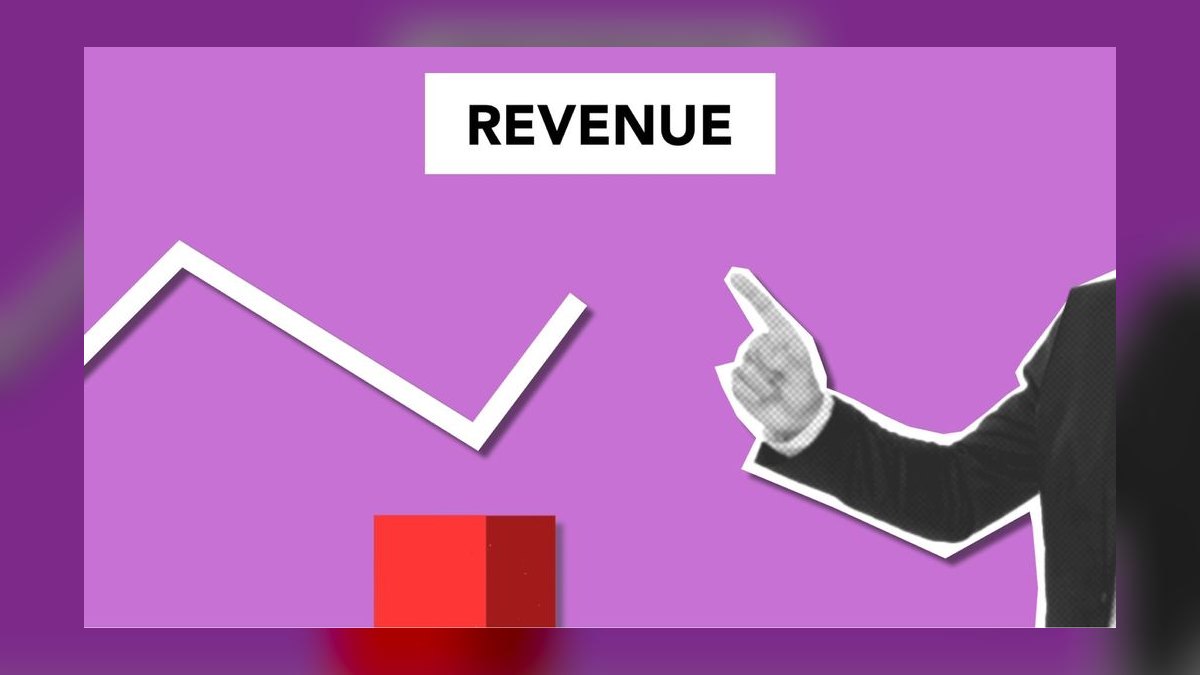
None of this should be negotiated blind, and the single most persuasive thing you can bring to the table is a simple three-year model with both scenarios laid side by side. Take a store with $120,000 base rent, a 6% rate, and a $1.5 million natural breakpoint. In a year-one at $1.2 million in sales, percentage rent is $0—you're below the breakpoint. At $1.7 million in year two, you owe 6% of the $200,000 overage, or $12,000. At $2.1 million in year three, you owe 6% of $600,000, or $36,000—still comfortably under a 50%-of-base cap of $60,000. Now re-run the identical store against an artificial $900,000 breakpoint at 8%: year two alone costs 8% of $800,000, or $64,000, more than five times the fair figure. That one comparison—$12,000 versus $64,000 in a single year—is the entire negotiation compressed into one line, and it is vastly more convincing than any abstract appeal to fairness. Bring the spreadsheet, and the natural breakpoint stops being a debate and becomes the obvious answer.
Related questions
How is the breakpoint calculated?
A natural breakpoint equals your annual base rent divided by the percentage rate. If base rent is $60,000 and the rate is 7%, the breakpoint is roughly $857,000 in sales. You pay percentage rent only on sales above that figure, so a higher breakpoint means a higher tax-free sales floor before any overage is owed.
Can percentage rent apply to online sales?
It depends entirely on the lease language. Many modern leases try to include e-commerce orders fulfilled from the store, and sometimes even warehouse-shipped orders. Negotiate to exclude online sales fulfilled off-site, or cap the included portion, and define "gross sales" precisely so the ambiguity never defaults in the landlord's favor.
Is percentage rent negotiable at all, or is it standard?
It is highly negotiable. The rate, the breakpoint, the gross-sales definition, caps, tiers, audit rights, and grace periods are all on the table. Standard lease forms simply reflect the landlord's opening position; strong tenants and softer markets routinely move every one of those terms in the tenant's direction.
What happens if my sales are seasonal or unpredictable?
Use a natural breakpoint tied to base rent rather than a fixed monthly number, and consider a tiered-rate structure with an annual reporting period so a strong quarter isn't taxed in isolation. A percentage-rent cap protects you if an unexpected seasonal spike would otherwise generate an outsized overage bill.
Who decides what counts as gross sales?
The lease definition controls, which is why it's worth fighting over word by word. If the clause is silent or vague, disputes default to the landlord's broad reading. Nail down every exclusion—taxes, returns, off-site online orders, transfers—so the calculation is mechanical rather than a matter of the landlord's interpretation.
FAQ
What exactly is the breakpoint in percentage rent? The breakpoint is the sales threshold you must exceed before any percentage rent is owed. It is usually calculated as your annual base rent divided by the agreed percentage rate—so if base rent is $60,000 and the rate is 7%, your breakpoint is roughly $857,000 in gross sales. Below that number, you owe only base rent.
Can I negotiate a lower percentage rate than the landlord's first offer? Yes. Landlords often open at 8%–10% but will frequently accept 5%–7% for strong tenants or in softer markets. Your leverage improves with solid credit, a proven concept, existing successful stores you can reference, and—most of all—credible alternative locations you're genuinely willing to walk to.
Is there a way to cap the total percentage rent I pay? Absolutely. A common tactic is a ceiling on percentage rent—for example, no more than 50% of base rent, or a flat dollar cap per lease year. This protects you if sales unexpectedly surge and keeps a single breakout year from becoming a landlord windfall while your operating margins stay flat.
Which exclusions from gross sales are realistic to win? Sales and excise taxes, returns and refunds, unredeemed gift cards, employee discounts, credit-card processing fees, interstore transfers, and off-site e-commerce orders are all commonly excluded. A good broker or attorney can usually carve out four to six of these, cutting your effective percentage rent by 10%–20% without moving the headline rate.
Should I ask for a grace period before percentage rent starts? Yes. A grace period of 12 to 18 months keeps the percentage clause dormant while a new store builds traffic. Since the location's traffic benefit isn't fully real on day one, deferring the overage obligation until the concept ramps is a reasonable and frequently granted request, especially for a new-to-market tenant.
How do I know if percentage rent is even fair for my business? Run a break-even analysis: estimate realistic annual sales and weigh the projected percentage-rent cost against the value of the location's foot traffic and visibility. If percentage rent would consume more than roughly 2%–3% of total revenue, it's likely too high—push for a lower rate, a higher breakpoint, or broader exclusions.
Sources
- https://www.cbre.com/insights
- https://www.us.jll.com/en/trends-and-insights
- https://www.cushmanwakefield.com/en/united-states/insights
- https://www.icsc.com/
- https://www.naiop.org/
- https://www.boma.org/
- https://www.sba.gov/business-guide/manage-your-business/buy-lease-commercial-space
- https://www.nolo.com/legal-encyclopedia/commercial-real-estate-leases
Related on PULSE
- [How Do I Negotiate Rent Down in a Soft Commercial Market?](/knowledge/bo0069)
- [How Do I Negotiate the Landlord's Construction-Management Fee Down?](/knowledge/bo0059)
- [How Do I Negotiate a Pop-Up or Short-Term Retail Lease?](/knowledge/bo0118)
- [How Do I Negotiate a Retail Lease: Mall vs Strip Center?](/knowledge/bo0089)
- [What's the cheapest way to add a private restroom in a retail shell space?](/knowledge/bo0290)
- [What's the cheapest way to finish a raw shell space for a small retail store?](/knowledge/bo0240)
This page will be disappearing soon. Save it to your device for $1 — or read it free while it is here.
@Kory-White- · if Venmo asks, the last 4 of my number are 2012
 buildoutsHow Do I Do a Sale-Leaseback Without Getting Burned?
 buildoutsHow Do I Negotiate Operating-Expense (OpEx) Stops?
 buildoutsHow Do I Sublease My Space to Cut My Rent?
 buildoutsWhat Is a Recapture Clause and How Do I Kill It?
 pulse-recentHow do I calculate a fair landlord fund contribution for my buildout in 2027?
 buildoutsHow Do I Sublease Excess Office Space I'm Not Using?
 pulse-recentHow much does it cost to build out a movie theater auditorium in 2027?
 buildoutsHow Do I Audit My CAM Reconciliation to Claw Back Overcharges?
 pulse-recentHow much cash do I need on hand while I wait for the landlord's TI fund to reimburse my buildout costs in 2027?
 pulse-recentHow much does a ground-up build-to-suit cost per square foot in 2027?