
Skill Drill: Relationship Selling for Furniture Manufacturing
 Curated byKory White · Fractional CRO · Maryland
 PULSEKNOWLEDGE LIBRARY
This skill drill trains furniture manufacturing reps to build durable, reordering relationships with three real buyer types — independent dealers, interior designers, and procurement managers. A sales manager runs it with 4 to 12 reps in 45 to 60 minutes using verbatim scripts and showroom-floor role-plays, moving accounts from a one-time PO to a standing seasonal program.
What it is and why Relationship Selling matters in Furniture Manufacturing
Furniture Manufacturing is a relationship business disguised as a product business. A casegoods or upholstery maker rarely wins on a single transaction; it wins when a dealer reorders the same SKUs season after season, when a designer specs your frame into a 200-room hotel refresh, and when a procurement lead names you a preferred vendor on a multi-year contract. That recurring reorder — not the first purchase order — is where account-level revenue actually compounds.
The structural facts of the category make Relationship Selling non-optional. Lead times run 8 to 16 weeks from order to delivery. COM (customer's own material) complexity means a designer's fabric yardage, backorder, and inspection all sit on your critical path. Freight class, LTL damage rates, and showroom-floor real estate all mean the buyer is choosing a partner, not a chair. A single late shipment can cost a designer a client relationship, a dealer a season of floor traffic, or a procurement manager a performance bonus.

The bottleneck this drill fixes is that most reps are trained to pitch catalogs and quote prices, not to ask the questions that surface a dealer's floor-turn problem or a designer's deadline pressure. Relationship Selling as a discipline is well documented: SPIN Selling (Neil Rackham) frames the problem-and-implication questioning that uncovers real pain; The Challenger Sale (Dixon and Adamson) shows when to reframe a buyer's thinking instead of nodding along; Sandler insists on equal business stature so a rep stops acting like an order-taker; and Dale Carnegie supplies the durable interpersonal mechanics. This drill operationalizes those named methods against three furniture buyer personas so reps practice the exact moves before they are live with a High Point Market account.
The three personas the drill runs against are fixed so the practice stays concrete. Marcus is an independent dealer with a 12,000 sq ft store and 18 vendors; he obsesses over floor turns and net-60 dating and hates dead inventory, so his real pain is cash tied up in slow-moving stock. Priya is an interior designer specifying for boutique hotels and corporate offices; she lives and dies by install deadlines and COM lead times and protects her design intent, so her pain is a supplier missing a date and damaging her client reputation. Dana is a procurement manager sourcing for a regional hospitality group, scored on cost, on-time delivery, and warranty claims, running a competitive bid against two other casegoods makers; her pain is total cost of ownership, not unit price. Each persona reorders on different math — turns, deadlines, and scorecards — which is exactly why a generic role-play teaches habits that fail on a real market floor.

The step-by-step process a sales manager runs
The drill is four rounds inside a 45-to-60-minute block, run in pods of three: Rep, Buyer, and Observer. The leader frames it, models the opening, runs live reps, applies pressure, and locks one behavior per person. The single hard rule enforced by the observer: no quoting price until the rep has surfaced the buyer's real problem. If the rep leads with price, the observer stops them out loud and the rep restarts.
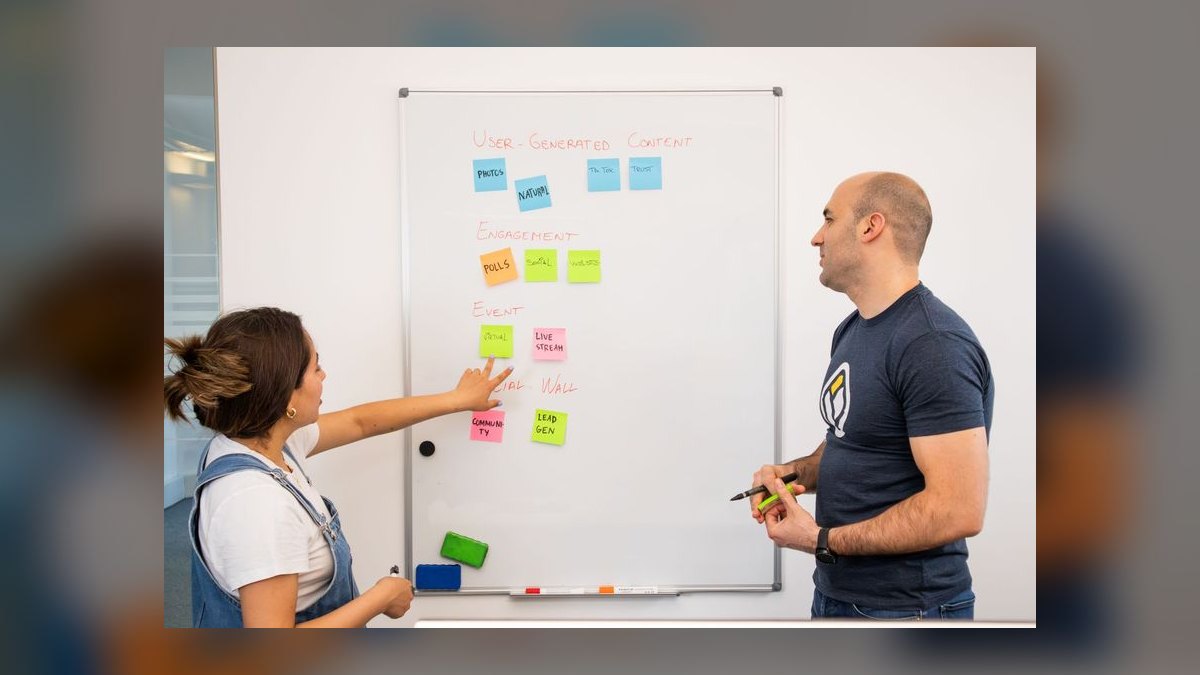
Round 1 — Set the scene (5 to 7 minutes). The leader reads the opening script verbatim: "We sell relationships that reorder, not chairs that ship once. For the next 40 minutes you'll move a buyer from a single PO to a standing program. No quoting price until you've surfaced the buyer's real problem." Assign pods of three, hand each pod one persona card with a one-paragraph backstory (for example, Marcus is sitting on 40 unsold dining sets and needs floor space), and write the goal on the whiteboard: "Earn the second order, not the first." Observers are told their only job is to mark every question the rep asks and flag the first price mention.
Round 2 — Run the reps (about 20 minutes). Each pod runs a 6-minute live role-play, then rotates roles, three times so every rep plays the rep once. The rep opens the relationship using a SPIN progression — Situation, Problem, Implication, Need-payoff — adapted to furniture. The leader models it first on the dealer scenario: "Marcus, before I show you the new collection — how are your floor turns running on accent seating right now? … When a piece sits past 90 days, what does that do to your open-to-buy for the next market? … So if I could get you a frame that turns in 45 days with net-60 dating, what would that free up?" The buyer plays their card honestly but never volunteers pain; the rep must dig. What good looks like: at least three problem or implication questions before any product is mentioned, one specific furniture detail named (lead time, COM yardage, freight class, dating terms), and a proposed next step that implies a second interaction (a sample, a floor sample, a market appointment).
Round 3 — Pressure test (10 minutes). The leader reads a curveball into each pod and the rep must hold equal business stature without caving or discounting. Procurement (Dana): "Your competitor came in 9% under you on the dining chair — match it or you're out." The rep must reframe to total cost: warranty claim rate, freight damage, reorder lead time, and the cost of a failed install. Dealer (Marcus): "I already carry two upholstery lines — why give you floor space?" Tie floor space to turn velocity and margin, not style. Designer (Priya): "Your lead time blew my last install — why spec you again?" Own the miss out loud, present the specific process fix, rebuild trust, then re-pitch.
Round 4 — Debrief and lock it in (10 minutes). Observers report one question that opened the relationship and one moment the rep reached for price too early. The leader captures a shared "best questions" list for the next market, and each rep writes one commitment on a sticky note — the one move they will reuse on a live account this week — and hands it to the leader for accountability.
Costs, timelines, and typical ranges
The drill is intentionally cheap to run and expensive to skip. Direct cost is close to zero: persona cards, a whiteboard, a timer, and sticky notes. The real investment is manager time and rep time, so plan the ranges deliberately.
Team size: 4 to 12 reps is the sweet spot. Pods of three are the engine, so a team of 6 runs two pods and a team of 12 runs four. Under 4, the leader plays the buyer. Over 12, split into two rooms with a co-leader so every rep still gets a live rep role-play — never let pod size drift above four or the observer role collapses and reps spectate instead of practicing.

Session length: three standard cuts. The 5-minute version skips pods — the leader reads one persona curveball to the whole room, one volunteer responds live, and everyone scores against the rubric; ideal for a stand-up. The 30-minute version is Round 1 (5) plus Round 2 with two rotations only (15) plus the debrief (10), cutting the pressure test; good for a weekly huddle. The 60-minute version is the full four rounds (45) plus a 15-minute live-account segment where each rep applies the drill to a real named account and the leader coaches the actual next call. The 60-minute cut builds the most durable habits and is the one to run monthly.
Timing inside a round: budget 6 minutes per live role-play, 2 minutes to rotate and reset, and a 2-minute micro-debrief after each. Three rotations in Round 2 therefore consume roughly 20 minutes — hold that line, because a fourth rotation usually adds fatigue, not learning.

Cadence: re-run monthly, and always about two weeks before a major market such as High Point or Las Vegas. Rotate the curveballs so veterans stay sharp and feed fresh real accounts into the 60-minute version each time. The furniture lead-time facts to keep on the persona cards stay stable — 8-to-16-week production windows, net-60 dating as a common dealer term, and COM yardage as the designer's recurring risk — so the cards need updating only when your actual terms change.
Where teams get it wrong
The failure modes are predictable, and each has a one-line coaching cue the leader can deliver in the moment.

Leading with the catalog. Reps default to feature-dumping. Cue: "Put the spec sheet face down until you hear a problem." Force a question before any product surfaces.
Quoting price to escape tension. Discounting at the first push trains buyers to push every time. Cue: "Tension is the work, not the failure." This is the single most common reason a rep loses margin on a reorder.

Treating all three buyers the same. A dealer cares about turns, a designer about deadlines, procurement about its scorecard. Cue: "Never one script for all three." Running the same pitch across personas is how reps memorize habits that fail on the market floor.
Skipping the implication question. A stated problem is not enough — the buyer has to feel what it costs. Cue: "Ask 'what does that cost you?' after every problem." For a dealer, "What does a slow SKU cost you in open-to-buy?" For a designer, "What does a missed install date cost you in client trust?" This is where SPIN actually moves the deal.
Folding on the designer's deadline curveball. Reps get defensive when a past miss is thrown at them. Cue: "Own the miss out loud before you re-pitch — trust first, product second."

Forgetting the second interaction. The whole point is the reorder. Cue: "Every close is a request for the next meeting, not just the order." A rep who ends without a proposed next step earned a transaction, not a relationship.
A subtler failure is running the drill without an observer who will actually interrupt. If price appears before a problem and nobody stops the rep, the drill quietly becomes the bad habit it was meant to break. Three forced restarts in one session usually snaps the habit faster than any lecture — but only if the leader empowers the observer to be blunt.

Decision framework: when to choose what
Not every situation calls for the full 60-minute drill, and not every rep needs the same emphasis. Use the buyer's dominant pain and your available time to pick the cut and the reframe.
Match the persona to the reframe: a dealer objection resolves on turn velocity and dating math, a designer objection resolves on owning the miss plus a concrete process fix, and a procurement objection resolves on a total-cost-of-ownership Challenger reframe — never a straight discount. Match the cut to the calendar: stand-up gets the 5-minute single reframe, the weekly huddle gets the 30-minute two-rotation version, and the pre-market monthly gets the full 60-minute live-account version. New hires can run the drill with the spec sheet in hand because it trains the conversation, not memorized SKUs; give rookies the persona card and let veterans play the difficult buyers in Round 3.
Related questions
How does SPIN Selling apply to furniture manufacturing?
It structures the conversation around Situation, Problem, Implication, and Need-payoff questions tied to furniture-specific pain — floor turns, COM lead times, warranty claims — so the rep moves a buyer from a single PO toward a standing reorder program instead of a one-off sale.
What is the key difference between selling to a dealer versus a designer?
A dealer buys on floor-turn math and dating terms to avoid dead inventory; a designer buys on lead-time reliability and COM control to protect install dates and design intent. Same product, two entirely different relationship conversations and next steps.
How can a rep handle a price objection from a procurement manager?
Reframe the bid from unit price to total cost of ownership — warranty claim rate, freight damage, reorder lead time, and the cost of a failed install to the buyer's properties — using a Challenger reframe rather than a reflexive discount.
Why is the implication question the most important move in this drill?
Because it makes the buyer feel the cost of their problem, which creates the urgency a need-payoff solution can answer. A stated problem without a felt cost rarely converts a transactional buyer into a repeat account.
How often should this drill be re-run?
Monthly, and always about two weeks before a major market like High Point or Las Vegas. Rotate the curveballs so veterans stay sharp and feed fresh, real named accounts into the 60-minute version each cycle.
FAQ
How big should the team be to run this well? Four to twelve. Pods of three are the engine — Rep, Buyer, Observer. Under four, the leader plays the buyer; over twelve, split into two rooms with a co-leader so every rep gets a live rep role-play rather than spectating.
Do reps need product knowledge first, or can new hires run it? New hires can run it with the spec sheet in hand. The drill trains the conversation, not memorized SKUs. Hand rookies the persona card and let veterans play the difficult buyers in Round 3's pressure test.
Why furniture-specific personas instead of generic buyers? Because the relationship moves differ by buyer. A dealer reorders on floor-turn math, a designer on COM lead times and install dates, procurement on warranty and delivery scorecards. Generic role-play teaches generic habits that fail on a real market floor.
What if a rep just can't stop quoting price? Empower the observer to stop them out loud the instant price appears before a problem is surfaced. Three forced restarts in a single session usually breaks the habit faster than any amount of after-the-fact coaching.
How does this connect to a real methodology? Round 2 runs a SPIN question progression, Round 3 uses a Challenger reframe and Sandler equal-stature posture, and the debrief borrows Dale Carnegie rapport principles. Reps practice named, proven mechanics, not improvisation, which is what makes the habits transfer to live accounts.
Can this drill be adapted to other industries? Yes, but only if the personas are rebuilt around that industry's buyer types and pain points. The SPIN progression and Challenger reframe are transferable; the furniture-specific details — COM, freight class, floor turns, net-60 dating — are what make this particular drill effective.
Sources
- SPIN Selling — Huthwaite International
- The Challenger Sale — Gartner
- Sandler Training
- Korn Ferry — Sales Effectiveness
- Dale Carnegie — Sales Training
- RAIN Group — Consultative Selling Skills
- American Home Furnishings Alliance (AHFA)
- Harvard Business Review — Customer Relationships
- Furniture Today
Related on PULSE
- [Skill Drill: Consultative Selling for Furniture Manufacturing](/knowledge/sk0089)
- [Skill Drill: Relationship Selling for Industrial Equipment](/knowledge/sk0069)
- [Skill Drill: Relationship Selling for Insurance Sales](/knowledge/sk0035)
- [Skill Drill: Conflict Resolution for Furniture Manufacturing](/knowledge/sk0060)
- [Skill Drill: Onboarding New Hires for Furniture Manufacturing](/knowledge/sk0031)
- [Skill Drill: Value-Based Selling for Manufacturing](/knowledge/sk0088)
@Kory-White- · if Venmo asks, the last 4 of my number are 2012
 pulse-skillsSkill Drill: Handling Price Increase Conversations for Waste and Recycling Services in 2027
 pulse-skillsSkill Drill: Active Listening for Automotive Dealerships
 pulse-skillsSkill Drill: Cold Calling for Commercial Real Estate
 pulse-skillsSkill Drill: Discovery Questions for Medical Device Sales
 pulse-skillsSkill Drill: Product Demos for HVAC
 pulse-skillsSkill Drill: Handling Rejection for Pharmaceutical Sales
 pulse-skillsSkill Drill: Delegation for SaaS Sales
 pulse-skillsSkill Drill: Storytelling for Building Materials
 pulse-skillsSkill Drill: Discovery Questions for Logistics and Freight
 pulse-skillsSkill Drill: Asking for Referrals for Building Materials