
How Do I Avoid a Bad Anchor-Tenant Situation in Retail?
 Curated byKory White · Fractional CRO · Maryland
 PULSEKNOWLEDGE LIBRARY
Protect yourself with a co-tenancy clause naming the specific anchor: if it goes dark or center occupancy falls below 75-80%, your rent drops to substitute or percentage-only rent, and after a 9-12 month cure window you can terminate penalty-free. Verify the anchor's remaining lease term before signing anything.
Why the anchor is your real lease partner
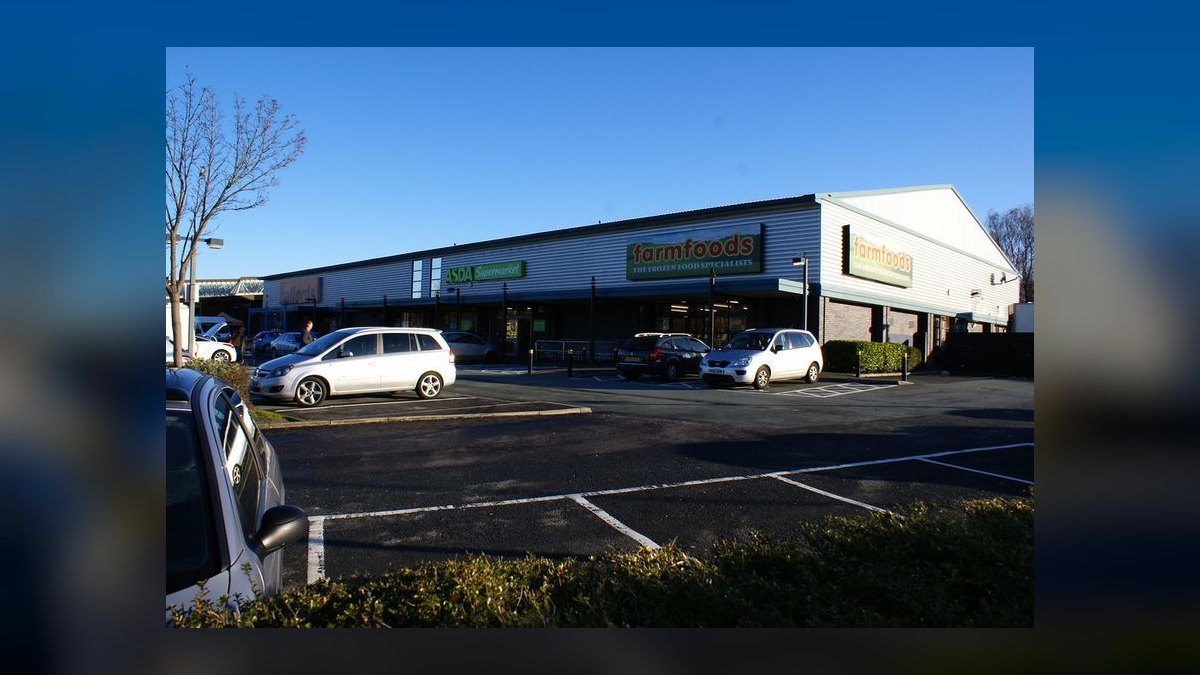
When you sign an inline retail lease, you are not really renting from the landlord — you are renting from the foot traffic the anchor generates. A strong grocery anchor can drive 15,000 to 40,000 weekly visits, and a large share of those shoppers spill into the smaller shops on their way in or out. Off-price boxes like TJ Maxx or Ross pull steady value-shopper trips several times a month. A fading legacy department store, by contrast, may drive almost nothing while still occupying the biggest, most visible box in the center.
That dependency is the whole game. A typical inline shop in a grocery-anchored center pays somewhere between $25 and $60 per square foot, and its entire pro-forma assumes the anchor keeps the parking lot full. If the anchor goes dark and traffic drops 30 to 50 percent, a store that was running a healthy margin can slide into losses within two quarters — and the lease still obligates full rent the entire time. Landlords have walked tenants into exactly this situation and then pointed calmly at the signed document.
It helps to grade anchors into tiers before you commit. Tier-1 anchors — top-quartile grocery, off-price, and warehouse clubs — produce durable, recession-resistant traffic and are genuinely worth signing near. Tier-2 anchors, like a mid-market regional grocer or a mid-box soft-goods retailer, are workable but demand a co-tenancy clause as the price of entry. At-risk anchors — struggling department stores and legacy category killers — should read as a red flag, because store closures cluster heavily in exactly those categories. Ask the landlord directly what the anchor's remaining lease term is and whether any renewal option has actually been exercised. An anchor with 18 months left is a time bomb; you want one with seven to ten-plus years of committed term that overlaps your own.

The co-tenancy clause, line by line
The co-tenancy clause is where the real money and the real protection live, and it has four moving parts that each need to be negotiated separately. Get one wrong and the whole thing can be worked around.
First, the named anchor. Insist on the specific store — "Whole Foods Market" or "Publix," not "a 40,000-square-foot grocer" or "a national retailer." Vague category language exists so the landlord can quietly swap in a dollar store or a mattress outlet later and claim the requirement is still satisfied. The name pins the value you are actually paying for.

Second, the occupancy floor. Tie your relief to the center staying at least 80 percent occupied AND the named anchor being open — both conditions, joined by "and," never "or." A landlord who can satisfy the clause with either condition will always keep whichever one is cheaper for them and leave you exposed on the other.
Third, the reduced-rent trigger. Standard tenant-favorable relief is "alternative rent" set at the lesser of 50 percent of fixed minimum rent or roughly 3 percent of gross sales. Some tenant-rep brokers push harder for percentage-only rent during a dark period, so you pay only against actual sales while the center is impaired. Either way, the reduction should be automatic on the triggering event — not something you have to sue to obtain.
Fourth, and most important, the termination right. If the cure period — commonly 9 to 12 months — lapses without a qualifying replacement anchor, you should be able to walk with no penalty. Discounted rent alone is a trap: a half-dead center at half rent still kills a small retailer, because the problem is missing customers, not just expensive rent. Get the right to terminate, not merely the right to pay less.
The numbers that tell you to walk
Before you sign anything, run a short battery of checks that will usually tell you the truth faster than any leasing brochure. Start with the sales-per-square-foot of the existing inline tenants. A healthy grocery-anchored strip runs its inline shops at roughly $300 to $500 per square foot; anything drifting below $200 signals a center that is already struggling to convert its traffic into sales. Ask the broker for this figure, and treat evasiveness as an answer in itself.
Next, line up the anchor's lease expiration against your own proposed term. Your lease should never outlast the anchor's committed term. If you are being offered a 10-year deal and the anchor has only five years left with no exercised renewal, you are almost guaranteed to lose your protection in the back half of your term — precisely when you have the most sunk cost and the least flexibility to move.

Then read the vacancy trend, not just the snapshot. One empty bay in a strip is normal churn. But three or four dark bays in a 15-unit center means the place is unwinding, and each new vacancy makes the next one more likely as the remaining tenants feel the drop. As a rough industry rule, sustained vacancy above 12 to 15 percent in a neighborhood center is a warning sign rather than a blip.
Finally, hunt for recapture and relocation clauses buried in the draft. If the landlord retains the right to force you to relocate within the center, your storefront visibility — and therefore your sales — sit entirely at their discretion. A prime end-cap can become a dead corner next to the loading dock, legally, with a signed lease you agreed to. Flag any relocation right and either strike it or cap it tightly with landlord-paid moving costs and a comparable-visibility guarantee.
How landlords try to screw you here
Most of the damage happens quietly, in the redline, through language that looks reasonable until the anchor actually leaves. Learn the four most common maneuvers.
The first is replacing the named anchor with a weaker one and declaring co-tenancy "satisfied." A grocery becomes a discount closeout store; the clause technically holds, your traffic collapses anyway. The fix is to require any replacement to occupy the same category and size class and to be open and operating — grocery-for-grocery, box-for-box.
The second is a sales-kicker percentage rent stacked on top of full minimum rent. In a bad year you can end up owing percentage rent above a breakpoint even while traffic is falling apart. Always negotiate the natural breakpoint — minimum rent divided by the percentage rate — and refuse any artificially low breakpoint that makes you cross into overage rent before you are genuinely thriving.

The third is an asymmetric continuous-operation, or "going-dark," clause: you are contractually required to stay open and operating, while the anchor retains the freedom to go dark whenever it likes. That imbalance is the tell that the lease was drafted purely for the landlord. Demand reciprocal go-dark rights, or strip the continuous-operation obligation from your side entirely.
The fourth is uncapped CAM. When a center loses its anchor, common-area maintenance charges often spike, because the same fixed costs now spread across fewer paying tenants — you inherit part of the departed anchor's share. Cap controllable CAM growth at 3 to 5 percent per year, and exclude capital expenditures and roof or structural work from the pass-through altogether.
Lease-language traps that quietly gut your protection
A co-tenancy clause is only as strong as the exceptions the landlord carves into it, and there are three exceptions that regularly hollow one out. The first is the going-dark loophole in the definition of "open." If "open for business" is written loosely enough, an anchor can keep a single register running with two employees while 90 percent of the store sits dark, and still satisfy the requirement. Insist the anchor be "fully operating with normal inventory, staffing, and hours" — typically defined as maintaining at least 75 to 80 percent of its historical sales-floor square footage and operating at least 40 hours per week including weekends.

The second is the substitution clause. Many leases let the landlord swap in a different tenant to satisfy co-tenancy, but the substitute might draw zero of the traffic you need. Push for language limiting substitutes to nationally or regionally recognized retailers in the same general category, and require the substitute to generate comparable sales per square foot — usually within about 20 percent of the original anchor's historical performance. Without those guardrails, the substitution clause is a permission slip for the landlord to install any warm body and call it a day.
The third is material-breach language that forces you to prove the anchor is in default of its own lease before your protection kicks in — a determination that can take 6 to 18 months of litigation while you bleed rent the whole time. You want the clause triggered by "ceasing operations" or "going dark" as a plain factual event, not a legal conclusion. A clean version reads roughly: if the anchor ceases operations for more than 30 consecutive days, regardless of whether that cessation constitutes a default under its own lease, co-tenancy protections apply immediately.

Financial modeling that reveals the true risk
Landlords will hand you a pro-forma with cheerful traffic projections. Run your own three-scenario model instead, using your real rent and your own projected sales, and bring your accountant into it before you sign.
Scenario A is the anchor closing outright. Assume foot traffic drops around 40 percent, assume your sales fall roughly in proportion, and hold your rent flat, because the lease will. Then count how many months you can survive before you are burning cash. For a typical inline tenant paying $30 to $50 per square foot, a 40 percent traffic drop can flip a 10 percent profit margin into a 5 to 8 percent loss within three months — the math moves fast once the customers are gone.
Scenario B is the anchor downsizing rather than leaving. Big-box retailers increasingly shrink their footprints — from, say, 100,000 square feet down to 60,000. Your clause should therefore specify a minimum square footage the anchor must maintain, not merely that it is "open." A 40 percent cut to the anchor's box might cost you 20 to 25 percent of your traffic — enough to push a marginal store underwater — so reserve a termination right if the anchor's footprint falls below roughly 70 percent of its original size.
Scenario C is broad occupancy decline even while your anchor stays put. If three other inline tenants leave, the center can feel half-empty and shoppers stop lingering. Your clause should trigger when overall occupancy falls below 70 to 75 percent, not only when the anchor departs. Reject any "rolling" threshold that resets annually in the landlord's favor; hold out for a fixed percentage that stays constant for your entire term.
The synthesis of all three is a break-even test. Model your break-even rent in the anchor-closed scenario, and if it comes out higher than about 60 to 70 percent of your full rent, your protections are too weak or your rent is simply too high. In that case you are gambling the whole business on the anchor staying healthy — which is exactly the bet a co-tenancy clause exists to let you avoid.
The due diligence that predicts anchor stability
The best predictor of a bad anchor situation is available before you ever sign, if you are willing to do the work. Spend $500 to $1,500 on a credit report for the anchor tenant — not just the landlord — and study the anchor's parent-company debt load, its same-store sales trend over the past three years, and any recent store-closure announcements. A retailer carrying heavy leverage or posting same-store sales declines above roughly 3 percent a year is materially more likely to go dark. Public anchors file 10-Ks and 10-Qs you can pull straight from SEC.gov; for a private anchor, ask the landlord to provide financial statements under a nondisclosure agreement, and treat a flat refusal as data.
Cross-check the anchor's own lease term against yours. If the anchor has five years left and you are signing for ten, you are structurally set up to lose your protection in the second half of your term. Aim for an anchor whose committed lease extends at least three to five years beyond your own, or negotiate a termination right that activates if the anchor's lease expires without a renewal.
Then get out of the conference room. Visit the center on a Tuesday at 2 p.m. and again on a Saturday at noon, count the cars in the lot, and note which stores are actually busy. Trust the count over the brochure every time. Most valuable of all, talk to three existing tenants and ask them plainly: has the anchor ever gone dark, and how did the landlord handle it? Neighboring tenants will tell you the truth about the landlord's responsiveness and whether the co-tenancy language works in practice — one honest conversation over the counter is often worth more than a dozen legal reviews of the draft.
Related questions
How much traffic does a strong anchor actually pull?
A top-tier grocery anchor commonly generates 15,000 to 40,000 weekly visits, and a meaningful share of those shoppers cross-shop nearby inline stores. Off-price and warehouse anchors drive frequent, recession-resistant trips. Legacy department stores often generate far less, which is why their category dominates closure lists.
What is the difference between opening and ongoing co-tenancy?
Opening co-tenancy requires the named anchor to be open and operating on your delivery or rent-commencement date, so you never open into a dead center. Ongoing co-tenancy requires it to stay open throughout your term. You want both written in — one protects the start, the other protects the rest.
Does a co-tenancy clause help if the center has multiple anchors?
Yes, but you must specify which anchors matter — usually the largest traffic drivers. A clause that only triggers when every anchor leaves is nearly worthless. Negotiate protection that activates if any key anchor goes dark, and consider tying relief to the combined occupancy of the anchor set.
Can I trust a landlord's promise that a new anchor is coming?
No. Never accept verbal assurances or leasing-brochure hype. If a "major tenant is coming," make a signed lease from that tenant a written condition of your own deal. Otherwise you are betting your business on hope rather than an enforceable commitment, and hope is not a lease term.
Should I hire a tenant-rep broker for a small inline lease?
Usually yes. Tenant-rep brokers are typically paid out of the landlord's commission split, so they often cost you nothing directly, and they know which co-tenancy, exclusive-use, and CAM traps to strike. On a lease where one clause can decide whether the business survives, that expertise pays for itself.
FAQ
What is a co-tenancy clause and why is it essential? A co-tenancy clause protects you if the anchor closes or the center falls below a set occupancy level. It typically triggers a rent reduction — often to roughly 50 percent of minimum rent or a percentage-only basis — until the anchor is replaced or occupancy recovers. Without it, you can be locked into full rent in a dying center with no exit.
How do I negotiate a strong co-tenancy clause? Push for a 75 to 80 percent occupancy threshold and a clear definition of the anchor by name and size. Include a going-dark trigger for closure or major hour reductions, insist on automatic rent relief without litigation, and secure a right to terminate if the anchor isn't replaced within 9 to 12 months.
What should I check about the anchor's financial health? Request recent financial statements or a credit report, and watch for declining same-store sales, heavy parent-company debt, or store closures in other markets. Review the anchor's own lease term as well — a short remaining term or early exit option weakens your protection regardless of how well the clause is drafted.
What if the landlord replaces my anchor with a weaker store? Require any replacement to match the original's category and size class, to be open and operating, and to produce comparable sales per square foot — commonly within 20 percent of the original anchor's historical performance. Without those limits, a grocery can be swapped for a dollar store and your protection evaporates while technically remaining "satisfied."
How do I verify the center's actual occupancy and tenant mix? Request a current rent roll and occupancy report, then cross-check against local property records or an independent broker. Visit at different times to observe real foot traffic and vacant bays. Don't rely on marketing materials — occupancy can shift quickly, and dated brochures routinely overstate how full and healthy a center really is.
What rent relief should the clause actually provide? Standard tenant-favorable relief is alternative rent at the lesser of 50 percent of fixed minimum rent or about 3 percent of gross sales, applied automatically on the trigger. Just as important is the termination right after the cure window — discounted rent in a half-empty center still fails, because the missing ingredient is customers, not cheaper rent.
Sources
- https://www.cbre.com/insights
- https://www.us.jll.com/en/trends-and-insights
- https://www.cushmanwakefield.com/en/united-states/insights
- https://www.icsc.com/
- https://www.naiop.org/
- https://www.boma.org/
- https://www.sec.gov/edgar/searchedgar/companysearch
- https://www.nolo.com/legal-encyclopedia/commercial-leases
Related on PULSE
- [How Do I Use Anchor-Tenant Leverage to Get a Better Lease?](/knowledge/bo0231)
- [How Do I Get a Commercial Lease With Bad or Thin Credit?](/knowledge/bo0120)
- [What Are the Good and Bad Clauses in a Commercial Lease?](/knowledge/bo0003)
- [How Do I Negotiate a Pop-Up or Short-Term Retail Lease?](/knowledge/bo0118)
- [How Do I Negotiate a Retail Lease: Mall vs Strip Center?](/knowledge/bo0089)
- [What Is Percentage Rent in a Retail Lease and How Do I Negotiate It Down?](/knowledge/bo0041)
This page will be disappearing soon. Save it to your device for $1 — or read it free while it is here.
@Kory-White- · if Venmo asks, the last 4 of my number are 2012
 buildoutsWhat Insurance Does My Lease Require and How Do I Not Overpay?
 pulse-recentHow do I negotiate a landlord-funded buildout budget when the allowance is fixed in 2027?
 pulse-recentWhat percentage of my total buildout budget should I hold in reserve in case the landlord's TI funding falls short in 2027?
 pulse-recentHow much does a 10,000 SF medical office buildout cost per square foot in 2027?
 pulse-recentHow much does a landlord typically mark up rent per square foot to fully fund a turnkey buildout instead of giving me a TI allowance in 2027?
 pulse-recentHow much should I ask for in a landlord buildout allowance in 2027?
 buildoutsWhat Hidden Fees Show Up in Commercial Leases?
 pulse-recentHow much should I set aside for a landlord-funded buildout contingency in 2027?
 pulse-recentHow much cash do I need on hand while I wait for the landlord's TI fund to reimburse my buildout costs in 2027?
 pulse-recentWhat interest rate should I expect if the landlord amortizes my TI allowance into rent instead of paying it upfront in 2027?