
How Do I Get the Landlord to Pay for the HVAC or Roof?
 Curated byKory White · Fractional CRO · Maryland
 PULSEKNOWLEDGE LIBRARY
HVAC and roof are capital items, not operating expenses. Keep them the landlord's job by writing a capital-expense carve-out: you cover routine maintenance and minor repairs up to a per-occurrence cap, while the landlord owns any replacement of roof, structure, foundation, and HVAC — never amortized into your rent or CAM.
Capital versus operating — the distinction that saves six figures
Every dollar of building cost falls into one of two buckets, and which bucket a given expense lands in decides whether a rooftop failure is a nuisance or a budget-ending event. An operating expense is a recurring cost to *run* the building — routine maintenance, filter changes, coil cleaning, minor repairs, janitorial. Those legitimately flow through to tenants under a triple-net (NNN) lease, and paying your share of them is normal and fair. A capital expense is a cost to *replace* or substantially extend the life of a major system — a new roof membrane, a new packaged rooftop HVAC unit, structural or foundation work, a repaved parking lot. Those belong to the owner, because the owner keeps the improved asset for the fifteen-to-thirty-year life of the system, long after your lease ends.
The economics are lopsided enough to justify fighting over the language. Replacing a single rooftop HVAC unit typically runs $15,000–$50,000 installed depending on tonnage and efficiency. A full commercial roof replacement runs roughly $5–$15 per square foot, so a 40,000-square-foot building is a $200,000–$600,000 capital event. If a lease quietly reclassifies those as "repair and maintenance" you are supposed to share, a single bad summer can wipe out a year of profit.

The landlord's favorite move is blurring the line so a $40,000 unit swap gets billed to you as a "repair." Your lease must define the boundary in plain words and assign capital items to the owner. The cleanest construction: the tenant is responsible for "ordinary maintenance and repair of building systems serving the premises," and the landlord is responsible for "all replacements and capital expenditures, including the roof, structure, foundation, and HVAC system replacement, at Landlord's sole cost." Specificity beats adjectives — vague terms like "structural" or "major" invite the exact argument you are trying to prevent. Name the four systems that matter, and name the trigger word, *replacement*.
The clauses that put HVAC on the landlord
HVAC is where tenants get nickel-and-dimed first, because units fail one at a time and each failure feels small enough to absorb until the invoice arrives. Build a stack of clauses so no single failure becomes yours by default:
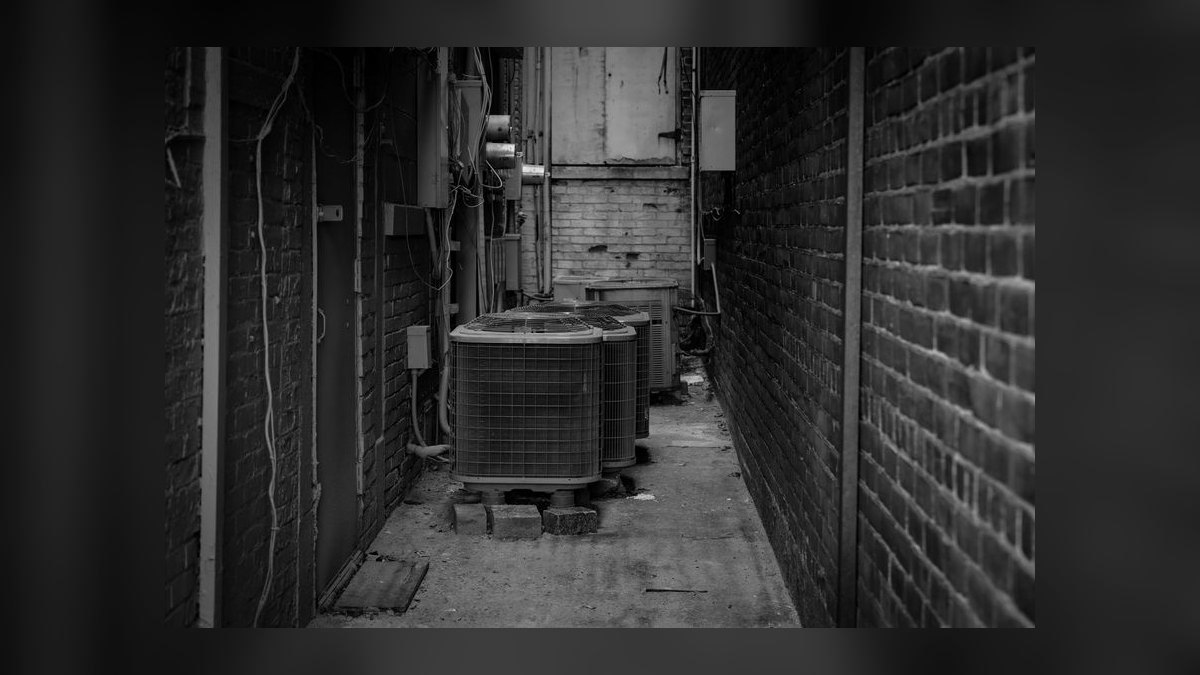
- Good-working-order delivery. Require the landlord to deliver all HVAC, plumbing, and electrical systems in good working condition on the commencement date, verified by an independent mechanical inspection before you accept the space. This resets the clock — you never inherit a unit that was already on its last legs.
- HVAC warranty period. Have the landlord warrant the HVAC for the first 6–12 months of the term, covering any failure not caused by your misuse. This closes the gap between "delivered working" and "fails in month three."
- Repair cap per occurrence and per year. Cap your exposure so a compressor replacement doesn't land entirely on you. Common structures are a $1,000–$2,500 per-occurrence cap with an annual ceiling around $500–$1,500 per ton or per unit; anything above the cap is the landlord's.
- Replacement equals landlord capital. State flatly that any HVAC *replacement* — as distinct from repair — is 100% the landlord's cost and is not amortized back to you.
- Maintenance-contract control. If the landlord requires a preventive service contract (reasonable, and it protects both sides), keep the right to choose a qualified licensed vendor rather than being forced onto an overpriced landlord affiliate.
The decision tree below is the logic your clauses should encode. Every failure gets sorted into repair-or-replace, and repairs get sorted against the cap, so responsibility is never a judgment call in the middle of a July outage.
The reason this matters even on a small package unit is compounding. A landlord who "repairs" a dying 12-SEER unit four times a year at $1,200 a visit is spending $4,800 to keep a $25,000 replacement off their own books — and if your lease lets those repairs pass through, you funded the delay. The per-occurrence and annual caps convert an open-ended liability into a known, budgetable number.

The clauses that put the roof on the landlord
The roof is the single largest capital risk in most commercial buildings, and it is almost always the landlord's responsibility — but only if the lease says so in the CAM exclusions, not just in a general "landlord maintains the structure" throwaway line. Layer these protections:
- Landlord roof warranty. The landlord warrants the roof watertight and structurally sound and covers all roof repairs and replacement during your term. Tie it to a standard: watertight, no active leaks, and structurally sound per an inspection.
- No roof capital in CAM. Explicitly exclude roof *replacement* from common-area-maintenance pass-throughs. Routine roof maintenance — resealing seams, clearing drains, minor patching — can reasonably pass through; a full or partial membrane replacement cannot.
- Pre-lease roof inspection. Commission an independent roof inspection before signing. A roof near end-of-life is a negotiating chip: use it to extract free rent, a lower base rate, or a written replacement commitment, rather than discovering the problem after you're locked in.
- Penetration and warranty protection. If your buildout penetrates the roof — new curbs for HVAC, exhaust vents, roof-mounted signage — use the landlord's approved roofer so the existing manufacturer warranty stays intact. This protects both parties and removes the landlord's excuse to blame your contractor for later leaks.
- Leak-response self-help remedy. Negotiate the right to repair and deduct: if the landlord fails to address a documented roof leak within a defined window (say, 10–15 business days, shorter for emergencies), you may make the repair and offset the cost against rent. Without this, a slow landlord can leave water running over your inventory for weeks.

The self-help remedy is the one landlords resist most and the one you should fight hardest for, because a beautifully drafted responsibility clause is worthless if you have no enforcement mechanism short of a lawsuit. Repair-and-deduct gives the clause teeth without dragging you into court.
The negotiation sequence below is the order to work the redline — start by re-drafting the capital carve-out, then push each protection in turn, because each one leans on the definitions established by the one before it.
When the landlord will only amortize
On multi-tenant NNN properties, especially institutionally owned ones, the landlord may refuse full capital responsibility and insist on amortizing replacements back to tenants. Don't accept that blind — accept it only with guardrails that keep the number honest and proportional:
- Amortize over true useful life. A roof amortizes over its 20–30 year service life, an HVAC unit over its 15–20 year life — not over your lease term. Amortizing a 25-year roof over a 5-year lease means you'd repay roughly five times your fair share; it's one of the oldest tricks in NNN drafting, and the fix is a single sentence tying amortization to the asset's useful life.
- Reasonable interest rate. The amortized balance should carry a reasonable rate tied to the landlord's actual cost of funds, not a marked-up "financing fee" invented to pad the pass-through. Cap it — for example, at the prime rate plus a small margin.
- Pay only while you occupy. Your share covers only the months you are actually in the space. When you vacate, your obligation for the remaining amortization ends, because the asset keeps serving the next tenant.
- Cap the annual capital pass-through. Put a ceiling on how much amortized capital can hit you in any single year, so a cluster of replacements can't blow up one year's budget.
- Energy-efficiency offset. If a new high-efficiency HVAC system materially cuts your utility bills, argue that the operating-expense savings should at least partly offset the amortized capital charge — you shouldn't pay a premium for the upgrade and also pocket none of its benefit.
Together these five points turn "we amortize capital to tenants" from an open checkbook into a bounded, defensible line item. The landlord still recovers a fair portion of a genuine improvement; you stop subsidizing an asset you'll never own.
Timing your leverage: when to negotiate
The window for shifting HVAC and roof responsibility onto the landlord is widest *before* you commit and narrowest *after* you sign. The ideal moment is during lease negotiation or renewal, typically 6–12 months before your current term expires, when the landlord is weighing your renewal against the cost of vacancy. That vacancy math is your best friend: a 40,000-square-foot space sitting empty for three months costs the owner $60,000–$120,000 in lost rent at $15–$30 per square foot NNN — often more than a new HVAC unit ($15,000–$50,000) or a roof patch ($5,000–$20,000). Framed against that loss, a capital commitment looks cheap to a rational owner.

If you're already mid-lease with a bad NNN clause, your leverage shifts to the moment of a major system failure — a dead compressor during a July heat wave, or a roof leak during spring storms. In that moment a landlord facing a tenant who may withhold rent or walk will often agree to split costs (a 50/50 arrangement is common) rather than fight. Document the failure with photographs and a licensed contractor's written report, and present a clear estimate and disruption timeline. Tenants who show up with paper and a plan consistently get better terms than tenants who simply complain by email.
For new leases where the landlord won't accept full responsibility, ask for a capital reserve contribution instead: a one-time credit of $1–$3 per square foot at signing to seed a fund against future replacement. This is common in Class B and C buildings — which make up the majority of commercial inventory — where owners are cash-constrained but eager to fill vacancy. A $2/sq ft credit on a 20,000-square-foot space is $40,000 you can hold against the day the rooftop units fail.
The repair-versus-replace trap and how to close it
Landlords often push these costs onto tenants not out of malice but because deferred maintenance has already drained their reserves. A twenty-year-old rooftop unit that was never serviced fails suddenly, and the replacement budget was long ago spent building out another suite. In multi-tenant buildings, owners may argue the HVAC serves only your space (true for package units) while the roof is a shared asset — but a leak over *your* inventory or equipment is your loss alone.
The real trap is repair-versus-replace ambiguity. A landlord may agree to "repair" a failing roof and then simply patch it again and again — $2,000–$5,000 a patch — rather than replace it for $200,000-plus. After three or four patches you've paid indirectly through CAM for a roof that still fails every storm. Close the loophole with a clause requiring replacement once repair costs exceed 50% of replacement value within any 24-month period. That forces the owner to make an honest economic decision instead of endlessly kicking the can.
When a landlord stalls, ask for a third-party engineering report on remaining useful life. A certified mechanical engineer or roofing consultant — typically a $500–$1,500 engagement — can estimate whether a system has two years left or ten, and that report becomes hard evidence in any dispute or negotiation. Tenants who commission one frequently secure a landlord contribution of 50–75% toward a replacement, because the report removes the "it's fine, we'll just patch it" defense.

Alternative funding when the landlord won't pay
If the landlord genuinely won't budge, you have practical options short of litigation. Contractor financing is the most common: many commercial HVAC installers offer 0% terms for 12–24 months on units above $10,000, so a $25,000 rooftop unit spread over 24 months runs about $1,042 a month — often less than the rent bump a landlord would demand to install one themselves. You then treat the unit as a capital improvement for tax purposes; consult your accountant about Section 179 expensing and bonus depreciation, which can let qualifying property be written off in the year placed in service rather than depreciated over decades.
Utility rebates can offset a real slice of the cost. Many utilities pay incentives — often in the low hundreds of dollars per ton — for high-efficiency replacements, and some fold in roof-insulation upgrades tied to HVAC efficiency. Check your local utility program and the Database of State Incentives for Renewables & Efficiency (DSIRE) for what applies in your area before you buy, because rebates usually require pre-approval.
A renegotiation trade often serves both sides: offer to fund the replacement yourself in exchange for a rent abatement of equal value. Pay $30,000 for a new roof, and the landlord reduces rent by roughly $1,250 a month for 24 months. You preserve cash flow, the owner gets a capital improvement at zero upfront cost, and — critically — you record it as a written lease amendment, never a handshake.
If none of these work, talk to a commercial real estate attorney *before* withholding rent, because in some states that move can trigger eviction proceedings in as little as 5–10 business days. Document everything, and where a failure creates a genuine health or safety issue — no heat in winter, mold from a chronic leak — a complaint to the local building department can force landlord action faster than any lease clause, because code violations carry their own penalties.
Related questions
Who normally pays for HVAC in a triple-net lease?
It depends entirely on drafting. NNN passes routine operating costs to tenants, but capital *replacement* of HVAC should stay with the landlord. If the lease is silent or vague, expect the landlord to argue it's yours — which is why the carve-out language matters.
Can I make the landlord pay after I've already signed?
Rarely, unless the existing lease already assigns capital items to the landlord. Post-signing, your leverage comes from a major failure, a renewal negotiation, or a code violation — not from reinterpreting the lease. The time to win this is before you sign.
What's a fair per-occurrence repair cap for a tenant?
Common ranges are $1,000–$2,500 per occurrence, with an annual ceiling around $500–$1,500 per ton or per unit. Above the cap becomes the landlord's cost. The right number depends on unit age, tonnage, and how the base rent is structured.
How much should I budget if I end up paying myself?
A new commercial rooftop HVAC unit runs roughly $15,000–$50,000 installed per unit; a full commercial roof replacement runs about $5–$15 per square foot. Actual cost depends on location, building size, efficiency, and contractor — treat these as honest planning ranges, not quotes.
What if the landlord only offers to patch the roof repeatedly?
Add a clause forcing replacement once repair costs exceed 50% of replacement value within any 24-month period. That converts endless patching into a required economic decision and stops you funding a dying roof indirectly through CAM.
FAQ
What exactly counts as a capital item like HVAC or roof? Capital items are major building systems with a long useful life — typically 15–20 years for HVAC and 20–30 years for a roof. They differ from routine repairs and maintenance, which are usually the tenant's job. If a system costs thousands to replace and lasts many years, it's a capital item that should belong to the owner.
Can I negotiate for the landlord to cover replacements after I sign? Once the lease is signed it's very hard to shift the cost back unless the lease already assigns it to the landlord. Your real leverage is during negotiation or renewal, before you commit. After signing, the landlord will simply point to the written terms.
What lease language should I look for? You want the lease to state explicitly that the landlord is responsible for all capital repairs and replacements, naming HVAC units and the roof specifically. Avoid vague words like "structural" or "major." Strong language reads: "Landlord shall replace all rooftop HVAC units and the roof membrane at Landlord's sole cost."
Is it common for landlords to cover roof and HVAC replacements? It varies by market and building class. In many standard commercial leases the landlord covers capital items, but in tight markets or for smaller spaces tenants may be asked to share or absorb them. It's a negotiable point, not a fixed rule — always ask and get it in writing.
What if the landlord says "we've never done that before"? That's a negotiation tactic, not a hard limit. Many owners agree when you make it a condition of signing, since replacements benefit the building long after your term. Be ready to trade — a longer lease term or a modest rent concession often unlocks the capital commitment you want.
Should I ever pay for the replacement myself? Sometimes it's the smartest move — if you fund it in exchange for an equal rent abatement, use contractor financing, and capture utility rebates and available tax treatment. Just document it as a written lease amendment, and confirm the tax handling with your accountant before you commit.
Sources
- CBRE — https://www.cbre.com
- JLL — https://www.jll.com
- Cushman & Wakefield — https://www.cushmanwakefield.com
- BOMA International — https://www.boma.org
- IREM (Institute of Real Estate Management) — https://www.irem.org
- DSIRE (Database of State Incentives for Renewables & Efficiency) — https://www.dsireusa.org
- IRS Publication 946, How To Depreciate Property (Section 179) — https://www.irs.gov/publications/p946
- U.S. Small Business Administration — https://www.sba.gov
Related on PULSE
- [Who Pays for HVAC Repair and Replacement in a Commercial Lease?](/knowledge/bo0023)
- [What Is a Tenant Improvement (TI) Allowance and How Do I Get the Landlord to Pay for It?](/knowledge/bo0002)
- [SBA 504 vs Conventional Loan: How Do I Pay Less to Buy My Building?](/knowledge/bo0036)
- [How Do I Get Key Money or a Reverse Premium From a Landlord?](/knowledge/bo0225)
- [How Do I Protect Myself If My Landlord Goes Bankrupt?](/knowledge/bo0232)
- [Institutional vs Mom-and-Pop Landlord: How Do I Negotiate Each?](/knowledge/bo0222)
This page will be disappearing soon. Save it to your device for $1 — or read it free while it is here.
@Kory-White- · if Venmo asks, the last 4 of my number are 2012
 buildoutsWhat Hidden Fees Show Up in Commercial Leases?
 buildoutsDo I Need a Grease Interceptor, and What Does It Cost?
 pulse-recentWhat Percentage of My Total Buildout Budget Will the Landlord Actually Fund Through the TI Allowance in 2027?
 pulse-recentHow much of my own cash should I budget on top of a landlord TI allowance for a typical retail buildout in 2027?
 buildoutsHow Do I Negotiate Exclusive-Use and Co-Tenancy Clauses?
 pulse-recentHow much does a 10,000 SF medical office buildout cost per square foot in 2027?
 pulse-recentHow do I sequence the concrete steps of a buildout to avoid out-of-pocket costs in 2027?
 buildoutsMy Use Clause Is Too Narrow — How Do I Broaden It?
 pulse-recentHow do I budget for a landlord-funded buildout without hidden out-of-pocket costs in 2027?
 buildoutsWhat Insurance Does My Lease Require and How Do I Not Overpay?