
How Do I Budget a Yoga or Pilates Studio Buildout?
 Curated byKory White · Fractional CRO · Maryland
 PULSEKNOWLEDGE LIBRARY
Budgeting a yoga or Pilates studio buildout requires careful planning, with costs typically ranging from $50,000 to $200,000 for a 1,500–2,500 sq ft space. The largest expense is often the HVAC system, especially if you plan to offer hot yoga. Flooring, mirrors, and acoustics are other significant cost drivers. A phased approach — building out one studio first and deferring extras — can help keep initial costs manageable.
What Actually Drives the Number
A yoga or Pilates studio is one of the cheaper fitness buildouts because you aren't installing heavy weight equipment or reinforced platforms. However, costs can escalate quickly if you don't plan for the three main drivers: flooring, HVAC, and lease terms. Most studios land between $50,000 and $200,000 all-in, depending on whether you're opening a simple mat studio or a fully-equipped hot yoga or reformer space.
The sprung or cushioned floor runs $4–$20 per square foot. A floating cushioned floor works for low-impact mat yoga, while a true sprung subfloor with vapor barrier is worth it for hot yoga. On 1,800 sq ft, that's roughly $7,000–$36,000. HVAC and humidity control range from $8,000 for a temperate flow room to $45,000 for a heated hot-yoga system — the single biggest swing. Mirrors cost $7–$15 per square foot installed; a 30-foot wall runs $2,500–$6,000. Acoustic work — absorption panels, multi-zone audio, floor isolation — adds $5,000–$20,000. Then add reception, storage, restrooms, permits, and a 12–15% contingency.
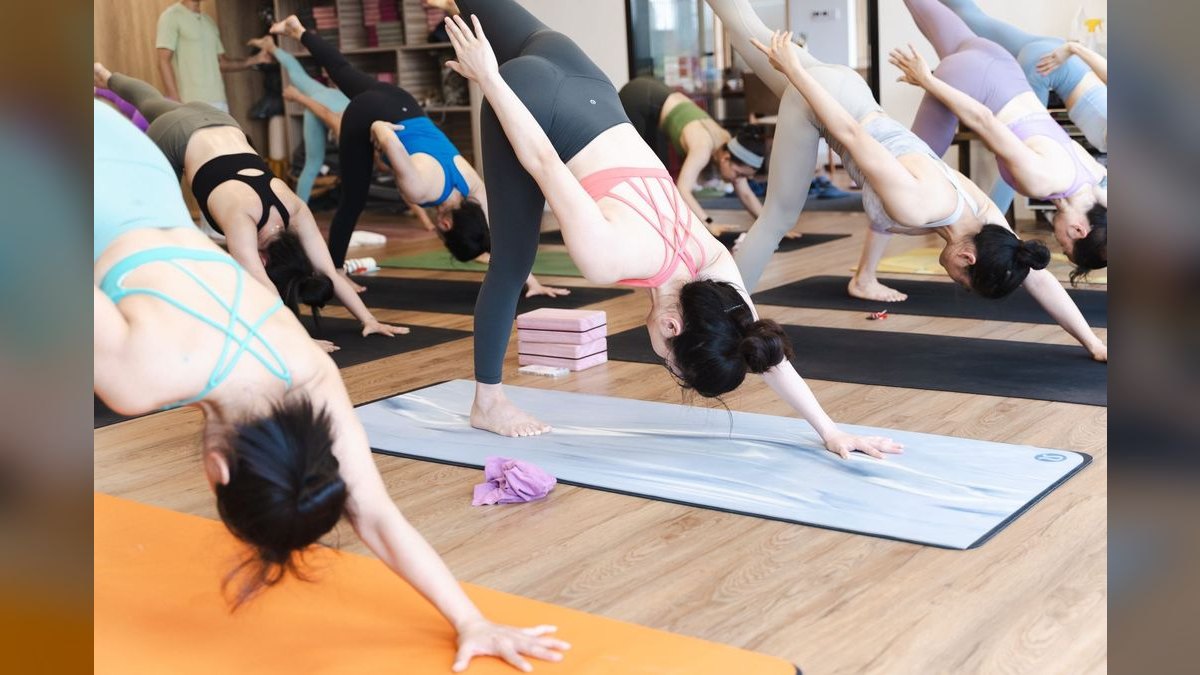
Floors, Mirrors, and Sound — Where the Money Earns Its Keep
Members judge a studio with their feet, eyes, and ears. A weak floor, warped mirror, or echoing room shows up in online reviews quickly and caps retention.
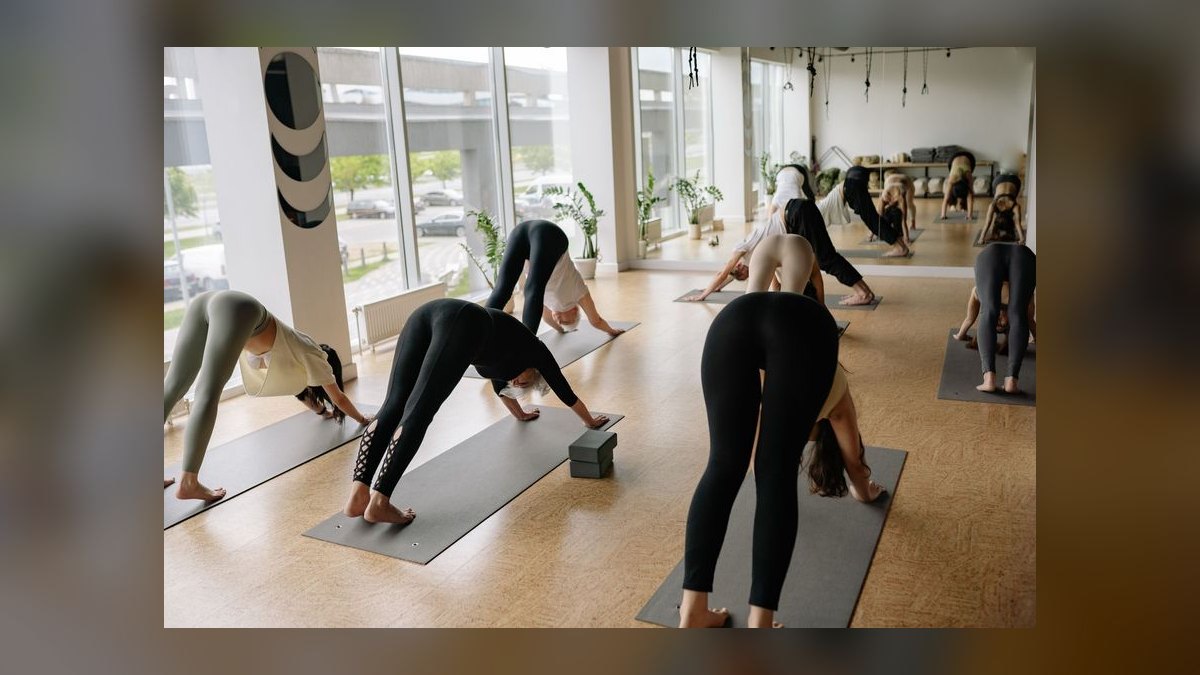
The floor comes first. A hard concrete slab under a thin mat wrecks joints. A floating cushioned floor at $4–$8/sq ft is the value sweet spot; step up to $8–$20/sq ft for hot yoga with moisture protection. Cutting the vapor barrier to save $2/sq ft can cost $20,000 in a tear-out later. Cork, bamboo, and luxury vinyl plank are good barefoot choices; avoid thin laminate or carpet.
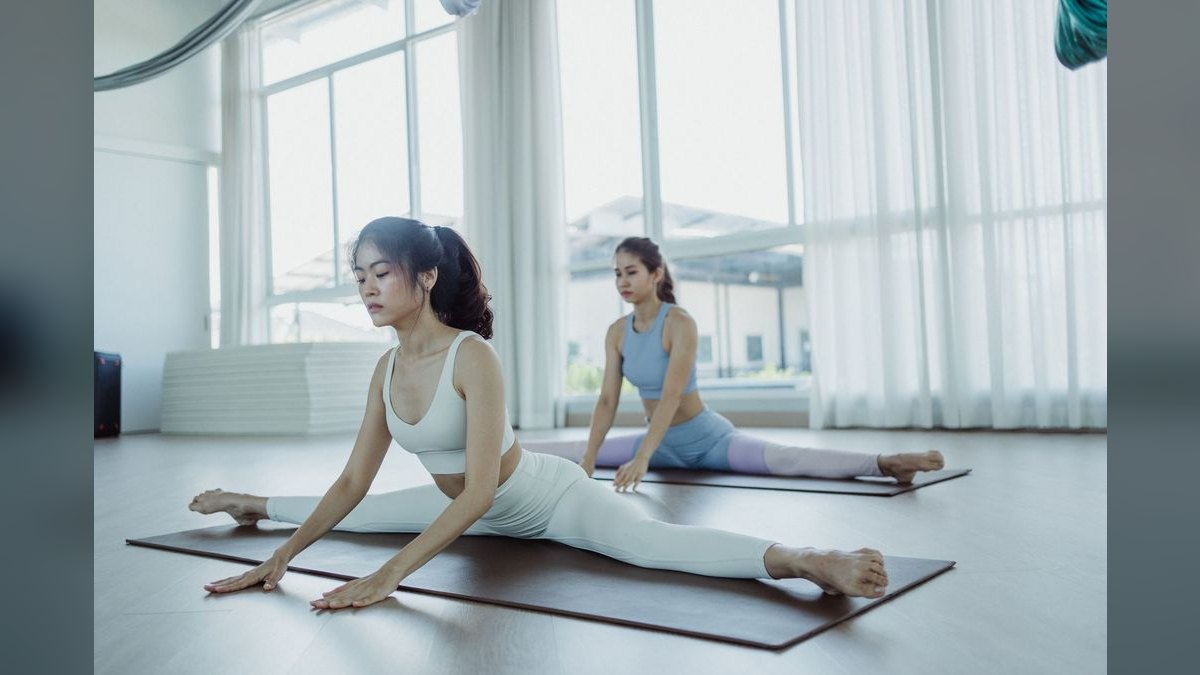
Mirrors should be proper safety-backed glass, gap-free and floor-anchored. Cheap film mirrors warp and distort alignment. A clean 30-foot wall runs $2,500–$6,000 installed. Pilates studios can spend less since reformer work is less mirror-dependent.
Sound is the third leg. Add absorption panels ($1,500–$6,000) so the room isn't an echo chamber during savasana. Pair with a multi-zone audio system ($3,000–$8,000) and isolate the floor so bass doesn't travel to neighbors. Bass transmission through a shared floor is the most common trigger for noise complaints in multi-tenant buildings.
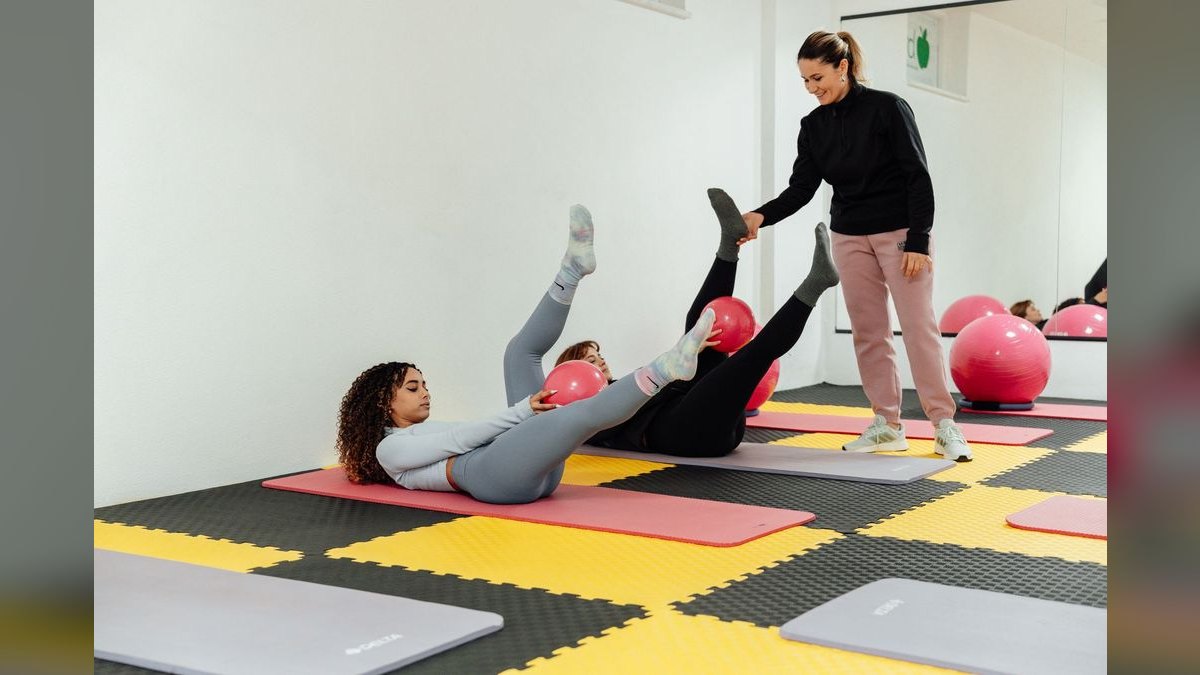
HVAC and the Hot Yoga Premium
Climate control is where a yoga budget quietly doubles. A temperate flow studio needs solid fresh-air exchange and enough cooling for 25 breathing bodies — a few thousand dollars of tuning usually suffices. Hot yoga is different: holding 95–105°F with heavy sweating requires both supplemental heat and aggressive humidity management.
Undersized HVAC is the number-one reason hot studios fail. Without real dehumidification, you get mold, corroded fixtures, foggy mirrors, and swampy air. A properly specified commercial system runs $15,000–$45,000 installed. Standard residential equipment cannot cycle that load and will burn out in a season or two.
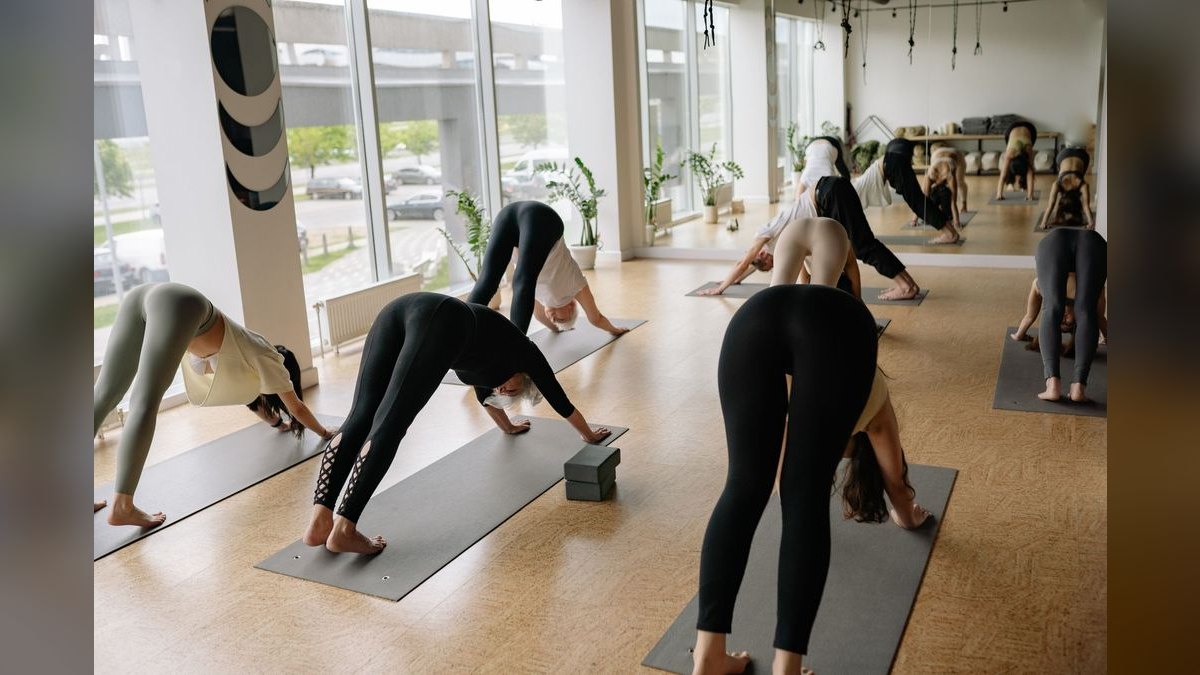
Before signing a lease, confirm the building's electrical and gas capacity can support heated air. Order equipment early — HVAC commonly has 4–8 week lead times. If hot yoga is central to your concept, treat HVAC as the anchor of the budget and size it for peak class occupancy plus margin.
Negotiating the Lease So You Don't Get Burned
A studio runs early-morning and late-night classes with music and movement. Lease terms around noise, hours, HVAC, and restoration decide whether you actually make money.
Push for a tenant improvement (TI) allowance. On a five-year lease, ask for $20–$50 per square foot — on 2,000 sq ft that's $40,000–$100,000 of buildout the landlord funds. Make HVAC the landlord's problem in writing — require them to deliver a system capable of your target temperature and humidity. Lock in operating hours and a noise clause permitting 5 AM to 10 PM classes with amplified music. Without it, one neighbor complaint can shut down your most profitable time slots.
Strip or cap the restoration clause so you aren't forced to rip out your floor and mirrors at move-out. Negotiate to leave them for the next fitness tenant. Verify the load factor — landlords quote rentable square footage padded with 12–18% common-area load. Get parking written into the lease — a studio with 30 cars arriving at once and six spaces is a slow death by one-star reviews. Finally, negotiate two to four months of free rent to cover buildout and ramp period.

The Hidden Costs That Blow Up the Estimate
Three cost categories routinely appear nowhere on the first buildout quote yet reliably add tens of thousands of dollars.
Acoustics and vibration control. A multi-tenant space usually needs $6,000–$12,000 of acoustic work: mass-loaded vinyl under the floor ($1.50–$3/sq ft), wall panels ($800–$2,500), duct wrapping ($400–$1,200). A drop-ceiling grid with acoustic tiles ($1,200–$3,000) can cut noise transmission by 40–60%.
Invisible infrastructure — plumbing, electrical, floor prep. Rough-in work commonly hides $8,000–$18,000. A 20–30 student studio needs two dedicated 20-amp circuits ($1,500–$3,500). A new bathroom drives plumbing rough-ins of $3,000–$7,000. Floor leveling on an uneven slab runs $1,200–$3,800.
Permits, fire, egress, and accessibility. Municipalities treat studios as assembly occupancies, triggering stricter codes. Budget $2,000–$5,000 for permits, plus $1,500–$4,000 for a fire-alarm upgrade. Rooms holding more than 50 people require two means of egress — adding a second fire-rated door costs $2,500–$6,000. ADA compliance is non-negotiable: $800–$2,200 for an accessible entrance ramp and $400–$1,200 for restroom grab bars.
A Phased Plan to Open Lean
The fastest path to a survivable opening is to fund the revenue room first. Build one well-finished practice studio — great floor, mirrors, sound, right HVAC — plus simple reception and code-compliant restrooms. Defer the second studio, retail wall, showers, and premium millwork until memberships prove out. This keeps opening capital near $70,000–$100,000 instead of $200,000.
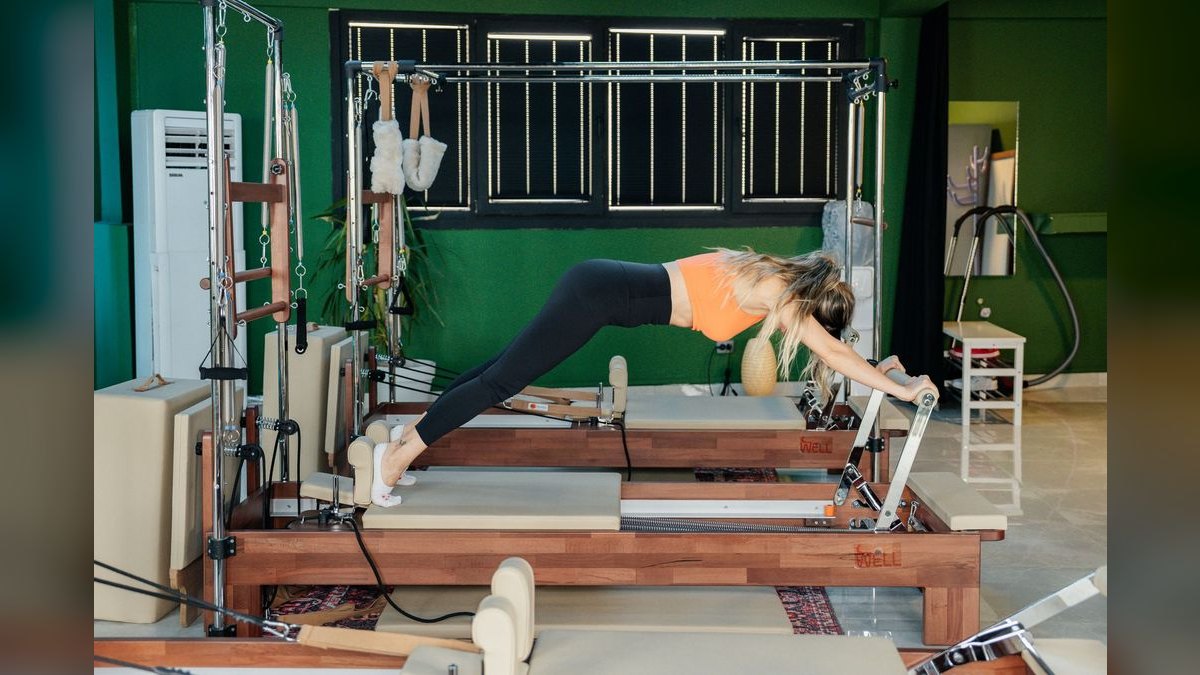
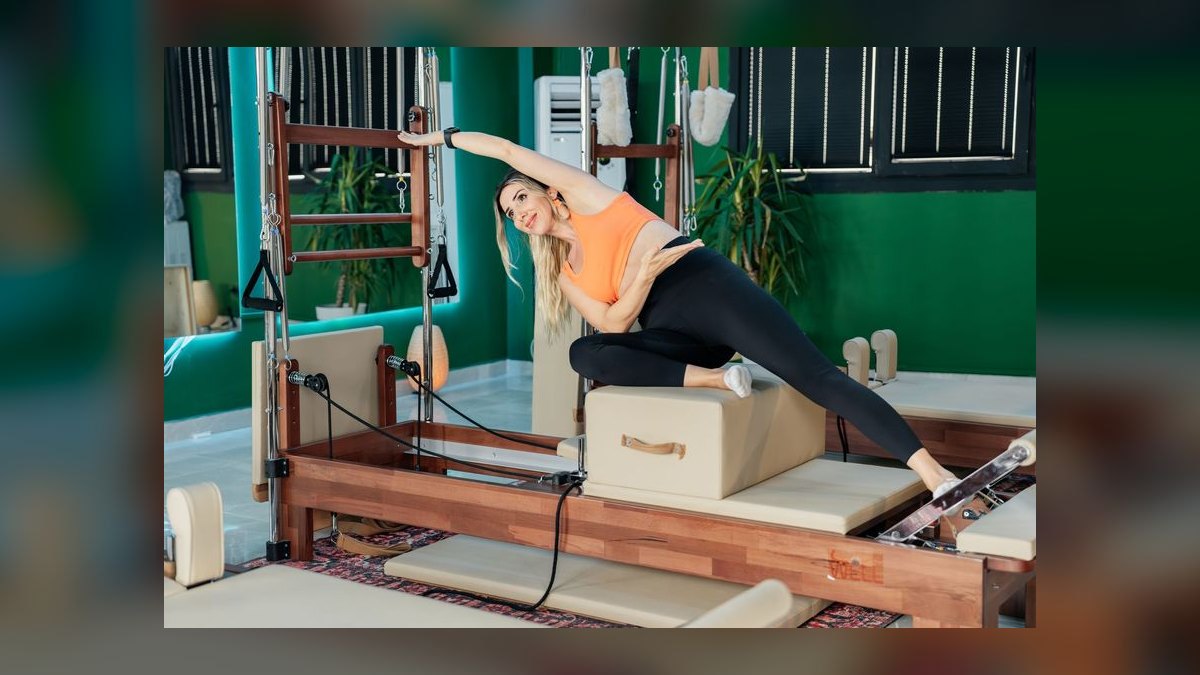
Buy reformers and props as enrollment grows rather than fully kitting out on day one. Reformers run $2,000–$5,000 each and can scale with demand. Order flooring and HVAC equipment early — both carry 4–8 week lead times. The single biggest way to save is to lease a former gym, dance, or fitness space that already has the floor, mirrors, and adequate HVAC — that alone can cut $25,000–$60,000 off your number. Hold a 12–15% contingency for the inevitable surprise behind a wall.
FAQ
What is the typical total cost to build out a yoga or Pilates studio? In a second-generation space, you might spend $30–$60 per square foot. A more elaborate buildout with high-end finishes and upgraded HVAC can run $80–$120 per square foot. Most small studios of 1,000–2,500 sq ft land between $50,000 and $200,000 all-in.
How much should I allocate for flooring? Expect $5–$12 per square foot for quality cork, bamboo, or luxury vinyl plank, and $8–$20 per square foot for a true sprung subfloor with vapor barrier if you run hot yoga. Avoid cheap carpet or thin laminate — it fails within 12–18 months.
Do I need special HVAC for a hot yoga or heated studio? Yes. Standard residential systems cannot handle sustained heat and humidity. A commercial-grade system designed to hold 95–105°F with proper dehumidification runs $15,000–$45,000 installed depending on room size and climate.
What about sound systems and acoustics? A decent multi-zone sound system with speakers in each room typically costs $3,000–$8,000 installed. Acoustic treatment adds another $2,000–$12,000 depending on your building. Cutting corners invites noise complaints from neighbors.
What are the biggest hidden costs? Permits and engineering fees — budget $3,000–$10,000 depending on your city. Also plan for $2,000–$5,000 in signage, $1,500–$4,000 for reception and shelving, $1,000–$3,000 for mirrors, and $1,200–$3,800 for floor leveling on an uneven slab. Fire, egress, and ADA upgrades add more.
How much tenant improvement allowance can I expect? In most markets, landlords offer $20–$50 per square foot on a five-to-ten-year lease, though this varies widely by location and building class. If your buildout exceeds the allowance, you cover the difference out of pocket or negotiate a higher rent to offset it.
Sources
- https://www.sba.gov/business-guide/plan-your-business/market-research-competitive-analysis
- https://www.entrepreneur.com/franchises/yoga-and-pilates-studio-costs
- https://www.mindbodyonline.com/business/education/blog/yoga-studio-startup-costs
- https://www.cbinsights.com/research/report/fitness-industry-trends/
- https://www.ihrsa.org/improve-your-club/studio-design-and-layout/
- https://www.us.jll.com/en/trends-and-insights/workplace/tenant-improvement-allowances
- https://www.cushmanwakefield.com/en/united-states/insights/lease-negotiation-guide
Related on PULSE
- [How Do I Budget a Dance Studio Buildout?](/knowledge/bo0179)
- [How Do I Budget a Recording or Photography Studio Buildout?](/knowledge/bo0153)
- [How Do I Budget a Gym or Fitness Studio Buildout?](/knowledge/bo0111)
- [How Do I Negotiate a Lease and Buildout for a Tattoo Studio?](/knowledge/bo0139)
- [How Do I Budget a Funeral Home Buildout?](/knowledge/bo0220)
- [How Do I Budget an Ambulatory Surgery Center Buildout?](/knowledge/bo0219)
This page will be disappearing soon. Save it to your device for $1 — or read it free while it is here.
@Kory-White- · if Venmo asks, the last 4 of my number are 2012
 buildoutsHow Do I Budget a Florist Shop With a Walk-In Cooler Buildout?
 buildoutsWhat Is a Go-Dark Clause and Should I Fight for One?
 buildoutsHow Do I Budget an Orthodontics or Oral-Surgery Office Buildout?
 buildoutsHow Do I Budget a Comic, Game, or Hobby Store Buildout?
 buildoutsHow Do I Budget an Escape Room Buildout?
 buildoutsHow Do I Budget a Makerspace or Woodworking Shop Buildout?
 buildoutsHow Do I Budget a Gym or Fitness Studio Buildout?
 buildoutsHow Do I Negotiate a Lease and Buildout for Doggy Daycare or Boarding?
 buildoutsHow Do I Budget a Family Entertainment Center or Mini-Golf Buildout?
 buildoutsHow Do I Budget a Veterinary Clinic Buildout?