


How do I get a performance bond from the landlord’s contractor for my buildout in 2027
Quality
Certified

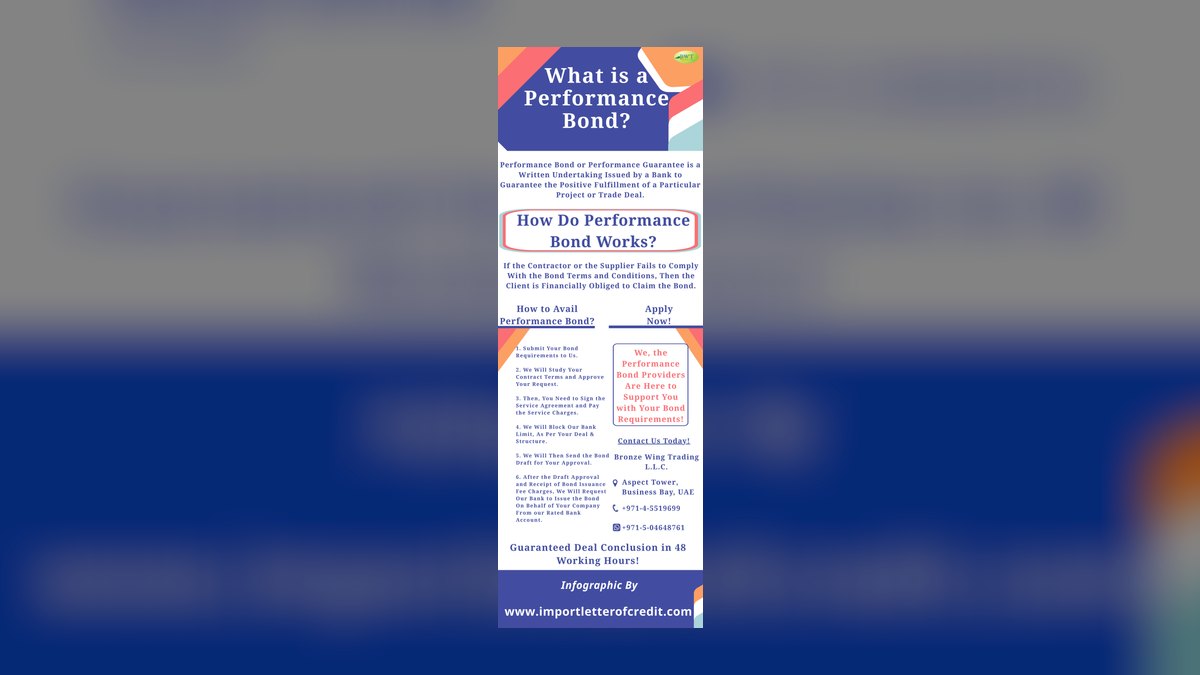
You don't buy a performance bond directly—you require it in your lease or work letter as a condition of the landlord's tenant-improvement funds. The landlord's contractor then purchases it from a surety, naming you as co-obligee. The surety guarantees completion, or pays up to the full contract value, if the contractor defaults.
Why a tenant wants a performance bond in the first place
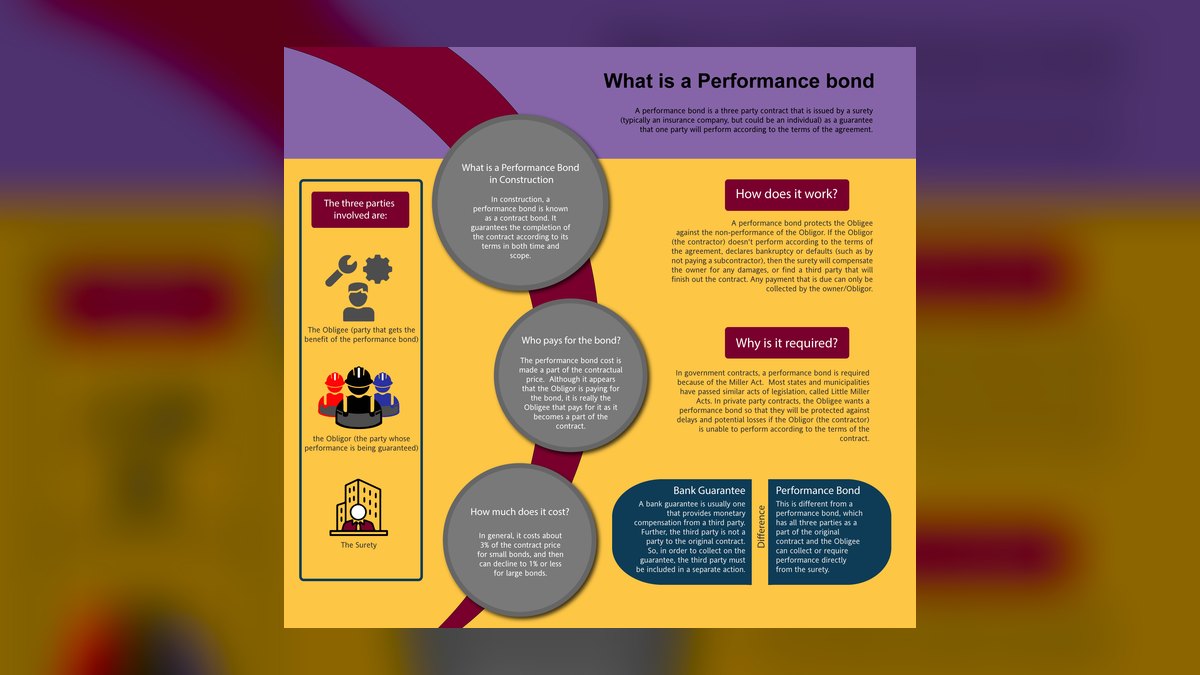
A performance bond is a three-party guarantee. The surety (usually a large insurer) promises the obligee (the party protected) that the principal (the contractor) will finish the work per the contract—or the surety steps in to complete it or pay damages up to the bond's penal sum, typically 100% of the contract price. When the landlord's general contractor is building out *your* leased space, three failure modes can wreck your timeline and your budget, and each maps to a specific protection the bond provides.
First, contractor default. Construction firms fail more often than tenants expect; a subcontractor-heavy GC operating on thin margins can go insolvent mid-project. If that happens without a bond, you inherit a half-built space, no leverage, and a landlord who may point the finger back at you for occupancy delays. With a performance bond, the surety hires a replacement contractor to finish at no additional cost to the obligee.

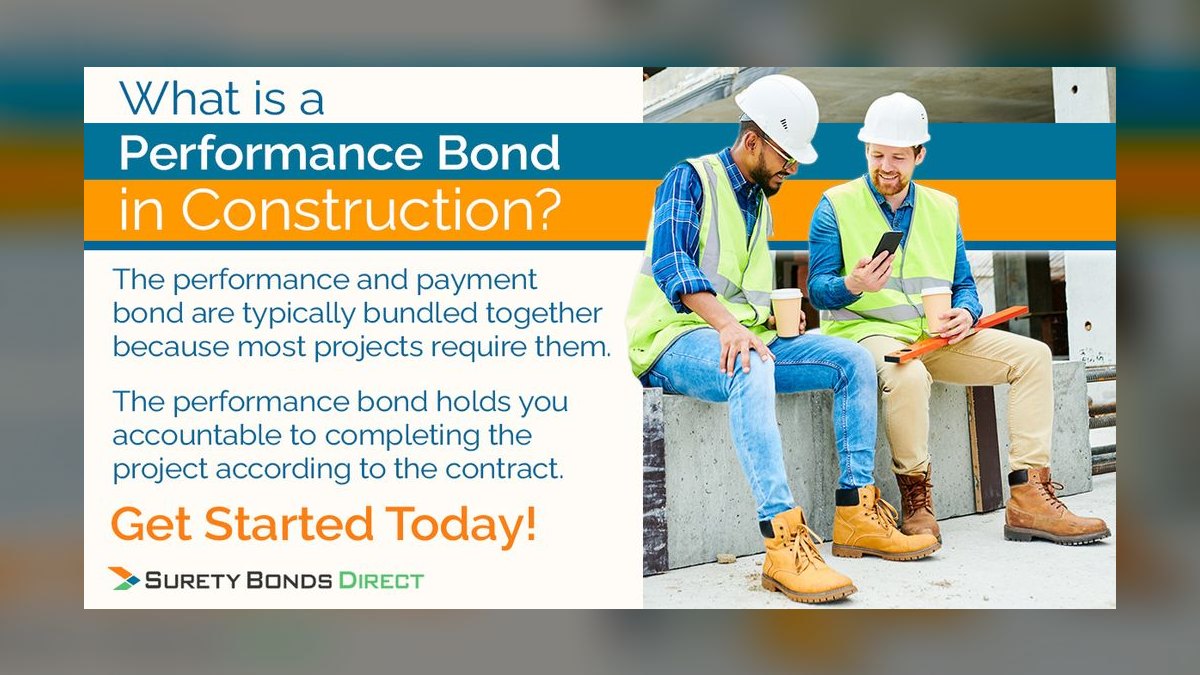
Second, subcontractor and supplier liens. Unpaid subs can file a mechanic's lien against the property, which clouds title and can legally stall your ability to occupy. The companion payment bond—almost always sold bundled with the performance bond as a "performance and payment bond"—guarantees that subs and suppliers get paid, so liens get bonded off or resolved rather than freezing your move-in.
Third, schedule slippage. A bonded contractor knows the surety is watching, conducting periodic reviews and demanding progress documentation. That oversight tends to keep the job moving. Because your rent commencement and your grand-opening date are usually tied to substantial completion, a stalled buildout doesn't just cost construction dollars—it burns rent on dark space and lost revenue you can't recover.
Where the requirement actually lives: the lease and work letter
The single most important thing to understand is *when* you secure a bond. You do it before signing the lease, by writing the requirement into the work letter (the construction exhibit attached to the lease) or into the lease body itself. Once the lease is executed, you've spent your leverage; a landlord has no reason to add a cost-bearing condition after ink is dry. So the negotiation window is the letter-of-intent-to-lease-signature stretch.
The clause language has to be precise, because a generic form-lease bond reference often leaves the tenant with no enforcement standing at all. Push for these specific terms:
- Bond amount. "Contractor shall furnish a performance bond and a payment bond, each equal to 100% of the total contract price for the tenant's buildout." Never accept a bond written for a fraction of the job—a partial bond leaves an uncovered gap exactly where a late-stage default hurts most.
- Co-obligee status. "Tenant shall be named as a co-obligee on the bond, with the right to make a claim directly against the surety." Landlords usually insist on being the primary obligee since they own the building; co-obligee status gives you independent standing to demand performance rather than waiting on the landlord to act.
- Surety quality. "The surety must be licensed in the state and hold an A.M. Best rating of A- or better and appear on the U.S. Treasury's approved list (Circular 570)." This screens out thinly capitalized sureties whose promise is worth little in a real claim.
- Delivery timing. "The bond shall be delivered to tenant and landlord no later than 10 days before construction commencement." No bond, no work—that sequencing is your enforcement lever.
- Waiver of subrogation. "The bond shall contain a waiver of the surety's rights of subrogation against tenant," so the surety can't chase you for reimbursement after it pays a claim.
Have a commercial real estate attorney draft or review the exhibit. The difference between "contractor shall provide a bond" and a clause that names you as co-obligee with direct claim rights and a Best-rating floor is the difference between real protection and a comforting sentence.
What the contractor and surety actually do
You never touch the surety directly—the landlord's contractor applies for the bond through a surety agent or broker, and the process is essentially a credit-and-capacity review of the contractor. Understanding it helps you judge whether a landlord's "my guy can't get bonded" excuse is real or a dodge.
The surety runs financial underwriting: it examines the contractor's financial statements, credit history, and work-in-progress backlog, looking for strong liquidity, manageable debt, and enough uncommitted bonding capacity to take on your job. A financially shaky contractor may be denied outright or forced to post collateral (cash or a letter of credit) to get the bond written. It also runs project-specific underwriting: a plain office fit-out is low risk, while a restaurant buildout—grease traps, exhaust hoods, extensive plumbing and gas—carries more risk and a higher premium.
Once approved, the surety issues the bond: a multi-page instrument stating the penal sum, the obligees, the conditions, and the underlying contract. The contractor pays the premium—typically 1% to 3% of the contract value, scaling down for larger or lower-risk jobs and up for smaller or riskier ones—and delivers a certified copy to you and the landlord. A single-project bond expires when the work reaches substantial completion and all lien waivers are filed; a contractor's blanket bonding line renews annually across projects.
You have the right to demand proof of bond—a certified copy, not a verbal assurance—before any TI money moves. If the contractor can't produce one within the timeline your work letter set, that's your signal to halt, not to proceed on faith.
How the bond interacts with your TI allowance and draws
Your tenant improvement allowance is the money the landlord contributes toward the buildout; the bond changes how safely and quickly that money flows. With a bond in place, the landlord is generally more comfortable releasing TI funds in progress payments—for example, tranches tied to demolition, rough-in, drywall, and final completion—because the surety backstops a default. Without a bond, landlords tend to demand signed lien waivers and third-party inspection sign-offs before every draw, which slows your contractor's cash flow and can ripple into schedule delays.
The premium is a real cost, and it's usually baked into the contractor's bid, meaning it comes out of your TI allowance or the project budget indirectly. If the bonded bid comes in higher to cover a 1%–3% premium on a large contract, one reasonable negotiation is to ask the landlord for a modestly higher allowance to offset it—framing the bond as protection for *their* asset, which it is.

Two mechanics are worth knowing. Bond reduction: as milestones complete, you can agree to reduce the penal sum proportionally so the contractor isn't paying premium on work already done. Final release: once the buildout is substantially complete and all lien waivers are collected, the surety issues a bond release and the obligation ends. Track the bond against your draw schedule deliberately—if the bond's coverage window and your TI draw timeline drift out of sync, funds can freeze at exactly the wrong moment.
What to do when the landlord refuses
Landlords push back on bonds most often for smaller buildouts, where a 1%–3% premium eats visibly into margin, or when they have a long-trusted preferred contractor. You have a graduated playbook rather than an all-or-nothing fight.
- Set a threshold. Waive the bond below a dollar figure but require it above—say, bond anything over a mid-six-figure contract. This signals reasonableness while protecting you where a default would hurt most.
- Accept a standby letter of credit. A standby letter of credit from the contractor's or landlord's bank, issued in your name for the buildout value, lets you draw funds if the contractor defaults. It lacks surety oversight and completion services, but it delivers the financial backstop.
- Ask for subcontractor default insurance. Some larger GCs carry SDI ("subguard"), which covers losses from a sub walking off or failing. It isn't a performance bond and it protects the GC first, but it reduces your lien and completion exposure.
- Escrow the TI allowance. If the landlord won't bond the contractor, propose depositing the TI allowance into a neutral escrow released only against signed lien waivers and passed inspections. You trade a surety's completion guarantee for tight control of disbursement.
- Use retainage. Independent of any bond, hold back 5%–10% retainage on each draw until final completion and lien-waiver collection. It's a partial, self-funded safety margin.
- Read the refusal as data. On a large, complex buildout, a landlord who flatly refuses any protection may be shielding a contractor with poor credit or a default history. That's a reason to slow down, not to concede.
Reframe the ask as mutual: the bond guarantees the landlord's building gets finished too, and a finished space pays rent. A reasonable counterparty hears that.
Filing a claim if the contractor defaults
If the worst happens—the contractor abandons the job, goes insolvent, or stops paying subs—your co-obligee status is what lets you act. Move deliberately. First, document the default: assemble the construction contract, the bond, all change orders, dated progress photos, inspection reports, and the correspondence showing the breach. Sureties investigate every claim and will demand this proof.

Second, give formal written notice. Send a certified claim letter citing the bond number, your co-obligee status, and the specific breach, and demanding either completion or payment. Follow any notice requirements printed in the bond exactly—missed notice conditions are a common reason claims stall. Third, allow the surety's investigation: it will review the contractor's finances and the project's status, and if the default is genuine, it must respond. The surety typically has one of three options—hire a completion contractor, pay the obligee the cost to complete up to the penal sum, or negotiate a settlement. Sureties usually prefer arranging completion because it's cheaper than writing a check.
Set expectations on timing: a contested bond claim can take weeks to months to resolve, during which your buildout sits idle. The surety retains the right to pursue the defaulted contractor to recover what it pays, but that recovery is the surety's problem, not yours. This lag is precisely why a strong, well-drafted bond requirement negotiated upfront beats any remedy after the fact—prevention protects your opening date in a way a claim never fully can.
Verifying the bond is real and enforceable
A bond you can't rely on is worse than knowing you have none, because it breeds false confidence. When the contractor delivers the bond, treat verification as a checklist. Get a certified copy directly from the surety, not a photocopy from the contractor. Confirm the surety's rating independently through A.M. Best and check it against the U.S. Treasury Circular 570 list of approved sureties. Verify the penal sum equals at least 100% of the current contract value, and re-verify after any large change order pushes the contract price up—an outdated amount silently under-covers you.

Check that the bond's effective dates span the entire construction period plus any punch-list and warranty window. Confirm you're actually named as co-obligee, not merely mentioned. If the contractor swaps major subcontractors mid-project, request a consent of surety so coverage isn't jeopardized by the change. And know the trap: a bid bond guarantees only that a bidder will enter the contract, and a payment bond alone guarantees only that subs get paid—neither one protects you against non-completion the way a performance bond does. Accepting the wrong instrument is the most common way tenants think they're covered when they aren't.
Related questions
What if my contract is with the landlord, not the contractor?
That's normal—in most buildouts the landlord holds the construction contract. You secure protection by requiring, in your lease work letter, that the landlord obtain a bond and name you co-obligee. Your leverage is contractual with the landlord, exercised before you sign.
Is a performance bond the same as a completion guaranty?
No. A completion guaranty is a promise from a parent company or principal to finish or fund the work, backed only by that party's own balance sheet. A performance bond is backed by a regulated, rated surety with statutory reserves—generally stronger and independently verifiable.
How long does it take a contractor to get bonded?

For an already-approved contractor with active bonding capacity, a single-project bond can issue in a few days. A contractor without an established surety relationship may need weeks of underwriting. Build that lead time into your work letter's delivery deadline.
Does the bond cover cost overruns?
Not automatically. A performance bond covers failure to complete per the contract, not increases you authorize through change orders. Overrun protection comes from a fixed-price or guaranteed-maximum-price contract and disciplined change-order control, not from the bond itself.
FAQ
Does a performance bond cover design errors? No. A performance bond covers the contractor's failure to build per the contract—not flaws in the drawings. Design defects are addressed through the architect's or engineer's professional liability (errors and omissions) insurance, which is a separate policy you'd look to for design problems.
Can I realistically get a bond on a small buildout? Often not efficiently. Many sureties won't write very small bonds because the underwriting cost outweighs the premium, and landlords resist paying for one. For small jobs, a standby letter of credit, escrow of the TI allowance, or heavier retainage usually delivers comparable protection at lower friction.

Who actually pays the bond premium? The contractor pays the surety, but the 1%–3% premium is baked into the bid, so it flows indirectly from the project budget—your TI allowance or the landlord's contribution. Negotiate explicitly in the work letter who ultimately bears that cost so it isn't a surprise line item.
What's the difference between a performance bond and a payment bond? A performance bond guarantees the work gets completed per contract. A payment bond guarantees subcontractors and suppliers get paid, preventing liens. They're almost always issued together as a "performance and payment bond," and you generally want both—completion protection and lien protection.
Can I be the only obligee on the bond? Rarely. The landlord owns the building and typically insists on being the primary obligee. The practical, standard outcome is naming you as co-obligee with independent, direct rights to make a claim against the surety—which gives you the standing you actually need.
What if the surety itself fails? It's uncommon but possible, and a failed surety makes the bond nearly worthless. That's exactly why you require an A.M. Best rating of A- or better and Treasury (Circular 570) approval—these screen for large, regulated insurers with strong reserves that regulators monitor.
Sources
- https://www.nasbp.org/ — National Association of Surety Bond Producers, performance bond fundamentals
- https://www.surety.org/ — The Surety & Fidelity Association of America, industry standards and claim basics
- https://www.aiacontracts.com/ — American Institute of Architects, contract documents and bond forms (A312)
- https://www.sba.gov/funding-programs/surety-bonds — U.S. Small Business Administration, surety bond guarantee program
- https://www.fiscal.treasury.gov/surety-bonds/circular-570.html — U.S. Treasury Circular 570, list of approved sureties
- https://www.naiop.org/ — Commercial Real Estate Development Association, tenant improvement best practices
- https://www.boma.org/ — Building Owners and Managers Association, lease negotiation resources
- https://www.ambest.com/ — A.M. Best, surety financial strength ratings
Related on PULSE
- What's the best way to verify the landlord's contractor bid isn't padded?
- How do I get a cost breakdown from the landlord's contractor before work starts?
- How do I avoid paying for overruns when the landlord's general contractor goes over budget?
- How Do I Vet a General Contractor So I Don't Overpay?
- How do I finance a buildout if the landlord offers zero TI allowance in 2027?
- Can I require the landlord to use a third-party expediter for permit approvals in 2027?
This page will be disappearing soon. Save it to your device for $1 — or read it free while it is here.
@Kory-White- · if Venmo asks, the last 4 of my number are 2012
This page is gone.
This one is off the shelf now. $1 keeps it on your phone for good — the whole page, pictures and diagrams included.
 boCan I lock in my TI allowance amount in 2027 dollars to protect against inflation
 boCan I deduct unused TI allowance from my first year's rent payments in 2027?
 boHow do I force the landlord to pay for an independent cost estimator in 2027?
 boHow do I get the landlord to pay for structural upgrades like HVAC or roof repairs in 2027?
 boHow do I terminate a lease early if the landlord fails to deliver the buildout as promised in 2027?
 boWhat happens to my deposit if the buildout runs past the rent commencement date in 2027
 boWhat's the average per-square-foot cost for a restaurant buildout with full kitchen in 2027?
 boCan I get a landlord contribution for my furniture, fixtures, and equipment in 2027?
 boCan I negotiate a clause forcing the landlord to reimburse my expediter fees in 2027?
 boWhat happens to my buildout schedule if the landlord's lender withholds approval in 2027?