
Best Manual-Transmission Cars in 2027
 Curated byKory White · Fractional CRO · Maryland
 PULSEKNOWLEDGE LIBRARY
The best manual-transmission car in 2027 is the Mazda MX-5 Miata, from roughly $30,500, whose short-throw six-speed remains the benchmark. The Honda Civic Si is the value pick near $30,300, the Civic Type R and GR Corolla anchor the performance tier, and the Porsche 911 Carrera T tops the field.
The outcome you should expect
Buying a new manual in 2027 is a narrower exercise than it was in 2015, and the realistic outcome is that you will choose from roughly a dozen and a half nameplates rather than dozens. Fewer than 20 models sold new in North America still offer a true clutch-pedal manual, down from more than 40 a decade earlier. That contraction is not evenly distributed: the survivors cluster in sports cars, hot hatches, and enthusiast sedans, and vanish entirely from SUVs, trucks, and mainstream family cars. The Jeep Wrangler, the last mass-market body-on-frame holdout, dropped its manual after 2023 and did not bring it back.
What you should expect on the showroom floor is a price floor around $30,000 and a ceiling well past $120,000, with the meaningful density between $30,000 and $50,000. You should also expect the manual to be positioned as a trim decision rather than a base-model default. On the Honda Civic Si the six-speed is the only transmission offered — there is no automatic, which is genuinely unusual in 2027. On the Toyota GR Supra the manual arrived years after launch as an enthusiast concession. On the Porsche 911 Carrera T the seven-speed manual is a deliberate, marketed differentiator rather than the cheap option it once was.
Expect, too, that the manual will rarely be the faster choice. A modern dual-clutch or torque-converter automatic will out-accelerate the same car's manual variant, usually by two to four tenths to 60 mph, and will typically return one to three mpg better on the EPA combined cycle. If your outcome metric is a stopwatch or a fuel bill, the manual loses. If your outcome metric is engagement per mile — how often you are actively participating in the drive rather than supervising it — the manual wins decisively, and that is the only honest reason to specify one.

The last expectation worth setting is on availability timing. Several of these cars are in the back half of their lifecycles. Toyota has not confirmed a manual for a next-generation Supra. Tightening emissions rules pressure the Subaru WRX's flat-four. Hybridization is widely expected to reach the MX-5. None of that is certain, but the direction of travel means that a 2027 order is closer to the end of a window than the beginning of one, and buyers who wait should plan on the used market rather than a showroom.
What drives that outcome
Three forces decide which cars keep a clutch pedal, and understanding them tells you where to look next year and the year after.
The first is homologation and emissions certification cost. Every transmission variant is a separate certification, separate calibration work, and separate durability testing. When a manual take-rate falls below roughly a tenth of a model's volume, the fixed cost per manual car sold becomes indefensible, and the option quietly disappears at the next refresh rather than with an announcement. This is why manuals survive best on cars where the take-rate is high by construction — the MX-5, the GR86 and BRZ twins, the Civic Type R — and die fastest on cars where the manual was a base-trim price leader.
The second is drivetrain architecture. A manual gearbox needs a mechanical path from a clutch pedal to a dry clutch pack, and it needs an engine willing to idle down to a stall. Hybrid systems that use the transmission bell housing for an electric motor make that packaging expensive or impossible, which is why hybridization is functionally a death sentence for a given car's manual. All-wheel-drive systems complicate it further: the Subaru WRX and Toyota GR Corolla both manage it, but both use mechanical center differentials or clutch packs designed around a manual from the outset rather than adapted to one.
The third is brand identity. Porsche, Honda, Mazda, and Toyota's Gazoo Racing division all treat the manual as a marketing asset, and price it accordingly. BMW keeps the six-speed in the M2 as the last compact M car with three pedals, explicitly framed as a farewell. When a manual becomes a differentiator rather than a cost-saver, it survives longer — but it also stops being cheap.

The downstream effect on you as a buyer is concrete. Cars in the bottom-right of that flow — MX-5, Civic Type R, 911 Carrera T — are the safest bets for parts, dealer familiarity, and resale. Cars whose manual is a legacy carryover are the ones to buy sooner rather than later, and the ones where a test drive of the actual clutch matters most, because a carryover gearbox has usually not been re-tuned in years.
Benchmarks and realistic ranges
Here is the field with the numbers that actually differentiate them, organized by where they sit on price.
Under $35,000. The Mazda MX-5 Miata starts near $30,500 with a 181-horsepower 2.0-liter that revs to 7,500 rpm, in a car weighing roughly 2,350 pounds. That power-to-weight ratio is modest by 2027 standards, and that is precisely the point: you can use the full range of the gearbox at legal speeds. The Honda Civic Si sits at about $30,300 with a 200-horsepower 1.5-liter turbo, front-wheel drive, a limited-slip differential, and standard rev-matching — plus four doors and a real trunk. The Toyota GR86 and Subaru BRZ twins land around $31,000 with a 228-horsepower 2.4-liter flat-four and rear drive, adding a token back seat and a fixed roof's structural rigidity over the Miata. The Subaru WRX at roughly $33,500 brings a 271-horsepower 2.4-liter turbo flat-four and standard symmetrical all-wheel drive — the only manual on this list you can genuinely commute in through a snowbelt winter without a tire swap being a survival requirement.
$35,000 to $50,000. The Toyota GR Corolla, around $39,000, pairs a 300-horsepower 1.6-liter three-cylinder turbo with a rally-derived all-wheel-drive system and a six-speed with a switchable rev-matching mode. It is the widest-bandwidth car here: quick on a track day, credible on gravel, practical as a five-door. The Ford Mustang GT at roughly $44,000 for the manual coupe is the cheapest route to a naturally aspirated V8 with three pedals, a 480-horsepower 5.0-liter with long-legged gearing that suits highway cruising as much as back roads. The Honda Civic Type R at about $46,000 is manual-only, with a 315-horsepower 2.0-liter turbo, a helical limited-slip differential, and a machined aluminum shift knob attached to one of the best-feeling linkages in production.
Above $50,000. The Toyota GR Supra, near $54,500, mates a six-speed to a 382-horsepower 3.0-liter turbocharged inline-six, with a heavier clutch and a defeatable iMT rev-matching system. The BMW M2 at roughly $66,000 is the most powerful reasonably attainable manual, a 453-horsepower twin-turbo inline-six driving the rear wheels through a precise six-speed. The Porsche 911 Carrera T at about $122,000 uses a seven-speed manual behind a 388-horsepower twin-turbo flat-six, with shortened gearing and a limited-slip differential — the aspirational benchmark, and the car that proves the manual still has a place at the top of the market.

Two cross-cutting benchmarks are worth internalizing. On resale, the 911 Carrera T and the MX-5 are the strongest performers in this group, with enthusiast demand keeping three-to-five-year retention high; manual variants of enthusiast cars generally track at or above their automatic siblings, which reverses the historical pattern where a stick depressed trade-in value. On clutch effort, the range across this field is wide: the Miata and Civic Si sit at the light, progressive end and are genuinely easy to learn on, while the GR Corolla, GR Supra, and 911 Carrera T are noticeably heavier. All are daily-drivable, but "daily-drivable" in stop-and-go traffic and "daily-drivable" on an open commute are different tests, and only a real test drive settles it.
An adjacent range worth knowing: the used market immediately below this field. Cars two to five years old — previous-generation WRXs, earlier GR86s, Fiesta and Focus ST hatchbacks, older Mustang GTs — deliver most of the manual experience for $18,000 to $28,000. If your goal is learning the skill rather than owning the newest example, that tier is where the value density actually sits, and a cheap used manual makes an excellent proving ground before you commit $46,000 to a Type R.

Risks, edge cases, and failure modes
The most common failure mode is buying on the spec sheet. Horsepower and price are easy to compare; shifter throw length, gate definition, clutch engagement point, and pedal spacing for heel-toe are not, and those are the controls you touch on every single drive. Two cars with identical output can feel a generation apart. Insist on driving the exact trim you intend to buy, and drive it in traffic, not just on a demo loop — a clutch that feels crisp on an empty road can feel exhausting in a 45-minute commute.
The second failure mode is overbuying power. A 453-horsepower M2 or a 480-horsepower Mustang GT spends most of its public-road life short-shifting into third and waiting. The engagement you bought the manual for lives in the act of working the gearbox through its range, and that experience is far more available in a 181-horsepower Miata than in anything with a four in the hundreds column. Buyers routinely discover this after the purchase. If your driving is 90 percent commuting and 10 percent canyon roads, the lower-powered car is not the compromise — it is the correct answer.
The third risk is drivetrain mismatch to climate. Front-drive cars like the Civic are forgiving and efficient. Rear-drive cars reward technique and punish inattention in rain. If you live where it snows, a rear-drive manual on all-season tires is a genuinely bad combination, and the honest choices are the WRX or GR Corolla with all-wheel drive, or a dedicated set of winter tires budgeted at $1,200 to $1,800 including wheels. Skipping that budget line is a common and expensive oversight.

Fourth is the clutch-wear edge case. A manual's clutch is a consumable, and replacement on a modern turbocharged performance car runs meaningfully more than on an economy car — expect a four-figure job on most of this field, and more on the mid-engine and all-wheel-drive layouts where access is poor. New drivers riding the clutch or launching hard can compress a 100,000-mile part into 30,000 miles. Rev-matching helps downshift smoothness but does nothing for the way you start from rest, which is where clutches actually die.
Fifth is the resale edge case that cuts the other way. Manual take-rates are low, which means the buyer pool for your used manual is also small. On enthusiast cars that scarcity is an asset. On a manual variant of a car nobody wanted a manual in, it is a liability — the car sits. Buy the manual on cars where the manual is the enthusiast configuration, not on cars where it was the price leader.
Finally, watch the availability edge case. Manual allocation is often a fraction of a dealer's inventory, and factory-ordering can add two to five months. Dealers may steer you to an automatic in stock. If a specific manual configuration matters, plan on a factory order and a wait, and get the allocation in writing.
A practical rollout plan
Treat this like a structured purchase rather than a weekend impulse, and the outcome improves materially.
Weeks one and two — define the envelope. Write down three numbers: your all-in budget including tax, title, and a winter tire set if applicable; the percentage of your annual miles that is commuting versus recreational; and whether you need rear seats or all-weather traction. Those three constraints eliminate most of the field before you visit a dealer. A 70-percent-commute buyer in Minnesota with a car seat is looking at a WRX or a GR Corolla, and everything else is noise.

Weeks three and four — drive, don't read. Book test drives on at least three cars spanning the price and power range, including one significantly less powerful than you think you want. Drive each in real traffic. Pay attention to four specific things: where the clutch bites in its travel, whether the shift gate is defined enough to find fifth versus third without looking, whether the pedals are spaced for a heel-toe blip, and how the car behaves at 15 mph in second gear. That last one is the commuting test and it fails more cars than any track metric.
Week five — decide on rev-matching. Several of these cars include it — standard on the Civic Si and Type R, switchable on the GR Corolla and GR Supra. If you are new to manuals, treat it as a learning aid you can switch off later, not a crutch to avoid. If you already heel-toe, confirm it defeats fully rather than partially.
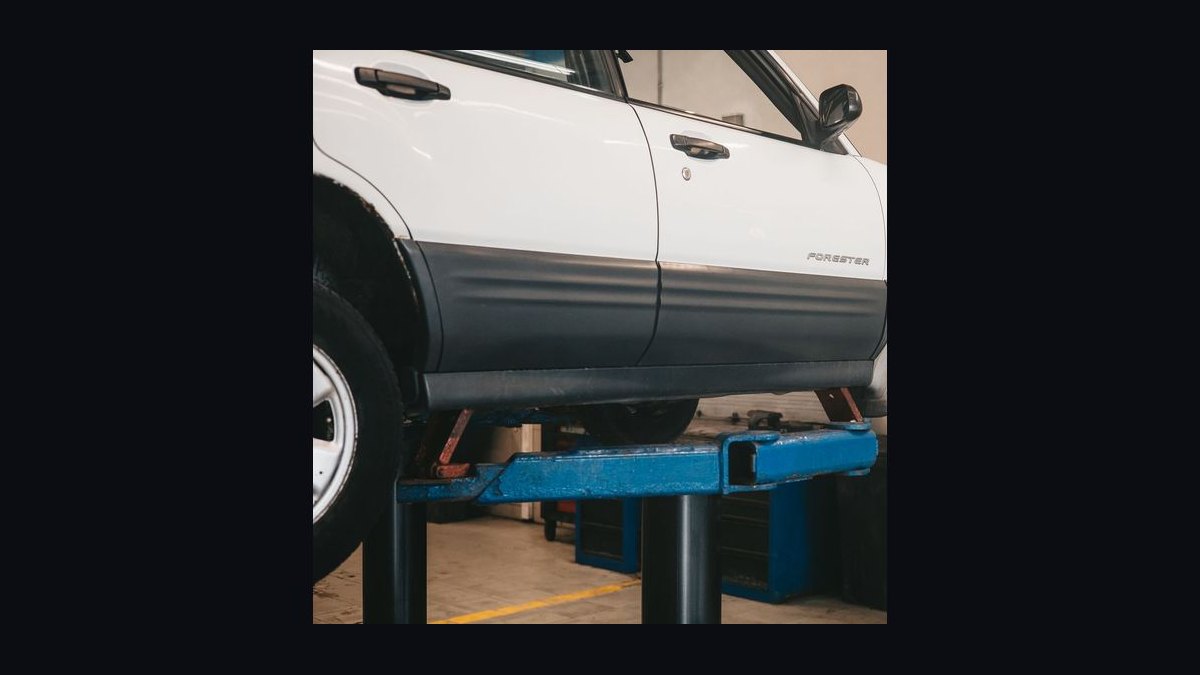
Weeks six through twenty — order and wait. If your configuration is not on a lot, place a factory order with a written allocation and a delivery estimate. Use the wait productively: if this is your first manual, buy an inexpensive used manual, or spend time with a rental or a friend's car, and put the learning miles on something whose clutch does not cost a four-figure sum to replace.
Delivery and the first 1,000 miles. Follow the break-in schedule in the manual — varied engine loads, no sustained single-rpm cruising, no track use. Do your first oil change on schedule rather than early or late. Learn hill starts in an empty lot before you need them at a stoplight on a grade.
The upstream effect of running this plan is that you buy the car you will still want in year three, rather than the one that impressed you on a 12-minute demo loop. The downstream effect is a shorter, cheaper ownership tail: correct tires for your climate, a clutch that lasts, and a configuration with a real buyer pool when you sell.
Related questions
Is the manual transmission actually dying?
It is contracting sharply, not vanishing. Fewer than 20 new models in North America offer a clutch pedal for 2027, versus more than 40 a decade ago. The survivors are enthusiast-focused cars where the take-rate justifies the certification cost, so near-term availability is stable.
Are there any manual SUVs or trucks left?
No. The manual is confined to sports cars, hot hatches, and enthusiast sedans in 2027. The Jeep Wrangler, the last mainstream holdout, dropped its six-speed after 2023. Off-road buyers wanting three pedals are shopping the used market exclusively.
Does a manual hurt or help resale value?
On enthusiast cars it helps. Scarcity plus a dedicated buyer pool keeps manual MX-5s, Type Rs, and 911s strong at three to five years. On cars where the manual was a base-trim price leader, it hurts — the buyer pool is too thin.
Should a first-time manual driver buy new?
Usually not. A used manual in the $8,000 to $18,000 range absorbs the learning curve without risking a four-figure clutch job on a new performance car. Put 5,000 miles on something cheap, then order the car you actually want.
Do manuals still get worse fuel economy than automatics?
Generally yes, by roughly one to three mpg combined on comparable models. Modern eight- to ten-speed automatics and dual-clutch units have more ratios and smarter lockup strategies. The manual is chosen for engagement, not efficiency.
FAQ
Which manual car is cheapest to buy new in 2027?
The Honda Civic Si opens near $30,300 and the Mazda MX-5 Miata near $30,500, putting both just under the $31,000 mark. They approach the price point differently — the Si gives you four doors, a turbo, and a limited-slip differential for commuting duty, while the Miata gives you a roadster built entirely around the gearbox. Neither is a compromise pick; they are simply answers to different questions.
Do any manual cars include automatic rev-matching?
Yes, and it is increasingly common. The Honda Civic Si and Type R include it as standard, and the Toyota GR Supra's iMT system and the GR Corolla's rev-matching mode can both be switched off for traditional heel-toe work. It smooths downshifts for newer drivers without removing the ability to do it yourself, which makes it a genuine learning aid rather than a substitute for skill.
How much does clutch feel vary across these cars?
More than most buyers expect. The Mazda MX-5 and Honda Civic Si sit at the light, progressive end with a forgiving engagement window. The Toyota GR Corolla, GR Supra, and Porsche 911 Carrera T are noticeably firmer, with a shorter travel and a more definite bite point. All are daily-drivable, but a heavy clutch and a 45-minute stop-and-go commute is a combination worth testing before you sign.
Is a manual slower than the automatic version of the same car?
Almost always, by roughly two to four tenths of a second to 60 mph on comparable models. Modern dual-clutch and multi-speed torque-converter automatics shift faster than any human and never miss. If lap times or drag strip numbers are your metric, the automatic wins. The manual is chosen for what happens between the shifts, not for the shift speed itself.
What should I budget beyond the purchase price?
Plan on a winter tire and wheel package at roughly $1,200 to $1,800 if you live in a snowbelt, particularly with a rear-drive car. Budget for a clutch replacement as a four-figure job somewhere past 80,000 to 100,000 miles depending on how the car is driven. Performance tires on the higher-output cars in this field wear faster than touring rubber, often in 15,000 to 25,000 miles.
Is 2027 the last chance to buy a new manual?
Not the last, but the window is narrowing. Several models here are late in their lifecycles, hybridization pressures the packaging that a clutch pedal requires, and no automaker has committed to a manual on a next-generation replacement for most of this field. Buying now means buying from a showroom; waiting three years likely means buying used.
Sources
- https://www.mazdausa.com/vehicles/mx-5-miata
- https://automobiles.honda.com/civic-si-sedan
- https://www.toyota.com/grcorolla/
- https://www.subaru.com/vehicles/wrx.html
- https://www.ford.com/cars/mustang/
- https://www.porsche.com/usa/models/911/
- https://www.bmwusa.com/vehicles/m-models/m2-coupe/
- https://www.caranddriver.com/features/g26881493/cars-manual-transmission/
- https://www.motortrend.com/features/every-new-manual-transmission-car/
- https://www.fueleconomy.gov/
Related on PULSE
- [Top 10 Performance Electric Cars in 2027](/knowledge/ca0993)
- [Top 10 Long-Range Electric Cars in 2027](/knowledge/ca0991)
- [Top 10 High-Performance Muscle Cars in 2027](/knowledge/ca0985)
- [Top 10 Sports Cars Under $100,000 in 2027](/knowledge/ca0979)
- [Best Used Hybrid Cars Under $35,000 in 2027 (Ranked)](/knowledge/ca0952)
- [Best Used Luxury Cars Under $35,000 in 2027 (Ranked)](/knowledge/ca0950)
This page will be disappearing soon. Save it to your device for $1 — or read it free while it is here.
@Kory-White- · if Venmo asks, the last 4 of my number are 2012
 pulse-carsTop 10 Hybrid Trucks 2027 — Best Overall + Best Value
 pulse-carsTop 10 Hybrid Minivans 2027 — Best Overall + Best Value
 pulse-carsTop 10 Sports Cars 1990 — Best Overall + Best Value
 pulse-carsBest Ford Escape Model Years (Ranked) in 2027
 pulse-carsTop 10 Sedans 2010 — Best Overall + Best Value
 pulse-carsBest Used AWD Cars Under $20,000 in 2027 (Ranked)
 pulse-carsTop 10 Full-Size SUVs 2027 — Best Overall + Best Value
 pulse-carsBest Mercedes-Benz CLA Model Years (Ranked) in 2027
 pulse-carsBest Cadillac XT6 Model Years (Ranked) in 2027
 pulse-carsBest Nissan Titan Model Years (Ranked) in 2027