


How do you align sales and marketing teams using RevOps in 2027?
Quality
Certified

RevOps aligns sales and marketing by making both teams accountable to one revenue number, one shared data model, and one lifecycle definition. You consolidate pipeline ownership under a single operations function, replace MQL handoffs with a jointly-owned pipeline target, and enforce definitions in the system of record so neither team can report a different truth.
Two models: shared-service RevOps versus embedded pods
Most companies aligning sales and marketing in 2027 land on one of two structural choices, and the choice matters more than any tooling decision that follows it.
The shared-service model puts every operations person — marketing ops, sales ops, CS ops, systems admin, analytics — into one team reporting to a single leader, usually a VP or Director of Revenue Operations who reports to the CRO or COO. Requests come in through a queue. The team owns the CRM, the marketing automation platform, the data warehouse tables that feed reporting, and the definitions layer. Sales and marketing become internal customers rather than owners. The advantage is definitional consistency: there is exactly one person who can change what "Sales Qualified Opportunity" means, and that person does not report to either of the teams whose numbers the definition affects. The disadvantage is throughput and distance. A marketing team that wants a landing-page form field changed now files a ticket and waits behind a quota-credit dispute. Shared-service teams commonly run two- to four-week backlogs once they pass roughly forty requests a month, and marketers start building shadow systems — a separate form tool, a spreadsheet of "real" lead status — which reintroduces exactly the misalignment the model was meant to kill.
The embedded pod model keeps a small central RevOps core (often two to four people) that owns architecture, definitions, security, and the data warehouse, then deploys ops specialists directly into the sales and marketing orgs. The embedded marketing ops person sits in marketing's standups, knows the campaign calendar, and ships changes in days rather than sprints. The central core reviews anything that touches shared objects: lifecycle stages, opportunity fields, attribution logic, territory rules. Throughput goes up sharply. The risk is definitional drift — the embedded person starts optimizing for their host team's dashboard, and within two quarters you have a marketing-sourced pipeline number that does not reconcile with the sales pipeline number, which is the original disease.

There is a third arrangement worth naming because it is common and usually a mistake: coordination-by-meeting, where marketing ops and sales ops remain in separate reporting lines and align through a weekly sync. It costs nothing to set up and it does not work at scale, because when the two teams disagree about whether a deal was marketing-influenced, the escalation path runs all the way to the CEO. Every alignment problem becomes a political problem. If you are under roughly thirty people in go-to-market, coordination-by-meeting is fine and cheap. Past that, the arbitration load exceeds what a weekly meeting can absorb.
A fourth pattern shows up in PLG-heavy and hybrid companies: RevOps owns the product-usage-to-pipeline path as a first-class object alongside the traditional lead path. Here the alignment question extends past sales and marketing into product analytics — a product-qualified account signal has to be defined once, computed once, and routed once, or you get sales reps chasing accounts that marketing is simultaneously nurturing and product is trying to self-serve upgrade. The structural choice is the same; the surface area is just wider.
How to decide between them
The decision is not about company size alone. Weigh four things: how many distinct revenue motions you run, how contested your reporting currently is, how much systems debt you carry, and whether you have a person who can credibly own definitions across both orgs.

If your marketing-sourced pipeline number and your sales pipeline number currently differ by more than about ten percent and nobody can explain the gap in an afternoon, you have a definitions problem, not a throughput problem — start shared-service, get to one number, then decentralize execution once the definitions layer is stable. If reporting already reconciles and the complaint you hear is "ops takes three weeks to change a field," you have a throughput problem, and embedding is the fix.
Systems debt is the quiet variable. If you are carrying two CRMs from an acquisition, or a marketing automation instance where nobody knows what half the smart lists do, embedding ops people into the teams accelerates the wrong thing — you get faster changes on top of a foundation nobody understands. Centralize until the architecture is documented and the duplicate systems are merged, then distribute.
The last input is people. A shared-service model needs one person with enough standing to tell a CRO that his forecast field change is going to break attribution — and be listened to. If you do not have that person, the shared-service org becomes a ticket queue with no authority, which is the worst of both worlds: slow *and* not definitive. In that case, embed, and buy the definitional consistency through process — a change advisory review, a documented data dictionary, a monthly reconciliation — rather than through org chart.
The numbers behind each option

Concrete ranges help more than principles here, so here is what these structures actually cost and produce.
Headcount ratios. A common benchmark is one operations person per twelve to twenty quota-carrying reps in a mid-market SaaS motion, drifting toward one per ten in enterprise where deal complexity, territory rules, and approval workflows add work. Marketing-side ops runs closer to one per eight to twelve marketers, because campaign operations is more transactional. A shared-service RevOps team at a 200-person go-to-market org therefore lands around ten to fourteen people; the embedded model with the same coverage typically runs one to two people leaner in aggregate but adds a coordination tax in review meetings that consumes maybe five to eight percent of the central core's time.
Turnaround times. Shared-service queues, once mature, tend to resolve routine requests (field additions, list changes, report builds) in five to fifteen business days and project work in one to two quarters. Embedded pods resolve routine requests in one to five business days. That gap is the entire argument for embedding, and it compounds: a marketing team that can iterate on form logic weekly runs three to five times more experiments per quarter than one that batches changes into a monthly release.
Reconciliation cost. The number nobody budgets for. When sales and marketing report different pipeline figures, the recurring cost is the analyst time spent explaining the delta — realistically four to twelve hours a month across both teams, plus the credibility cost when the board deck shows a footnote. Getting to one number is usually a four- to eight-week project: agree on the lifecycle stage definitions, rebuild the stage-transition logic in the CRM, backfill historical records so trend lines do not break at the cutover, and rebuild every dashboard that referenced the old fields. The backfill is the part teams underestimate; if you skip it, every quarter-over-quarter comparison for the next year carries an asterisk.

Tooling. A functional aligned stack in 2027 is smaller than most people expect: a CRM, a marketing automation platform, a data warehouse, a transformation layer, a BI tool, and an enrichment source. Everything else — sales engagement, conversation intelligence, intent, CPQ — is additive value, not alignment infrastructure. Costs vary enormously by seat count and tier, so rather than quoting prices, use this rule: if the combined ops stack exceeds a low-single-digit percentage of revenue and you still cannot answer "how much pipeline did marketing produce last quarter" in under ten minutes, the problem is definitions, not tools, and buying another tool will not fix it.
Time to signal. Structural changes take two quarters to show up in outcome metrics. Leading indicators move faster: lead response time, SLA compliance on follow-up, percentage of opportunities with a complete source field, and the number of open disputes about attribution. Watch those weekly. If SLA compliance is not above roughly eighty percent by week six, the process is not being adopted and the org change is decorative.
Implementation sequencing that actually holds
The order of operations matters because each step depends on the one before it. Doing them out of order is the most common reason alignment initiatives stall at the "we reorganized and nothing changed" stage.
Start with the shared number, not the org chart. Before touching reporting lines, get sales and marketing leadership to agree on a single joint target — usually qualified pipeline created, or a segmented version of it. Both teams get the same number in their plan. This is the load-bearing change; everything downstream is mechanism. If marketing's plan says MQLs and sales' plan says bookings, no structure will align them, because their incentives point in different directions and structure loses to incentive every time.

Then define the lifecycle end to end. Write out every stage a record can occupy from anonymous through closed, with an explicit entry criterion, an owner, and an exit condition for each. Include the unhappy paths: recycled leads, disqualified-but-revisit, accounts that go dark. Put it in a data dictionary that lives somewhere both teams can read. The specific stages matter far less than the fact that exactly one document defines them.
Then build the SLA in both directions. Marketing commits to volume and quality thresholds; sales commits to a response window and a working commitment — a minimum number of contact attempts before a record can be returned. Make both sides measurable and both sides visible. One-directional SLAs, where only sales is measured on follow-up speed, breed resentment and get abandoned within a quarter.
Then instrument. Enforce the definitions in the system: required fields on stage transitions, validation rules that block a stage change without the required data, automated routing so ownership is never ambiguous. If a definition exists only in a document, it will drift within weeks. If it is enforced by a validation rule, it holds.
Then, and only then, change the org chart. Reporting-line changes are expensive in trust and attention. Spend them once, after the definitions and incentives are settled, so the new structure is inheriting a working system rather than being asked to invent one.
Run a weekly pipeline council once the mechanism is live: one hour, sales leader, marketing leader, RevOps lead, one shared dashboard, and a standing agenda of exceptions rather than a full review. The purpose is to surface definitional disputes early, while they are still small enough to resolve without escalation.
Where alignment work spills past sales and marketing

The sales-marketing seam is the loudest misalignment, but it is rarely the only one, and fixing it in isolation tends to push the problem downstream rather than resolve it.
The handoff to customer success inherits every definitional sin from the front of the funnel. If the opportunity record does not carry the use case, the promised scope, and the actual source of the deal, CS starts every relationship reconstructing context from a call recording. Extending the shared data model through onboarding — the same account object, the same product-fit fields, the same source attribution — costs relatively little once the sales-marketing model exists, and it is what turns RevOps from a front-end function into a revenue-lifecycle function.
Renewals and expansion are the second spillover. Once marketing is measured on pipeline rather than leads, the natural next question is whether marketing should be measured on expansion pipeline too. In most companies that answer is eventually yes, and the instrumentation is the same problem in a new place: define what an expansion opportunity is, decide who creates it, agree on how influence is credited.
Finance is the third, and it is the one that forces discipline. When the RevOps pipeline number becomes the number finance uses for forecasting, definitional sloppiness stops being an internal irritation and starts being a board-level accuracy problem. Many teams find that inviting finance into the definitions conversation early is the fastest way to get both sales and marketing to take the data dictionary seriously — an audience with authority tends to concentrate attention.

Partner and channel motions deserve a mention because they break naive attribution models hardest. A partner-sourced deal that marketing also nurtured and sales closed will be claimed by all three, and no attribution model resolves that fairly. The workable answer is usually to stop trying: track sourced and influenced as separate, explicitly non-additive measures, publish both, and refuse to sum them. Teams that insist on a single clean attribution number spend quarters arguing about methodology instead of generating pipeline.
Finally, the adjacent-industry read is useful. Companies with heavy services components, franchise models, or field operations run the same alignment problem with different vocabulary — a marketing team generating inbound demand, a distributed sales force capturing it, and no shared definition of a qualified opportunity between them. The mechanism transfers cleanly: one number, one lifecycle, one enforcement layer, one council. The tooling looks different; the failure modes are identical.
What breaks and how to catch it early
Watch four failure signals, all of which precede the visible symptom by weeks.
Definitional drift shows up as a growing gap between two dashboards that should agree. Set a monthly reconciliation: pull the same metric from the CRM and the warehouse, compare, and investigate any variance over a couple percent. Drift is cheap to fix in week two and expensive in month six.
SLA decay shows up as compliance sliding from strong to acceptable to unmeasured. The pattern is predictable — a busy quarter, an exception granted, the exception becomes the norm. Report SLA compliance in the same forum as pipeline, every week, by team.

Shadow systems show up as spreadsheets. When a marketer maintains a private list of "leads that are actually good," the enforced definitions do not match reality and the marketer has quietly forked the source of truth. Treat every shadow spreadsheet as a bug report about the official system rather than a compliance violation, or the next one will simply be better hidden.
Ops capture is the embedded model's specific disease: the embedded operations person stops applying central standards because their host team's priorities are more immediate and more socially present. Catch it with a rotation, a dotted-line review, or a periodic architecture audit run by the central core rather than the pod.
One more caution about 2027-specific enthusiasm: automated agents that update CRM records, draft follow-ups, and score accounts are genuinely useful, but they amplify whatever definitions already exist. Pointing automation at a clean lifecycle model multiplies throughput. Pointing it at an ambiguous one multiplies the ambiguity, faster than humans can audit it. Get the definitions layer right before you scale automated writes against it, and keep a human review path on anything that changes a stage or an owner.
Related questions
Should RevOps report to the CRO or the CFO?
CRO reporting keeps RevOps close to the motion and speeds execution; CFO reporting buys independence when reporting integrity is contested. Most companies start under the CRO. Move it under finance or a COO only when pipeline numbers have credibility problems that a revenue-reporting leader cannot resolve neutrally.
Is the MQL dead in 2027?
Not dead, demoted. MQL remains a useful internal throughput metric for marketing, but it stops being the handoff currency between teams. The shared target becomes qualified pipeline or opportunities created, which both teams can influence and neither can manufacture alone.
How long does sales and marketing alignment take?

Definitions and SLA: four to eight weeks. System enforcement: another four to six. Behavior change and trust: two quarters minimum. Anything promising alignment in thirty days is describing a dashboard, not an operating change.
What is the smallest company that needs RevOps?
Roughly when go-to-market headcount passes twenty-five to thirty and no single person can hold the full funnel in their head. Below that, one part-time systems owner and a shared spreadsheet outperform a formal function.
Do you need a data warehouse to align sales and marketing?
Not to start. CRM-native reporting handles alignment fine at small scale. You need a warehouse once you have multiple systems producing conflicting numbers, or once analysis requires joining product usage, billing, and CRM data in one place.
FAQ
What is the single most important step in aligning sales and marketing?
Putting both teams on one shared number in their compensation and planning documents. Structure, tooling, and process are all mechanisms for delivering on a shared incentive; without the shared incentive, they are overhead. If marketing is paid on MQLs and sales on bookings, every downstream fix is a workaround.
How do you handle attribution disputes between sales and marketing?
Publish sourced and influenced as separate, explicitly non-additive metrics and refuse to combine them into a single credit number. Multi-touch models are useful for directional budget allocation and terrible as arbitration tools. When a deal touches partner, marketing, and outbound, the honest answer is that all three contributed.

Who should own lead routing — sales or marketing?
RevOps, in both models. Routing rules encode territory, segment, and capacity decisions that neither team can set unilaterally without advantaging itself. Marketing sets the qualification criteria, sales leadership sets territory and capacity, RevOps implements and audits the rules and holds the change log.
Does an embedded RevOps model work for a company under a hundred employees?
Usually yes, and often by default — you have one or two ops people who naturally sit closer to whichever team shouts loudest. The important discipline at that size is not structure but documentation: keep one written data dictionary and one change log, so the definitions survive the inevitable turnover of the individuals holding them.
How do you measure whether alignment is actually working?
Track four things weekly: pipeline created against the joint target, SLA compliance in both directions, the number of open definitional disputes, and the reconciliation variance between your two primary reporting surfaces. Improvement in all four sustained over two quarters is real alignment; improvement in the first alone is often just a good quarter.
What role does AI automation play in sales and marketing alignment in 2027?
It accelerates whatever system it is pointed at. Automated enrichment, record hygiene, and routing genuinely reduce ops load, but they inherit the quality of your definitions layer. Companies that automate before defining end up with more records, faster, in more inconsistent states — and less time to notice.
Sources
- https://hbr.org/2006/07/ending-the-war-between-sales-and-marketing
- https://www.gartner.com/en/sales/topics/revenue-operations
- https://www.salesforce.com/resources/articles/revenue-operations/
- https://www.hubspot.com/revenue-operations
- https://www.mckinsey.com/capabilities/growth-marketing-and-sales/our-insights
- https://www.forrester.com/blogs/category/revenue-operations/
- https://openviewpartners.com/blog/
- https://www.bain.com/insights/topics/commercial-excellence/
Related on PULSE
- How do you build a RevOps team from scratch?
- What is the difference between sales ops and RevOps?
- How do you define an SQL that sales will actually accept?
- What should a RevOps dashboard show weekly?
- How do you fix attribution when partner and marketing both claim a deal?
- When should a company hire its first RevOps leader?
This page will be disappearing soon. Save it to your device for $1 — or read it free while it is here.
@Kory-White- · if Venmo asks, the last 4 of my number are 2012
This page is gone.
This one is off the shelf now. $1 keeps it on your phone for good — the whole page, pictures and diagrams included.
 revopsWhat is the impact of RevOps on customer retention in 2027?
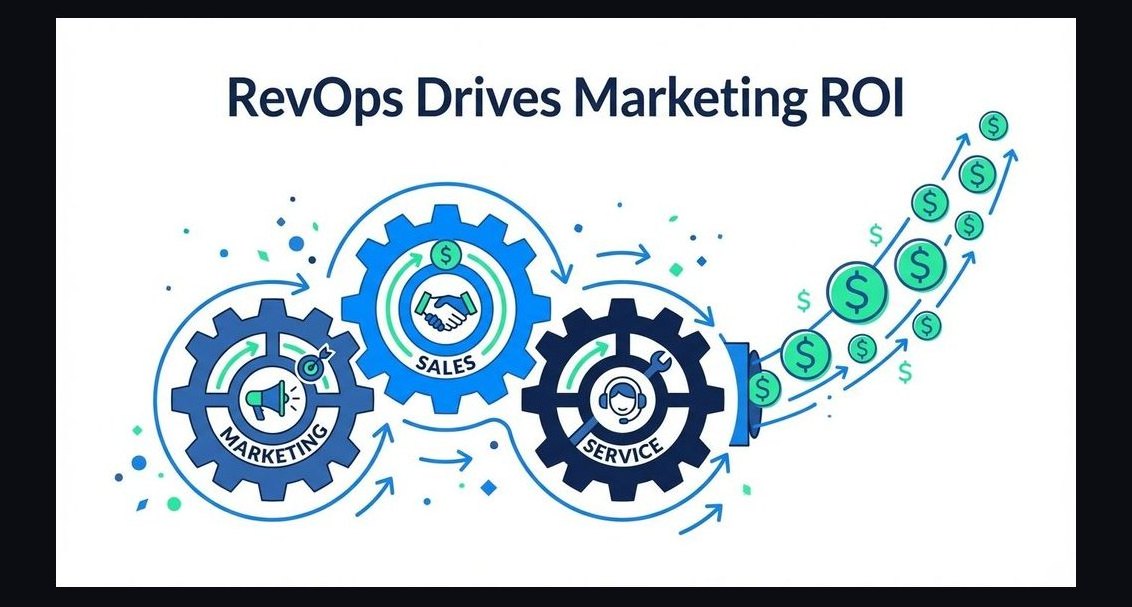 revopsHow do you calculate RevOps ROI across marketing, sales, and customer success in 2027?
 revopsWhat are the best tools for automating RevOps workflows and reducing manual handoffs in 2027?
 revopsWhat are common pitfalls when implementing RevOps in 2027?
 revopsHow do you handle lead routing in a multi-product RevOps setup in 2027?
 revopsHow do you structure a RevOps team for a B2B SaaS company in 2027?
 revopsHow do you build a RevOps hiring plan for a scaling startup in 2027?
 revopsWhat are the best practices for contract lifecycle management in RevOps in 2027?
 revopsWhat is the role of RevOps in setting and tracking annual recurring revenue (ARR) targets in 2027?
 revopsWhat are the best strategies for aligning sales and marketing in RevOps in 2027?