
Best Modern American Muscle Cars for Long Road Trips in 2027
 Curated byKory White · Fractional CRO · Maryland
 PULSEKNOWLEDGE LIBRARY
The strongest long-haul modern American muscle cars in 2027 are the Dodge Charger Daytona and last-generation Challenger for interior space, the Mustang EcoBoost or GT with the 10-speed automatic for fuel range, and the Camaro on the used market for handling. Prioritize automatic transmissions, adaptive dampers, and 18-inch wheels over track packages.
The two families you are actually choosing between
Every long-trip muscle car decision collapses into two families, and confusing them is the most common mistake buyers make.
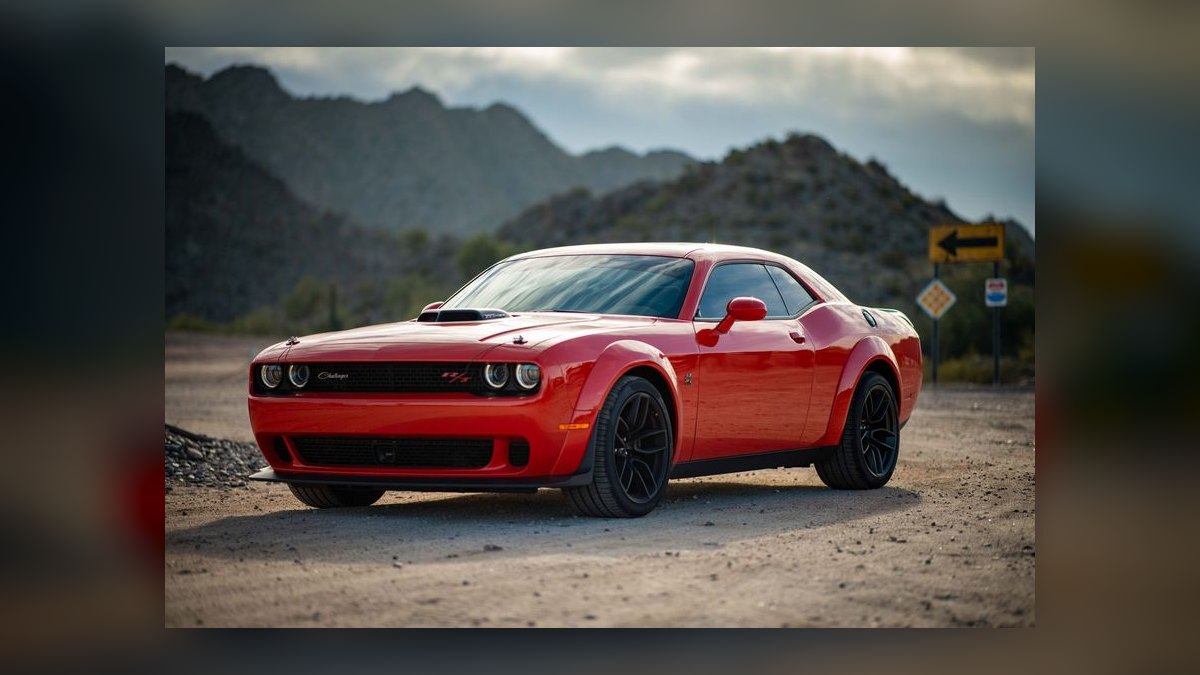
Family one: the grand tourer chassis. This is the Challenger lineage and the Charger Daytona that replaced it. These cars were engineered around a stretched platform with genuine rear legroom, a trunk that swallows two large suitcases plus soft bags, and suspension tuning that leans soft. The Challenger's wheelbase sits at 116 inches — longer than most midsize sedans — and that length does exactly what physics says it should over expansion joints and frost heaves. You feel one impact instead of two. On a 700-mile day, that difference is not a comfort preference; it is the difference between arriving functional and arriving wrecked. The Charger Daytona inherited the wide body and the trunk, added a hatchback opening that dramatically improves how you load gear, and brought in electric-drivetrain silence that removes the single biggest fatigue driver on a long drive: sustained noise.
Family two: the sport coupe chassis. This is the Mustang and the Camaro. Shorter wheelbases (107 inches for the Mustang, 110 for the Camaro), tighter cabins, smaller trunks, and suspensions tuned to reward a driver rather than insulate one. These cars are more fun on the good roads and more punishing on the bad ones. The Camaro in particular pays for its excellent chassis with genuinely poor outward visibility and a rear seat that functions as a padded shelf. The Mustang splits the difference better than any other muscle car on sale — it is the only one where the base engine, the practical transmission, and the comfortable suspension can all be specified together without compromise.

The trap is that these two families get shopped against each other on horsepower, which is the least relevant number for the use case. A 485-horsepower Mustang GT and a 375-horsepower Challenger R/T will both cruise at 80 mph using roughly a quarter throttle. Neither car's power output affects your trip. What affects your trip is seat geometry, sound level at cruise, tank range, wheel and tire choice, and whether the transmission has enough ratios to keep the engine quiet.
There is a third option worth naming even though it breaks the muscle-car label: the four-door alternatives built on the same bones. A Charger Scat Pack sedan from the previous generation, or a Chrysler 300 with the same platform underneath, gives you 90% of the muscle-car character and 100% more practical door count. If you are taking a trip with three or four people rather than one or two, this is the honest answer, and refusing to consider it because it has four doors is how people end up hating their own road trip.
How to decide between them
The decision is not about taste. It is a sequence of filters, and each one eliminates cars decisively.

Filter one: passenger count. Two people, any car works. Three or four adults for multiple days, the grand tourer chassis or a four-door variant is the only defensible choice. A Mustang or Camaro rear seat is viable for a 45-minute hop and abusive past two hours.
Filter two: luggage volume. The Challenger's 16.2 cubic feet of trunk space is close to double what the Camaro coupe offers at 9.1. The Mustang sits at 13.5. The Charger Daytona's hatch gives you a usable 22.8 cubic feet with the seats up. If you travel with hard cases, camera gear, or golf clubs, this filter alone decides the car.
Filter three: terrain. Long trips through the Rocky Mountain West or the Appalachians involve grades, altitude, and frost-damaged pavement. Naturally aspirated V8s lose meaningful power at 8,000 feet of elevation; a turbocharged four or a supercharged V8 loses far less. If your route includes sustained climbs above 6,000 feet, the EcoBoost Mustang and the electrified Charger both hold their power better than a Hemi or a naturally aspirated Coyote V8.

Filter four: transmission. For long trips, the automatic is not a compromise, it is the correct answer. The 10-speed in the Mustang and the 8-speed in the Dodge products both deliver relaxed cruise RPM around 1,600-1,900 at 75 mph. A six-speed manual sits closer to 2,200-2,500 at the same speed, which means more noise, more fuel burn, and a left leg that resents you in traffic.
Filter five: wheel and tire spec. This is where buyers self-sabotage most often. A 20-inch wheel with a 275/35 summer tire looks correct and rides terribly. The same car on an 18- or 19-inch wheel with a 45- or 50-series sidewall is a categorically better road-trip vehicle, quieter, more comfortable, and far less likely to bend a rim on a pothole 300 miles from a dealer. Summer-only compounds also lose grip below about 45 degrees Fahrenheit, which matters enormously on a trip that crosses a mountain pass or runs into an early cold front.
The filters run in that order deliberately. Passenger count and luggage are physical constraints you cannot option your way out of. Terrain and transmission are choices with real consequences. Wheel and tire spec is the cheapest fix and the one most people skip.

Concrete numbers behind each option
Here is where the abstractions become budget lines and hours behind the wheel.
Fuel range and stop cadence. The Mustang EcoBoost carries 16 gallons and returns roughly 32-33 mpg on the highway when driven at 75 mph with the air conditioning running. That is a real-world 480-510 mile range with a comfortable reserve, which means one fuel stop for most driving days. The Mustang GT with the 10-speed does roughly 24 mpg highway on the same 16 gallons — call it 350-380 usable miles. The Challenger R/T and Scat Pack carry 18.5 gallons and return 23 and 21 mpg respectively, landing at 390-425 and 350-390 miles. The Camaro SS is similar to the Scat Pack. The practical consequence: the EcoBoost buys you one fewer stop per day, which over a five-day trip is roughly two hours of your life back and about $180-260 less spent on premium fuel at 2027 prices.
Electric range and the charging reality. The Charger Daytona's usable battery lands in the 93-100 kWh range depending on trim, with EPA highway figures in the 216-260 mile band. At a sustained 75-80 mph in cold weather, plan on 170-200 real miles between charges. Its 350 kW peak charging capability means a 20-80% top-up in roughly 25-30 minutes on a functioning high-power charger. The math changes your trip structure rather than your trip length: instead of five-minute stops every 400 miles, you take 25-minute stops every 200. On a route with dense charging infrastructure — the I-5 corridor, the Northeast, most of Texas — that is an acceptable trade and the cabin silence is worth it. On US-50 across Nevada or a long stretch of the Dakotas, it is not, and the gas car wins outright.
Tire cost as a trip line item. A set of 305-section summer tires for a Scat Pack or Camaro SS runs $1,400-2,000 installed and can wear out in 15,000-20,000 miles. An all-season set in the same size runs $900-1,400 and lasts 40,000-50,000. If your annual mileage is dominated by long trips, that is a $600-1,000 swing per replacement cycle and roughly double the interval. Muscle-car owners routinely underestimate this and it distorts the actual cost-per-mile of the cheaper-to-buy car.
Insurance and depreciation. A 485-horsepower coupe insures at a substantial premium over the four-cylinder version of the same body — frequently 30-50% higher for a driver under 30. On the depreciation side, the discontinued Challenger and Camaro are in the phase where enthusiast demand and limited supply have flattened the curve for desirable trims, while base V6 and four-cylinder cars continue to fall normally. Buying a lightly used Scat Pack or 1LE has become closer to an asset hold than a typical car purchase, though nobody should treat a road-trip car as an investment thesis.

Comfort numbers that nobody publishes. Sound level at 75 mph matters more than any performance figure for a long-trip car. The Challenger with the standard exhaust is meaningfully quieter than the Mustang GT with active exhaust in its loud setting — and much louder than the same Mustang in quiet mode, which is exactly why the active exhaust option is the single best road-trip feature Ford sells. Adaptive dampers, where offered, are the second-best. Ventilated seats are third; on a 95-degree day in Kansas, leather without ventilation becomes a genuine endurance problem by hour three.
Total trip cost, worked. A 2,400-mile round trip in an EcoBoost Mustang at 32 mpg and $4.10/gallon premium costs roughly $308 in fuel. The same trip in a Scat Pack at 21 mpg costs roughly $469. Add the tire-wear differential and the gap widens further. Neither number should decide the car by itself — but if you take four trips like that a year, the V8 premium runs $650-900 annually in consumables, and that is a real number worth knowing before you sign.
Adjacent angle: what fleet and commercial thinking teaches the individual buyer
This is worth a detour, because the people who make vehicle decisions professionally solve exactly this problem and they use a framework individual buyers almost never apply.

Fleet managers and sales-operations leaders who run field teams across large territories evaluate vehicles on total cost per mile, driver retention, and unplanned downtime — not on the sticker or the horsepower. The relevant translation for a muscle-car buyer is that a vehicle's cost structure has four components, and only one of them is visible at purchase. Acquisition cost is visible. Fuel is semi-visible and easy to model. Consumables — tires, brakes, fluids on an aggressive service interval — are invisible until they hit, and on high-performance cars they are disproportionately large. Downtime risk is the one nobody models: a summer tire punctured on a rural route with no local inventory in that size is a two-day delay, and on a performance car with staggered wheels you cannot rotate a spare onto the wrong axle.
Outside-sales organizations that reimburse mileage learned this the hard way. When a company pays a per-mile rate, the driver in the efficient car nets meaningful money and the driver in the thirsty car loses money on every trip. That dynamic quietly steers company-car programs toward mid-power drivetrains — and it is the same logic that should steer an enthusiast who genuinely drives long distances toward the EcoBoost or the six-cylinder rather than the top trim. The revenue math in a commercial fleet is explicit: cost per mile times miles driven, subtracted from the revenue that territory generates. An individual has the same equation with a softer denominator, but the arithmetic does not care.
The second borrowed lesson is service-network density. Commercial fleets deliberately standardize on platforms with wide dealer coverage because a breakdown 400 miles from home is resolved by proximity, not by brand loyalty. For muscle cars this favors Ford and Chrysler-Dodge networks heavily — both have dense rural coverage across the American interior, which is exactly where long trips get you into trouble. A discontinued Camaro is increasingly serviced at general Chevrolet dealers who see few of them, and specialist parts for the 1LE and ZL1 variants are not stocked in Wyoming.

Third: driver-condition management. Fleet safety programs cap continuous driving hours and mandate breaks because fatigue-related incident rates climb sharply after long unbroken stints. Apply that to yourself. A car that fatigues you faster — louder cabin, firmer ride, worse seat, more road noise — effectively shortens your safe driving day. That is the strongest practical argument for the grand tourer chassis and the quiet-exhaust setting, and it is more important than any lap time.
Implementation details and sequencing
If you are actually buying and prepping a Modern American Muscle car for long Trips, the order of operations matters. Doing these in the wrong sequence wastes money.
Step one: fix the contact patch before anything else. All-season or grand-touring tires in the stock size, or a modest step down in wheel diameter with a taller sidewall. This single change improves ride quality, road noise, wet safety, cold-weather grip, and tire life simultaneously. Budget $900-1,600. Nothing else you do to the car returns as much comfort per dollar.

Step two: address the seat and the driving position. Muscle-car seats are frequently good for lateral support and poor for multi-hour lumbar support. A quality lumbar insert costs $40-90 and solves most of it. If the car has power seats, spend 20 minutes with the cushion tilt and lumbar settings before a long trip rather than adjusting at hour two on the highway.
Step three: cabin noise. Sound-deadening mats in the trunk and behind the rear seat cost $150-350 in materials and a weekend of labor, and remove a real portion of the drone that fatigues you. On cars with active exhaust, simply learning to leave it in quiet mode is free and does more.
Step four: the pre-trip mechanical pass, 10-14 days out. Not the day before. You want time to order parts. Check brake pad thickness against your route's descent profile, verify coolant condition and level, inspect belts, check tire dates as well as tread depth (a 2020-dated tire with good tread is still a compromised tire), and confirm the spare or the inflator kit actually exists and functions. Many modern muscle cars ship without a spare.

Step five: route the trip around the car, not despite it. For a gas car this means noting the 150-mile stretches without premium fuel. For the Charger Daytona it means mapping high-power chargers and identifying a backup at every stop, because a single occupied or broken charger on a 200-mile-spacing route is the failure mode. Build the route with a 20% buffer on range and never plan to arrive at a charger under 10%.
Step six: pack for the trunk you have, not the trunk you want. Soft duffels conform to the irregular trunk shapes these cars have; hard-shell suitcases waste 25-30% of the usable volume. In a Camaro, load through the trunk opening before you commit to a bag size — the aperture, not the volume, is the binding constraint.
Sequencing note on the purchase itself. If you are buying used, inspect in this order: tire dates and sizes, brake and rotor condition, evidence of tune or modification, then cosmetics. A modified car is not automatically bad, but a tuned car with unknown provenance is a poor long-trip choice because you cannot predict its behavior at sustained load in high ambient temperatures. Sustained 80 mph in 100-degree heat is a harder test than a quarter-mile run, and it is the test your trip will administer.
Related questions
Is a manual transmission a mistake for long trips?
Not a mistake, but a real cost. Expect 300-600 more RPM at cruise, more cabin noise, and fatigue in traffic. If you drive 500-mile days regularly, the automatic is measurably less tiring and slightly more efficient. Choose the manual because you want it, not because it is better here.
Can a muscle car handle winter road trips?
Yes, with all-season or winter tires — the tires matter far more than the drivetrain. Rear-wheel drive with proper winter rubber outperforms all-wheel drive on summer tires. The Charger Daytona's all-wheel drive is a genuine advantage. Summer-only compounds below 45°F are unsafe regardless of driver skill.
Which is cheaper to run over 100,000 highway miles?
The turbocharged four-cylinder, decisively. Fuel savings alone run several thousand dollars against a V8, and narrower all-season tires cost less and last roughly twice as long. Brake and fluid service intervals are also less aggressive on the lower-output cars.
Do these cars need premium fuel on a long trip?
The V8 and turbocharged engines are designed for premium, and sustained highway load is exactly when octane matters. Running regular under those conditions triggers timing retard and costs power and efficiency. Budget premium pricing, and note the rural stretches where only 87 is available.
FAQ
Which modern American muscle car has the most usable rear seat for adults?
The Charger Daytona and the previous-generation Charger sedan, followed by the Challenger. The Challenger's rear legroom is genuinely usable for adults on multi-hour stints — an unusual claim for a two-door. The Mustang and Camaro rear seats are functionally cargo shelves; the Camaro's is the tightest of the group and difficult to access.
How much does wheel size actually change ride quality?
More than any other single specification. Moving from a 20-inch wheel with a 35-series sidewall to a 19-inch with a 45-series adds roughly half an inch of sidewall cushion. The practical effect is fewer sharp impacts through the structure, less tire noise, better pothole survivability, and a slightly lower risk of a bent rim far from home.
Is the Charger Daytona actually viable for a cross-country trip?
On corridors with dense high-power charging, yes — and the cabin quiet is a real fatigue advantage. On sparse routes through the interior West, it demands planning that a gas car does not. Assume 170-200 real highway miles per charge in adverse conditions and always identify a backup charger.
Should I buy new or used for a long-trip muscle car?
Used, in most cases. A two-to-four-year-old car has absorbed the steepest depreciation, and the discontinued models are only available used anyway. The exception is if you want a factory warranty for peace of mind across long distances, which is a legitimate reason to pay the new-car premium.
Does horsepower matter at all for this use case?
Barely. Cruising at 80 mph requires a small fraction of any of these engines' output. Horsepower matters for merging, passing at altitude, and enjoyment. It costs you in fuel, tires, insurance, and often ride quality. For a pure long-trip build, mid-tier output is the rational choice.
What is the single most overlooked pre-trip item?
The spare tire situation. Many modern muscle cars ship with an inflator kit instead of a spare, and staggered wheel setups make a universal spare impractical. Confirm what you actually have, verify the inflator's sealant has not expired, and know your roadside coverage before you leave.
Sources
- https://www.fueleconomy.gov
- https://www.caranddriver.com
- https://www.motortrend.com
- https://www.nhtsa.gov
- https://www.tirerack.com
- https://www.edmunds.com
- https://www.kbb.com
- https://www.iihs.org
- https://www.consumerreports.org
Related on PULSE
- [Top 10 long-range electric cars for road trips — Best Overall + Best Value in 2027](/knowledge/ca1129)
- [Best Cars for Road Trips in 2027](/knowledge/ca0288)
- [Best American Muscle Cars in 2027](/knowledge/ca0487)
- [Best Cars for Long Commutes in 2027 (Ranked)](/knowledge/ca1150)
- [Top 10 Muscle Cars 1974 — Best Overall + Best Value](/knowledge/ca0162)
- [Top 10 Muscle Cars 1965 — Best Overall + Best Value](/knowledge/ca0152)
 pulse-carsBest Kia Forte Model Years (Ranked) in 2027
 pulse-carsBest Genesis GV70 Model Years (Ranked) in 2027
 pulse-carsTop 10 Compact SUVs 2026 — Best Overall + Best Value
 pulse-carsBest Acura RDX Model Years (Ranked) in 2027
 pulse-carsBest Honda S2000 Model Years (Ranked) in 2027
 pulse-carsBest GMC Canyon Model Years (Ranked) in 2027
 pulse-carsBest Ford Ranger Generations (Ranked) in 2027
 pulse-carsTop 10 Family SUVs 2025 — Best Overall + Best Value
 pulse-carsBest Audi e-tron Model Years (Ranked) in 2027
 pulse-carsBest Nissan Cube Model Years (Ranked) in 2027