
How do you coach product knowledge to a brand-new salesperson?
 Curated byKory White · Fractional CRO · Maryland
 PULSEKNOWLEDGE LIBRARY
Coach product knowledge as buyer outcomes, not feature recall. Every capability the new salesperson learns gets mapped to a specific customer pain and a measurable result, rehearsed out loud, then proven on recorded calls. Sequence it across 30/60/90 days, and certify on whether they can handle a live objection while talking value.
The scenario that shows the real gap
A brand-new salesperson finishes week two. They passed the product quiz with a 92%. They can name all eleven modules, recite the integration list, and tell you the difference between the Standard and Enterprise tiers from memory. Their manager signs off on ramp and puts them on live discovery calls in week three.
Then you listen to the recording. Twelve minutes in, the prospect — a RevOps lead at a 180-person company — says, "We already have something that does reporting." The rep responds with a ninety-second monologue about dashboard refresh intervals, custom field mapping, and the API rate limit. The prospect goes quiet, says "send me some materials," and never books the follow-up. The rep hangs up genuinely confused. They knew the answer. They said the answer. They lost the deal anyway.
This is the single most common failure mode in new-rep product coaching, and it is almost never a study problem. The rep had the knowledge. What they did not have was the translation layer — the ability to hear "we already have something that does reporting" as a statement about a *job the buyer is failing to get done*, and to answer with what changes for that buyer rather than what the software contains.
The diagnostic split matters because the fix is different in each case. A rep who genuinely has not learned the product needs structured content and study time. A rep who knows it but flattens on calls needs at-bats and role-play, not more reading. A rep who is avoiding the work needs an accountability conversation, and more content will make it worse by giving them a place to hide. And a rep who was handed a login and a 40-page PDF on day one has a *system* problem — the enablement never existed, and coaching them harder is unfair.

In practice, roughly the pattern you will see on a new hire class: a minority genuinely have not studied, a small number are wrong-fit hires who will not do the work, and the large majority — the ones who look like they should be fine — are translation-failure cases. They sound like a brochure because nobody ever made them practice sounding like anything else. Coaching the wrong diagnosis costs you three to four weeks of ramp per rep, and on a 90-day ramp that is a third of the runway.
The tell is easy to hear once you know it. Listen for whether the rep's sentences end in a product noun or a customer verb. "It has real-time pipeline dashboards" ends in a noun and dies there. "Your managers stop finding out about a slipped deal in the QBR" ends in something the buyer does differently on Monday. Same feature. Completely different call.
How the coaching mechanism actually works
The engine of product-knowledge coaching is a drill, not a curriculum. The curriculum tells the rep what exists; the drill teaches them what it is *for*. The drill is the "so what?" ladder, and it runs in a 1:1 in about eight minutes per feature.
You pick one capability. The rep explains it. Then you say "so what?" and keep saying it until they land on a business outcome a budget-holder would care about. It looks like this, and it should feel slightly uncomfortable:
- Rep: "It has real-time pipeline dashboards." — You: "So what?"
- Rep: "Managers can see the pipeline live instead of waiting for a weekly export." — You: "So what?"
- Rep: "They catch slipping deals earlier in the quarter." — You: "So what? Why does the VP we're selling actually care?"
- Rep: "Because they stop getting blindsided in the QBR and they hit forecast." — You: "*That* is the sentence you lead with. The dashboard is the reason it's true, not the pitch."

Three or four rungs is typical. Fewer than three usually means the rep jumped to a generic outcome ("it saves time") without earning it, and generic outcomes do not survive a follow-up question. More than five usually means you have picked a feature that does not matter enough to coach yet.
Run this inside a GROW-shaped 1:1 — Goal, Reality, Options, Will — so the drill has scaffolding around it. Set the goal in buyer language: "By Friday I want you to explain our three core capabilities to me as if I'm a skeptical buyer — not what they do, what they change." Expose reality without shaming: "Walk me through this feature like I'm the prospect you talked to yesterday. What problem of theirs does it solve?" When they recite specs, interrupt gently — "That's what it *is*. I want what it's *for*."
The Options step is where most managers blow it. The instinct is to hand the rep the perfect phrasing you have used for six years. Do not. Ask instead: "Which two customers we've closed would have cared most about that, and why?" and "What analogy would make this land for a non-technical buyer?" Reps defend language they generated and forget language they were handed. The phrasing they produce will be worse than yours in week three and better than yours in week ten, because it will be theirs.
Close on Will with a specific, verifiable commitment — "I'll record three discovery calls and tie at least one capability to a stated pain on each" — and name the single capability they will go deep on next. Sequencing is the whole game. A new salesperson who is asked to learn everything learns nothing to a usable depth.
Real numbers, ranges, and the 30/60/90 that carries them
Foundational product fluency for a brand-new salesperson typically takes 30 to 90 days depending on product complexity and prior sales experience. A rep selling a single-product tool into an SMB motion can be conversationally dangerous in three to four weeks. A rep selling a multi-module platform into enterprise, with a technical buyer in the room, will need the full 90 and often longer for the edge cases. Set the expectation explicitly at hire, because a rep who thinks they should be fluent in two weeks will fake fluency instead of asking questions.

Days 1–30 — narrow and deep. Teach the three use cases that close the most revenue, not the catalog. Three is not arbitrary: it is roughly what a person can hold with real depth while also learning a CRM, a territory, and a set of names. Daily "so what?" reps of 15 to 20 minutes. Two recorded calls shadowed per day with one written takeaway each — one line, not a summary, because the constraint forces a judgment. Exit bar for day 30: the rep can run a basic discovery conversation and connect each of the three use cases to a stated pain without notes.
Days 31–60 — objection fluency. Now layer pricing, competitor comparisons against the names you actually lose to, and the hardest objection in your category — usually some version of "we already use X" or "we'll build it ourselves." Weekly role-play, and the rep starts running live discovery with you listening. Expect the first four or five live calls to be rough; that is the point of listening rather than reading a summary afterward.
Days 61–90 — full catalog and certification. Edge cases, integrations, technical-buyer questions. The certification is a live delivery: a value pitch plus an objection gauntlet, graded on outcomes language and recovery, not on spec recall. A rep who forgets a field name but reframes the objection into a business problem passes. A rep who recites the spec sheet flawlessly and never mentions a buyer fails.
On measurement, track leading indicators, because a brand-new rep's quota tells you nothing useful for months. The most diagnostic single metric is the feature-mention to outcome-statement ratio on recorded calls. Sample two to three calls a week and count. A brand-new rep typically starts somewhere around 80/20 — four features named for every outcome stated. By day 90 you want that roughly inverted. If it has not moved by day 45, your coaching is not landing and you should change the drill, not repeat it louder.
Watch talk-to-listen ratio as a secondary signal. Conversation-intelligence research from vendors like Gong has consistently found that stronger reps talk less on discovery calls than weaker ones, and a rep who is anxious about product knowledge over-talks — they fill silence with specs because silence feels like exposure. A falling talk ratio in weeks four through eight is often the earliest visible sign the coaching is working, sometimes before the outcome-language ratio moves.
Round out the set with objection-handling success rate — how often a product objection advances the conversation rather than stalling it — and time-to-first-meaningful-discovery, meaning days until the rep runs a call you would be comfortable sitting in on unannounced. Keep ramp-to-first-deal as the lagging confirmation. Watch it; do not coach to it. Coaching to a lagging indicator with a 90-day feedback loop is how managers end up thrashing a rep who was actually on track.

Budget your own time honestly: roughly three to five hours per week per new rep for the first 30 days, tapering to one or two by day 90. If you have four new reps and cannot commit that, reduce the class size or accept a longer ramp. Under-coached parallel hiring is the most expensive false economy in a sales org.
Trade-offs: role-play, live-call audit, and reverse demo
You have three practical coaching surfaces, and they are not interchangeable. Most managers over-index on one and wonder why the ramp stalls.
Role-play is cheap, repeatable, and safe. You can run the objection gauntlet — the five objections you genuinely lose on, answered in two sentences each ending in value — as many times as you want with no deal at risk. Its weakness is that it is not real. A rep can get very good at role-playing you specifically, because you telegraph, you pause in predictable places, and you are rooting for them. Use role-play heavily in days 1–30 when the cost of a botched live call is highest, then taper it.
Live-call audit is the truth serum. Pull two or three snippets a week from the rep's actual calls — one where they nailed a product-to-outcome connection and one where they stumbled. Play both. Ask "what made the first one work? what was missing in the second?" rather than telling them. The trade-off is latency and volume: a new rep may only have four or five real calls a week early on, and the feedback arrives days after the moment. It is also the highest-emotion surface — hearing yourself fail is harder than failing in practice — so lead with the clip that worked.
The reverse demo is the highest-signal-per-minute of the three. The rep teaches *you* the product as if you are a skeptical buyer, and you interrupt with real objections: "that sounds expensive," "our current vendor already does that," "we don't have the bandwidth to implement." Teaching forces a depth of understanding that note-taking never produces, and the interruptions surface gaps no quiz can reach. Thirty minutes weekly for the first 60 days. Score it on how many objections they handle without retreating to a spec sheet, not on feature count.

Underneath all three sits a scaffold worth building in week one: a two-column pain-to-outcome map. Left column, "when the buyer says X" — real pain language, e.g. "our team wastes hours reconciling data by hand." Right column, "the salesperson says Y" — the capability that resolves it plus a concrete result from an actual customer. Critically, the new rep fills it out themselves and you review it, rather than receiving it pre-made. The act of writing the connection is most of the learning; a handed-down map is just another PDF. Reps typically stop needing it around day 45, but it prevents the freeze that otherwise happens mid-call in weeks three through six.
The alternative worth naming and rejecting: certification by written exam alone. It is fast, scalable, defensible to HR, and it measures the wrong thing. Use the quiz as a floor — a rep who cannot pass it clearly has not studied — but never as the gate.
Pitfalls that quietly cost you a month of ramp
Confusing recall with readiness. The 92% quiz score at the top of this page is the canonical version. A rep who aces a feature exam can still lose a call to the first "so what?" the market throws at them. If your certification is a test, you are certifying the wrong capability. Make the gate a live delivery with an objection in it.
The firehose. Dumping the full catalog in week one feels thorough and guarantees shallow learning everywhere. The rep ends up with a thin film of familiarity across forty features and command of none. Sequence to the top three revenue use cases, prove depth, then expand. You can always add; you cannot un-overwhelm someone.
Rescuing the rep in role-play. When a new salesperson stalls mid-answer, the silence is genuinely uncomfortable and your instinct is to supply the line. Every time you do, you take back the rep they were about to get. Count to five in your head. Let them produce something imperfect, then improve it together.
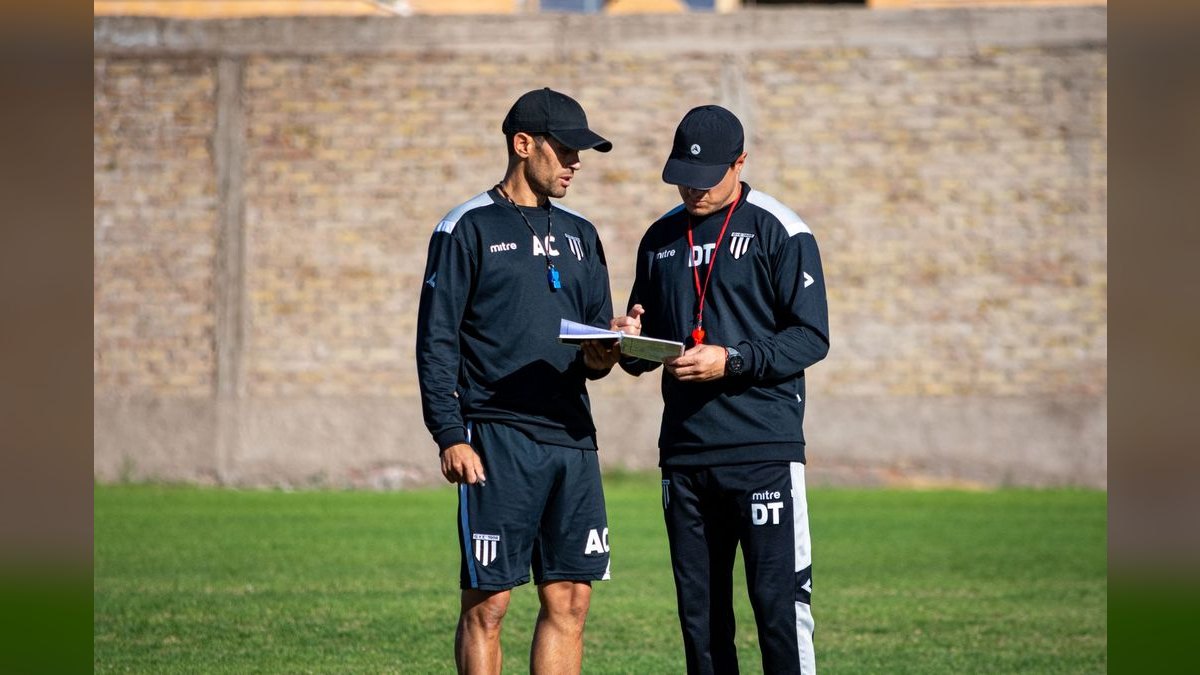
Coaching feature-by-feature instead of pain-by-pain. If your coaching agenda is organized by module, you are training a walking data sheet regardless of how good the individual sessions are. Organize the agenda by buyer problem — "this week, the RevOps lead whose forecast keeps missing" — and let the relevant capabilities attach to it.
No follow-through. A strong 1:1 with no Thursday call review is theater. The commitment made in the Will step is the only part of the meeting with a half-life; if you never check it, the rep learns that commitments here are decorative. Either close the loop or do not run the meeting.
Treating a will problem as a knowledge problem. If the rep will not do the work, more content is an escape hatch, not a remedy. That is an expectations conversation, and occasionally a wrong-fit-hire conversation. Confusing the two is kind in the moment and unkind over a quarter — you spend eight weeks assigning reading to someone who needed a direct conversation in week two.
Assuming buyers need the feature tour at all. Modern buyers self-educate extensively before they ever take a call; by the time the salesperson is on the line, the feature list is often already known. The rep's differentiated job is translation — this pain, in your specific environment, becomes this outcome — and coaching that still leads with a product tour is coaching to a job the buyer already did themselves.
Letting the coaching go dark after certification. Day 90 is not the finish line; it is the point where the rep stops needing daily reps and starts needing monthly ones. Product changes, competitors move, and the pain-to-outcome map goes stale. Re-run a reverse demo quarterly.
Related questions
How do I coach product knowledge when I don't know the product deeply myself?
Bring in a solutions engineer or a top rep for the content, and own the drill yourself. You do not need product depth to ask "so what?" and to hear whether the answer ends in a buyer outcome. Delegate the substance; keep the translation coaching.
Should the new salesperson shadow calls or run their own first?
Both, overlapping. Shadow two recorded or live calls daily in weeks one and two with a written one-line takeaway each, then start running discovery live with you listening by week three. Pure shadowing past three weeks builds passivity.
How much of this changes for a rep with prior sales experience?
Compress the calendar, not the drill. An experienced rep usually reaches conversational fluency in 30 to 45 days rather than 90, but they carry a specific risk: confidently mapping your product onto their old one. Reverse demos catch that faster than anything else.
What if the whole team, not just the new hire, sounds like a brochure?
Then it is a system problem, not a coaching problem. Fix the enablement content, build the pain-to-outcome map at the team level, and run the so-what ladder in a group setting. Coaching one new salesperson inside a feature-dumping culture will not hold.
FAQ
How long does it take to coach a new salesperson on product knowledge?
Plan for 30 to 90 days to foundational fluency, driven by product complexity and prior experience. The 30/60/90 cadence sequences it: month one on the three highest-revenue use cases, month two on objections and competitive positioning, month three on the full catalog plus a live certification.
What exactly is the "so what?" drill?
You name a feature, the rep explains it, and you ask "so what?" repeatedly until they land on an outcome a budget-holder cares about. Typically three to four rungs. It converts spec knowledge into buyer language, and it is the single highest-leverage eight minutes in a product-coaching 1:1.
How do I know whether the product knowledge is actually sticking?
Score recorded calls, not quizzes. Count feature mentions versus outcome statements across two to three calls a week; you want that ratio to invert over 90 days. Watch talk-to-listen ratio and whether product objections advance or stall the conversation.
What if the rep knows the product cold but freezes on live calls?
That is a skill gap, not a knowledge gap, and assigning more study makes it worse. Increase at-bats: objection role-play, reverse demos, and reviewing their own recordings for delivery and timing rather than content accuracy. Volume of reps fixes freezing; volume of content does not.
How do I handle a new hire who avoids doing the learning?
Stop coaching and set expectations. Put a certification gate in front of the next stage — they must demonstrate value-based conversations on recorded calls to advance — and hold it. If it persists past a couple of clear, documented conversations, treat it as a hiring-fit question rather than an enablement one.
Should I teach features first or buyer outcomes first?
Outcomes first, always. Introduce each capability already attached to the pain it resolves, so the rep never stores it as a standalone fact. Buyers arrive having researched the feature list themselves; the value a salesperson adds is translating their specific situation into a result.
Sources
- Gong Labs — sales conversation research and call analytics
- Harvard Business Review — sales management and coaching research
- MindTools — the GROW model of coaching and mentoring
- RAIN Group — sales training and coaching research blog
- Sandler — sales coaching and reinforcement methodology
- Winning by Design — SaaS sales frameworks and playbooks
- Gartner — sales practice research and insights
- SHRM — onboarding practices and new-hire ramp
Related on PULSE
- [Top 10 questions to identify gaps in a rep's product knowledge](/knowledge/cg0903)
- [Top 10 questions to measure a rep's product knowledge depth](/knowledge/cg0830)
- [How do you coach a brand-new sales manager on their first hire?](/knowledge/cg0802)
- [How do you coach a sales team through a major change like a new product?](/knowledge/cg0199)
- [What specific question can you ask a new sales rep in their first week to assess their understanding of your product's top three differentiators?](/knowledge/cg0856)
- [What is the single most effective question to ask a salesperson who is consistently missing quota?](/knowledge/cg0811)
This page will be disappearing soon. Save it to your device for $1 — or read it free while it is here.
@Kory-White- · if Venmo asks, the last 4 of my number are 2012
 sales-coachingHow do you coach reps to manage their own energy and time?
 sales-coachingHow do you document and track coaching across your team?
 sales-coachingHow do you coach salespeople to handle rejection?
 sales-coachingHow do you coach a rep to navigate a buying committee?
 sales-coachingHow do you turn around an underperforming sales rep?
 sales-coachingHow do you coach reps to improve their win rate?
 sales-coachingHow do you coach a rep who's overly focused on commission?
 sales-coachingHow do you coach reps to use AI for outreach without sounding robotic?
 sales-coachingHow do you coach a rep to improve forecast accuracy?
 sales-coachingHow do you know when coaching won't fix a sales rep?