
How do you coach a sales rep who's consistently missing quota?
 Curated byKory White · Fractional CRO · Maryland
 PULSEKNOWLEDGE LIBRARY
Coaching a sales rep who is consistently missing quota starts with diagnosis, not motivation. Pull 90 days of pipeline and call data, find the single funnel stage converting below the team median, then run a structured GROW conversation to determine whether the gap is skill, will, knowledge, or a broken system. Build a 30/60/90 plan around that one stage, measure a leading indicator weekly, and escalate to a performance plan if a genuine skill gap doesn't move after 60 days of real coaching.
The Outcome You Should Expect
When you coach the right cause instead of the missed number, the change shows up in leading indicators before it shows up in the quota line. A rep with a genuine, coachable skill gap — say, discovery calls that never surface real pain — typically shows measurable movement in the targeted metric within three to four weeks of focused drills: more qualified pain points logged, higher demo-to-proposal conversion, or a tighter talk-to-listen ratio in call recordings. That movement precedes the quota recovery by a full cycle or two, because pipeline created this month closes next month or the month after.
What you should not expect is an overnight fix. A rep who has been under-converting for two or three consecutive quarters didn't get there in a week, and the coaching won't reverse it in one either. Realistically, plan on 60 to 90 days from diagnosis to a durable behavior change, with the first 30 days spent almost entirely on stabilizing the leak rather than closing deals. Managers who expect an immediate quota swing set themselves and the rep up for disappointment and often abandon a plan that was actually working, just slower than hoped.

The other outcome worth naming honestly: not every rep responds. If the root cause is will — the rep understands exactly what to do and simply isn't doing it at the volume required — coaching alone rarely fixes it. You should expect roughly a third of "coaching cases" in any RevOps org to resolve not through skill-building but through a performance conversation, territory change, or exit. That's not coaching failure; it's coaching doing its job by correctly identifying that the lever you're pulling isn't the one that moves the number.
What Drives That Outcome
The reason coaching succeeds or fails almost always traces back to whether you diagnosed the correct stage before you intervened. A rep consistently missing quota is exhibiting a symptom; the funnel tells you where the actual leak sits. Four categories cover nearly every case, and each demands a different fix:

- Skill — the rep cannot yet execute a stage well: weak discovery questions, soft demos that never tie to value, closes that collapse under pricing pushback. This is coachable with targeted drills, role-play, and repetition.
- Will — the rep knows the mechanics but isn't putting in the reps: low dial volume, avoidance of hard conversations, coasting after one good month. Coaching helps only when the underlying motivation is reachable; otherwise it becomes a management issue.
- Knowledge — the rep lacks depth on the product, the buyer persona, or the competitive landscape, so they can't earn trust in the room. This is an enablement fix, not a 1:1 coaching fix, and no amount of role-play substitutes for product and market fluency.
- System — the rep is structurally set up to miss: a dead territory, a broken comp plan, thin lead flow, or a quota that doesn't match the patch's realistic total addressable market. Coaching a system problem burns trust and changes nothing, because the math itself is broken.
The mechanism that connects diagnosis to outcome is the GROW conversation — Goal, Reality, Options, Will. Its power isn't the acronym; it's that the rep, not the manager, articulates the gap and proposes the fix. A rep who can precisely describe where a call goes sideways almost always has a skill gap. A rep who stays vague, deflects, or blames external factors when asked the same question almost always has a will gap. That single tell, surfaced in the "Reality" step, is often more diagnostic than a week of pipeline analysis.
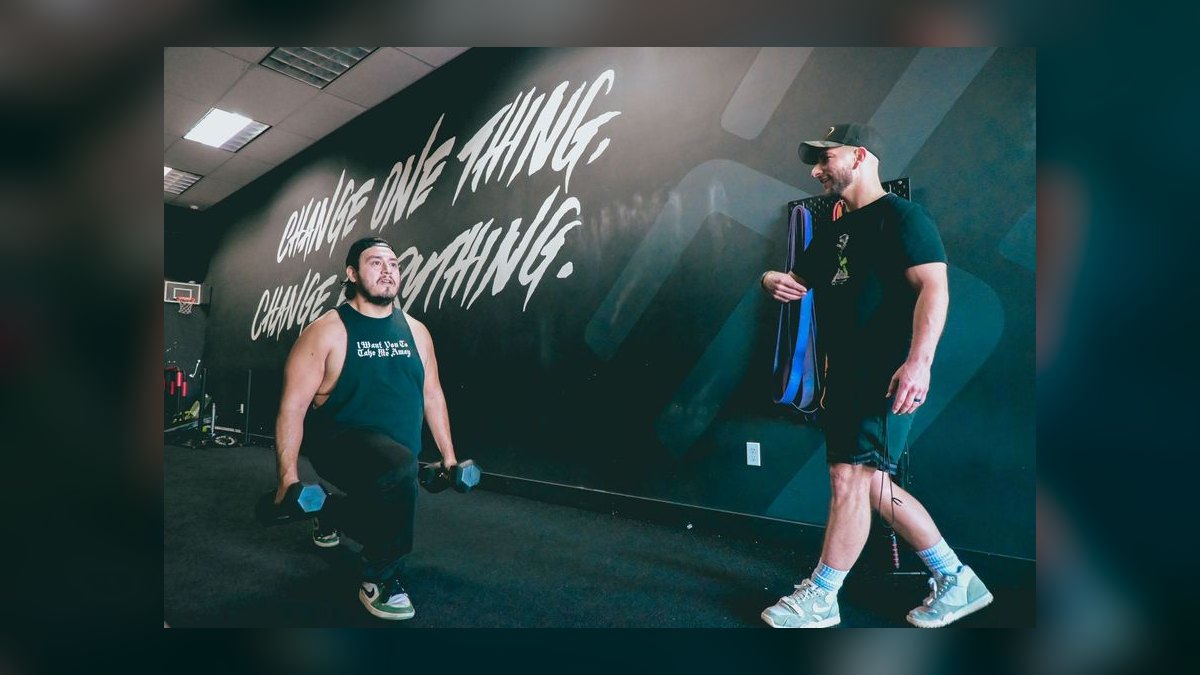
This is also where RevOps involvement changes the outcome for the better. A sales manager coaching from memory and gut feel will misdiagnose the cause more often than one working from clean CRM data, call-intelligence tagging, and a documented team benchmark. If your RevOps function maintains stage-conversion benchmarks by segment and rep tenure, use them — coaching against a real median beats coaching against an assumption every time.
Benchmarks and Realistic Ranges
Numbers vary by industry, deal size, and sales motion, but a few reference ranges hold up broadly enough to anchor a coaching conversation:

- New opportunities created per rep per month — for a mid-market B2B seller, team medians commonly fall in the 6-10 range; a rep creating 3-4 with adequate territory and lead flow has a top-of-funnel leak worth investigating before anything else.
- Discovery-to-demo conversion — healthy teams often see 50-65% of qualified discovery calls advance to a demo; anything meaningfully below that median points to a qualification or messaging gap rather than a closing problem.
- Demo-to-proposal conversion — a common benchmark range is 30-45%; a rep converting at half the team median here usually has a demo-to-value gap, not a discovery gap, so don't apply discovery drills to a demo problem.
- Proposal-to-closed-won — ranges vary widely by deal complexity, but 20-35% is a reasonable mid-market band; reps below this range often lack multi-threading (they're negotiating with a single champion, not the economic buyer).
- Pipeline coverage ratio — most RevOps teams target 3x to 4x quota in qualified, weighted pipeline at any given time; below 2.5x, a rep is mathematically unlikely to hit number regardless of close-rate skill.
- Time to diagnose and show movement — expect the first measurable shift in a targeted leading indicator within 3-4 weeks of focused coaching; expect 60-90 days before the lagging quota number reflects it.
- Time before escalating a will problem — most RevOps and sales-ops playbooks treat 45-60 days of documented, real coaching on the same behavior with zero movement as the threshold to shift from coaching to a formal performance plan.
These ranges are starting points, not universal law — a complex enterprise motion with 9-month cycles will have very different top-of-funnel numbers than a transactional SMB motion closing in two weeks. The discipline that matters isn't matching an external benchmark exactly; it's establishing your own team's internal median from your CRM and coaching each rep against that, because the team median already accounts for your product, your ICP, and your pricing.

Risks, Edge Cases, and Failure Modes
Several failure patterns show up repeatedly when managers try to coach a rep out of a quota miss, and most of them come from skipping diagnosis in favor of action:
Coaching the wrong cause. The single most common mistake is running role-plays and skill drills on a rep whose real problem is will — low activity, avoidance, or disengagement. Drills don't fix a motivation problem, and doing them anyway wastes coaching hours while the manager mistakenly believes they're addressing the issue. The inverse failure — treating a genuine skill gap as a will problem and simply demanding "more effort" — is equally common and equally unproductive, because a rep who doesn't know what to fix can't fix it by trying harder.
Rescuing instead of coaching. A manager who jumps onto a rep's call and closes the deal personally feels helpful in the moment but teaches the rep nothing and can quietly erode their confidence and credibility with the buyer. The deal gets saved; the underlying gap doesn't move an inch, and the rep is no better equipped for the next one.

No follow-through cadence. A strong 1:1 with a clear plan and no scheduled checkpoint is a conversation, not coaching. Without a recurring cadence — weekly or twice-weekly during the diagnose phase — the plan quietly dies and the manager is surprised a month later that nothing changed.
Confusing more activity with better selling. Doubling a rep's dial count when the actual leak is at proposal-to-close just produces more losses further down the funnel, faster. Activity fixes top-of-funnel leaks; it does nothing for a closing or negotiation gap.

System problems disguised as people problems. A rep in a genuinely thin territory, working stale leads, or saddled with a quota that doesn't match realistic TAM will show every symptom of a skill or will problem — low pipeline, poor conversion, low morale — without actually having one. Coaching this rep as though the fault is theirs damages trust and typically doesn't move the number, because the math was never solvable at the rep level. Compare the territory's lead flow and TAM against peers before assuming the rep is the variable.
Refusing to call the moment it stops being coachable. Extending coaching indefinitely on a rep who has had real support, real drills, and real time, and simply isn't executing, is unfair to the rep — who deserves clarity, not ambiguity — and to the rest of the team, who watch a manager tolerate underperformance. This isn't a failure of compassion to fix; it's a failure of clarity, and it should convert into a written performance plan with explicit metrics and a deadline.

Treating every rep with the same script. A one-size coaching template ignores that a will problem and a skill problem need opposite interventions. Applying identical drills to every underperformer wastes the manager's highest-leverage hours on reps who don't need them and starves the reps who do.
A Practical Rollout Plan
Structure the coaching engagement as a 30/60/90 loop built around the single broken stage you identified, not a general "do better" mandate:

Days 1-30 — Diagnose and stabilize. Pull pipeline and call data, compute stage-to-stage conversion against the team median, and confirm the one leaking stage. Run the GROW conversation to sort skill from will from knowledge from system. Set two 30-minute 1:1s per week, each anchored to a specific call recording or pipeline review, and set a single weekly leading-indicator target tied only to the broken stage — for example, "5 new qualified opportunities" if the leak is top-of-funnel, or "3 demo recordings reviewed" if the leak is demo-to-value.
Days 31-60 — Build the skill. Shift from diagnosis to repetition. Run role-play on the specific broken stage twice weekly, provide live-deal coaching on two active opportunities using a structured qualification framework like MEDDIC or SPIN, and gradually shift from manager-led to rep-led — the rep runs the play while the manager observes and debriefs, rather than demonstrating it themselves.

Days 61-90 — Prove durability. Pull back the scaffolding deliberately. The rep self-reviews one call per week using call-intelligence tooling and brings their own insight to the 1:1, rather than waiting for the manager to find it. Success at this stage means the leading indicator holds for three consecutive weeks without the manager actively driving it — that's the signal the change is real and not dependent on constant supervision.
Run this loop honestly: if 60 days pass with real drills, a real cadence, and zero movement on the targeted indicator, that is the signal to convert the engagement into a formal, written performance plan with explicit weekly targets and a stated consequence for missing them again — not to keep running the same coaching indefinitely.
Related questions
What's the fastest way to tell if a rep's problem is skill or will?
Watch how specifically they describe the breakdown during the GROW "Reality" step. A skill-gap rep can pinpoint the exact moment a call goes wrong; a will-gap rep stays vague, deflects, or blames external factors instead.
Should a manager coach the live deal or the underlying skill first?
Coach the live deal first to bank a win and preserve morale, but immediately extract the repeatable lesson afterward so the rep doesn't need rescuing on the next similar deal.
How is coaching a rep different from coaching an entire underperforming team?
Individual coaching targets one rep's specific broken funnel stage; team-level coaching usually points to a systemic issue — messaging, enablement, or a comp plan — that's producing the same gap across multiple reps at once.
What role does RevOps play in sales coaching?
RevOps supplies the clean pipeline data, stage-conversion benchmarks, and call-intelligence tagging that let a manager diagnose the real broken stage instead of guessing from gut feel.
Can a rep with a genuine territory problem ever be coached back to quota?
Only if the territory itself is fixed first — better lead flow, a corrected quota, or a stronger patch — because no coaching intervention repairs a quota that was never mathematically achievable.
FAQ
How long should I coach a consistently missing rep before deciding it isn't working? Give a focused 30/60/90 plan a genuine chance — most real skill gaps show measurable movement in the leading indicator within three to four weeks. If you've run structured coaching and weekly checkpoints for 60 days on the same gap with zero movement, treat it as a performance issue rather than a coaching one.
What's the single biggest mistake managers make when coaching missed quota? Coaching the wrong root cause — running skill drills on a will problem, or demanding more effort from a rep who genuinely lacks the skill. Diagnosing before intervening prevents most wasted coaching hours.
How do I know if the rep's territory, not the rep, is the real issue? Compare their patch's lead flow, total addressable market, and quota against peer territories. If the math doesn't support the quota regardless of who's selling, that's a system problem, and coaching won't resolve it.
How often should 1:1s happen with a rep who's missing quota? Twice weekly at roughly 30 minutes during the diagnose-and-build phase, each tied to a specific call or pipeline review, tapering to weekly once the leading indicator holds on its own.
Is a Performance Improvement Plan a failure of coaching? No — it's the honest next step once real coaching has run its course without movement. Clear metrics and a deadline are fairer to the rep than open-ended, indefinite coaching that never resolves.
Can call-intelligence tools replace manager coaching? No, but they accelerate diagnosis. Platforms that surface talk ratios, missed next steps, and stalled deals let a manager spend the 1:1 on the fix itself instead of hunting for where the call broke down.
Sources
- Harvard Business Review — Are You Coaching Your Team the Right Way?
- Sandler Training — The GROW Model of Coaching
- RAIN Group — Sales Coaching Best Practices
- Gong Labs — Sales Coaching Research
- MEDDIC Academy — What is MEDDIC
- Harvard Business Review — What Great Sales Coaching Looks Like
- Society for Human Resource Management — Performance Improvement Plans
Related on PULSE
- [What is the single most effective question to ask a salesperson who is consistently missing quota?](/knowledge/cg0811)
- [How do you coach a rep who keeps missing quota?](/knowledge/cg0758)
- [Top 10 questions to identify why a rep is missing quota](/knowledge/cg0840)
- [What question would you ask a rep who consistently loses deals at the proposal stage to diagnose the real issue?](/knowledge/cg0860)
- [How do you coach a sales team when you're also carrying a quota?](/knowledge/cg0006)
- [How do you coach a rep who's stressed about hitting quota?](/knowledge/cg0150)
This page will be disappearing soon. Save it to your device for $1 — or read it free while it is here.
@Kory-White- · if Venmo asks, the last 4 of my number are 2012
 sales-coachingHow do you know when coaching won't fix a sales rep?
 sales-coachingHow do you coach a top performer so they don't leave?
 sales-coachingHow do you coach a farmer rep to start hunting new logos?
 sales-coachingHow do you coach a rep who thinks their quota is unfair?
 sales-coachingHow do you coach reps to act on AI call-coaching feedback?
 sales-coachingHow do you coach a rep to improve forecast accuracy?
 sales-coachingHow do you follow up on coaching so it actually changes behavior?
 sales-coachingHow do you coach reps to use AI for outreach without sounding robotic?
 sales-coachingHow do you coach a renewals rep to protect revenue without discounting?
 sales-coachingHow do you coach a rep who interrupts prospects?