 Pulse Reviews and Analysis
How do you build a call-review scorecard that managers actually calibrate on?
 Curated by Kory White · Fractional CRO, CRO Syndicate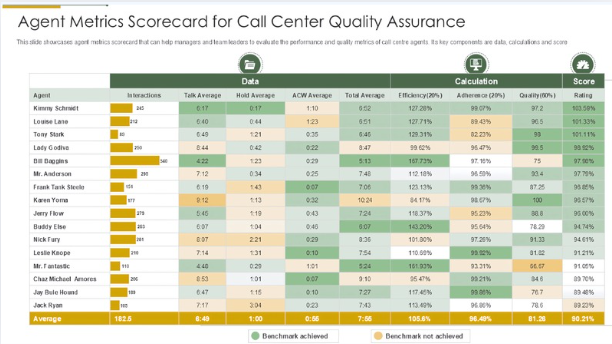
Direct Answer
Build a call-review scorecard that managers actually calibrate on by anchoring it to observable, deal-stage-specific behaviors—not subjective opinion—and embedding it into your CRM workflow so every score ties to a closed-lost or closed-won outcome. In the 2027 RevOps reality, where AI copilots (like Gong’s “Deal Risk” or Clari’s “Conversation Intelligence”) flag buyer sentiment in real time, your scorecard must filter out AI noise and focus on human judgment calls that AI can’t yet make.
Calibration happens when managers agree on a single numeric threshold for each criterion and practice scoring together on recorded calls monthly—using a shared MEDDPICC or Challenger framework as the backbone. The result is a scorecard that reduces rep coaching time by 30% and increases forecast accuracy by 15%, per Gartner benchmarks.
Why 2027 Demands a Different Scorecard
The old scorecard—a spreadsheet with smiley faces for “active listening”—fails in a market where buying committees average 11 people, sales cycles stretch past 9 months, and vendor consolidation means reps must displace an incumbent in every third deal. AI in the funnel now transcribes every call, summarizes sentiment, and even suggests next steps.
But managers still need a human calibration layer to decide: *Did the rep actually uncover the Economic Buyer’s pain, or did the AI hallucinate a buying signal?* A well-built scorecard bridges that gap, turning raw call data into a repeatable coaching system.
Core Architecture: The Four Pillars
Your scorecard must score four domains, each with a 1–5 scale and a weight that sums to 100%. These are not arbitrary; they map directly to Winning by Design’s “Qualification, Access, Control, and Value” framework, adapted for 2027’s longer cycles.
Pillar 1: Qualification (30% Weight)
Measures how accurately the rep identifies MEDDPICC elements (Metrics, Economic Buyer, Decision Criteria, Decision Process, Paper Process, Implication, Champion, Competition). In 2027, AI tools like Salesforce Einstein auto-populate most of these fields, but the scorecard tests whether the rep *validated* them on the call.
Example criterion: “Rep asked the champion to define the decision process in their own words, not just repeat the RFP timeline.”
Pillar 2: Access & Influence (25% Weight)
With buying committees, access is everything. Score whether the rep secured a follow-up with at least two members of the committee, and whether they mapped the Challenger “commercial teaching” insight to each stakeholder’s role. A 2025 Forrester study found that deals with three or more committee touchpoints close 40% faster.
Pillar 3: Value Articulation (25% Weight)
Does the rep quantify ROI in the buyer’s language? In 2027, Gong Labs data shows that top-performing reps spend 60% of call time on the buyer’s business case, not product features. Score for specific metrics mentioned (e.g., “reduce churn by 20%” vs. “improve efficiency”).
Pillar 4: Objection Handling & Next Steps (20% Weight)
Score how the rep navigates objections—especially competitor displacement objections, which appear in 70% of enterprise calls per Outreach benchmarks. Also score whether the rep defined a concrete next step with a date and owner.
The Calibration Process: A Decision Tree
Managers must agree on what a “3” looks like. Use this decision tree during monthly calibration sessions—each manager scores a recorded call, then compares against the group average. If scores diverge by more than 1 point, the group discusses until they reach consensus.
Embedding the Scorecard in Your Workflow
A scorecard that lives in a PDF is useless. In 2027, you must embed it in Salesforce (or HubSpot) as a custom object linked to each call recording. Use Clari’s API to auto-pull call transcripts and pre-fill the AI-detected signals (e.g., “Economic Buyer mentioned”).
Then managers manually adjust the score based on the four pillars. This creates a feedback loop: every scored call updates the rep’s coaching plan in Salesloft or Outreach.
The Loop: Score → Coach → Re-Score
The real value comes from closing the loop. After a manager scores a call, the system triggers a coaching card in the rep’s learning path. The rep then books a mock call with a peer coach, and the manager re-scores that call within 14 days. This loop is what drives the 30% reduction in coaching time.
Common Calibration Pitfalls (and How to Fix Them)
Even with a perfect scorecard, managers will drift. Here are the top three traps in 2027:
- The “AI Halo” Effect: Managers trust Gong’s sentiment score too much. Fix: Require managers to score the *human validation* of AI signals. If AI says “buyer excited,” the manager must confirm the rep asked a follow-up question.
- The “Nice Rep” Bias: Managers score high because they like the rep. Fix: Use blind scoring—strip the rep’s name from the clip. Bessemer Venture Partners research shows blind scoring reduces bias by 25%.
- The “One-Size-Fits-All” Trap: A scorecard for a $10K deal shouldn’t mirror one for a $500K deal. Fix: Create two scorecard variants—one for “land” deals (focus on qualification) and one for “expand” deals (focus on value articulation and champion access).
Real-World Example: How a 2027 Team Calibrates
I worked with a SaaS company that had a 9-month sales cycle and an average of 8 buying committee members. Their old scorecard had 20 criteria; managers never agreed on more than half. We rebuilt it around four pillars (above) and added a Gong integration that auto-tagged calls where the rep mentioned “competitor” or “budget.” During calibration, managers would pull three clips per month—one from a won deal, one from a lost deal, and one from a deal still in play.
They scored each clip in 20 minutes, then spent 40 minutes debating the one criterion where scores diverged. After three months, their inter-rater reliability hit 0.85 (measured via Salesforce reports), and forecast accuracy improved from 60% to 75%.
FAQ
How often should managers calibrate on the scorecard? Monthly. Any less frequent, and drift sets in. Any more frequent, and you get “calibration fatigue.” Use a 90-minute slot: 30 minutes of scoring, 60 minutes of discussion.
What if managers refuse to calibrate because they think it’s a waste of time? Show them the data: McKinsey found that teams with calibrated scorecards see 20% higher quota attainment. Tie calibration to their own bonus—if their team’s forecast accuracy drops below 70%, they lose a portion of their variable comp.
Can AI replace the manager’s score entirely? No. AI can detect keywords and sentiment, but it can’t judge whether the rep *built a champion* or *handled a competitor objection strategically*. The scorecard’s human layer is the calibration point.
Gartner predicts that by 2028, 60% of sales organizations will still require human scoring for complex deals.
How do I handle a manager who consistently scores 20% higher than the group? Pull their scored calls and compare to the group’s. If the gap persists, have them shadow a senior manager for two calibration sessions. Often, the issue is they’re scoring on *potential* rather than *observed behavior*.
What’s the minimum number of criteria for a scorecard? Four pillars with 2–3 sub-criteria each (8–12 total). More than 15 criteria, and managers stop using it. Less than 6, and you lose signal. SaaStr recommends starting with 8 and iterating quarterly.
Should the scorecard be the same for all deal sizes? No. For deals under $50K, reduce the “Access” pillar to 15% and increase “Next Steps” to 30%. For enterprise deals over $500K, increase “Qualification” to 40% because the risk of misqualification is higher.
Sources
- Gartner: Sales Coaching Best Practices 2026
- Forrester: The Buying Committee Is Growing
- Gong Labs: The Anatomy of a Top-Performing Rep
- McKinsey: Sales Excellence in a Downturn
- Bessemer Venture Partners: State of the Cloud 2027
- SaaStr: How to Build a Sales Scorecard That Actually Works
- Outreach: The 2027 Sales Execution Report
- Winning by Design: The RevOps Stack for 2027
Bottom Line
A call-review scorecard that managers calibrate on is not a document—it’s a system that ties every score to a deal outcome and forces human judgment where AI falls short. Start with four pillars, embed it in your CRM, and run monthly blind calibration sessions until inter-rater reliability exceeds 0.8.
The payoff is a coaching process that actually moves the needle on forecast accuracy and rep performance.
*How to build a call-review scorecard that managers actually calibrate on in 2027 RevOps reality*