


What is the average cost per person for a top 10 restaurant in 2027?
Quality
Certified
Expect roughly $250 to $500 per person at a top 10 restaurant in 2027, before wine. A single tasting menu typically runs $325–$425, with pairings adding $150–$275 and service and tax pushing the all-in average cost per person past $600 at the highest tier.
Booking a table and reading the real bill
Picture a couple who wins a reservation lottery for a globally ranked dining room in spring 2027. The menu price on the website reads $345 per person. That number is the anchor everyone quotes, but it is not what leaves the bank account. The final tab is assembled from five separate layers, and each one behaves differently.
The first layer is the prepaid ticket. Most restaurants at this tier moved to full prepayment years ago, charging the card at booking rather than at the table. That means the $345 is non-refundable inside a 72-hour window and is often quoted exclusive of tax. The second layer is beverage. A wine pairing at a three-star-caliber room typically lands between 50% and 75% of the food price, so $175 to $260 on a $345 menu. A reserve pairing, where the sommelier pours older or allocated bottles, can equal or exceed the food price outright. Ordering by the bottle instead is sometimes cheaper, sometimes not: markups on the list at this tier run 2x to 2.5x retail on mid-list bottles and compress toward 1.6x on trophy bottles, so a $400 bottle split two ways can undercut two pairings.
The third layer is supplements. Caviar service, truffle shavings during winter, or an A5 wagyu course are priced à la carte on top of a fixed menu, commonly $60 to $150 each. The fourth is service. Roughly half of top-tier rooms now bake service into the menu price and say so explicitly; the other half still expect 18% to 22%. If you cannot tell which, the menu language matters — "service included" or "all-inclusive pricing" versus silence. The fifth is tax, which in major dining cities runs 8% to 10.5% on food and beverage.
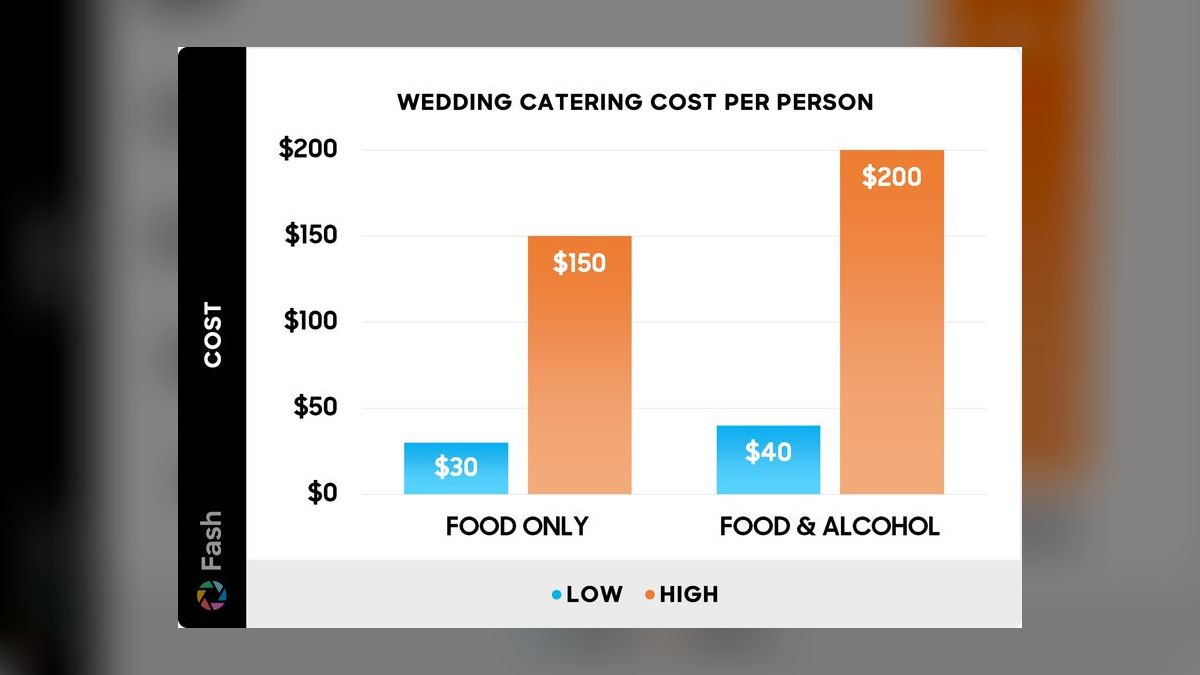
Run the couple's actual arithmetic. Two tickets at $345 is $690. Two standard pairings at $210 is $420. One caviar supplement at $95. Subtotal $1,205. Add 8.875% tax and a 20% service charge and the table pays roughly $1,552, which is $776 per person. The advertised number was $345. The multiplier between headline price and final average cost per person at this tier is reliably 1.7x to 2.2x when you drink, and about 1.3x when you do not.
That gap is the single most useful thing to internalize. Anyone budgeting off the menu price alone will be short by hundreds of dollars per couple, and the shortfall is almost entirely predictable.
How the pricing mechanism actually works
The per-person price at a top 10 restaurant is not set by food cost. Food cost at this tier typically runs 28% to 38% of the menu price, which is high by restaurant standards but not the binding constraint. The binding constraint is labor against covers.
A dining room in this category runs a staff-to-guest ratio that would bankrupt a normal restaurant. It is common to see 30 to 45 employees serving 40 to 60 guests per night across two seatings, counting kitchen, front of house, sommeliers, pastry, and stage. Some rooms approach one staff member per guest. Those employees are increasingly salaried with benefits rather than tipped hourly, which was a deliberate industry shift and a major driver of menu inflation over the past decade.
Now do the division. If a restaurant carries $220,000 per month in fully loaded labor, plus $45,000 in rent, plus $30,000 in insurance, utilities, licensing, and amortized buildout, it needs roughly $295,000 monthly before buying a single ingredient. Serve 50 guests a night, five nights a week, and that is about 1,000 covers per month. Fixed cost per cover is $295. Layer food cost of $110 and the break-even sits near $405 per person before any profit, before waste, before the R&D kitchen that ranked restaurants run to stay ranked.
This is why the number cannot drift far below $300. It is arithmetic, not positioning. When you see a ranked room charging $180, it almost always means one of three things: the covers are much higher (90 to 120 a night), the labor is family or partner-owned rather than salaried, or the real estate is owned rather than leased.
The second mechanism is demand rationing. A room with 50 seats and a global waitlist has no price-elasticity problem in the normal sense. Raising the menu from $345 to $395 does not reduce demand; it reduces the waitlist. That gives these restaurants unusual pricing freedom, and the observed pattern is annual increases of 5% to 10% — faster than general food inflation, because the constraint being priced is scarcity, not ingredients.
Third, prepayment changes the economics on the restaurant's side. Charging at booking eliminates no-shows, which historically ran 8% to 20% at reservation-only rooms and were pure loss against a fully staffed night. Killing that loss let some restaurants hold prices flatter than they otherwise would have. It also means the restaurant holds your money for 30 to 90 days, which is meaningful working capital at this volume.
Real numbers, ranges, and benchmarks

Break the field into bands, because "top 10" means different things depending on whose list you read and what city you are in.
Tier one — the globally ranked tasting rooms. These are the names that appear on the World's 50 Best list or hold three Michelin stars. Menu-only pricing in 2027 sits around $350 to $475 per person in the United States, Scandinavia, and Japan's high end. With standard pairings, service, and tax, the realistic all-in average cost per person is $650 to $900. Two people should budget $1,400 to $1,800 for the evening, and the top of that band is not unusual.
Tier two — nationally ranked, one or two stars, or city best-of lists. Tasting menus of $185 to $285. Pairings of $95 to $165. All-in per person of $350 to $500. This is where most "top 10 in [city]" lists actually live, and it is a materially different budget from tier one.
Tier three — top 10 by popularity rather than critical ranking. Lists built from reservation-platform data or review volume include steakhouses, sushi counters, and destination Italian rooms that are à la carte rather than fixed menu. Per-person spend here is driven by what you order, and the observed average is $120 to $220 with wine — a wide band because a shared pasta and one glass and a dry-aged ribeye with a bottle live in the same restaurant.

Component benchmarks worth memorizing:
- Tasting menu, three-star tier: $325–$475
- Tasting menu, one-star tier: $145–$245
- Standard wine pairing: 50%–75% of food price
- Reserve or premium pairing: 90%–130% of food price
- Non-alcoholic pairing: $75–$140, usually 35%–45% of food price
- Caviar supplement: $85–$175 for a standard service
- Truffle supplement, in season: $60–$120 per course
- Corkage where permitted: $75–$200 per bottle, often capped at two bottles
- Service charge where not included: 18%–22%
- Tax, major U.S. dining cities: 8%–10.5%
Geography moves the number substantially. Tokyo's ranked sushi counters often price at 30,000 to 60,000 yen, which converts near $200 to $400 but comes with almost no tipping and lower tax, so the effective all-in is closer to the menu price than in New York. Paris and Copenhagen include service by law or convention, so the listed price is much nearer the true cost per person. American pricing carries the largest gap between listed and final, because tipping culture and higher sales tax both stack on top.
Lunch is the most reliable discount in fine dining. Where a ranked restaurant serves lunch, the same kitchen, same room, often a shortened version of the same menu runs 40% to 60% of dinner. A $395 dinner becomes a $175 to $235 lunch. Chef's counter or kitchen table seating runs the other direction — a $75 to $200 premium over the dining room for the same food.
Trade-offs: where to spend and what to skip

The decision that moves your bill most is beverage, not food. Food price is fixed and non-negotiable at a tasting-menu restaurant. Beverage is where a $700 evening becomes a $400 evening or a $1,100 one.
Pairing versus bottle. A pairing is 5 to 8 pours of 2 to 3 ounces, so roughly one to one-and-a-half bottles' worth of wine per person. At $210 per pairing for two people, you are paying $420 for the liquid equivalent of about two and a half bottles, or roughly $170 a bottle at list. A single well-chosen $250 bottle for the table, split across the meal, costs $170 less and often drinks better. The trade-off is real: pairings are curated to the courses and give you access to by-the-glass pours of wines you could not buy by the bottle. If the sommelier program is the reason you booked, pay for it. If you booked for the food, order one bottle.
Non-alcoholic pairing. These have become genuinely good — fermented juices, teas, clarified infusions — and price at 35% to 45% of the food menu rather than 50% to 75%. For a table of two that would otherwise take wine pairings, choosing the non-alcoholic option saves $150 to $220 and is not a lesser experience at the rooms that take it seriously.
Supplements. These carry the worst value ratio on the bill. A $120 truffle supplement adds a garnish to a course you already paid for. A $150 caviar course is priced at 4x to 6x the retail cost of the tin. If the menu is already 12 courses, the marginal enjoyment of course 13 is small. The exception is when the supplement is the restaurant's signature — some rooms deliberately place their best work behind the supplement because it lets them hold the headline price down.
Lunch versus dinner. Discussed above, and it is the single largest available saving: 40% to 60% off for substantially the same experience, minus some evening atmosphere and occasionally two or three courses.
Bar or counter menu. A growing number of ranked restaurants run an à la carte bar program in the same building with the same kitchen. Per-person spend of $90 to $160 gets you three or four of the restaurant's actual dishes without the ticket. This is the highest value-per-dollar path into a top 10 kitchen and requires no reservation lottery.
Timing within the year. Ranked restaurants raise prices on a schedule, usually at the turn of the calendar year or the start of a new seasonal menu. Booking in November for a January date sometimes means paying the new price even though you reserved under the old one, because the ticket is charged at booking but the menu is repriced independently. Read the confirmation email for repricing language.
Party size. Four to six people is the efficiency sweet spot. Bottles split further, supplements can be ordered once for the table at some rooms, and the per-person average drops 10% to 15% versus a couple ordering the same way. Above eight, most ranked restaurants push you to a private dining minimum, which resets the math upward — minimums of $3,000 to $10,000 for the room are common, and that minimum is food and beverage only, exclusive of service and tax.
Common pitfalls and how to avoid them

Budgeting off the headline number. Already covered, but it is by far the most common error. Multiply the listed menu price by 1.7 to 2.2 if you plan to drink and by 1.3 if you do not. Do this before you book, not after the card is charged.
Assuming the prepaid ticket covers everything. Some prepaid systems include service and tax in the charged amount; many charge only the food and settle everything else at the table. The confirmation will say. If it does not, the safe assumption is that you owe more at the end of the night.
Not checking the cancellation window. Non-refundable inside 48 to 72 hours is standard, and at the tightest rooms the ticket is non-refundable from purchase, transferable only. A cancelled anniversary can cost the full amount. Some restaurants let you resell or transfer the reservation through their platform; know whether yours does before you buy.
Missing dietary restrictions at booking. Tasting-menu kitchens plan and purchase against a confirmed guest count and confirmed restrictions. Raising an allergy at the table produces a worse meal — substitutions improvised on the line rather than designed. Every serious room asks at booking; answer completely, including preferences you think are minor.
Overlooking the second tax line. In several U.S. cities a service charge is itself taxable, so a 20% charge on a $1,200 subtotal generates tax on $1,440, not $1,200. It is a small number, $20 or so, but it surprises people who did careful arithmetic and still came in short.

Confusing a ranked restaurant with a ranked list. "Top 10 restaurant" depends entirely on the list. A Michelin three-star, a World's 50 Best entry, a newspaper critic's annual ten, and a reservation-app popularity ranking select for different things and price 3x apart. Before budgeting, know which list you are reading and what tier it actually represents. This is the reason the honest answer to the average cost per person spans such a wide band.
Ignoring the drink-free path. Skipping alcohol entirely at a $395 tasting menu takes the all-in from roughly $760 to roughly $515 per person. That is a 32% reduction from one decision, larger than any other single lever on the bill.
Booking the wrong seat. Chef's counter, kitchen table, and private room seatings carry premiums of $75 to $200 per person over the main dining room for identical food. If you want the premium seat, buy it deliberately. If you clicked it because it was the only availability shown, you may have paid for something you did not want.
Underestimating the shoulder costs. Parking or a car at $40 to $90, a hotel if the restaurant is a destination, and the pre- or post-dinner drink that almost always happens. These are outside the restaurant's bill but inside the evening's real cost, and they add $75 to $150 per person routinely.
Related questions
How much should two people budget for a three-star dinner?
Plan $1,400 to $1,800 all-in with wine pairings, service, and tax. Without alcohol, $950 to $1,200. If the room includes service in the menu price, take the low end of each band.
Is the wine pairing worth the money?
Sometimes. It costs 50% to 75% of the food price and delivers roughly one and a half bottles per person in small pours. If the sommelier program is a stated draw, yes. Otherwise one shared bottle is usually better value.
Do top restaurants still expect a tip?

Roughly half include service in the price and say so plainly. The other half expect 18% to 22%. Look for "service included" language on the menu or confirmation; if it is absent, assume you are tipping.
What is the cheapest way to eat at a top 10 restaurant?
Lunch service at 40% to 60% of dinner pricing, or the à la carte bar program where one exists, at $90 to $160 per person. Both use the same kitchen.
Why do prices vary so much between top 10 lists?
Because the lists measure different things. Critical rankings select for ambitious tasting menus at $325 and up; popularity rankings select for volume and include à la carte rooms averaging $120 to $220 per person.
FAQ
What is the average cost per person for a top 10 restaurant in 2027?
Roughly $250 to $500 for the food alone at globally ranked rooms, with the tasting menu itself typically $325 to $425. Once wine pairings, supplements, service, and tax are added, the true all-in average cost per person lands between $600 and $800, and can exceed $900 at the very top. City and national "top 10" lists run considerably lower, often $350 to $500 all-in.
Why is the price so much higher than the menu says?

Four things stack on top: beverage at 50% to 75% of the food price, supplements at $60 to $150 each, service at 18% to 22% where it is not included, and sales tax at 8% to 10.5%. Together they produce a 1.7x to 2.2x multiplier on the advertised number for a guest who drinks.
What drives the underlying cost the most?
Labor against covers. These restaurants run 30 to 45 staff for 40 to 60 guests a night, increasingly on salary with benefits rather than tips. Fixed cost per cover commonly reaches $295 before any ingredient is purchased, which is why menu prices cannot realistically fall below about $300 at this tier.
Is prepayment standard now?
Yes at most ranked tasting-menu restaurants. The card is charged at booking, cancellation windows run 48 to 72 hours, and some tickets are non-refundable from purchase with transfer as the only remedy. Read the confirmation for whether service and tax are inside or outside the charged amount.
How much cheaper is lunch?
Where a ranked restaurant serves lunch, expect 40% to 60% of the dinner price for a shortened version of the same menu from the same kitchen. A $395 dinner commonly appears as a $175 to $235 lunch, which is the largest structural discount available.
Does the number differ by country?
Substantially. Tokyo, Paris, and Copenhagen include service and carry lower consumption tax, so the listed price is close to the final one. American pricing has the widest gap between headline and total because tipping and higher sales tax both stack on top of the menu.
Sources
- https://guide.michelin.com/
- https://www.theworlds50best.com/
- https://www.bls.gov/cpi/
- https://www.nytimes.com/section/food
- https://www.eater.com/
- https://www.jamesbeard.org/
- https://www.restaurant.org/research-and-media/research/
- https://www.bonappetit.com/
- https://www.tax.ny.gov/
- https://www.reuters.com/business/retail-consumer/
Related on PULSE
- Why prepaid reservations replaced the no-show problem in fine dining
- Wine pairing versus bottle: the arithmetic behind the sommelier's pitch
- How restaurant labor models shifted from tipped hourly to salaried
- Reading a "top 10" list: what each ranking actually measures
- The economics of the tasting menu and why courses keep multiplying
- Lunch service as the value arbitrage in destination dining
This page will be disappearing soon. Save it to your device for $1 — or read it free while it is here.
@Kory-White- · if Venmo asks, the last 4 of my number are 2012
This page is gone.
This one is off the shelf now. $1 keeps it on your phone for good — the whole page, pictures and diagrams included.
 diningTop 10 Places to Dine in Portland for Dungeness Crab in 2027
 diningTop 10 Steakhouses in Florida in 2027
 diningTop 10 Steakhouses in Virginia in 2027
 pulse-recentTop 10 Steakhouses in Colorado in 2026
 diningTop 10 Steakhouses in Milwaukee in 2027
 diningTop 10 Steakhouses in Roswell in 2027
 diningTop 10 Steakhouses in Park City in 2027
 diningTop 10 Steakhouses in Wisconsin in 2027
 pulse-recentTop 10 Steakhouses in Kentucky in 2026
 diningTop 10 Most Affordable Michelin-Starred Restaurants in 2027