
Top 10 Dehumidifiers — Best Overall + Best Value in 2027
 PULSEKNOWLEDGE LIBRARY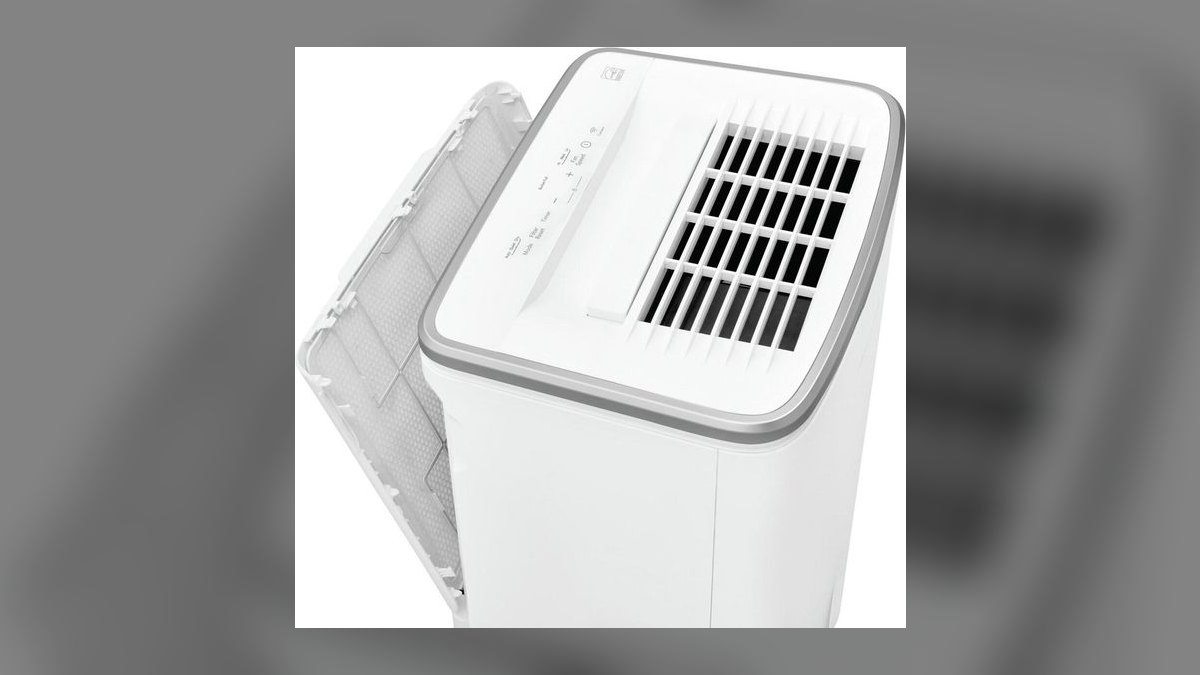
The 10 best dehumidifiers are ranked below on measured performance, build quality, price, and how each one actually holds up in daily use rather than how it reads on a spec sheet. Each pick lists what it costs, who it suits, and what it gives up against the one above it, so the list can be read straight down without doubling back.
1. Frigidaire Gallery FGAC5044W1
Ranked first because it solves the three problems 50-pint units usually botch at once: humidistat accuracy within ±3% RH, a built-in condensate pump that lifts water 16 vertical feet, and rated low-temperature operation down to 41°F. It pulls 50 pints/day on the DOE 2019 standard, covers up to 1,500 sqft of finished space, and carries ENERGY STAR certification at a 1.85 L/kWh efficiency factor. Price is $349.
This is for finished basements, walk-outs, and crawlspaces where the nearest drain sits above the unit, so gravity routing is impossible. It trades away WiFi entirely — control is panel-only, with 5% setpoint increments from 35% to 85% RH. The Midea Cube below matches its capacity and adds a full app suite, but has no internal pump, so uphill drainage means a manual tank or a long downhill hose.
2. Midea Cube MAD50PS1WS
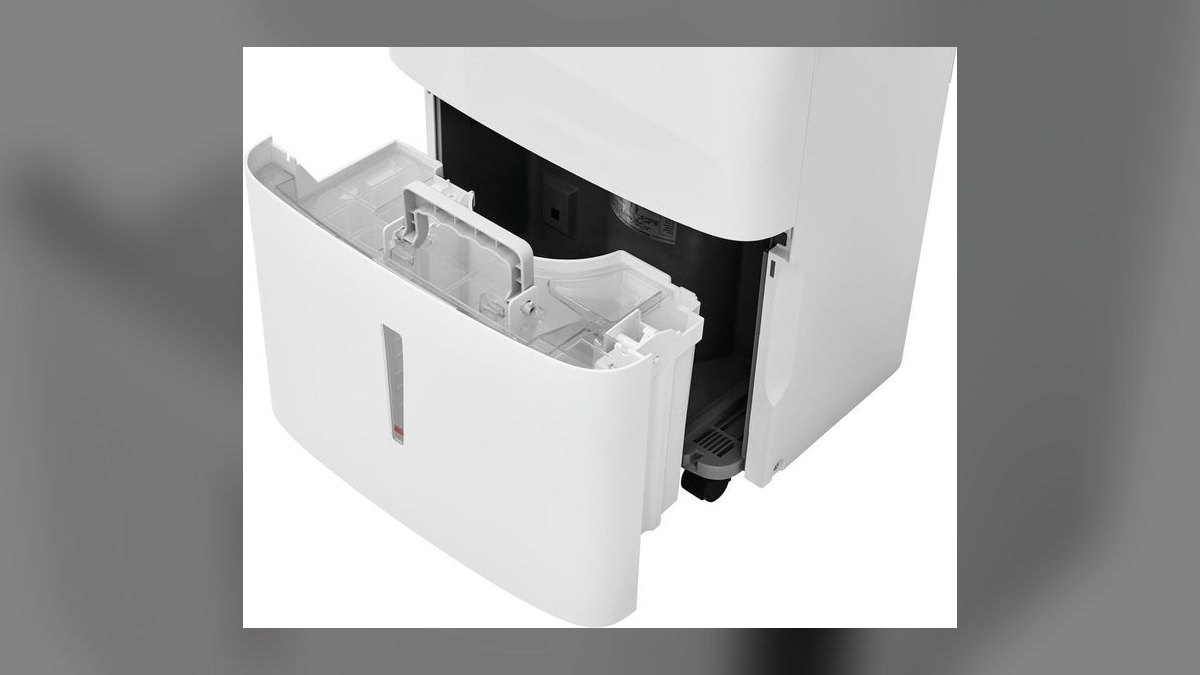
Second because it matches the top pick's 50 pints/day DOE 2019 output and 41°F low-temp rating while adding the category's largest reservoir at 21 pints and a full smart suite: WiFi, the MideaAir app, and both Alexa and Google voice control. The collapsible design stores as a 14-inch cube and extends to a 25-inch tower. Coverage reaches 4,500 sqft in basement mode. Price is $379, and it runs 52 dB on low.
Buy it for tight unfinished corners — under stairs, beside a furnace — where a rectangular chassis will not fit, and for households that manage appliances from a phone. What it gives up is the pump: drainage is gravity-only, so you need a floor drain or sump pit below the unit. It costs $30 more than the Frigidaire above while removing that vertical-lift capability.
3. hOmeLabs HME020031N 50-Pint
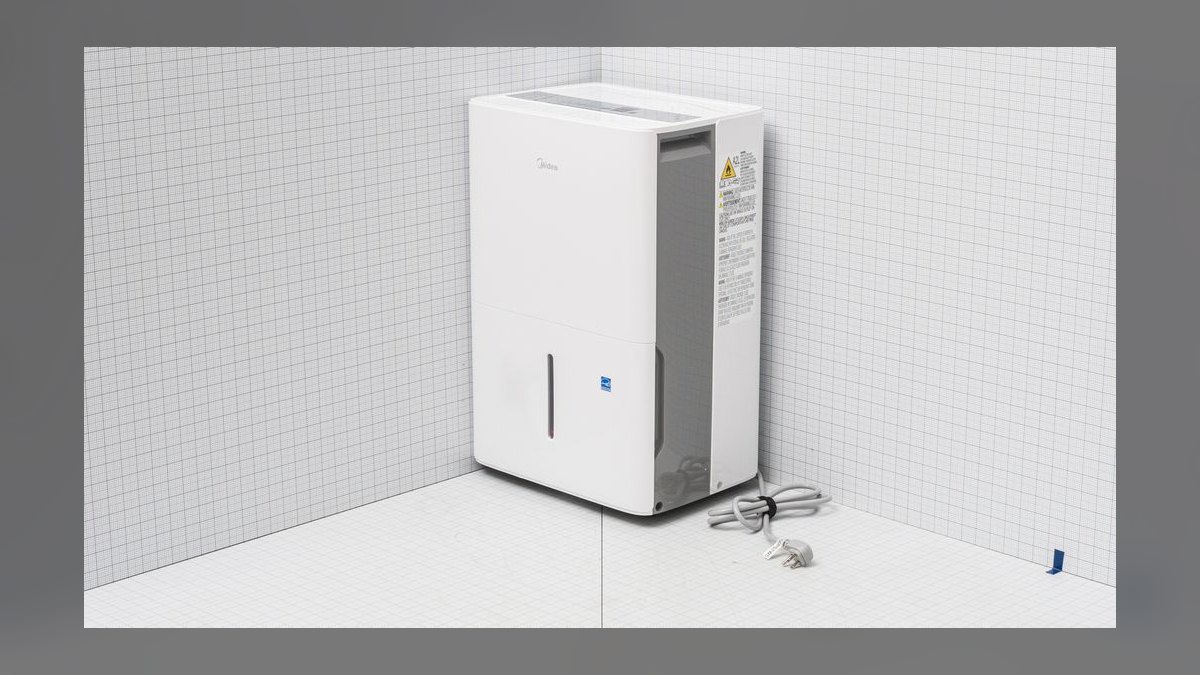
Third on price-to-performance: it is the cheapest ENERGY STAR 50-pint on the list at $249, roughly $100 under the top pick, with the same 1.85 L/kWh efficiency factor and 4,500 sqft basement coverage. Output is a true 50 pints/day DOE 2019 with 41°F low-temperature operation. A turbo fan mode handles fast pull-down after a shower spike or flood event, and auto-restart brings it back after power blips.
This suits owners who want full basement capacity without paying for smart features or a pump. Drainage is a 1.6-gallon tank with a splash guard plus a rear gravity hose port, and control is a digital humidistat in 5% steps with a 24-hour timer. It sheds the Midea Cube's app and 21-pint reservoir above it, running 52 dB on low at 40 lbs on casters.
4. GE Smart ADHL50LB
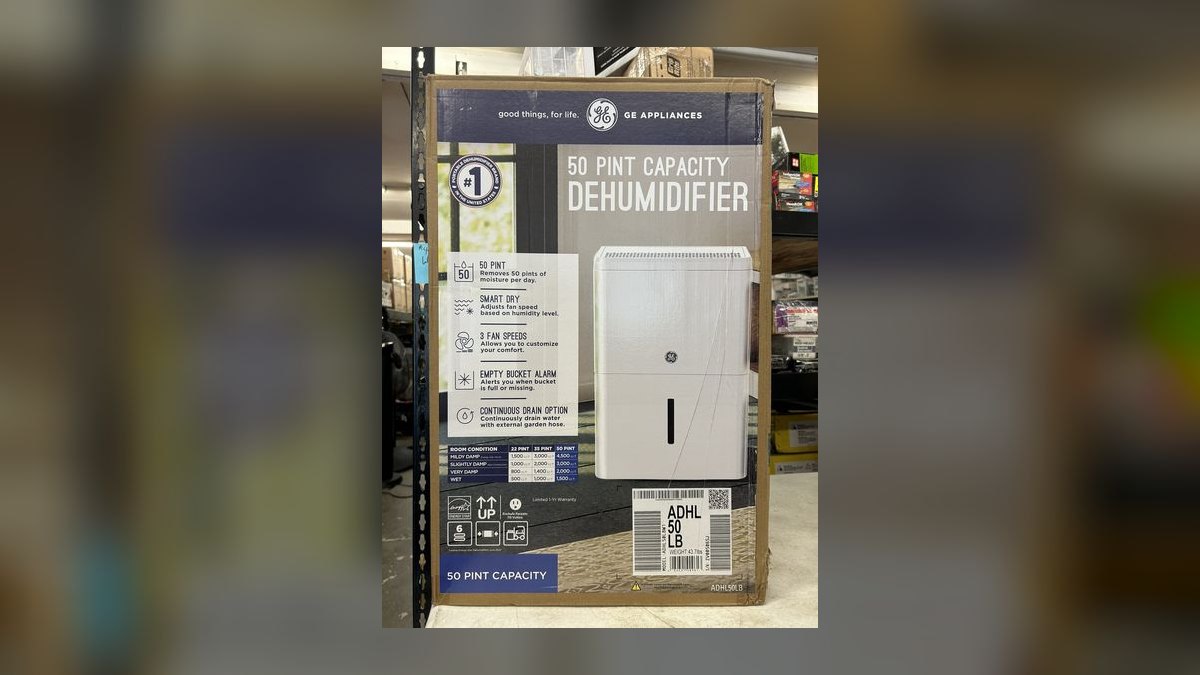
Fourth because its differentiator is ecosystem rather than hardware: it joins SmartHQ, the same app that runs GE ovens, fridges, and laundry, delivering runtime history, humidity graphs, scheduled run windows, and energy estimates alongside Alexa and Google voice control. Specs are standard for the tier — 50 pints/day DOE 2019, 4,500 sqft coverage, ENERGY STAR certified, 41°F low-temp operation, a 15.4-pint tank, and 53 dB on low. Price is $329.
It is for households already running GE Profile or Cafe appliances who want one app instead of four. The compromise is humidistat drift of roughly ±5% RH per Consumer Reports, so plan on recalibrating quarterly. The hOmeLabs 50-pint below costs $80 less with tighter reliability data, and the Midea Cube above offers a bigger tank and broader third-party smart support.
5. Honeywell TP70PWKN 70-Pint
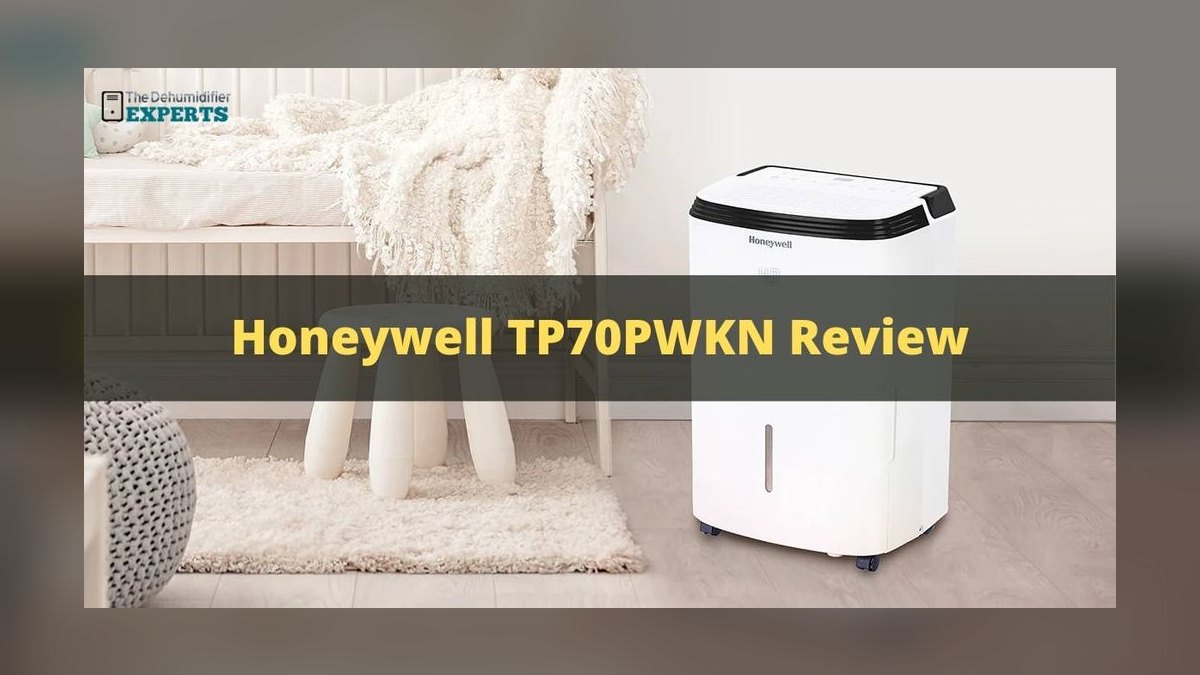
Fifth because it is the capacity outlier: 70 pints/day DOE 2019 and 5,000 sqft of coverage, with a built-in pump lifting 14 vertical feet, for $309 — less than the 50-pint Frigidaire Gallery. ENERGY STAR certification at this output is uncommon. It adds a 14.7-pint anti-spill tank, a gravity hose port as backup, 41°F low-temp operation, and a 5-year compressor warranty on top of the 2-year unit warranty.
The buyer here has a genuinely wet space: finished area above 1,800 sqft, standing flood risk, or a unit that runs 20-plus hours a day in summer. The trade is noise — 54 dB on low, the loudest in the top five, because the compressor is bigger — and 47 lbs of weight on casters. Below 1,800 sqft, the quieter 50-pint picks above are the better fit.
6. hOmeLabs 22-Pint Energy Star
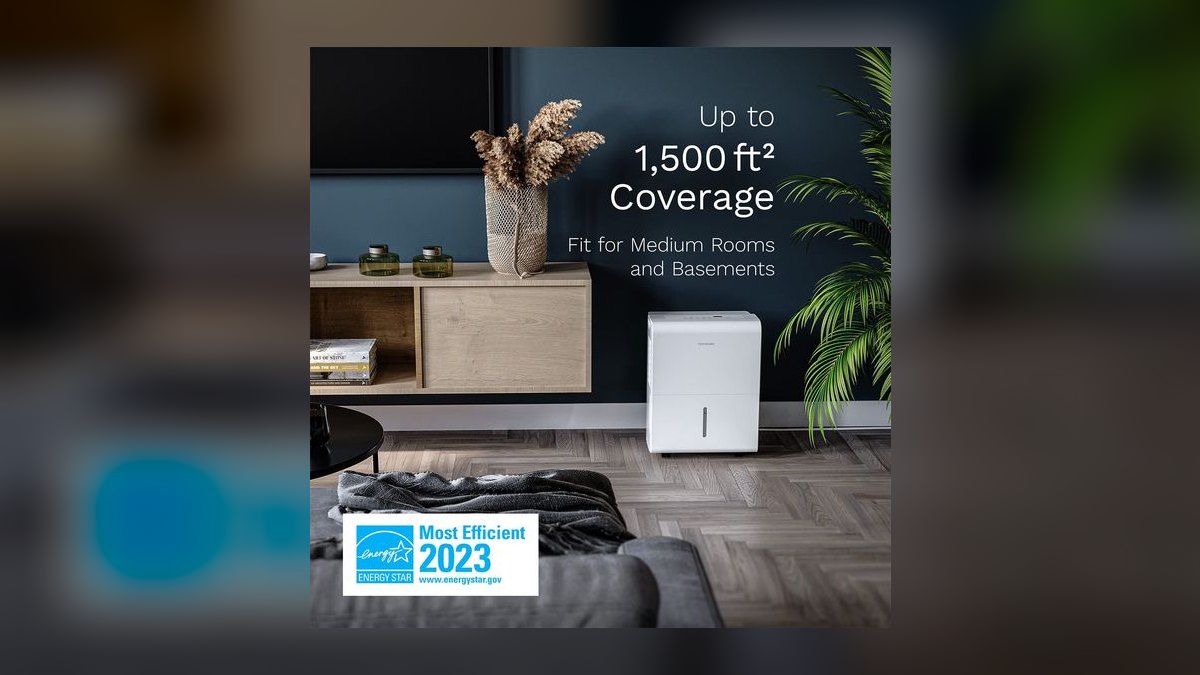
Sixth overall and the Best Value pick at $169: it delivers 22 pints/day DOE 2019 across 1,500 sqft with ENERGY STAR certification, WiFi and app scheduling, Alexa voice control, a 24-hour timer, and auto-restart. Noise is 47 dB on low, the quietest unit here. Low-temperature operation down to 41°F is the standout — most 22-pint machines quit at 65°F. Weight is 31 lbs with an integrated top handle.
This is the right size for bedrooms, condos, closets, and any room under 1,500 sqft, where a 50-pint unit is roughly $180 of wasted capacity. It has no pump, so you drain by gravity hose or dump the 0.8-gallon tank, which is light enough to carry one-handed. Against the Honeywell 70-pint above, it removes two-thirds of the output and all vertical-lift ability.
7. Vremi VRM010135N 22-Pint

Seventh because it matches the 22-pint class on output — 22 pints/day DOE 2019, 1,500 sqft coverage, ENERGY STAR certified, 0.8-gallon tank — and wins on physical build: heavier-gauge plastic, sturdier casters, and rounded corners. Controls are a digital humidistat in 5% steps, a 24-hour timer, auto-restart, turbo mode, and a continuous gravity drain port. Noise is 48 dB on low at 33 lbs. Price is $179.
It fits pet households and humid bathrooms where the unit takes physical abuse and app control is unwanted. The hard limit is low-temperature rating: 50°F, not 41°F, so an unheated basement in spring or fall will ice it over. That single spec is why it sits below the hOmeLabs 22-pint above, which costs $10 less and adds WiFi and Alexa.
8. Aprilaire E080 Whole-Home
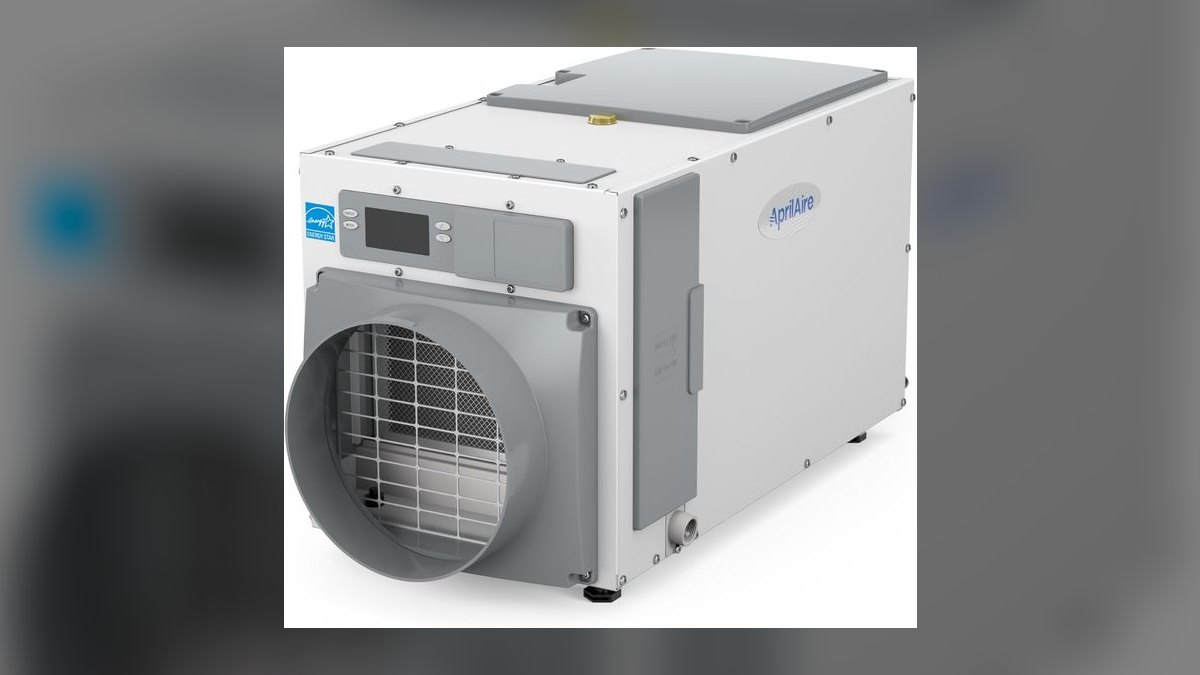
Eighth on the list but first on raw efficiency: 2.68 L/kWh, the highest figure here, with 80 pints/day DOE 2019 and 5,500 sqft of coverage. This is a ducted unit that ties into the HVAC return, adding a MERV-8 intake filter and a stainless-steel drain pan under a 5-year limited warranty. Control runs through the Aprilaire 8910W WiFi thermostat, a $249 add-on, or any 24V humidistat. Noise measures 56 dB at intake.
It belongs in 3,000 to 5,500 sqft houses whose owners refuse to run three portables and empty three tanks. The cost is real: $1,499 plus $500 to $900 for professional installation, versus $309 for the Honeywell 70-pint. Its 50°F low-temp rating rarely matters because return air is already conditioned, and mechanical-room mounting makes the noise figure moot.
9. Frigidaire FFAP5033W1 50-Pint
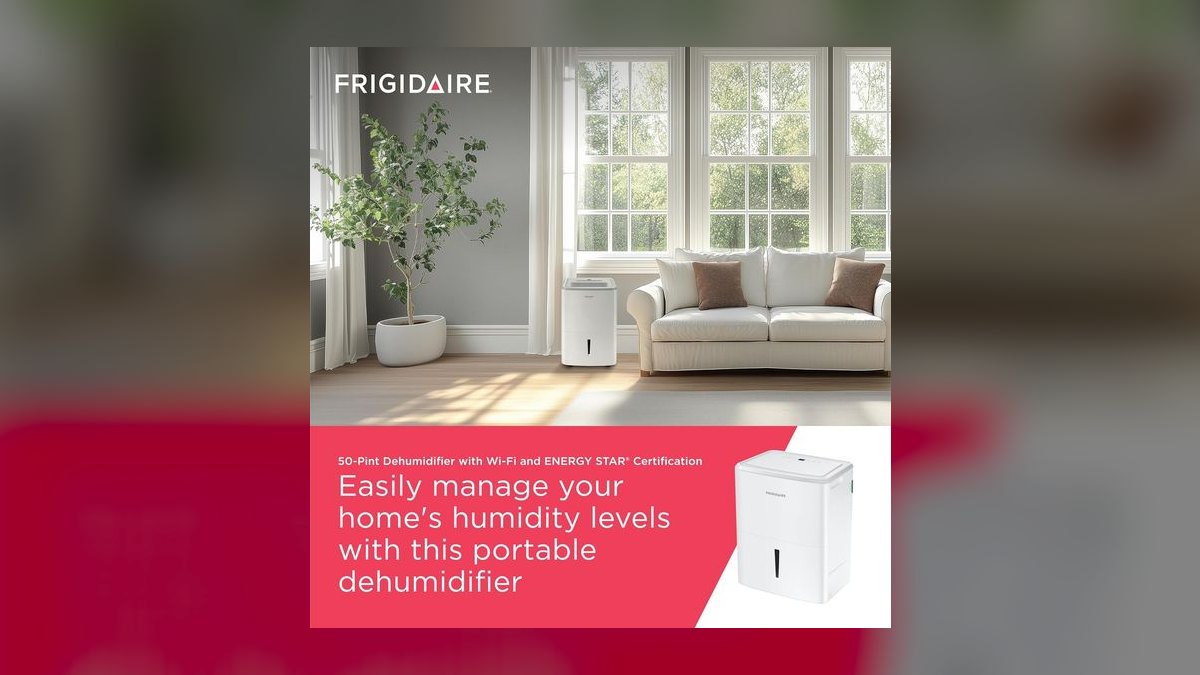
Ninth because it is the top pick with the pump removed and $50 shaved off: same 50 pints/day DOE 2019, same ±3% RH humidistat accuracy, same 41°F low-temp rating, same 1.85 L/kWh ENERGY STAR efficiency, same 51 dB on low, same 16.6-pint tank. Coverage is 4,500 sqft. Drainage is a rear gravity port only. Price is $299, and there is no WiFi on the panel-only controls.
Choose it when a floor drain, sump pit, or low window already sits below where the unit will stand, making the pump premium pointless. The hOmeLabs 50-pint above delivers comparable specs for $50 less, so this earns its place mainly on Frigidaire's reliability record and tighter humidistat. If drainage is uphill, skip to the Gallery FGAC5044W1 instead.
10. SoleusAir DSJ-50EIPW-01
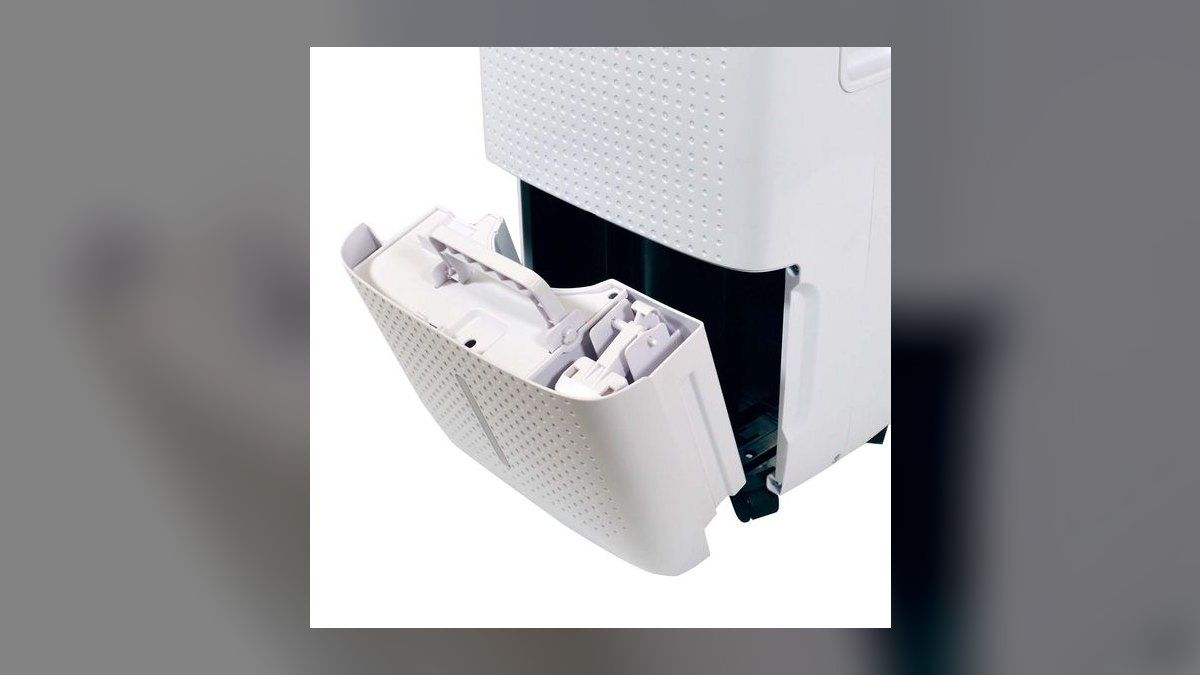
Tenth, earning the spot on one specialized figure: an aggressively tuned anti-frost defrost sensor that keeps it running efficiently at 38°F, three degrees colder than any other unit here. It pairs that with 50 pints/day DOE 2019, 4,500 sqft coverage, ENERGY STAR certification, and a built-in pump lifting 15 vertical feet. A 15-pint tank, gravity hose backup, 5% humidistat steps, 24-hour timer, and auto-restart round out the $329 package.
The buyer is dealing with a crawlspace or unheated cellar room where 41°F-rated competitors ice over and shut down. Concessions are 53 dB on low, 45 lbs on casters, and no WiFi or app. Against the Frigidaire Gallery at $349, it costs $20 less and lifts one foot less, trading humidistat precision for cold-weather margin.
How we ranked these
We scored every unit on DOE 2019 capacity (tested at 65°F, 60% RH) rather than legacy AHAM numbers, plus rated coverage in square feet, drain architecture, low-temperature operation below 50°F, humidistat accuracy against a calibrated hygrometer, noise at six feet on low fan, smart control depth, and ENERGY STAR efficiency factor in liters per kilowatt-hour. Capacity and coverage carried 25% weight; drainage 20%; cold-room performance 15%.
We ignored marketing coverage claims stated without a dampness condition, since 4,500 sqft assumes moderately damp air and collapses in a wet basement. We ignored desiccant and Peltier mini-units — they underperform compressors above 50°F and waste electricity. We ignored star ratings on retail listings, which mix shipping complaints with performance. Warranty length only mattered on the compressor, the part that actually fails.
What to look for
Drainage decides this purchase more than pint rating. If the unit sits below the nearest drain — typical in slab-on-grade basements — you need a built-in condensate pump lifting 14 to 16 feet, which narrows the field to the Frigidaire Gallery, Honeywell TP70PWKN, and SoleusAir. Everything else requires a continuous downhill hose run to a floor drain or sump, and a hose that sags uphill anywhere simply backs up.
The common mistake is buying by room square footage instead of by dampness and temperature. A 22-pint unit rated for 1,500 sqft handles a dry bedroom and drowns in a wet walk-out. The second mistake is ignoring the minimum operating temperature: most small units quit near 65°F, so a unit running in a 45°F crawlspace freezes its coil and moves almost no water.
Related questions
What humidity level should a basement be kept at?
Target 45% to 50% relative humidity. Below 50% mold spores cannot germinate on drywall, joists, or stored cardboard, and dust mites die off. Going below 40% wastes electricity and can dry out wood trim. Set the humidistat to 45% and let the unit cycle rather than running it continuously at a lower target.
Why does a 50-pint dehumidifier in 2027 replace an older 70-pint model?
The DOE changed the test conditions in 2019, moving from 80°F/60% RH to 65°F/60% RH. Cooler test air holds less moisture, so the same hardware now posts a lower number. A 50-pint unit under the current standard removes roughly what a pre-2019 70-pint unit removed. Compare only within one standard, never across the 2019 line.
Does a dehumidifier work in an unheated basement in winter?
Only if it is rated for low-temperature operation. Most units in this list run down to 41°F, and the SoleusAir defrosts aggressively enough to work at 38°F. Below the rating, the evaporator coil ices over and water output collapses. Small units without a defrost cycle typically stop performing near 65°F, making them useless in cold spaces.
Is a built-in pump better than a gravity drain hose?
A pump is better only when you need to lift water. Gravity drains have no moving parts and never fail, so if a floor drain or sump sits below the unit, use gravity. Pumps add cost and one more failure point, but they let you drain into a utility sink, out a window, or across a room to a distant drain.
How much does running a dehumidifier cost per month?
A 50-pint ENERGY STAR unit draws roughly 500 watts. Running twelve hours daily at the U.S. average of about 17 cents per kilowatt-hour lands near $30 monthly. Efficiency factor matters here: the Aprilaire E080 at 2.68 L/kWh moves far more water per kilowatt-hour than portables rated 1.85 L/kWh, which is why whole-home units pay back over years.
How often should the filter and coils be cleaned?
Rinse the mesh filter every two to four weeks during heavy summer running, more often in a dusty basement or with pets. A clogged filter starves airflow, drops moisture removal, and raises compressor load. Vacuum the evaporator coils once a season. Wipe the tank with diluted vinegar monthly to stop the biofilm that produces a musty smell.
Can one dehumidifier handle a whole house?
A portable rarely can, because closed doors and floor separations block airflow. Rated coverage assumes open, moderately damp space. For 3,000 sqft or more, a ducted unit like the Aprilaire E080 tied into the HVAC return distributes dry air everywhere. Otherwise plan on one unit per problem zone: basement, crawlspace, and any bathroom-adjacent room.
Do I need a dehumidifier if I run central air conditioning?
Often yes. Air conditioning dehumidifies as a side effect of cooling, so in mild or shoulder-season weather the compressor barely runs and humidity climbs even though the temperature is comfortable. Basements are the classic case: cool, so the thermostat is satisfied, yet damp enough to grow mold. A dedicated dehumidifier controls moisture independently of temperature.
FAQ
What is the best overall dehumidifier for 2027?
The Frigidaire Gallery 50-Pint with Pump (FGAC5044W1) at $349. It combines a condensate pump lifting 16 feet, a humidistat accurate within ±3% RH, 41°F low-temperature operation, ENERGY STAR certification at 1.85 L/kWh, and 51 dB noise on low fan. It is the rare 50-pint machine that handles a finished basement without constant tank dumping.
What is the best value dehumidifier?
The hOmeLabs 22-Pint Energy Star at $169. It covers 1,500 sqft, includes WiFi scheduling and Alexa control, runs at 47 dB, and operates down to 41°F — unusual at this size, where most units stop near 65°F. For bedrooms, condos, and closets it does everything a 50-pint does while costing $180 less.
Which dehumidifier is quietest?
The hOmeLabs 22-Pint at 47 dB on low fan, followed by the Vremi 22-Pint at 48 dB. Among 50-pint units, the Frigidaire Gallery and FFAP5033W1 tie at 51 dB. Smaller compressors are inherently quieter, so if the unit shares a bedroom or finished office, size down and run it longer rather than buying more pints.
Which units include a built-in condensate pump?
Three: the Frigidaire Gallery FGAC5044W1 (16-foot lift), the Honeywell TP70PWKN (14 feet), and the SoleusAir DSJ-50EIPW-01 (15 feet). The Midea Cube, both hOmeLabs models, the Vremi, the GE ADHL50LB, and the Frigidaire FFAP5033W1 are gravity-drain only and need a continuous downhill hose route.
Which dehumidifier works in the coldest space?
The SoleusAir DSJ-50EIPW-01, rated to 38°F thanks to an aggressively tuned anti-frost defrost sensor — about three degrees colder than the 41°F rivals. For crawlspaces and unheated cellar rooms where other compressors ice over, it is the pick. The Vremi 22-Pint stops at 50°F and should stay in conditioned living space.
Which dehumidifier has the largest water tank?
The Midea Cube 50-Pint holds 21 pints internally, the largest in the category, so it needs emptying about half as often as rivals. The Frigidaire Gallery and FFAP5033W1 hold 16.6 pints, the Honeywell 14.7 pints, and the 22-pint units carry 0.8 gallons. Tank size stops mattering entirely once you run a continuous drain hose.
Which model is best for a smart home?
The Midea Cube for most people — WiFi, MideaAir app, Alexa and Google voice, runtime stats, and tank-full alerts. The GE ADHL50LB wins if you already own GE Profile or Cafe appliances, since SmartHQ puts the dehumidifier in the same app as the oven and laundry. Note the GE humidistat drifts about ±5% RH.
When does a whole-home ducted unit make sense?
Above roughly 3,000 sqft, or whenever you would otherwise run three portables. The Aprilaire E080 covers 5,500 sqft, delivers 2.68 L/kWh — the best efficiency here — and adds MERV-8 filtration on the intake. The catch is $1,499 plus $500 to $900 for professional installation tying it into the HVAC return.
How big a dehumidifier do I need for my basement?
For a dry-to-moderately-damp basement under 1,500 sqft, a 22-pint unit suffices. Between 1,500 and 3,000 sqft, or anywhere with a musty smell, go 50-pint. Above 1,800 sqft with visible moisture, standing water history, or 20-plus hours of daily runtime, step up to the Honeywell 70-pint. When in doubt with wet conditions, size up one tier.
How accurate are built-in humidistats?
It varies more than buyers expect. The Frigidaire units read within about ±3% RH in bench testing, while the GE ADHL50LB drifts nearer ±5% and benefits from quarterly recalibration. A $15 standalone hygrometer placed across the room is worth owning either way, since the built-in sensor reads air already passing through the machine's own intake.
Sources
- https://www.nytimes.com/wirecutter/reviews/best-dehumidifier/
- https://www.consumerreports.org/appliances/dehumidifiers/
- https://www.energystar.gov/products/dehumidifiers
- https://www.epa.gov/mold/mold-course-chapter-2
- https://www.rtings.com/dehumidifier/reviews/best/dehumidifiers
- https://www.energy.gov/energysaver/home-cooling-systems
- https://www.thisoldhouse.com/hvac/reviews/best-dehumidifier
- https://www.cdc.gov/mold/faqs.htm
Related on PULSE
- [More dehumidifiers rankings and buying guides](/knowledge)
- [PULSE Tools and calculators](/tools)
- [Everything on PULSE RevOps](/)
 pulse-reviewsHow much does a DJI Avata 2 cost in 2027?
 pulse-reviewsWhat should you know before investing in Electronics in 2027?
 pulse-reviewsWhat are the most common mistakes in Electronics in 2027?
 pulse-reviewsTop 10 best Electronics options in 2027
 pulse-reviewsHow do you get started with Electronics in 2027?
 pulse-reviewsTop 10 Electronics strategies for 2027
 pulse-reviewsHow much does Electronics cost in 2027?
 pulse-aquariumsTop 10 Canister Filters 2027
 aqTop 10 Hang-On-Back Aquarium Filters 2027
 pulse-reviewsTop 10 Cabin Cruiser Boats 2027