


Top 10 Drip Coffee Makers — Best Overall + Best Value in 2027
Quality
Certified
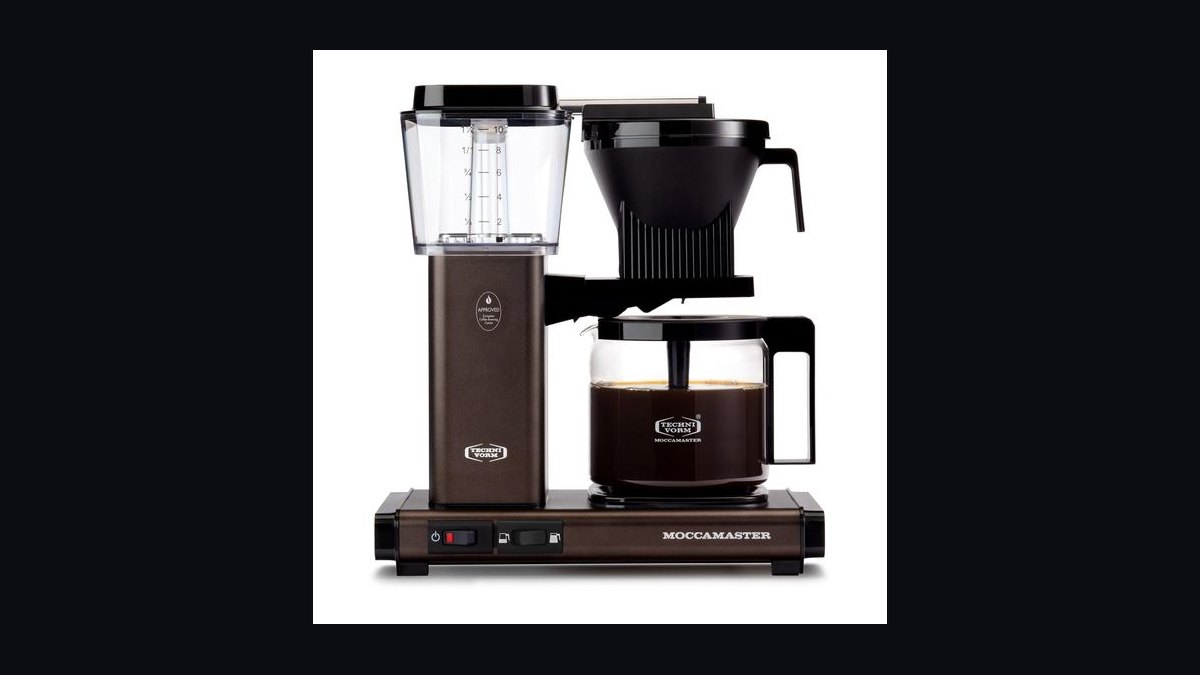
The 10 best drip coffee makers are ranked below on measured performance, build quality, price, and how each one actually holds up in daily use rather than how it reads on a spec sheet. Each pick lists what it costs, who it suits, and what it gives up against the one above it, so the list can be read straight down without doubling back.
1Technivorm Moccamaster KBGV Select
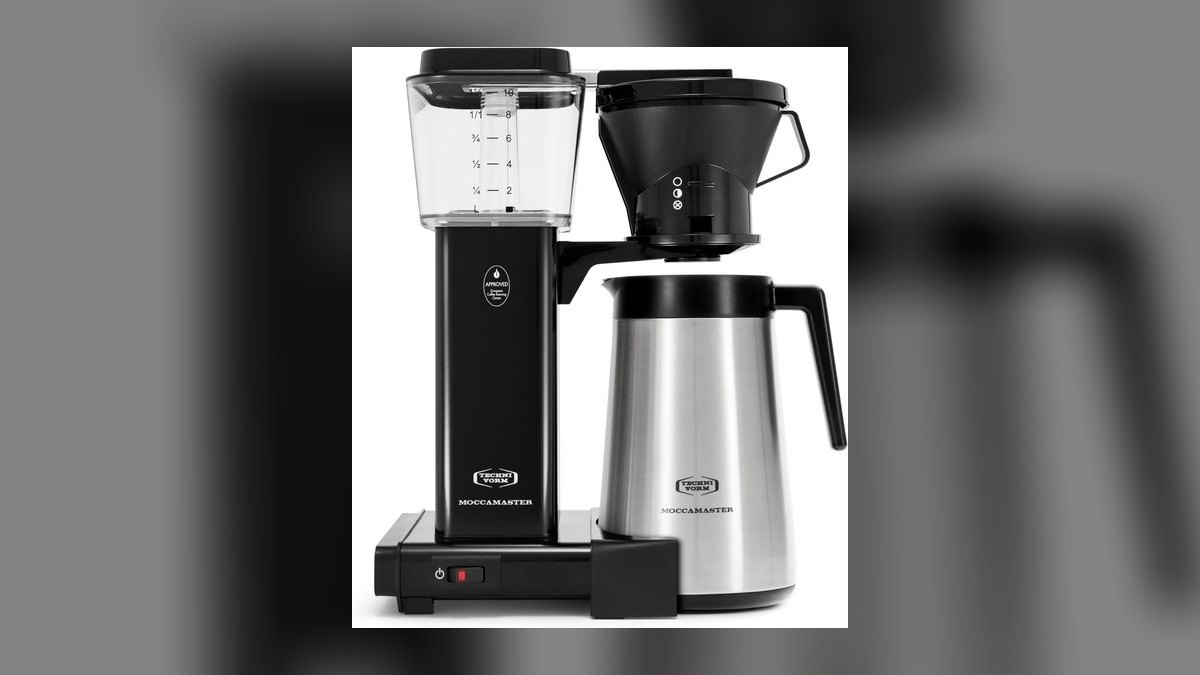
Ranks first because it is the only $379 brewer holding the SCA Golden Cup window of 196-205°F across the full 4-6 minute brew cycle. A copper boiling element reaches temperature in under a minute, and a 9-hole showerhead spreads water evenly over the bed. Hand-built in Amersfoort, Netherlands since 1964, it ships with a 5-year warranty and fully replaceable parts.
This suits the daily drinker who wants to own one machine for a decade with no software between them and the coffee. It trades away programmability entirely, so there is no timer for a full pot on waking, and the glass carafe on its 175°F or 185°F hotplate sheds heat faster than thermal rivals. The Breville below matches its brew temperature and adds a timer, but not its decade-long repairability.
2Breville Precision Brewer Thermal
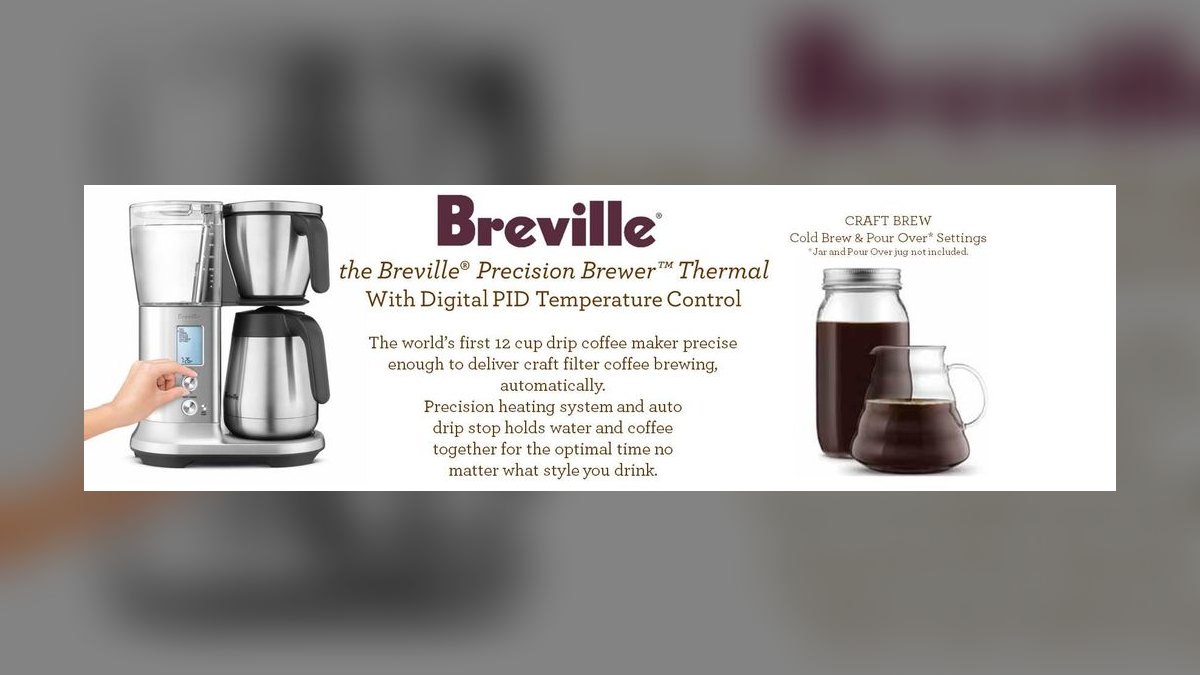
Second place goes to the most adjustable SCA-certified drip machine sold, priced at $359. A PID-controlled element holds 197-204°F, and a Pour Over preset runs a slow pulsed bloom that imitates a Hario V60. It ships with both flat-bottom and cone baskets, six presets including Cold Brew and Iced, plus a My Brew custom mode for temperature, bloom time, and flow rate.
This suits tinkerers who want to change variables rather than press one switch. The trade is build quality and learning curve: it leans plastic where the Moccamaster is metal, and the LCD interface takes roughly twenty minutes to understand. Against the pick above, it wins on 24-hour programming and thermal retention from its double-walled carafe, while giving up hand-built longevity and a decade-long parts ecosystem.
3Wilfa Svart Aroma
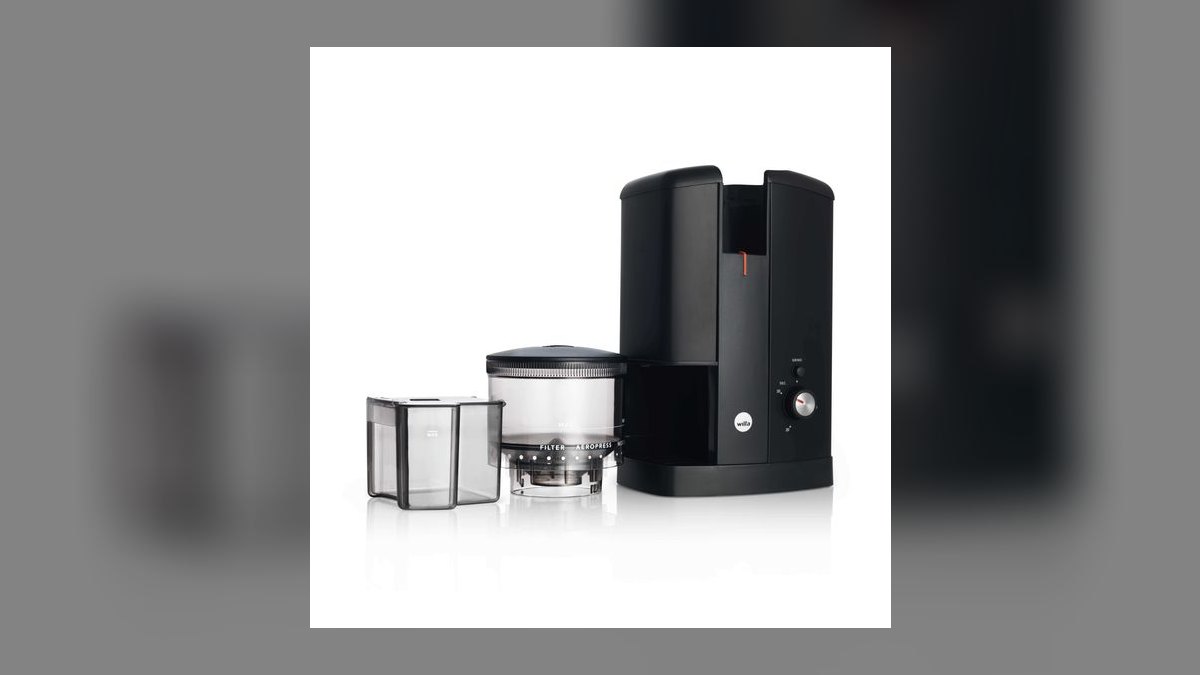
Third at $300 for the cleanest cup on this list, designed in Norway with Tim Wendelboe, the 2004 World Barista Champion. It is SCA-certified at 199°F and uses a wide circular showerhead that fully saturates a flat-bottom basket, which keeps light roasts from channeling. The 1.25L thermal carafe needs no hotplate, and the matte black exterior runs on a single power switch with no screen.
This suits someone brewing light-roasted single origins from a third-wave roaster who wants pour-over flavor unattended. It gives up more than the Breville above: no programming, no strength selector, no presets at all. Compared with the Ratio Six below, it costs $175 less and includes the thermal carafe as standard rather than a paid add-on, while conceding the industrial design touches.
4Ratio Six
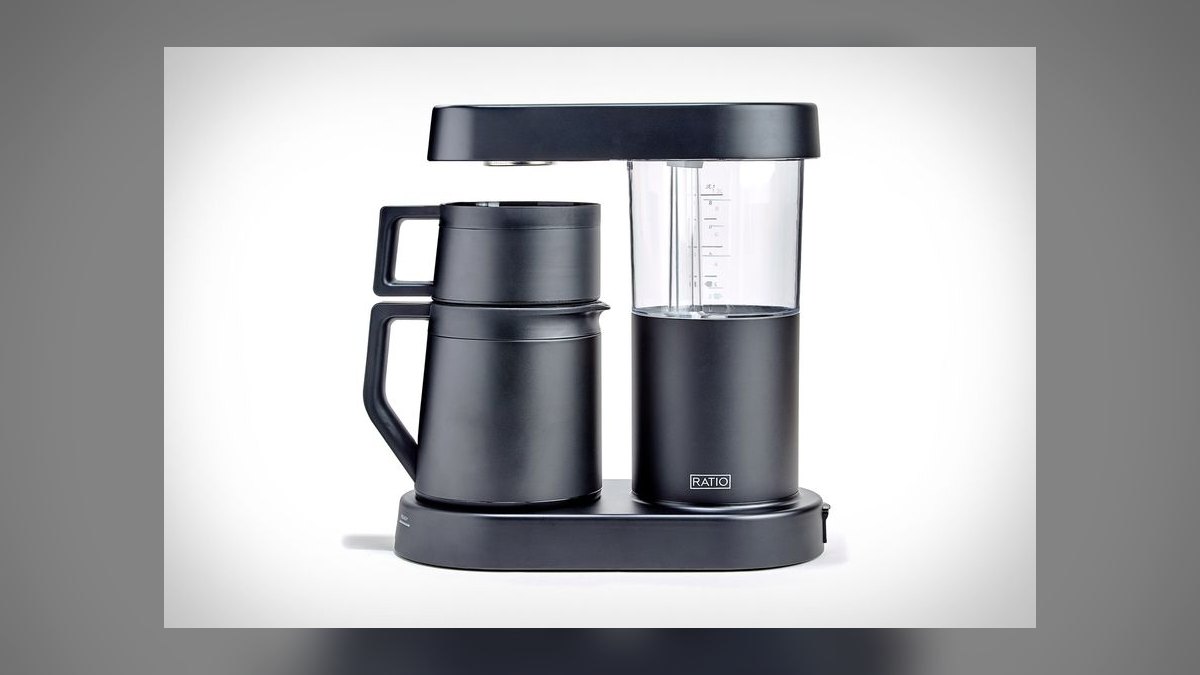
Fourth because the design premium is real but so is the $475 price, the highest non-commercial figure on this list. It brews at 200°F with a 20-second bloom phase followed by a pulsed pour, earning SCA certification. Construction is anodized aluminum with walnut accents and a glass kettle serving as the carafe. Built in Portland, Oregon, it runs on one button and carries a 5-year warranty.
Buy this when the kitchen counter matters as much as the cup, because nothing else here looks like it. The trades are concrete: no programming, and the standard glass carafe loses heat quickly since the stainless thermal version costs an extra $50. Against the Wilfa above, it adds a proper bloom stage and American manufacturing but asks $175 more for comparable brew quality.
5OXO Brew 8-Cup
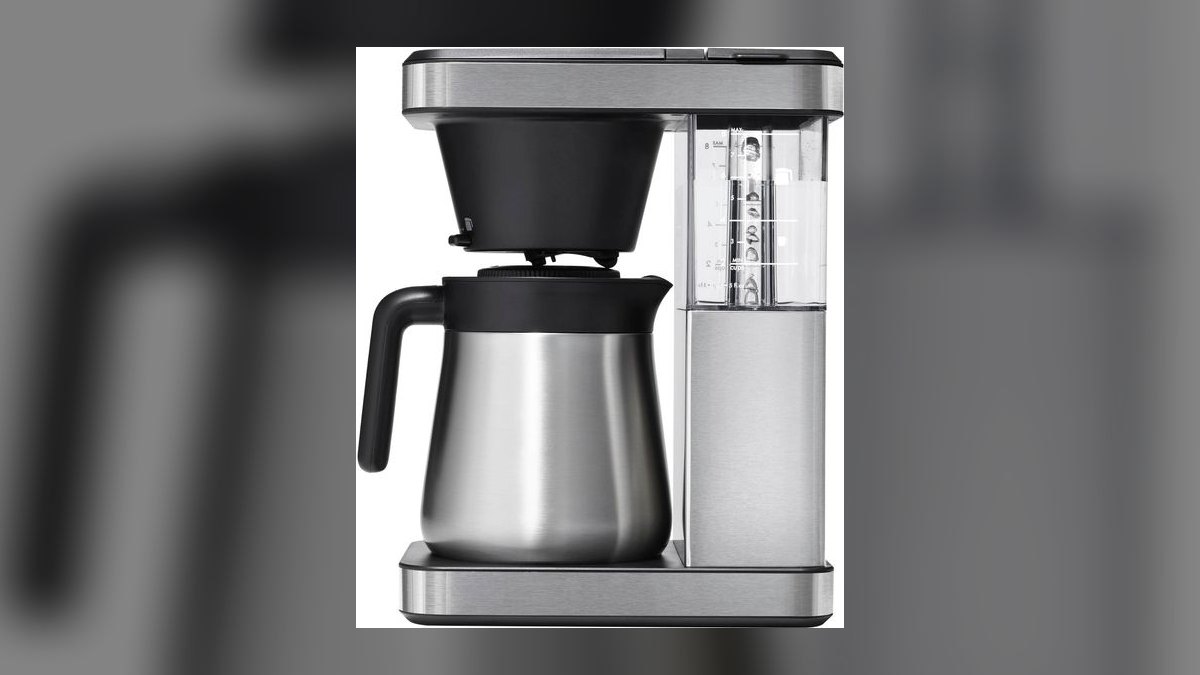
Fifth at $199 as the compact SCA-certified option, brewing at 197.6°F through the same rainmaker showerhead that pulses water in concentric circles over the grounds. The double-walled stainless thermal carafe holds temperature for hours with no hotplate involved. One dial handles power and brew volume together, and 24-hour programming is built in rather than sold as an upsell.
This fits one- or two-person households where limited counter space matters more than pot size. The trade is capacity: eight cups caps you when guests arrive. It is functionally the same machine as the 9-cup Best Value pick below, $20 cheaper and physically smaller, so the choice between them comes down entirely to how many people you brew for on a normal morning.
6OXO Brew 9-Cup
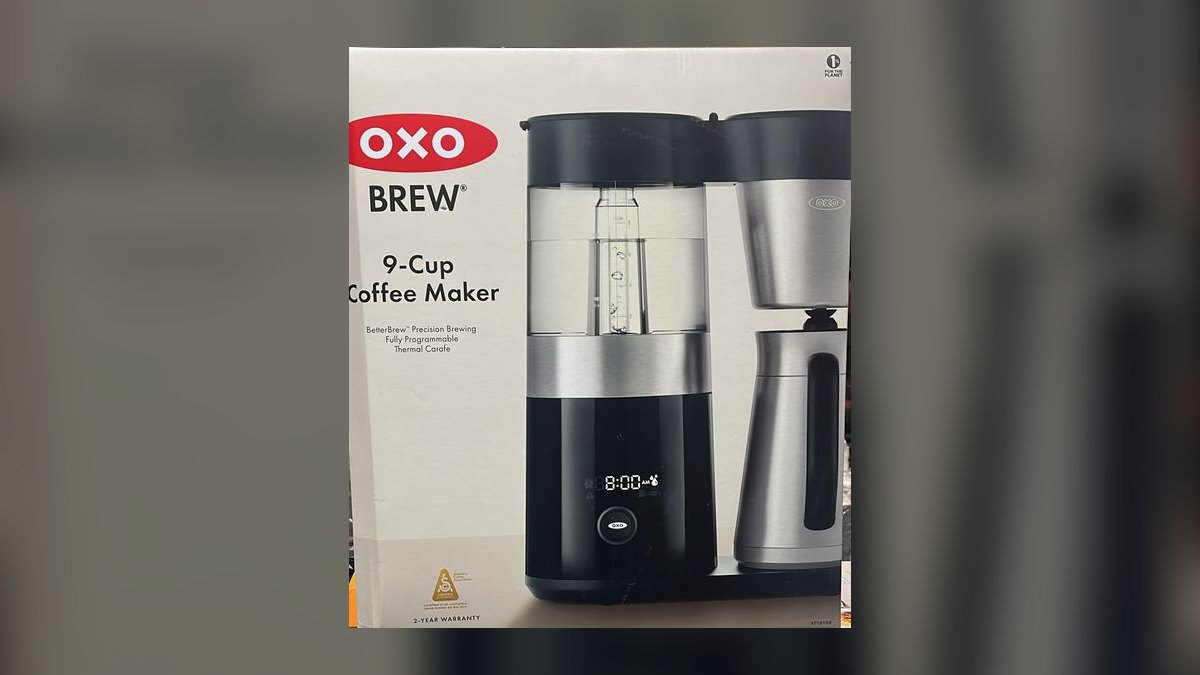
Sixth on absolute quality but the Best Value pick of 2027, because $219 buys SCA certification at 197.6°F, roughly 58% of the Moccamaster's price. The rainmaker showerhead pulses water in a spiral across the bed, and the double-walled stainless thermal carafe holds nine cups near brew temperature past two hours. A single rotary dial runs everything, and 24-hour programming is standard.
This is the family machine for anyone who wants certified brew quality and a morning timer under $230. What it gives up is longevity: the plastic construction will not be repaired part-by-part the way a Moccamaster is. Against the 8-cup above, the extra $20 buys a full cup of capacity and the same brewing behavior in a larger housing, nothing more.
7Bonavita Connoisseur BV1901TS
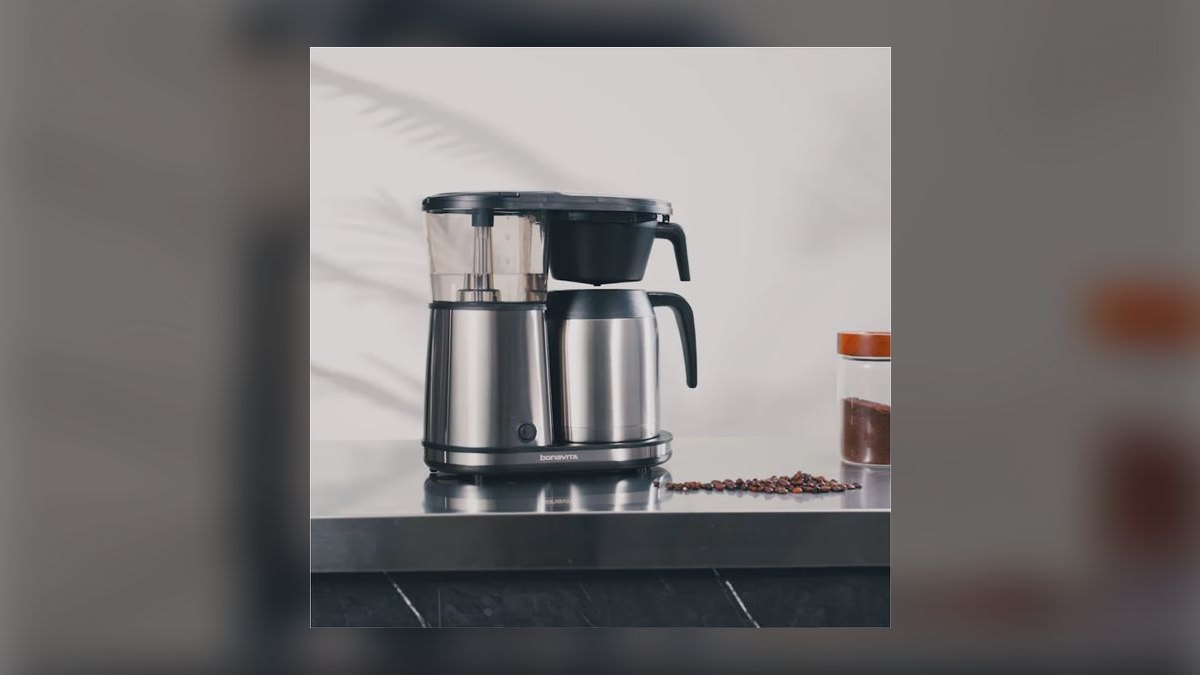
Seventh as the cheapest SCA-certified brewer on this list at $199, stripped to essentials. It brews at 200°F through a shower-style dispersion head and finishes the cycle in six minutes, pouring into a double-walled stainless thermal carafe. A pre-infusion mode wets the grounds for 30 seconds before the main pour begins. The entire interface is one button, in a compact footprint.
This is for buyers who want certified extraction and nothing else, no clock, no strength dial, no presets. Bonavita's argument is that fewer components mean fewer failures over four to six years. Compared with the OXO 9-Cup above at $219, it matches on thermal carafe and SCA certification and adds a bloom stage, but loses 24-hour programming and a cup of capacity.
8Cuisinart DCC-3200P1 PerfecTemp
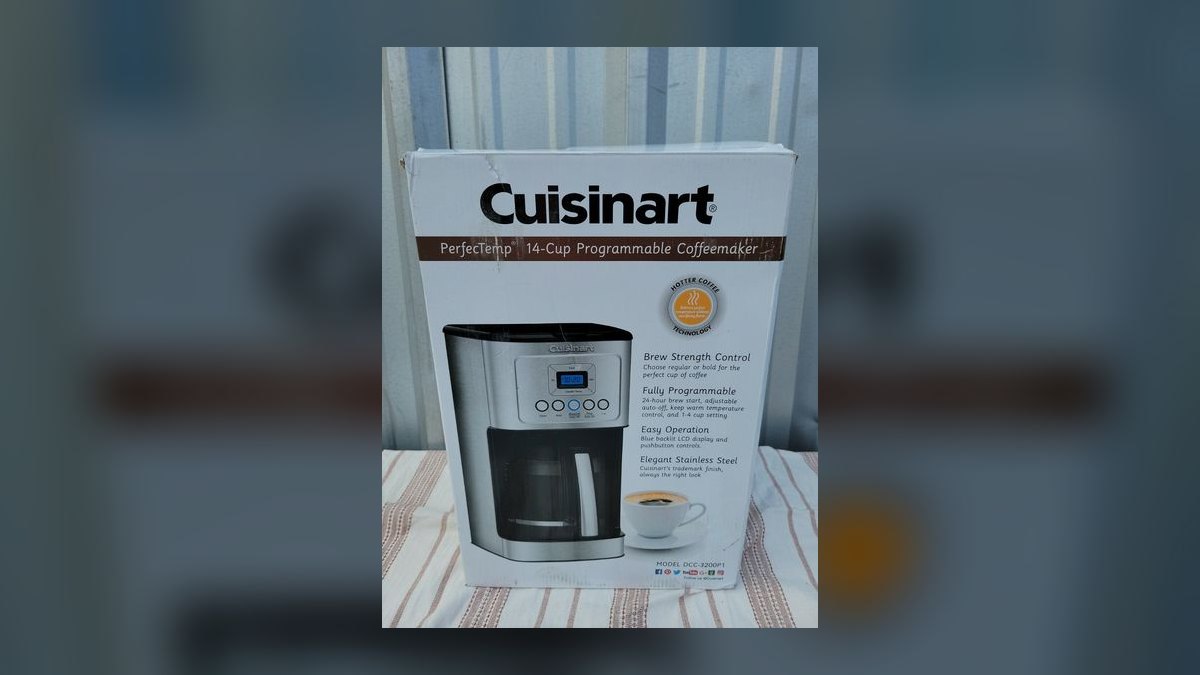
Eighth because it is not SCA-certified, though independent testing puts it at 192-198°F, close enough to taste good with freshly ground beans. At $129 it delivers the largest capacity here, a 14-cup glass carafe in a stainless body. Features cover everything: 24-hour programming, brew-strength control with Regular and Bold settings, a 1-4 cup setting, a self-clean cycle, and a three-temperature hotplate.
This is the workhorse for offices, hosts, and large families who empty a pot quickly. The compromise is the carafe: glass sitting on a hotplate slowly cooks coffee, with bitterness climbing noticeably past the 30-minute mark. Against the Bonavita above, it trades certified temperature and thermal retention for six more cups, a full feature set, and $70 off the price.
9Ninja CFP307 DualBrew Pro
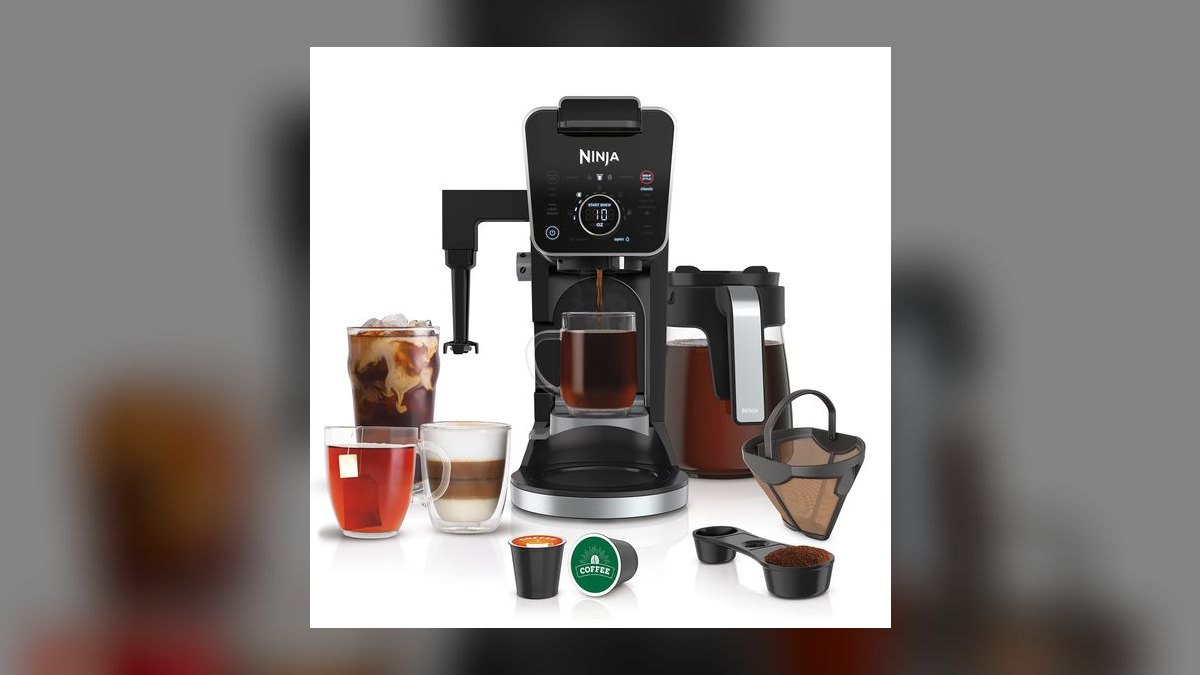
Ninth at $229 for format flexibility rather than brewing precision, landing at 195-200°F without certification. It brews a full 12-cup drip pot or a single K-Cup with no adapter, and a separate K-Cup carafe mode runs one to four pods straight into the carafe. Six brew styles cover Classic, Rich, Over Ice, Specialty, Cold Brew, and Hot Water, with a fold-out milk frother built in.
This suits split households where one person wants a pod and another wants a full pot. The trade is plastic construction and ongoing pod cost, which undercuts both durability and the sustainability argument. Against the Cuisinart above, it costs $100 more and holds two fewer cups, buying single-serve capability, a frother, and a 15-20 minute cold brew mode in exchange.
10Hamilton Beach FlexBrew Trio
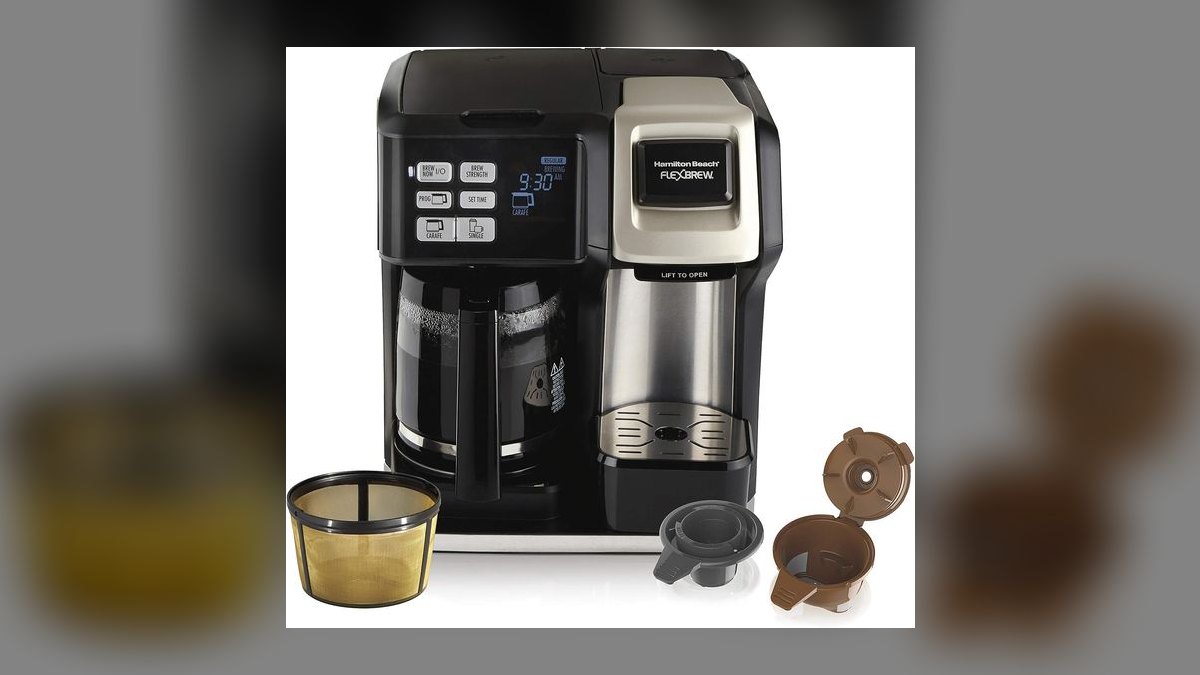
Tenth because $129 is the floor for a dual-mode brewer worth owning, and the brew temperature shows it at 190-195°F, below SCA spec. It runs a 12-cup drip pot on one side and a single-serve on the other that accepts K-Cups or loose ground coffee. Both sides get 24-hour programming, there is an adjustable brew-strength selector, and a travel-mug setting on the single-serve side.
This suits renters and small kitchens that need two brewing formats without spending $200. The trade is extraction: sub-SCA water temperature under-extracts light and medium-light roasts, so stick to dark and medium roasts that forgive it. Against the Ninja above, it saves $100 and adds ground-coffee single-serve, but drops the frother, cold brew, and roughly five degrees of brew temperature.
How we ranked these
Ranking weighted brew temperature accuracy at 30% — the machine must hold 195-205°F across the full cycle, per the SCA Golden Cup standard. Water dispersion counted 20%, favoring multi-hole showerheads over single-stream spouts. Carafe heat retention took 15%, build quality and serviceability another 15%, programmability 10%, and price-to-performance the final 10%. Uncertified models had to prove the temperature window in independent third-party testing to qualify at all.
We ignored WiFi, app control, and touchscreen interfaces entirely — they change nothing about extraction, and the top-ranked machine has no screen. Brew-strength dials on sub-SCA machines were discounted, since a "bold" setting cannot repair under-extraction caused by 185°F water. Pod-only systems marketed as barista-grade were excluded outright. Amazon star ratings and manufacturer claims carried zero weight without a corroborating temperature log.
Related questions
What is the SCA Golden Cup standard?
It is the Specialty Coffee Association's benchmark for properly brewed coffee, covering brew temperature of roughly 195-205°F, a water-to-coffee contact time in the four-to-eight-minute range, and even saturation of the grounds. Machines meeting it earn Home Brewer certification. It exists because most consumer drip makers never reach the temperature required to fully extract ground coffee.
Why does a thermal carafe preserve flavor better than a hotplate?
A double-walled stainless carafe insulates rather than reheats, holding coffee near 180-185°F for over two hours with no external heat. A hotplate keeps liquid hot by continuing to cook it, which drives off aromatics and builds bitterness. Past the thirty-minute mark the difference is obvious in the cup — the hotplate pot turns flat and harsh.
Does grind size matter more than the brewer itself?
Grind consistency arguably matters more than the last hundred dollars of brewer price. A blade grinder produces fines and boulders simultaneously, so one fraction over-extracts while the other stays sour, and no showerhead can fix that. Pairing a $219 SCA-certified brewer with a decent burr grinder beats a $475 machine fed pre-ground supermarket coffee every time.
What is pre-infusion, and which machines have it?
Pre-infusion, or bloom, wets the grounds for twenty to thirty seconds before the main pour begins, letting trapped carbon dioxide escape from fresh coffee. Without it, gas bubbles push water away from the bed and cause uneven extraction. The Breville Precision Brewer, Bonavita Connoisseur, and Ratio Six all build a bloom phase into their cycles.
Are flat-bottom or cone brew baskets better?
Flat-bottom baskets spread the grounds in a shallow, even bed, which favors clarity and works well with light-roasted single origins — the Wilfa Svart and OXO models use them. Cone baskets create a deeper bed and a slightly heavier body. The Breville Precision Brewer ships with both, so you can test the difference with the same beans.
How long should a drip coffee maker last?
A hand-built Moccamaster with replaceable elements, carafes, baskets, and showerheads routinely runs past ten years, carried by a five-year warranty. Plastic-bodied machines typically fail at the brew basket, silicone gaskets, or flow valves after four to six years. Serviceability, not brand prestige, is the variable that decides which category a given machine falls into.
Why do some SCA-certified machines lack programmability?
Manufacturers like Technivorm, Wilfa, Bonavita, and Ratio treat every added circuit as another failure point and design around a single switch. Certification measures brew quality, not convenience features, so a purist machine can score identically to a feature-loaded one. If waking to a finished pot matters, the Breville and both OXO models offer 24-hour programming without giving up certification.
Is a dual K-Cup and drip machine worth the compromise?
It solves a real household problem when one person wants a single serving and another wants a full pot. The Ninja DualBrew Pro handles both plus cold brew and frothing, landing at 195-200°F. The tradeoffs are a plastic-heavy build and ongoing pod cost, which over five years can exceed the price of a premium single-purpose brewer.
FAQ
Which drip coffee maker is best overall in 2027?
The Technivorm Moccamaster KBGV Select 10-Cup at $379. Its copper boiling element reaches the 196-205°F window in under a minute and holds it through a four-to-six-minute brew, and the nine-hole showerhead distributes water evenly. Hand-built in Amersfoort, Netherlands, every component is replaceable and the machine carries a five-year warranty, making a ten-year service life realistic.
What is the best value drip coffee maker?
The OXO Brew 9-Cup at $219. It is SCA-certified at 197.6°F, uses a rainmaker showerhead that pulses water in a spiral across the grounds, and includes a double-walled thermal carafe that holds nine cups near brew temperature for over two hours. It delivers most of the Moccamaster experience at roughly 58% of the price.
Is a $400 coffee maker worth it over a $100 one?
For daily drinkers, yes. Certified machines produce measurably better extraction — third-party cuppings show clearer flavor notes and less bitterness than machines brewing at 185-192°F. Amortized across ten years, the Moccamaster costs about ten cents a day. For someone brewing twice a week from pre-ground beans, the upgrade is much harder to justify.
What temperature should drip coffee brew at?
Between 195 and 205°F, held for the entire cycle. Below that range you under-extract and get sour, weak coffee; above it you scorch the oils and get bitterness. Inexpensive drip makers typically peak around 180-188°F, which explains why supermarket-grade machines produce flat coffee even with good beans and a proper grind.
Thermal carafe or glass carafe — which should I buy?
Thermal, if you drink a pot over more than half an hour. Double-walled stainless holds coffee at 180-185°F for two-plus hours without any heat source. Glass on a hotplate stays hot but slowly scalds the coffee, with bitterness climbing noticeably past thirty minutes. If your pot empties quickly, glass is perfectly fine and usually cheaper.
What does SCA certification actually require?
The Home Brewer program requires a machine to hit 195-205°F throughout the brew, achieve adequate water-to-coffee contact time of roughly four to eight minutes, and distribute water evenly over the grounds. Uncertified machines can fail on any of those, and most fail on temperature — brewing at 185-192°F, which under-extracts and yields thin, sour coffee.
Which machine is best for light-roasted single origins?
The Wilfa Svart Aroma at $300, designed in Norway by 2004 World Barista Champion Tim Wendelboe. It brews at 199°F through a wide circular showerhead into a flat-bottom basket, producing the cleanest cup on this list, and includes a 1.25L thermal carafe. There is no programming or brew-strength selector — it is deliberately a purist's machine.
What is the best large-capacity drip coffee maker?
The Cuisinart DCC-3200P1 PerfecTemp 14-Cup at $129. It is not SCA-certified, but independent testing puts it in the 192-198°F range, which is respectable with fresh-ground beans. You get brew-strength control, 24-hour programming, a self-clean cycle, and an adjustable hotplate. The glass carafe is the compromise — finish the pot within thirty minutes.
Do programmable timers fail before the rest of the machine?
Generally no. On programmable machines the first failures are usually mechanical: the plastic brew basket, silicone gaskets, or flow valves, typically after four to six years. Technivorm, Breville, and Bonavita all sell replacement parts, so a failed component does not have to mean a new machine. Descaling on schedule extends valve and heater life considerably.
Which brewer makes the most sense for a small apartment?
The OXO Brew 8-Cup at $199 if you want certified quality on a narrow footprint — same 197.6°F brewing and rainmaker showerhead as the 9-cup, in a smaller body with a thermal carafe and 24-hour programming. If you also need single-serve, the Hamilton Beach FlexBrew Trio at $129 covers both formats, though it brews below SCA spec.
Sources
- https://www.nytimes.com/wirecutter/reviews/the-best-coffee-maker/
- https://www.seriouseats.com/best-coffee-makers-5115403
- https://www.americastestkitchen.com/equipment_reviews/1451-drip-coffee-makers
- https://sca.coffee/certified-home-brewer
- https://www.technivorm.com/
- https://www.consumerreports.org/appliances/coffee-makers/
- https://www.breville.com/us/en/products/coffee/bdc450.html
- https://www.oxo.com/9-cup-coffee-maker.html
- https://www.cnet.com/home/kitchen-and-household/best-coffee-maker/
- https://www.goodhousekeeping.com/appliances/coffee-maker-reviews/g5030/best-coffee-makers/
Related on PULSE
This page will be disappearing soon. Save it to your device for $1 — or read it free while it is here.
@Kory-White- · if Venmo asks, the last 4 of my number are 2012
This page is gone.
This one is off the shelf now. $1 keeps it on your phone for good — the whole page, pictures and diagrams included.
 pulse-reviewsTop 10 Radar Detectors — Best Overall + Best Value in 2027
 pulse-reviewsTop 10 Neck and Shoulder Massagers — Best Overall + Best Value in 2027
 pulse-reviewsTop 10 Outdoor Smart Lighting — Best Overall + Best Value in 2027
 pulse-reviewsTop 10 Blue Light Glasses for Sales Reps in 2027
 pulse-reviewsTop 10 Wireless Earbuds for Quick Sales Calls in 2027
 pulse-reviewsTop 10 DDR5 RAM Kits — Best Overall + Best Value in 2027
 pulse-reviewsTop 10 Laptop Stands for Remote AEs in 2027
 pulse-reviewsTop 10 85-Inch TVs — Best Overall + Best Value in 2027
 pulse-reviewsTop 10 YouTube Lighting Kits — Best Overall + Best Value in 2027
 pulse-reviewsTop 10 Noise-Cancelling Headphones — Best Overall + Best Value in 2027