


Top 10 Hobby Oscilloscopes — Best Overall + Best Value in 2027
Quality
Certified
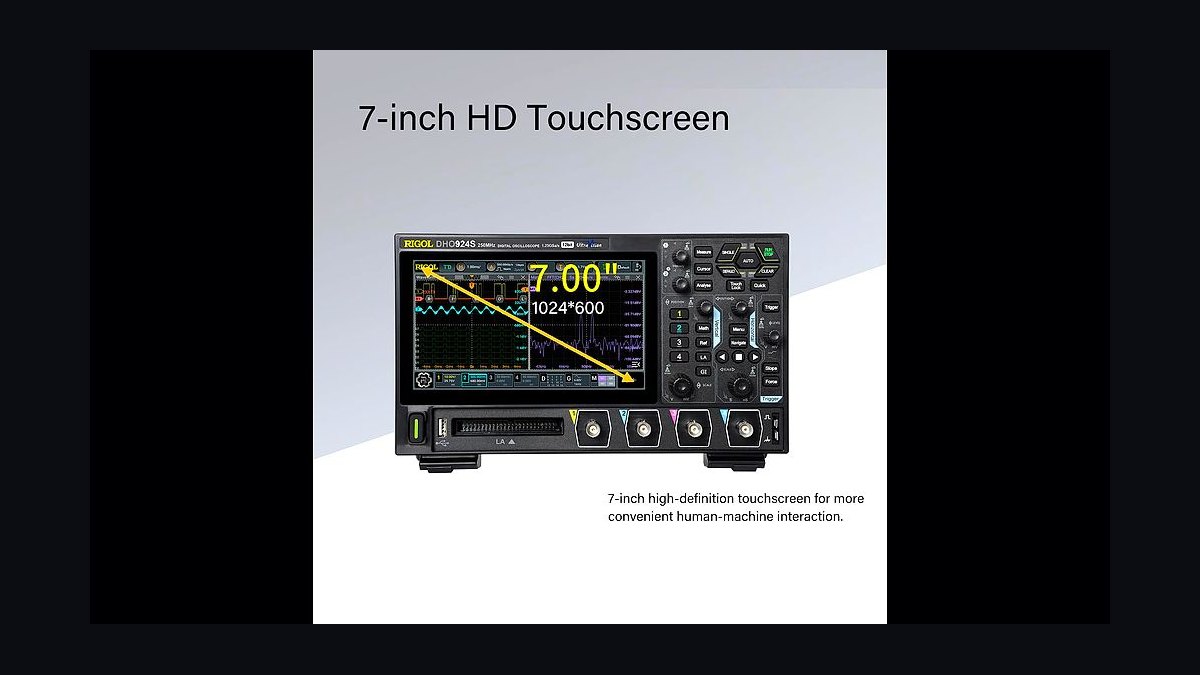
The 10 best hobby oscilloscopes are ranked below on measured performance, build quality, price, and how each one actually holds up in daily use rather than how it reads on a spec sheet. Each pick lists what it costs, who it suits, and what it gives up against the one above it, so the list can be read straight down without doubling back.
1Rigol DHO924S
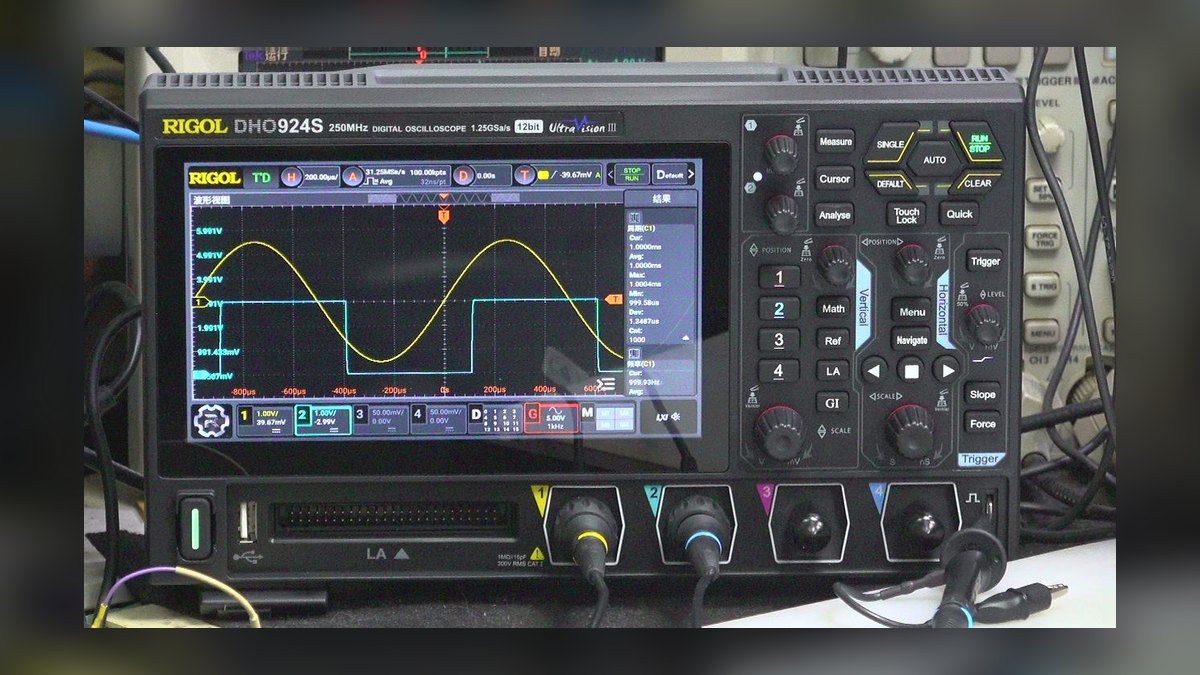
The Rigol DHO924S ranks first because no other scope under $2,000 pairs 250 MHz bandwidth with 12-bit vertical resolution across four channels. At $1,599 you get 4 GSa/s sampling and 50 Mpts of standard memory, specs that carried $5,000 price tags from Tektronix and Keysight. A built-in 25 MHz arbitrary waveform generator removes the need for a separate signal source, and serial decode for I2C, SPI, UART, CAN, LIN, and FlexRay ships included.
This suits the hobbyist or working engineer who wants pro-tier capability on a permanent bench. It trades away portability at 3.4 kg, and the AWG output tops out at 5 Vpp into 50 ohms. Against the Siglent SDS1104X-E below it, you pay roughly triple for 150 MHz more bandwidth, four extra bits of vertical resolution, a 10.1-inch capacitive touchscreen, and 3.5x the memory depth.
2Siglent SDS1104X-E
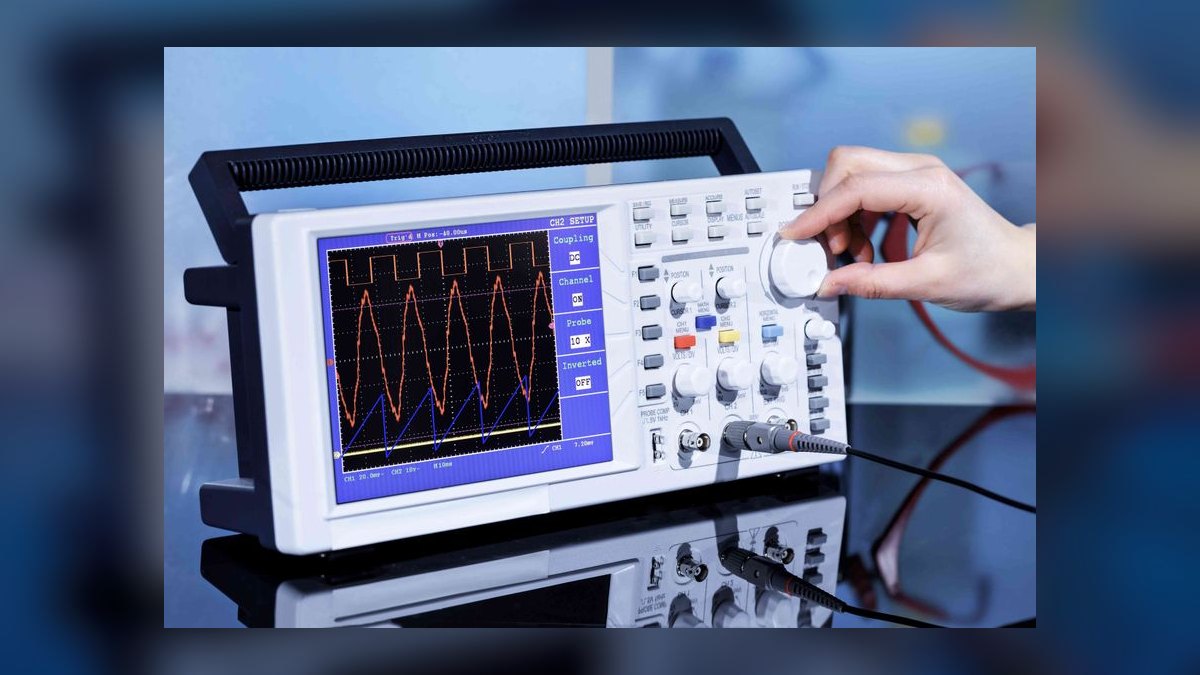
Second place goes to the price-per-channel leader: four channels at 100 MHz for $479. It samples at 1 GSa/s shared across channels, holds 14 Mpts of memory, and drives the Super-Phosphor display whose 256-level intensity grading surfaces glitches cheaper 8-bit scopes bury. Decode for I2C, SPI, UART, CAN, and LIN unlocks free via a community-known option key, and WebVNC remote control runs over standard Ethernet.
This is the maker's scope for embedded, automotive CAN, and multi-line SPI work where channel count beats resolution. The trade is 8-bit vertical, which is mediocre for low-level analog and power-supply ripple. Compared to the Rigol DHO924S above, you give up 12-bit resolution and the touchscreen; against the $999 Tektronix below, you gain two channels and nearly 3x the memory.
3Tektronix TBS2102B
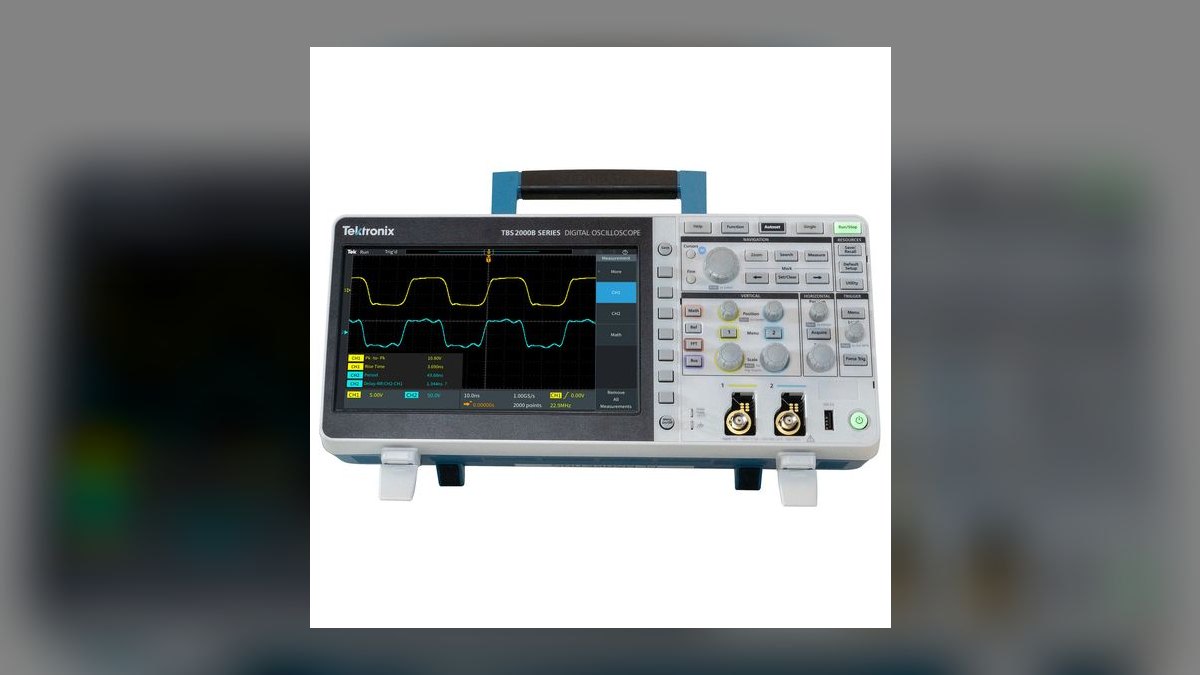
It earns third on build quality and service life rather than raw specifications. At $999 you get 100 MHz across two channels, 2 GSa/s, 5 Mpts of memory, 8-bit vertical, a 9-inch WVGA display, and the Tektronix front panel whose knobs survive a decade of classroom abuse. The trigger system is the best in this roundup, HelpEverywhere gives context-aware coaching, and a 5-year warranty ships standard.
Buy it if you are an educator or engineer whose real cost is downtime, not purchase price. You trade away two channels, deep memory, any built-in AWG, and free decode, which Tek sells as a paid bundle covering I2C, SPI, and RS-232. The Siglent above delivers double the channels for less than half the money; you pay the Tek tax for reliability instead.
4Rigol DHO814
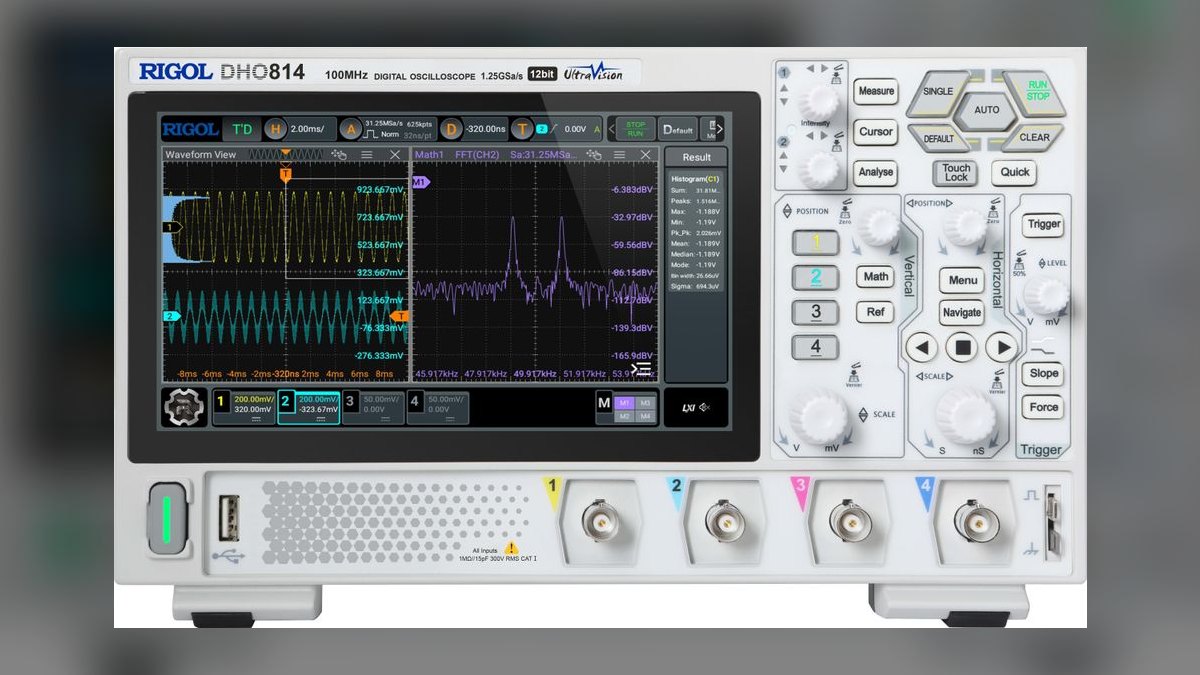
Fourth place reflects the cheapest genuine 12-bit, four-channel bench scope worth owning at $569. It runs 100 MHz with 1.25 GSa/s sampling and 25 Mpts of memory, driven by the same 7-inch capacitive touchscreen interface as the flagship DHO924S. Protocol decode for I2C, SPI, UART, CAN, and LIN is included at no cost, and an HDMI output projects the display to an external monitor for teaching.
This targets sub-$600 buyers doing audio, power-supply ripple, and low-level analog where 12 bits give 16x finer voltage steps than 8-bit rivals. It trades away the AWG entirely, carries half the 924S memory, and the fan whine is audible in a quiet room. Against the Tektronix above, you get double the channels and four extra bits for $430 less.
5Keysight EDUX1052G
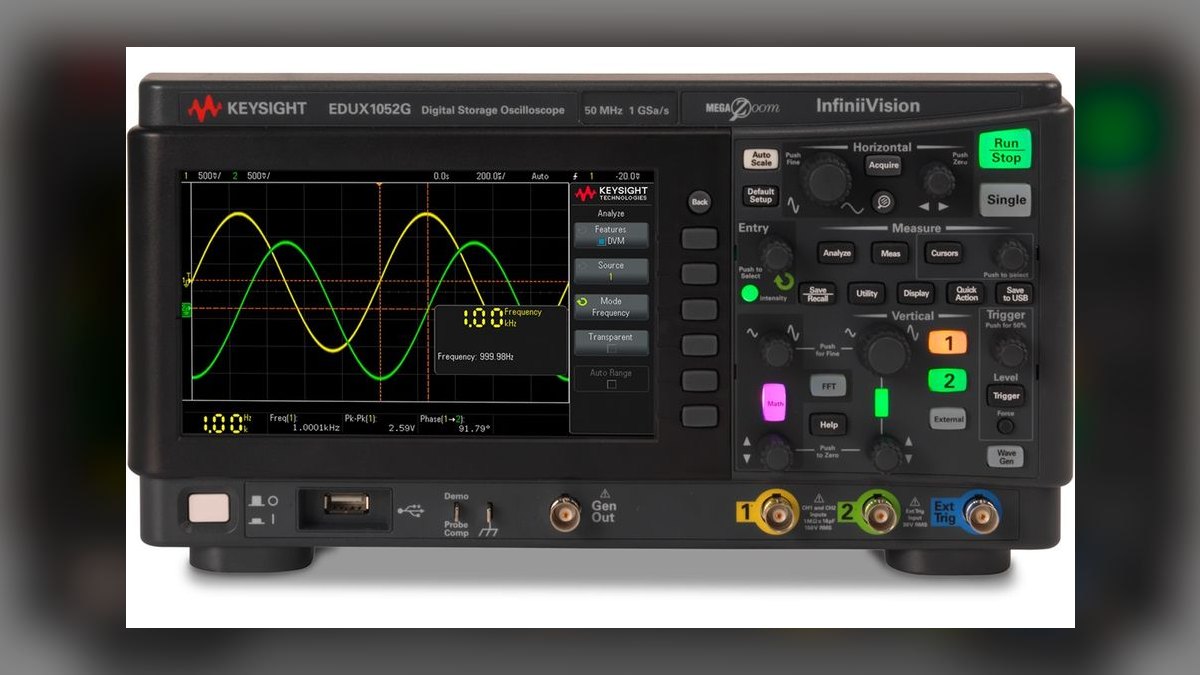
It lands at five because the InfiniiVision pedigree and included 20 MHz waveform generator outweigh modest core specs. At $779 you get 50 MHz across two channels, 1 GSa/s with 5 GSa/s peak, 1 Mpts of memory, and 8-bit vertical on a 7-inch WVGA display. Serial decode for I2C, SPI, and UART is free, and Keysight's zone-trigger touch interface makes glitch isolation genuinely fast for beginners.
This is built for classrooms and students who need to close the loop on filter and amplifier experiments without a second instrument on the bench. The trade is severe: 50 MHz bandwidth and 1 Mpts memory get outgrown quickly by any serious hobbyist. The Rigol DHO814 above costs $210 less and delivers double the bandwidth, double the channels, and 25x the memory.
6Rigol DS1054Z
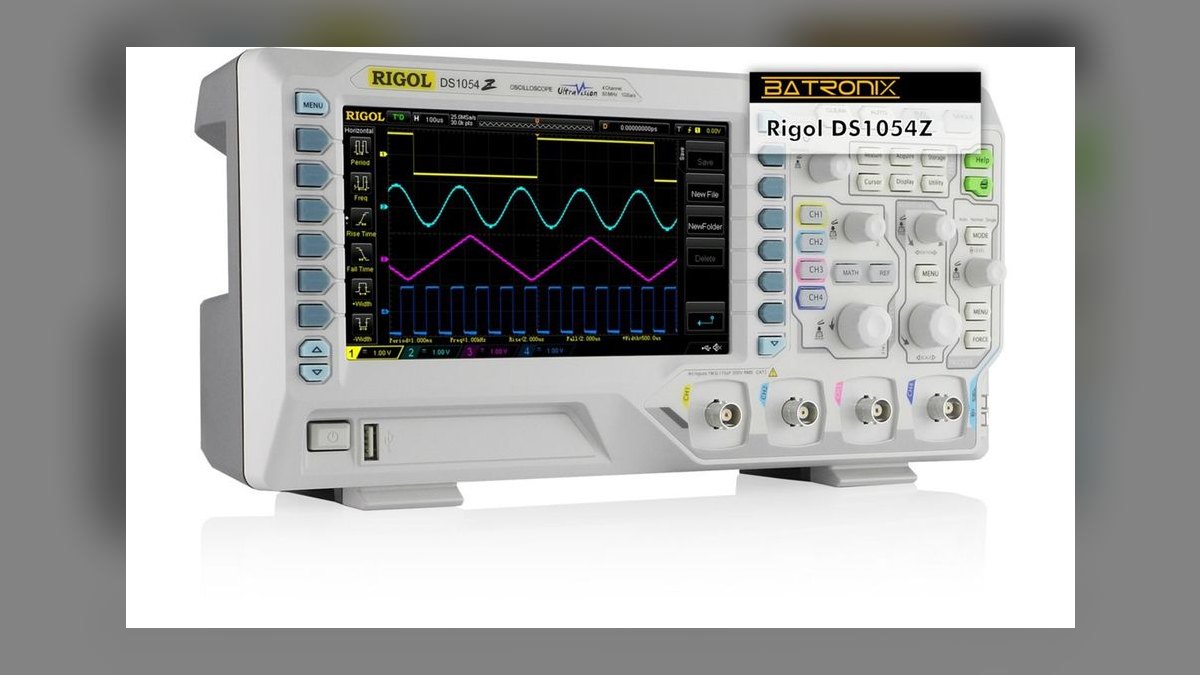
Sixth on raw specs, first on value at $349, which is why it remains the most-recommended first scope on the planet. Stock it delivers 50 MHz across four channels, 1 GSa/s sampling, 24 Mpts of memory, and 8-bit vertical on a 7-inch 800x480 display. The community-shared option key unlocks 100 MHz bandwidth, deep memory mode, all serial decode, advanced triggers, and the recorder, turning it into roughly a $900 instrument.
This fits every first-time hobbyist and anyone who wants four channels under $400. It trades away 12-bit resolution and a modern interface; the UI feels dated beside the DHO touchscreens. Against the Rigol DHO814 above, you save $220 and lose the 12-bit ADC, but the EEVblog knowledge base behind this model is unmatched and spare parts are cheap.
7Owon SDS1102
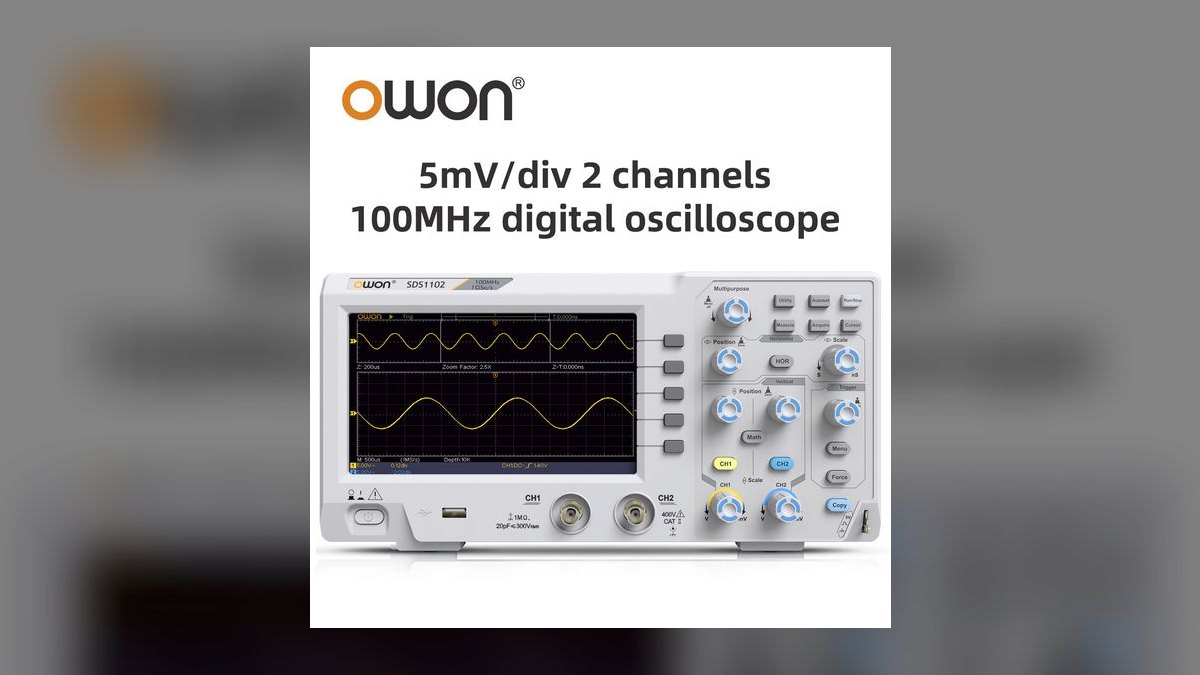
It ranks seventh as the cheapest scope here that does not overstate its bandwidth. At $259 you get an honest 100 MHz across two channels, 1 GSa/s sampling, 10 Mpts of memory, and 8-bit vertical on a 7-inch 800x480 TFT. Two 100 MHz passive probes come in the box, FFT math is included, USB Host and Device ports are standard, and Owon backs it with a 3-year warranty.
This is for the absolute beginner debugging Arduino projects, audio circuits, and power supplies who needs working hardware today. It trades away serial decode, any AWG, and LAN connectivity, the fan is noisy, and the trigger circuit is the weakest in this roundup. The Rigol DS1054Z above costs $90 more and adds two channels plus a hackable path to full decode.
8Hantek DSO5102P
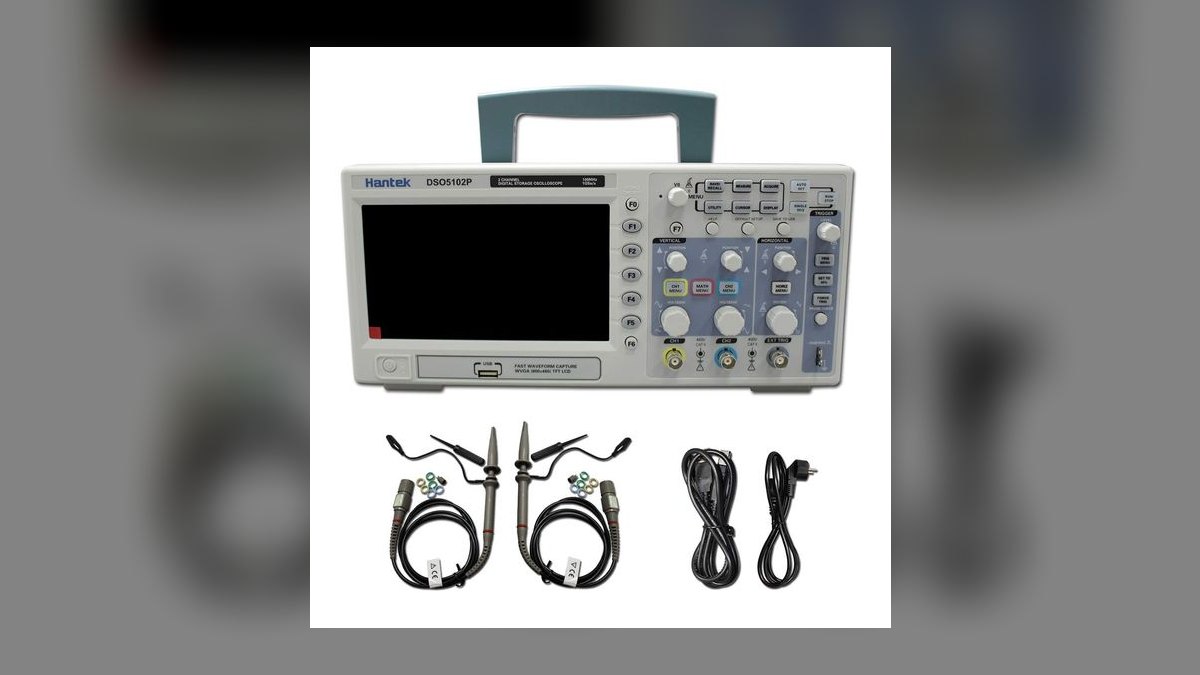
Eighth place comes down to firmware, not hardware: 100 MHz, two channels, and 1 GSa/s for $319 in an all-metal chassis. Standard memory is only 40K with 24 Mpts available as a paid option, vertical resolution is 8-bit, and the 7-inch 800x480 color LCD is bright. Sensitivity reaches 2 mV/div, 32 automatic measurements and FFT are built in, and SCPI scripting works over USB.
This serves the tinkerer doing car-stereo, RC, and basic embedded work, or anyone wanting a solid third scope for the bench. It trades away decode and any AWG, and Hantek's interface is the clunkiest of the major brands. The Owon above costs $60 less with far deeper standard memory, making this a backup rather than a first purchase.
9PicoScope 2208B
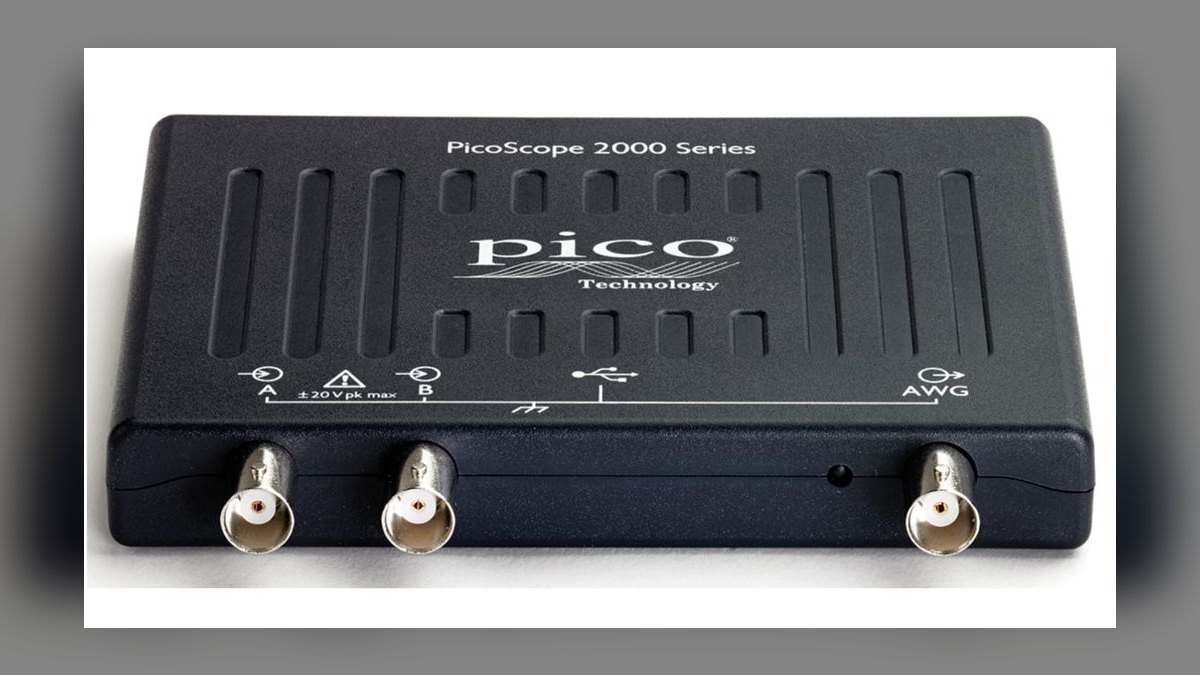
Ninth on this bench-scope list purely because it has no screen, yet it holds the deepest memory here at 128 Mpts. The $519 aluminum brick weighs 200 g and turns a laptop running PicoScope 7 into a 100 MHz, two-channel, 1 GSa/s instrument with 14-bit resolution-enhance mode. A 1 MHz AWG is built in, decode for I2C, SPI, UART, CAN, LIN, FlexRay, and USB is free, and the warranty runs 5 years.
This belongs to the field-service tech, automotive diagnostician, or CI test-rig builder who lives out of a laptop bag. The SDK covers C, C#, Python, MATLAB, and LabVIEW, making it the automation favorite. The trade is total dependence on a host computer with no knobs and no standalone display, unlike every bench scope above it, including the Hantek.
10Siglent SDS814X HD
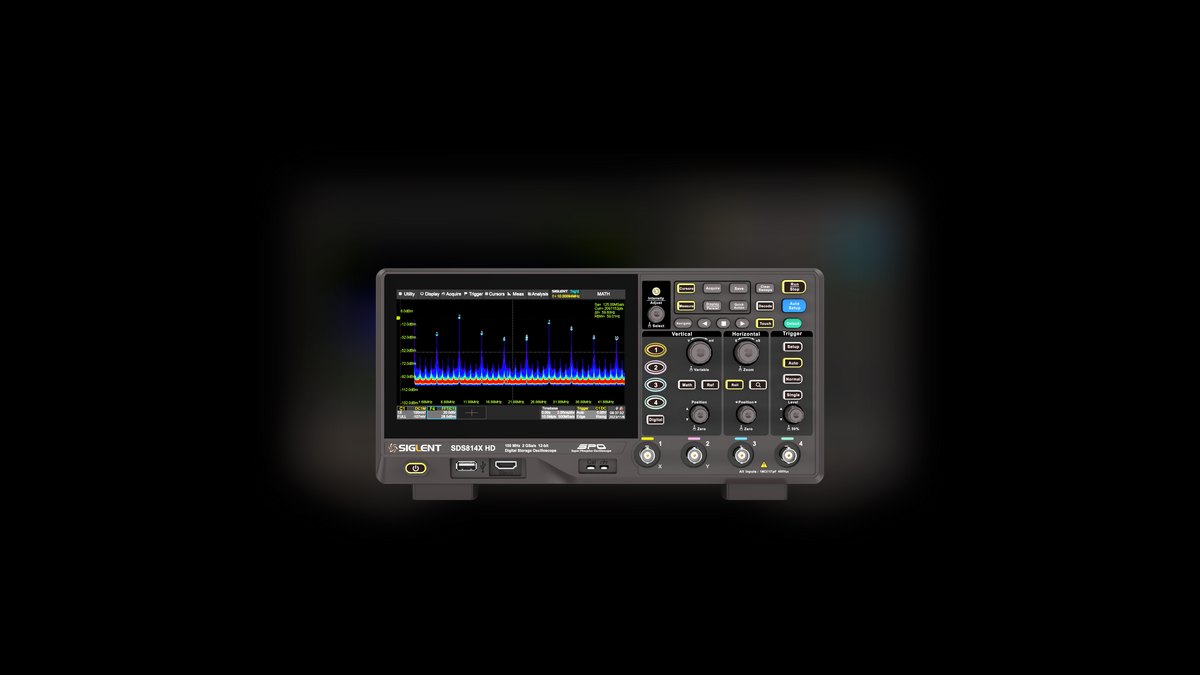
It closes the list at $999 because it matches the Rigol DHO814's 12-bit four-channel formula but costs $430 more. The specs are strong: 100 MHz, 2 GSa/s, 50 Mpts of memory, and a 10.1-inch capacitive touchscreen from the SDS800X HD line. Free decode covers I2C, SPI, UART, CAN, LIN, and FlexRay, history and sequence acquisition are included, HDMI output works, and the front-end noise floor is exceptionally clean.
This suits hobbyists who prefer Siglent's interface and want 12-bit resolution with a larger display than Rigol's 7-inch panel. It trades away the built-in AWG, which requires the external SAG1021I add-on, and caps bandwidth at 100 MHz. Buyers needing headroom should look at the 200 MHz SDS824X HD; buyers watching price should take the DHO814 instead.
How we ranked these
We ranked scopes by weighting bandwidth-to-price ratio, sample rate per active channel, memory depth, vertical resolution (8-bit vs 12-bit), included protocol decode, AWG bundle value, display quality, connectivity, and firmware hackability. Sources included EEVblog reviews, Hackaday teardowns, w2aew benchmarks, Pico Technology white papers, and manufacturer datasheets from Rigol, Siglent, Tektronix, Keysight, Owon, Hantek, and Pico.
We deliberately ignored front-panel bandwidth numbers taken at face value, since a 100 MHz scope only measures cleanly to roughly 20 MHz. We ignored interleaved sample-rate claims that collapse when all channels are active, marketing FFT features running on 1 kpts of memory, and bundled accessory counts. Brand prestige earned nothing on its own—Tektronix and Keysight scored on trigger quality and warranty length, not reputation.
Related questions
How many channels does a hobbyist actually need?
Two channels handle roughly 70% of hobby tasks—signal plus reference, or input versus output. Four becomes essential for SPI with MISO, MOSI, CLK and CS visible at once, CAN bus with a separate trigger source, or three-phase power work. On Rigol and Siglent the price gap between two and four channels is small, so buy four if the budget stretches.
What does 12-bit vertical resolution actually change on the bench?
A 12-bit ADC gives sixteen times finer voltage steps than 8-bit, so small features riding on a large signal stay visible without changing the vertical scale. That matters for power-supply ripple, audio distortion, and low-level analog measurement. For digital logic, embedded buses, and general board bring-up, 8-bit remains entirely adequate and costs considerably less.
Why does sample rate drop when I turn on more channels?
Many scopes interleave a single fast ADC across channel pairs. The Siglent SDS1104X-E advertises 1 GSa/s, but with all four channels active each gets 250 MSa/s. That still clears Nyquist for typical embedded signals, yet it changes what fast edges you can trust. Always read the per-channel figure in the datasheet rather than the front-panel headline.
Is a USB scope a real instrument or a compromise?
The PicoScope 2208B carries 128 Mpts of memory, the deepest here, plus 14-bit resolution enhancement, a 1 MHz AWG, and free decode across seven protocols. It weighs 200 grams and scripts through C, Python, MATLAB and LabVIEW. The tradeoff is having no display or knobs—your laptop is the instrument, which suits field service and automated test rigs.
What memory depth do long protocol captures require?
Capturing a complete CAN session, a multi-transaction I2C exchange, or a boot log at full sample rate needs 24 to 50 Mpts. The Rigol DHO924S ships 50 Mpts standard and the DS1054Z offers 24 Mpts. A 1 Mpts scope like the Keysight EDUX1052G forces a choice between time window and timing resolution on every capture.
Do the stock probes need replacing?
The 350 MHz PVP3150 passives shipped with the DHO924S are genuinely good and need no upgrade. Owon and Hantek stock probes are usable for Arduino-level work but limit serious analog measurement. Whatever probe you use, compensate it against the scope's calibration output before measuring—an uncompensated probe distorts square edges and makes the scope look worse than it is.
Which scope suits a classroom rather than a workbench?
The Keysight EDUX1052G at $779 includes a 20 MHz waveform generator, letting students drive a filter and observe the response using one instrument. The Tektronix TBS2102B at $999 survives a decade of student handling and carries a five-year warranty. Both cost more per specification than the Rigols, and both are built for repeated abuse rather than maximum capability.
What separates the Rigol DHO814 from the Siglent SDS814X HD?
Both deliver 100 MHz across four channels with 12-bit resolution and free serial decode. The Siglent adds a 10.1-inch touchscreen, 2 GSa/s and 50 Mpts for $999; the Rigol delivers a 7-inch touchscreen, 1.25 GSa/s and 25 Mpts for $569. Neither includes an AWG. Choose the Rigol on price and the Siglent on display and memory.
FAQ
What is the best overall hobby oscilloscope in 2027?
The Rigol DHO924S at $1,599—250 MHz across four channels, 12-bit vertical resolution, 4 GSa/s, and 50 Mpts of standard memory, with a built-in 25 MHz AWG and free decode for I2C, SPI, UART, CAN, LIN and FlexRay. Comparable specifications from Tektronix or Keysight cost above $5,000, and the three-year warranty beats most rivals.
What is the best value hobby oscilloscope?
The Rigol DS1054Z at $349 remains unbeaten. Stock it delivers 50 MHz across four channels with 1 GSa/s and 24 Mpts of memory. The widely circulated community option key unlocks 100 MHz, deep memory, every serial decode, advanced triggers and the recorder, turning a $349 purchase into roughly $900 of instrument for first-time hobbyists.
What minimum bandwidth do Arduino and embedded projects need?
Between 50 and 100 MHz covers it. The DS1054Z at 50 MHz stock, or 100 MHz once unlocked, handles every common I2C, SPI, UART, PWM and SPI-flash signal a maker meets. The Siglent SDS1104X-E at 100 MHz across four channels does the same with more headroom. Neither will limit typical microcontroller work.
How much bandwidth headroom should I buy?
Choose a scope rated at roughly five times your highest signal frequency. A 100 MHz instrument measures amplitude honestly only to about 20 MHz before rolloff begins. If you need to see the harmonics that shape a 40 MHz square wave rather than just its fundamental, budget for a 200 to 250 MHz scope such as the DHO924S.
Does the Rigol DS1054Z option-key unlock still work?
It remains a gray-area community modification that Rigol has tacitly tolerated for roughly a decade, and working keys still circulate on the EEVblog forum. This is not legal advice. Even entirely unmodified, the DS1054Z gives four channels, 50 MHz and 24 Mpts at $349, which is why it stays the most-recommended first scope.
Should my first scope be a bench model or a USB model?
Buy a bench scope first if you have a permanent workbench—knobs, a display, and instant power-on beat launching software every session. Choose a USB scope like the PicoScope 2208B first if you are a field-service technician, automotive diagnostician, or building CI test rigs, because it fits a laptop bag and scripts cleanly through its SDK.
Is the Tektronix price premium justified?
Only if longevity outranks specifications. The TBS2102B costs $999 for 100 MHz across two channels with 5 Mpts and 8-bit resolution—Rigol and Siglent undercut that badly on paper. What you buy is a front panel that survives a decade of student handling, an excellent trigger system, and a five-year warranty as standard.
Which scopes include protocol decode without extra cost?
Rigol and Siglent include or freely unlock decode for I2C, SPI, UART, CAN and LIN, and the PicoScope 2208B adds FlexRay and USB. Tektronix and Keysight lock decode behind paid bundles running $200 to $600, though the EDUX1052G does include I2C, SPI and UART. Factor those bundle costs into any cross-brand price comparison.
What specification traps should I watch for?
Three recur constantly. A 1 GSa/s claim frequently means interleaved across channel pairs, halving to 500 MSa/s per channel when both are active. An advertised FFT running on 1 kpts of memory produces unusable spectra. And listed WiFi is sometimes an optional USB dongle sold separately rather than an integrated radio, as on some Rigol and Siglent trims.
Does a built-in waveform generator matter?
It matters more than most buyers expect. A standalone AWG costs $300 to $500 and consumes bench space and a power outlet. The DHO924S includes a 25 MHz generator and the EDUX1052G a 20 MHz one. The Siglent SDS814X HD requires the external SAG1021I module, which narrows its apparent price advantage over comparable Rigol models.
Sources
- https://www.eevblog.com/forum/testgear/
- https://hackaday.com/2019/03/07/hands-on-with-the-rigol-ds1054z/
- https://www.rigolna.com/products/digital-oscilloscopes/
- https://siglentna.com/digital-oscilloscopes/
- https://www.tek.com/en/products/oscilloscopes/tbs2000
- https://www.keysight.com/us/en/products/oscilloscopes.html
- https://www.picotech.com/oscilloscope/2000/picoscope-2000-overview
- https://www.batronix.com/shop/oscilloscopes/
- https://www.tequipment.net/Rigol/DHO924S/Digital-Oscilloscopes/
Related on PULSE
This page will be disappearing soon. Save it to your device for $1 — or read it free while it is here.
@Kory-White- · if Venmo asks, the last 4 of my number are 2012
This page is gone.
This one is off the shelf now. $1 keeps it on your phone for good — the whole page, pictures and diagrams included.
 pulse-reviewsTop 10 Outlet Testers — Best Overall + Best Value in 2027
 pulse-reviewsTop 10 Laptop Stands for Remote AEs in 2027
 pulse-reviewsTop 10 4K TVs — Best Overall + Best Value in 2027
 pulse-reviewsTop 10 Foldable Phones — Best Overall + Best Value in 2027
 pulse-reviewsTop 10 RV Surge Protectors — Best Overall + Best Value in 2027
 pulse-reviewsTop 10 85-Inch TVs — Best Overall + Best Value in 2027
 pulse-reviewsTop 10 Smart Water Leak Detectors — Best Overall + Best Value in 2027
 pulse-reviewsTop 10 Electric Spice Grinders — Best Overall + Best Value in 2027
 pulse-reviewsTop 10 YouTube Lighting Kits — Best Overall + Best Value in 2027
 pulse-reviewsTop 10 Boom Pole Kits — Best Overall + Best Value in 2027