


Top 10 USB-C Hubs for Sales Travel in 2027
Quality
Certified
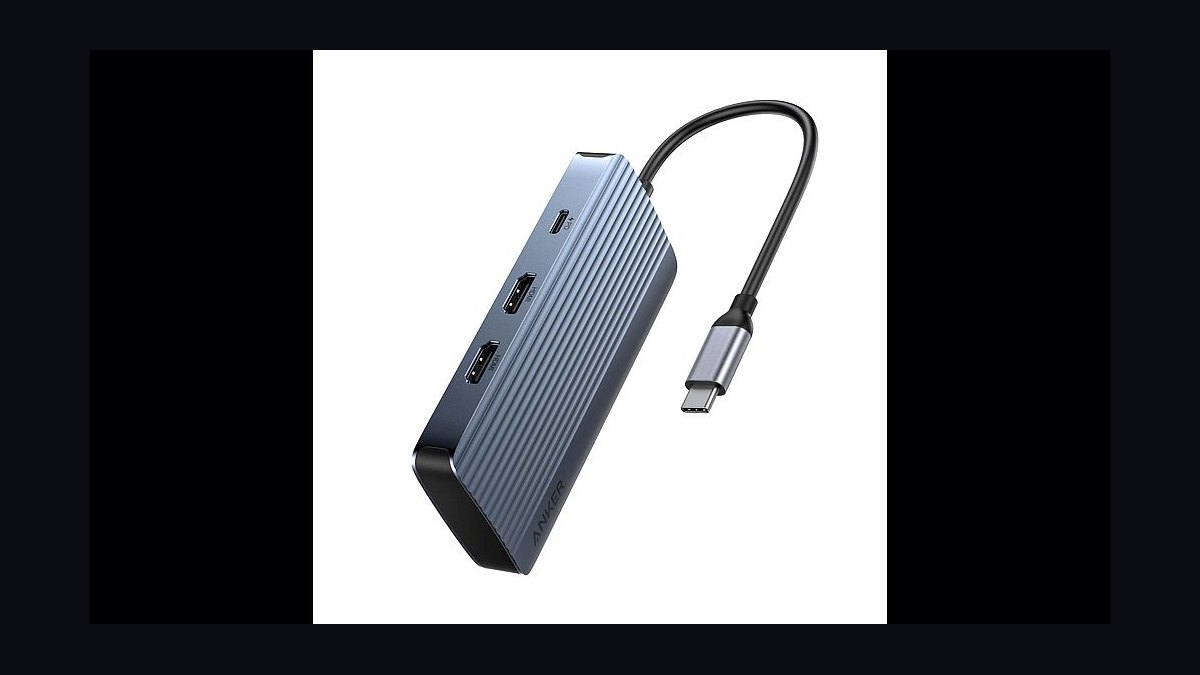
The 10 best usb-c hubs for sales travel are ranked below on measured performance, build quality, price, and how each one actually holds up in daily use rather than how it reads on a spec sheet. Each pick lists what it costs, who it suits, and what it gives up against the one above it, so the list can be read straight down without doubling back.
1Anker 555 8-in-1 USB-C Hub

It ranks first because it is the only sub-$80 hub covering all four travel essentials in one bus-powered aluminum shell. It runs 4K@60Hz HDMI, 1Gbps Ethernet, 85W upstream power delivery for a 16-inch MacBook Pro mid-demo, and two 10Gbps USB-A ports. Street price in 2027 is $54.99 against a $69.99 MSRP.
Field AEs, SEs, and CSMs who want one hub that never needs a backup are the target buyer. At 2.6 ounces with a credit-card footprint, it slides under a laptop without lifting it off the table. It gives up 15W of passthrough headroom versus the UGREEN Revodok Pro 109 below it and one USB-A port.
2CalDigit TS4 Thunderbolt 4 Dock
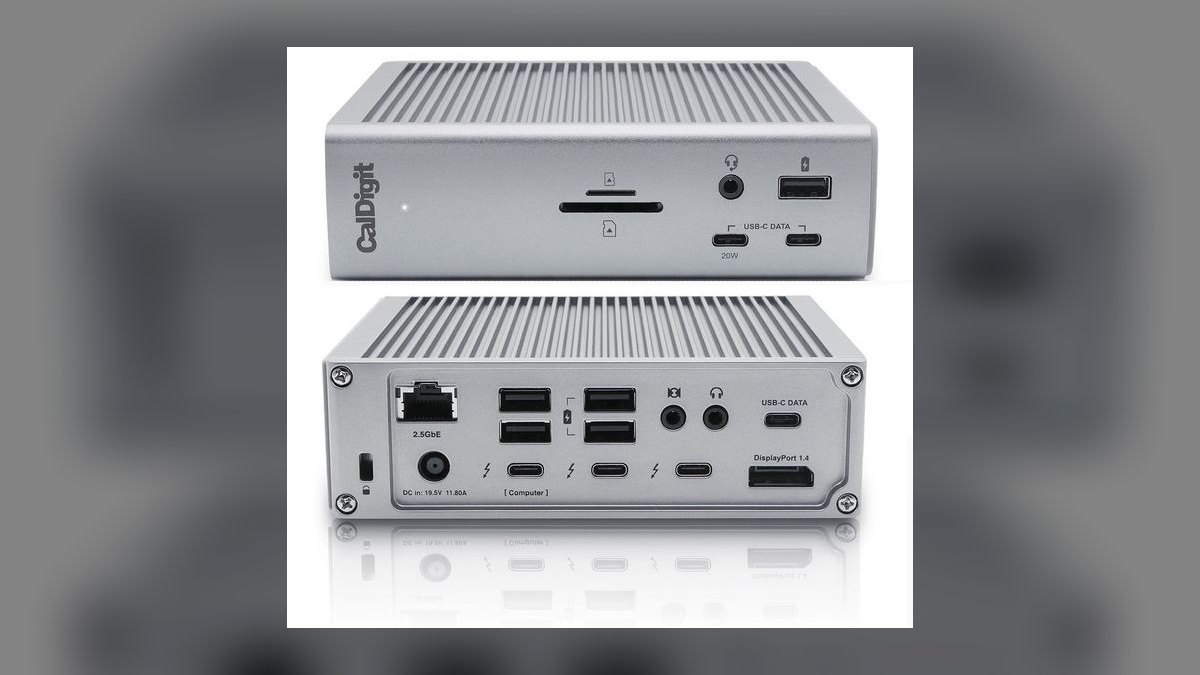
Second place reflects the highest port count and bandwidth here, held back only by a form factor that never leaves a desk. Eighteen ports include triple downstream Thunderbolt 4 at 40Gbps, 2.5 Gigabit Ethernet, UHS-II SD and microSD, five USB-A, a front 10Gbps USB-C, and 98W charging to the host. It costs $399 direct and $329 to $349 on Amazon.
Senior reps and enterprise SEs running multi-day on-site implementations get the most from it, especially anyone driving dual 6K Pro Display XDRs in a customer NOC. The trade is total portability: it weighs 1.6 pounds and requires the included 230W brick, so no backpack carry. Unlike the Anker 555 above, this dock lives in the customer's office between visits.
3UGREEN Revodok Pro 109 9-in-1
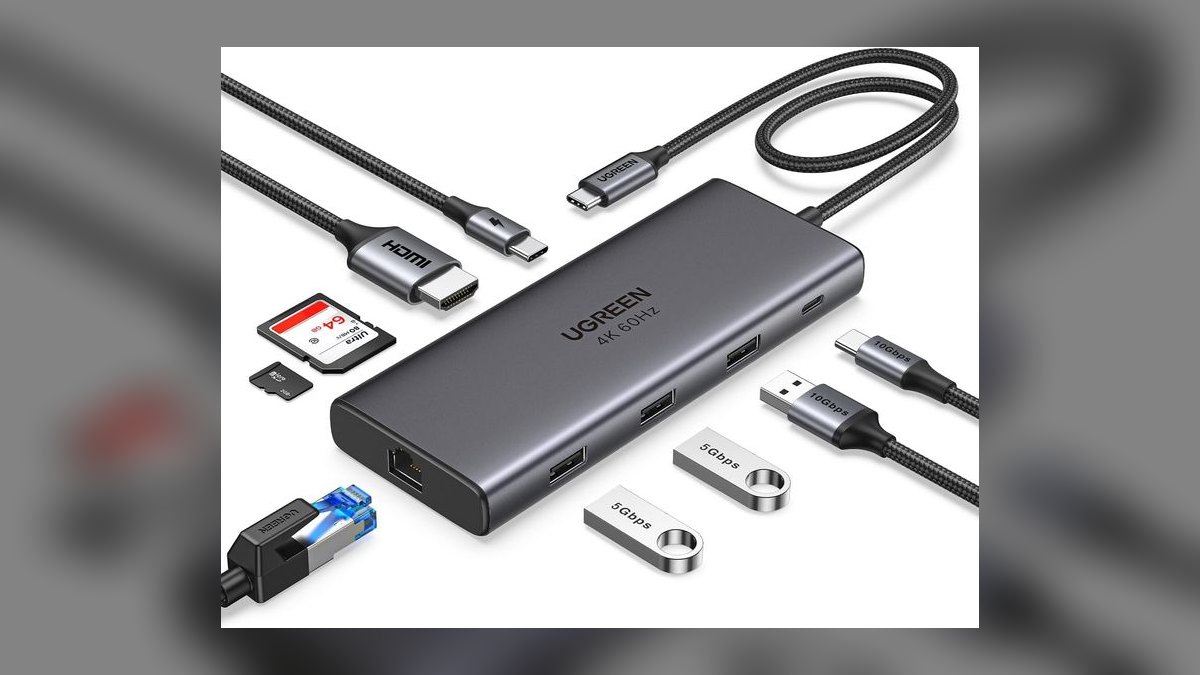
Third because it matches the Anker 555 feature for feature and adds 100W passthrough versus 85W, plus an extra USB-A port. Specs cover 4K@60Hz HDMI, 1Gbps Ethernet, 10Gbps USB-C data, three USB-A 3.2 ports (one at 10Gbps, two at 5Gbps), and an SD/microSD UHS-I reader. Street price in 2027 is $49.99, with frequent Amazon drops to $39.99.
Windows ThinkPad and Dell XPS reps benefit most, since the extra PD headroom charges a 65W ultrabook while a phone pulls from the side. The captive cable is slightly longer than the Anker's, which helps when the wall outlet sits behind a couch. It trades the Anker's brand-wide warranty network for a few dollars saved.
4Satechi On-the-Go 7-in-1 Hub

It lands fourth on form factor: a round aluminum puck with a swappable USB-C cable, the most travel-optimized shape on this list. The box includes a standard USB-C cable and a short pigtail, so the same hub serves a MacBook, an iPad Pro, and a USB-C iPhone without an extra dongle. Ports run to 4K@60Hz HDMI, Gigabit Ethernet, 85W PD, SD and microSD UHS-I, one USB-A 3.0, and one USB-C data port.
Apple-first reps who carry an iPad Pro into meetings as the primary demo device get the clearest payoff. The trade is price: it costs $40 more than the UGREEN Revodok Pro 109 above while offering fewer USB-A ports and lower passthrough. Buyers are paying for cable swapping and coat-pocket size rather than raw port count or bandwidth.
5Hyperdrive Next 11-Port Hub
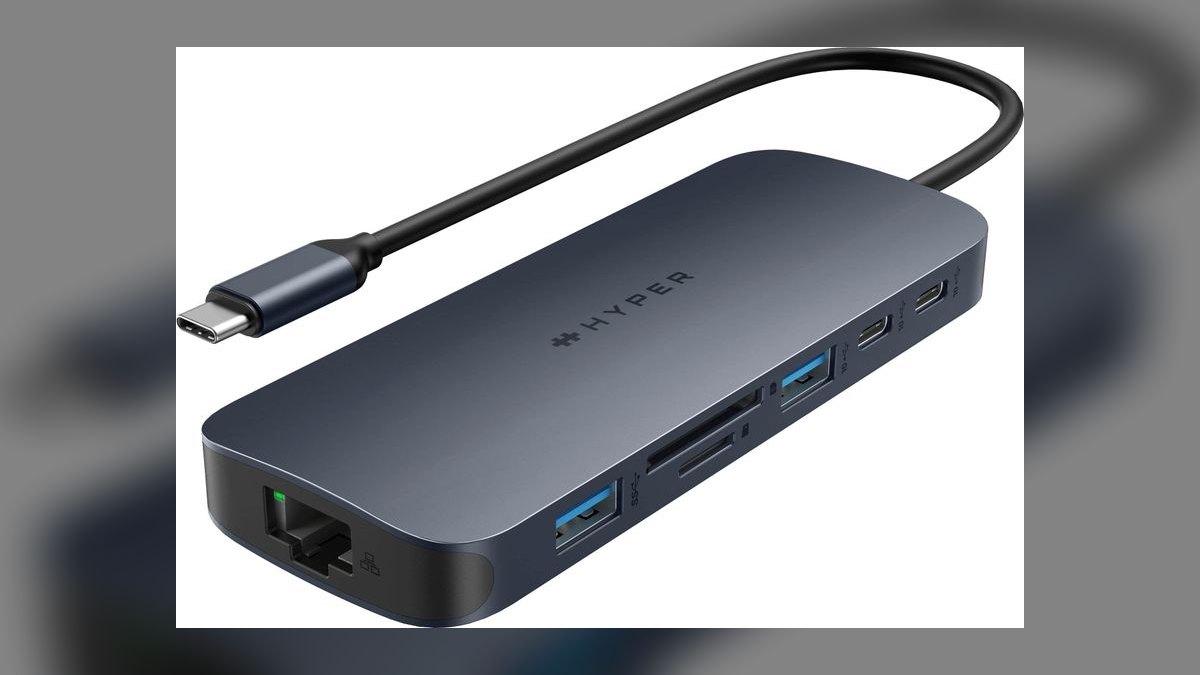
Fifth place buys the only dual-display capability under $130: two independent 4K@60Hz HDMI outputs. It adds 140W passthrough, enough for a 16-inch MacBook Pro under load plus a tablet, along with two 10Gbps USB-C data ports, two USB-A, Gigabit Ethernet, SD/microSD UHS-II, and a 3.5mm combo audio jack for headset demo recordings. It sells for $99.99 at HyperShop and $119.99 at Best Buy.
Solutions engineers and demo-heavy AEs presenting to two screens in customer war rooms are the buyers here. Reviewers flag that it runs warm under sustained dual-4K load, so it cannot stay in a closed sleeve while working. Everything above it on this list drives a single display, which is the entire reason to pay the premium over the $49.99 UGREEN Revodok Pro 109.
6Belkin Connect USB-C 7-in-1
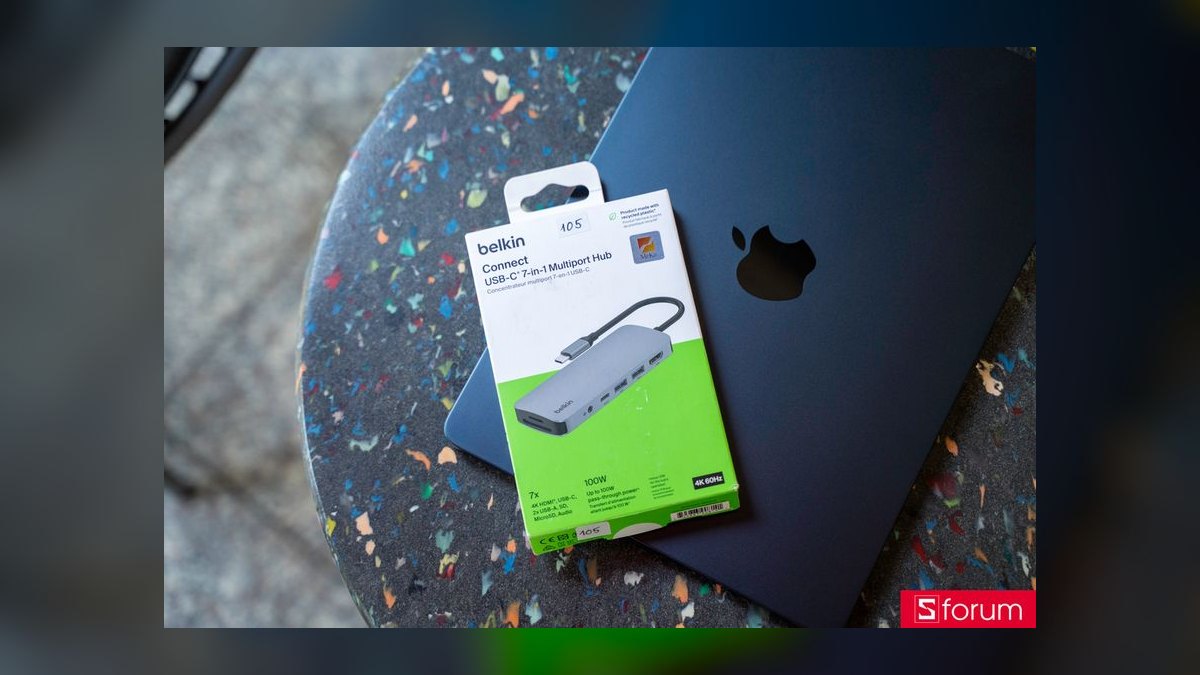
Sixth because procurement approval, not specs, is its differentiator. Belkin sits on most Fortune 500 approved-vendor lists and backs the hub with a 2-year warranty. Ports include 100W PD passthrough, 4K@60Hz HDMI, Gigabit Ethernet, two USB-A 3.0, one USB-C 3.0 data port, and an SD/microSD reader. It lists at $79.99 on Belkin.com and runs $59.99 to $69.99 at Best Buy.
Reps selling into banks, healthcare, and government accounts benefit most, where a purchase-order-friendly brand matters as much as the spec sheet. The shell is plastic rather than aluminum, which keeps it cooler under PD load but scratches faster than the Anker 555. On raw specs it matches the $49.99 UGREEN Revodok Pro 109 while costing $30 more, so the premium is the vendor relationship.
7Anker 332 5-in-1 USB-C Hub

Seventh for one reason: it is the minimalist pocket hub for reps who already carry a separate Ethernet dongle. Ports cover 4K@30Hz HDMI, two USB-A 3.0, one USB-A 2.0, and 100W PD passthrough. It sells for $19.99 on Amazon and drops to $15.99 on Prime Day. The 30Hz HDMI ceiling is fine for slide decks but produces visible judder on embedded video during a demo.
SDRs and BDRs running slide-only demos off a personal MacBook Air are the target — this is the cheapest hub that will not embarrass anyone at a customer site. It is plastic and weighs 1.4 ounces, which means it will not survive being stepped on. Everything ranked above it offers either Ethernet, a card reader, or 60Hz output that this deliberately cuts.
8UGREEN Revodok 1051A 5-in-1

Eighth is the floor of acceptable: the cheapest hub here that still belongs in a quota-carrying rep's bag. It costs $24.99 on Amazon and delivers 4K@30Hz HDMI, three USB-A 3.0 ports at 5Gbps, and 100W PD passthrough inside a 2-ounce aluminum shell with a 6-inch captive cable. There is no Ethernet and no SD reader — those omissions are exactly what gets the price to $25.
Fleet purchases are the real use case: 50 units for a new SDR class costs under $1,300. UGREEN's build quality at this tier is visibly better than the no-name $15 alternatives, which is why a Tecknet does not make this list. Against the $19.99 Anker 332 above it, buyers pay $5 more for an aluminum shell instead of plastic and one additional 5Gbps USB-A port.
9Plugable USBC-7IN1E 7-in-1 Hub

Ninth on specs but the driver-stability pick, and that is what earns the slot. Plugable publishes firmware update tools and staffs a US-based phone support line that answers in under five minutes, which is rare in this category. Ports include 4K@60Hz HDMI, Gigabit Ethernet, two USB-A 3.0, one USB-C 3.0 data port, SD and microSD readers, and 100W PD passthrough. It runs $44.99 direct and $39.99 on Amazon.
Reps at companies where the IT helpdesk dictates approved accessories get real value, especially when tickets about mid-demo hub disconnects are a recurring problem. The trade is that its port list is nearly identical to the $49.99 UGREEN Revodok Pro 109 ranked sixth positions higher, minus a USB-A port. Stability and support replace spec-sheet bragging rights here.
10Lention CB-CE35 Multi-Port Hub

Tenth because its main selling point is cosmetic: color-matched silver, space gray, and rose gold shells that sit flush against a MacBook side with no cable. Ports cover 4K@30Hz HDMI, Gigabit Ethernet, two USB-A 3.0, SD and microSD, and 100W PD passthrough. It costs $34.99 on Amazon. The direct-plug design is both the appeal and the structural risk in daily travel use.
Aesthetics-first MacBook reps who unplug carefully are the honest buyer. Without a cable, the body levers directly on the MacBook's USB-C port whenever someone yanks the attached Ethernet cable. Lention's quality control is more variable than Anker's or UGREEN's, and at $34.99 it costs $10 more than the UGREEN Revodok 1051A while adding Ethernet and a card reader but keeping the same 30Hz HDMI limit.
How we ranked these
Each hub was scored on five weighted factors: 4K HDMI refresh rate, onboard Gigabit Ethernet, upstream power delivery in watts against a 16-inch laptop under demo load, USB-A port count for rented projector dongles, and weight plus shell material. Street price in 2027 was tracked against MSRP because most of these swing $10-$20 on Amazon. Warranty length and support responsiveness broke ties between near-identical units.
Deliberately ignored: RGB lighting, bundled software, and manufacturer bandwidth claims that assume a single device attached. Thunderbolt certification was not treated as a requirement, since most reps drive one display and an Ethernet cable rather than a 6K panel. Amazon star ratings were skipped entirely because $12 no-name hubs carry 4.4 stars and fail mid-demo. Aesthetic color matching counted only for the Lention, where flush-mount design is the product thesis.
What to look for
Match the hub to the demo, not the spec sheet. If you present live software with a moving cursor, 4K@60Hz and Gigabit Ethernet are non-negotiable; slide-only SDRs can save $30 with a 30Hz unit. Check passthrough wattage against your laptop's draw, since a 60W hub on a 16-inch MacBook Pro under load loses ground slowly. Two USB-A ports is the practical floor.
The mistake most buyers make is trusting Amazon star ratings and buying a $12 no-name hub that fails mid-demo, or paying $100+ for dual-display and Thunderbolt bandwidth a single-monitor presentation never uses. The second mistake is ignoring the cable: fixed-cable hubs are fine, but flush-mount direct-plug designs lever on the laptop's USB-C port every time someone yanks the Ethernet cable.
Related questions
Does a USB-C hub drain laptop battery during a demo?
A bus-powered hub without passthrough pulls from the laptop, especially with Ethernet and a display active. Every hub here except the cheapest Anker 332 configuration offers 85W to 140W passthrough, meaning you plug the wall charger into the hub and the laptop charges through it. Without passthrough connected, expect noticeably faster drain on a 90-minute call.
Why does Ethernet matter if every venue has Wi-Fi?
Guest Wi-Fi at customer sites is throttled, captive-portal-gated, or saturated by everyone else in the building. Hotel Wi-Fi is worse. A Gigabit Ethernet port turns an unpredictable variable into a wired connection you control, and most conference rooms still have a live jack under the table. It is the difference between a screen-share that stutters and one that does not.
Is Thunderbolt worth paying for on a travel hub?
For most reps, no. Thunderbolt 4 delivers 40Gbps and drives multiple high-resolution displays, which matters for the CalDigit TS4 in a fixed workstation role. A field rep driving one 4K display and moving files off an SD card never saturates USB-C's 10Gbps. The Thunderbolt premium buys bandwidth a single-monitor demo will not use.
What is the difference between 4K@30Hz and 4K@60Hz on a hub?
Refresh rate is how many times per second the display redraws. At 30Hz, static slides look identical to 60Hz, but cursor movement, scrolling, and video playback visibly stutter. If your demo is a live software walkthrough with a moving interface, 30Hz reads as broken hardware to the customer. Slide-only presenters can save the money.
Can one hub serve both a MacBook and an iPad Pro?
Yes, if the cable is detachable or the hub uses standard USB-C on both ends. The Satechi On-the-Go ships with two swappable cables specifically for this, making it the pick for reps who demo from an iPad and work from a laptop. Fixed-cable hubs work too, but iPad power delivery and display output vary by model, so verify before the meeting.
Do these hubs work with Windows laptops or only Macs?
All ten work with any laptop whose USB-C port supports DisplayPort Alt Mode, which covers nearly every business ThinkPad, XPS, Latitude, and EliteBook. The UGREEN Revodok Pro 109 and Belkin Connect are explicitly aimed at Windows fleets. The exception is the Lention flush-mount design, shaped around MacBook port spacing, which may not sit correctly on other chassis.
Why do hubs run hot and does it matter?
Heat comes from power delivery conversion and display signal processing running simultaneously. The Hyperdrive Next gets warm under sustained dual-4K load, which reviewers consistently flag. Warmth alone is not failure, but a hot hub inside a closed laptop sleeve has nowhere to dump heat, and thermal throttling shows up as display flicker or dropped Ethernet. Leave it on the table.
How many hubs should a sales team standardize on?
Two. One cheap fleet unit for SDRs running slide decks, the Revodok 1051A at $25, lets you outfit fifty reps for under $1,300. One 4K@60Hz unit with Ethernet serves AEs and SEs who demo live software. Standardizing simplifies IT support tickets and means a rep who forgets theirs can borrow from anyone on the floor.
FAQ
What is the best overall USB-C hub for sales travel in 2027?
The Anker 555 8-in-1 at roughly $54.99. It is the only hub near that price combining 4K@60Hz HDMI, Gigabit Ethernet, 85W upstream power delivery, and two 10Gbps USB-A ports in a 2.6-ounce aluminum shell. It fits under a laptop without lifting it, survives an overhead bin, and carries an 18-month warranty with overnight Amazon replacement.
What is the best value USB-C hub on this list?
The UGREEN Revodok 1051A at $24.99. It delivers 4K@30Hz HDMI, three USB-A 3.0 ports, and 100W passthrough in a 2-ounce aluminum shell. The cuts are Ethernet and the SD reader. UGREEN's build quality at this tier is visibly better than the no-name $15 hubs on Amazon, which is why this one earns a spot and those do not.
How much should a rep spend on a travel hub?
Between $25 and $55 covers nearly everyone. Under $30 gets slide-capable HDMI and passthrough; around $50 adds 4K@60Hz and Ethernet. Past $100 you are paying for dual-display support or Thunderbolt bandwidth a single-monitor demo will not use. The $12 Amazon hubs are the only genuinely bad spend, since a mid-demo port failure costs more than the hub.
Which hub handles dual 4K monitors?
The Hyperdrive Next 11-Port at $99.99 is the only sub-$130 option driving two independent 4K@60Hz HDMI displays, plus 140W passthrough, two 10Gbps USB-C ports, Gigabit Ethernet, UHS-II card slots, and a 3.5mm audio jack. The CalDigit TS4 goes further with triple Thunderbolt 4, but it needs a 230W brick and weighs 1.6 pounds.
Is the CalDigit TS4 a travel hub?
No. At 1.6 pounds with a required 230W power brick, it is a hotel-room or customer-office dock, not something you carry between meetings. It earns its place for senior reps doing multi-day on-site implementations, or teams that leave one dock permanently at a key account. For anything moving through an airport, pick something bus-powered.
Which hub does corporate IT usually approve?
Belkin and Plugable. Belkin is on most Fortune 500 approved-vendor lists with a 2-year warranty, making the Connect 7-in-1 at $79.99 the purchase-order-friendly choice for bank, healthcare, and government accounts. Plugable at $44.99 is the driver-stability pick, publishing firmware update tools and staffing a US phone line that answers in under five minutes.
Is passthrough charging safe for an expensive laptop?
Yes, provided the hub's rated wattage meets or exceeds what your laptop draws. Passthrough negotiates power through the USB-C PD standard rather than forcing voltage. The risk is not damage, it is undercharging: a 60W hub on a 16-inch MacBook Pro under demo load will lose ground slowly. Match the number to the machine, not the cheapest option.
Are flush-mount direct-plug hubs a good idea?
They look clean and add no dangling cable, which is the appeal of the Lention CB-CE35 at $34.99 in MacBook-matched colors. The risk is leverage: yank the Ethernet cable and the hub torques the laptop's USB-C port, an expensive board-level repair. If you unplug carefully, it is fine. If you travel fast and rough, buy a captive-cable hub instead.
How many USB-A ports does a rep actually need?
Two, minimum. Rented projectors, presenter remotes, older conference-room dongles, and customer-supplied thumb drives are still overwhelmingly USB-A, and needing two at once is common. Every hub on this list clears that bar. The Revodok Pro 109 offers three, which matters if you charge a phone off the side while both presentation accessories are occupied.
Does hub choice change for an Apple-first rep?
Somewhat. If you demo from an iPad Pro and work from a MacBook, the Satechi On-the-Go at $89.99 ships swappable cables so one accessory serves both without re-cabling in front of a customer. Otherwise, the Anker 555 works identically on macOS and Windows. Only the color-matched Lention is genuinely Mac-specific, and that is cosmetic.
Sources
- https://www.engadget.com/computing/accessories/best-usb-c-hub-120051833.html
- https://www.techgearlab.com/topics/electronics/best-usb-hub
- https://www.xda-developers.com/ugreen-revodok-pro-109-review/
- https://www.xda-developers.com/caldigit-ts4-review/
- https://www.laptopmag.com/reviews/caldigit-thunderbolt-station-4
- https://www.macworld.com/article/624040/caldigit-thunderbolt-station-4-review.html
- https://www.androidcentral.com/accessories/satechi-onthego-7-in-1-usb-c-hub-ideal-travel-accessory
- https://appleinsider.com/articles/22/03/07/hypers-hyperdrive-10-in-1-usb-c-hub-review-use-two-4k-displays-with-your-m1-mac
- https://www.anker.com/products/a8383
- https://www.belkin.com/p/usb-c-7-in-1-multiport-adapter/INC009btSGY.html
Related on PULSE
This page will be disappearing soon. Save it to your device for $1 — or read it free while it is here.
@Kory-White- · if Venmo asks, the last 4 of my number are 2012
This page is gone.
This one is off the shelf now. $1 keeps it on your phone for good — the whole page, pictures and diagrams included.
 pulse-reviewsTop 10 Backpack Leaf Blowers — Best Overall + Best Value in 2027
 pulse-reviewsTop 10 DDR5 RAM Kits — Best Overall + Best Value in 2027
 pulse-reviewsTop 10 Foldable Phones — Best Overall + Best Value in 2027
 pulse-reviewsTop 10 Laptop Stands for Remote AEs in 2027
 pulse-reviewsTop 10 Car Backup Cameras — Best Overall + Best Value in 2027
 pulse-reviewsTop 10 Mirrorless Cameras — Best Overall + Best Value in 2027
 pulse-reviewsTop 10 Smart Microwaves — Best Overall + Best Value in 2027
 pulse-reviewsTop 10 Bluetooth Transmitters for TV — Best Overall + Best Value in 2027
 pulse-reviewsTop 10 Drone Cases — Best Overall + Best Value in 2027
 pulse-reviewsTop 10 Smart Notebooks — Best Overall + Best Value in 2027