


Top 10 Studio Lights for Sales Demo Setups in 2027
Quality
Certified
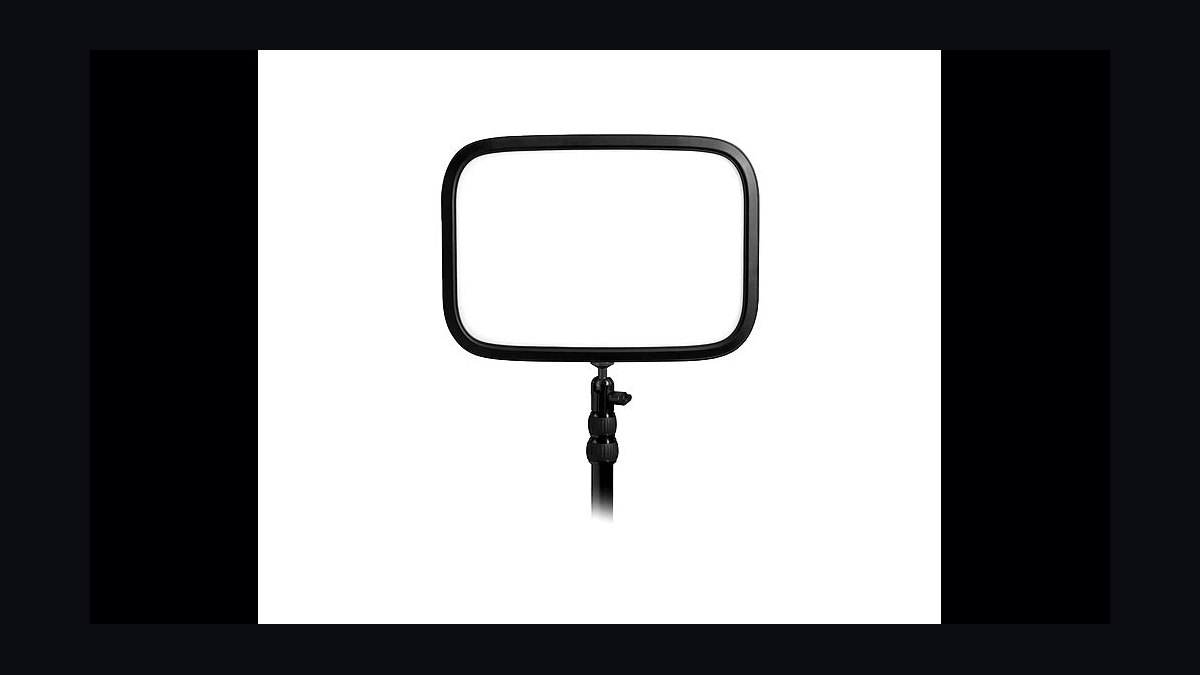
The 10 best studio lights for sales demo setups are ranked below on measured performance, build quality, price, and how each one actually holds up in daily use rather than how it reads on a spec sheet. Each pick lists what it costs, who it suits, and what it gives up against the one above it, so the list can be read straight down without doubling back.
1Elgato Key Light (2nd Gen)
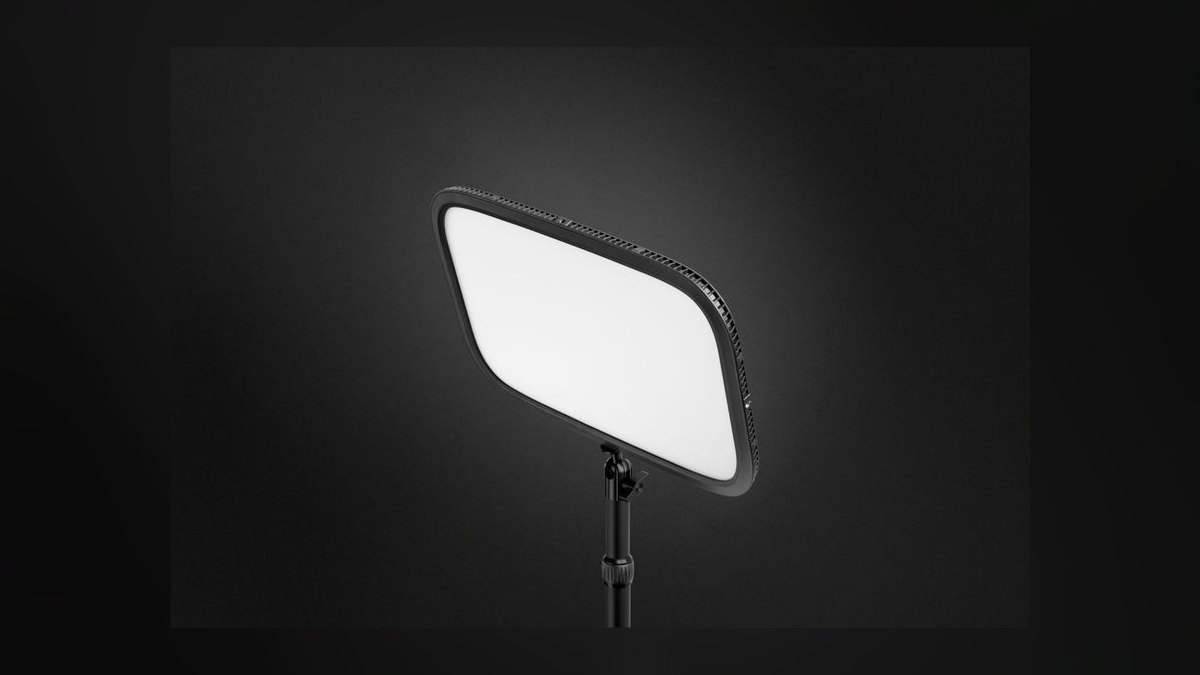
The Key Light earns the top spot because it solves the sales-rep problem no cinema light bothers with: staying out of frame on a dual-monitor desk. It runs 160 OSRAM LEDs at 2,800 lumens peak across a 2900-7000K bicolor range, mounted on a desk clamp that sits above the screen. Control is WiFi-only through Elgato Control Center or a Stream Deck, so a saved 4,500K/30% profile is one button.
This is for SDRs, AEs, and CS managers running six or more video calls a day from a fixed desk. It trades away modifier flexibility entirely — no Bowens mount, no softbox, no battery, so it never leaves the desk. At $199.99 it costs $40 more than the Godox SL60IIBi below and puts out less raw light, but the edge-lit diffusion is flatter at this size and there is no stand to assemble.
2Aputure Amaran COB 60x S
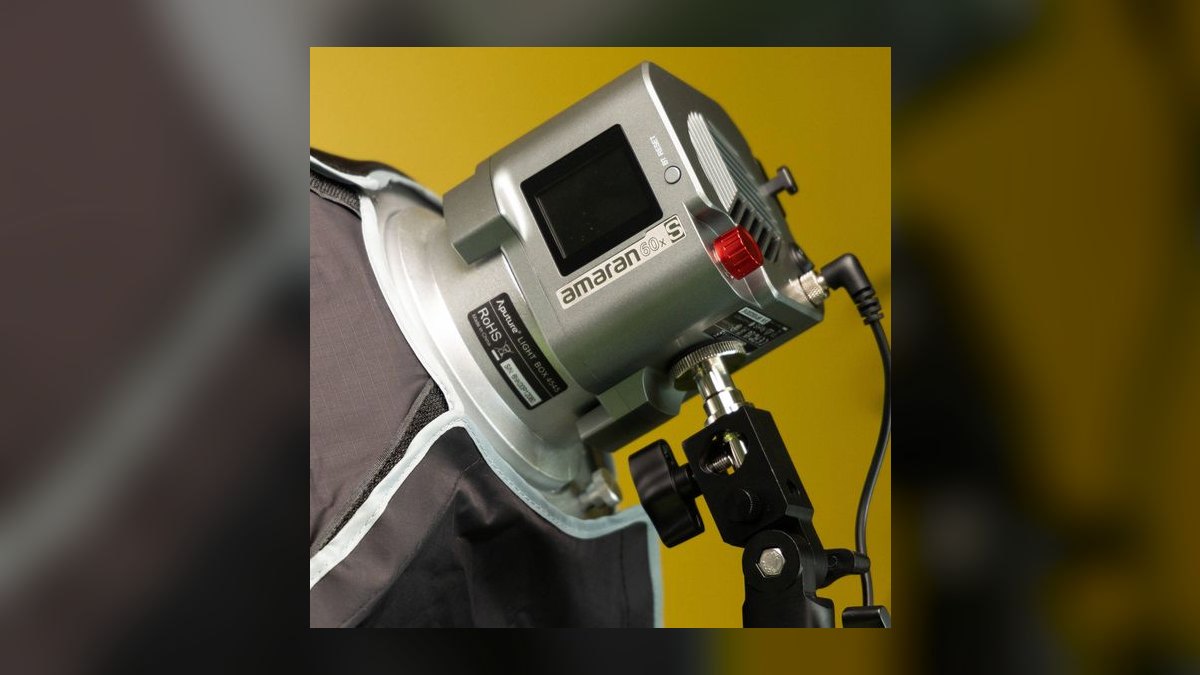
The COB 60x S ranks here because it brings actual cinema-brand engineering to a $229 price. It delivers 65W output across 2700-6500K bicolor at CRI/TLCI 95+, and the Bowens mount accepts any of the 300-plus softboxes already on the market. Sidus Link runs over 2.4GHz for color, intensity, and eight built-in effects. The passive-cooling version is fanless and silent, which matters on a live pitch.
Built for sales leaders, founders, and field marketers who do live demos and outbound video prospecting on one rig. The trade is setup friction: it needs a light stand and a modifier, so it is not a five-second desk clamp like the Elgato above. Against the Godox below, you pay $70 more for tighter build quality and a better app, not for visibly better light on a 1080p feed.
3Godox SL60IIBi
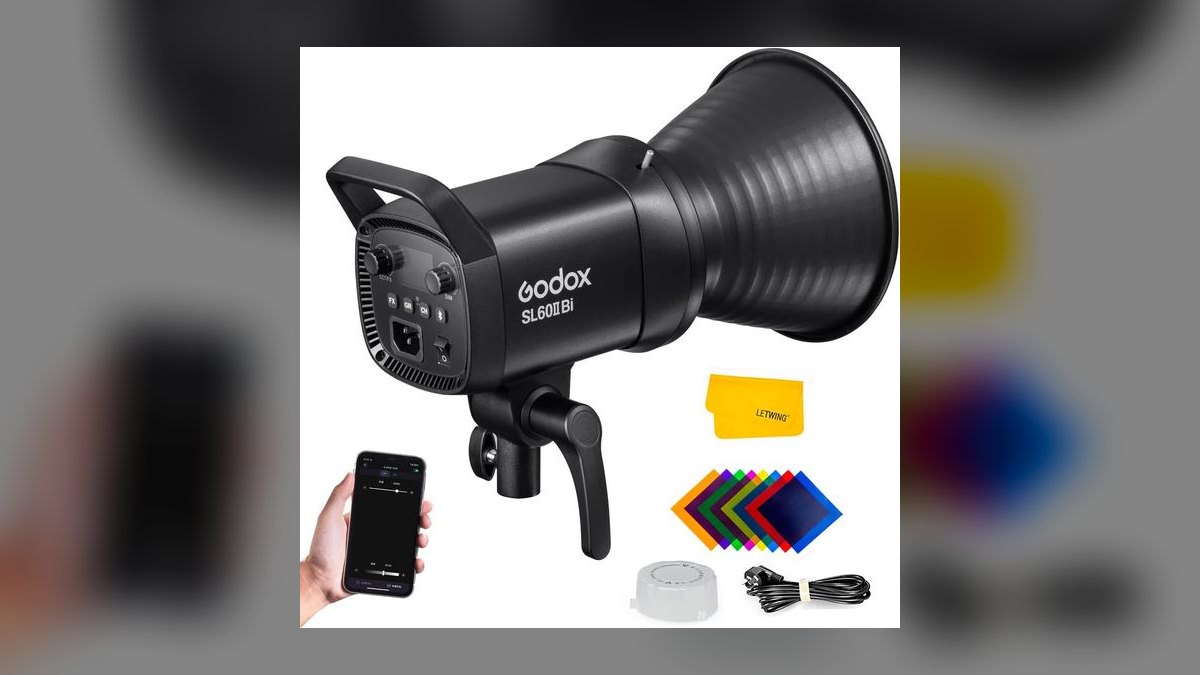
The SL60IIBi lands at three on pure price-performance: 75W output and 25,100 lux at 1m for $159. It covers 2800-6500K bicolor at CRI 96+ and TLCI 97+, carries a Bowens mount, includes 11 built-in effects, and pairs over Bluetooth to the Godox Light app. A two-light kit runs $319, which is what most demo studios actually buy for key plus fill.
Aimed at bootstrapped SDR teams outfitting 5 to 20 reps on identical kit, or a solo seller who wants most of the Aputure for less. What you give up is build: the housing is plastic-heavier than the Amaran COB 60x S above, and there is no fanless option. On camera at 1080p the light quality is honestly hard to separate from the Aputure, which is why the $70 gap is hard to justify at scale.
4Nanlite Forza 60B II
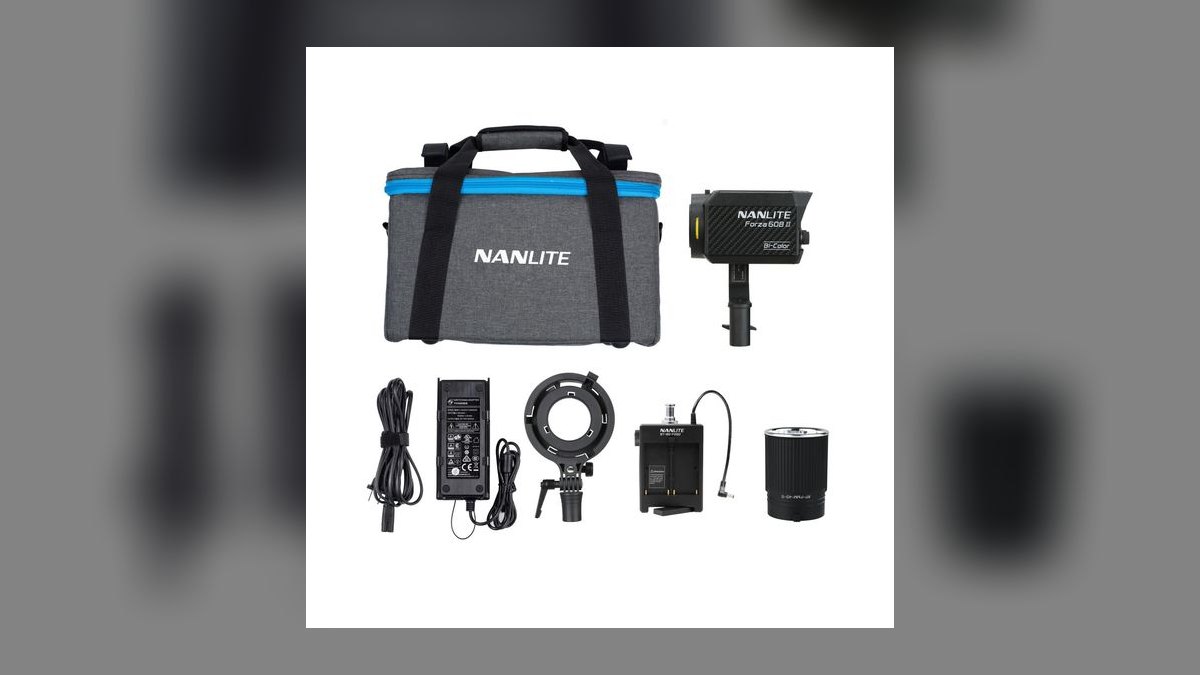
The Forza 60B II ranks fourth on portability rather than output. It runs 60W for 14,350 lux at 1m across 2700-6500K bicolor, hitting CRI 96 and TLCI 98, in a 1.5 lb body that fits a laptop sleeve. Bowens mounting comes via adapter. An optional NPF battery grip means a rep can shoot at a customer site with no outlet, and NANLINK plus built-in 2.4GHz dims four to six units from a phone.
This suits enterprise reps who travel to shoot case-study video, and product marketers running off-site executive interviews. At $279 it costs $120 more than the Godox above and puts out roughly half the lux, so buying it for a fixed desk wastes money. The battery option and the weight are the entire argument.
5Westcott Flex Cine Bi-Color 1x1
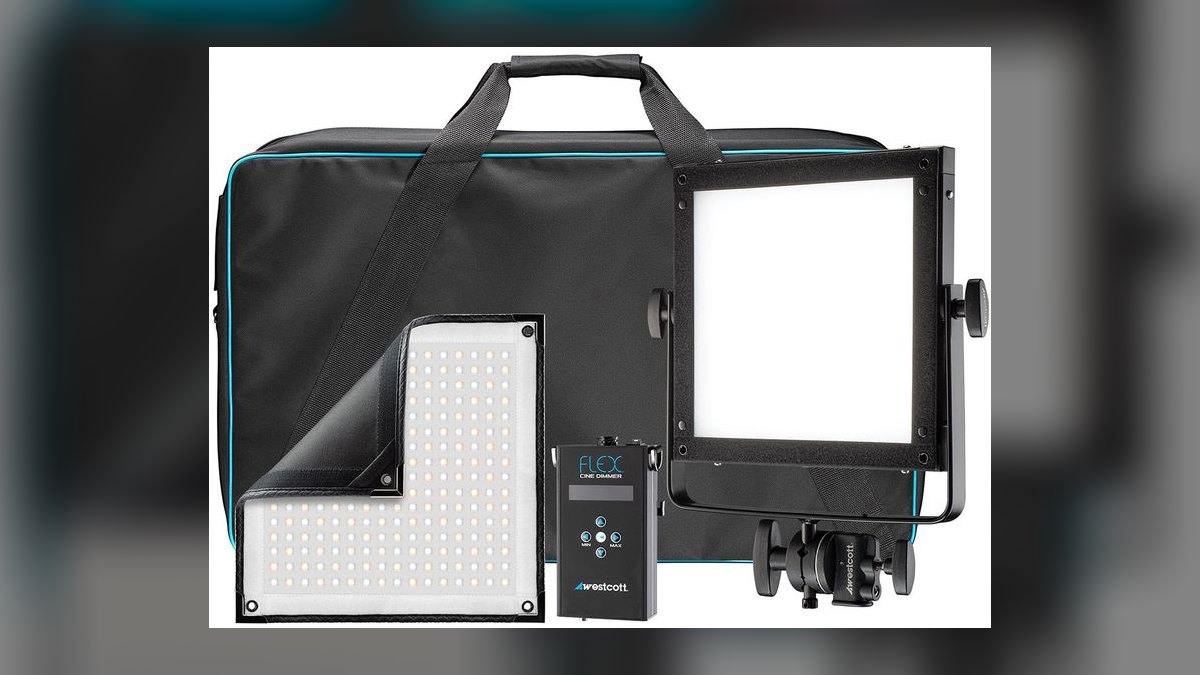
The Flex Cine sits at five because it is a rollable 1ft by 1ft LED mat, one-third of an inch thick and 3 lbs, that no rigid fixture can substitute for. It puts out 2,100 lux at 1m across 2800-6000K bicolor at CRI 95-98, is rain-resistant, and mounts via magnetic corners and metal grommets. Westcott backs it with a lifetime warranty, which is unique in this category.
The buyer is an enterprise marketing team assembling portable executive-interview kits that survive 50-plus flights a year. At $1,599 for a single mat with dimmer and AC, or $2,799 for a two-light travel kit with V-mount batteries, it costs roughly ten times the Nanlite above while producing less light. You pay for the form factor and the durability, not the brightness.
6Elgato Key Light Air
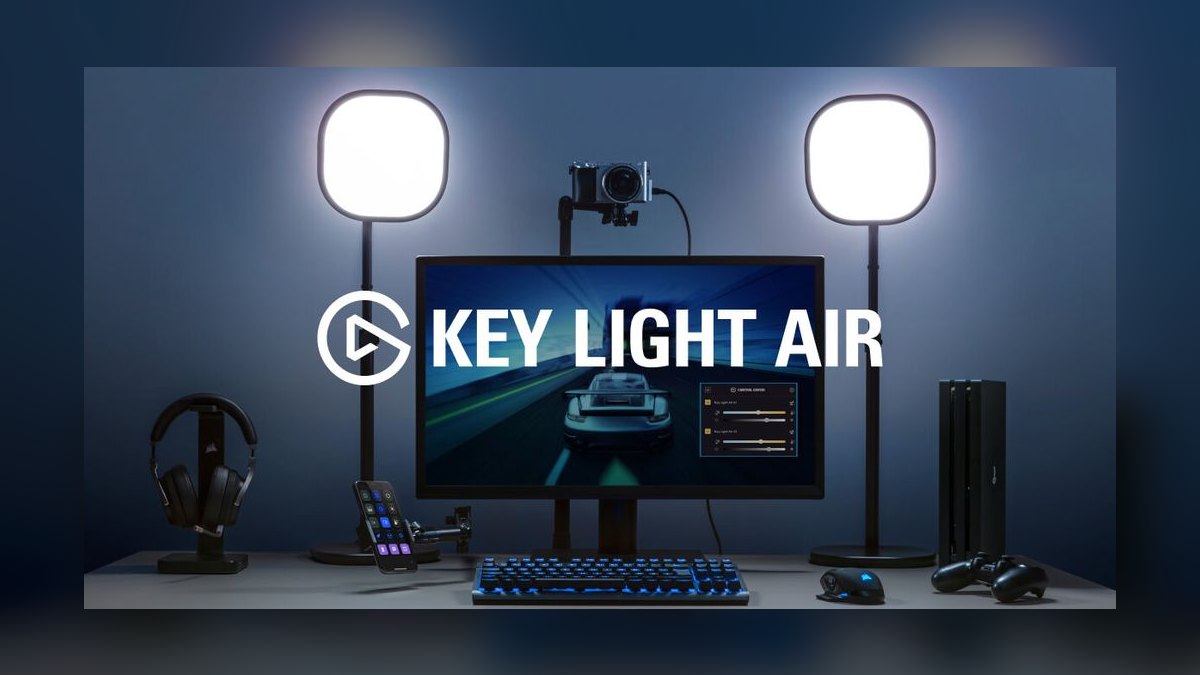
The Key Light Air ranks sixth as the cut-down Key Light: 1,400 lumens from 80 OSRAM LEDs, exactly half the flagship's output. It keeps the same 2900-7000K bicolor range, the same Control Center app, and the same Stream Deck integration, for $129.99. Two Airs in clamshell formation, one left and one right, put out more total light than a single Key Light and still cost less than $260.
This is the pick for individual SDRs and BDRs buying out of pocket, and for sales-ops teams outfitting 20 to 50 reps per head. A single unit is genuinely dim for a bright room, which is the trade. Compared with the Key Light at rank one, you lose half the lumens and a bit of panel size but keep the entire software stack that makes the Elgato worth owning.
7Lume Cube RGB Panel Pro 2.0
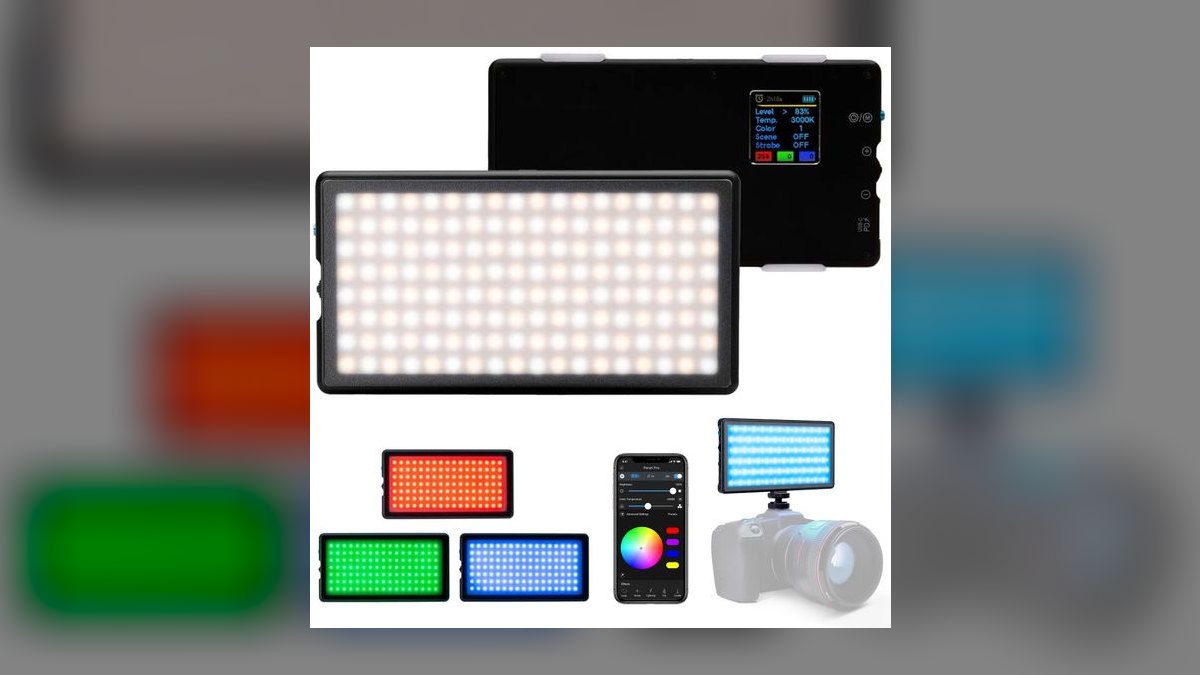
The Panel Pro 2.0 ranks here as the only light on this list that fits a laptop bag without a case. Its 204 LEDs produce 595 lumens at CRI 96+ from a 6 x 3 x 0.4 inch body, with full RGB alongside bicolor. The internal battery runs two hours at full output or four at 50%, and it doubles as a USB-C power bank. Price is $179.99.
Built for road-warrior AEs, founders, and exec assistants who rebuild a demo rig in a different city each week. The 595-lumen ceiling is the obvious trade — it is a fraction of the Key Light Air above and works as fill or close-range key, not a room light. RGB is the bonus, useful for a colored accent behind you on Vidyard or Loom recordings.
8Neewer 660 PRO II RGB
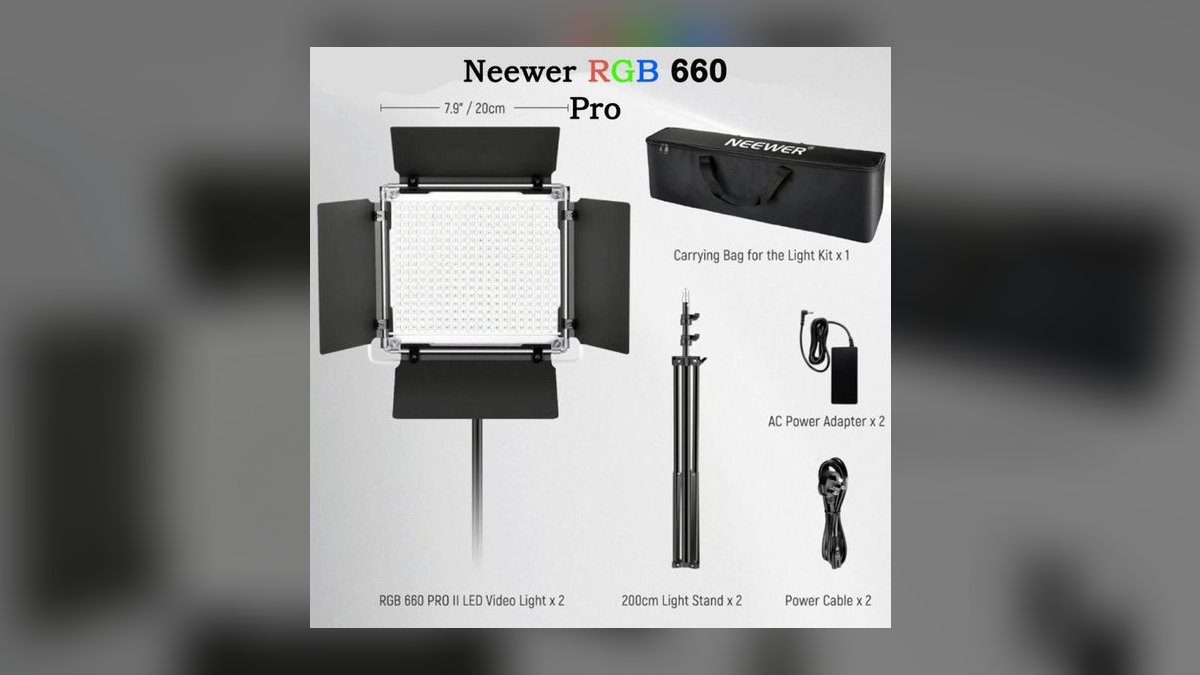
The 660 PRO II ranks eighth because $249.99 buys two 50W panels with stands and softboxes included — nothing else here ships a complete studio in one box. Each panel covers 3200-5600K bicolor plus 360-degree RGB hue at CRI 97+, controlled by 2.4GHz remote or app. The plastic mount and merely adequate fan are where the cost came out, and both are noticeable next to Godox or Aputure housings.
The buyer is an early-stage startup building a first sales-video studio on a single order. Durability is the trade: this kit will not survive the travel abuse the Nanlite or Westcott absorb. Against the Lume Cube above, you get vastly more output and full stands for $70 more, but you give up any pretense of portability.
9Amaran P60x Bicolor LED Panel
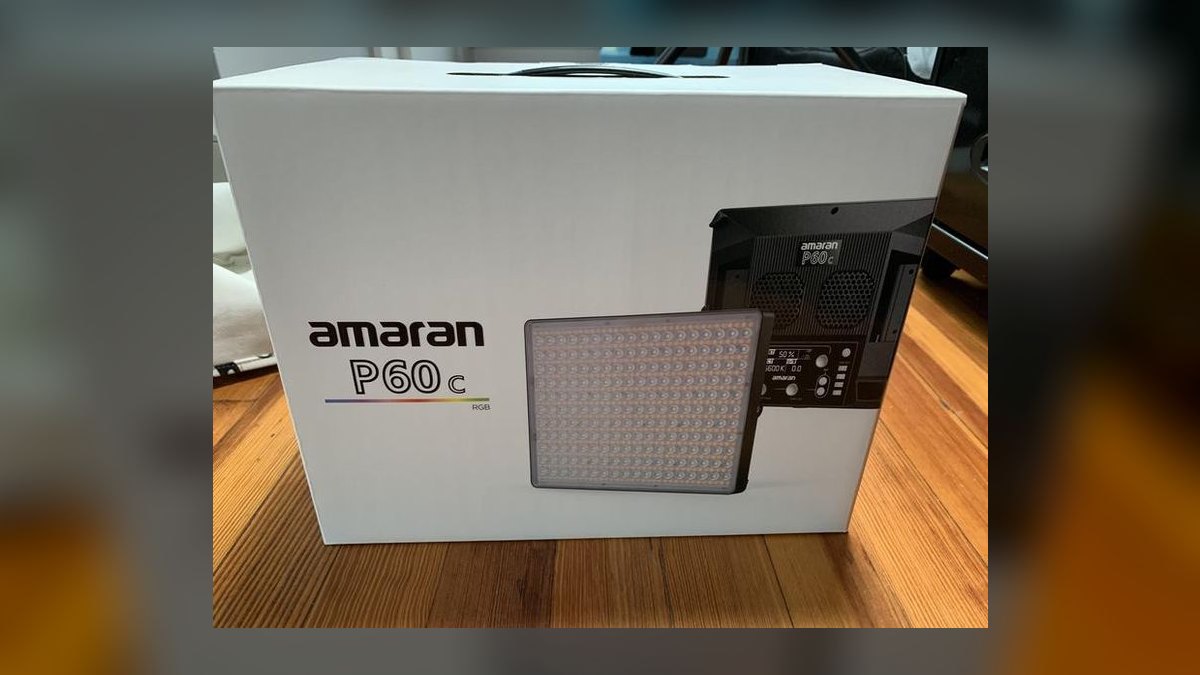
The P60x ranks ninth as the flat-panel sibling of the COB 60x, trading throw for softness. It runs 60W for 5,070-plus lux at 1m across 3200-6500K bicolor, at CRI 95+ and TLCI 97+, with Sidus Link control and four built-in effects. The bundle includes a softbox and grid, so the panel's naturally gentle falloff arrives without any modifier assembly on your part. Price is $239.99.
This fits inside-sales managers who want flatter, more forgiving skin tones than a COB delivers and never plan to swap modifiers. The trade is exactly that: no Bowens mount, so the fixture cannot grow into a beauty dish or a large octabox. Against the COB 60x S at rank two, it costs $10 more and locks you into one lighting character.
10Elgato Key Light Neo
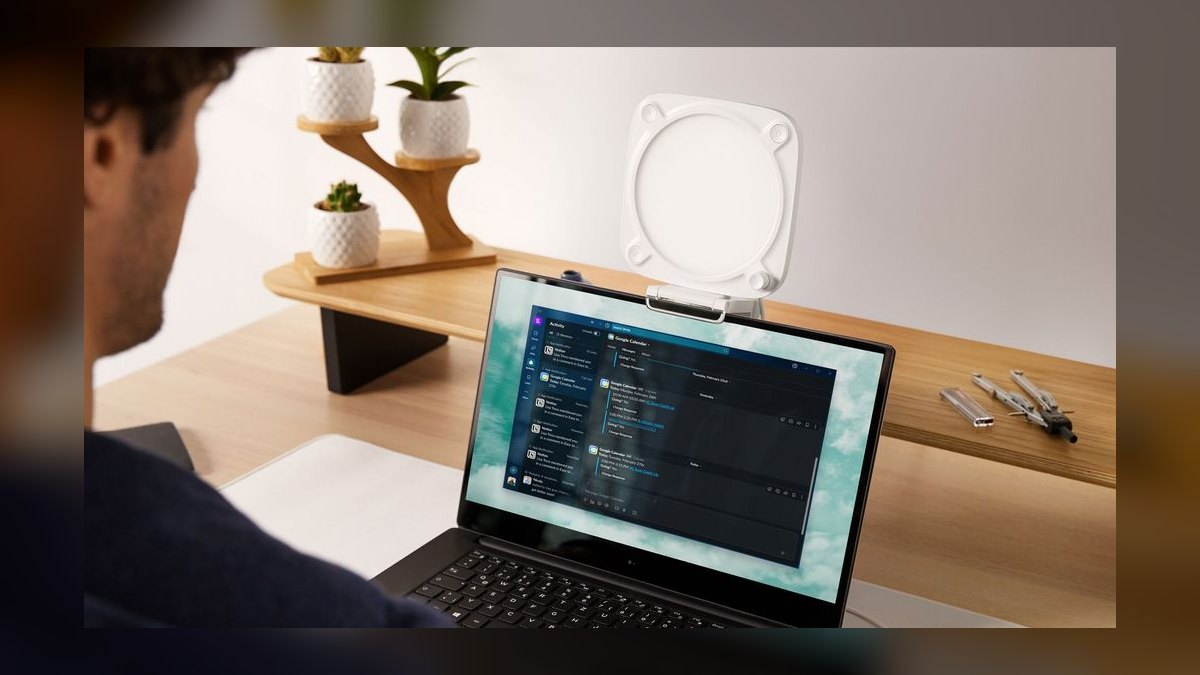
The Key Light Neo closes the list on price: $99.99 for 1,000 lumens across the same 2900-7000K bicolor range Elgato uses throughout. It is the entry-level panel, less powerful than the Key Light Air, but it adds a physical dial alongside app control — a real usability gain for anyone who does not want another desktop utility running during a call. That dial is the reason to choose it over its own siblings.
Best for brand-new SDRs and BDRs, interns, or secondary fill duty in a three-light rig. At 1,000 lumens it cannot carry a bright room alone, which is the honest limit. Against the Key Light Air above, you save $30 and gain the dial while losing 400 lumens, so the Neo makes most sense as the second or third light rather than the only one.
How we ranked these
Weighting favored what a rep actually feels on camera: measured output (lumens or lux at 1m), CRI/TLCI accuracy for skin tones, bicolor Kelvin range, mount type (desk clamp, Bowens, magnetic), control method (desktop app, on-device dial, 2.4GHz), fan noise during live calls, portability weight, and verified 2027 street pricing from B&H, Adorama, Amazon, and manufacturer direct pages. Kit pricing was tracked separately from single-unit pricing.
Deliberately ignored: RGB effects libraries (paparazzi, lightning, TV modes) because sales calls never use them; Instagram-influencer aesthetics; ring lights, which cannot be modified or repositioned meaningfully; and any light without published CRI figures. Also ignored were unbranded Amazon panels with no warranty path, since sales-ops teams buying for 5-50 reps need RMA support and repeatable SKUs, not a listing that vanishes in six months.
What to look for
Mount type decides more than brightness. If you sit at a fixed dual-monitor desk, a clamp-mount panel like the Elgato Key Light keeps the light out of frame with zero floor space. If you record outbound video voicemails or field testimonials, a Bowens-mount COB like the Godox SL60IIBi or Amaran COB 60x S accepts softboxes and grids you will buy later. Fan noise matters: passive-cooled units stay silent on live calls.
The common mistake is buying one bright light instead of two modest ones. Two Key Light Airs at $129 each in clamshell formation beat a single $199 Key Light for flattering, shadow-free coverage. Buyers also overspend on peak lumens they never use — most reps run at 30-40% brightness — while underspending on CRI, which is what actually makes skin look human rather than jaundiced on a compressed Zoom feed.
Related questions
How many lights does a sales demo setup actually need?
Two is the practical sweet spot: a key light at 45 degrees off-camera and a fill on the opposite side at roughly half intensity. A single light creates visible shadow on one cheek. A third light behind you for hair separation only matters if you record polished video content. Most reps on Zoom calls are fine with two panels at 30-40% output.
Does fan noise from a studio light show up on a Zoom call?
Yes, if the light sits within a few feet of your microphone. Active-cooled COB monolights like the Neewer 660 PRO II have audible fans that a cardioid mic will pick up as low hum. Passive-cooled versions of the Amaran COB 60x S and all Elgato panels are silent. If you use a headset mic, the risk drops sharply.
What color temperature should a rep use for video calls?
Around 4500K to 5000K matches most office and daylight-mixed environments and keeps skin tones neutral. Going warmer than 3200K reads as orange on camera; going cooler than 6000K looks clinical. Bicolor lights let you match whatever window light is behind you, which is why fixed 5600K daylight-only units are a worse fit for reps who work from varied rooms.
Is a Bowens mount worth paying extra for?
Only if you plan to add modifiers. The Bowens standard opens up 300-plus softboxes, grids, and beauty dishes from Godox, Aputure, and third parties. For a rep who only runs Zoom calls at a fixed desk, a flat panel already delivers soft light with no modifier needed, so the Bowens flexibility on the Godox SL60IIBi or Amaran COB 60x S goes unused.
Can these lights run on battery for on-site customer visits?
The Nanlite Forza 60B II accepts an NPF battery grip, and the Lume Cube RGB Panel Pro 2.0 has a two-hour internal battery at full output plus USB-C power-bank duty. The Westcott Flex Cine travel kit ships with V-mount batteries. Elgato panels and the Godox SL60IIBi are AC-only, so they stay tied to a desk or an outlet.
Why do panel lights cost less than COB monolights at the same wattage?
COB designs concentrate one large emitter behind a reflector, which requires heavier heat management, a Bowens mount casting, and tighter optics. Panels spread many small LEDs across a diffused surface, which is cheaper to build and inherently soft. You pay the COB premium for modifier flexibility and punch at distance, not for better light quality on a webcam feed.
Does app control actually matter or is it a gimmick?
It matters for reps running back-to-back calls. Elgato Control Center and Stream Deck let you save a profile at a set Kelvin and brightness and recall it with one keypress, instead of reaching behind a monitor mid-demo. Sidus Link and the Godox app do the same over Bluetooth or 2.4GHz. The Key Light Neo's physical dial is a valid alternative for app-averse users.
What should a sales-ops team budget per rep for lighting?
Roughly $130 to $260 per rep covers a real setup. One Elgato Key Light Air at $129 works as a single-light minimum. Two Key Light Airs, or a $319 two-light Godox SL60IIBi kit, is the better standard for 5-50 seats. Reserve the $1,599-plus Westcott Flex Cine budget for a shared traveling executive-interview kit, not per-head deployment.
FAQ
What is the best studio light for a sales demo setup in 2027?
The Elgato Key Light (2nd Gen) at $199.99 is the best overall. It combines 160 OSRAM LEDs, 2,800 peak lumens, a 2900-7000K bicolor range, and a monitor-mount desk clamp with Control Center app and Stream Deck profiles. That lets a rep recall a saved call setting instantly instead of adjusting hardware between a Zoom demo and a screenshare.
What is the best value studio light for sales reps?
The Godox SL60IIBi at $159 delivers 75W output, 25,100 lux at one meter, CRI 96-plus, TLCI 97-plus, a 2800-6500K bicolor range, and a Bowens mount. The plastic body is heavier than the Aputure equivalent, but the rendered light is effectively indistinguishable on a 1080p feed. A two-light key-and-fill kit runs $319.
Are COB lights or panel lights better for sales demos?
Panels win for fixed desks. The Elgato Key Light, Amaran P60x, and Westcott Flex Cine give even, soft output with no modifier to manage. COB monolights like the Aputure Amaran COB 60x S and Godox SL60IIBi win if you record outbound video voicemails or case-study footage and want a Bowens softbox for directional, more shaped lighting.
Do I need a high CRI rating for sales demo lighting?
Aim for CRI 90 or higher so skin tones and product colors stay accurate on camera. Every light on this list clears that bar: the Godox SL60IIBi hits CRI 96-plus and TLCI 97-plus, the Amaran COB 60x S reaches 95-plus, and the Nanlite Forza 60B II posts CRI 96 with TLCI 98. Low-CRI panels make faces read green or sallow.
Can I use a ring light for sales demos instead of a studio light?
A ring light handles a basic webcam call, but it cannot be repositioned off-axis, accept modifiers, or scale output for a bright room. Studio panels and COB monolights let you control spread, angle, and intensity independently. For demos where you switch between your face, a product, and a shared screen, the studio light is far more adaptable.
How much should I spend on a studio light for sales demos?
Between $100 and $280 covers nearly every real need. The Elgato Key Light Neo starts at $99.99, the Key Light Air is $129.99, the Godox SL60IIBi is $159, and the Nanlite Forza 60B II tops out at $279. The $1,599 Westcott Flex Cine is a marketing-team purchase, not an individual rep expense.
Which light is best for a rep who travels constantly?
The Lume Cube RGB Panel Pro 2.0 at $179.99 fits a laptop bag at six by three by 0.4 inches, runs two hours at full output on internal battery, and doubles as a USB-C power bank. The Nanlite Forza 60B II is the step up at $279 and 1.5 pounds when you need real output for on-location case-study video.
Is the Elgato Key Light Air enough on its own?
At 1,400 lumens it is about half the Key Light's output, which is fine for a dim home office but thin against window light. The better move is two Key Light Airs in clamshell formation at $259 total, which outperforms a single $199.99 Key Light on evenness and shadow control while keeping the same app and Stream Deck workflow.
Why is the Westcott Flex Cine so much more expensive than the rest?
It is a rollable one-foot LED mat, a third of an inch thick, rain-resistant, with magnetic corners, metal grommets, and a lifetime warranty. That construction survives repeated air travel and mounts to walls or ceiling tiles where rigid panels cannot. At $1,599 single or $2,799 for the two-light V-mount kit, it is a portable executive-interview kit.
Do RGB lights add anything for sales video?
Rarely. RGB modes on the Lume Cube RGB Panel Pro 2.0 and Neewer 660 PRO II can throw a colored accent on the wall behind you for Vidyard or Loom prospecting videos, which reads as intentional production value. For live demos, the effects libraries with paparazzi, TV, and lightning modes are dead weight you will never enable.
Sources
- https://www.elgato.com/us/en/p/key-light
- https://www.bhphotovideo.com/c/product/1734364-REG/godox_sl60iibi_sl_60iibi_led_video_light.html
- https://www.cined.com/amaran-cob-60x-and-60d-lighting-review-the-perfect-travel-light/
- https://www.cined.com/westcott-flex-cine-travel-led-lighting-kit-video-review-demo/
- https://www.newsshooter.com/2021/11/08/amaran-budget-friendly-p60x-and-p60c-led-panels-review/
- https://www.digitalcameraworld.com/buying-guides/best-lights-for-zoom-calls
- https://photofocus.com/reviews/review-lume-cube-rgb-panel-pro-2-0-light/
- https://fstoppers.com/gear/review-godox-sl60d-ii-first-really-good-budget-video-light-649447
- https://theasc.com/articles/westcott-flex-cine
Related on PULSE
This page will be disappearing soon. Save it to your device for $1 — or read it free while it is here.
@Kory-White- · if Venmo asks, the last 4 of my number are 2012
This page is gone.
This one is off the shelf now. $1 keeps it on your phone for good — the whole page, pictures and diagrams included.
 pulse-reviewsTop 10 VR Headsets — Best Overall + Best Value in 2027
 pulse-reviewsTop 10 Bluetooth Transmitters for TV — Best Overall + Best Value in 2027
 pulse-reviewsTop 10 Outdoor Smart Lighting — Best Overall + Best Value in 2027
 pulse-reviewsTop 10 Multimeters — Best Overall + Best Value in 2027
 pulse-reviewsTop 10 Rugged Phones — Best Overall + Best Value in 2027
 pulse-reviewsTop 10 LG TVs — Best Overall + Best Value in 2027
 pulse-reviewsTop 10 Drone Cases — Best Overall + Best Value in 2027
 pulse-reviewsTop 10 Noise-Cancelling Headphones — Best Overall + Best Value in 2027
 pulse-reviewsTop 10 Noise-Cancelling Headphones for Sales Reps on Phone Calls in 2027
 pulse-reviewsTop 10 Neck and Shoulder Massagers — Best Overall + Best Value in 2027