


Top 10 Wireless Lavalier Mics for Sales Video Recording in 2027
Quality
Certified
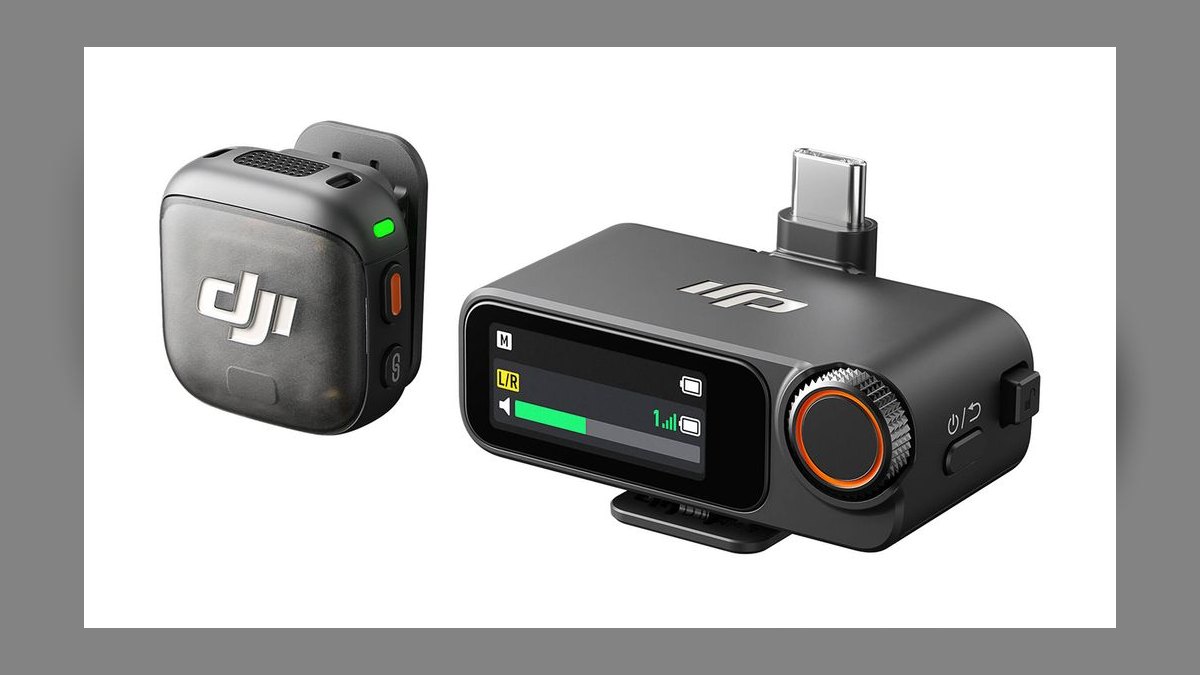
The 10 best wireless lavalier mics for sales video recording are ranked below on measured performance, build quality, price, and how each one actually holds up in daily use rather than how it reads on a spec sheet. Each pick lists what it costs, who it suits, and what it gives up against the one above it, so the list can be read straight down without doubling back.
1DJI Mic 3
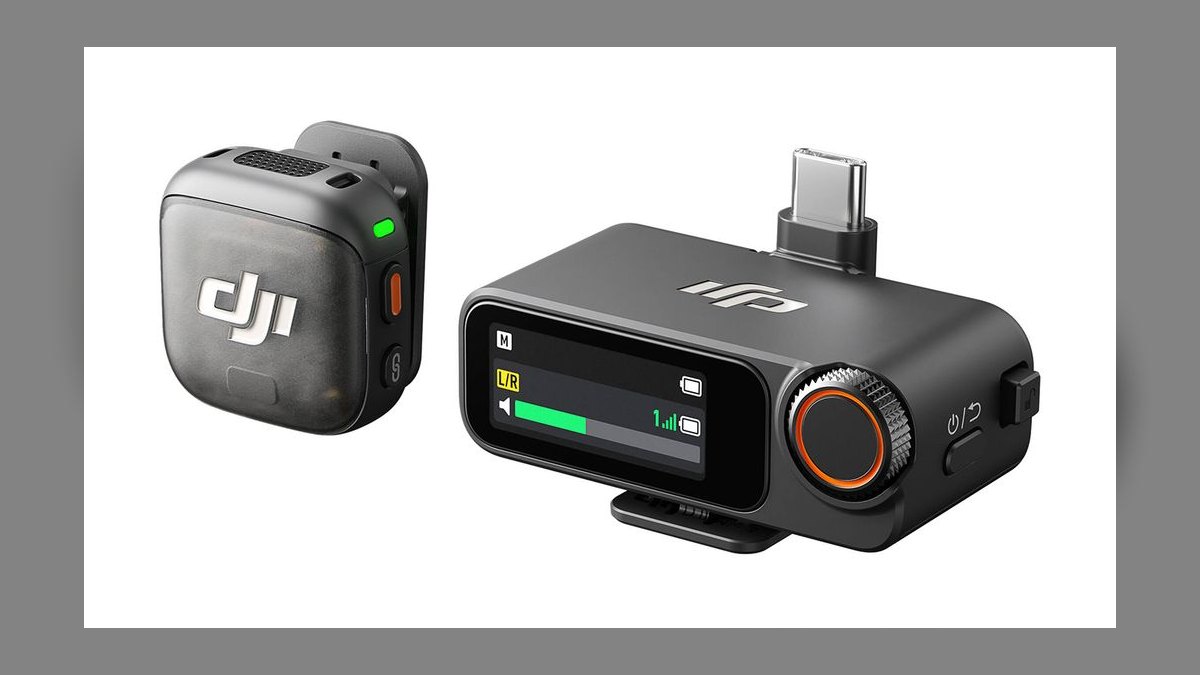
It ranks first because no rival kit wins on size, fidelity, range, battery, and price simultaneously at $309. Each 16-gram transmitter records 32-bit float internally to 32 GB, so a loud laugh in a celebration clip never clips. Range hits 400 m line-of-sight with automatic 2.4 GHz / 5 GHz frequency hopping. Total runtime reaches 28 hours with the charging case, or 8 h TX and 10 h RX standalone.
This suits AEs, SDRs, and CSMs recording daily Loom walkthroughs, demo flybys, and trade-show interviews. Adaptive noise cancellation, timecode, lossless 24-bit WAV, and MP3 export cover CapCut through Premiere. The system scales to 4 TX and 8 RX, enough for a four-person boardroom panel. It undercuts the Rode Wireless Pro by $90 while shipping lighter transmitters, longer range, and longer battery.
2Rode Wireless Pro
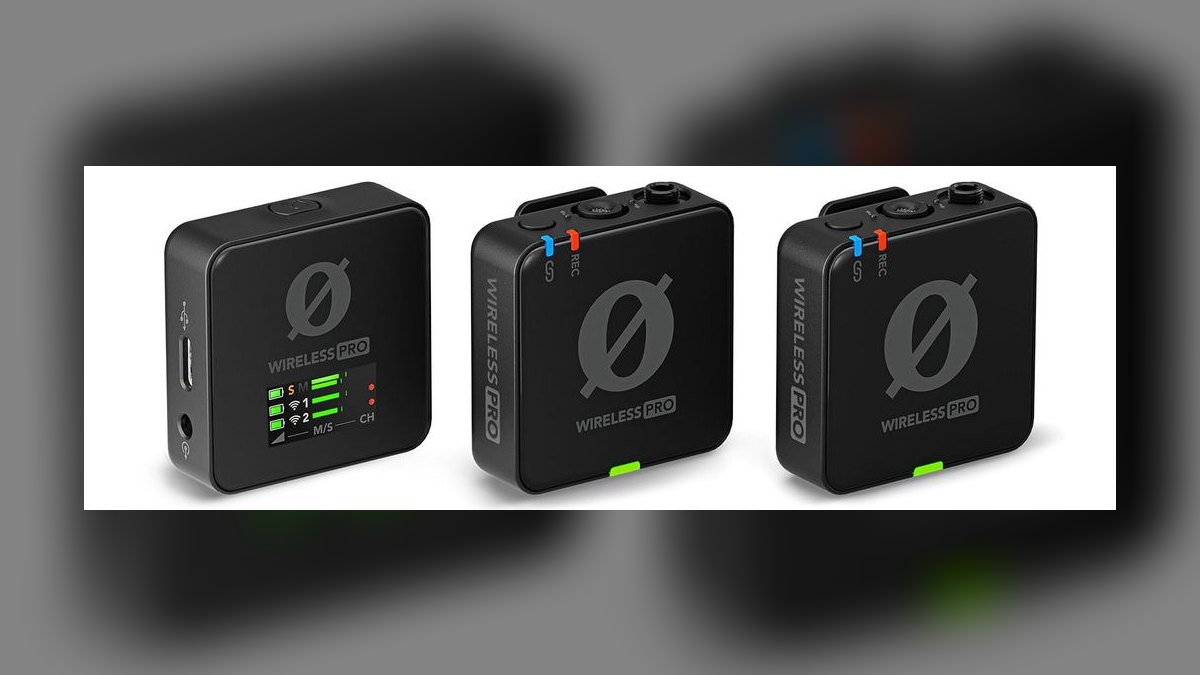
Second place goes to the $399 kit because it loses to the DJI on price, weight, range, and battery while keeping the strongest editor toolkit. It records 32-bit float to 32 GB per transmitter, roughly 40 hours of internal backup audio. A built-in timecode generator gives broadcast-grade sync. Intelligent GainAssist auto-rides levels, and range is 260 m with 7 hours of TX battery over USB-C charging.
Sales-content teams cutting in Premiere or DaVinci Resolve need that timecode to sync the lapel feed against a B-camera. Two Lavalier II capsules ship in the box, so there is no upsell for the clip-on. SoundGuys described its sound as full-bodied with depth close to natural tone. Compared with the DJI above it, you pay $90 more for editor plumbing rather than better everyday audio.
3Sennheiser EW-DP ME2 Set
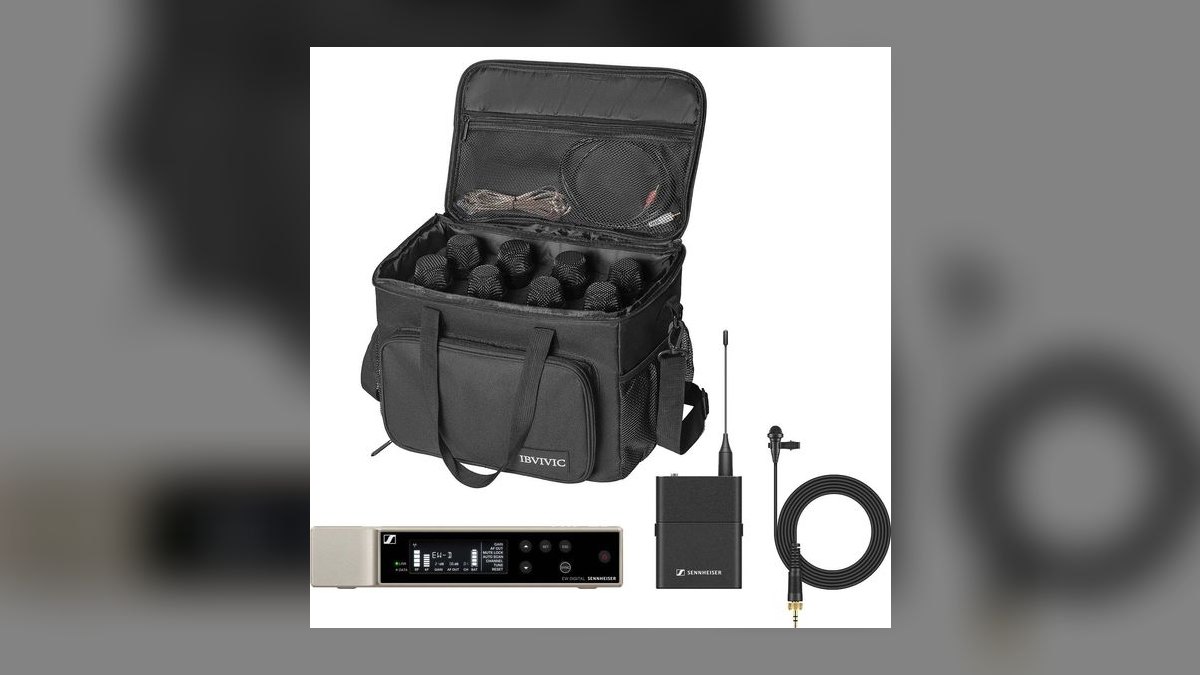
It lands third on price: $899 buys broadcast RF reliability but no 32-bit float and no internal recording on the base ME2 transmitter. UHF transmission across 470–608 MHz sidesteps 2.4 GHz congestion entirely. Dynamic range measures 134 dB, the widest here, capturing a whisper and a shout in one take. Auto-scan locates a clean channel in under 10 seconds, and the camera-mount receiver's OLED shows gain, battery, RF, and AF meters.
Buy it for conference floors, busy showrooms, and compliance-sensitive medtech or fintech shoots where UHF is the requirement. The ME2 omnidirectional capsule matches Sennheiser's broadcast G4 rigs. It fits sellers already shooting on a Sony FX3 or Canon C70. Against the Rode above it, you gain RF certainty and lose internal recording, timecode convenience, and $500.
4Hollyland Lark M2
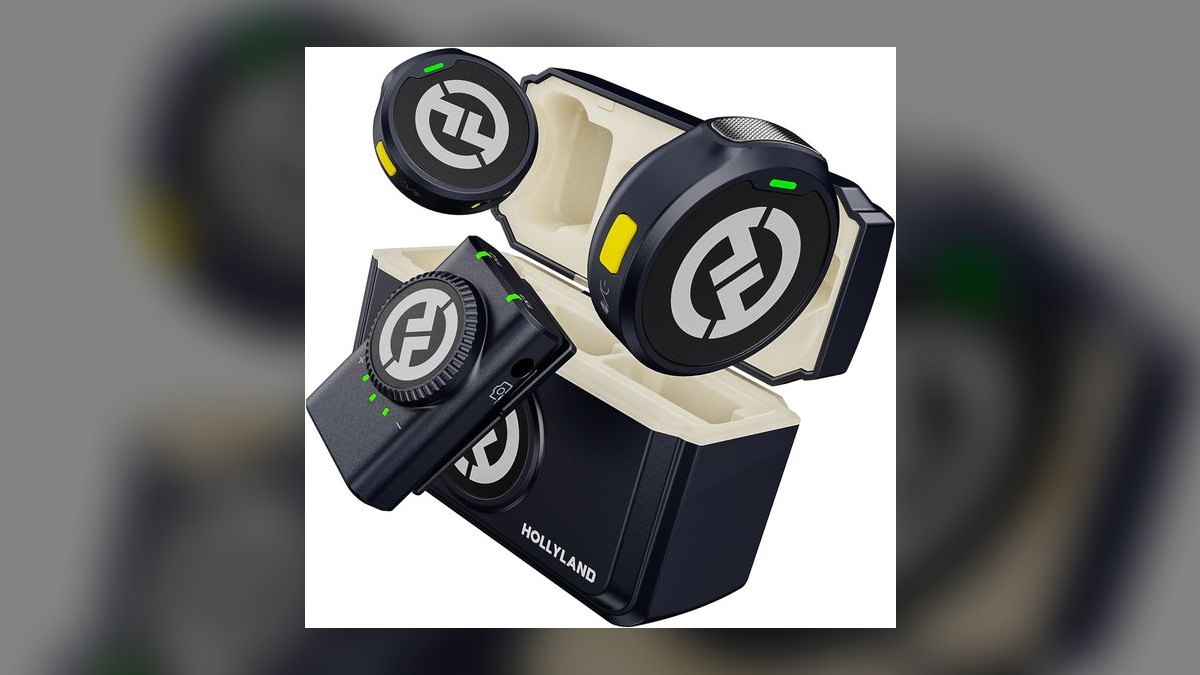
Fourth because it is the only sub-$200 kit that avoids a compromise that bites in real meetings, at $159. Audio is 48 kHz / 24-bit uncompressed, with 300 m line-of-sight range and active noise cancellation. Each transmitter weighs 9 grams with a titanium-alloy clip that hides under a collar. Total runtime is 40 hours with the charging case, and USB-C, Lightning, and 3.5 mm adapters ship in the box.
SDRs, BDRs, and early-career AEs can start recording prospecting videos this week without a $400 expense report. Founders producing selling content get the same benefit. Videomaker and Castos both rated it the best-value wireless lav of 2026, and a 2027 firmware update added two-level noise reduction. It stays below the Sennheiser and DJI because it lacks 32-bit float and caps onboard storage at 8 GB.
5Hollyland Lark Max 2
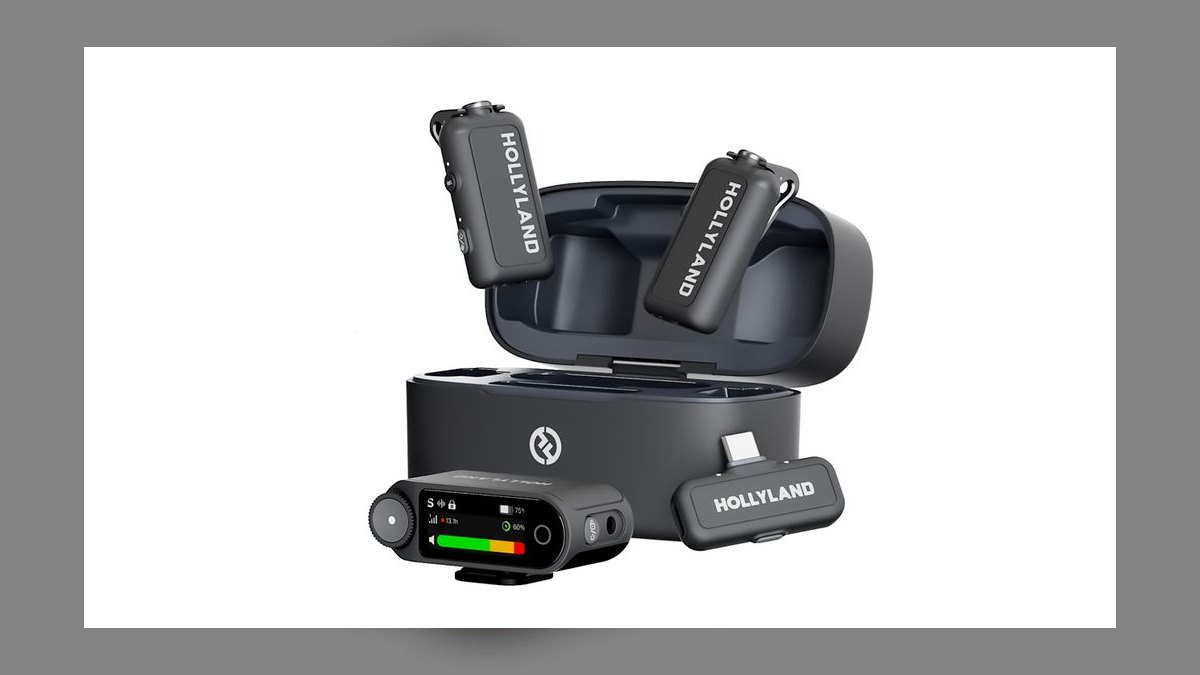
Fifth because it matches the DJI on 32-bit float and 32 GB storage but loses on range, weight, and total runtime at $329. It records 48 kHz / 24-bit lossless alongside the float track. Three onboard capsules let sellers pick vocal, conference, or vocal-boost without an EQ pass. Range is 320 m with 20 hours of TX battery, and an OLED touchscreen on the receiver adjusts gain, low-cut, and noise cancellation without a phone app.
Solo creators and founder-led sales teams who want DJI-tier features with a larger, easier-to-grip clip should start here. Adaptive noise cancellation is rated for HVAC, café, and street noise, and USB-C plus Lightning adapters are included. Against the Lark M2 four places up, you pay $170 more for float recording and on-receiver controls. Against the DJI, it is a coin flip decided by whether you tolerate phone apps.
6Rode Wireless GO III
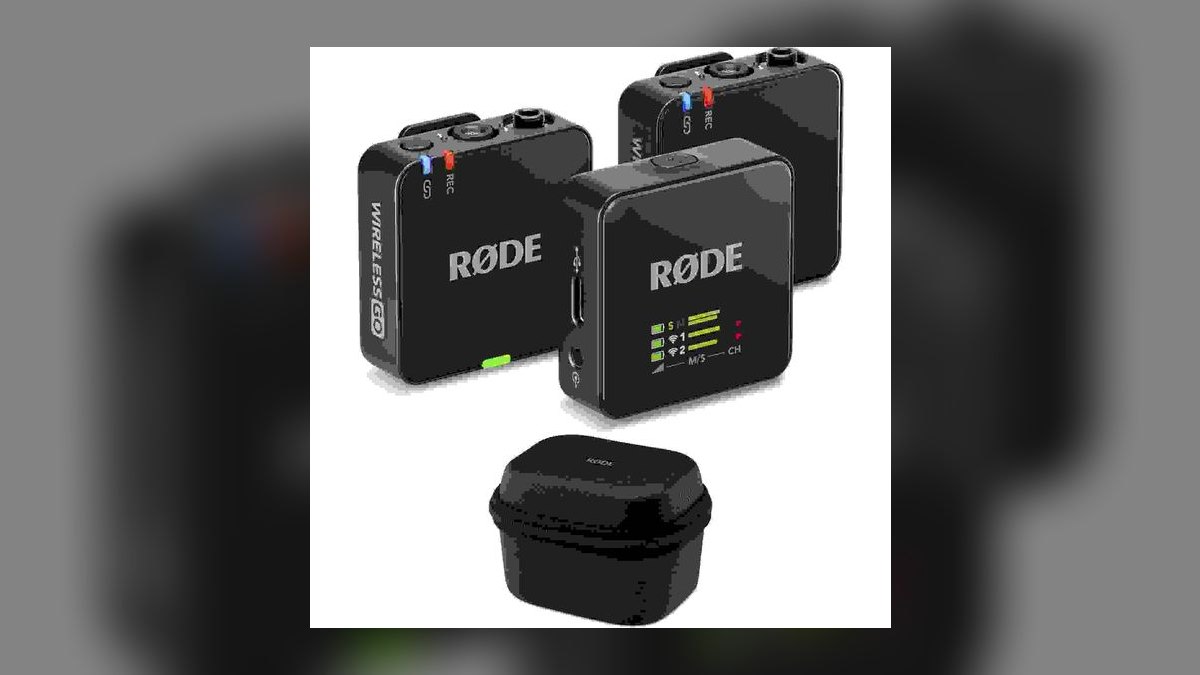
Sixth because it overlaps heavily with the Wireless Pro at the same $399 while offering less for sales work. Range is 850 feet, the longest of any 2.4 GHz consumer system here. Each transmitter holds 32-bit float recording across 40 hours of onboard storage. Bluetooth, USB-C, and 3.5 mm outputs record into a phone and a camera simultaneously, and the Series IV 2.4 GHz stack adds 128-bit AES encryption for enterprise IT.
Field reps who walk and talk through warehouse, plant, or construction tours benefit most, since 100 m separation between rep and camera is routine there. The kit includes both the built-in capsule and a Lavalier II clip-on. Tom's Guide and GamesRadar both flagged the confusing overlap with the Wireless Pro. At identical money, the Pro's GainAssist and timecode win for sales video.
7Shure MoveMic Two
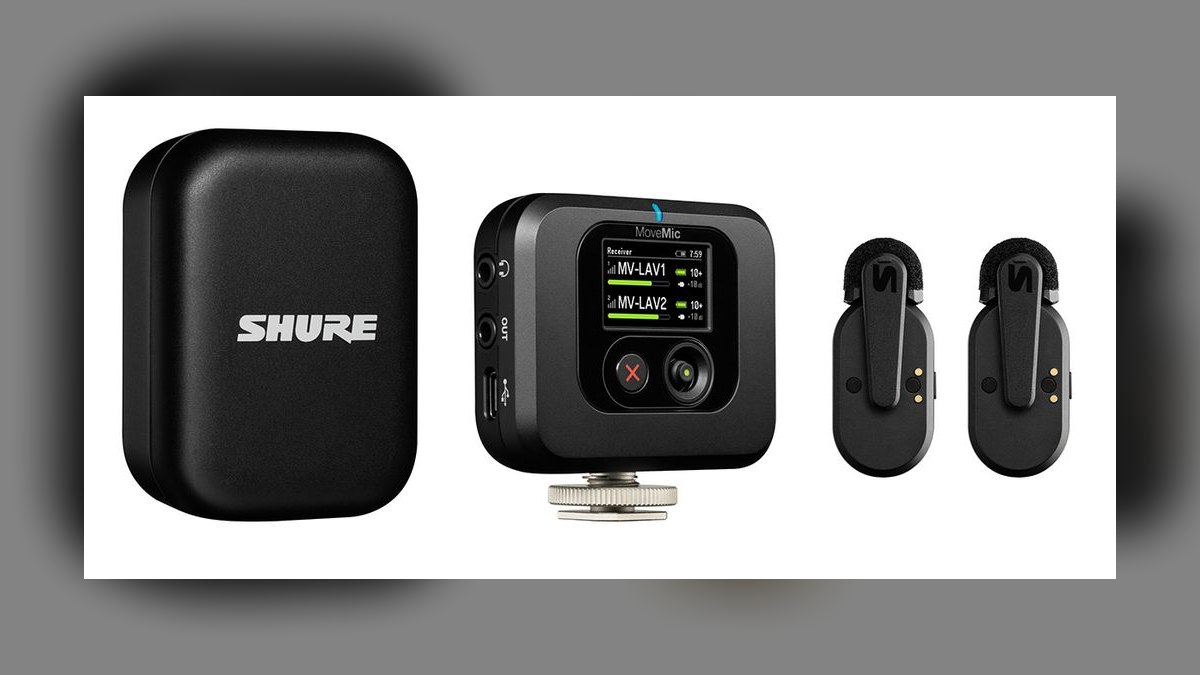
Seventh despite the clearest mid-range in this lineup, because $499 buys no 32-bit float, no internal recording, and short range. The Shure capsule is tuned for spoken word, and DSP EQ presets cover Speech, Sing, and Loud with two-stage gain. Dual transmitters live in a clamshell case small enough for a sport-coat pocket. Battery runs 8 hours per transmitter and 24 hours total with the case.
Smartphone-first sellers shooting vertical LinkedIn video are the real audience, since the transmitters connect over Bluetooth directly to an iPhone through the ShurePlus MOTIV app with no receiver. The trade is that the included receiver is bigger than the entire DJI Mic 3 set. SoundGuys called it hard to recommend at $499 against Rode and DJI. Talking-head audio quality alone keeps it ahead of the cheaper kits below.
8Sennheiser EW-D ME2 Set
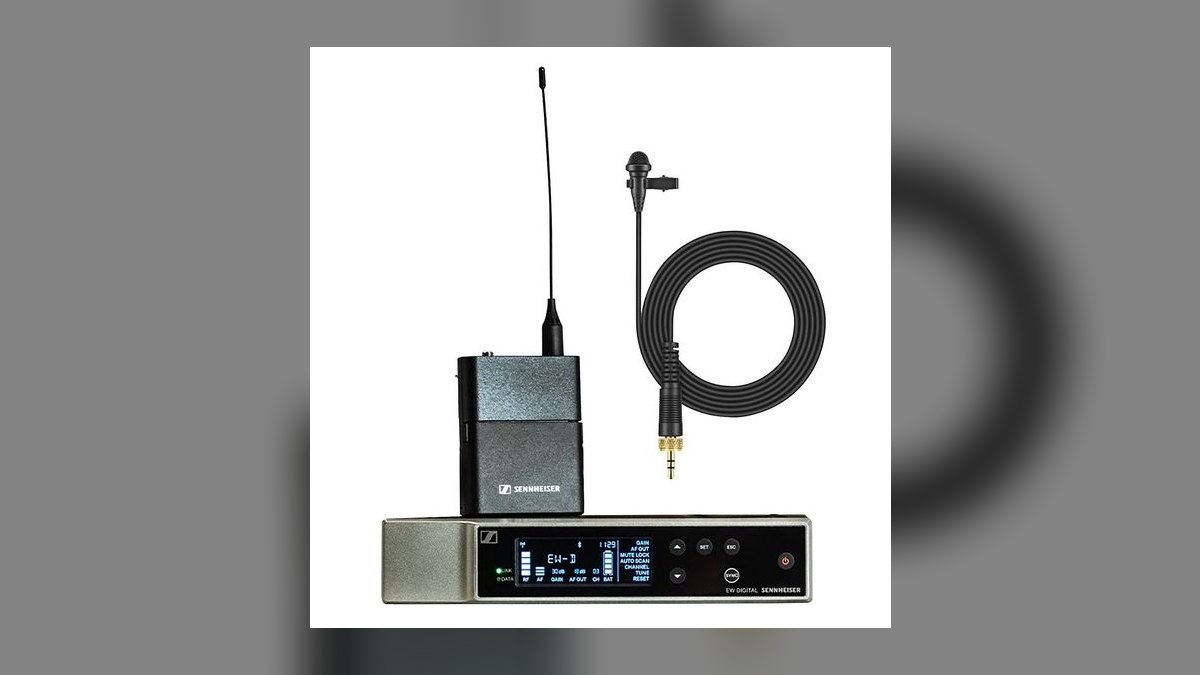
Eighth because it delivers the EW-DP's audio in a form factor wrong for camera-mount work, the dominant sales-video use case. It runs digital UHF with the same 134 dB dynamic range and 75 MHz of tuning bandwidth to find a clean channel anywhere. The ME2 omni capsule is identical to the EW-DP kit's. Two AA batteries give 12 hours and swap in the field, and the receiver is rack-mountable at $729.
Inside-sales studios recording outbound video from a fixed desk are the fit, with the receiver racked beside the lighting and capture card. It is the EW-DP's older sibling: same capsule, simpler receiver, $170 cheaper. Against the EW-DP three places up, you save money and lose portability. Against the Shure above it, you gain RF reliability and lose phone-direct convenience.
9Saramonic Blink 500 B2+
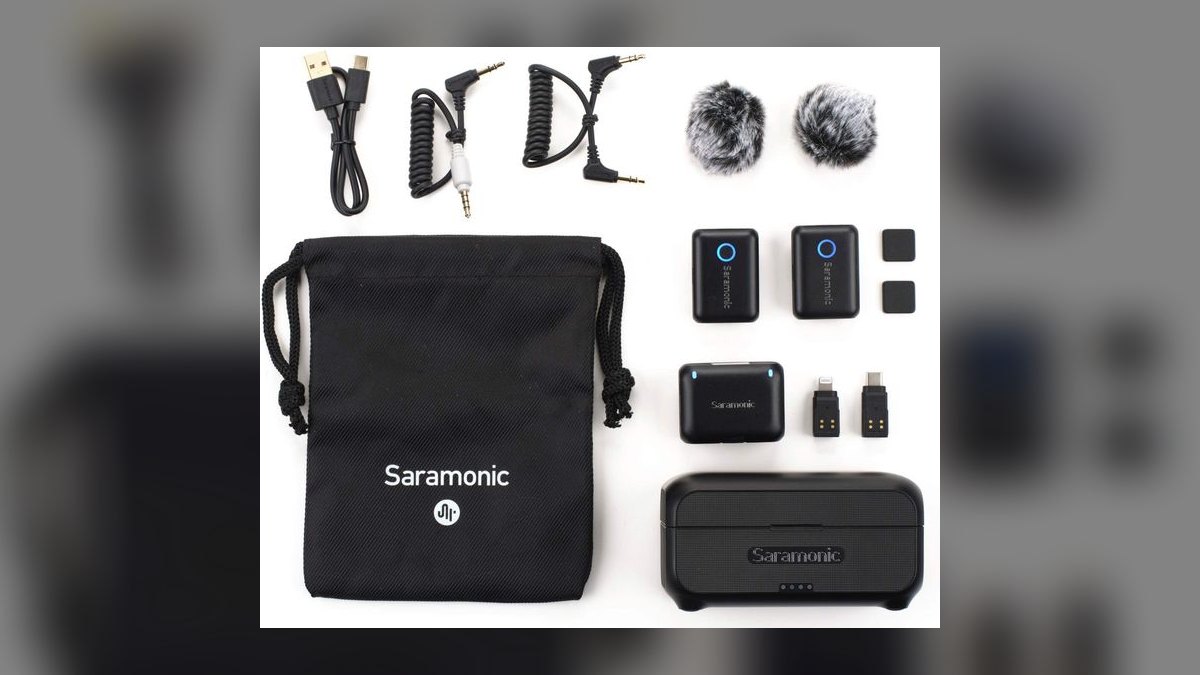
Ninth because it does less than the Lark M2 for nearly the same money at $129. Range stops at 165 feet, roughly half the Hollyland's, and there is no noise cancellation. Audio is 48 kHz / 24-bit with 6 hours of TX battery and 35 hours total with the case. Dual 2.4 GHz transmitters pair to a single receiver with an OLED display showing gain and battery, and USB-C plus Lightning adapters are included.
Solo founders and two-person sales partnerships on the tightest budget who still want a real receiver rather than a Bluetooth-only link are the buyers. Desktop and home-studio recording sit comfortably inside its range limit. It earns a slot because Saramonic distribution is wider than Hollyland's in some regions and B&H stock is reliable. Spend $30 more on the Lark M2 if availability is not an issue.
10Comica BoomX-D2 Pro
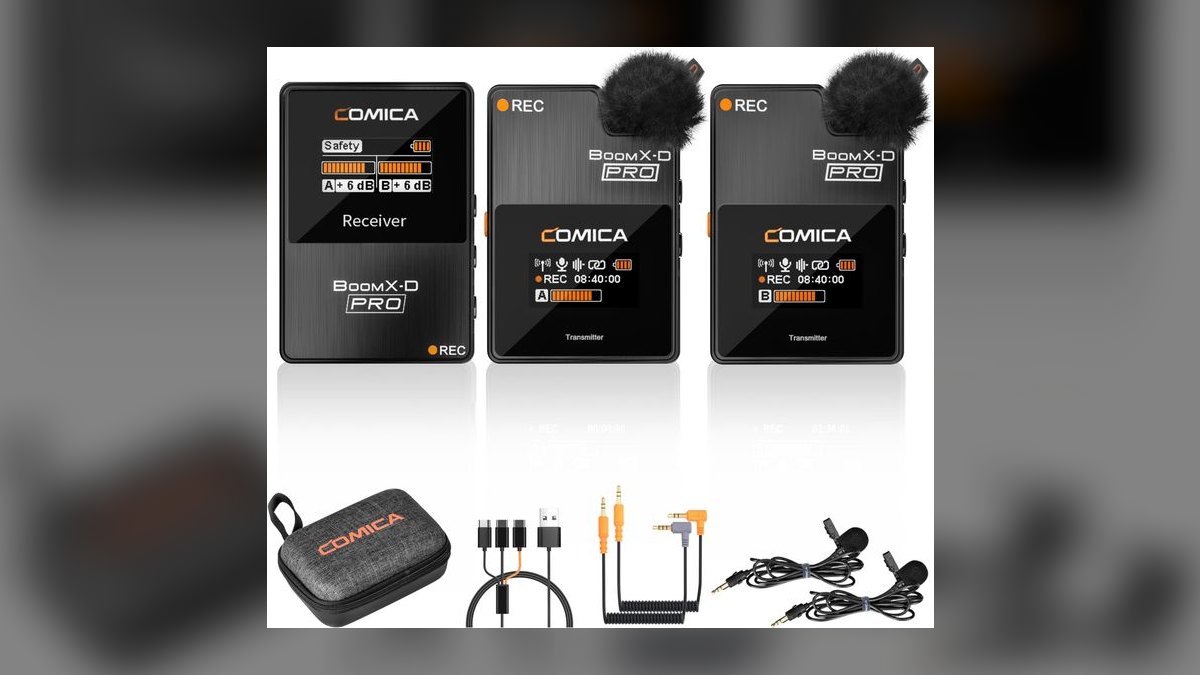
Tenth because the hardware is good but the app experience and firmware cadence trail Hollyland and DJI by roughly 18 months. At $199, it transmits over 2.4 GHz at 656 feet, strong for the price bracket. Each transmitter carries a built-in 16 GB recorder for internal backup audio. A safety track records a -6 dB auto-attenuated backup channel, and the receiver adds noise cancellation plus a low-cut filter.
Cost-conscious sales orgs that specifically want internal recording should look here, since most sub-$200 kits skip it entirely. USB-C, Lightning, and 3.5 mm adapters ship in the box for phones and mirrorless bodies. Against the Saramonic above it, you pay $70 more and gain onboard recording plus longer range. If internal recording is not the deciding factor, put the extra $110 toward the DJI Mic 3 instead.
How we ranked these
We priced complete kits (transmitters + receiver + case), then weighted five things a seller actually feels: audio capture headroom (32-bit float, bit depth), transmitter weight and clip discretion under business clothing, real runtime including case recharges, RF behavior in Wi-Fi-saturated rooms, and connector coverage across iPhone, Android, and mirrorless bodies. Internal backup recording counted heavily, since a dropout mid-demo costs a reshoot.
We ignored music and singing performance, XLR studio integration, rack-mount ecosystems, and multi-camera film production features beyond timecode. Streaming-influencer aesthetics, colorway options, and windscreen accessory bundles carried no weight. We also skipped app ecosystems that require an account login, and we did not credit manufacturer range claims measured line-of-sight without walls, because office and conference environments never resemble that test condition.
Brand loyalty scored zero.
What to look for
Match the mic to your recording cadence, not your aspiration. Daily Loom walkthroughs and demo flybys justify 32-bit float plus internal backup, because you cannot reshoot a live customer moment. Weekly prospecting videos do not. Then check connector reality: if you shoot vertical on an iPhone, a Bluetooth-direct kit beats a receiver you must mount. Finally, weigh transmitter grams — a heavy clip sags a knit polo and reads amateur on camera.
The common mistake is buying range. Buyers compare 400 m against 300 m and pick the bigger number, then record everything from six feet away at a desk. Walls, not distance, cause dropouts, and frequency agility matters far more than headline meters. The second mistake is skipping internal recording to save sixty dollars, then losing a customer testimonial to one receiver disconnect.
Related questions
Does a lavalier mic actually improve reply rates on prospecting video?
Clean audio does not create interest, but bad audio kills it fast. Prospects abandon a video within seconds when speech sounds hollow, roomy, or clipped. A lav puts the capsule six inches from your mouth, removing the laptop-mic echo that signals low effort. Treat it as a floor requirement rather than a lift lever — it protects the message you already wrote.
Should each rep own a mic or should the team share a kit?
Individual ownership wins when reps record more than twice weekly, because a shared kit sitting in a drawer never gets used and charging discipline collapses. Shared rigs make sense for scheduled studio sessions, customer-story shoots, and conference travel where one enablement owner manages gear. Mixed approach: cheap personal kits for daily async video, one premium kit reserved for polished marketing assets.
How do I stop clothing rustle from ruining a recorded demo?
Rustle comes from fabric brushing the capsule, not from the mic being cheap. Clip at the sternum, roughly a hand-width below the chin, on a stable placket rather than a loose knit. Loop the cable once behind the clip so movement pulls the loop, not the head. Avoid necklaces, lanyards, and badge reels, which are the top offenders on conference floors.
Is 32-bit float worth the premium for someone recording at a desk?
At a fixed desk with consistent speaking volume, the benefit is modest — you can set gain once and leave it. It earns its price when conditions move: walk-and-talks, trade-show aisles, or celebratory outbursts that spike levels. If you never leave a controlled room, a 24-bit kit with a safety track covers you for far less money.
Do these mics work with Zoom, Teams, and Loom directly?
Yes, through the USB-C receiver, which appears to the operating system as a standard audio input device. Select it in the meeting app's sound settings, then confirm the browser has the same device selected, since browsers keep separate permissions. The failure case is a Bluetooth-only kit, which some conferencing apps downgrade to call-quality audio automatically.
How much storage does daily sales video recording actually consume?
On-transmitter storage matters less than people assume, because the backup track is a safety net you rarely export. A 32 GB transmitter holds dozens of hours of compressed audio, far past any single shoot day. The practical limit is your habit of clearing files. Set a weekly offload routine, or the transmitter silently stops writing backups mid-session.
Will IT approve a wireless mic on a corporate network?
These kits do not touch the corporate network — they use their own 2.4 GHz, 5 GHz, or UHF link between transmitter and receiver. That said, dense enterprise Wi-Fi competes for the same 2.4 GHz spectrum, which causes stutter rather than a security issue. Encryption features matter mainly for regulated industries recording confidential customer conversations.
What audio settings should a rep use before recording anything?
Set gain so normal speech peaks well below the top of the meter, leaving obvious headroom for laughter. Enable a low-cut filter to remove HVAC rumble. Turn noise cancellation to its lower setting — aggressive modes hollow out voice and introduce artifacts that sound worse than the original room. Record ten seconds, listen on headphones, then commit.
FAQ
What is the best wireless lavalier mic for sales video in 2027?
The DJI Mic 3 kit at $309 ranks first overall. It combines 32-bit float internal recording on 32 GB per transmitter, 400 m line-of-sight range, adaptive noise cancellation, 28 hours of total runtime with the charging case, and 16-gram transmitters that clip under a polo without sagging. That package covers daily Loom walkthroughs, demo recordings, and conference interviews.
What is the best wireless lavalier mic under $200?
The Hollyland Lark M2 at $159 is the value pick. It records 48 kHz, 24-bit uncompressed audio, reaches 300 m line-of-sight, includes active noise cancellation, and runs 40 hours total with the case. The 9-gram titanium-alloy clip hides under a collar. It lacks 32-bit float and caps onboard storage at 8 GB, which is the tradeoff.
How important is 32-bit float recording for sales video?
It matters most in unpredictable environments. The format lets you recover audio recorded too loud or too quiet during editing, so you do not need perfect levels before hitting record. That protects walk-and-talks, conference-floor clips, and any take you cannot repeat. At a controlled desk with steady speaking volume, the advantage narrows considerably.
Can these mics connect to both a smartphone and a mirrorless camera?
Yes. Most kits in this list ship with USB-C, Lightning, and 3.5 mm TRS adapters in the box. The DJI Mic 3 and Hollyland Lark M2 both work across iPhone, Android, and DSLR or mirrorless bodies without extra purchases. The Rode Wireless GO III adds Bluetooth plus USB-C output, so it can feed a phone and camera simultaneously.
What real-world range should I expect indoors?
Expect far less than the box claims. The DJI Mic 3 advertises 400 m line-of-sight, but inside an office with drywall, glass, and metal studs, plan on roughly 100 to 200 feet. For desk recordings and conference-room video, 50 feet is more than sufficient. Range only becomes a real constraint on warehouse, plant, and construction tours.
How long do the batteries last?
Transmitters generally run six to ten hours per charge, and the charging case adds two to three full recharges. The DJI Mic 3 delivers 28 hours total with its case and 8 hours transmitter-only. The Hollyland Lark M2 reaches 40 hours total. Either covers a full day of recording sessions with margin for a forgotten overnight charge.
Will office Wi-Fi cause dropouts during recording?
It can. Dense Wi-Fi and Bluetooth traffic crowd the 2.4 GHz band, producing brief stutters. The DJI Mic 3 hops automatically between 2.4 GHz and 5 GHz to dodge congestion, and the Lark M2 uses adaptive frequency management. For trade-show floors where 2.4 GHz is saturated, a UHF system like the Sennheiser EW-DP avoids the problem entirely.
Do I need timecode support for sales videos?
Only if you cut lapel audio against a separate B-camera in Premiere or DaVinci Resolve. Timecode automates that sync, saving real editing hours on customer-story shoots. Single-camera talking-head video, which describes most sales recording, never needs it. The Rode Wireless Pro and DJI Mic 3 are the two kits here that generate it.
Is the Sennheiser EW-DP worth $899 for a sales team?
Only for specific conditions. It buys UHF transmission immune to 2.4 GHz congestion, 134 dB dynamic range, and sub-ten-second auto channel scanning — genuinely valuable on a packed conference floor or in regulated industries. But the base ME2 transmitter offers no 32-bit float and no internal recording. For everyone else, the DJI Mic 3 wins decisively on cost per feature.
Should I buy a Bluetooth-direct mic like the Shure MoveMic?
Choose it if you shoot vertical video on an iPhone and never plug into a camera. The Shure capsule delivers the clearest mid-range here for talking-head clips, and Bluetooth-direct removes the receiver entirely. The costs are real: no 32-bit float, no internal recording, shorter range, and a $499 price that reviewers have called hard to justify.
Sources
- https://www.dji.com/mic-3/specs
- https://www.tomsguide.com/audio/dji-mic-3-review-the-gold-standard-for-content-creation
- https://www.techradar.com/cameras/camera-accessories/the-small-and-mighty-dji-mic-3-is-a-major-improvement-on-its-predecessor-in-almost-every-way
- https://www.soundguys.com/dji-mic-2-vs-rode-wireless-pro-109560/
- https://www.tomsguide.com/audio/microphones/rode-wireless-go-gen-3-review
- https://www.sennheiser.com/en-us/catalog/products/wireless-systems/ew-d-me2-set/ew-d-me2-set-q1-6-508700
- https://www.newsshooter.com/2024/09/04/sennheiser-uhf-ew-dp-eng-body-pack-and-plug-on-transmitter-wireless-kit-review/
- https://www.videomaker.com/reviews/audio-equipment/hollyland-lark-m2-review-delivering-a-compact-wireless-audio-solution-for-creators/
- https://castos.com/hollyland-lark-m2-review/
- https://rode.com/en/microphones/wireless/wirelesspro
Related on PULSE
This page will be disappearing soon. Save it to your device for $1 — or read it free while it is here.
@Kory-White- · if Venmo asks, the last 4 of my number are 2012
This page is gone.
This one is off the shelf now. $1 keeps it on your phone for good — the whole page, pictures and diagrams included.
 pulse-reviewsTop 10 Standing Desks $500-$1500 in 2027
 pulse-reviewsTop 10 Bluetooth Transmitters for TV — Best Overall + Best Value in 2027
 pulse-reviewsTop 10 Boom Pole Kits — Best Overall + Best Value in 2027
 pulse-reviewsTop 10 Premium Travel Coffee Mugs for Sales Reps in 2027
 pulse-reviewsTop 10 Spot Welders — Best Overall + Best Value in 2027
 pulse-reviewsTop 10 Red Light Therapy Devices — Best Overall + Best Value in 2027
 pulse-reviewsTop 10 Outdoor Smart Lighting — Best Overall + Best Value in 2027
 pulse-reviewsTop 10 85-Inch TVs — Best Overall + Best Value in 2027
 pulse-reviewsTop 10 TDS Water Testers — Best Overall + Best Value in 2027
 pulse-reviewsTop 10 Noise-Cancelling Headphones for Sales Reps on Phone Calls in 2027