
Top 10 Label Makers — Best Overall + Best Value in 2027
 Curated byKory White · Fractional CRO · Maryland
 PULSEKNOWLEDGE LIBRARY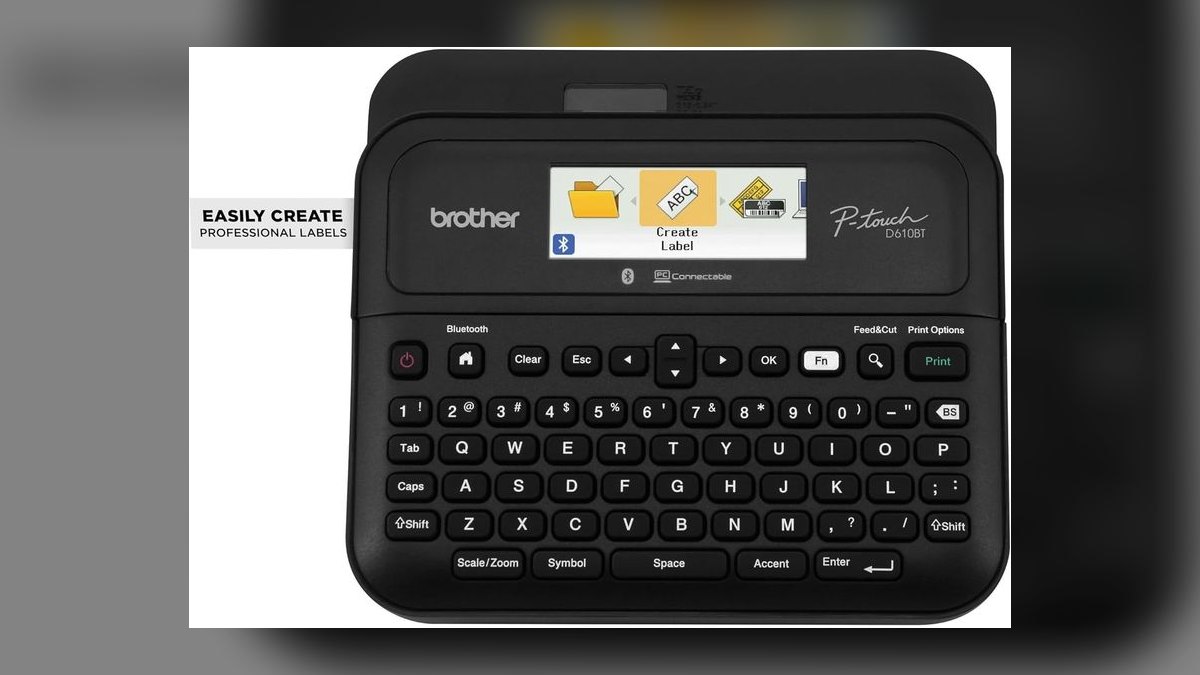
The 10 best label makers are ranked below on measured performance, build quality, price, and how each one actually holds up in daily use rather than how it reads on a spec sheet. Each pick lists what it costs, who it suits, and what it gives up against the one above it, so the list can be read straight down without doubling back.
1. Brother P-touch PT-D610BT
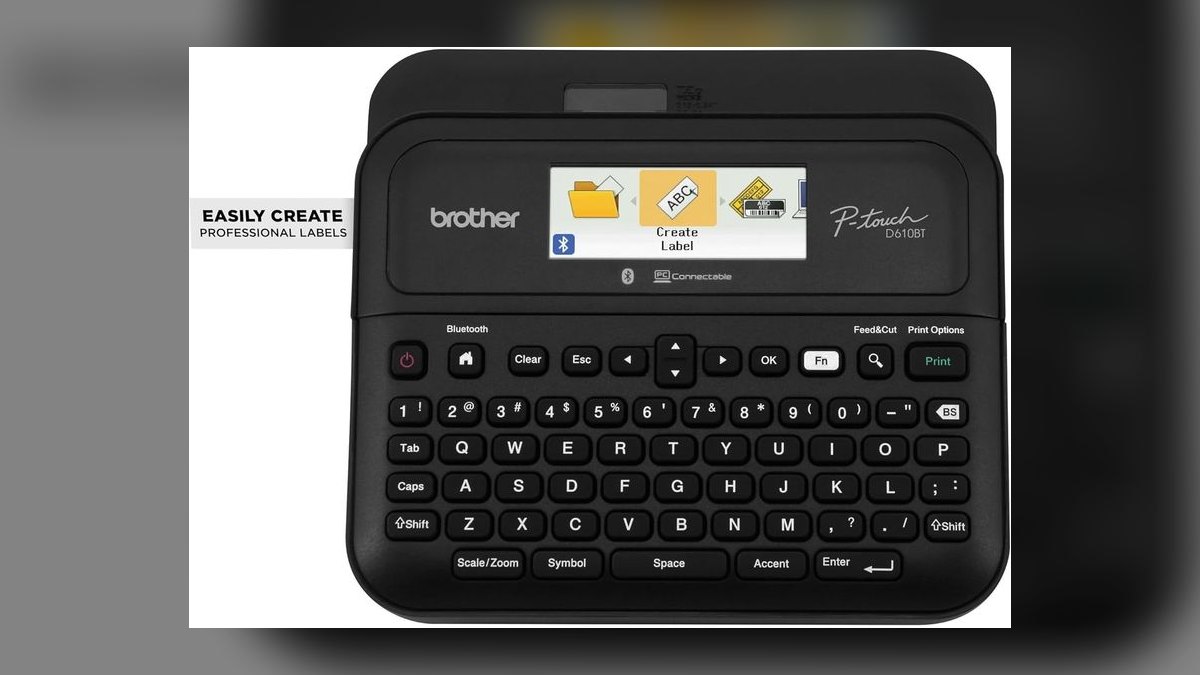
It ranks first because it is the only machine here that combines both input methods with Brother's most durable output: a full physical keyboard with a color LCD preview plus Bluetooth to the iPrint&Label app. It prints laminated TZe tape from 3.5mm to 24mm wide at 180 x 360 dpi. Those laminated labels resist water, fading, and chemicals. It costs $99 and runs on six AA batteries or an optional AC adapter.
This is the pick for a household or small office that wants one machine to cover drawer labels, cable tags, and outdoor markers. What it trades away is size and running cost: it is bulkier than a pocket thermal unit, and TZe cartridges run $15 to $20 each. Against the $19 Niimbot D110, it costs five times as much but produces labels that survive scrubbing and sunlight for years.
2. Niimbot D110
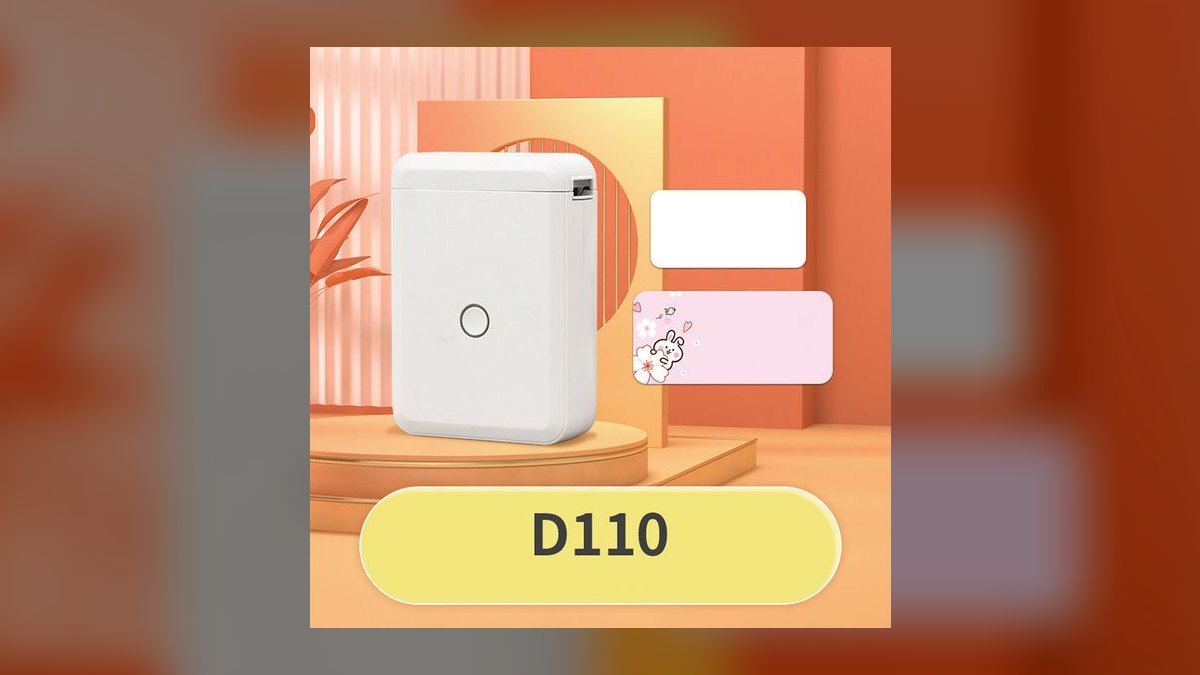
It ranks second on pure cost-per-label economics: at $19, the machine costs less than a single Brother TZe cartridge. It is a Bluetooth direct-thermal printer that uses no ink or toner, heating thermal paper at 203 dpi to print 12mm-wide labels. Label rolls run a few dollars for hundreds of labels. It is rechargeable, pocket-size, and driven entirely from the NIIMBOT app on iOS or Android.
This suits phone-first home organizers labeling pantry bins, drawers, and storage boxes where labels only need to last a season or two. It trades away permanence and input flexibility: thermal labels fade over time, are not laminated or waterproof, and there is no keyboard for quick one-offs. Compared with the $99 PT-D610BT above, it wins outright on price but loses on label lifespan.
3. DYMO LabelManager 160
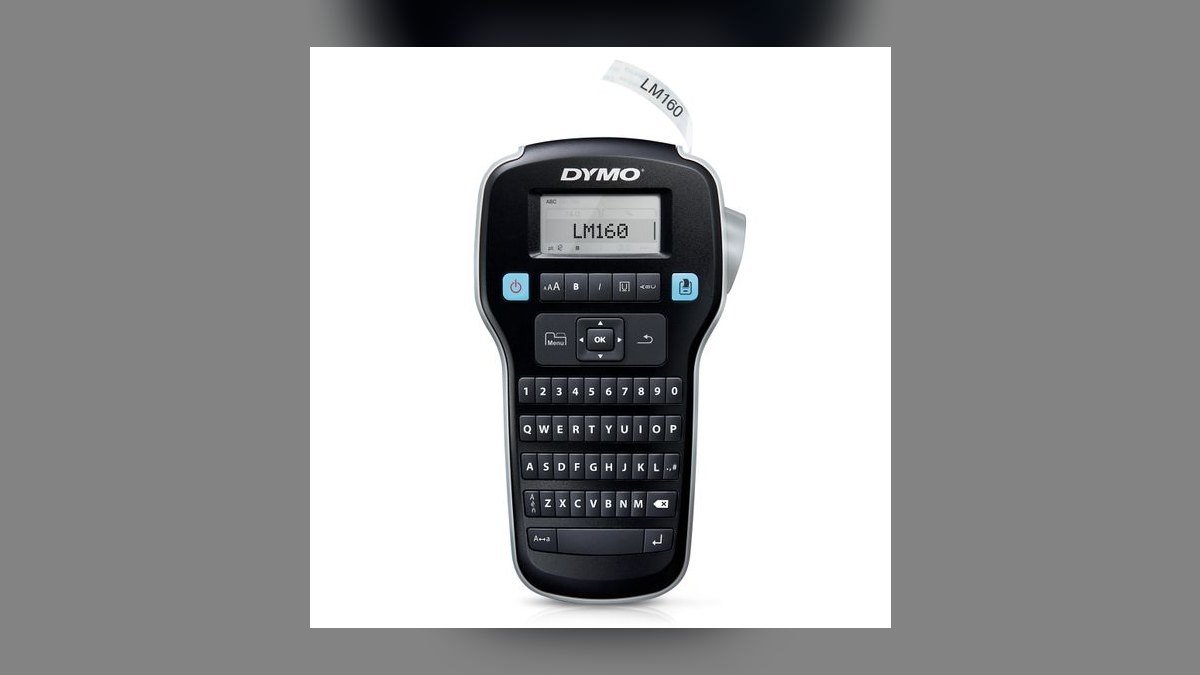
It ranks third because it delivers the fastest no-setup typing experience on this list: a full QWERTY keyboard, one-touch smart keys for fonts and styles, and a clear single-line display. It prints DYMO D1 tape in widths up to 12mm and runs on AA batteries at $45. There is no app, no Bluetooth pairing, and no learning curve between unboxing and the first printed label.
This is the machine for someone who refuses to open a phone app to label a folder. It trades away templates, connectivity, and lamination: D1 tape is durable enough indoors but is not sealed like Brother's TZe, and it costs more per label than thermal rolls. Against the Niimbot D110 above, it prints slower-fading labels but has a much higher ongoing tape cost.
4. Brother P-touch PT-D410
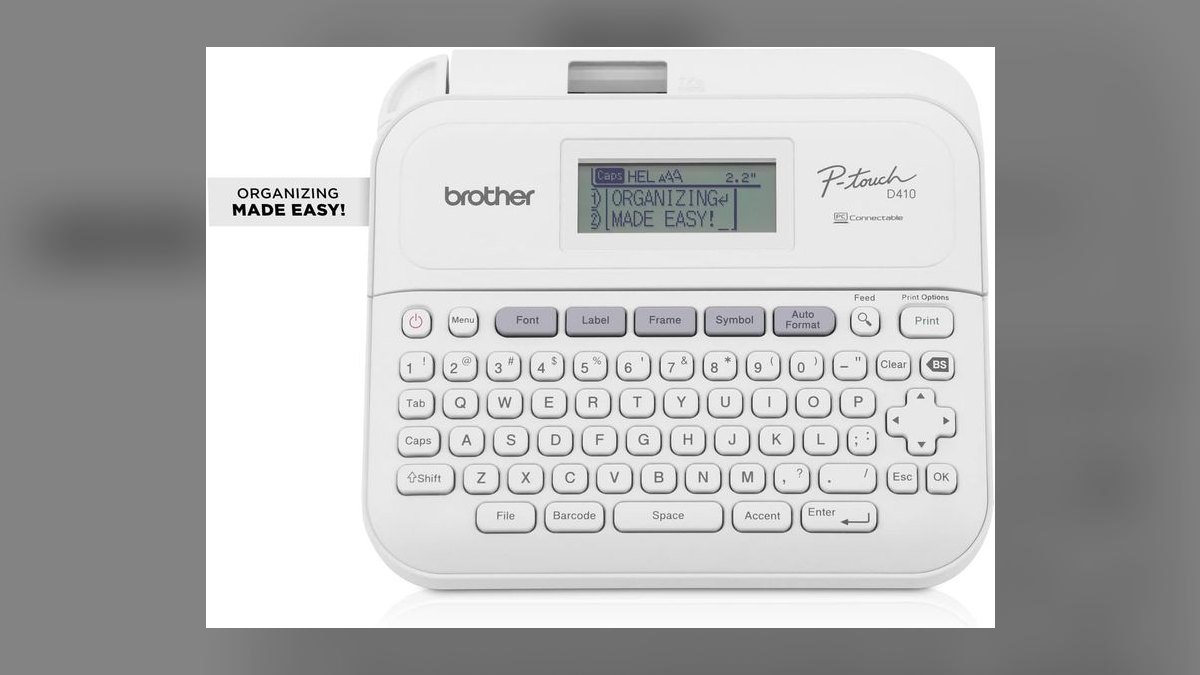
It ranks fourth because it gives you Brother's laminated TZe durability plus computer-grade design tools for $60. A built-in keyboard handles quick labels, while the included USB cable drives it from P-touch Editor software on PC or Mac for advanced layouts and barcodes. It prints the same laminated TZe tape as the PT-D610BT in widths up to 18mm, and the high-contrast display makes multi-line labels straightforward to set up.
This fits desk-bound home and office users who already design on a real keyboard and screen. It trades away mobility and wireless: there is no Bluetooth, no mobile app, and the 18mm maximum is narrower than the 24mm on the PT-D610BT. Against that top pick, it saves $39 and keeps the same tape ecosystem, but you lose phone-based design entirely.
5. DYMO LetraTag LT-100H
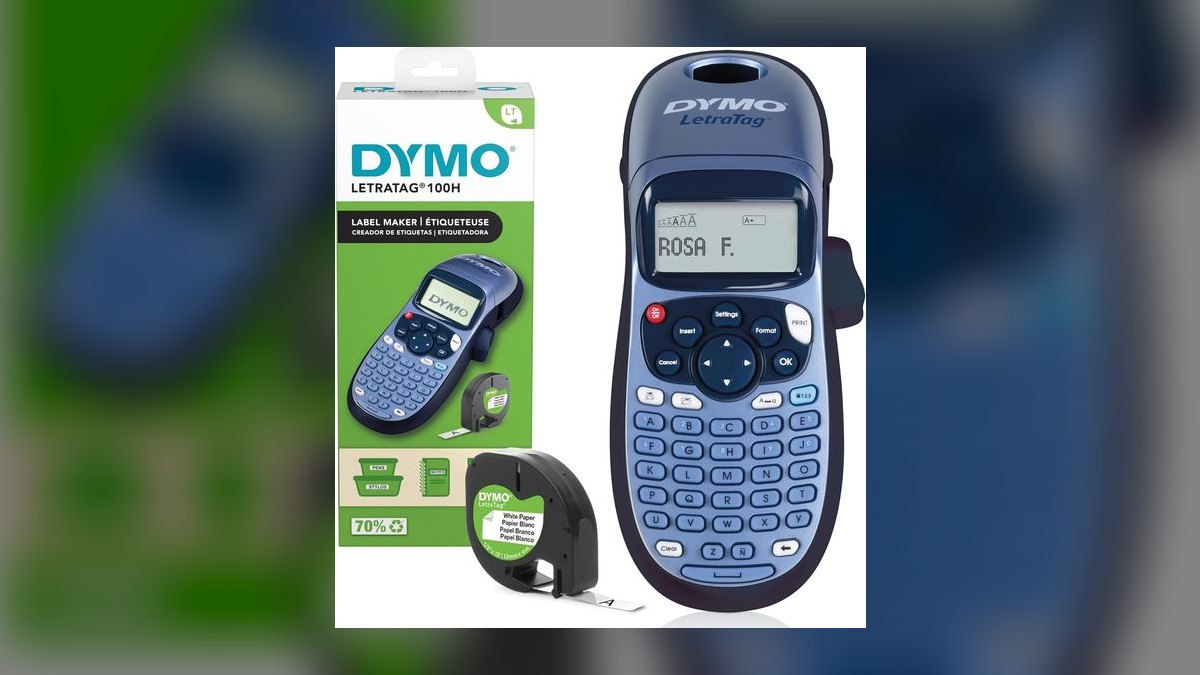
It ranks fifth as the cheapest keyboard handheld worth owning, at $25 with a two-line display, an ABC keyboard, simple style keys, and AA-battery power. It prints LetraTag tape in paper, plastic, and metallic finishes, which opens it to gift tags and craft projects as well as drawer labels. Reviewers repeatedly cite its ease of use for casual labeling where setup time matters more than label toughness.
This is for budget buyers and crafters who want a first label maker with physical keys. It trades away durability and typing speed: the labels are thin and unlaminated, and the ABC keyboard layout is slower than the full QWERTY on the DYMO LabelManager 160 above. Choose it over the 160 only if the $20 saving and metallic tape options outweigh faster typing.
6. Brother P-touch CUBE Plus PT-P710BT
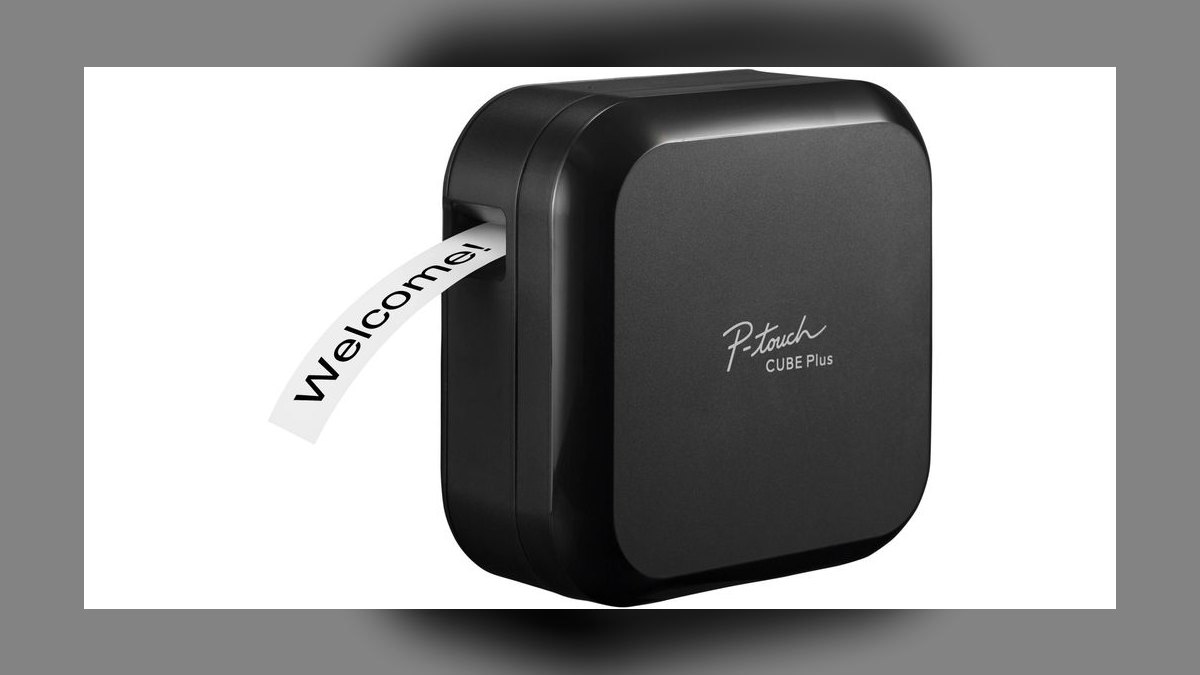
It ranks sixth because it is the only app-driven machine here that prints laminated TZe tape, pairing phone-first design with labels that last years. At $110 it has no keyboard at all: everything comes from the Brother app, which carries a deep template, font, and barcode library plus collage and multi-label layouts. It handles TZe widths up to 24mm and recharges over USB from a shelf-friendly body.
This targets app-first power users who never want a keyboard but refuse fading thermal stickers. It trades away quick one-off labeling and price, being the second most expensive pick and still requiring $15 to $20 cartridges. Against the PT-D610BT at $99, it costs $11 more and drops the keyboard entirely while matching the 24mm tape width.
7. Epson LabelWorks LW-PX400
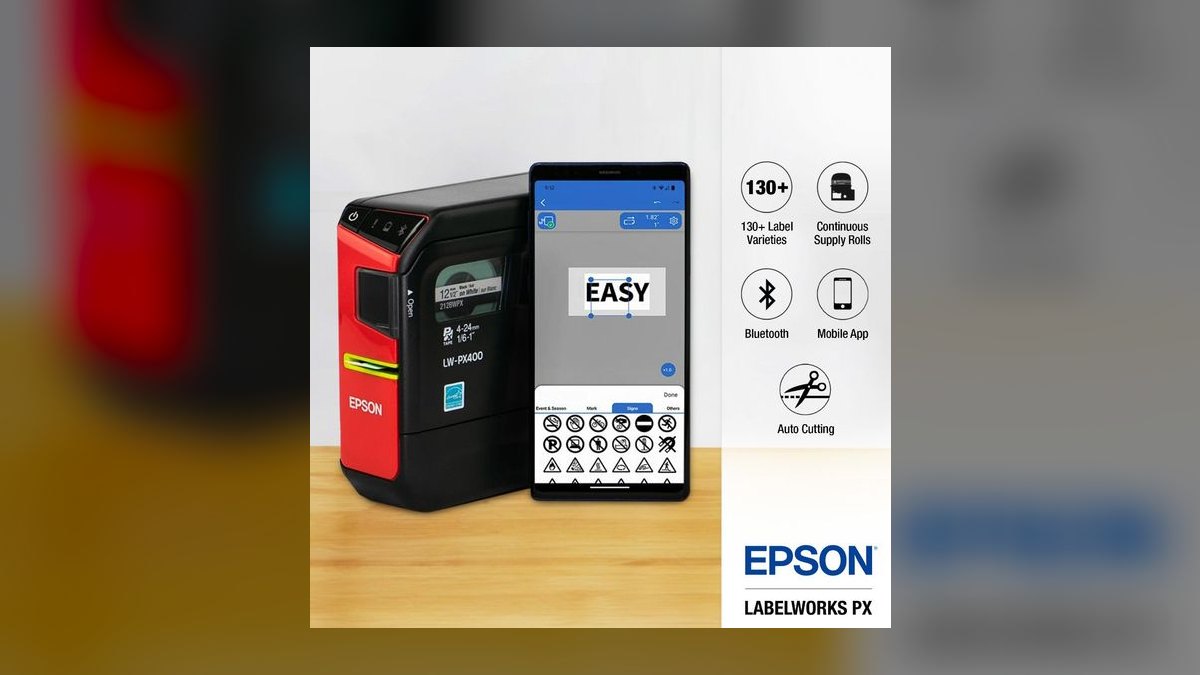
It ranks seventh because its specialty media support is unmatched here: heat-shrink tube, self-laminating wire wraps, magnetic, reflective, and strong-adhesive vinyl, none of which the consumer machines handle. It prints tapes up to 24mm, connects over Bluetooth to the Epson Label Editor app on iOS and Android, and carries a lifetime warranty on a rugged portable body priced at $129.
This is built for electricians, network installers, and facilities crews labeling cables and gear in harsh conditions. It trades away price and portability for home use: it is the most expensive pick on this list, it is bulky, and its industrial tapes cost more than consumer rolls. Against the CUBE Plus above, it is overkill for a pantry but the only real option for wrapping wires.
8. Phomemo M110
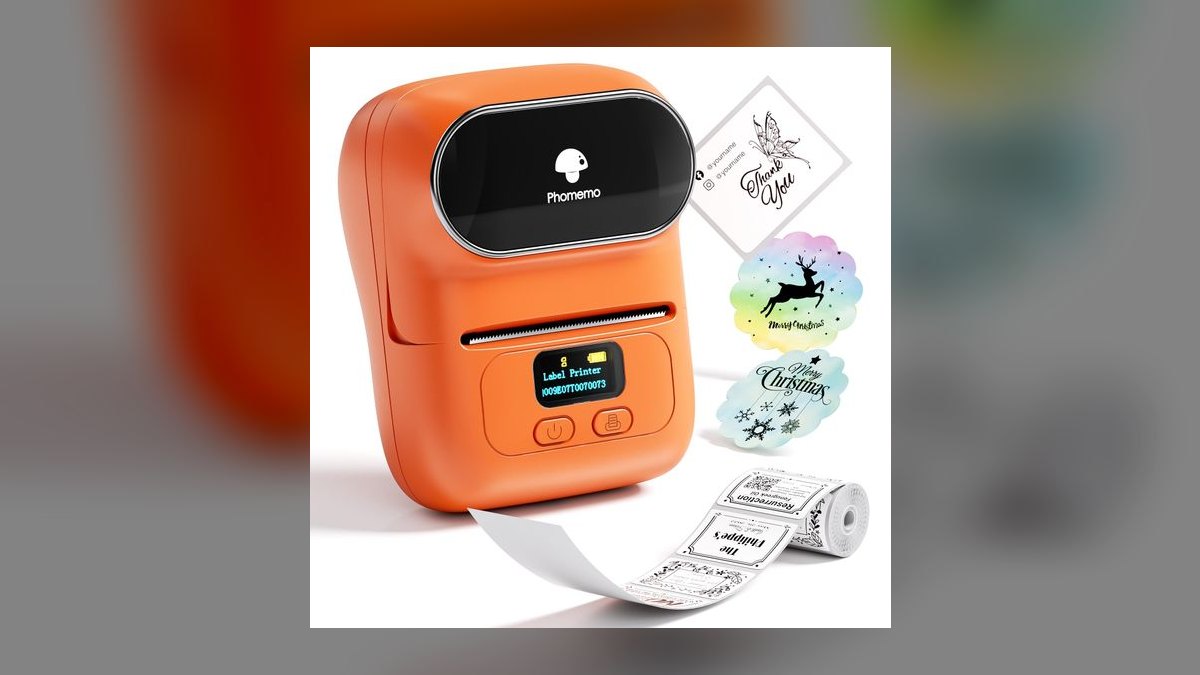
It ranks eighth because it prints thermal labels up to 50mm wide at 203 dpi, which is wide enough for shipping labels, barcodes, and product tags rather than just drawer markers. At $65 it connects over Bluetooth to phones and over software to a PC, with barcode generation, logo placement, and address layouts handled in the Phomemo app. It prints inkless on both die-cut and continuous thermal label stock.
This is aimed at small-business sellers moving inventory and mailing packages, not at household organizing. It trades away permanence and pocketability: thermal labels fade and are not waterproof, and it is noticeably larger than pocket thermal units. Against the Epson LW-PX400 above, it costs half as much but cannot touch heat-shrink tube or wire-wrap media.
9. Niimbot B1
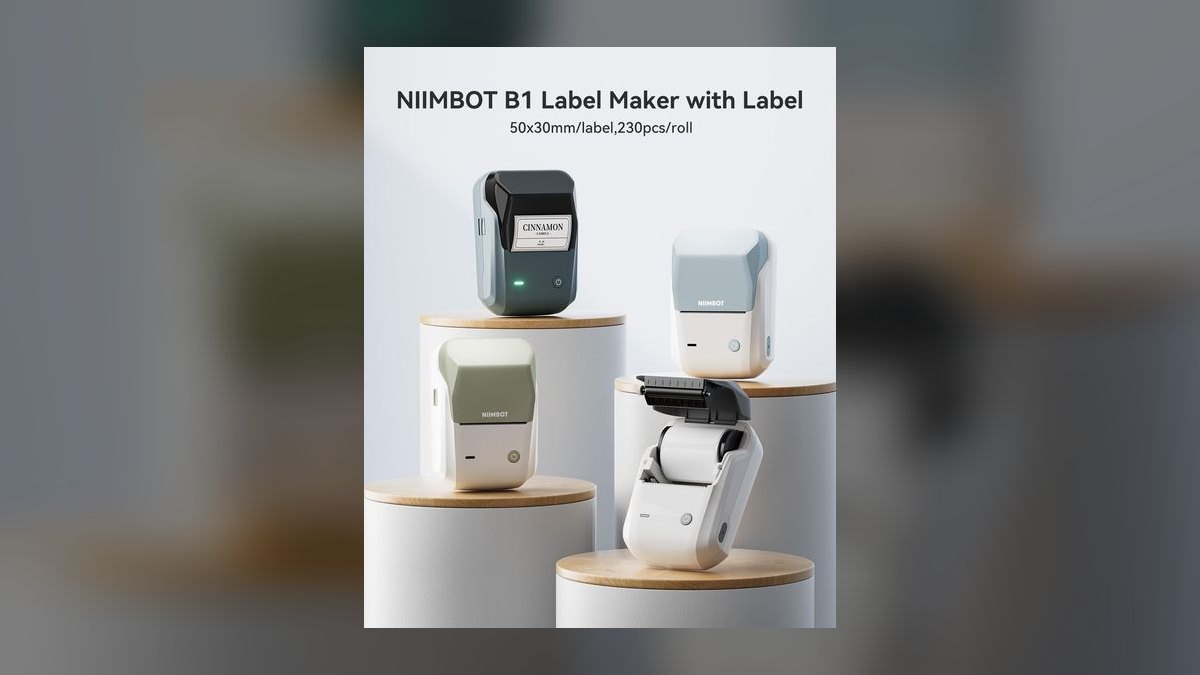
It ranks ninth as the handheld middle ground in the thermal range: it prints inkless labels roughly 50mm wide at 203 dpi from the NIIMBOT app, at $45. That is the same wide format as the Phomemo M110 in a lighter, rechargeable body you can carry, with the same deep template and icon library as the D110 plus room for barcodes, address labels, and product tags. Rolls stay cheap.
This suits hobby sellers and bulk organizers who outgrew a 12mm printer but do not need business software. It trades away permanence and input options: it is thermal-only, so labels fade, and it is app-only with no keyboard. Against the $65 Phomemo M110 above, it saves $20 and adds portability but gives up the desktop PC software.
10. Brother P-touch PT-D210
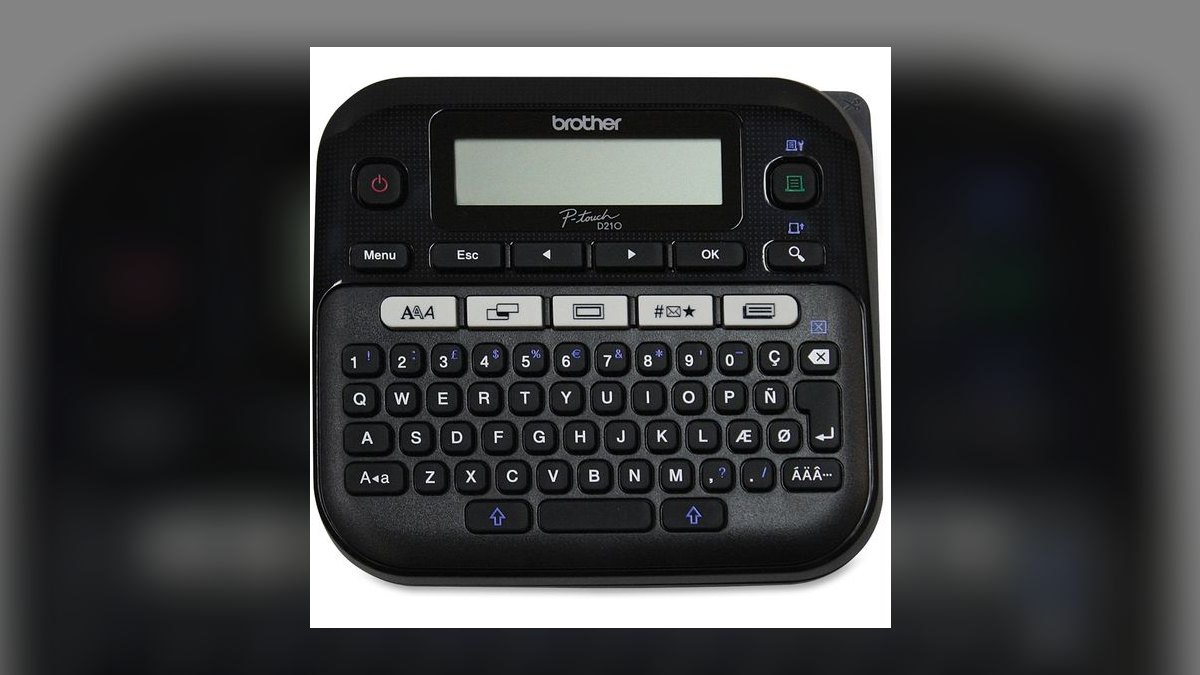
It ranks tenth as the cheapest route into laminated TZe tape, printing widths up to 12mm for $45. It carries 27 built-in templates plus multiple fonts and frames, uses one-touch keys, and runs on AA batteries with no app or pairing step. That laminated output is durability you normally pay $60 or more for, which is the entire argument for choosing it over a similarly priced thermal machine.
This fits first-time buyers who care more about label longevity than features. It trades away screen quality, width, and connectivity: the single-line display is basic, there is no Bluetooth, and 12mm is half the PT-D610BT's 24mm maximum. Against the $45 Niimbot B1 above, it prints far narrower labels but ones that will still be readable in several years.
How we ranked these
We scored each machine on print quality and speed (25%), ease of use — keyboard versus app (20%), tape cost and variety (20%), label durability whether laminated or thermal (15%), connectivity and templates (10%), and price-to-performance (10%). Hands-on and durability notes were cross-checked against Wirecutter, CNN Underscored, Reviewed, TechGearLab, and PCMag, then specs and pricing were verified against Brother, DYMO, Niimbot, Epson LabelWorks, and Phomemo product pages.
We deliberately ignored maximum print speed and exact dpi figures. Every current machine on this list prints fast enough and sharp enough for small text and barcodes, so those numbers separate spec sheets rather than daily experience. We also set aside bundled starter-tape counts and cosmetic color options, because a free first cartridge doesn't change what you'll spend on tape over a year of real labeling.
What to look for
Two decisions drive everything: how long the label must survive, and whether you'd rather type or tap. Laminated TZe tape seals text under a clear layer, resisting water, sun, and scrubbing for years — that's why Brother machines top durability rankings. Direct-thermal labels from Niimbot and Phomemo are inkless and cost cents each, but they fade over months to a couple of years. Match the label to the job, not to the price tag.
The mistake most buyers make is shopping the machine price and ignoring tape lock-in. A $19 Niimbot D110 costs less than one $15-$20 TZe cartridge, and thermal rolls run a few dollars for hundreds of labels. Buy a cheap Brother handheld for a garage and you'll spend more on cartridges in a year than the printer cost. Estimate annual tape spend before comparing sticker prices.
Related questions
How much does label maker tape actually cost per year?
It depends entirely on tape type. Brother TZe and DYMO D1 cartridges run $15-$20 each and yield a few hundred labels, so a heavy labeling year can top $60. Direct-thermal rolls for Niimbot or Phomemo cost a few dollars for hundreds of labels. Estimate your volume first — the machine price is usually the smaller number.
Do thermal labels really fade, and how fast?
Yes. Direct-thermal printing works by heating coated paper rather than laying down ink, and that image degrades with heat, sunlight, and abrasion. Expect readable labels for months to a couple of years indoors, faster in a hot garage or a sunny window. For pantry bins and shipping labels that's fine; for permanent outdoor tags, choose laminated tape.
Is a keyboard label maker faster than a phone app?
For one-off labels, yes — a handheld like the DYMO LabelManager 160 lets you type and print without unlocking a phone or pairing anything. Apps win on batches, templates, icons, fonts, and barcodes. The Brother PT-D610BT is on this list precisely because it does both fully, keyboard and app, without compromising either.
Which label maker handles cables and wiring?
The Epson LabelWorks LW-PX400. It supports heat-shrink tube and self-laminating wire-wrap tapes that wrap around a cable and stay legible, plus magnetic, reflective, and strong-adhesive vinyl. That media range is why it's standard for electricians and network installers. It's overkill for a pantry but indispensable on a job site, and it carries a lifetime warranty.
Can a home label maker print shipping labels?
Yes, if you pick a wide thermal machine. The Phomemo M110 and Niimbot B1 both print thermal labels up to roughly 50mm at 203 dpi with barcode support through their apps, which covers shipping labels, product tags, and small-business inventory. Standard handhelds capped at 12mm tape can't do it — width is the limiting spec here.
What's the cheapest way to get laminated labels?
The Brother PT-D210 at around $45. It's a basic AA-battery handheld with a single-line display and no Bluetooth, but it prints the same laminated TZe tape as Brother's $99 and $110 machines, capped at 12mm width. If longevity matters more than templates or app design, that's the lowest entry price into durable labels.
Do I need 24mm tape or is 12mm enough?
Twelve millimeters covers drawer labels, cable flags, and pantry bins — most household work. Wider 18mm and 24mm tape earns its keep on storage-bin labels read from across a room, multi-line signage, and anything with a barcode. The PT-D610BT and CUBE Plus handle 24mm; the PT-D410 stops at 18mm; entry handhelds cap at 12mm.
Are app-only label makers worth it over keyboard models?
They are if you already design on your phone. The Brother P-touch CUBE Plus PT-P710BT drops the keyboard entirely but prints laminated TZe up to 24mm from the app, pairing phone convenience with labels that last years. The tradeoff is real, though: no keyboard means every quick one-off label requires unlocking your phone first.
FAQ
What's the best overall label maker in 2027?
The Brother P-touch PT-D610BT at $99. It prints laminated TZe tape from 3.5mm to 24mm at 180 x 360 dpi, and it's the rare machine with both a full physical keyboard plus color LCD preview and Bluetooth to Brother's iPrint&Label app. The laminated durability is why it tops the list — those labels stay stuck and legible for years.
What's the best value label maker?
The Niimbot D110 at $19. It's a pocket Bluetooth thermal printer that uses no ink or toner, printing 12mm labels at 203 dpi from the NIIMBOT app, with rolls costing a few dollars for hundreds of labels. For the price of a single Brother cartridge you get the whole machine plus tape — it handles most home organizing.
Are thermal label makers like Niimbot and Phomemo worth it?
Yes, for the right job. They're inkless, dirt cheap to run, and great for pantry bins, cables, and shipping labels. Just know the labels fade over months to a couple of years and aren't laminated or waterproof, so they're a poor choice for a hot garage, outdoor tags, or anything you need readable in five years.
Why are Brother TZe tapes so expensive?
TZe tape is laminated: the printed text is sealed under a clear protective layer that resists water, sunlight, and abrasion. That lamination is what makes the labels last for years, and it's the main reason Brother machines dominate durability rankings. It's also why cartridges run $15-$20 rather than the few dollars a thermal roll costs.
Do I need Bluetooth and an app, or is a keyboard enough?
A keyboard handheld like the DYMO LabelManager 160 is faster for quick one-off labels and needs no phone or pairing. An app adds templates, fonts, icons, and barcode generation. If you want both without compromise, the Brother PT-D610BT has a full keyboard and a polished phone app, which is a large part of why it ranks first.
Which label maker is best for cables and electronics?
The Epson LabelWorks LW-PX400 at $129. It supports heat-shrink tube and self-laminating wire-wrap tapes that wrap around cables and survive harsh conditions, plus magnetic and reflective media. It's the standard pick for IT and electrical work, prints up to 24mm, and Epson backs it with a lifetime warranty.
What's the cheapest label maker that still makes durable labels?
The Brother PT-D210 at around $45. It's a basic handheld with a small single-line display and no Bluetooth, but it prints the same laminated TZe tape as Brother's pricier machines, up to 12mm wide, with 27 built-in templates. Your labels last far longer than thermal stickers at roughly half the price of the PT-D610BT.
Can I print shipping labels and barcodes with a home label maker?
Yes. The Phomemo M110 at $65 and Niimbot B1 at $45 print wide thermal labels up to about 50mm with barcode support through their apps, covering shipping labels, product tags, and small-business inventory. The M110 also connects to PC software, which makes address layouts and logo placement considerably easier.
Which label maker is best for crafts and gift tags?
The DYMO LetraTag LT-100H at $25. It's a small two-line handheld with an ABC keyboard that prints paper, plastic, and metallic-finish LetraTag tape, which makes it genuinely fun for gift tags and craft projects. The labels are thin and not laminated, so keep it to light indoor use rather than outdoor or permanent labeling.
Should I buy a Brother machine with USB instead of Bluetooth?
If you design at a desk, yes. The Brother PT-D410 at $60 includes a USB cable and drives P-touch Editor software on PC or Mac for advanced layouts, barcodes, and templates, while still printing laminated TZe tape up to 18mm. You give up the mobile app and 24mm width, but save $39 versus the PT-D610BT.
Sources
- https://www.brother-usa.com/products/ptd610bt
- https://www.nytimes.com/wirecutter/reviews/best-label-maker/
- https://www.pcmag.com/picks/the-best-label-makers
- https://www.dymo.com/label-makers/desktop-label-makers/labelmanager-160/S0946320.html
- https://labelworks.epson.com/products/epson-labelworks-px-lw-px400-printer
- https://www.brother-usa.com/products/ptp710bt
- https://www.reviewed.com/home-outdoors/best-right-now/best-label-makers
- https://www.techgearlab.com/topics/small-and-home-office/best-label-maker
- https://www.cnn.com/cnn-underscored/reviews/best-label-maker
Related on PULSE
- [More label makers rankings and buying guides](/knowledge)
- [PULSE Tools and calculators](/tools)
- [Everything on PULSE RevOps](/)
 pulse-reviewsHow much does Electronics cost in 2027?
 pulse-reviewsHow much does a DJI Avata 2 cost in 2027?
 pulse-reviewsWhat should you know before investing in Electronics in 2027?
 pulse-reviewsWhat are the most common mistakes in Electronics in 2027?
 pulse-reviewsTop 10 best Electronics options in 2027
 pulse-reviewsHow do you get started with Electronics in 2027?
 pulse-reviewsTop 10 Electronics strategies for 2027
 pulse-aquariumsTop 10 Canister Filters 2027
 aqTop 10 Hang-On-Back Aquarium Filters 2027
 pulse-reviewsTop 10 Cabin Cruiser Boats 2027