
Top 10 Indoor Smart Gardens — Best Overall + Best Value in 2027
 Curated byKory White · Fractional CRO · Maryland
 PULSEKNOWLEDGE LIBRARY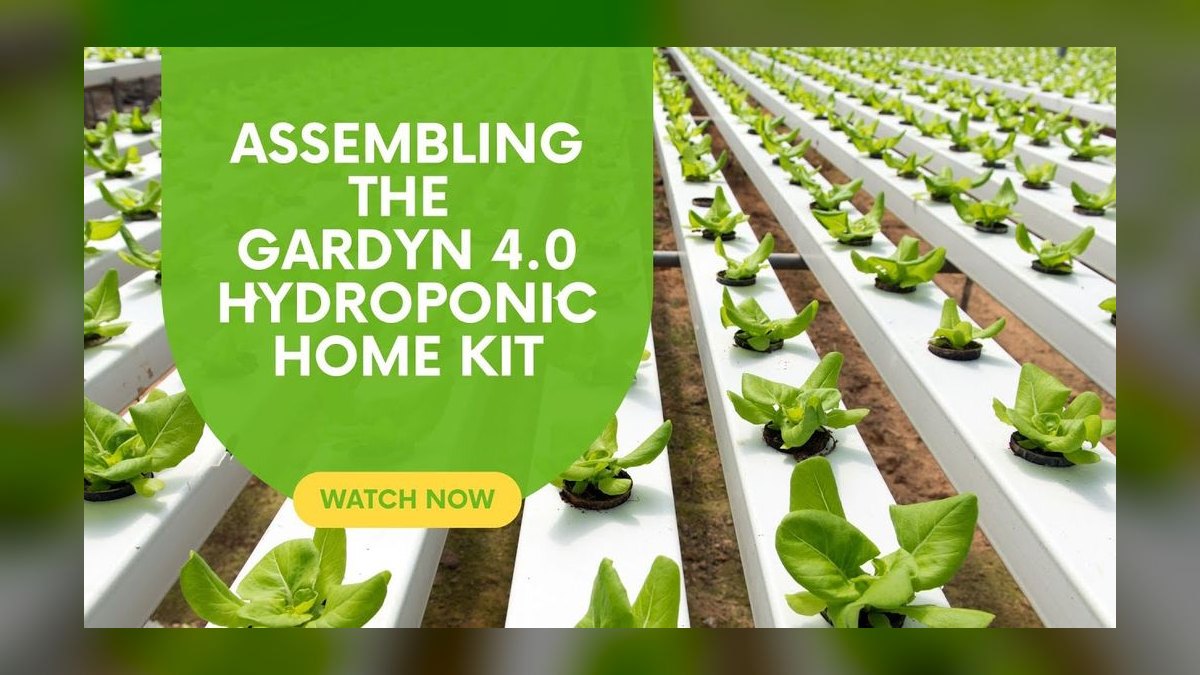
The 10 best indoor smart gardens are ranked below on measured performance, build quality, price, and how each one actually holds up in daily use rather than how it reads on a spec sheet. Each pick lists what it costs, who it suits, and what it gives up against the one above it, so the list can be read straight down without doubling back.
1. Gardyn Home Kit 4.0
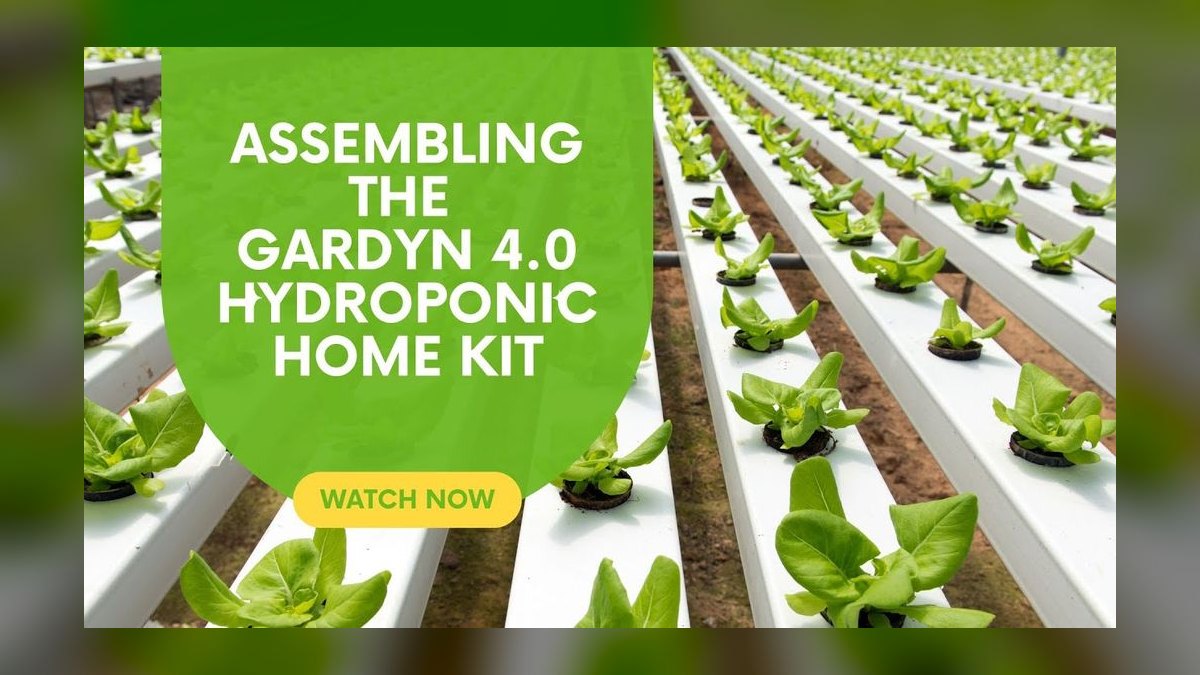
It ranks first because it posted the highest measured yields of any consumer system tested: 4.8 lbs of greens from 2 sq ft over 12 weeks in Greener Pods testing, versus 1.1 lbs from an AeroGarden Bounty. The $899 tower holds 30 plants in roughly 2 square feet using proprietary yCubes. Per-pod cameras and sensors feed the Kelby AI assistant, which flags problems on individual plants before a crop fails.
This is for households that want real vegetable harvests rather than garnish herbs, and that have $899 plus a $29–$39 monthly membership to unlock full AI features. You trade away seed freedom: yCubes are proprietary refills with no generic substitute. The AeroGarden Bounty Elite below costs $330 and accepts cheap third-party pods, but it holds 9 pods against Gardyn's 30 and grows a fraction of the food.
2. AeroGarden Bounty Elite
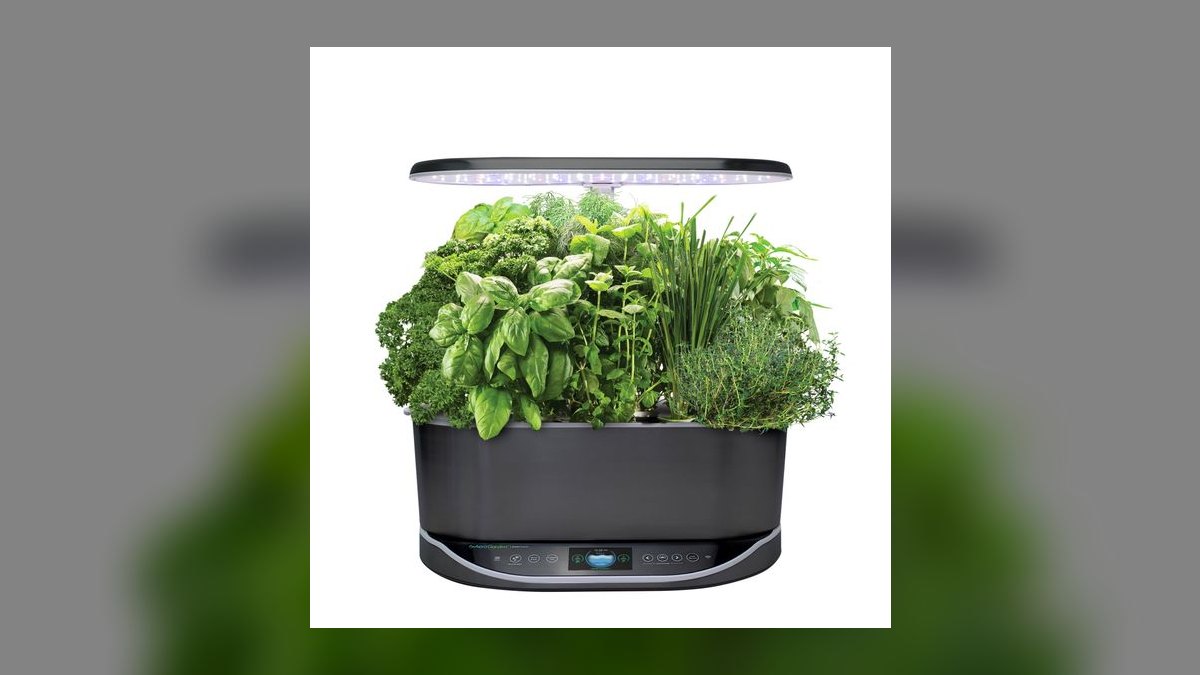
It ranks second on light output and app control at $330: a 50W LED panel against roughly 30W on the standard Bounty, driving fast growth across 9 pods. The stainless-finish unit includes full WiFi app control for light scheduling and reminders, and its tall height-adjustable arm clears room for tomatoes and peppers that most countertop rivals cannot handle. Simple liquid-nutrient hydroponics grows quickly when the reservoir stays topped up.
Buy it if you want the classic countertop hydroponic experience with app connectivity and no subscription. The catch is corporate volatility — AeroGarden reversed its 2024 shutdown and honors warranties, but confirm stock before ordering. Nine pods is thin for the price next to the 30-plant Gardyn above. Official pods run $5–7 each, though third-party pods cut refill costs 50–70%.
3. Rise Gardens Personal

It ranks third for seed freedom: the $349 floor-standing single tier uses net cups and a nursery tray instead of proprietary pods, so any seed packet works, with 200-plus varieties available from Rise. It holds roughly 12 plants in a furniture-grade frame that reads as modern shelving rather than a gadget. The connected app meters nutrients and signals reservoir refills, and added tiers scale the system to 24 or 36 plants.
This suits self-reliant growers who want their own seeds and room to expand later. It demands floor space rather than a counter, and net-cup setup is more hands-on than dropping in a sealed pod. Against the AeroGarden Bounty Elite above, it costs $19 more and skips the 50W panel, but ongoing costs stay low since refills mean only seeds and nutrient solution.
4. Click & Grow Smart Garden 9
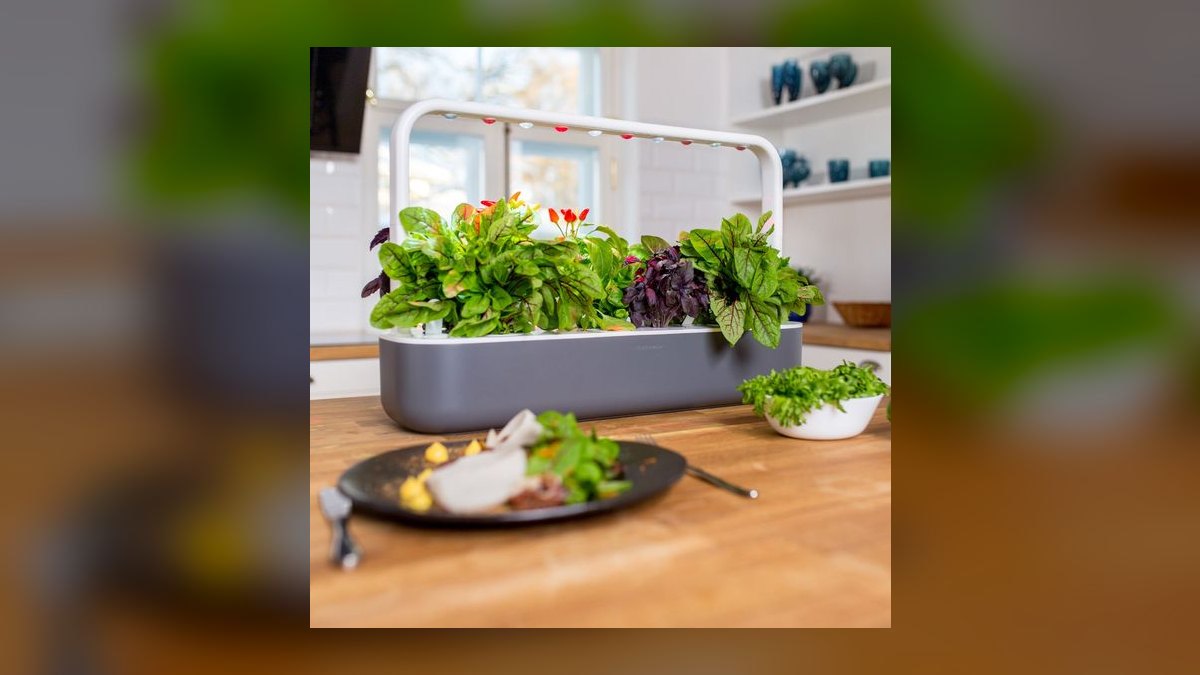
It ranks fourth for being the most beginner-proof system here: $199.95 buys 9 Smart Soil pods with pre-measured nutrients, so there is no liquid dosing, no pump noise, and no bubbling. You add water roughly every one to two weeks and the unit handles light and feeding on its own. Click & Grow sells 50-plus pre-seeded varieties plus seedless pods for planting your own herbs and greens.
Buy this if you hate fiddling with nutrients or travel enough that weekly attention is unrealistic. You trade long-term cost and light output: proprietary Smart Soil pods cost more per plant than open-seed rivals, and the LEDs are dimmer than hydroponic flagships. The Rise Gardens Personal above costs $149 more but accepts any seed and scales to 36 plants; this one stays silent and simple.
5. iDOO 12-Pod Hydroponics Kit
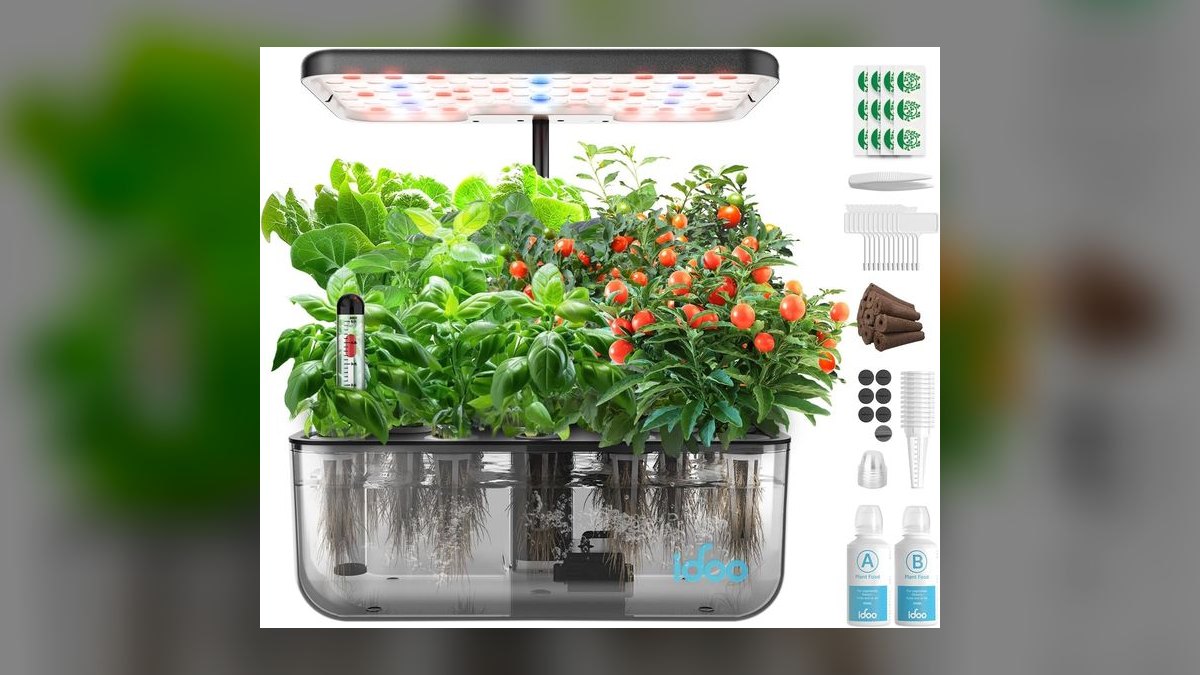
It ranks fifth on pods per dollar: roughly $99 buys 12 growing slots, a 24W LED (36W on some units) with separate veg and flower modes, a built-in fan, an auto-timer, and a light arm rising to about 11.3 inches. There is no subscription and no lock-in. Open compatibility is the real advantage — any seed packet and generic grow sponges cost pennies per pod, keeping ongoing spend near zero.
This is for budget herb growers who want maximum capacity for the least money. You give up app control and WiFi entirely, and the short light arm limits tall fruiting plants. Reviewers describe it as not premium but durable, with one tester running the same unit three years. The Click & Grow Smart Garden 9 above costs twice as much for three fewer pods and locks you into refills.
6. Lettuce Grow Farmstand
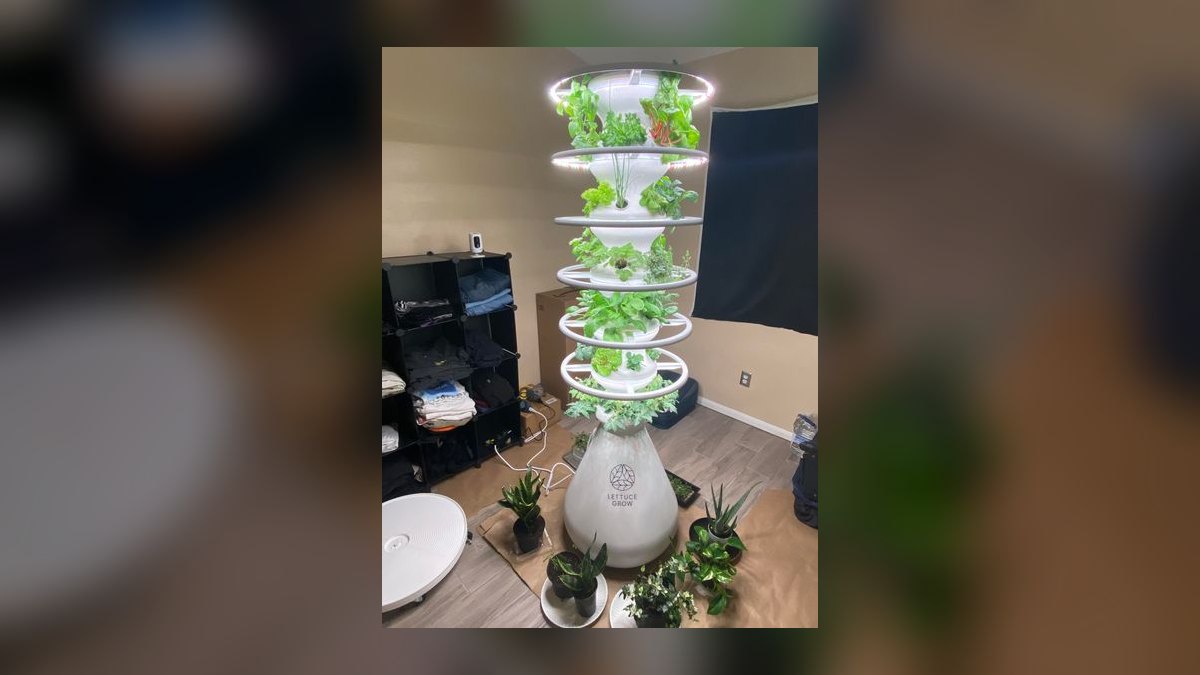
It ranks sixth on raw capacity: the $399-plus vertical tower scales from 12 to 36 plants across stacking rings, with a submersible pump cascading nutrient solution down the tower about 15 minutes each hour. It works indoors or outdoors, growing roughly 30% faster in real sun. Reviewers in 2026 praised the sturdy, non-flimsy build, and upkeep runs about 15 minutes weekly.
Buy it if your household eats a lot of salad and you have real floor space. The cost is misleading: indoor growing through winter requires Glow Rings at $250 or more on top of the base price, pushing it well past the iDOO above and closer to premium territory. Against the iDOO's countertop footprint, this is a serious floor-standing salad machine with triple the plant count.
7. Rise Gardens Family (Rise 3)

It ranks seventh because $749 is a steep ask, though it stacks three tiers for up to 36 plants and keeps the same any-seed, net-cup approach as the Personal model. The app handles nutrient scheduling and reminders across all tiers, and the cabinet-style frame functions as actual furniture in a living space. Refills stay cheap and flexible since nothing about the system is proprietary.
This is for committed indoor farmers trying to replace store-bought greens at scale. You trade a high upfront outlay and dedicated floor space for that capacity. It matches the Lettuce Grow Farmstand above at 36 plants, but includes its lighting rather than charging $250-plus extra for Glow Rings — making the real-world gap between the two narrower than list prices suggest.
8. LetPot LPH-Max
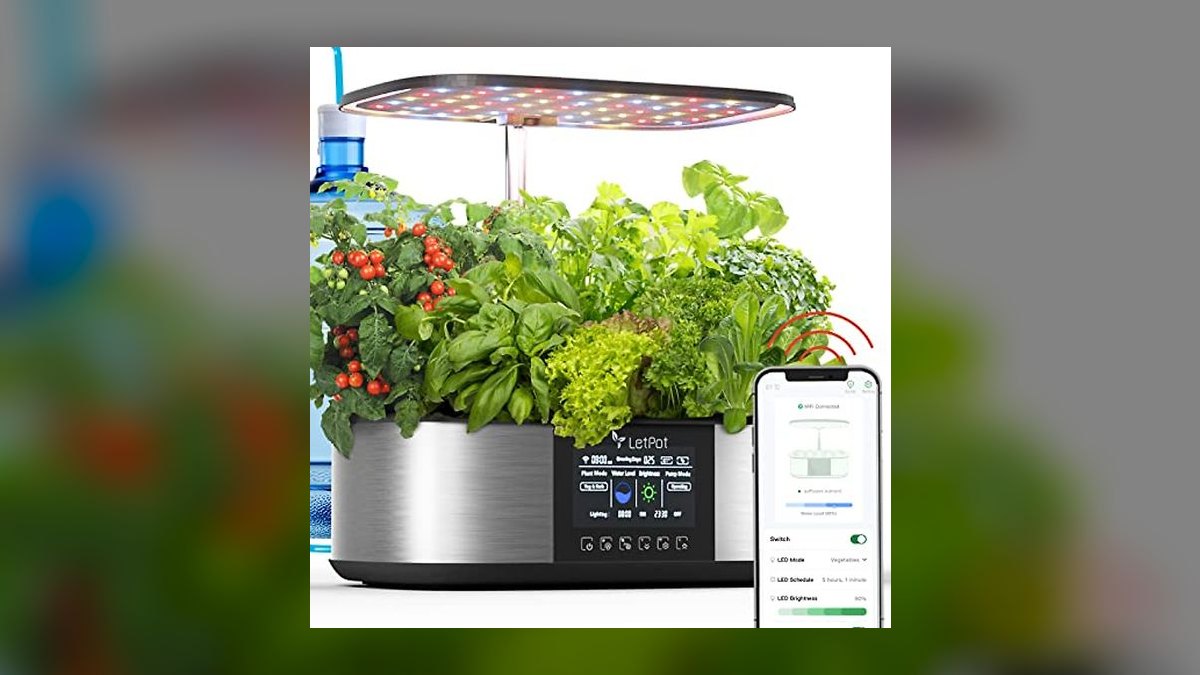
It ranks eighth as the best capacity-plus-automation blend under the premium tier: about $252 buys 21 pods, a 36W LED rod extending to 30 inches for tall plants, a 7.5L tank good for roughly 30 days of auto-watering, and full app and WiFi control over lighting and alerts. Built from imported stainless steel, it holds a 4.6-star customer average, and Gardening Know How praised its easy setup.
This fits value seekers who still want WiFi automation and open sponges instead of branded pods. The footprint runs larger than basic counter kits, and the stainless finish shows water spots. Against the Rise Gardens Family above, it costs roughly a third as much for 21 plants versus 36, and its month-long tank means fewer refills than most systems on this list.
9. Click & Grow Smart Garden 3
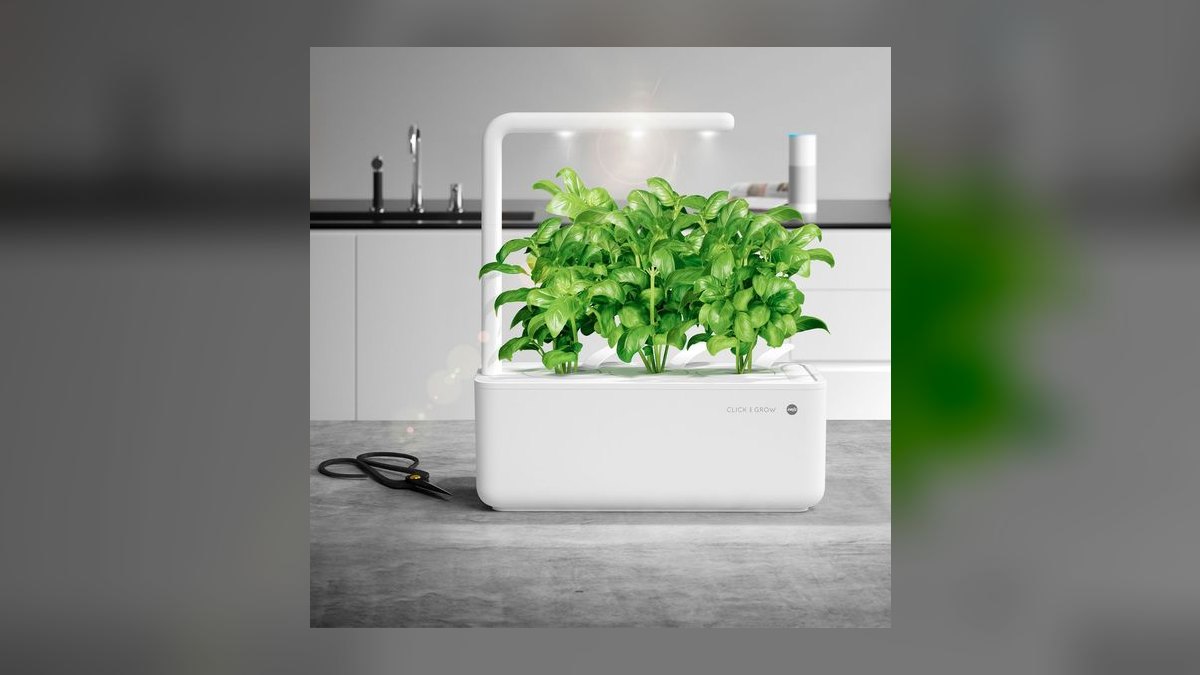
It ranks ninth because 3 pods is a small harvest, but $99.95 buys the same foolproof Smart Soil system in a footprint about 10 inches wide. It is silent, needs water only every week or two, and ships with three basil pods to start. Seedless pods let you plant your own herbs. Nothing here requires nutrient measuring, pump maintenance, or scheduling attention.
This is the right call for a windowsill, dorm room, or office desk where floor space does not exist. Three slots make it an accent rather than a pantry, and the easiest experience means proprietary pods. The iDOO 12-Pod costs about the same and grows four times as many plants, but it needs counter room, makes pump noise, and demands hands-on nutrient work.
10. AeroGarden Farm 24XL
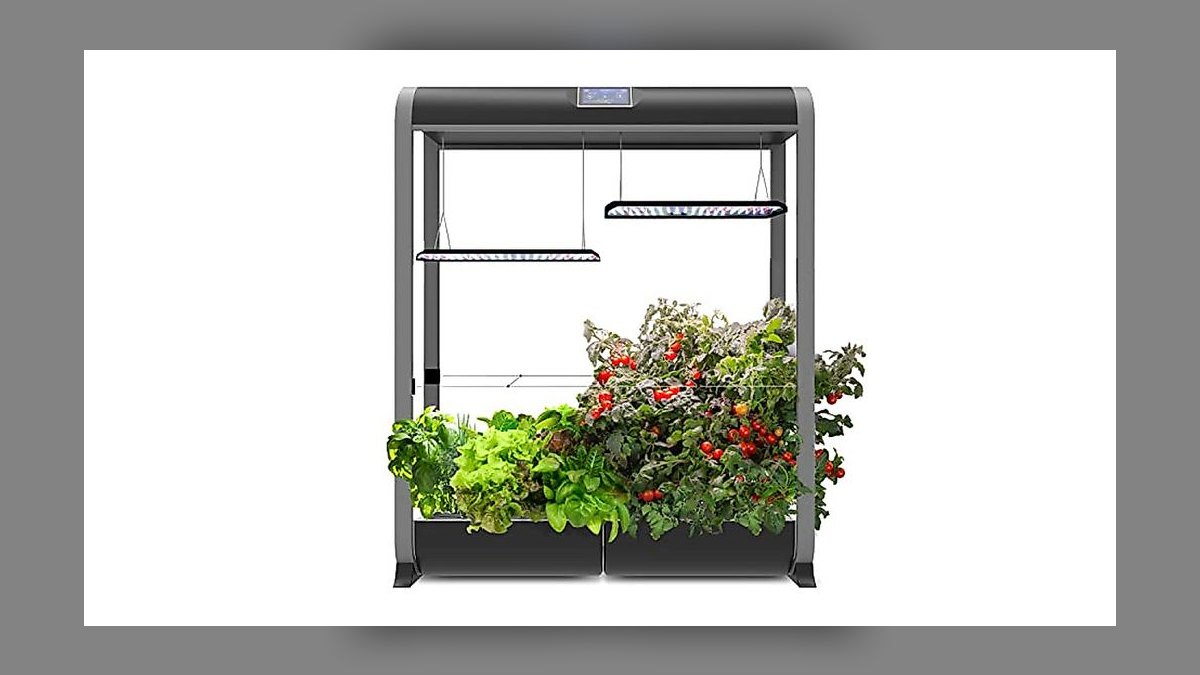
It ranks tenth despite holding 24 pods because brand-stability uncertainty and a large footprint undercut it. The Farm 24XL is AeroGarden's largest surviving model, with tall height-adjustable LED panels clearing room for full tomato and pepper plants. Older Farm 12 and Farm XL variants were discontinued, but this one still ships, often bundled with a salad-bar seed-pod kit. It runs the same liquid-nutrient hydroponics as the Bounty.
Buy it on a deal between $350 and $500 if you want big harvests from one tabletop frame. Confirm current availability and warranty first — the same corporate volatility affecting the Bounty Elite applies here. Third-party pod compatibility keeps refills cheap. Against the Click & Grow Smart Garden 3 above, it grows eight times the plants but takes a table, not a windowsill.
How we ranked these
Weighting followed what decides a harvest: grow-light output and PAR carried 25%, capacity in pods 20%, app automation and per-pod monitoring 15%, pod cost and own-seed compatibility 15%, footprint and design 15%, and price-to-performance 10%. Measured yield data — Gardyn's 4.8 lbs of greens from two square feet over twelve weeks versus 1.1 lbs from a Bounty — outranked spec sheets wherever published testing existed.
Deliberately ignored: voice assistants, color-changing accent lighting, and camera counts treated as standalone features. None rescues a dim panel or a three-pod tray. Also set aside were launch-window promotional prices, since pod refills and memberships dominate three-year cost. Brand heritage carried no weight either — AeroGarden's 2024 shutdown and reversal shows reputation is a poor proxy for whether a unit ships next month.
Related questions
How much do indoor smart garden pods cost per year?
Proprietary pods run $5–7 each. A nine-pod Click & Grow or AeroGarden replanted four times annually costs roughly $180–250 in refills. Open-seed systems like iDOO, LetPot, Rise, and Lettuce Grow use generic grow sponges at pennies per plant plus a seed packet, dropping the same year to under $30. Over three years that gap exceeds the price of the hardware.
Do indoor smart gardens actually save money on groceries?
Only at real capacity. A three-pod unit produces garnish-level basil and never pays back. A 24–36 plant tower harvesting continuously can replace most household salad greens, worth roughly $10–20 weekly at grocery prices. Factor electricity: a 50W panel running sixteen hours daily costs about $3 monthly. Break-even on a $400 open-seed tower lands near the one-year mark.
What is the difference between hydroponic and Smart Soil systems?
Hydroponic units — AeroGarden, iDOO, LetPot, Gardyn — suspend roots in circulating nutrient water, requiring a pump and periodic liquid dosing. Click & Grow's Smart Soil embeds pre-measured nutrients in a soil-like capsule, so there is no pump, no noise, and no dosing. Hydroponics grows faster and larger; Smart Soil is quieter and far more forgiving of neglect.
How loud is a hydroponic garden in a kitchen or bedroom?
Most countertop pumps produce a soft bubbling around 30–40 decibels, comparable to a quiet refrigerator. iDOO's built-in fan adds a faint hum. Lettuce Grow's Farmstand pump runs roughly fifteen minutes each hour rather than continuously. Click & Grow's Smart Soil units are genuinely silent since they have no pump at all — the right pick for a bedroom or small studio.
Can smart gardens run without any window light?
Yes. Every system here supplies its full light budget through LEDs, which is the point of the category. Window placement can actually hurt by creating uneven light that pulls plants sideways. What matters instead is room temperature between 65 and 75 degrees and enough clearance above the unit for the light arm to raise as plants grow taller.
How long until the first harvest from a smart garden?
Herbs like basil and cilantro reach usable cutting size in three to four weeks. Loose-leaf lettuce takes four to five weeks to first harvest and then regrows for repeated cuttings. Tomatoes and peppers need eight to twelve weeks before fruit sets, and only on units with a light arm that raises high enough — the Bounty Elite, Farm 24XL, LetPot Max, or Gardyn.
What happens to a smart garden while you are on vacation?
Tank size decides it. LetPot's 7.5L reservoir supports roughly thirty days of automatic watering. Click & Grow's Smart Soil holds one to two weeks. Small countertop hydroponic trays need topping up every five to seven days and will strand plants beyond that. Lights stay on their timer regardless, so a dry reservoir is the only real vacation failure mode.
Are third-party pods safe to use in an AeroGarden?
Yes, and they cut refill costs fifty to seventy percent. AeroGarden's pod format is widely cloned, and generic grow sponges with your own seed packets work in the same baskets. AeroGarden does not void warranties over pod sourcing. The tradeoff is doing your own germination rather than getting a pre-seeded capsule, which adds a few minutes at planting time.
FAQ
Which indoor smart garden is best overall in 2027?
The Gardyn Home Kit 4.0 at roughly $899. It grows 30 plants in about two square feet, adds per-pod cameras feeding its Kelby AI assistant, and posted the highest measured yields in published testing — 4.8 lbs of greens from two square feet over twelve weeks. The catch is a $29–$39 monthly membership for full AI features and proprietary yCube refills.
What is the best value indoor smart garden?
The iDOO 12-Pod Hydroponics Kit at about $99. Twelve slots, a 24–36W LED with veg and flower modes, a built-in fan, and an auto-timer, with no subscription of any kind. It accepts any seed packet with generic sponges, so ongoing cost is near zero. No app and a short light arm are the compromises at that price.
Do I have to buy proprietary seed pods?
Not always. Gardyn's yCubes and Click & Grow's Smart Soil capsules are proprietary. But iDOO, LetPot, Rise Gardens, and Lettuce Grow all accept your own seeds in generic net cups or grow sponges for pennies per plant. Click & Grow does sell seedless pods as a middle path, letting you plant your own seeds in its Smart Soil format.
Is a monthly subscription required for smart gardens?
Only for Gardyn, which charges $29–$39 monthly to unlock its full AI and per-pod monitoring features. AeroGarden, iDOO, LetPot, Rise Gardens, Click & Grow, and Lettuce Grow require no subscription — you pay for hardware, then seeds and nutrients. Budget the membership into Gardyn's true cost: three years of it roughly doubles the $899 sticker.
Can indoor smart gardens grow tomatoes and peppers?
Yes, on units with enough vertical clearance. The AeroGarden Bounty Elite and Farm 24XL use tall height-adjustable arms, LetPot's LPH-Max extends to 30 inches, and Gardyn's tower handles tall fruiting plants natively. Fixed low-bar units like the Click & Grow Smart Garden 3 top out well before a tomato plant sets fruit, so stick to herbs and greens there.
Are AeroGardens still being sold in 2027?
Yes. AeroGarden reversed its 2024 shutdown and is operational again through 2026–2027, honoring existing warranties. Ownership has been volatile, though, so confirm current stock and warranty terms before ordering. The Bounty Elite and Farm 24XL are the surviving flagship models; older Farm 12 and Farm XL variants were discontinued and appear only through remaining retail inventory.
How much floor space does a smart garden need?
Gardyn's tower fits roughly two square feet of floor. Lettuce Grow's Farmstand and the Rise Gardens Family need dedicated floor area closer to a small side table. Countertop units — the Bounty Elite, iDOO, Click & Grow 9 — occupy standard kitchen counter depth. The Smart Garden 3 is about ten inches wide and fits a windowsill or office desk.
Which smart garden has the highest measured yields?
The Gardyn Home 4.0. In Greener Pods testing it produced about 4.8 lbs of greens from two square feet across twelve weeks, versus roughly 1.1 lbs from a comparable AeroGarden Bounty in the same window. CNN Underscored separately named it the top hydroponic indoor garden for first-harvest success rate, which matters more than peak yield for beginners.
What should I prioritize when comparing these systems?
Light output first, capacity second. Look for 30W or more on countertop units and dedicated LED rings on towers — weak light produces leggy, pale plants regardless of what the app promises. Then match pod count to what you actually eat: three pods grow garnish, 20–36 pods grow real salads. Apps, cameras, and voice control are bonuses, not fixes.
Does Lettuce Grow's Farmstand work indoors without extra purchases?
No. The base Farmstand starting near $399 is designed for outdoor or bright-patio use, where it grows about 30% faster in real sun. Indoor operation requires Glow Rings at roughly $250 or more, which pushes real cost well past the sticker. Budget for both together, then compare against Rise Gardens Family or Gardyn on total delivered price.
Sources
- https://www.nytimes.com/wirecutter/reviews/best-indoor-garden/
- https://www.cnet.com/home/yard-and-outdoors/best-indoor-garden/
- https://www.thespruce.com/best-indoor-garden-systems-5088785
- https://www.tomsguide.com/best-picks/best-smart-gardens
- https://www.goodhousekeeping.com/home-products/g35045890/best-indoor-herb-garden-kits/
- https://www.bobvila.com/articles/best-indoor-garden-system/
- https://www.clickandgrow.com/products/the-smart-garden-9
- https://mygardyn.com/product/gardyn-home-kit/
- https://risegardens.com/products/personal-indoor-garden
- https://www.gardeningknowhow.com/reviews/letpot-lph-max-review
Related on PULSE
- [More indoor smart gardens rankings and buying guides](/knowledge)
- [PULSE Tools and calculators](/tools)
- [Everything on PULSE RevOps](/)
 pulse-reviewsHow much does Electronics cost in 2027?
 pulse-reviewsHow much does a DJI Avata 2 cost in 2027?
 pulse-reviewsWhat should you know before investing in Electronics in 2027?
 pulse-reviewsWhat are the most common mistakes in Electronics in 2027?
 pulse-reviewsTop 10 best Electronics options in 2027
 pulse-reviewsHow do you get started with Electronics in 2027?
 pulse-reviewsTop 10 Electronics strategies for 2027
 pulse-aquariumsTop 10 Canister Filters 2027
 aqTop 10 Hang-On-Back Aquarium Filters 2027
 pulse-reviewsTop 10 Cabin Cruiser Boats 2027