
Top 10 Thermal Imaging Cameras — Best Overall + Best Value in 2027
 Curated byKory White · Fractional CRO · Maryland
 PULSEKNOWLEDGE LIBRARY
The 10 best thermal imaging cameras are ranked below on measured performance, build quality, price, and how each one actually holds up in daily use rather than how it reads on a spec sheet. Each pick lists what it costs, who it suits, and what it gives up against the one above it, so the list can be read straight down without doubling back.
1. FLIR ONE Edge Pro
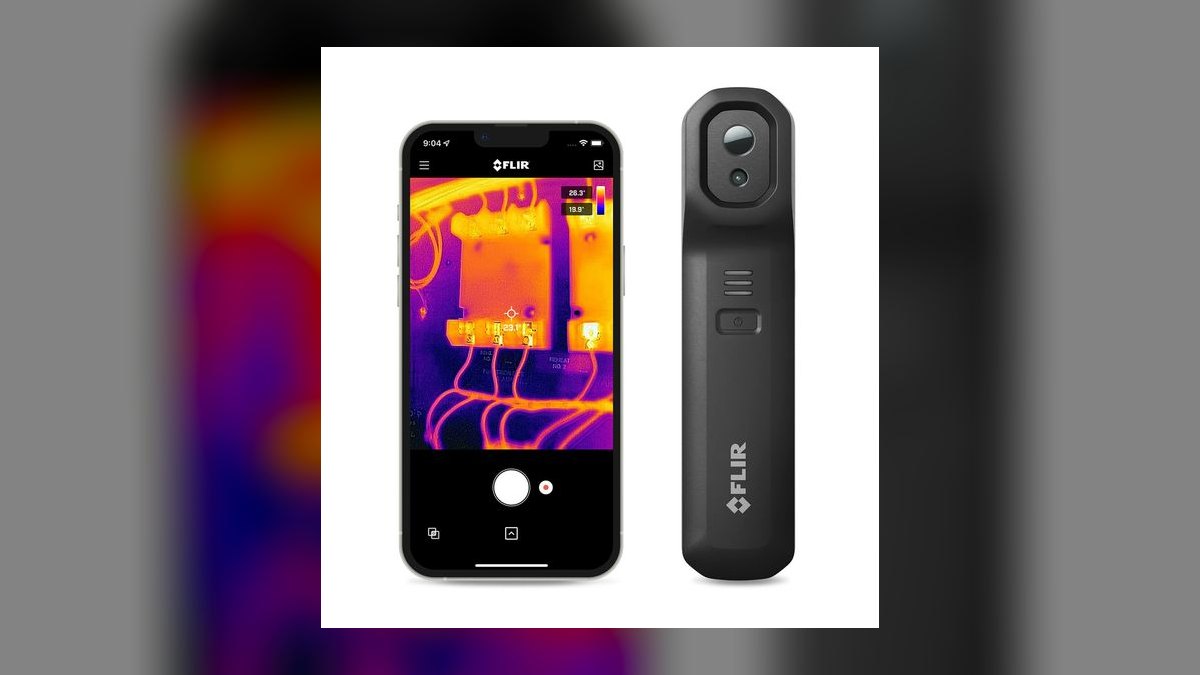
It ranks first because it is the only $499 imager here that detaches and streams wirelessly over Bluetooth and Wi-Fi up to roughly 30 meters from the phone. The 160×120 detector reads 70 mK sensitivity at an 8.7Hz refresh, covering -4°F to 752°F across dual ranges. MSX and VividIR sharpen edges, and FLIR Ignite pushes shots straight to cloud reports. IP54 sealing and drop testing survive jobsites.
This suits inspectors who bill clients and need one unit for both arm's-length panels and unreachable ceilings or crawlspaces. It trades raw pixels away: 160×120 is well under the 256×192 detectors on cheaper rivals, and 8.7Hz smears when you pan a wall quickly. Against the Topdon TC001 below it, you pay roughly $200 more for wireless detach, fusion overlay, and documentation rather than for sensor count.
2. Topdon TC001
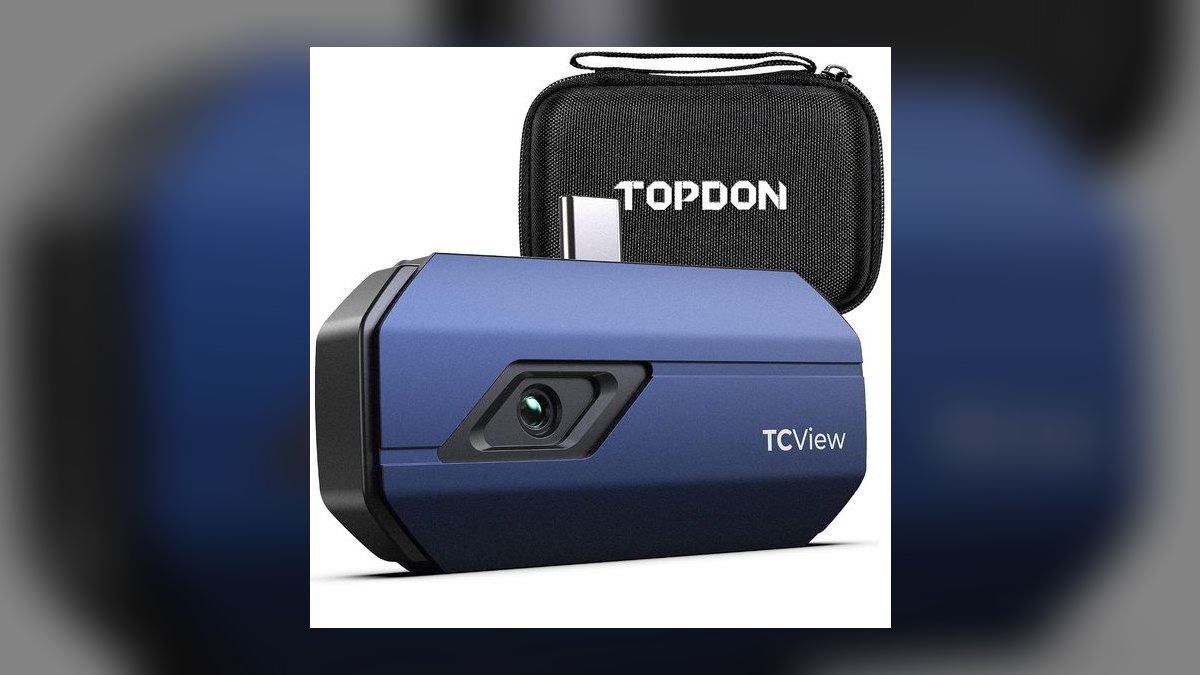
It takes second on pure price-to-performance: a 256×192 detector, 49,152 pixels, for $299 list and roughly $209 on the street. That is more than double the native pixel count of the $499 FLIR above it. Refresh runs 25Hz, so panning stays fluid, and some firmware builds stretch the range to -4°F to 1022°F. It draws power from an Android USB-C port, so there is no battery to charge.
Buy it if you want maximum thermal clarity per dollar for studs, leaks, hot breakers, and missing insulation. It gives up MSX-style visual fusion entirely, so there are no visible-light edges or label text overlaid for context. It is also Android-first; iOS users need the separate TC002C. Tom's Guide praised its sharpness for the money, and the raw image beats the FLIR ONE Edge Pro's.
3. HIKMICRO Pocket2
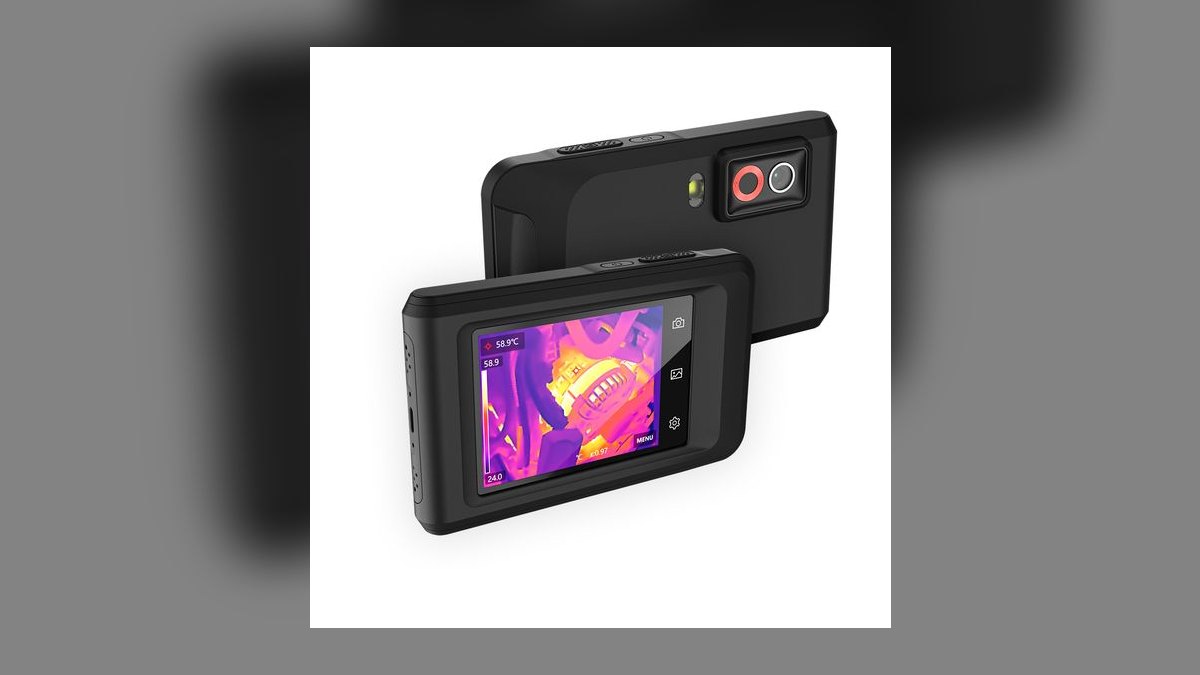
Third place goes to the best fully standalone pocket imager at $599. It carries a 256×192 detector with under 40 mK NETD — the most sensitive figure on this list — and a 25Hz refresh. A 3.5-inch 640×480 touchscreen, 8MP visual camera, LED light, and onboard Wi-Fi make it grab-and-go. Range spans -4°F to 752°F with IP54 protection against dust and splashes.
This is for electricians and HVAC techs who hate fumbling with a phone on a ladder and want the handset free. It costs more than attach-style modules carrying the identical 256×192 sensor, and it skips true visual fusion overlay. Compared with the Topdon TC001 above, you pay roughly $300 extra purely for independence from the phone, a touchscreen, and paired visual documentation.
4. FLIR C5
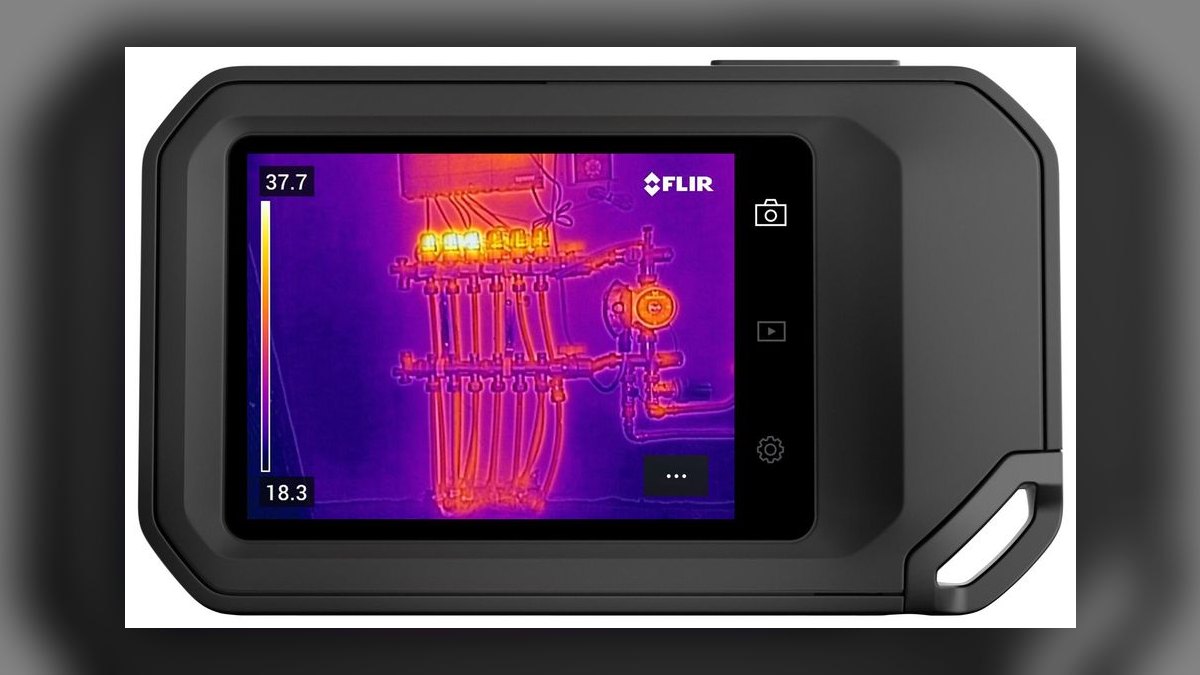
It lands fourth because its reporting pipeline outweighs a dated sensor. The pocketable standalone body holds a 160×120 true thermal detector, genuine MSX overlay, a 5MP visual camera, and a built-in LED floodlight for dark crawlspaces. FLIR Ignite auto-uploads, organizes, and shares images at around $600. Build is IP54 rated and drop-tested to 6.6 feet, and the refresh sits at 9Hz.
Buy it if you generate polished moisture or energy-audit reports for paying clients and want a dedicated device. You surrender pixels and speed: 160×120 feels thin beside 256×192 rivals, and 9Hz smears during fast scanning. Versus the HIKMICRO Pocket2 above, the C5 costs about the same but swaps a sharper sensor and touchscreen for MSX fusion and cloud documentation.
5. InfiRay P2 Pro
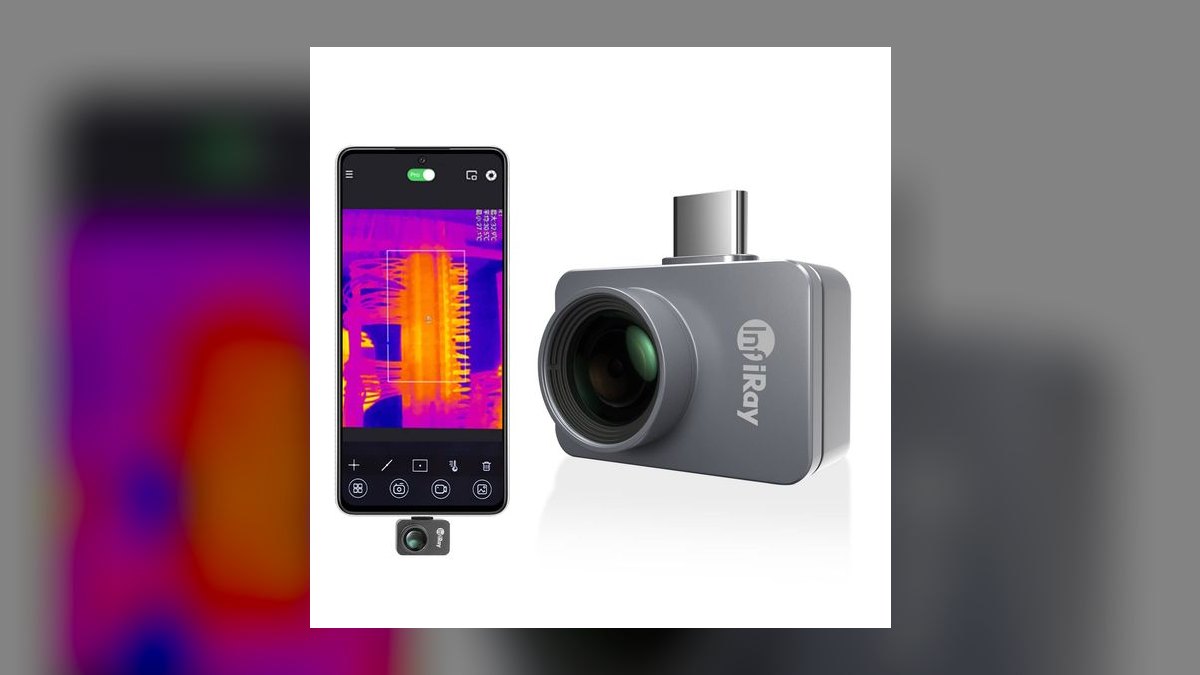
Fifth reflects extraordinary capability per gram: a 9-gram all-metal module with a 256×192 detector and 25Hz refresh for roughly $249. Its magnetic macro lens resolves individual components, making it the standout for PCB diagnosis and fine electronics work. The range runs -4°F to 1022°F, wide enough for both circuit faults and mechanical heat. It plugs into Android USB-C or iOS and undercuts nearly everything carrying the same sensor.
Electronics hobbyists and repair techs hunting failing components on crowded boards benefit most. There is no MSX or visual fusion, and the tiny body can torque a phone's USB-C port under side load. Against the Topdon TC001, the sensor and refresh match at a lower price; the macro lens is the differentiator, while the TC001's larger body handles wall scanning more comfortably.
6. Seek Thermal CompactPRO
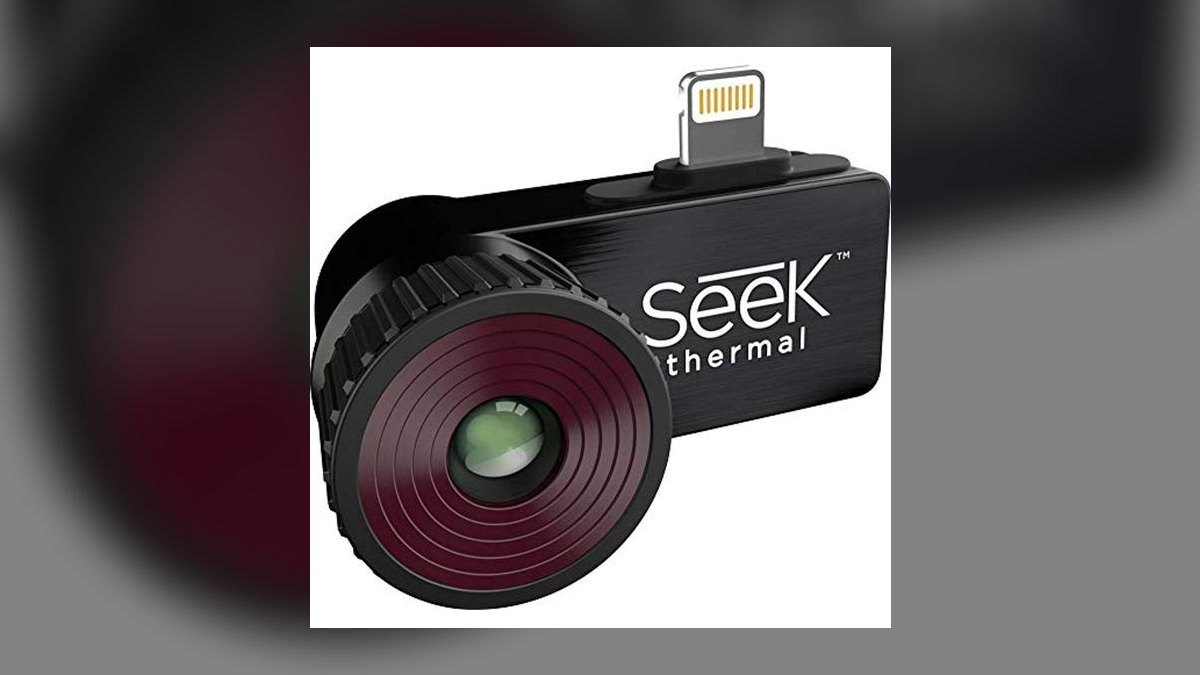
It holds sixth on the strength of the highest native resolution here — a 320×240 detector, 76,800 pixels, in a phone module around $499. Sensitivity is under 70 mK, and the range spans -40°F to 626°F. An adjustable-focus lens sharpens images at varied distances, and radiometric file export supports real analysis. iOS and Android versions both draw power from the phone rather than an internal battery.
Home inspectors chasing fine moisture gradients and insulation gaps gain the most from the extra pixels; Structure Tech has fielded it for years. The US export model refreshes at only 9Hz, which feels sluggish when sweeping a ceiling, and there is no visual fusion. Versus the InfiRay P2 Pro above, you pay double for more pixels but lose 25Hz smoothness and the macro lens.
7. HIKMICRO Mini2 Plus
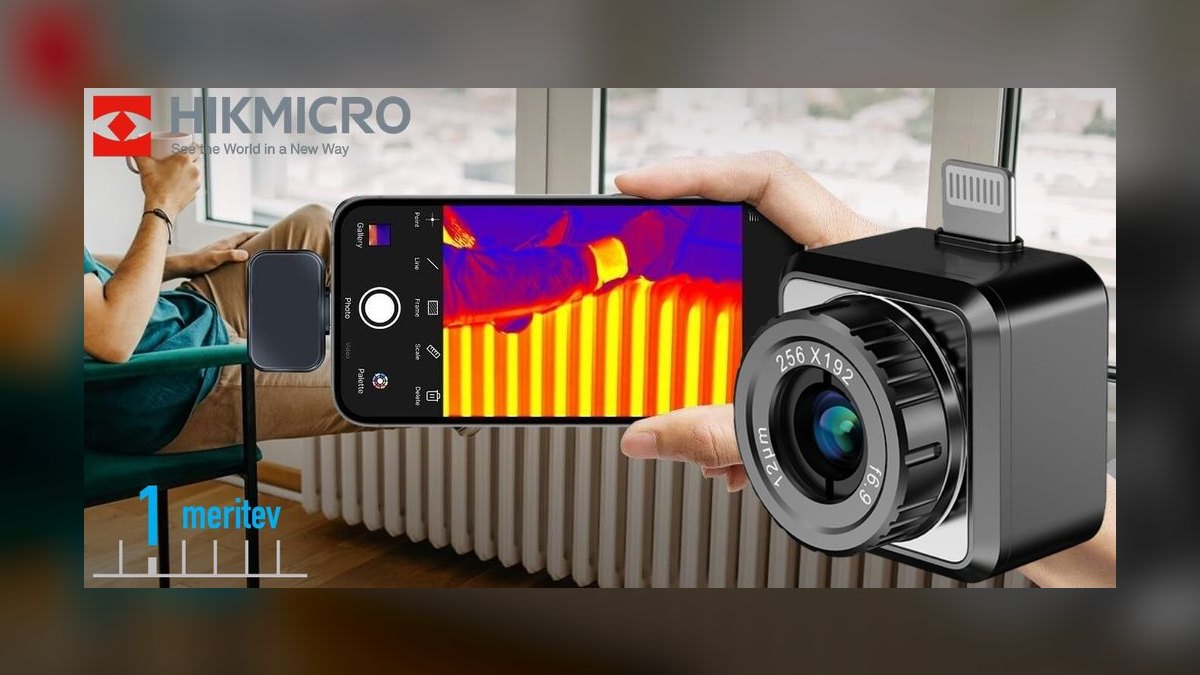
Seventh place is earned by focusing optics that are rare under $400. This roughly $349 attach module pairs a 256×192 VOx detector and 25Hz refresh with a manual-focus lens sharpening targets from 7cm out to 10 meters. Accuracy is rated ±2°C or ±2% across a -4°F to 662°F range. A short extension cord lets you snake the head into wall cavities and tight equipment bays.
Android inspectors who need both macro detail and distance shots without buying two devices are the target; a V2 adds iOS. There is no MSX fusion, and the base model is Android-only. Compared with the Topdon TC001, you spend about $140 more for the focusing lens and extension cord while getting the same detector, refresh, and a narrower top temperature ceiling.
8. Klein Tools TI290
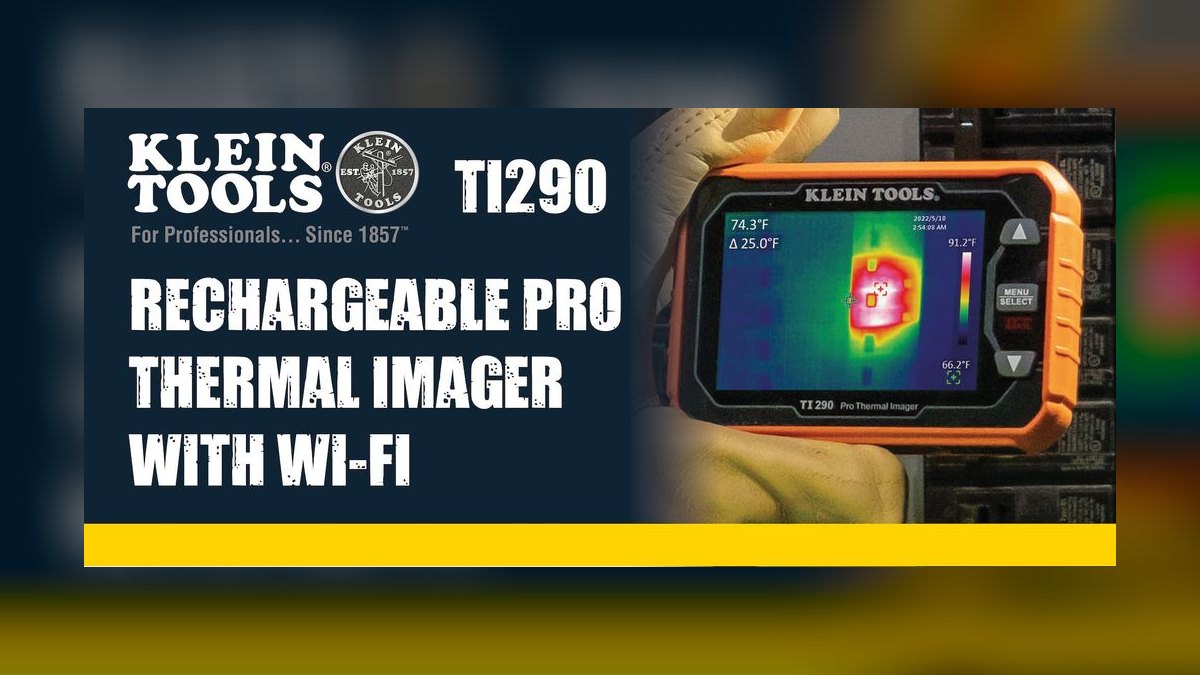
It sits eighth because durability and brand support, not image quality, justify the $649 price. The rechargeable standalone body houses a 256×192 sensor of over 49,000 pixels, Wi-Fi data transfer, three palettes, and high/low crosshairs with user-set alarms across -4°F to 752°F. Pro Tool Reviews highlighted its 6.6-foot drop protection and tradesperson-friendly interface. It displays a straight thermal image with no fusion processing.
Electricians already invested in Klein tooling who want a rugged no-phone workflow and familiar service channels are the buyers. It is the priciest standalone here for the sensor delivered, and the plain thermal image lacks context cues. Against the HIKMICRO Pocket2, the sensors match but the Pocket2 costs $50 less and adds a visual camera; the Klein answers with drop rating and alarms.
9. FLIR ONE Pro Gen 3
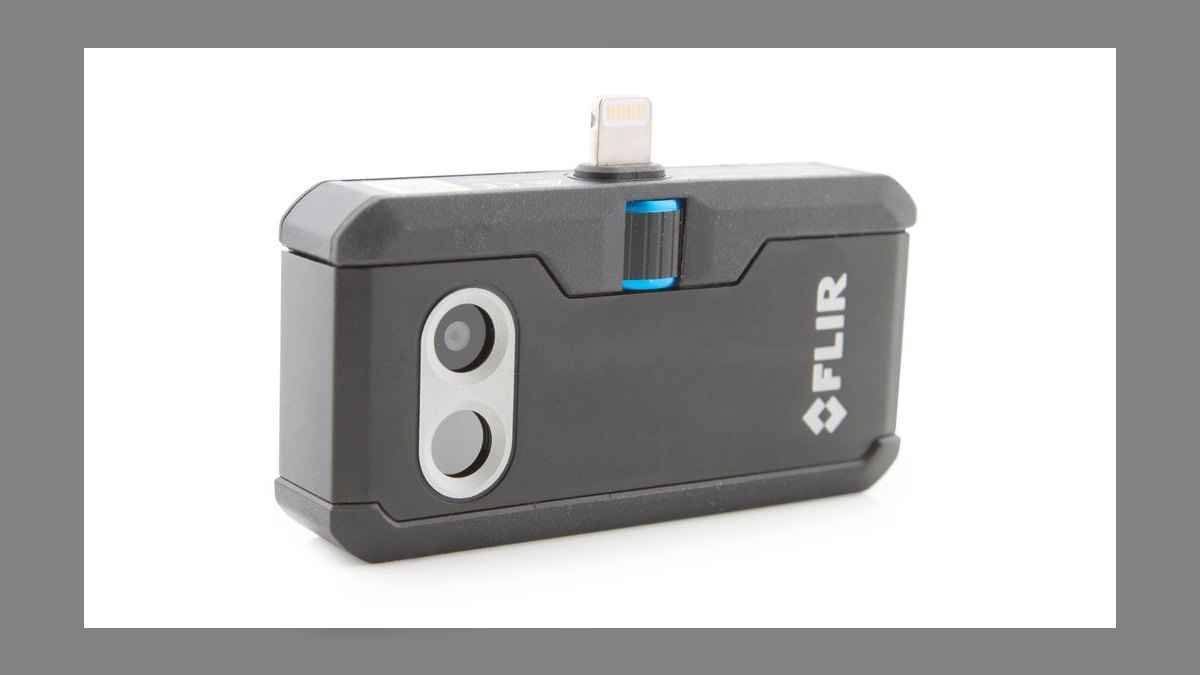
Ninth is where FLIR's fusion becomes affordable: roughly $429 for a 160×120 attach module with genuine MSX overlaying visible-light edges and text in real time. It offers up to three spot meters and six regions of interest across a -4°F to 752°F range, with a mature and reliable app. Lightning versions serve iOS and USB-C versions serve Android, so one product line covers both platforms.
This fits people who specifically want MSX labeling of panels and pipes without paying $499 for the Edge Pro. The cost is resolution and speed: 160×120 is undercut by 256×192 modules half the price, and the 9Hz refresh trails the 25Hz budget crowd. Versus the FLIR ONE Edge Pro at rank one, you keep MSX and Ignite but lose wireless detach operation.
10. Topdon TC005
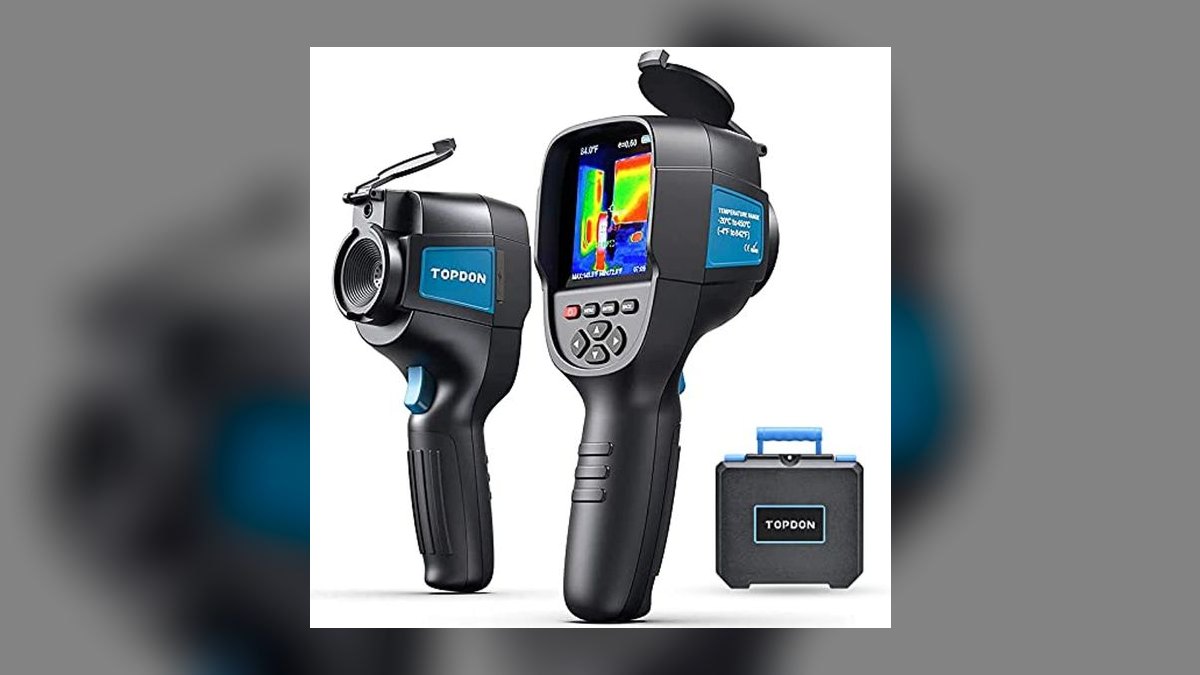
It closes the list because the extra hardware does not fully justify the premium over its sibling. The roughly $469 handheld runs a 256×192 native sensor at 25Hz with a dual-lens design, laser targeting, and one of the widest ranges here at about -4°F to 1022°F. Topdon's TISR processing upscales the display to 512×384, which is interpolated rather than measured detector pixels.
Buyers who want a self-contained handheld with laser spot aiming and dual optics rather than a bare phone module will get value. The trap is paying for that 512×384 figure: the TC001 at rank two uses the identical native detector and refresh for roughly $170 less. Choose the TC005 for the optics, aiming laser, and standalone body — never for the upscaled pixel claim.
How we ranked these
Every camera here was scored on native detector resolution and NETD sensitivity at 30%, refresh rate at 15%, attach-versus-standalone form and MSX-style fusion at 15%, temperature range and stated accuracy at 15%, build durability and usability at 15%, and price-to-performance at 10%. Specs were pulled from FLIR, Topdon, Seek, HIKMICRO, InfiRay, and Klein sheets, then cross-checked against Pro Tool Reviews, Wirecutter, Family Handyman, Tom's Guide, and CNET field testing.
We deliberately ignored upscaled display resolution. A 256×192 detector interpolated to 512×384 by TISR or SuperIR is still a 256×192 camera, so the Topdon TC005 was ranked on its real sensor. We also discounted bundled accessory counts, marketing-only palette totals, and thermal features aimed at hunting or night vision rather than inspection, because none of them change whether you find the wet drywall or the hot breaker.
What to look for
Two specs decide almost every purchase: native pixel count and refresh rate. A 9Hz camera smears when you sweep a wall, which matters more than most buyers expect during a whole-house scan; 25Hz units feel like video. Then pick your form factor honestly. Phone modules like the TC001 and P2 Pro cost less and weigh nothing, but they occupy your phone on a ladder. Standalone units like the Pocket2 or TI290 free both hands and survive drops.
The common mistake is paying for the number printed on the box. TISR and SuperIR upscaling invent pixels the detector never captured, so a $469 TC005 sees exactly what a $209 TC001 sees. The second mistake is ignoring emissivity adjustment — without it, shiny metal and bare copper read wildly wrong, and your measured temperature becomes a guess dressed up in color.
Related questions
Does a higher refresh rate actually matter for home inspection?
Yes, more than spec sheets suggest. At 9Hz the image smears while you pan a wall or ceiling, forcing you to stop, wait for the frame to settle, then move again. Over a full house that costs real time. At 25Hz the display behaves like video, so you sweep continuously and catch gradients you would otherwise pan straight past.
What is NETD and why is 40 mK better than 70 mK?
NETD measures the smallest temperature difference a detector can resolve, expressed in millikelvin. Lower is better. A 40 mK sensor like the HIKMICRO Pocket2's separates faint gradients — a slightly damp stud bay, a marginally loaded breaker — that a 70 mK sensor blends into noise. For insulation and moisture work, sensitivity often reveals more than raw pixel count does.
Is the Seek CompactPRO's 320×240 sensor worth the slower refresh?
It depends on your work. The CompactPRO packs 76,800 native pixels, the most of any module here, and its adjustable-focus lens keeps them sharp at varied distances. But the US export model runs at 9Hz. If you scan slowly for fine moisture gradients and insulation gaps, take the resolution. If you sweep large areas fast, take 25Hz instead.
Why does FLIR keep using 160×120 sensors when rivals ship 256×192?
FLIR sells the software stack, not the pixel count. MSX overlays visible-light edges and text onto the thermal frame in real time, so panel labels and pipe markings stay readable — something no amount of raw resolution gives you. Add FLIR Ignite cloud upload and report generation, and inspectors billing clients often value the pipeline over the extra pixels.
Can a smartphone module replace a standalone thermal camera on a jobsite?
For most inspection work, yes. The Topdon TC001 and InfiRay P2 Pro deliver 256×192 at 25Hz for under $300, drawing power from the phone with no battery to charge. The tradeoff is practical: your phone is occupied, exposed on a ladder, and the tiny module can torque in the USB-C port. Standalone units solve those problems for more money.
What makes the InfiRay P2 Pro better for PCB work than the others?
The magnetic macro lens. Most modules focus at arm's length or beyond, which blurs individual components on a crowded board. The P2 Pro's macro attachment resolves single failing chips, and its 9-gram all-metal body sits close to the work without a bulky handle in the way. Its -4°F to 1112°F range also covers electronics heat comfortably.
Is the FLIR ONE Edge Pro's wireless operation a gimmick?
No — it changes what you can inspect. The Edge Pro works up to roughly 30 meters from your phone over Bluetooth and Wi-Fi, so you can set it on a ceiling, inside a panel, or lower it into a crawlspace while reading the image from where you stand. Nothing else near $499 detaches from the phone that way.
Why is emissivity adjustment more important than palette options?
Palettes only recolor data you already have. Emissivity determines whether that data is correct. Shiny metal, bare copper, and polished ductwork reflect surrounding heat instead of radiating their own, so a camera locked to a default 0.95 reads them dramatically wrong. Without an adjustable emissivity setting plus movable spot and area markers, you own a heat map, not a measurement tool.
FAQ
What is the best overall thermal imaging camera in 2027?
The FLIR ONE Edge Pro at $499. Its 160×120 detector, 70 mK sensitivity, and 8.7Hz refresh are unremarkable on paper, but it operates wirelessly up to roughly 30 meters from your phone, adds MSX and VividIR detail overlay, and pushes images to FLIR Ignite for client reports. IP54 rated and drop-tested, it handles both arm's-length and out-of-reach inspection.
What is the best value thermal camera under $300?
The Topdon TC001, listed at $299 and often street-priced near $209. It carries a 256×192 detector — 49,152 native pixels, more than double the FLIR ONE Edge Pro — with a 25Hz refresh and a range reaching 1022°F on some firmware. It plugs into an Android USB-C phone with no battery required. The TC002C variant serves iOS users.
Which thermal camera has the highest native resolution here?
The Seek Thermal CompactPRO, with a 320×240 detector totaling 76,800 native pixels. It also offers under 70 mK sensitivity, an adjustable-focus lens, a -40°F to 626°F range, and radiometric file export for analysis. The catch is a 9Hz refresh on the US export model and no visual fusion overlay, so panning feels sluggish compared with the 25Hz field.
Do I need a standalone camera or is a phone attachment enough?
Phone attachments cost less, weigh nothing, and often match standalone sensors — the TC001 and Pocket2 share a 256×192 detector. Choose standalone when you work on ladders, in crawlspaces, or on rough sites where your phone is a liability. The HIKMICRO Pocket2 at $599 and Klein TI290 at $649 free your hands and survive 6.6-foot drops.
What does MSX actually do to a thermal image?
MSX is FLIR's fusion technology. It extracts edges, text, and detail from the visible-light camera and embosses them onto the thermal frame in real time. Breaker labels, pipe markings, and equipment tags stay legible inside the heat map, which makes documenting findings far easier. The FLIR ONE Edge Pro, C5, and ONE Pro Gen 3 all include genuine MSX; most rivals skip fusion entirely.
Is the Topdon TC005's 512×384 resolution real?
No. The TC005 has a 256×192 native detector that Topdon's TISR processing upscales to a 512×384 display image. Interpolation smooths the picture but adds no captured detail. Judge it as a 256×192 camera. Its genuine advantages over the cheaper TC001 are dual-lens optics, laser targeting, 25Hz refresh, and a wide -4°F to 1022°F range — not the pixel claim.
Which camera is best for electricians specifically?
The Klein Tools TI290 at $649 if you want rugged and standalone: 256×192 sensor, Wi-Fi transfer, high/low crosshairs with user-set alarms, 6.6-foot drop protection, and brand support electricians already trust. If budget rules, the Topdon TC001 at $299 finds overheating breakers just as well. The TI290 buys durability and a no-phone workflow, not better image quality.
What temperature range do I actually need?
HVAC and electrical inspection rarely exceeds 752°F, which every camera here covers. Wider ranges reaching 1022°F on the TC001, P2 Pro, and TC005 matter for mechanical, exhaust, and industrial work. Pay closer attention to the cold end and to accuracy: the Seek CompactPRO reaches -40°F, and most units state ±2°C or ±2%, whichever is larger.
Which thermal camera is best for finding moisture and insulation gaps?
Sensitivity matters more than pixels here, because moisture shows as faint gradients rather than sharp hot spots. The HIKMICRO Pocket2's sub-40 mK NETD resolves the smallest differences, while the Seek CompactPRO's 320×240 detector and adjustable focus map subtle patterns across a wall. Either beats a coarse sensor. Scan interior surfaces when there is a real temperature difference across the envelope.
Can I use one camera on both iPhone and Android?
Only if it is wireless or standalone. The FLIR ONE Edge Pro pairs with both platforms over Bluetooth and Wi-Fi, and standalone units like the Pocket2, C5, and TI290 are platform-agnostic. Wired modules are not: the Topdon TC001 is Android-first with a separate TC002C for iOS, and the HIKMICRO Mini2 Plus base model is Android-only until the V2.
Sources
- https://www.flir.com/products/flir-one-edge-pro/
- https://www.flir.com/products/flir-c5/
- https://www.protoolreviews.com/best-thermal-imaging-camera/
- https://www.tomsguide.com/reviews/topdon-tc001-thermal-camera
- https://www.hikmicrotech.com/en/consumer-products/handheld-thermography-camera/pocket-series/
- https://www.seekthermal.com/compactpro
- https://www.kleintools.com/catalog/thermal-imagers/rechargeable-pro-thermal-imaging-camera-49000-pixels-wi-fi-data
- https://www.nytimes.com/wirecutter/reviews/best-thermal-camera/
- https://www.familyhandyman.com/list/best-thermal-imaging-cameras/
- https://www.cnet.com/home/energy-and-utilities/thermal-cameras-can-help-find-where-your-home-is-losing-heat/
Related on PULSE
- [More thermal imaging cameras rankings and buying guides](/knowledge)
- [PULSE Tools and calculators](/tools)
- [Everything on PULSE RevOps](/)
 pulse-reviewsHow much does Electronics cost in 2027?
 pulse-reviewsHow much does a DJI Avata 2 cost in 2027?
 pulse-reviewsWhat should you know before investing in Electronics in 2027?
 pulse-reviewsWhat are the most common mistakes in Electronics in 2027?
 pulse-reviewsTop 10 best Electronics options in 2027
 pulse-reviewsHow do you get started with Electronics in 2027?
 pulse-reviewsTop 10 Electronics strategies for 2027
 pulse-aquariumsTop 10 Canister Filters 2027
 aqTop 10 Hang-On-Back Aquarium Filters 2027
 pulse-reviewsTop 10 Cabin Cruiser Boats 2027