
Top 10 Cordless Pole Saws — Best Overall + Best Value in 2027
 Curated byKory White · Fractional CRO · Maryland
 PULSEKNOWLEDGE LIBRARY
The 10 best cordless pole saws are ranked below on measured performance, build quality, price, and how each one actually holds up in daily use rather than how it reads on a spec sheet. Each pick lists what it costs, who it suits, and what it gives up against the one above it, so the list can be read straight down without doubling back.
1. EGO Power+ PS1001 56V
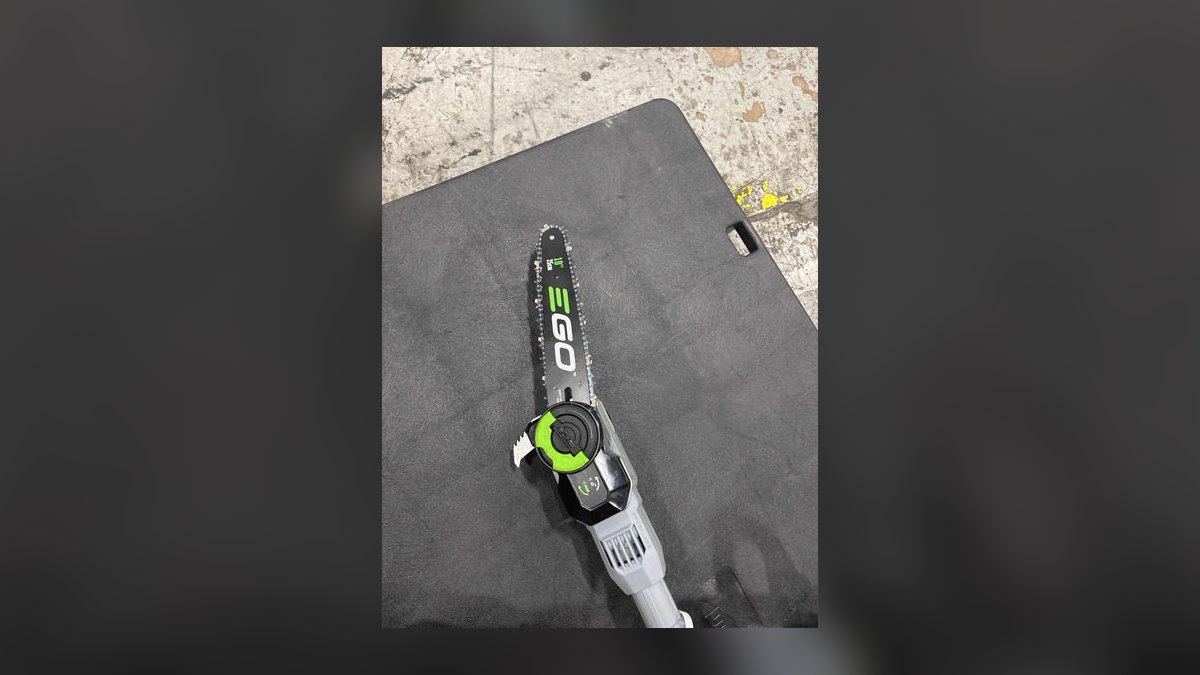
This ranks first because it is the most complete package at $299: a 56V brushless motor, a 10-inch bar and chain, and a telescoping aluminum shaft that pushes maximum reach to roughly 15 feet at the cut. EGO rates it at up to 70 cuts per charge on a 2.5Ah ARC Lithium battery. An automatic chain oiler, translucent oil window, and LED cut-line indicator handle the details.
This is for homeowners who want gas-class cutting without a gas engine, and who expect to buy more EGO tools on the same 56V packs. It trades away weight: fully extended, it is heavier overhead than a slim 20V saw, and the kit price climbs once larger batteries are added. Against the Milwaukee below it, the EGO gives up cuts per charge but does not require an existing pro battery platform.
2. Milwaukee M18 FUEL 2825-20PS
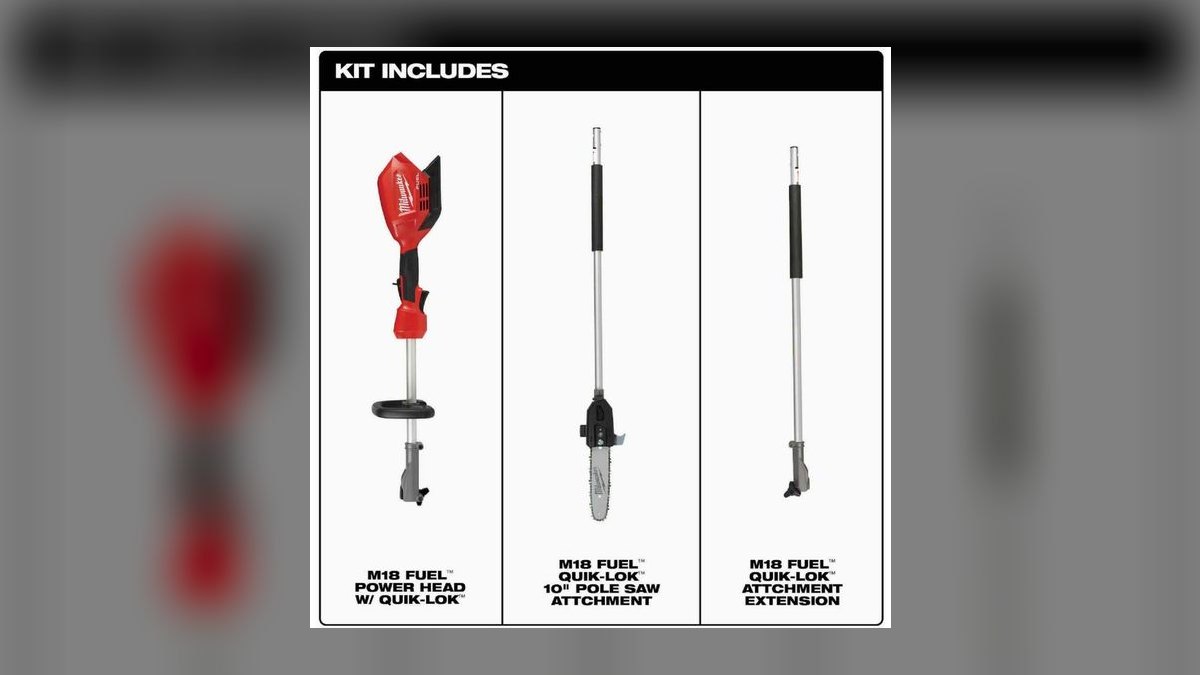
Second place goes to the highest measured throughput here: up to 150 cuts per charge on a high-output M18 pack, with the chain reaching full speed in under one second. The 10-inch bar runs off an 18V brushless motor, and the magnesium cutting head keeps end weight manageable at a working reach of roughly 12 to 14 feet. A QUIK-LOK coupler swaps the powerhead onto edgers, brushes, and hedge attachments.
This one is for pros and serious property owners already holding M18 batteries, since $329 buys the tool only. It trades away value for anyone outside that ecosystem, and owners report occasional oil seepage when it is stored on its side. Compared with the EGO above, it cuts more per charge and swaps attachments, but costs more and reaches slightly less.
3. DEWALT DCPS620B 20V MAX XR
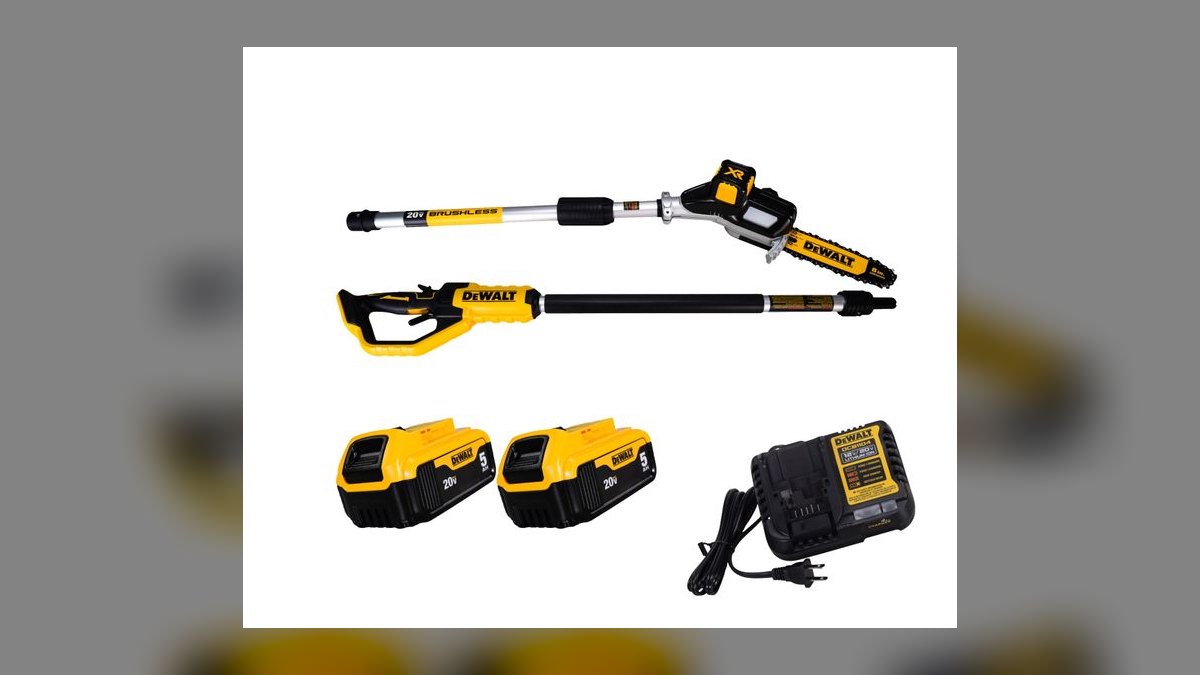
Third because it is the value champion: $169 tool-only for a brushless 8-inch saw whose pole extends 10 feet for a 15-foot total reach — matching the EGO's reach for roughly half the price. DEWALT rates it at up to 96 cuts per charge. Metal bucking strips, an automatic oiler, and a tree hook for pulling cut limbs clear come standard, and reviewers single out its balance and control.
This is for budget-minded homeowners who already own 20V MAX batteries, which is a very large group. It trades away bar length — the 8-inch bar limits the thickest limbs compared with the 10-inch saws above it — and the tool-only price excludes battery and charger. Against the Milwaukee, it gives up cuts per charge and attachment swapping for a much lower entry cost.
4. Greenworks Pro 80V PS80L211
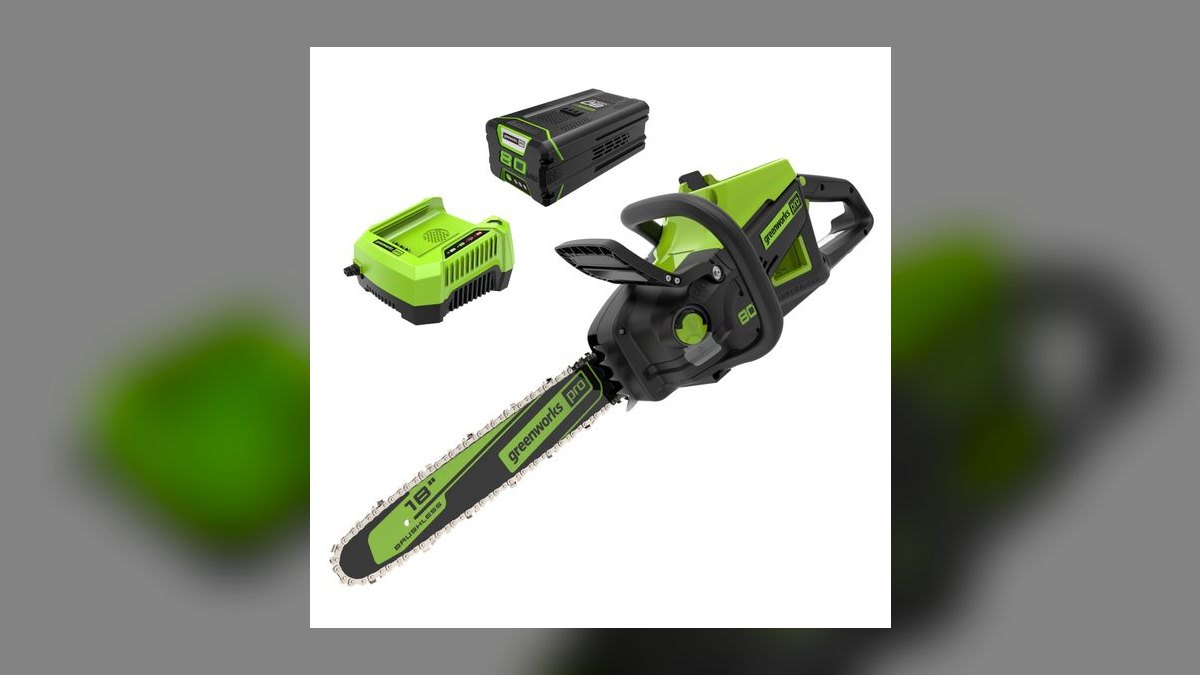
This lands fourth on raw torque per dollar: an 80V brushless motor driving a 10-inch bar at roughly 32 feet per second of chain speed, for about $249 with battery and charger included. A three-piece shaft delivers 14 to 14.5 feet of reach, and the tool manages roughly 83 cuts per charge on the included 2.0Ah pack, which recharges in about 30 minutes. An automatic oiler feeds the chain.
This suits acreage owners who need thick-limb power and want a complete kit rather than a bare tool. It trades away ecosystem depth — the 80V line has fewer companion tools than EGO's 56V — and the three-piece shaft flexes slightly at full extension. Against the DEWALT below it, the Greenworks brings a bigger bar and more reach, but a less widely owned battery platform.
5. Makita XAU02ZB 36V LXT
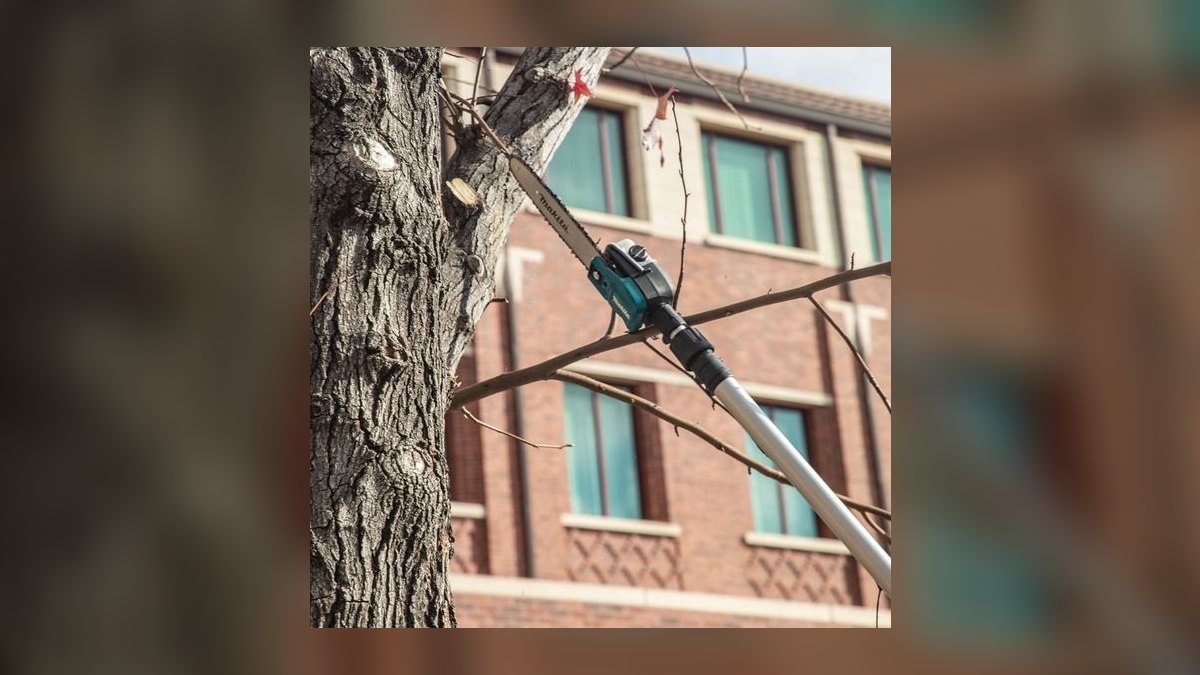
Fifth place reflects commercial-duty power at a steep price: two 18V LXT batteries combine for 36V that Makita says matches a 30cc gas pole saw and cuts about 20% faster than a 31.4cc gas engine. The telescoping shaft adjusts from 9 to 13 feet, the bar measures 10 inches, and a torque-boost mode muscles through hard wood. Testers report up to 140 cuts in 4x4 cedar on a pair of 5.0Ah packs.
This is for commercial crews already running Makita LXT batteries, with XPT weather sealing built for daily outdoor work. It trades away affordability at $500 tool-only, and it demands two batteries to run at all. Against the Greenworks above it, the Makita cuts harder and survives rougher treatment, but costs roughly double before a single battery is added.
6. Ryobi RY40561 40V
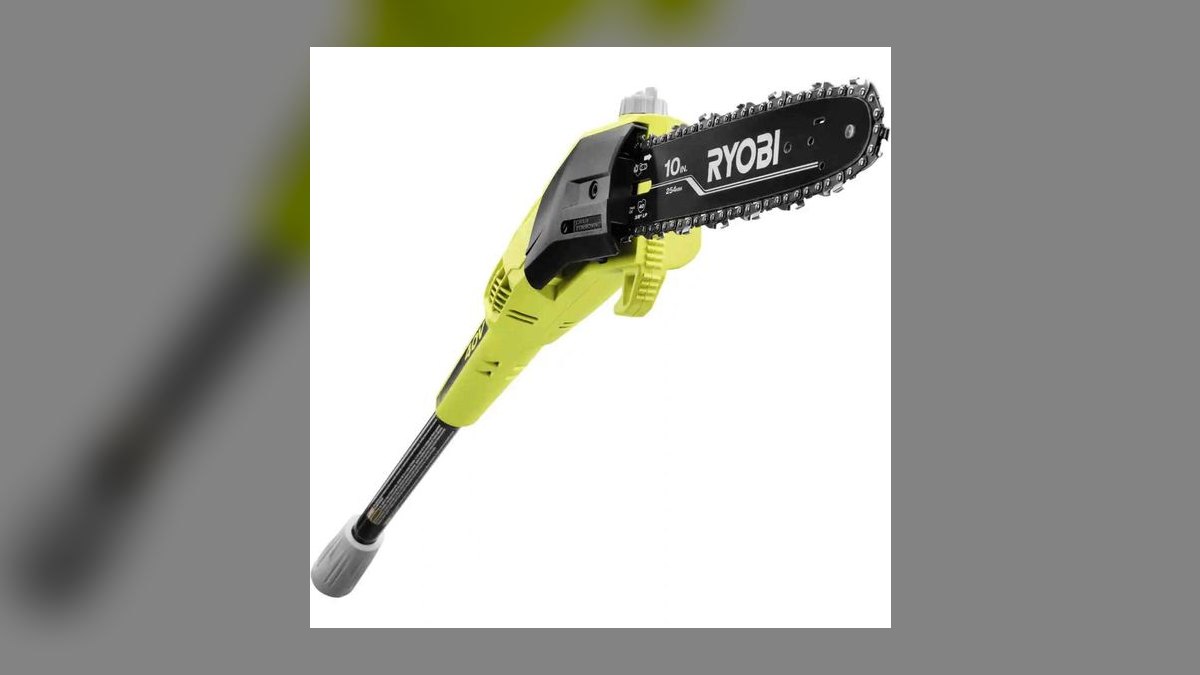
Sixth because it is the most complete homeowner kit at $199: a 10-inch bar and chain rated for limbs up to 6 inches thick, an extension shaft reaching dead branches up to 12 feet overhead, and a box containing a 2.6Ah battery, charger, extension shaft, and bar oil. Automatic lubrication handles the chain, and the powerhead is attachment-capable, accepting Ryobi expand-it heads for edging and trimming.
This is for DIY homeowners already on the Ryobi 40V system, which spans dozens of tools. It trades away reach — 12 feet trails the 14-to-15-foot shafts above — and its in-line motor produces less torque than the premium saws. Against the Greenworks Pro 80V, the Ryobi costs $50 less and ships more accessories, but handles thick hardwood noticeably slower.
7. EGO Power+ PSA1000 Attachment
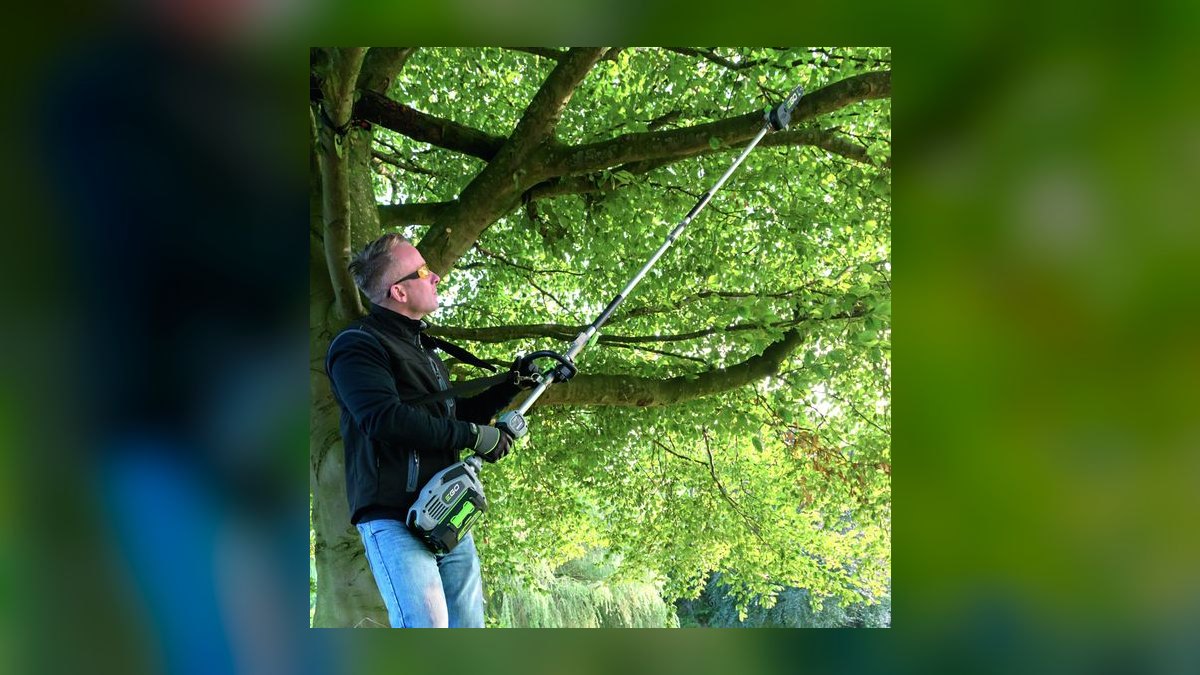
This ranks seventh because it is not a standalone saw: the PSA1000 is a 10-inch pole saw head for EGO's 56V multi-head powerhead, priced at $199 for the attachment alone. It carries a brushless motor, delivers up to 70 cuts per charge with a 2.5Ah ARC Lithium battery, and uses a 31-inch aluminum extension to add reach when paired with the optional extension pole.
This is for people who already own EGO's multi-head powerhead and want saw duty added cheaply, sharing one motor across hedge trimmer, edger, and cultivator heads. It trades away independence entirely — without the powerhead it does nothing. Against the standalone PS1001 at rank one, it delivers similar cutting output for $100 less, provided the powerhead is already in the garage.
8. Greenworks 40V PS40B210
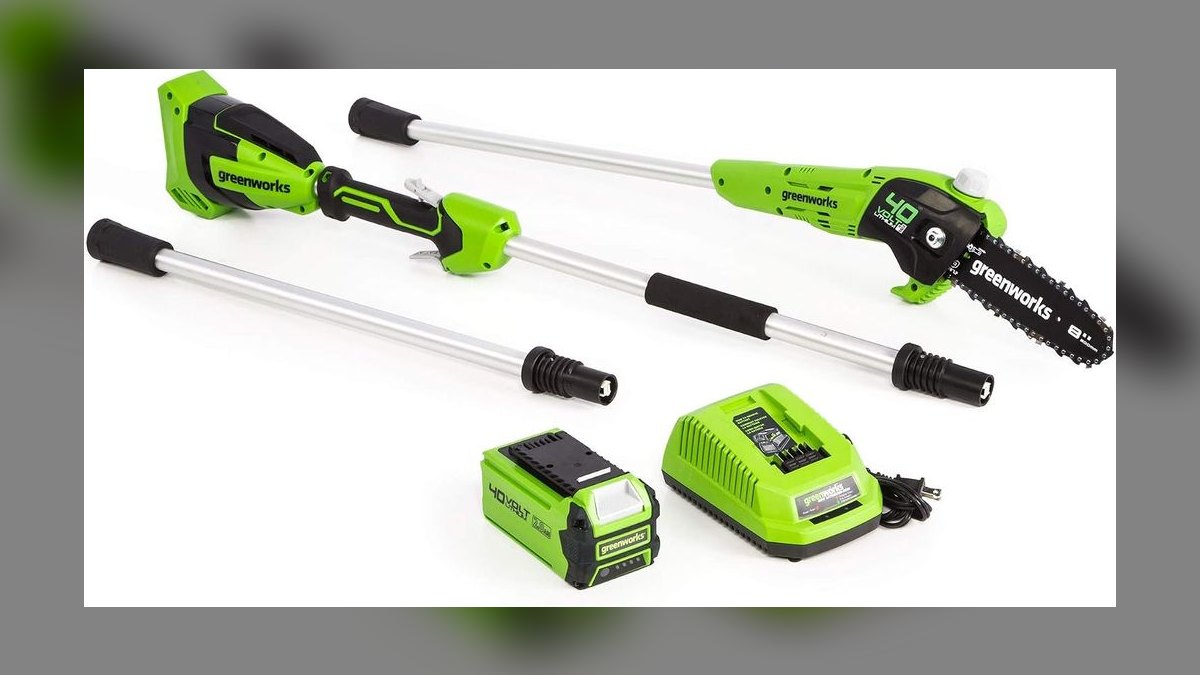
Eighth place is the lowest kit price in this guide at $159, which buys an 8-inch bar, a 40V 2.0Ah battery, and a charger in one box. It reaches comfortably overhead for light pruning and includes an automatic oiler, so maintenance stays simple. The 40V packs are shared with Greenworks mowers and blowers, which softens the cost of a first purchase on the platform.
This is for tight budgets and thinner branches — occasional limb trimming on a small lot. It trades away serious capability: the 8-inch bar struggles with thick hardwood, and runtime on the 2.0Ah pack is modest for extended work. Against the DEWALT value pick, it costs less and includes a battery, but gives up brushless efficiency and five feet of total reach.
9. Worx WG323 20V Power Share
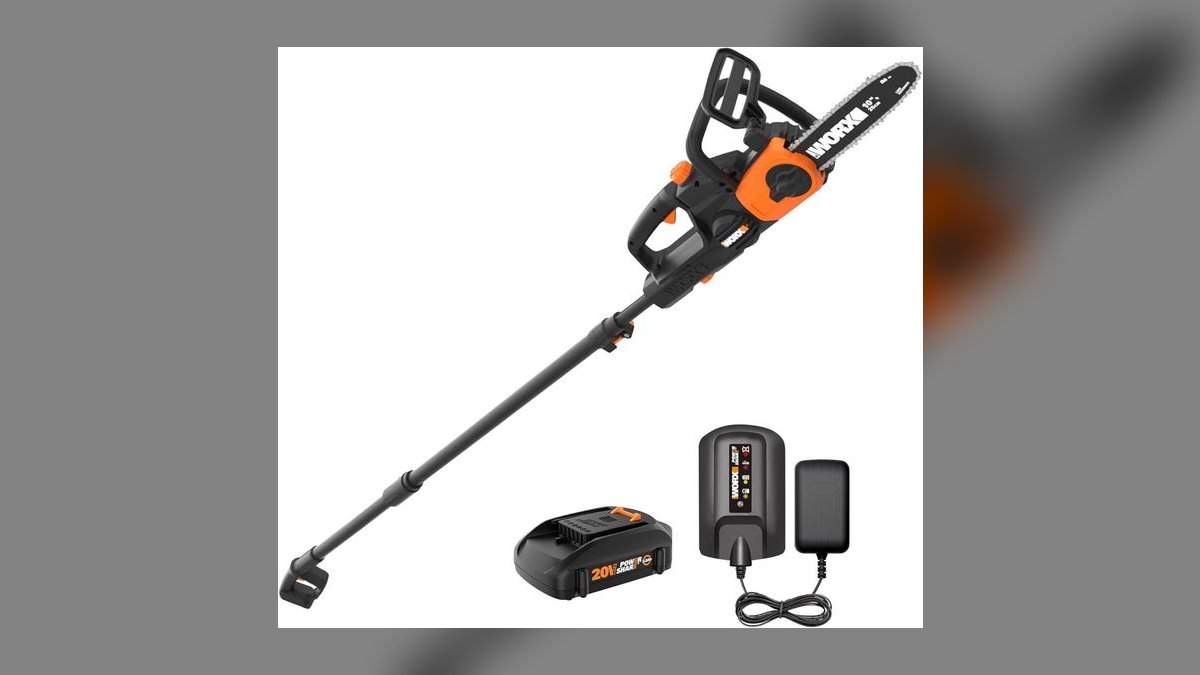
Ninth because convertibility carries it despite weak runtime: the WG323 works as a 10-inch pole saw and converts to a handheld chainsaw, with an auto-tension chain system that needs no tools. The pole extends to about 12 feet of reach, and the $169 price includes a 20V Power Share battery and charger. Owners report roughly 12 to 15 minutes of cutting per charge.
This is for small yards and quick cleanups where a second tool would sit unused most of the year. It trades away endurance — a spare battery is close to mandatory for anything bigger than a few limbs — and the build is lighter-duty than the premium saws. Against the Greenworks 40V below it, the Worx adds a larger bar and chainsaw mode for $10 more.
10. STIHL HTA 50 Pole Pruner
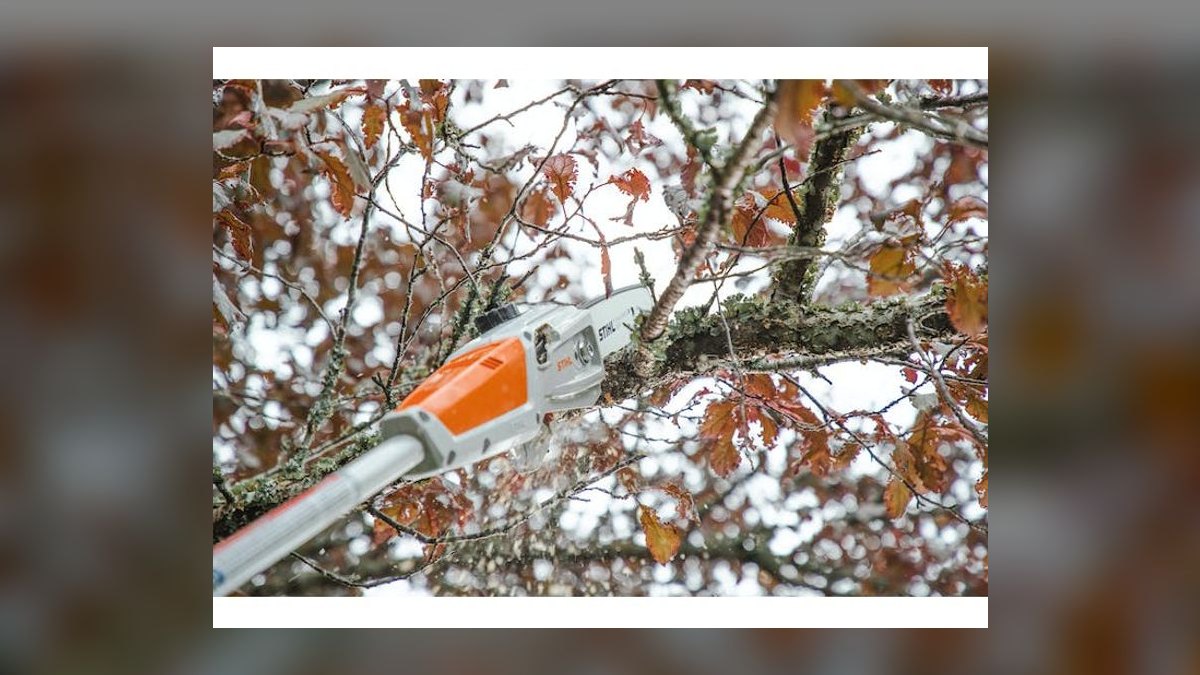
Tenth because it is the narrowest tool here: a lightweight 36V battery pole pruner built for clean, quiet pruning rather than thick-limb work, at $299 tool-only. The fixed shaft gives an overall length around 9 feet 2 inches, extendable to nearly 11 feet with an optional shaft section. It runs on STIHL's AK system batteries for low-noise, low-maintenance operation.
This is for detailed shaping of fruit trees and ornamentals, where a compact head and precise trigger matter more than raw power. It trades away reach and cutting capacity — no telescoping shaft, and it will not chew hardwood like the 10-inch saws above. Against the Worx, it costs $130 more and cuts less, buying build quality and control instead.
How we ranked these
We weighted cutting performance first — bar length paired with motor class, chain speed, and how each saw tracked through hardwood without bogging. Reach and weight balance came next, because a shaft that clears 15 feet punishes your shoulders if the head is nose-heavy. Battery platform depth and rated cuts per charge followed, then auto-oiler quality, build materials, safety hardware, and finally price-to-performance at typical 2027 street prices.
We deliberately ignored peak voltage as a standalone ranking signal. An 80V badge does not beat a well-engineered 36V or 56V tool; motor design, chain speed, and head balance decide real cutting. We also set aside marketing runtime claims measured in ideal conditions, cosmetic features, and warranty length, since every brand here offers comparable coverage and none of it changes what happens when the chain meets a limb.
What to look for
What actually matters is the limb thickness you face and the battery platform already in your garage. A 10-inch bar on a 56V, 80V, or 36V brushless motor handles thick hardwood; an 8-inch budget saw is fine under a few inches. Then check head weight and balance, not maximum extension — every foot overhead adds fatigue. An auto-oiler with a translucent reservoir is non-negotiable, and a tree hook earns its keep.
The mistake most buyers make is chasing maximum reach they will use twice a year, then fighting a heavy, flexy shaft on every ordinary cut. Measure your tallest target limb first; a 12-foot tool already reaches roughly 18 to 20 feet of branch height once you add your own shoulder height. The second mistake is buying tool-only without owning that platform, which quietly doubles the price.
Related questions
How thick a branch can a cordless pole saw actually cut?
Most 8-inch saws comfortably handle limbs up to about 4 to 6 inches. Ten-inch brushless machines like the EGO PS1001 and Makita XAU02 push toward 6 to 8 inches in softer wood. Beyond that, drop the limb in sections from the outside in, or step down to a dedicated chainsaw on the ground where you control the cut.
Can a cordless pole saw replace a gas model?
For homeowners, yes. Premium 36V, 56V, and 80V brushless saws now rival 30cc-class gas pole saws in cutting speed while running quieter, lighter, and maintenance-free. Makita rates the XAU02 as cutting roughly 20% faster than a 31.4cc gas engine. Heavy all-day commercial crews may still prefer dual-battery models purely for uninterrupted runtime.
Is the DEWALT DCPS620B enough saw for a typical yard?
For most yards, yes. Its brushless 8-inch bar, 15-foot total reach, auto-oiler, and tree hook cover routine limb work, and DEWALT rates it at up to 96 cuts per charge. You give up raw power against 56V and 80V rivals, but very little practical capability. At $169 tool-only on the 20V MAX platform, it is the value pick.
Why does the EGO PS1001 rank above cheaper saws?
It balances the three things that usually trade off against each other. The 56V brushless motor and 10-inch bar handle hardwood, the telescoping aluminum shaft reaches roughly 15 feet, and the redesigned head is light enough to control overhead. Add an LED cut-line indicator, auto-oiler, and a 56V platform spanning mowers and blowers, and the $299 spreads across your whole yard kit.
What does the Milwaukee QUIK-LOK system add?
QUIK-LOK is a coupler that lets the M18 FUEL powerhead swap between the pole saw, edger, brush cutter, and hedge attachments. One motor, one battery, several tools, and far less storage space. Combined with the magnesium cutting head and up to 150 cuts per charge on a high-output pack, it is the reason M18 owners pick the 2825-20PS over a standalone saw.
Is the EGO PSA1000 attachment a standalone saw?
No. It is a 10-inch pole saw head for EGO's 56V multi-head powerhead system, so it needs that separate powerhead to run. If you already own one, $199 adds brushless pruning with up to 70 cuts per charge on a 2.5Ah ARC Lithium pack. If you do not, buy the complete PS1001 instead — the attachment route costs more overall.
Does an auto-oiler really matter on a pole saw?
Yes, more than on a ground chainsaw. You cannot easily stop, lower the tool, and hand-oil a bar held twelve feet overhead, so an automatic oiler keeps the chain fed continuously and stops the bar from overheating. A translucent reservoir lets you confirm oil level at a glance. Every saw in this top 10 includes one for that reason.
Should I buy the tool only or the full kit?
If you already own batteries on that platform, tool-only saves real money — the DEWALT DCPS620B, Makita XAU02ZB, Milwaukee 2825-20PS, and STIHL HTA 50 are all sold that way. If this is your first tool on a platform, buy the kit. The Greenworks PS40B210 and Ryobi RY40561 ship with a matched battery and charger included.
FAQ
How much reach do I really need?
Measure your tallest target limb first. A 12-foot tool reaches roughly 18 to 20 feet of branch height once you account for your arm and shoulder height. Most homeowners are well served by 12 to 15 feet of tool reach. More than that gets heavy, flexy at full extension, and genuinely hard to control above your head.
Which cordless pole saw has the longest runtime?
The Milwaukee M18 FUEL 2825-20PS leads on rated cut count at up to 150 cuts per charge on a high-output battery. The Makita XAU02ZB reports up to 140 cuts in 4x4 cedar on a pair of 5.0Ah packs. DEWALT rates 96 cuts, Greenworks Pro 80V about 83, and the EGO PS1001 up to 70.
Is 80V better than 56V or 36V?
Not automatically. Voltage is the single most oversold spec in this category. Motor design, chain speed, bar length, and head balance decide how fast a saw actually cuts and how long you can hold it up. The 36V Makita XAU02ZB outperforms plenty of higher-voltage tools. Judge by cuts per charge and hands-on cutting results instead.
What is the cheapest decent cordless pole saw?
The Greenworks 40V PS40B210 at about $159 is the lowest kit price here, and it ships with a 2.0Ah battery and charger included. The 8-inch bar limits it to thinner branches and the runtime is modest, but for occasional pruning on a small lot it is hard to beat. The Worx WG323 at $169 is the convertible alternative.
Are cordless pole saws safe to use without a ladder?
That is exactly the point of them — keeping both feet on the ground is far safer than running a chainsaw off a ladder. Wear a helmet, eye protection, and gloves, never cut directly overhead, plan your escape path, and stay well clear of power lines. A tree hook helps pull cut limbs free without shaking the tool loose.
Why does the Worx WG323 have such short runtime?
It is a compact 20V Power Share tool with a small included battery, and owners commonly report roughly 12 to 15 minutes of cutting per charge. That is fine for a handful of branches, less so for a full afternoon. Buy a spare Power Share pack if you plan longer sessions — the batteries are shared across the Worx line.
Which saw is best for detailed fruit-tree pruning?
The STIHL HTA 50. Its fixed shaft runs about 9 feet 2 inches overall, extendable to nearly 11 feet with the optional section, and the compact head plus precise trigger favor control over brute force. It runs on STIHL's AK battery system, stays quiet, and suits shaping ornamentals where a heavy telescoping saw would be clumsy.
Do I need an articulating or angled head?
It helps more than people expect. Squaring the bar up to an awkward limb produces a cleaner cut and reduces the chance the chain pinches and binds mid-cut, which is the most common way to stall a pole saw. If your trees have limbs growing at odd angles rather than straight out, prioritize an adjustable head.
How do I stop the chain from pinching in a limb?
Cut in two passes. Make a shallow undercut on the bottom of the limb first, then finish from the top so the limb's weight opens the kerf instead of clamping it shut. Work from the outside of the branch inward, taking weight off in sections, and never try to remove a long heavy limb in one cut.
How often should I sharpen or replace the chain?
Sharpen when the saw starts producing fine dust instead of chips, or when you find yourself pushing rather than letting the chain pull. For homeowner use that is usually every few sessions. Keep the chain tension correct, check the oil reservoir before each use, and replace the bar if the rails show uneven wear.
Sources
- https://www.protoolreviews.com/best-cordless-pole-saw-reviews/
- https://www.popularmechanics.com/home/tools/g23582296/best-pole-saws/
- https://www.bobvila.com/articles/best-pole-saw/
- https://www.familyhandyman.com/list/best-pole-saws/
- https://toolguyd.com/
- https://egopowerplus.com/56-volt-lithium-ion-cordless-10-inch-pole-saw/
- https://www.dewalt.com/product/dcps620b/20v-max-xr-brushless-cordless-pole-saw-tool-only
- https://www.makitatools.com/products/details/XAU02ZB
- https://www.milwaukeetool.com/Products/Power-Tools/Outdoor-Power-Equipment/2825-20PS
- https://www.stihlusa.com/products/pole-pruners/battery-pole-pruners/hta50/
Related on PULSE
- [More cordless pole saws rankings and buying guides](/knowledge)
- [PULSE Tools and calculators](/tools)
- [Everything on PULSE RevOps](/)
 pulse-reviewsHow much does Electronics cost in 2027?
 pulse-reviewsHow much does a DJI Avata 2 cost in 2027?
 pulse-reviewsWhat should you know before investing in Electronics in 2027?
 pulse-reviewsWhat are the most common mistakes in Electronics in 2027?
 pulse-reviewsTop 10 best Electronics options in 2027
 pulse-reviewsHow do you get started with Electronics in 2027?
 pulse-reviewsTop 10 Electronics strategies for 2027
 pulse-aquariumsTop 10 Canister Filters 2027
 aqTop 10 Hang-On-Back Aquarium Filters 2027
 pulse-reviewsTop 10 Cabin Cruiser Boats 2027