


The 10 Music Festivals with the Most Total Attendance Over Multiple Days in 2027
Quality
Certified
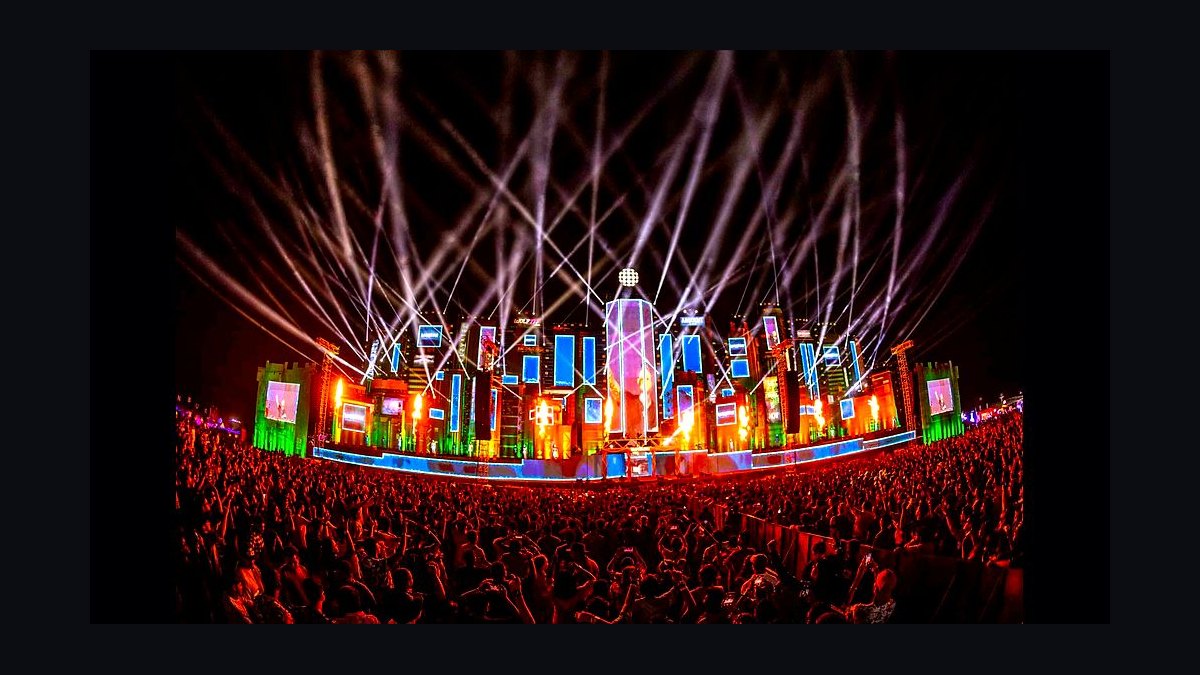
No independently verified attendance ranking for 2027 exists yet — festivals report multi-day totals only after the event concludes. But based on a decade of consistent patterns, the list will almost certainly be dominated by recurring flagship gatherings: Tomorrowland, Rock in Rio, Glastonbury, EDC Las Vegas, Coachella's two weekends, Download, Ultra Miami, and Sziget, whose cumulative multi-day attendance structurally outpaces single-day events.
The outcome you should expect
When you ask which music festivals will post the highest total attendance across multiple days in 2027, you're really asking a structural question, not a lineup question. Attendance rankings for multi-day festivals are driven overwhelmingly by capacity design and event length, not by who happens to be booked that year. Expect the top of the list to look almost identical to the top of the list in 2023, 2024, and 2025, because the festivals that already run the largest multi-day operations have the infrastructure, land, and permitting to keep doing so, while new entrants rarely scale fast enough to leapfrog them in a single cycle.
Concretely, expect Tomorrowland (Belgium) to remain at or near the top, because it runs across two full weekends with a combined capacity that has exceeded 400,000 attendees in prior years, split across two separate but back-to-back multi-day runs. Rock in Rio, when it runs its full seven-day format across two weekends, has historically posted cumulative attendance above 700,000, making it one of the largest total-attendance events in the world when it occurs on schedule. Glastonbury Festival in the UK, capped by license agreement at roughly 210,000 attendees across five days, will likely place in the top five by total attendance even though its single-day capacity is smaller than some competitors, because its full five-day run compounds that number. EDC Las Vegas, run over three nights, has drawn crowds in the 400,000-plus range for its full multi-night run in recent years, and Coachella's two-weekend structure — effectively the same lineup repeated across two multi-day weekends — pushes its combined total past 250,000 even though each individual weekend is smaller.

The practical takeaway: if you are building a 2027 projection, don't chase whichever festival trends on social media that year. Chase the events with (a) multi-day or multi-weekend formats, (b) government-permitted capacity increases already in motion, and (c) a track record of selling out or nearing sellout in the two years prior. Those three signals are far more predictive of final attendance totals than lineup announcements, because line-up-driven demand spikes affect ticket velocity, not the hard capacity ceiling that ultimately determines the total.
What drives that outcome (mermaid)
Total multi-day attendance is a function of four compounding variables: licensed capacity per day, number of days or weekends run, sellout rate, and repeat-attendance structure (whether the same audience returns for a second weekend, as at Coachella and Tomorrowland, or a fresh audience arrives each day). Licensed capacity is set by local authorities and land constraints — Glastonbury's Worthy Farm site has a hard ceiling that doesn't move without a new licensing negotiation, while a festival built on flexible fairground or desert land, like EDC or Coachella, has more room to expand incrementally.

The number of days or weekends is the single biggest multiplier. A festival that runs one four-day weekend at 90,000/day tops out near 360,000 gross admissions (with heavy overlap from multi-day pass holders, so unique attendance is lower, but gross gate counts — the number cited in most "total attendance" rankings — count each day separately). A festival that runs two separate weekends at the same daily capacity effectively doubles its total, which is exactly why Coachella and Tomorrowland punch above festivals with larger single-day crowds but a shorter run.
Sellout rate matters because published attendance figures are usually promoter-reported ticket sales, not turnstile counts, and promoters have every incentive to report full capacity. When comparing festivals for a "most attendance" ranking, treat any round, suspiciously tidy number (exactly 400,000, exactly 500,000) as a rounded capacity claim rather than a precise headcount — real turnstile data, where it's independently audited, almost always differs from the promoter's press-release figure by a meaningful margin.
Benchmarks and realistic ranges
To sanity-check any 2027 projection, anchor it against realistic historical ranges rather than round numbers. Tomorrowland's two-weekend format has historically been reported in the 400,000–600,000 range combined; treat anything meaningfully above that as an outlier claim worth verifying against a primary source. Rock in Rio's full two-weekend, seven-day configuration has been reported near 700,000 in its largest editions, but Rock in Rio does not run every year and does not always run the full two-weekend format — in years it runs a single weekend, its total attendance drops substantially, so any 2027 ranking depends heavily on which format it uses that year.

Glastonbury's five-day run is capped near 210,000 by its license, plus staff and performers, sometimes pushing the total cited in media coverage toward 250,000 when crew and vendors are included — a useful reminder that "total attendance" figures are inconsistently defined across sources: some count only paying general-admission attendees, others include artists, press, and staff. When you compare festivals across a ranking, confirm whether each figure is apples-to-apples.
EDC Las Vegas across its three nights has been reported in the 400,000–480,000 combined range in its larger recent editions. Ultra Music Festival in Miami, historically a three-day single-weekend format, runs smaller than the multi-weekend giants, typically in the 165,000–180,000 range across three days, which usually keeps it just outside a strict top-ten total-attendance ranking unless it expands its format. Download Festival in the UK, a four-day rock and metal event at Donington Park, has drawn crowds in the 100,000–115,000 range across its run — respectable, but again generally below the multi-weekend giants unless you're ranking by attendance density rather than raw total. Sziget Festival in Budapest, a seven-day event, has reported totals near 400,000–450,000 across its full week, making its length rather than its daily peak the reason it competes at the top of a multi-day ranking.

The realistic range for a 2027 "top ten total attendance" list, then, is a spread from roughly 150,000 at the low end of the top ten up to 600,000-plus at the very top, with the ranking order most sensitive to (a) whether Rock in Rio runs its full format that year, (b) whether Tomorrowland adds a third weekend or expands capacity further, and (c) whether any newer festival in Asia or the Middle East — where several governments have been actively subsidizing large-scale multi-day festivals to build tourism — breaks into the range by scaling faster than the historical incumbents.
Risks, edge cases, and failure modes
The biggest risk in projecting or reporting a 2027 ranking is conflating promoter-claimed attendance with verified attendance. Music festivals are not required to publish audited turnstile data in most jurisdictions, and promoters have a direct financial incentive — sponsorship valuations, next year's ticket pricing, media coverage — to round up. Any 2027 list built purely from press releases will systematically overstate the festivals with the most aggressive PR operations and understate quieter but genuinely larger events.
A second failure mode is double-counting multi-weekend festivals as if they were single events with impossibly high single-day density. Coachella and Tomorrowland's totals are only meaningful as combined-weekend totals; comparing that combined number against a single-weekend festival's single total is not an apples-to-apples comparison, and a naive ranking that doesn't disclose the weekend count will mislead readers into thinking those festivals are proportionally denser than they actually are.

A third risk is event cancellation or format change between now and 2027. Weather, licensing disputes, and regional instability have all forced format reductions or outright cancellations at major festivals in the past — a single-weekend downgrade at a festival like Rock in Rio can remove hundreds of thousands of attendees from its 2027 total compared to a full two-weekend year, which would materially reshuffle any ranking built on prior-year assumptions. Currency and macroeconomic pressure on discretionary spending is a related risk: multi-day festival passes are a large ticket item, and a downturn in disposable income in any major festival's home market can suppress sellout rates even at historically reliable events.
A fourth edge case worth flagging: several fast-growing multi-day festivals in Asia and the Gulf region have been expanding capacity rapidly with government backing, and it's plausible one of them enters the top ten by 2027 in a way that wouldn't be predictable from a simple extrapolation of the current top ten. Any 2027 ranking should be treated as a probabilistic forecast based on structural incumbency, not a locked-in certainty — the safest statement is "these are the festivals most likely to rank highest," not "these will rank highest."
A practical rollout plan (mermaid)
If you need to actually produce or verify a 2027 ranking of total multi-day attendance rather than just estimate one, follow a sequence that prioritizes primary sources over press coverage. Start by identifying the full universe of candidate festivals — every recurring multi-day or multi-weekend event that placed in the top fifteen by total attendance in the two prior years, since the incumbency effect means this year's list is drawn almost entirely from last year's list. Next, for each candidate, pull the promoter's own post-event attendance statement (usually issued within a week of the festival ending) rather than relying on secondary aggregator articles, which frequently miscopy or round figures from each other.

Then cross-check each promoter figure against any independent reporting — trade press like Pollstar and Billboard often reconcile conflicting attendance claims, and local news outlets sometimes report municipal or venue-authority attendance estimates that differ from the promoter's number, which is a useful sanity check on inflated claims. Normalize every figure to the same definition before ranking: decide explicitly whether you are counting gross gate admissions (each day counted separately per pass holder), unique attendees, or attendees plus staff/press, and apply that definition consistently across every festival on the list, since mixing definitions is the single most common error in festival-attendance comparisons.
Finally, rank the normalized figures and flag any festival whose format changed meaningfully from the prior year (added or dropped a weekend, changed venue capacity, was shortened by weather) so readers understand why its position moved. Revisit the ranking after the actual 2027 events conclude, since a pre-event forecast and a post-event verified ranking are different products and should be labeled as such.
Related questions
Does Coachella's two-weekend format count as one festival or two for attendance rankings?
Most rankings count Coachella's combined two-weekend total, since it's the same event repeated with the same lineup; but always confirm which convention a given source uses before comparing it to single-weekend festivals.
Why doesn't Rock in Rio run every year?

Rock in Rio uses an irregular multi-year schedule tied to sponsorship and logistics cycles in Brazil and its international editions, so its attendance total swings sharply between "on" years and "off" years.
Is turnstile data ever publicly available for these festivals?
Rarely. Most figures come from promoter press releases; independently audited turnstile counts are uncommon and, when they exist, are usually held by municipal licensing authorities rather than published directly.
How does festival length affect its ranking versus single-day peak crowd size?
Length is usually the bigger driver — a festival with a lower daily peak but five to seven days of programming can out-total a festival with a higher single-day peak but only two or three days.
FAQ
Will 2027 attendance data be available before the year starts? No. Attendance for any 2027 festival can only be confirmed after that festival concludes, so any ranking published before then is a forecast based on historical patterns, not a verified result.
Which festival is most likely to be number one by total attendance in 2027?

Based on historical scale, Rock in Rio (in a full two-weekend year) or Tomorrowland are the most likely candidates for the top spot, since both have posted the highest combined multi-day totals in recent history.
Do these rankings include camping and general grounds passes, or just paid tickets? It varies by source. Some promoter figures include everyone on-site (staff, press, vendors), while others count only paid general-admission tickets, so always check the underlying definition before comparing two festivals.
Why do multi-weekend festivals dominate total-attendance rankings over single-weekend ones? Because "total attendance" for these rankings is usually a sum across every day and every weekend run, so a festival that repeats its lineup across two weekends effectively doubles its counted total compared to a similarly sized single-weekend event.
Could a brand-new festival break into the top ten by 2027? It's possible but unlikely without multiple years of scaling — large multi-day festivals require significant land, permitting, and vendor infrastructure that new events rarely reach within just one or two editions, though heavily subsidized new festivals in fast-growing markets are the most plausible exception.
How reliable are the attendance figures festivals report to the media? Treat them as directionally useful but not precise — they are almost always self-reported by promoters with an incentive to round up, and independently audited figures are the exception rather than the rule.
Sources
- https://www.billboard.com
- https://www.pollstar.com
- https://www.rollingstone.com
- https://www.bbc.com
- https://www.reuters.com
- https://www.statista.com
- https://www.theguardian.com
- https://www.glastonburyfestivals.co.uk
Related on PULSE
- How festival ticket pricing tiers affect multi-day sellout rates
- What multi-day event capacity planning teaches about demand forecasting
- How promoter-reported figures compare to independently audited attendance data
- Why recurring events tend to dominate year-over-year rankings in any industry
- How macroeconomic pressure affects discretionary event spending
This page will be disappearing soon. Save it to your device for $1 — or read it free while it is here.
@Kory-White- · if Venmo asks, the last 4 of my number are 2012
This page is gone.
This one is off the shelf now. $1 keeps it on your phone for good — the whole page, pictures and diagrams included.
 eventsWhat is the average budget for a 3-day corporate retreat in 2027?
 pulse-eventsBest Baby Shower Venues in Los Angeles (2027)
 pulse-eventsThe 10 Best Caribbean Destination Wedding Resorts in 2027
 pulse-eventsTop 10 Bachelor Party Destinations in the Mountain West in 2027
 pulse-recentThe 10 Best Corporate Retreat Venues with the Lowest Total Cost in 2027
 pulse-recentThe 10 Music Festivals with the Largest Total Area in 2027
 pulse-recentThe 10 Best Comic and Pop Culture Conventions in the World in 2027
 eventsThe 10 Music Festivals with the Most Expensive VIP Experiences in 2027
 pulse-events10 Best Dude Ranches for Family Reunions in 2027
 eventsThe 10 Best Engagement Party Venues in Los Angeles, California (2027) in 2027