


How long does the average corporate retreat last in 2027?
Quality
Certified

The average corporate retreat in 2027 lasts three days and two nights, roughly 48 to 60 hours on site. Most organizations cluster between two and four days, with one-day offsites common for single-team planning and week-long retreats reserved for distributed companies flying people in from multiple time zones.
The two dominant formats compared
Almost every corporate retreat in 2027 collapses into one of two shapes, and the choice between them drives budget, agenda density, and whether people actually retain anything. Understanding both formats in detail is the prerequisite for choosing deliberately rather than by default.
The compressed format (1.5 to 2 days, one overnight) is the workhorse for teams that are already co-located or within a short drive. Arrival is typically midday Thursday, one full working day Friday, departure Friday evening or Saturday morning. Total on-site time is 24 to 36 hours. The agenda is almost entirely structured: two or three working blocks, one dinner, and very little unscheduled time. Travel cost is low because most attendees drive or take a short flight, and the hotel bill is a single night per head. The trade-off is that the compressed format has almost no slack. If one session runs long, something gets cut. And the informal relationship-building that people cite as the main reason to gather at all — the hallway conversation, the late dinner, the second drink where somebody finally says the thing they would not say in a meeting — gets squeezed into a single evening.
The standard format (3 days, 2 nights) is what the average lands on. Arrival Tuesday afternoon or evening, two full working days Wednesday and Thursday, departure Friday morning. On-site time is 48 to 60 hours depending on how early the first day starts and how late the last day runs. This format allows a real arc: day one for context-setting and diagnosis, day two for the hard decisions, day three morning for commitments and owners. It gives you two evenings, which matters more than people expect — the first evening is polite, the second is honest. Cost is roughly 1.6 to 1.8 times the compressed format per head, because you are paying two nights of lodging, three days of food and beverage, and typically a full extra day of venue and facilitation.

There is a third shape worth naming even though it is not the average: the extended retreat (4 to 7 days), used almost exclusively by fully distributed companies that gather rarely. When a company brings people together twice a year instead of every week, the math changes. Travel time for an intercontinental attendee can be 20 to 30 hours round trip, and jet lag eats the first full day. Stretching to five days amortizes that travel over more useful hours. These retreats also carry a different agenda: less strategy per hour, more deliberate social time, because the gathering is doing work that a co-located company gets for free every week.
The pull toward three days is not arbitrary. It is the shortest duration that survives contact with reality — long enough that a single derailed session does not destroy the agenda, short enough that most attendees are away from home for only two nights and one full weekend day at most. A corporate retreat that runs three days also hits a sweet spot for venue contracting, since most properties price two-night blocks more favorably than single nights.
How to decide between them
The duration decision is downstream of three inputs: how far people are traveling, what the retreat is supposed to produce, and how often you gather. Work them in that order.

Travel geometry sets the floor. A useful rule: on-site working hours should be at least three times total travel hours for the median attendee. If your median attendee has a two-hour door-to-door trip, four hours of working time technically clears the bar — a one-day offsite is defensible. If the median is a six-hour flight plus airport time, call it ten hours each way; you need thirty-plus working hours, which is a three-day retreat minimum. If you have people crossing eight or more time zones, the first working day is functionally half-productive and you should either extend to four days or accept that day one is arrival and acclimation only.
Output type sets the shape. Sort what you want out of the retreat into three buckets. *Information transfer* (roadmap readouts, financial updates, org announcements) compresses well — this is the part of the agenda that could have been a document, and it should occupy the smallest possible share of the schedule. *Decision-making* (picking between two strategies, resolving a territory dispute, agreeing on next year's priorities) needs a full uninterrupted block plus an overnight. Decisions made before people sleep on them get relitigated in the parking lot; decisions revisited the next morning stick. *Relationship formation* is the one that genuinely requires elapsed time and cannot be compressed. If relationship formation is the primary goal, two nights is the practical minimum.
Cadence sets the ceiling. Teams that gather quarterly can afford short retreats because the next one is twelve weeks out. Teams that gather once a year are carrying twelve months of accumulated agenda into a single event, and cramming that into 36 hours produces a retreat where everyone is exhausted and nothing is decided. Annual gatherings should run at least three days; twice-yearly can run two to three; quarterly can run one to two.

A practical override: if you cannot fill the agenda with work that genuinely requires everyone in the same room, shorten the retreat rather than inventing filler. A tight two-day retreat that people talk about afterward beats a padded four-day one that people endure.
Concrete numbers behind each option
Duration drives cost non-linearly, and understanding where the steps are helps you choose deliberately rather than by default.
Per-head cost structure. A corporate retreat has four cost buckets that scale differently with length. *Travel* is fixed — it costs the same to fly someone in for two days as for five, which is exactly why long-haul attendees justify longer retreats. *Lodging* scales linearly with nights, and nights are what actually count, not days: a "three-day retreat" is two nights. *Food and beverage* scales linearly with days and is usually the most underestimated line, because venue F&B minimums are quoted per person per day and a full day of breakfast, lunch, breaks, and dinner runs well above what people assume. *Facilitation and programming* is typically quoted per day, and good outside facilitation is not cheap; many organizations shorten the retreat specifically to afford professional facilitation rather than running a longer unfacilitated one.
The practical consequence: going from two days to three adds roughly one night of lodging, one day of F&B, and one day of facilitation per head, while travel stays flat. Going from three days to five roughly doubles the lodging and F&B lines. For a domestic, drivable audience, travel is a small share of total cost and each added day is expensive in relative terms. For an international audience where travel is the dominant line, each added day is comparatively cheap — which is the structural reason distributed companies run long retreats and co-located ones run short.

The opportunity cost line most budgets omit. The largest real cost of a corporate retreat is usually not the invoice. It is the loaded cost of the attendees' time plus travel days. For a three-day retreat with travel on each end, most attendees lose three and a half to four working days. Multiply that across the attendee list at fully loaded compensation and the time cost frequently exceeds the venue and travel spend. This is the number that should discipline duration decisions: an extra day is not "one more night of hotel," it is one more day of the entire attendee list not doing their jobs.
Usable-hours arithmetic. A retreat day does not contain eight working hours. Budget realistically: a full mid-retreat day yields roughly six to seven hours of structured content once you subtract meals, breaks, and the inevitable late start. An arrival day yields two to four hours. A departure day yields two to three hours, because people leave for flights. So a three-day, two-night retreat contains roughly 12 to 15 hours of real structured time — a full arrival-day block, one full middle day, and a departure-day morning. A two-day retreat contains 8 to 10. A five-day retreat contains 28 to 33, but with meaningfully declining returns after day three as attention degrades.
The attention curve. Facilitators consistently report the same shape: engagement rises through day one, peaks somewhere in day two, and declines from mid-day-three onward unless the format changes. This is the empirical argument for three days as the average — it is roughly where the curve is still positive but about to turn. Retreats that run longer than three days almost always need a structural break: a half-day of genuinely unscheduled time, an offsite-within-the-offsite, or a shift from plenary sessions to small-group work. Running five straight days of the same format produces a measurably worse day five than day one.

Weekend encroachment. How much of the retreat falls on personal time is a real cost even though it never appears in a budget. A Tuesday-to-Thursday retreat costs attendees zero weekend. A Thursday-to-Saturday retreat costs them a Saturday, and that shows up in resentment, in declined invitations, and disproportionately among attendees with caregiving responsibilities. If you are choosing between two three-day windows, the mid-week window is worth paying a modest premium for.
Implementation details and sequencing
Once you have picked a duration, the sequencing work determines whether those hours produce anything. Length without structure just produces a longer retreat.
Lock the length before the agenda, not after. The common failure is inviting agenda submissions first and then sizing the retreat to fit them. Agendas expand to fill any container offered, and every function will submit a session. Set the duration from the travel-and-cadence logic above, publish the total number of available structured hours, and force prioritization against that fixed budget. Sessions then compete on merit rather than accumulating.
Sequence by cognitive load, not by org chart. Put the hardest thinking on the morning of the full middle day, when people are rested and acclimated but not yet saturated. Day one afternoon is for context and framing — shared facts, the numbers everyone needs in their head, the problem statement. Day one evening is unstructured. Day two morning is the hard decision block. Day two afternoon shifts to smaller groups so people can recover from the plenary. Day two evening is the one that matters socially. Day three morning is narrow and concrete: owners, dates, and what changes Monday.

Protect unstructured time explicitly. The single most common retreat mistake is scheduling to 95 percent capacity. Attendees consistently rate unstructured time as the most valuable part, and organizers consistently cut it first when the agenda gets tight. Budget at least 25 percent of waking on-site hours as genuinely unscheduled — not "networking breakfast," which is scheduled, but actual open blocks. On a three-day retreat that is roughly six to eight hours of real slack.
Pre-work is how you buy back a day. Anything that is one-directional information transfer should be distributed before the retreat as a document with a required read. This is the highest-leverage move available: it can turn a four-day agenda into a three-day one without cutting substance. The enforcement mechanism matters — a pre-read nobody read means the first session becomes a live readout anyway. Practical approach: open the first session with questions about the pre-read rather than a summary of it, and the norm establishes itself after one retreat.
The 48-hour follow-through window. Retreat decisions decay fast. Whatever was agreed needs to be written down, assigned an owner and a date, and circulated within two days while the shared context is still live. Retreats that skip this reliably produce the "we decided that at the retreat and nothing happened" pattern that makes the next one harder to justify.

Sequencing the logistics. Venue contracts for multi-night corporate bookings are typically signed well in advance, and the contracted room block and F&B minimum lock your duration months before the agenda exists. This is another argument for deciding length from first principles early: by the time the agenda is written, the length is already contractually fixed, and discovering you needed a fourth day is an expensive discovery.
What actually changes the answer for your organization. The average is three days, but averages hide the variables that matter for a specific decision. Distribution model is the dominant variable. Co-located companies gathering people who see each other weekly need short retreats — the relationship-building work is already done, and the retreat is for focused strategy. Fully distributed companies need longer ones, because the gathering carries a year of relationship maintenance in addition to whatever is on the agenda. Hybrid companies fall between and often get this wrong in both directions: too short because "we see each other sometimes," or too long because they are copying a distributed-company playbook that does not fit.
Attendee seniority changes the tolerance. Executive retreats skew shorter, often one to two days, because the calendar cost of removing the leadership team from operations for a week is severe and because the group is small enough to make decisions quickly. Broader all-hands gatherings skew longer because the coordination overhead of large groups is real — you cannot run a 200-person decision block in ninety minutes.
Group size interacts with duration. Under 15 people, a two-day retreat can genuinely produce decisions. Between 15 and 50, you need three days because everything takes longer and small-group breakouts become mandatory. Above 100, the format shifts from decision-making to communication and culture, and the duration question changes character entirely — you are running an event, not a working session.

Season and travel friction shape retreat length in practice through things that have nothing to do with agenda quality: school calendars, fiscal year-end, peak travel pricing, and whether the venue you want has availability. Organizations that book venues far in advance get better duration choices; organizations booking late take whatever length the calendar allows.
The honest test: for any proposed length, ask what specifically would be lost by cutting the last day. If the answer is a session that could be a document, cut it. If the answer is "the second evening," keep it — that is usually the most valuable and least defensible-sounding part of the whole thing.
Related questions
Is a one-day corporate retreat worth doing?
Yes, for co-located teams with a narrow, decision-focused agenda. A one-day offsite works when nobody travels overnight and the goal is a single decision or planning cycle. It does not work for relationship-building, which requires at least one overnight to produce anything durable.
Should retreats include weekends?
Prefer mid-week. Weekend days cost attendees personal time that never appears in a budget and generates disproportionate resistance from people with caregiving responsibilities. If the venue or cost math forces a weekend day, make it the departure day rather than a full working day.
How much of a retreat should be unscheduled?
Roughly a quarter of waking on-site hours. Attendees consistently rate unstructured time highest, and organizers consistently cut it first. Protect it in the published agenda as an explicit block so it is not quietly consumed when sessions run long.
Do longer retreats produce better outcomes?

Not past about three days without a format change. Engagement peaks around day two and declines from mid-day-three. Extended retreats work when they break format — small groups, genuinely open half-days — rather than running the same plenary structure for five straight days.
How far in advance should retreat length be locked?
Before the agenda exists, and typically at venue contracting — often several months out. Room blocks and food-and-beverage minimums fix the duration contractually. Deciding length from travel geometry and cadence early avoids discovering too late that you needed another day.
FAQ
How long does the average corporate retreat last in 2027?
Three days and two nights is the typical average, translating to roughly 48 to 60 hours on site and 12 to 15 hours of actually structured content. The distribution is wide: one-day offsites for single co-located teams, two-day compressed formats for regional groups, three days as the common center, and four to seven days for fully distributed companies whose people are flying in from multiple continents.
Why is three days the common length rather than two or four?
Three days is the shortest duration that survives a derailed session without destroying the agenda, and it delivers two evenings — the first polite, the second honest. Two days gives you only one evening and no slack. Four days pushes past the point where attention reliably declines, and it costs attendees a full working week once travel is counted.

Does the number of nights matter more than the number of days?
Yes, in two ways. Nights drive lodging cost directly, so a "three-day retreat" is a two-night bill. And nights drive outcomes: decisions made before people sleep on them get relitigated, while decisions revisited the following morning tend to hold. When you are cutting length, count what you are losing in nights, not days.
How should travel distance change the length?
Aim for at least three hours of on-site working time per hour of one-way travel for the median attendee. A short drive justifies a one-day offsite. A multi-hour flight justifies three days. Crossing five or more time zones justifies four or five, because the first working day is functionally half-productive due to jet lag.
What is the real cost of adding one more day?
One more night of lodging, one more day of food and beverage and facilitation per head — and, far larger, one more day of every attendee's fully loaded time not spent on their job. For most organizations the opportunity cost of attendee time exceeds the venue and travel invoice, which is the number that should discipline the decision.
How do you shorten a retreat without losing substance?
Move every one-directional information session into a pre-read distributed two weeks ahead, and enforce it by opening with questions about the material rather than a summary of it. That single change routinely converts a four-day agenda into a three-day one. Lock the duration before soliciting agenda items, so sessions compete for fixed hours instead of expanding to fill them.
Sources
- https://hbr.org/2022/03/how-to-make-your-offsite-more-than-just-a-fun-day-out
- https://hbr.org/2019/09/how-to-run-a-great-offsite-meeting
- https://www.mckinsey.com/capabilities/people-and-organizational-performance/our-insights/reimagining-the-postpandemic-workforce
- https://www.gallup.com/workplace/236495/hybrid-work.aspx
- https://sloanreview.mit.edu/article/the-future-of-work-is-through-workforce-ecosystems/
- https://gitlab.com/company/culture/all-remote/in-person/
- https://www.shrm.org/topics-tools/news/employee-relations
- https://www.pcma.org/
- https://www.mpi.org/
- https://www.gsa.gov/travel/plan-and-book/per-diem-rates
Related on PULSE
- How much does a corporate retreat cost per person?
- What should be on a corporate retreat agenda?
- How often should distributed teams meet in person?
- Are executive offsites worth the cost?
- How do you measure whether an offsite worked?
- What is the ideal group size for a company offsite?
This page will be disappearing soon. Save it to your device for $1 — or read it free while it is here.
@Kory-White- · if Venmo asks, the last 4 of my number are 2012
This page is gone.
This one is off the shelf now. $1 keeps it on your phone for good — the whole page, pictures and diagrams included.
 eventsWhat is the average cost of a corporate retreat per person in 2027?
 eventsThe 10 Best Music Festivals in the World by Number of Daily Attendees in 2027
 pulse-eventsTop 10 Bachelor Party Destinations in the Mountain West in 2027
 pulse-eventsBest Quinceanera and Sweet 16 Venues in Miami (2027)
 eventsThe 10 Music Festivals with the Highest Ticket Prices in 2027
 pulse-recentHow many people attend the 10 largest corporate retreats in the U.S. in 2027?
 eventsThe 10 Most Affordable Corporate Retreat Destinations in the U.S. in 2027
 pulse-recentHow many portable restrooms do the 10 largest music festivals in the world provide in 2027?
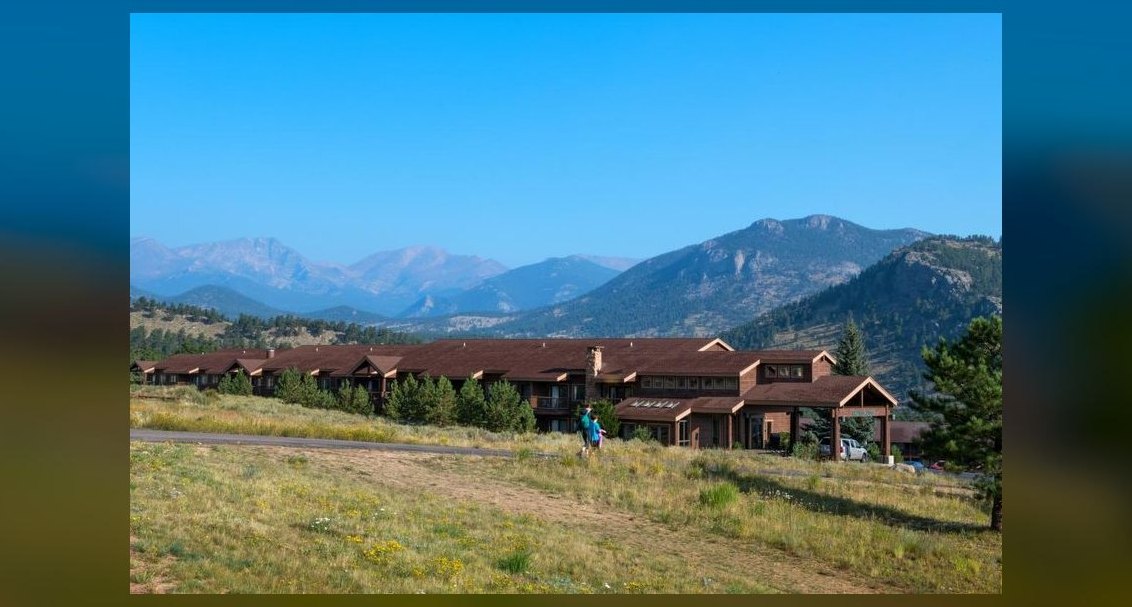 pulse-recentThe 10 Best Corporate Retreat Venues with the Lowest Total Cost in 2027
 pulse-eventsTop 10 Corporate Retreat Venues in the Mountain West in 2027