


Should I open or buy a Dutch Bros Coffee franchise in 2027?
Quality
Certified
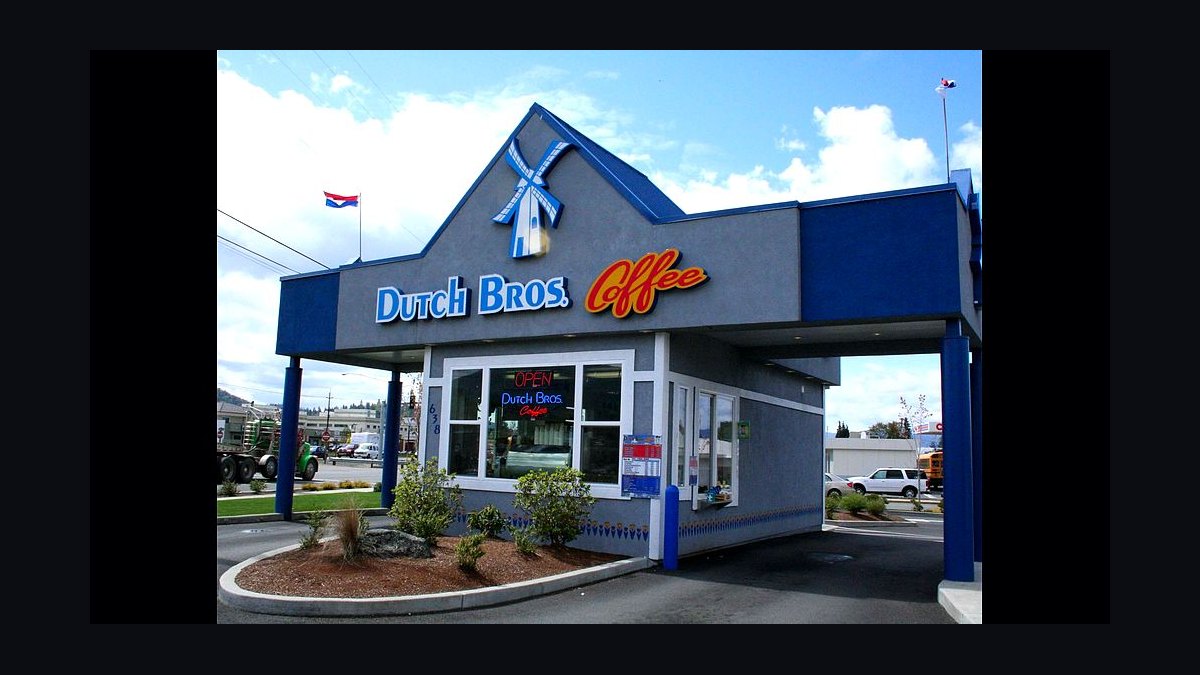
No — you cannot buy a Dutch Bros Coffee franchise in 2027 as an outside investor. Dutch Bros closed its external franchise program in 2017 and now expands almost entirely through company-operated shops, with a small internal "Regional Operator" track reserved for long-tenured employees. If you want to open a drive-thru coffee business in 2027, pursue 7 Brew, Scooter's Coffee, Ziggi's, or Black Rock instead — all are actively selling territories.
The Outcome You Should Expect
If you are an outside candidate hoping to open a Dutch Bros in 2027, the realistic outcome is a dead end, not a slow process — there is no application queue to join, no deposit to put down, and no broker who can legitimately get you in. Dutch Bros, Inc. trades publicly (NYSE: BROS) and discloses its unit economics through 10-K and 8-K filings rather than a current Franchise Disclosure Document, because it no longer sells franchises to the public. The last FDD the brand issued was in 2017, right before the program closed, and nothing has reopened it since. Anyone offering a "Dutch Bros 2027 franchise opportunity" for a fee is selling access that does not exist.
The outcome changes completely if you already work inside the system. Dutch Bros promotes long-tenured Broistas and shift leads into a Regional Operator structure, where proven employees — typically with three to five-plus years of tenure and a track record of running a shop above plan — get awarded operating rights over a cluster of shops under an internal agreement, not a traditional franchise contract. For that narrow population, the expected outcome in 2027 is strong: average unit volumes near $2.0 million, store-level EBITDA in the 18-30% range depending on whether you're looking at the public company-operated benchmark or realistic operator-level figures, and payback in roughly 3.5 to 5 years. That is a best-in-category outcome for drive-thru coffee — but it is only available to people the company already trusts.

For everyone else, the correct 2027 outcome to plan for is: redirect your capital and your 90 days of diligence toward a brand that is actually open for business. The opportunity cost of waiting on Dutch Bros to "reopen" franchising is real — there's no public signal that it intends to, and the capital markets reward its current focus on company ownership of every new corporate-track shop. Treat the Dutch Bros door as closed and move on quickly rather than spending months hoping for an exception.
What Drives That Outcome
The core driver is ownership structure, not market demand. Dutch Bros does not need external franchise capital because it is a well-funded public company that can self-finance its own growth — roughly 1,000+ shops and climbing, with systemwide revenue of $464.4 million in Q1 2026 alone, up 30.8% year over year. When a brand can fund its own build-outs from operating cash flow and public equity, it has no financial incentive to split margin with outside franchisees. That single fact — access to cheap internal capital — is what keeps the franchise door shut while competitors like 7 Brew and Scooter's, which lack that balance sheet, lean on franchise fees and royalties to fund expansion.

A second driver is brand control. Dutch Bros' growth strategy depends heavily on consistent culture — the company's "love abounds" internal values, barista energy, and drive-thru service speed are treated as a competitive moat. Franchising at scale historically dilutes that consistency because franchisees optimize for their own P&L first. By keeping shops company-operated (plus a small layer of internal operators who were trained inside that exact culture for years), Dutch Bros protects the thing that differentiates it from copycats.
A third driver is the internal talent pipeline itself. The Regional Operator track exists specifically to retain high performers who might otherwise leave for a competing franchise opportunity. By offering a path to meaningful equity-like upside only to insiders, Dutch Bros turns its best employees into long-term stakeholders instead of losing them to 7 Brew or Scooter's. That retention dynamic reinforces the closed-door policy — opening it back up to outsiders would undercut the exact incentive structure keeping veteran operators in place.
Benchmarks and Realistic Ranges
Because there is no live FDD, the most honest way to benchmark a 2027 Dutch Bros opening is to blend the brand's public 10-K disclosures with the economics of the drive-thru coffee category it helped create. Total initial investment for an internal operator building a new drive-thru pad runs roughly $500,000 to $1.2 million, covering real estate and site work ($250,000-$600,000), shop construction ($400,000-$700,000), equipment such as espresso machines, blenders, and POS systems ($90,000-$150,000), initial inventory ($20,000-$40,000), and three months of working capital ($75,000-$150,000). There is no public royalty rate because internal operators work inside the company's P&L structure rather than paying a traditional franchise royalty and brand fund.

On the revenue side, system-wide average unit volume sits near $2.0 million, among the highest in the category — driven by same-shop sales growth of 8.3% in Q1 2026 and transaction growth of 5.1%, the seventh straight quarter of positive transaction growth. Store-level EBITDA margins for company-operated shops run 22-30% per the 10-K, though a more conservative planning range for an operator-level unit is 18-22% once you account for internal allocations that don't show up identically to a franchisee's bottom line. Payback lands between 3.5 and 5 years, which beats most of the open-franchise alternatives in the category.
For comparison, 7 Brew's 2026 FDD shows total investment of $887,000-$1.85 million, median AUV near $1.92 million, a 7% royalty plus 3% brand fund, and payback of 4-6 years. Scooter's Coffee runs $794,000-$1.3 million total investment, median AUV around $881,000, 6% royalty plus 2% marketing, and payback of 5-7 years. Both are real, buyable franchises in 2027 with disclosed Item 19 figures you can actually underwrite against — something no Dutch Bros candidate can do. Ziggi's offers smaller kiosk formats under $300,000, useful for secondary markets, while Black Rock Coffee Bar runs roughly 140 locations with strong Pacific Northwest density and active 2027 multi-unit deals.
Coffee commodity costs are a benchmark worth tracking regardless of which brand you pursue: arabica futures traded above $3.50/lb in 2025 versus a historic average near $1.80/lb, and contracts resetting in 2027 will pressure cost of goods sold by an estimated 100-200 basis points unless menu pricing absorbs it. Labor cost benchmarks matter just as much — minimum wage levels in core West Coast drive-thru markets (California at $20+/hr for fast food, Washington at $16.66/hr, Oregon at $14.70/hr) compress margins 150-250 basis points versus 2024 planning assumptions across the entire category, not just Dutch Bros.
Risks, Edge Cases, and Failure Modes

The single biggest risk in 2027 is a scam, not a bad investment. Because Dutch Bros is a recognizable, high-performing brand with no public franchise program, it is a magnet for brokers and "franchise consultants" who imply — without directly lying — that access can be arranged for a fee. There is no legitimate side door. If anyone asks for money to "secure a territory" or "get you on the list" for Dutch Bros, that is a fraud risk, full stop, and it should end the conversation immediately.
Inside the system, the failure modes are different but still serious. Operators who treat an awarded shop as passive income fail quickly, because Dutch Bros locations are high-labor, high-volume operations running 40-50 Broistas per shop; throughput during peak hours is labor-constrained, not demand-constrained, so absentee management directly caps revenue. A second failure mode is under-investing in site selection — a pad site with weak left-turn access, shallow stacking depth for the drive-thru line, or low daily car counts can push AUV 30-40% below system average, and because Dutch Bros' build costs are high relative to some competitors, a weak site breaks fixed-cost coverage below roughly $1.2 million in annual revenue. A third failure mode is market saturation: in markets like Phoenix, Sacramento, and Boise, three to five Dutch Bros locations within a five-mile radius have begun cannibalizing each other's same-shop sales growth, a pattern worth watching before committing to a new build in any hot market.

An edge case worth naming explicitly: some candidates consider an "independent drive-thru coffee" concept with a local roaster partnership as a workaround to the closed Dutch Bros door. This is a legitimate business model — typically $350,000-$700,000 all-in with no royalty — but it carries none of Dutch Bros' brand pull, which drives over 60% Dutch Rewards loyalty penetration among its customers. Break-even for an unbranded independent typically runs 18-24 months versus 8-14 months for a well-run franchised drive-thru brand, so this path trades lower fees for materially slower ramp and higher execution risk.
Finally, anyone evaluating 7 Brew, Scooter's, Ziggi's, or Black Rock as a "Dutch Bros substitute" should treat that substitution carefully rather than assuming one-to-one economics. Each brand has a different royalty structure, a different AUV ceiling, and a different growth trajectory — 7 Brew is expanding past 700 shops with FDD-disclosed economics closest to Dutch Bros' scale, while Scooter's is a lower-AUV, lower-investment value play. Underwriting any of them using Dutch Bros' numbers instead of their own disclosed Item 19 figures is a modeling error that shows up only after you've signed.
A Practical Rollout Plan
Whether you end up pursuing an internal Dutch Bros path or pivoting to an open franchise, a disciplined 90-day process protects your capital. Days 1-15 should resolve the access question first: confirm whether you are a current Dutch Bros employee with three-plus years of tenure and a documented conversation with your Regional Operations lead about the operator track. If the answer is no, stop evaluating Dutch Bros entirely and move to open alternatives — don't spend 90 days chasing a program you cannot enter.
Days 16-30 are for pulling comparable FDDs directly from 7 Brew, Scooter's Coffee, and Ziggi's, or through FDD aggregation services, and reading Item 7 (investment range), Item 19 (financial performance), Item 20 (unit transfers and failures), and Item 21 (audited financials) before anything else. Days 31-45 build the unit-economic model using realistic, stressed assumptions — run the numbers at $1.4 million AUV (roughly 30% below the peer median), a 6.5% blended royalty and marketing fee, and labor at 32% of sales. If that stressed model doesn't clear 15% store-level EBITDA, the brand carries too much downside risk at that AUV.
Days 46-60 call for in-person site tours: visit at least eight operating shops across two markets, timing the drive-thru line at 7:30-9:00 AM on a weekday and 2:00-4:00 PM on a weekend, counting cars served per hour. Fewer than 80 cars per hour at peak is a warning sign for the category. Days 61-75 are for operator reference calls — talk to at least five current franchisees of your target brand and ask directly how their year-two EBITDA compared to the FDD's Item 19 averages; if three or more underperformed Item 19 by 20% or more, treat that as a reason to walk away. Days 76-85 lock the capital stack, typically 30-35% equity against 65-70% SBA 7(a) or conventional debt, with a lender who has closed at least five drive-thru coffee deals in the past two years. Day 86-90 is the decision gate: sign only if the model clears 20% EBITDA at the base-case AUV, the site is contractually committed, and your post-close reserve covers six months of debt service and payroll.
Related questions
Can I buy a Dutch Bros franchise if I live outside the United States?
No. Dutch Bros does not sell franchises domestically or internationally; the brand closed its entire external program in 2017 and operates only through company-owned shops and the internal Regional Operator track for existing employees.
How long does it take an internal operator to open a new Dutch Bros location?
For employees approved onto the operator track, the process from approval to opening typically runs 12-24 months, depending on site selection, permitting, and construction timelines — similar to the build cycle for any drive-thru coffee concept.
Is 7 Brew a good substitute for someone who wanted to open a Dutch Bros?
Yes, economically it is the closest public substitute — similar AUV near $1.92 million, comparable build costs, and active 2027 territory sales with a disclosed FDD you can underwrite, unlike Dutch Bros.
Why doesn't Dutch Bros franchise anymore if the category is growing so fast?
Because the company can self-fund growth as a profitable public business, it keeps full margin and tighter culture control by building company-operated shops and promoting proven insiders rather than splitting economics with outside franchisees.
FAQ
Can I still buy a Dutch Bros franchise in 2027? No, not from the outside. Dutch Bros stopped selling franchises to new candidates in 2017. The only way to operate a Dutch Bros location is through the internal Regional Operator program, reserved for long-term employees who have worked their way up within the company.
What are the financial requirements for a Dutch Bros Regional Operator?
If you qualify as an internal operator, build-out costs typically run $500,000 to $1.2 million per drive-thru location. There's no public Item 7 or Item 19 for outside candidates, so exact liquid capital or net worth requirements aren't disclosed publicly.
How profitable is a Dutch Bros location on average? Company-operated stores report average unit volumes around $2.0 million, with store-level EBITDA margins in the 18-30% range depending on the measurement basis. Payback periods generally fall between 3.5 and 5 years, varying by market and operational efficiency.
What alternatives to Dutch Bros are actually offering franchises in 2027? Several drive-thru coffee chains are actively selling territories: 7 Brew, Scooter's Coffee, Ziggi's, and Black Rock Coffee. These brands provide public franchise disclosure documents, estimated startup costs, and ongoing support for new franchisees — unlike Dutch Bros.
Is there any way to become a Dutch Bros operator without being an employee first? No. The Regional Operator program is strictly internal. You must have a proven track record as a Dutch Bros employee, typically over several years, to be considered. There are no exceptions for outside investors or experienced franchisees from other brands.
What is the typical timeline from application to opening a Dutch Bros location? For internal operators, the process can take 12 to 24 months from approval to opening, depending on site selection, permitting, and construction. Since there's no external franchise program, there's no standard timeline for outside candidates to reference.
Sources
- Dutch Bros, Inc. 10-K Annual Report (FY 2025) — SEC EDGAR Filing
- Dutch Bros, Inc. Q1 2026 Earnings Release — SEC Form 8-K
- Dutch Bros Coffee Franchise Disclosure Document (2017, last public FDD) — FDD Exchange
- "Dutch Bros sales jump 32%; ups 2026 expansion to at least 185 shops" — Chain Store Age
- "Dutch Bros Coffee Aims to Double Store Count to 2,029 Locations by 2029" — Shopping Center Business
- 7 Brew Franchise Disclosure Document (2026) — Franchise Payback
- Scooter's Coffee Franchise Disclosure Document (2026) — Franchise Investor Data
- Ziggi's Coffee Franchise Disclosure Document (2026) — Franchise Chatter
- International Franchise Association (IFA) — 2027 Franchise Economic Outlook
- US Bureau of Labor Statistics — QSR Wage and Employment Data, 2026
Related on PULSE
- Should I open or buy a Poke Bros franchise in 2027?
- Should I open or buy an Einstein Bros Bagels franchise in 2027?
- Best coffee and beverage franchises to buy in 2027
- Should I open or buy an It's A Grind Coffee franchise in 2027?
- Should I open or buy a The Coffee Bean & Tea Leaf franchise in 2027?
- Should I open or buy a Summer Moon Coffee franchise in 2027?
This page will be disappearing soon. Save it to your device for $1 — or read it free while it is here.
@Kory-White- · if Venmo asks, the last 4 of my number are 2012
This page is gone.
This one is off the shelf now. $1 keeps it on your phone for good — the whole page, pictures and diagrams included.
 franchiseShould I open or buy a Roto-Rooter franchise in 2027?
 franchiseShould I open or buy a Kona Ice franchise in 2027?
 franchiseShould I open or buy a Big O Tires franchise in 2027?
 franchiseShould I open or buy a Domino's franchise in 2027?
 franchiseShould I open or buy a Chipotle franchise in 2027?
 franchiseShould I open or buy an Ace Hardware franchise in 2027?
 franchiseShould I open or buy a Wendy's franchise in 2027?
 franchiseShould I open or buy a UPS Store franchise in 2027?
 franchiseShould I open or buy a Primrose Schools franchise in 2027?
 franchiseShould I open or buy a Smoothie King franchise in 2027?