


Should I open or buy a Liberty Tax franchise in 2027?
Quality
Certified
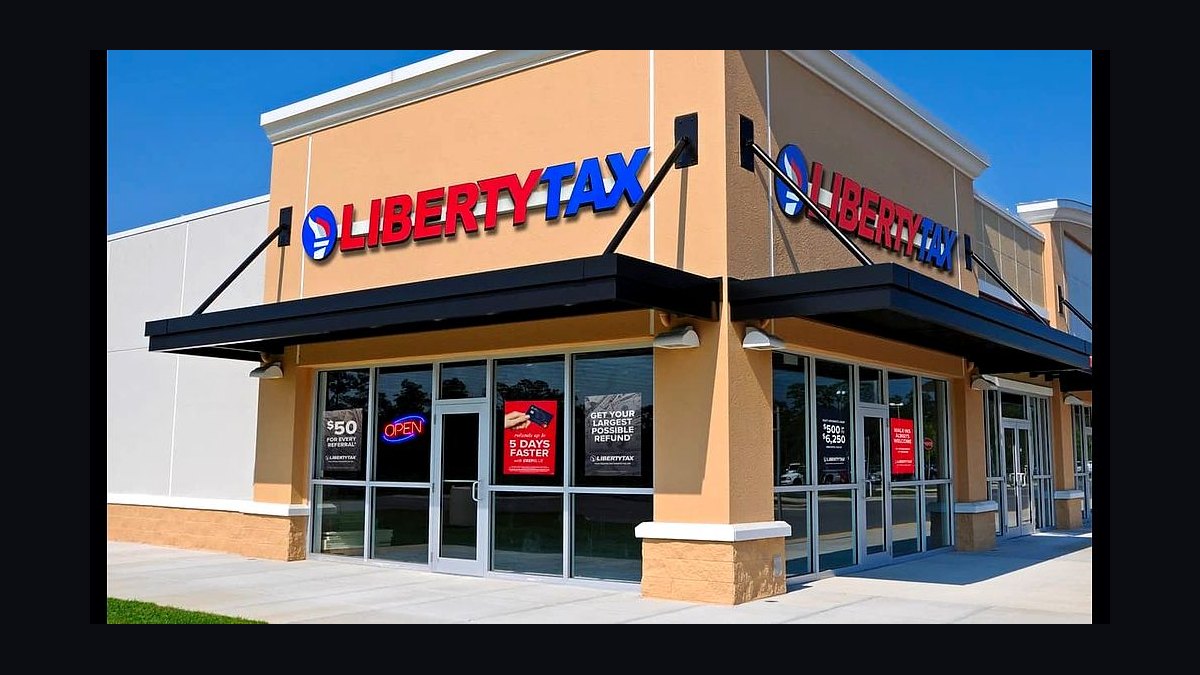
Probably not — unless you already run a tax practice, have $80,000 liquid, and can personally execute 400+ returns per season at a $30,000 average per-return revenue your local market actually supports. A Liberty Tax franchise in 2027 runs $42,200 to $78,900 all-in (Item 7), demands a $40,000 franchise fee, charges 14% royalty + 5% advertising fee = 19% off the top, and produces roughly $130,000 to $155,000 in average annual gross revenue per location based on third-party FDD analysis. After royalties, rent, seasonal labor, and software, realistic Year-1 owner cash flow lands between $18,000 and $35,000 on a single seasonal office. Breakeven sits in Year 2 to Year 3 for disciplined operators; underwater by Year 3 for everyone else. The IRS killed Direct File for 2026 — a tailwind — but H&R Block and Jackson Hewitt have shed 3,000+ locations since 2014, and that contraction is the real signal.
The Real Numbers
The numbers below pull from Liberty Tax's most recent FDD Item 7 (initial investment) and third-party FDD analysis for Item 19 (Liberty Tax does not publish a formal Item 19 — a material disclosure gap prospects must price in). Independent estimates are sourced from Vetted Biz, Peersense, Wolf of Franchises, and Franchimp databases, cross-referenced with IBISWorld NAICS 541213 industry data.
| Line Item | Low | High | Notes |
|---|---|---|---|
| Initial franchise fee | $40,000 | $40,000 | Item 5; non-refundable; reduced fees sometimes offered for veterans and multi-unit deals |
| Build-out / leasehold improvements | $1,000 | $15,000 | Strip-mall seasonal kiosk to permanent storefront |
| Equipment, signage, computers | $1,000 | $8,000 | Includes 2-3 workstations, printers, scanners, secure shredding |
| Initial training & travel | $0 | $1,500 | Required attendance at Liberty corporate training |
| Initial marketing package | $5,000 | $5,000 | Wavers, signage, local SEO setup |
| 3 months working capital | $4,000 | $25,000 | Pre-season payroll, rent, software |
| Insurance, licenses, deposits | $1,200 | $5,000 | E&O insurance is non-negotiable |
| TOTAL Initial Investment (Item 7) | $42,200 | $78,900 | Per Liberty Tax 2026 FDD Item 7 |
| Ongoing royalty | 14% of gross | 14% of gross | One of the highest royalty rates in franchising |
| Advertising fund | 5% of gross | 5% of gross | Above local marketing spend |
| Effective revenue haircut | 19% | 19% | Before rent, labor, software |
| Average gross revenue / unit | $130,000 | $155,000 | Third-party FDD analysis; no official Item 19 |
| Gross after royalty + ad fund | $105,300 | $125,550 | After 19% top-line haircut |
| Owner-operator EBITDA margin | 14% | 22% | Seasonal model; operator labor as COGS |
| Year-1 owner cash flow | $18,000 | $35,000 | Assumes operator runs front desk |
| Payback period | 24 months | 48 months | Multi-unit operators hit faster |
| Liquid capital required | $50,000 | $50,000 | Liberty Tax financial qualification |
| Minimum net worth | $100,000 | $100,000 | Liberty Tax financial qualification |

Three numbers do most of the work here. First, the 19% effective royalty + ad fund is roughly double Subway's 12.5% and triple a typical service-franchise rate of 6-7%. Second, the $130K-$155K revenue band is a seasonal number — Liberty offices generate roughly 85% of revenue between February 1 and April 15, then idle for nine months unless the owner adds bookkeeping or year-round small-business services. Third, payback longer than 24 months on a sub-$80K investment signals the unit economics are thin, not that the investment is small.
Who Wins With This Business
Existing tax pros with a book of business. A CPA, EA, or seasoned preparer who already has 300-500 personal clients and uses Liberty Tax as a brand wrapper, software bundle, and lead-gen overlay captures the franchise's only genuine arbitrage. The brand recognition pulls 30-50 incremental walk-ins per season in B/C-class trade areas, the ProTaxPro software handles intake, and the operator's existing client base covers the 19% royalty haircut.

Multi-unit operators in tax-prep deserts. Buyers who can deploy 3-5 seasonal kiosks across lower-income, predominantly cash-economy zip codes — where H&R Block has pulled back and independent preparers lack the brand trust — extract real value. The model scales because seasonal labor is the largest variable cost, and a single owner can supervise 3-5 locations during the 10-week peak.
Operators with deep Spanish-language capability and EITC expertise. Liberty's highest-performing offices consistently sit in Hispanic-majority trade areas where refund-anticipation loans and EITC filings drive volume. An owner who is bilingual, IRS-certified for EITC due-diligence rules, and personally available 80 hours/week from January to April can push a single office past $200,000 in gross revenue, well above the system average.
Buyers of distressed resales at 30-50 cents on the dollar. The Liberty Tax resale market is thick with motivated sellers post-2020. Acquiring an existing office with historical client data, lease in place, and a 2-year operating history for $25,000-$60,000 cash materially changes the IRR math versus a greenfield $78,900 build.
Who Loses With This Business

First-time operators with no tax background. Anyone who thinks Liberty's two-week training course substitutes for a CPA, EA, or 3+ tax seasons of prep experience will lose money. The IRS due-diligence penalties for botched EITC, CTC, and AOTC filings run $615 per return per error in 2026 — a single inattentive season can wipe out two years of profit.
Absentee owners. The Liberty model is owner-operator economics dressed as a franchise. Hiring a manager at $25/hour plus performance bonus to run a single office during a 10-week revenue window mathematically zeros out the operator's take. The FDD's implied EBITDA assumes the owner is the front-desk preparer.
Operators in markets H&R Block dominates. In A-class suburban trade areas where H&R Block has 4-6 corporate offices within 5 miles, Liberty competes on price alone, and price competition in tax prep is a race to the bottom. The brand premium does not exist where H&R Block's marketing budget saturates the market.

Anyone underestimating seasonality risk. A late tax season, a snowstorm in the first two weeks of February, or a sudden IRS filing-deadline extension can vaporize 15-25% of revenue with no offsetting expense reduction. Rent, software fees, and royalty minimums continue through the dead months.
Buyers who skip the franchisee discovery calls. Liberty Tax's franchisee satisfaction surveys (Franchise Grade, Franchise Business Review) consistently rank below the 50th percentile in the broader franchise universe. Skipping 15+ existing-franchisee discovery calls is the single fastest path to a regrettable signature.
2027 Market Conditions
The IRS killed Direct File — confirmed in November 2025 — and Direct File will not return for the 2026 or 2027 tax seasons. This removes a real competitive overhang from the paid-prep industry and pushes an estimated 3-5 million returns back into the H&R Block / Intuit / Liberty / Jackson Hewitt / independent-preparer funnel. H&R Block and Intuit spent $103M+ in cumulative federal lobbying since 2003 to engineer this outcome.

The Tax Cuts and Jobs Act's individual provisions expire December 31, 2025. Whatever Congress passes in 2026 — extension, modification, or full sunset — will produce the single most complex personal-tax filing season since 1986. Complexity drives paid preparation: historically, every 10% increase in the average Form 1040's complexity score correlates with a 4-6% bump in paid-prep market share.
Brick-and-mortar continues contracting. H&R Block has gone from 11,011 retail locations in 2014 to 9,001 in 2026, and Jackson Hewitt from 6,350 to 5,287. The contraction reflects DIY software cannibalization, not industry-wide collapse — but it means the storefront tax-prep market is consolidating, and Liberty's 2,000+ office footprint sits in the cross-hairs.
EITC due-diligence enforcement intensified in 2026. The IRS expanded preparer audit programs, raising the per-error penalty to $615 and triggering suspension and debarment proceedings for preparers with 3+ consecutive EITC-error seasons. Marginal operators are exiting.
Bookkeeping and year-round small-business services are the only path to break the seasonality curse. Liberty has leaned into bookkeeping add-ons through its corporate parent NextPoint Financial, but adoption inside the franchisee base remains under 20%.
The 90-Day Decision Tree

- Days 1-7: Pull the current Liberty Tax FDD from the franchisor or frandera.com / Franchimp and read Items 5, 6, 7, 19, 20, and 21 cover-to-cover. Confirm Item 19 absence and document the estimated revenue source you will rely on.
- Days 8-21: Call 15 current and 5 former franchisees from the Item 20 list. Ask three questions: gross revenue for the last 3 seasons, owner take after royalty and labor, and would you sign again at $40K fee + 19% top-line haircut.
- Days 22-35: Trade-area validation. Pull Census ACS data for your target zip codes — median household income $30K-$60K, EITC eligibility above 25%, Hispanic population share above 20%, no H&R Block within 3 miles. Walk the trade area on a Saturday in January-February to count foot traffic.
- Days 36-50: Build the unit economic model. Use $130K conservative gross, 19% royalty + ad fund, $2,500/mo rent year-round, $18,000 seasonal labor, $4,800 software, $2,400 insurance. Sensitize ±20% on gross revenue and stress-test a 10-day late season.
- Days 51-65: Resale market scan. Search bizbuysell.com, franchimp.com resale board, and direct broker outreach for Liberty Tax resales priced under $60K with 2+ year operating history and client retention above 70%.
- Days 66-80: Legal review. Engage a franchise attorney ($3,500-$6,500 flat) for FDD review, lease review, and personal guarantee analysis. Negotiate territory protection language — Liberty's standard agreement is operator-unfavorable on encroachment.
- Days 81-90: Final go/no-go. If you cannot answer yes to all five: existing tax expertise, B/C trade area validated, 15+ franchisee calls all positive, resale option exhausted, model breaks even at 80% of base case — walk away.
Alternative Plays

Become an Enrolled Agent and open an independent practice. EA credential costs ~$200 plus the IRS SEE exam; an independent shingle in the same trade area captures 100% of revenue with no royalty. Trade-off: no brand, no software bundle, no lead gen — you bring the clients.
Buy an established independent CPA or EA practice. Small tax practices trade at 0.8x-1.2x trailing revenue — a $300K-revenue practice runs $240K-$360K but produces $120K-$180K in owner cash flow versus Liberty's $18-35K.

Acquire a Jackson Hewitt resale. Same 14% royalty + 6% ad fund but resales trade at 20-40 cents on the dollar in 2027 as the system contracts. Effectively identical economics, sometimes better Item 19 disclosure.
Open an H&R Block franchise. H&R Block's franchisee economics are better (lower royalty band, stronger Item 19), but new franchise sales are restricted to existing operators and company-store conversions in most markets.
Start a virtual tax practice. A single licensed preparer using TaxDome or Canopy can serve 150-250 remote clients at $350-$650 per return from a home office, generating $50K-$130K in net cash flow with near-zero capex.
FAQ
What is the total investment needed to open a Liberty Tax franchise in 2027? The all-in startup cost ranges from $42,200 to $78,900, which includes a $40,000 franchise fee. You’ll also need at least $80,000 liquid to cover initial expenses and working capital before your first tax season.
How much revenue can a single Liberty Tax franchise expect in its first year?

Average annual gross revenue per location typically falls between $130,000 and $155,000. However, actual revenue depends heavily on your local market, competition, and your ability to personally prepare 400 or more returns.
What are the ongoing royalty and advertising fees? You pay a 14% royalty on gross revenue plus a 5% advertising fee, totaling 19% off the top. These fees are deducted before you cover rent, seasonal labor, and software costs.
How long does it take to break even with a Liberty Tax franchise? Breakeven usually occurs in Year 2 to Year 3 for disciplined operators who can manage costs and build a client base. Many franchisees, however, find themselves underwater by Year 3 if they can’t sustain 400+ returns per season.
Is the tax preparation industry growing or shrinking for franchises like Liberty Tax? The industry has seen significant consolidation, with major competitors like H&R Block and Jackson Hewitt closing over 3,000 locations since 2014. While the IRS ended Direct File for 2026, which could help, the overall trend points to a contracting market for tax franchises.

What is the realistic owner cash flow in the first year? After all expenses—royalties, rent, seasonal staff, and software—owner cash flow typically lands between $18,000 and $35,000. This range assumes you personally handle a high volume of returns and keep overhead low.
Bottom Line
Liberty Tax in 2027 is a credentialed tax professional's brand-and-software wrapper, not a path to passive franchise income. The $42K-$79K entry price is real and the Direct File shutdown plus TCJA-sunset complexity are real tailwinds, but the 19% top-line royalty haircut, brutal seasonality, absent Item 19 disclosure, sub-50th-percentile franchisee satisfaction, and 2,000+ office network sitting in the same brick-and-mortar contraction wave that took H&R Block from 11,011 to 9,001 locations make the unit economics fragile. Buy a distressed resale at 30-50 cents on the dollar, only if you already hold an EA or CPA credential, only in a B/C trade area where you can personally work 80 hours a week from January through April, and only after 15+ franchisee discovery calls confirm the math. Otherwise, become an Enrolled Agent, hang your own shingle, and keep 100% of the revenue.
Sources
- Liberty Tax Service FDD — Vetted Biz franchise analysis
- Liberty Tax Franchise Cost & FDD $40K Fee, $42K-$79K Total 2026 — Peersense
- Liberty Tax Service Unit FDD — Frandera
- Liberty Tax Service Analysis Updated 2026 — Franchimp
- Liberty Tax Franchise Cost, Fees & Earning Stats — Wolf of Franchises
- Liberty Tax Franchise FDD, Costs & Fees 2026 — Franchise Payback
- Franchise Deep Dive Liberty Tax Service's Costs, Fees, Profit and Data — 1851 Franchise
- IRS Officially Kills Direct File — Money.com
- IRS tells states Direct File 'will not be available' in 2026 — Federal News Network
- Over 296,000 happy users last year, 0 this year — Fortune
- Tax Preparation Services in the US Industry Analysis — IBISWorld NAICS 541213
- Liberty Tax Service vs H&R Block Franchise Cost Comparison — The Franchise Mall
Related on PULSE
This page will be disappearing soon. Save it to your device for $1 — or read it free while it is here.
@Kory-White- · if Venmo asks, the last 4 of my number are 2012
This page is gone.
This one is off the shelf now. $1 keeps it on your phone for good — the whole page, pictures and diagrams included.
 franchiseShould I open or buy a Supercuts franchise in 2027?
 franchiseShould I open or buy a Take 5 Oil Change franchise in 2027?
 franchiseShould I open or buy a Wingstop franchise in 2027?
 franchiseShould I open or buy an Orangetheory Fitness franchise in 2027?
 franchiseShould I open or buy a Mac Tools franchise in 2027?
 franchiseShould I open or buy a Little Caesars franchise in 2027?
 franchiseShould I open or buy an Auntie Anne's franchise in 2027?
 franchiseShould I open or buy a Merry Maids franchise in 2027?
 franchiseShould I open or buy a Whataburger franchise in 2027?
 franchiseShould I open or buy a Hand and Stone Massage franchise in 2027?