


Should I open or buy a Spherion Staffing franchise in 2027?
Quality
Certified
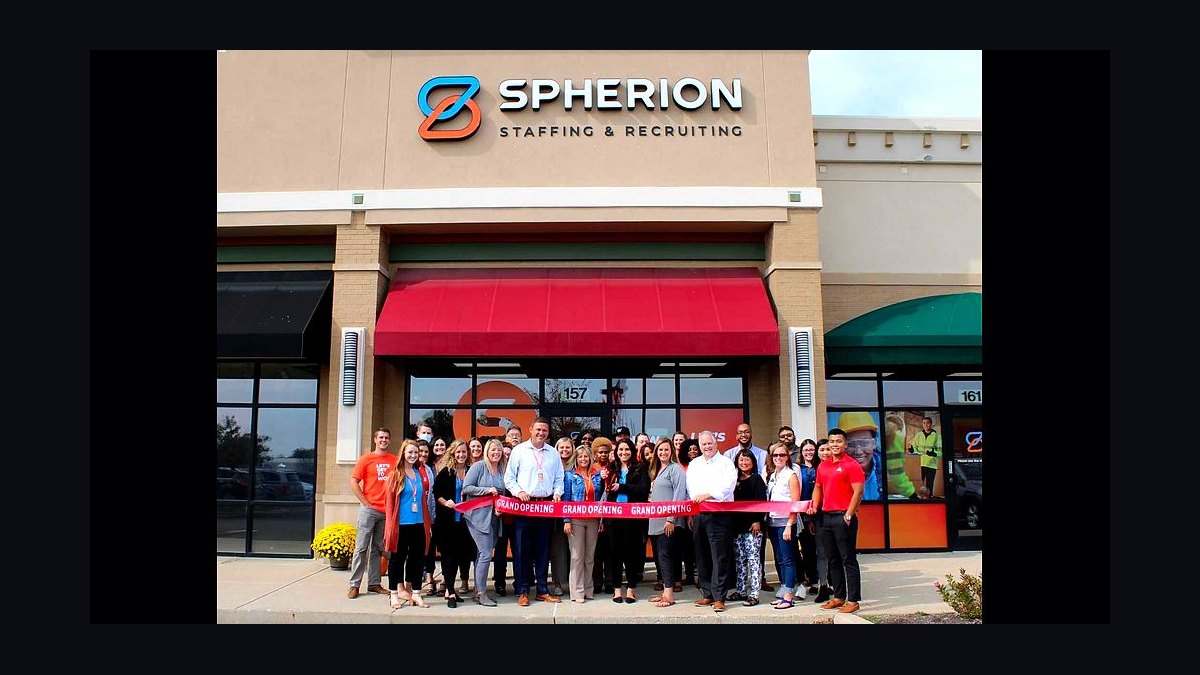
Yes, if you bring $400K-plus in liquid capital, a decade of B2B sales or recruiting leadership, and a secondary metro where Spherion has no incumbent office. The 2027 FDD lists total investment at $211,725-$423,925, no royalty but a 25% cut of temporary gross profit, and a 14-22 month breakeven. Passive investors, undercapitalized first-timers, and tier-1 metro entrants without a client book should not open this franchise.
What Spherion's franchise model actually is and why it matters
Spherion is a Randstad-owned staffing franchise built on placing light-industrial, clerical, and administrative workers with mid-market employers. It is not a storefront concept — there is no customer walking in off the street. The entire business is built on two interlocking relationships: a bench of temporary associates you can deploy on short notice, and a roster of client companies that need labor flexibility without carrying it on their own headcount. Understanding why that matters starts with the fee structure, because it is genuinely unusual compared to most franchise categories.
Spherion charges no traditional royalty percentage of revenue. Instead, the franchisor takes 25% of temporary gross profit (dropping to a 60/40 split favoring the franchisee in resale territories) and 12% of full-time placement fees. This matters enormously for how you should think about the deal. A royalty-based franchise taxes your top line regardless of profitability; Spherion's model only taxes you when you are actually making money on a placement. In exchange, Spherion funds the back office that an independent staffing firm would have to build from scratch: payroll advances to temporary associates before client invoices clear, workers' comp administration, unemployment insurance pooling, and credit risk underwriting on accounts receivable. That back-office machinery is the actual product you are buying when you open a Spherion franchise — the brand name is secondary.

The reason this should change how you evaluate the opportunity is cash-flow timing. In most franchise categories, the dominant Year-1 expense is build-out or equipment. In staffing, the dominant expense is funding payroll for your temporary associates every week while clients pay on net-30 to net-60 terms. A franchisee who opens without understanding this will chase growth, add billable headcount, and then discover they are structurally unable to make Friday payroll because last month's invoices have not cleared. Spherion's franchisor-level AR factoring capacity (reportedly north of $400M across the system) exists specifically to smooth this, but it still requires the franchisee to carry a meaningful working-capital cushion — not just the franchise fee.
Why it matters beyond the mechanics: this is fundamentally a sales and operations business wearing a staffing costume. Franchisees who treat it as "run the office Spherion hands you" underperform. Franchisees who treat it as "I am building a mid-market B2B sales organization that happens to sell temporary labor" tend to be the ones who cross the $1M revenue run-rate inside 18 months rather than 30.
The step-by-step path from decision to day-one revenue

Opening a Spherion staffing franchise follows a reasonably linear sequence, and skipping steps is where most new franchisees lose months later. The sequence below reflects how experienced multi-unit operators and franchise attorneys describe the on-ramp.
First, pull the current FDD directly from the franchisor and read Items 7 (initial investment), 19 (financial performance representations), 20 (outlets and franchisee turnover), and 21 (financial statements) in full — not the summary. Calculate your personal capital headroom against the *high end* of Item 7, plus six months of personal living expenses, before doing anything else. Second, call existing franchisees from the Item 20 contact list — not just the two or three the franchise development team recommends. Ask about months to breakeven, current gross profit, their biggest early business-development mistake, and what they wish they had known on day one. A consistent pattern of the same complaint across multiple calls is a real signal, not noise.
Third, validate the target territory using Census County Business Patterns data, looking for a dense base of employers in the 50-500 employee range across light industrial, clerical, and healthcare-support sectors. This is also the point to physically drive the territory and visit industrial parks — a map with the right employer count can still be the wrong metro if those employers already have entrenched staffing relationships. Fourth, build an actual named list of 50 target clients using tools like LinkedIn Sales Navigator and confirm you can name a real HR or operations contact at a meaningful share of them; this list is the single best predictor of how fast you reach revenue.

Fifth, engage a franchise attorney for FDD review and, critically, territory boundary negotiation — this is the highest-leverage single negotiating moment in the entire process, because the boundary determines your addressable market for the life of the agreement. Sixth, secure financing; Spherion is SBA-registered, so a 7(a) loan is a realistic path for a share of the total investment, provided you can bring the required equity injection and have reasonable credit. Seventh, sign the agreement and lock in real estate — a modest Class-B office is sufficient; this is not a build-out-heavy concept. Eighth, complete initial training at the franchisor's headquarters, and pre-book client discovery meetings so that day one post-training is a selling day, not a planning day.
Costs, timelines, and typical ranges
The 2027 Item 7 range runs from $211,725 on the low end to $423,925 on the high end, with the spread driven primarily by territory size, office build-out scope, and working-capital cushion — not by franchise fee alone. The initial franchise fee itself sits between $30,000 and $60,000, sliding by territory. Real estate and build-out for a 1,200-2,000 square foot Class-B office typically runs $15,000-$55,000; furniture, IT, and signage another $18,000-$42,000; initial training and travel $5,000-$12,000; and pre-opening marketing $8,000-$25,000.

The number that actually determines whether a franchisee survives is working capital, typically $125,000-$215,000 earmarked for payroll float. Once an office reaches 20-30 active billable temporary associates, weekly payroll can run $40,000-$80,000, and because clients pay on net-30 to net-60 terms, a franchisee needs roughly 8-12 weeks of float before cash flow normalizes. This is the line item that gets underestimated most often, because it does not feel like "startup cost" in the way a lease deposit does — it feels like working capital that should already be covered by revenue, except revenue has not caught up yet.
On the performance side, the franchisor's Item 19 disclosure reports established offices averaging $5.6 million in revenue and $1.2 million in gross profit in 2024, with the franchisee retaining roughly 75% of that gross profit before SG&A, recruiter salaries, and owner draw. But the median across all units, including new offices, is only $293,000 — a gap that signals a bimodal distribution rather than a typical outcome clustered near the average. A meaningful share of existing franchisees own multiple offices, which pulls the average revenue figure well above what a single new location should expect in its first several years.
Realistic timelines: conservative Year-1 cash flow runs negative $80,000-$150,000, and breakeven typically lands in months 14-22. Payback on the full initial investment runs 30-60 months in an owner-operator scenario. Mature offices tend to run 8-14% EBITDA margins after the franchisor's split and owner compensation. None of these numbers describe a quick-flip business — this is a multi-year build that rewards patience and personal involvement in business development far more than it rewards capital alone.
Where operators get this wrong

The most common failure mode is underestimating the payroll-float requirement relative to growth speed. A franchisee who signs five new clients in a strong month and adds 15 billable associates can accidentally outrun their own cash position — they are paying associates weekly while waiting 30-60 days to collect, and a fast-growing book of business, paradoxically, is what breaks an undercapitalized office. Growth should be financed deliberately, not celebrated reflexively.
A second mistake is opening in a tier-1 metro without an existing client book. Markets like New York, Los Angeles, and Chicago are already saturated with large national staffing firms, and enterprise procurement teams in those markets increasingly route contingent labor through managed service providers — third-party intermediaries that control vendor access for large companies. An independent franchise office entering cold in a tier-1 market often discovers by month 12 that the accounts worth winning are locked behind vendor-management contracts it cannot easily penetrate, while the accounts it can win are thin-margin and highly price-competitive.
A third mistake is treating the franchise as semi-absentee. Staffing franchises are relationship businesses in the first 24 months specifically; the owner who personally closes the first 30 client accounts builds dramatically better long-term unit economics than one who hires a salesperson on day one and steps back. First-time owners with no sales or recruiting background, and no appetite to personally carry the business-development load early, consistently underperform franchisees who come from a decade of B2B selling.

A fourth, more subtle mistake is ignoring the labor-market mix shift. Staffing demand for clerical, administrative, and customer-service roles — historically a staffing-firm staple — faces structural headwinds as automation and AI tools absorb more of that work, while warehouse, light-industrial, and skilled-trades labor demand has stayed comparatively resilient. Franchisees who build their territory sales pitch around the segments facing the steepest long-term decline are fighting against the category's own trend line; those who pivot toward industrial and skilled-trades placements are positioned better for the next several years.
Finally, some prospective owners assume AI-driven recruiting software can substitute for business development. Applicant-tracking and sourcing automation genuinely speeds up the back end of recruiting, but winning the client relationship in mid-market staffing still runs on direct outreach, plant visits, and operator-to-operator trust — no software tool replaces the owner showing up and closing the account.
Decision framework: when to open, when to pass
Reduce the decision to a small number of hard gates rather than a gut call. If you do not have access to roughly $500,000 in total capital once working capital is included, the math does not work regardless of how strong your sales background is — stop there. If you have the capital but lack 10-plus years of B2B sales or recruiting leadership, either plan to hire an experienced general manager who can personally sell, or walk away, because this is not a business you can run purely as a capital allocator. If your target market is a tier-1 metro already dense with Allegis, Adecco, Robert Half, or Aerotek, and you have no existing client relationships there, the vendor-management lockout risk is high enough that a secondary or tertiary metro is almost always the better bet.

Assuming capital, experience, and market fit all clear, the remaining question is whether an incumbent Spherion office already exists in your target territory. If one does and is for sale, a resale brings an existing client book and associate pipeline, but at a less favorable 60/40 profit split and a purchase price on top of the franchise economics. If the territory is open, a greenfield entry gets the standard 75/25 split but means building the client list and the associate bench from zero — slower, but with full long-term upside. Either path should be evaluated against the same milestone: reaching a $1 million revenue run-rate within roughly 18 months. Offices that clear that bar by month 18 are on a trajectory toward the breakeven window; offices that are meaningfully behind it by month 18 should trigger a hard cost and strategy review rather than simply waiting for the market to improve.
Related questions
How is a Spherion franchisee paid versus a traditional royalty-based franchise?
Spherion takes 25% of temporary gross profit (60/40 in resale territories) and 12% of placement fees instead of a flat revenue royalty, so the franchisor only profits when placements are actually profitable, not from top-line sales volume alone.
What's the biggest financial risk specific to staffing franchises?
Payroll float — paying temporary associates weekly while clients pay on net-30 to net-60 terms — can bankrupt a fast-growing but undercapitalized office faster than slow growth ever would.
Does a Spherion franchise work in a major city like Chicago or New York?

Usually not for a new entrant without an existing client book, because enterprise accounts in tier-1 metros are often locked behind managed-service-provider vendor contracts that favor incumbent national staffing firms.
How does AI affect the long-term outlook for a staffing franchise?
It shifts the mix rather than eliminating the category — clerical and administrative placement demand faces structural decline while light-industrial and skilled-trades demand stays comparatively resilient, so territory and client strategy should favor the latter.
FAQ
What is the total investment range for a Spherion staffing franchise in 2027? The 2027 FDD reports total investment of $211,725 to $423,925, including a $30,000 to $60,000 initial franchise fee. The range is driven mainly by territory size, office build-out, and the working-capital cushion needed to fund associate payroll before client invoices are collected.
How does Spherion make money if there's no traditional royalty? Spherion takes 25% of temporary staffing gross profit and 12% of full-time placement revenue instead of a flat royalty on total sales. That structure means the franchisor's income rises and falls with the profitability of your placements, not simply your top-line billing.

How long does it typically take to break even? Breakeven typically falls between months 14 and 22, with conservative Year-1 cash flow running negative $80,000 to $150,000. Franchisees who arrive with an existing client network and strong local relationships tend to land toward the faster end of that range.
What revenue and profit can an established office expect? Established offices averaged $5.6 million in revenue and $1.2 million in gross profit in 2024 per the franchisor's Item 19 disclosure, but the median across all units including new ones was only $293,000 — a sign that results are heavily weighted toward experienced, often multi-unit, operators.
Do I need staffing-industry experience specifically, or is general sales experience enough? Spherion's own guidance centers on 10-plus years of B2B sales or recruiting leadership rather than staffing-specific experience. What matters most is an existing network of mid-market HR and operations buyers and the ability to sell consultatively rather than transactionally.
Can I run a Spherion franchise as a passive, hands-off investment? Generally no. The first one to two years in particular reward direct owner involvement in closing client accounts and managing the associate bench; owners who try to run it passively from day one tend to underperform owners who personally lead sales early.
Sources
- Spherion Staffing Franchise Disclosure Document (Items 5, 7, 19, 20) — spherion.com/franchising
- Franchise Chatter: Spherion Staffing Review — franchisechatter.com
- Franchise Gator: Spherion Cost & Fees — franchisegator.com
- VettedBiz: Spherion Franchise Insights — vettedbiz.com
- Entrepreneur Franchise 500 Directory: Spherion Staffing listing — entrepreneur.com/franchises
- 1851 Franchise: Spherion Costs, Fees, and Profit Data — 1851franchise.com
- Staffing Industry Analysts: US Commercial Staffing Forecast — staffingindustry.com
- American Staffing Association: Employment Situation Dashboard — americanstaffing.net
- US Bureau of Labor Statistics: Employment Projections — bls.gov/emp
Related on PULSE
This page will be disappearing soon. Save it to your device for $1 — or read it free while it is here.
@Kory-White- · if Venmo asks, the last 4 of my number are 2012
This page is gone.
This one is off the shelf now. $1 keeps it on your phone for good — the whole page, pictures and diagrams included.
 franchiseShould I open or buy a Papa John's franchise in 2027?
 franchiseShould I open or buy a Take 5 Oil Change franchise in 2027?
 franchiseShould I open or buy a Cold Stone Creamery franchise in 2027?
 franchiseShould I open or buy a Servpro franchise in 2027?
 franchiseShould I open or buy a Mac Tools franchise in 2027?
 frShould I open or buy a McDonald's franchise in 2027?
 franchiseShould I open or buy a Sonic Drive-In franchise in 2027?
 franchiseShould I open or buy a Bojangles franchise in 2027?
 franchiseShould I open or buy a Pizza Hut franchise in 2027?
 franchiseShould I open or buy a Bahama Breeze franchise in 2027?