


Should I open or buy a Snelling Staffing franchise in 2027?
Quality
Certified
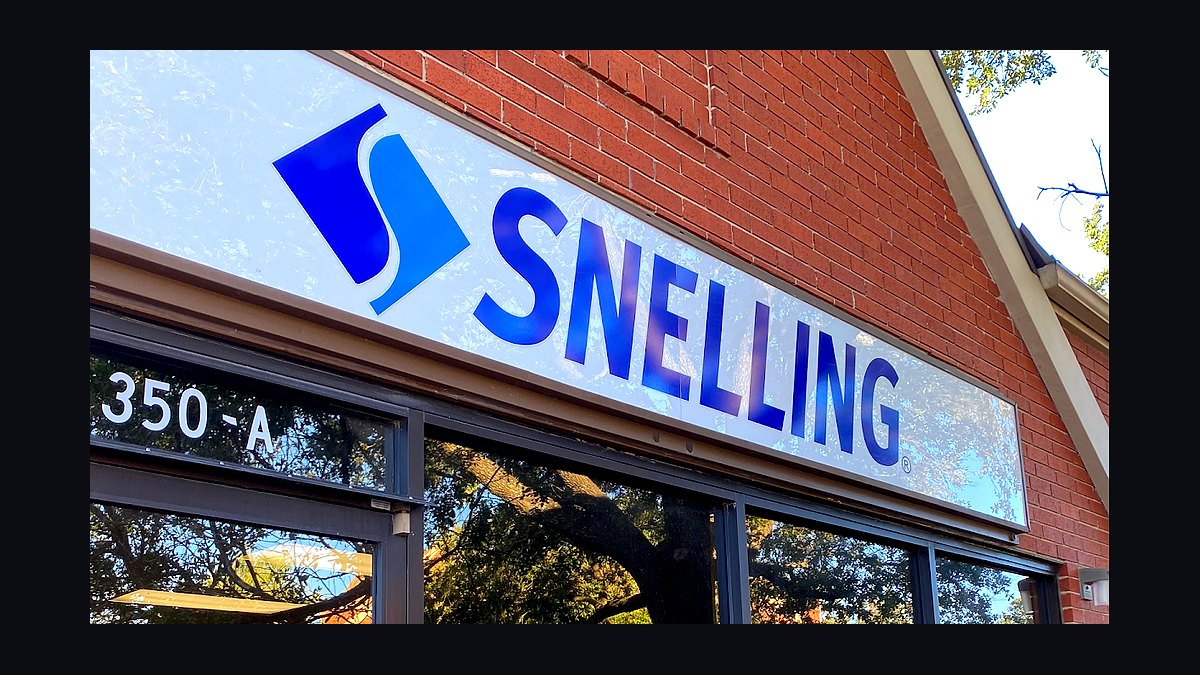
Buy an existing Snelling Staffing franchise rather than open a new one — unless you bring prior staffing sales experience and a light-industrial market. A resale gives you a live client book and immediate revenue; a startup gives you $47K–$151K entry, no upfront franchise fee, and 14–22 months of unpaid grinding before breakeven.
The two paths: opening cold versus buying a live book
There are two genuinely different transactions hiding under the phrase "get into Snelling," and confusing them is the single most expensive mistake prospective owners make.
Path one — open a new territory. You sign the standard franchise agreement with HireQuest, Inc. (NASDAQ: HQI), the publicly traded parent that acquired Snelling in 2021. The standard agreement carries no upfront franchise fee, which is unusual and genuinely attractive. Total startup investment per the current Item 7 runs roughly $47,150 on the low end to $150,750 on the high end. You get a protected territory, the Snelling brand, access to the master back office, and — the part that actually matters — payroll funding. HireQuest fronts the money to pay your temporary workers weekly while you wait 30 to 60 days for client invoices to clear. You start with zero clients, zero placed workers, and zero revenue on day one.
Path two — buy an existing office. Somewhere between 76 and 100 franchised Snelling offices operate across 35-plus states, and in any given year a fraction of those owners retire, burn out, or want liquidity. A resale transfers an existing client list, an active temp book, a trained internal recruiter or two, an established local phone number that still rings, and a track record you can underwrite. Staffing franchises typically trade at 2.5x to 4x seller's discretionary earnings (SDE). An office producing $120,000 SDE therefore asks somewhere around $300,000 to $480,000 — roughly three to eight times the cash you would need to open cold.

The trade is stark and it is not subtle. Opening cold is cheap in dollars and brutally expensive in time and personal risk: you are buying an option on your own sales ability, and you will fund 14 to 22 months of losses to find out whether that option is worth anything. Buying a live book is expensive in dollars and much cheaper in time: revenue exists on the day you close, the payroll funding relationship is already established, and the incumbent recruiters know which plant managers actually pick up the phone.
There is a third structure worth naming because it shows up in most real deals: the partial resale or territory carve. A retiring owner in a large market sells only the accounts inside a defined geography or vertical, and you sign a fresh franchise agreement for the remainder. You pay a smaller multiple on a smaller book but inherit enough revenue to cover overhead from month one. If you can find one of these, it is frequently the best risk-adjusted entry available.
A fourth option deserves mention only to be dismissed for most buyers: buying a distressed office at a discount. Staffing offices go distressed for two reasons — the owner stopped selling, or the market's industrial base left. The first is fixable and can be a genuine bargain. The second is not fixable by anyone at any price, and you must be able to tell the difference before you write a check.
How to decide between opening and buying
The decision is not about capital availability. It is about which of the two scarce inputs you actually possess: money or a Rolodex. A buyer with $80,000 liquid and fifteen years selling light-industrial staffing for Aerotek, Adecco, Kelly Services, Robert Half, or Express Employment should open cold — that buyer can produce the client book that a resale seller is charging 3x SDE for. A buyer with $400,000 liquid and a corporate operations background but no staffing relationships should buy an existing office, because the thing they cannot manufacture is exactly what the resale includes.

Run these gates in order, and stop at the first one you fail.
Gate one — do you have staffing or B2B sales experience? Not "sales experience" broadly. Specifically: have you ever carried a quota that required cold-calling plant managers, HR directors, and office managers? If no, opening cold is a coin flip weighted against you, and you should either buy an existing office with a working sales manager or not proceed at all.
Gate two — does the market have an industrial base? Count light-industrial employers with 50-plus employees inside a 25-mile radius. You need roughly 150 or more qualifying targets to support a single office. Pure white-collar metros, college towns, and retirement markets underperform badly because Snelling's core business is light industrial and clerical, not professional services.
Gate three — is the market already owned? Markets dominated by Aerotek, Aston Carter, or TrueBlue/Labor Ready with national MSP contracts in place are graveyards for a new unit. You cannot win on price against a billion-dollar competitor. If the incumbents fill orders in 24 hours at $19/hour, your only viable edge is vertical specialization or service depth — and you had better be able to articulate exactly what that means before you sign anything.
Gate four — can you fund 12 months of personal living expenses outside the business? The $47,150 floor assumes you take nothing out. Undercapitalized owners fail when the first meaningful client stretches payment to 75 days and the owner has to choose between rent and payroll.
The gates matter more than the enthusiasm. Every failure mode in this business traces back to skipping one of them, and the franchisor's willingness to sign you is not evidence that you passed. HireQuest is selling a franchise agreement; you are underwriting a decade of your life.
Concrete numbers behind each option

Here is the actual unit economics, because "should I open or buy" is unanswerable without them.
The bill-rate math. A typical light-industrial placement bills at roughly $22 per hour with a pay rate around $16 per hour. That leaves $6 per hour of gross margin, about 27 percent. One full-time temp working 2,000 hours per year generates roughly $44,000 in gross sales and $12,000 in gross margin. Royalty runs approximately 6 to 8 percent of gross margin on temp placements under the standard agreement — call it 7 percent, or about $840 on that temp. An alternate royalty structure exists on certain agreements (roughly 4.5 percent of payroll plus 18 percent of gross margin), and permanent placements carry about 7 percent of the placement fee. Marketing fund contribution runs 0 to 1 percent. Allocate office overhead at roughly $3,500 per temp on a 20-temp book and the franchisee keeps somewhere near $7,500 per active temp per year.
That number is the whole business. It means you need 15 to 25 temps out continuously to produce a livable income, and it means every incremental temp above your fixed-cost base is nearly pure contribution.
Startup cost, opening cold. The Item 7 range breaks down roughly as: office lease deposit and build-out $5,000–$30,000 for 800 to 1,500 square feet of Class B space; furniture, computers, and phones $5,000–$15,000 for two to four workstations plus applicant testing machines; signage $1,500–$7,500; ATS software and background-check setup $2,000–$5,000 tied into the HireQuest back office; initial marketing and business development $3,000–$15,000; insurance including E&O, general liability, and workers' comp bond setup $2,500–$8,000 (workers' comp itself runs through the HireQuest master policy); licenses, legal, and permits $1,500–$5,000 including a state staffing license where required; and three months of working capital at $20,000–$40,000. Franchisor guidance puts liquid capital required at $50,000 to $75,000.

Startup cost, buying existing. Purchase price at 2.5x–4x SDE, plus transfer fees, plus legal and accounting diligence of roughly $10,000–$20,000, plus working capital because the acquired book still consumes float. SBA 7(a) financing is available for staffing franchises — Snelling appears on the SBA Franchise Directory, which simplifies underwriting materially — at roughly prime plus 2.25 to 2.75 percent, with a typical 20 to 25 percent equity injection required. On a $350,000 acquisition that means $70,000–$88,000 of your own cash and a note that will consume $4,000–$5,000 a month of the business's cash flow for a decade.
Revenue and cash flow expectations. Average gross sales per office land somewhere in the $350,000 to $1,200,000 range based on industry benchmarks — and this is where the critical caveat lives. Snelling does not publish an Item 19 financial performance representation. There are no franchisor-verified earnings claims. Every number in the previous sentence is an industry estimate, not a disclosure. Franchisee-reported owner discretionary cash flow at maturity in years two to three ranges from about $40,000 to $145,000. Conservative first-year owner cash flow on a cold open runs negative $15,000 to positive $25,000, because payroll funding fees and the invoice float eat everything early. Payback typically lands between 14 and 36 months, with the spread driven almost entirely by how fast you land your first three clients.
What the blank Item 19 actually costs you. It shifts diligence onto you. Compare that to Express Employment Professionals, which runs $150,000 to $250,000 all-in with a substantially higher initial fee but publishes an Item 19 showing median franchise sales in the millions. You pay more for Express and you know what you are buying. With Snelling you pay less and you must generate the unit economics yourself by calling franchisees off the Item 20 list.
Market conditions shaping the 2027 entry

The staffing industry is recovering, but unevenly, and the mix shift matters more than the headline.
US staffing revenue is projected at roughly $183 billion in 2027, up about 2 percent from 2026's approximately $180 billion, per Staffing Industry Analysts. That modest growth follows three consecutive down years — roughly -14 percent in 2023, -12 percent in 2024, and -3 percent in 2025. A recovery from a low base is still a recovery, but nobody entering in 2027 should expect a rising tide.
Underneath the aggregate, the segments diverge sharply. Office and clerical staffing is forecast to decline another 3 percent in 2027 as generative AI absorbs entry-level administrative work — data entry, scheduling, basic correspondence, first-line phone coverage. Industrial staffing grows about 2 percent, IT staffing about 1 percent, healthcare staffing about 2 percent, and locum tenens leads at roughly 5 percent. For a Snelling franchisee this dictates strategy plainly: shift mix toward light industrial, manufacturing, distribution, and skilled trades — categories where AI cannot replace the body on the line — and away from pure clerical placement, which is a structurally shrinking category.
AI is also changing your cost structure, favorably. Modern applicant tracking systems — Bullhorn, JobDiva, Crelate — now bundle large-language-model resume parsing and candidate screening that compress recruiter time-per-hire meaningfully, on the order of 30 to 45 percent. Practically, one internal recruiter who could previously manage a 20 to 25 temp book can now run 30 to 40 temps. That single change alters the whole model: your largest controllable expense is internal recruiter salary at roughly $55,000 plus burden, and getting 50 percent more throughput per recruiter moves breakeven meaningfully earlier. HireQuest integrated AI sourcing across its brands, which is a genuine tailwind on the back end for franchisees.
Demand-side geography matters more than it used to. Reshoring of US manufacturing — semiconductor fab construction, EV battery plants concentrated in Tennessee, Georgia, Kentucky, and Ohio — is creating multi-year light-industrial staffing pipelines in specific counties. These are not national trends you read about; they are zip-code-level facts you can verify. A local Snelling office with a plant manager relationship at one of these facilities can lock in a single client worth $500,000-plus in annual gross sales, which is a full office's revenue from one logo. Simultaneously, return-to-office mandates at large employers pushed clerical temp demand up regionally even as the national clerical segment declined — meaning your local clerical read may diverge from the national forecast, and you should check rather than assume.
The portfolio effect is real too. HireQuest owns Snelling alongside HireQuest Direct, Northbound Executive Search, and Snelling Medical Professionals. Cross-referral lanes between brands let you monetize a request that falls outside your lane instead of declining it. An independent agency cannot do that.
Implementation sequencing for either path
Whichever path you choose, the diligence sequence is roughly the same for the first 45 days and diverges after.
Days 1–14: Read the FDD yourself. Pull the current Franchise Disclosure Document and read Items 6, 7, 19, 20, and 21 personally — not a broker's summary. Item 19 is blank; treat that as a flag requiring compensating diligence, not an automatic disqualifier. Item 20 gives you the franchisee contact list, including departures over the past three years. Call at least ten current owners spanning small, medium, and large markets, plus at least three who left. Ask each one the same four questions: what is your current active temp count, what is your blended gross margin percentage, how long did breakeven take, and would you do it again.
Days 15–30: Validate the market with data, not vibes. Run a count of light-industrial employers within 25 miles using a business database such as D&B Hoovers or ZoomInfo — you need 150-plus targets with 50-plus employees. Then pull BLS QCEW data for your county and chart manufacturing and warehousing employment over the trailing 36 months. A county losing industrial employment will not support a new office no matter how good your sales skills are.

Days 31–45: Shop your competitors. Walk into the local Express Employment, Spherion, and Labor Finders offices as a prospective client with a real-sounding need. Note how fast they respond, how many internal staff they have, and what bill rate they quote. If they can fill in 24 hours at $19 an hour, price is not your lever — specialization is.
Days 46–60: Model it at three volumes. Build a 36-month P&L at 10, 20, and 30 active temps. Include the HireQuest payroll funding fee, your elected royalty structure, office rent, one internal recruiter at $55,000 plus burden, technology at roughly $400 a month, and an owner draw of $0 for months 1–6, $4,000 a month for months 7–12, and $7,000 a month in year two. If the 10-temp scenario does not survive 18 months on your available capital, you are underfunded.
Days 61–75: Secure capital. SBA 7(a) lenders active in staffing franchises include Live Oak Bank, Huntington, and Wells Fargo. Expect prime plus 2.25 to 2.75 percent and a 20–25 percent equity injection. If you are buying rather than opening, this is also when you complete quality-of-earnings work on the seller's books — specifically verifying that gross margin is real and that the top three clients are not 70 percent of revenue.
Days 76–90: Sign or walk. For a cold open, the gate is a signed letter of intent or a credible verbal commitment from at least one anchor prospect to try a two-temp pilot. For a resale, the gate is a client concentration test and a retention agreement with the existing recruiting staff. If neither gate is met, walk — opening blind burns $60,000 of working capital before your first invoice clears.
Post-close operating priorities differ by path. Opening cold, months 1 through 6 are pure business development — 30 outbound calls a day to plant managers, HR directors, and office managers, with candidate sourcing secondary until you have orders to fill. Buying existing, the first 90 days are retention: personally meet every client representing more than 5 percent of revenue before the seller's announcement circulates, and lock in the internal recruiters with retention bonuses, because a departing recruiter takes candidate relationships and sometimes clients with them.
Alternatives if neither Snelling path clears the gates

Express Employment Professionals costs substantially more all-in but publishes an Item 19 with strong median unit revenue — you are paying for proven economics. Spherion offers a comparable back-office-funded structure with stronger clerical and professional brand pull and a published Item 19. Labor Finders concentrates on blue-collar day labor at lower bill rates and higher transaction volume, a genuinely different operating rhythm. Patrice & Associates runs a recruiting-only model — direct-hire placement with no temp payroll — at a low five-figure all-in cost, which eliminates float entirely and suits owners who want commission economics without payroll complexity.
There is also a non-franchise route worth taking seriously: operate an independent staffing agency using a back-office and payroll-funding license from a provider such as HireQuest Direct. You pay a funding fee instead of a royalty, which captures most of the capital-efficiency benefit, but you forfeit the Snelling brand, the protected territory, and the cross-referral lanes between HireQuest's brands. For an experienced operator with an existing client book, that trade often favors independence. For a first-timer, the brand and the system are worth the royalty.
Finally, if the appeal is exposure to staffing economics rather than operating a business, HireQuest trades publicly as HQI. Buying shares gives you portfolio-wide exposure with zero operational risk, zero personal guarantee, and zero cold calls — and it is the honest answer for anyone who read the 90-day sequence above and felt dread rather than energy.
Related questions
Is the missing Item 19 a dealbreaker?

Not automatically, but it shifts the entire burden of proof to you. Without franchisor earnings claims you must reconstruct unit economics from at least ten Item 20 franchisee calls. If owners will not share numbers, that silence is itself the answer.
Can I run a Snelling office semi-absentee?
No. Staffing is a daily-grind sales business — client visits, candidate interviews, dispute resolution, fill-rate reporting. Absentee owners consistently exhaust working capital before breakeven. If you will not personally make calls in months 1 through 18, buy a resale with a proven sales manager or skip it.
How much does the payroll funding actually help?
Substantially. Independent agencies typically die from the cash conversion gap — paying temps weekly while clients pay net-30 to net-60. HireQuest funding closes that gap, which is the core reason the model works at a sub-$150,000 entry cost rather than requiring a seven-figure credit facility.
What multiple will I get when I sell?
Roughly 2.5x to 4x SDE, with the higher end reserved for offices above about $200,000 SDE, with diversified client concentration and a management team that stays. A $60,000 SDE office attracts thin buyer interest at any multiple.
Should I specialize in a vertical or stay generalist?
Specialize. Franchisees concentrating on manufacturing, distribution, call center, or skilled trades in regional markets consistently outperform generalists, because vertical depth beats price when competing against national agencies with MSP contracts.
FAQ

Do I need prior staffing industry experience to succeed?
Strongly recommended, and effectively required if you are opening cold. Most successful franchisees come from staffing, recruiting, or B2B sales backgrounds. Without that experience the learning curve is steep and breakeven routinely stretches past 22 months — which is exactly when undercapitalized owners run out of runway.
What is the true total investment range for opening new in 2027?
Roughly $47,150 to $150,750 per the current Item 7, including working capital and initial marketing, with liquid capital guidance of $50,000 to $75,000. No upfront franchise fee applies on the standard agreement. Buying an existing office instead typically costs 2.5x to 4x seller's discretionary earnings.
How long does breakeven take?
Realistically 14 to 22 months on a cold open, driven by how quickly you land the first three clients and how fast you build to a continuous 12- to 15-temp book. A resale with an existing book can be cash-positive from closing, which is much of what the purchase multiple pays for.
What should I expect for first-year owner cash flow?
Conservative first-year owner cash flow on a new office ranges from negative $15,000 to positive $25,000. The spread reflects payroll float: you fund weekly wages while clients pay on net-30 to net-60 terms, so growth consumes cash before it produces income.
Does Snelling publish earnings claims?
No. Snelling does not include an Item 19 financial performance representation, meaning there are no franchisor-verified unit economics. You are buying the brand, the territory, and the back office. Every revenue and profit figure you evaluate must come from your own franchisee interviews and market analysis.
Which market conditions matter most in 2027?
An industrial employer base is the single biggest factor — you want 150-plus employers with 50-plus employees inside 25 miles, ideally with reshoring activity nearby. Clerical demand is structurally declining as AI absorbs entry-level admin work, so mix should lean light industrial, manufacturing, distribution, and skilled trades.
Sources
- HireQuest, Inc. Investor Relations
- Staffing Industry Analysts — US staffing market forecasts
- Snelling Staffing Services franchise profile — Franchise Gator
- SBA Franchise Directory — US Small Business Administration
- SBA 7(a) loan program overview
- Bureau of Labor Statistics — Quarterly Census of Employment and Wages
- Bureau of Labor Statistics — Employment Projections
- FTC — Franchise Rule and buying a franchise guidance
- IBISWorld — Employment & Recruiting Agencies in the US
- American Staffing Association — industry data and research
Related on PULSE
- Should I open or buy a Spherion Staffing franchise in 2027?
- How long does it take to open a franchise and break even in 2027?
- Should I open or buy a Tommy Gun's Original Barbershop franchise in 2027?
- What is seller's discretionary earnings and how is it calculated?
- How do SBA 7(a) loans work for franchise acquisitions?
This page will be disappearing soon. Save it to your device for $1 — or read it free while it is here.
@Kory-White- · if Venmo asks, the last 4 of my number are 2012
This page is gone.
This one is off the shelf now. $1 keeps it on your phone for good — the whole page, pictures and diagrams included.
 franchiseShould I open or buy a Taco Bell franchise in 2027?
 franchiseShould I open or buy a McAlister's Deli franchise in 2027?
 franchiseShould I open or buy a Dunkin' franchise in 2027?
 franchiseShould I open or buy a Firehouse Subs franchise in 2027?
 franchiseShould I open or buy an Anytime Fitness franchise in 2027?
 franchiseShould I open or buy a Roto-Rooter franchise in 2027?
 franchiseShould I open or buy a Kumon franchise in 2027?
 franchiseShould I open or buy an Ace Hardware franchise in 2027?
 franchiseShould I open or buy a Marco's Pizza franchise in 2027?
 franchiseShould I open or buy a Kona Ice franchise in 2027?