


Should I open or buy a Home Instead Senior Care franchise in 2027?
Quality
Certified

Yes — if you can write a check for $211,000 all-in (not the $98K-$125K headline), absorb 18-24 months of negative-to-flat cash flow while you stand up a caregiver bench in a market with 79% annual turnover, and personally run business development for the first three years. Home Instead franchisees post a median Average Unit Volume of $2.6M against a 5% royalty + 1% brand fund, with mature operators clearing 18-22% net margins — roughly $470K-$570K owner earnings at the median. Probably not if you expect a passive, manager-run unit in Year 1, lack $150K liquid outside the franchise fee, or are buying into a saturated metro where 4+ Home Instead territories already operate. Conservative Year-1 cash flow: negative $40K to positive $60K after owner draw.
The Real Numbers
The 2026 Home Instead Franchise Disclosure Document (issued under the Honor Technology parent) is the most current source — there is no separately issued 2027 FDD as of this writing, so 2027 underwriting uses the 2026 FDD with a 3-5% wage inflation overlay. Below are the Item 6, Item 7, and Item 19 numbers plus realistic working-capital adders most franchise consultants leave out.
| Line Item | Low | High | Source |
|---|---|---|---|
| Initial franchise fee | $54,000 | $54,000 | FDD Item 5 (2026) |
| Real estate / build-out (office) | $4,500 | $14,000 | FDD Item 7 |
| Computers, phones, software setup | $5,000 | $9,500 | FDD Item 7 |
| Insurance (GL, WC, auto, bonding) | $2,500 | $7,000 | FDD Item 7 |
| Initial marketing campaign | $5,000 | $10,000 | FDD Item 7 |
| Caregiver recruiting (pre-open) | $3,000 | $8,000 | FDD Item 7 |
| Training travel & lodging | $2,500 | $4,500 | FDD Item 7 |
| Additional working capital (3 mo) | $22,000 | $30,000 | FDD Item 7 |
| FDD-disclosed total range | $98,500 | $137,000 | FDD Item 7 |
| Realistic 12-month working capital | $60,000 | $80,000 | Operator interviews |
| Owner draw replacement (Year 1) | $0 | $60,000 | Operator interviews |
| All-in realistic cash need | $175,000 | $277,000 | Field data |
| Royalty | 5.0% of gross | 5.0% of gross | FDD Item 6 |
| National brand fund | 1.0% of gross | 1.0% of gross | FDD Item 6 |
| Median AUV (603 reporting US units) | — | $2,609,616 | FDD Item 19 |
| Top quartile AUV | — | $3,800,000+ | FDD Item 19 |
| Bottom quartile AUV | — | $980,000 | FDD Item 19 |
| Mature EBITDA margin | 16% | 22% | HCAOA benchmark |
| Year-1 EBITDA margin | -5% | 6% | Operator interviews |
| Payback period (median operator) | 30 mo | 48 mo | FDD Item 19 + field |
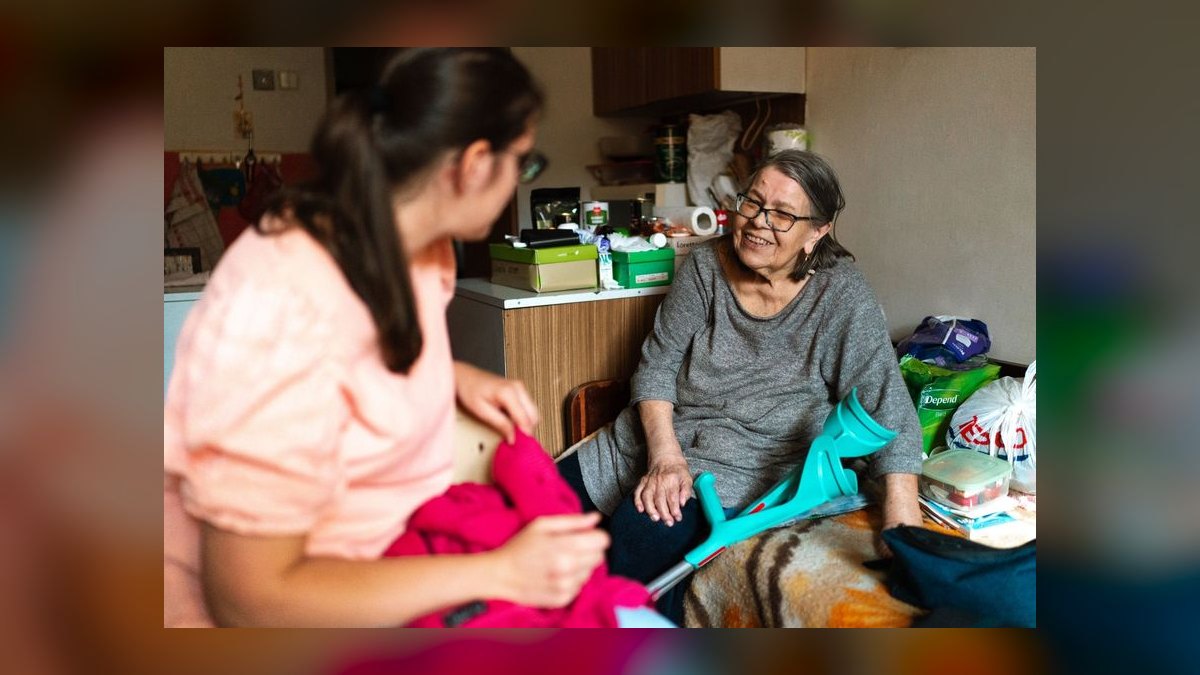
Two numbers that get buried. First, the $2.6M median AUV is a gross revenue figure on roughly $25-$32/hr billable rates — caregiver wages alone consume 62-68% of revenue, which is why net margins are nowhere near the top-line implies. Second, the bottom quartile of $980K AUV is not a rounding error: it represents the ~150 franchisees every year who are either ramping, under-resourced on sales, or operating in a saturated metro. Underwrite to the median, sensitivity-test to the bottom quartile, and never to the $3.8M top-quartile.
Who Wins With This Business
Wins are concentrated in five operator profiles. First, healthcare or hospital operations veterans who already speak the discharge-planner, social-worker, and case-manager language — they convert referrals 3-4x faster than first-time small-business owners. Second, multi-unit franchisees stacking 2-4 territories in a single MSA to absorb shared overhead (one care coordinator, one scheduler, one office); the Honor-era playbook explicitly favors multi-territory operators. Third, second-career executives age 50-65 who bring $300K-$500K in liquid capital, retirement-stage risk tolerance, and a personal network of community contacts (church, Rotary, country club) that seeds the first 30 clients. Fourth, adult children of dementia clients who carry emotional credibility with referral sources — they close families because they have lived it. Fifth, operators in markets with population over 50,000 seniors aged 75+ and no more than 2 existing Home Instead territories — territory density is the single biggest predictor of AUV.
Who Loses With This Business
Losses cluster around the same five errors, every year. First, passive investors who plan to hire a manager from Day 1 — Home Instead franchises that hit $2M+ are run by an owner-operator working 50+ hours/week for the first 30 months; absentee ownership predicts the bottom-quartile $980K outcome. Second, undercapitalized buyers who lean on the $98K FDD-disclosed minimum and run out of cash in Month 8-10 before referral velocity matures. Third, rural buyers in markets with fewer than 25,000 seniors aged 75+ — the math does not work; you cannot recruit enough caregivers to fill the schedule. Fourth, operators who hate sales — this business is 80% referral relationship management with hospitals, geriatric care managers, elder-law attorneys, and senior living communities; if you will not personally walk into a discharge planner's office every week, the business stalls. Fifth, buyers in oversaturated metros like Phoenix, Dallas, and Atlanta where 6-12 Home Instead territories already compete with Honor Care direct, Visiting Angels, Right at Home, Comfort Keepers, and a dozen independents chasing the same caregiver pool.
2027 Market Conditions
The 2027 macro setup is the most favorable demand environment in the category's 30-year history, paired with the worst labor environment. On the demand side, the 75+ population grows ~3% annually through 2030, the US home care market is projected at $225B by 2027 at an 11% CAGR, and 90% of adults over 65 state a preference to age in place — Medicare Advantage plans now reimburse non-medical home care under Special Supplemental Benefits for the Chronically Ill (SSBCI), a tailwind that did not exist five years ago. On the labor side, BLS projects a 25% home-health-aide shortfall by 2030, industry turnover sits at 79%, median caregiver wages have climbed to $17-$19/hr in most metros (up from $15.14 in 2024), and 22 states have passed or are debating home care worker minimum wage floors of $20-$22/hr. The Honor Technology parent (acquired Home Instead in 2021) has rolled out proprietary scheduling, caregiver app, and pay-card tooling across the network, narrowing the operational gap with venture-backed competitors. Net read for 2027: demand is structural and durable, but operators who cannot recruit and retain caregivers at $2-$4/hr above local market will lose hours to competitors faster than they can replace them.
The 90-Day Decision Tree
- Days 1-10: Validate the territory. Pull the US Census ACS 5-year estimate for population 75+ in the ZIP codes you would be granted, cross-reference the Home Instead territory map for existing operators within 25 miles, and confirm minimum 10,000 seniors aged 65+ with at least 4,000 aged 75+. Below those thresholds, stop.
- Days 11-20: Run the unit economics. Build a 36-month model at $28/hr billable, $17/hr caregiver wage, 65% gross margin, 6% royalty + brand fund, and $220K all-in capital. Stress-test at $980K AUV. If the bottom-quartile case bankrupts you, stop.
- Days 21-30: Validate-call 8 existing franchisees. Use the FDD Item 20 contact list — required disclosure of every current and former franchisee with phone numbers. Ask each: Year-1 revenue, Year-3 revenue, owner draw timeline, biggest mistake, what they wish they had known. Do not skip this step.
- Days 31-45: Discovery Day in Omaha. Attend the Honor/Home Instead Discovery Day at the Omaha support center. Interview the field business consultant assigned to your region. Walk away with a named sales pipeline for your territory.
- Days 46-60: Capital and entity. Confirm $150K liquid + $100K SBA-financeable. Form the single-member LLC, open the operating account, and lock the business insurance package (GL, WC, professional liability, bonded employees).
- Days 61-75: Sign and pre-open. Execute the franchise agreement, wire the $54K fee, lock office lease (300-600 sqft), and start caregiver recruiting — you need 15-20 caregivers hired and trained before client #1.
- Days 76-90: Soft launch. Complete Home Instead training in Omaha (5 days), run 30 referral-source intro meetings (hospitals, SNFs, elder-law attorneys, senior centers), and publish your Google Business Profile. Target 3-5 active clients by Day 90 and 8-12 by Day 120.
Alternative Plays
If Home Instead does not fit your capital, territory, or risk profile, four alternatives merit a side-by-side bid. Visiting Angels runs a $58K franchise fee and $95K-$130K all-in with 3.5% royalty — lighter royalty load but smaller average AUV (~$1.4M) and weaker national brand recognition with hospital systems. Right at Home sits at $50K fee, $90K-$160K total, 5% royalty, with $1.8M average AUV and strong VA contract penetration — best fit for operators near military bases. Comfort Keepers at $50K fee, $112K-$185K total, 5% royalty, with $1.6M average AUV and a dementia care positioning that resonates with adult-child buyers. Independent home care agency — skip the franchise entirely, save the $54K fee + 6% perpetual royalty, and accept the cost: you build the brand, software, training program, and referral relationships from scratch, typically reaching $1M AUV in 36 months instead of 18. The franchise premium buys roughly 12-18 months of ramp speed and a turnkey operations playbook — at $2.6M median AUV, that 6% royalty equals $156K/year forever, which is the price tag of the system.
FAQ
What is the total investment needed to open a Home Instead franchise? The headline range is $98K-$125K, but the realistic all-in cost is around $211,000 when you include working capital, legal fees, and initial staffing. You should have at least $150K in liquid assets beyond the franchise fee to cover the first year's operating shortfall.
How long does it take to become profitable?
Most new franchisees face 18-24 months of negative-to-flat cash flow while building a reliable caregiver team. After that, mature units often reach 18-22% net margins, with median owner earnings of $470K-$570K. But Year 1 cash flow typically ranges from negative $40K to positive $60K after your own draw.
What is the biggest challenge for new owners? Caregiver turnover is the top hurdle, averaging 79% annually. You'll need to constantly recruit, train, and retain staff while personally handling business development for the first three years. Expect to spend significant time on the road meeting clients and referral sources.
Can I run this as a passive investment? Not in Year 1. You must be hands-on with operations, especially sales and caregiver management. A manager-run unit is possible only after you've stabilized the business, usually by Year 3 or later. Passive ownership from the start is a common reason for failure.
How does the royalty structure work? You pay a 5% royalty on gross revenue plus a 1% brand fund contribution. With median unit volumes around $2.6M, that's roughly $156K in annual fees. Mature operators can still net 18-22% after these costs, but the fees are fixed regardless of your profitability.
Is it risky to buy into a metro with multiple Home Instead territories? Yes, if there are 4 or more existing territories in your market. Saturation can lead to cannibalization and slower growth. You'll need a strong local differentiation strategy, such as focusing on a specific niche like dementia care or partnering with local hospitals.
Bottom Line
Home Instead in 2027 is a viable franchise for a narrow operator profile. The median operator clears $2.6M AUV and $470K-$570K owner earnings, the demand backdrop is the strongest in the category's history, and the Honor parent has materially improved the technology stack. The buy hinges on three non-negotiables: $211K all-in capital (not the $98K headline), owner-operator commitment for 30 months minimum, and a territory with 4,000+ seniors aged 75+ and fewer than 2 existing Home Instead offices within 25 miles. Hit those three, run the 90-day decision tree with discipline, and the business pays back capital in 30-48 months and compounds from there. Miss any one of them — particularly the capital floor or the owner-operator commitment — and you join the bottom-quartile $980K cohort that is fighting for survival by Month 18. Buy the math, not the brochure.
Sources
- Honor Technology Acquires Home Instead — Honor press release
- Home Instead Franchise Review 2025 — Franchise Chatter FDD breakdown
- Home Instead FDD, Costs & Fees (2026) — Franchise Payback
- Home Instead Senior Care Franchise: Cost, Profit Margin & Owner Salary — Senior Care Authority
- Home Instead Franchise Insights — VettedBiz FDD analysis
- Home Instead Franchise Cost 2026 — Franchise Investor Data
- Home Instead Franchise Costs, Fees, ROI and Opportunity for 2026 — 1851 Franchise
- Home Care Workforce Crisis Report — Home Care Association of America
- Senior Caregiving Labor Shortage — CNBC, November 2025
- Home Care Industry Trends 2026 — myEZcare State of Home-Based Care
- Direct Care Workforce Key Facts — PHI National
- Honor to Acquire Home Instead — Home Health Care News via Honor
Home Instead Senior Care franchise review, Home Instead Senior Care franchise reviews, Home Instead Senior Care franchise rating, Home Instead Senior Care franchise review 2027, review of Home Instead Senior Care franchise
Related on PULSE
- Best senior care franchises to buy in 2027
- Should I open or buy an Amada Senior Care franchise in 2027?
- Should I open or buy an Always Best Care Senior Services franchise in 2027?
- Should I open or buy a Senior Helpers franchise in 2027?
- Should I open or buy a Griswold Home Care franchise in 2027?
- Should I open or buy a Home Helpers Home Care franchise in 2027?
This page will be disappearing soon. Save it to your device for $1 — or read it free while it is here.
@Kory-White- · if Venmo asks, the last 4 of my number are 2012
This page is gone.
This one is off the shelf now. $1 keeps it on your phone for good — the whole page, pictures and diagrams included.
 franchiseShould I open or buy a Stanley Steemer franchise in 2027?
 franchiseShould I open or buy a Take 5 Oil Change franchise in 2027?
 franchiseShould I open or buy a Pizza Hut franchise in 2027?
 franchiseShould I open or buy a Bruster's Real Ice Cream franchise in 2027?
 frShould I open or buy a McDonald's franchise in 2027?
 franchiseShould I open or buy a Dairy Queen franchise in 2027?
 franchiseShould I open or buy a Roto-Rooter franchise in 2027?
 franchiseShould I open or buy an Anytime Fitness franchise in 2027?
 franchiseShould I open or buy a Whataburger franchise in 2027?
 franchiseShould I open or buy a Jamba franchise in 2027?