


Should I open or buy a California Closets franchise in 2027?
Quality
Certified

Only if you bring design or construction credibility, roughly $400K–$600K liquid, and a metro with high household income and home values. California Closets is an owner-operated premium selling business, not passive income. First-time franchisees chasing fast cash flow generally get better cash-on-cash from lower-capital closet brands instead.
The outcome you should expect
Strip away the brochure and here is what a realistic 2027 entry looks like. California Closets — founded in 1978, franchising since the early 1980s, and owned by FirstService Brands, the same parent behind Paul Davis Restoration and CertaPro — publishes a total initial investment range in Item 7 of its Franchise Disclosure Document that spans from roughly the low six figures for a showroom-only design center to nearly a million dollars for a showroom-plus-manufacturing facility. That range is not a spectrum you get to pick freely. It is two fundamentally different businesses wearing the same sign.
The showroom-only model is a design-and-sell operation. You lease a retail bay, install display closets, hire designers who run in-home consultations, and push orders to a shared regional manufacturing plant that cuts, edges, and ships the panels. Your cost of goods is essentially a transfer price you do not control. Your margin lives in average ticket, close rate, and installation efficiency. Expect single-digit-to-low-teens EBITDA margins in the early years, because you are paying a royalty on revenue plus a brand fund contribution on top of a plant markup.
The showroom-plus-manufacturing model is a light industrial business with a retail front end. You are buying panel saws or a CNC router, edgebanders, dust collection, racking, delivery vans, and a lease on ten to forty thousand square feet of industrial space. Once utilization crosses roughly two-thirds of capacity, the margin story inverts — you capture the fabrication spread, and EBITDA margins in the high teens to low twenties become achievable. Below that utilization line, fixed overhead eats you alive. This is the single most consequential fork in the entire decision, and most first-time franchisees underestimate how different the two operating jobs are.
The outcome to expect in year one, honestly modeled: a new operator in a solid but non-legacy metro books something in the range of low-single-digit millions in gross sales — meaningfully below the system-wide average you will see quoted, because that average is dominated by twenty-five-year-old territories where one franchisee runs multiple showrooms and a full plant. Owner earnings in year one are often modest to negative once you pay yourself, service debt, and absorb the learning curve on job pricing. By year four or five, a competent operator in a good territory can plausibly build a business generating several hundred thousand dollars in annual owner earnings with real resale value. That is a good outcome. It is also a five-to-seven-year outcome, not a two-year one.
The adjacent comparison worth holding in your head: this is the same economic shape as high-ticket in-home services generally — kitchen refacing, garage systems, sunrooms, window replacement, and epoxy flooring all share the pattern of a consultative in-home sale, a multi-thousand-dollar ticket, a fabrication or supply dependency, and an installation crew whose quality determines your review score. If you would not enjoy running a window replacement dealership, you will not enjoy running this.
What drives that outcome
Four levers dominate, and none of them are the brand.
Territory demographics. Custom storage is a discretionary premium purchase funded by home equity and household surplus. A territory with high median household income, a high owner-occupied housing rate, and high median home values will produce average tickets several thousand dollars above a territory that fails those tests. In lower-income metros, the same brand, the same designers, and the same marketing spend produce jobs at roughly half the ticket — and because royalty and brand fund are percentages of revenue, not of gross profit, the fixed percentage bite hurts far more when your ticket is small. Territory quality is not a tiebreaker. It is the primary variable.
Average ticket and close rate. This business is won or lost in the living room. A designer who sits with a homeowner, measures a primary closet, and walks out with a signed order in the four-to-eight-thousand-dollar band is generating the revenue that makes the model work. A designer who quotes low, discounts to close, or sells a wire-shelf-plus-a-few-drawers job is generating traffic without profit. Operators who personally run their first several dozen consultations before delegating consistently outperform, because they learn what the market will actually pay before they train anyone else on pricing.
Designer retention. Custom millwork sales roles churn hard across the whole industry — closets, kitchens, and bath dealers all fight the same problem. Every departure costs you the ramp period, the leads that designer was nurturing, and often the referral relationships they built. If you cannot recruit, train, comp, and keep designers, you do not have a business; you have a permanent hiring project. This is the operating skill that separates the top quartile from everyone else, and it is why prior sales-management experience matters more than design taste.
Installation and rework. Every reworked job is a double hit: you pay labor twice and you burn a review. Install quality drives your online rating, your realtor referrals, and your referral rate — which in mature territories supplies a meaningful minority of total lead flow. Operators who treat installers as interchangeable subcontractors tend to discover the cost of that decision in month fourteen.
Benchmarks and realistic ranges
Use the FDD as your source of truth and treat every third-party summary — franchise portals, broker decks, "top franchise" listicles — as marketing until verified. That said, here are the benchmark bands a practitioner should model against, stated as ranges rather than false precision.
Capital. Budget above the midpoint of the disclosed Item 7 range, not at the bottom. Item 7 covers opening costs and a limited initial working capital period — typically a few months. It does not cover the full ramp. Plan on a separate working capital reserve or line of credit equal to a meaningful fraction of your build-out, because the gap between opening and consistent positive cash flow is measured in quarters, not weeks. If your total liquid position leaves you unable to fund six-plus months of payroll, rent, and marketing without revenue, you are undercapitalized regardless of what the minimum requirement says.
Ongoing fees. Expect a mid-single-digit percentage royalty on gross revenue plus a brand fund contribution of one to a few percent, with a minimum-royalty floor that kicks in after the initial ramp years. Read that floor clause carefully — it converts a variable cost into a fixed one exactly when a struggling territory can least afford it. Also budget local marketing spend above the brand fund; the national fund does not fill your calendar in a secondary metro.
Revenue ramp. Model year one conservatively, at a fraction of whatever system average appears in Item 19, and require your model to work at that conservative number. A healthy trajectory roughly doubles year-one revenue by year four in a good territory. If your pro forma needs system-average revenue in year two to service debt, the model is not conservative — it is a hope.
Margin. Showroom-only operations run thin in the early years; the manufacturing model runs thinner at first and then better, contingent entirely on utilization. Neither model produces meaningful owner earnings in year one after a market-rate owner salary. Cap your own draw for the first couple of years in the model and see whether the business still clears your target. That is the honest test.
Payback. For the lighter model, a two-to-three-year cash payback is a reasonable planning target in a strong territory with disciplined pricing. For the manufacturing model, plan on substantially longer — often double — in exchange for a higher terminal earnings ceiling and a more defensible asset at exit. Anyone promising you faster than that is selling, not modeling.
Debt service. With SBA 7(a) pricing tied to prime plus a spread, a mid-six-figure loan carries a monthly payment in the several-thousand-dollar range. Run your model at a rate one to two points above today's quote. Franchisees who bought during the cheap-money years had a materially easier ramp than a 2027 cohort will, and comparing yourself to their reported results is an apples-to-oranges error.
Item 20 turnover. Count transfers, terminations, non-renewals, and ceased operations for the trailing three years and express them as a percentage of average units. A system with a low single-digit annual exit rate is healthy. Elevated exits — especially terminations rather than transfers — tell you more about franchisee economics than any Item 19 average ever will. Also note how many units are company-owned versus franchised, and which direction that ratio has moved. A parent that keeps buying territories back is telling you where it believes the value is, and it may also mean thin resale competition when you eventually want out.
Risks, edge cases, and failure modes
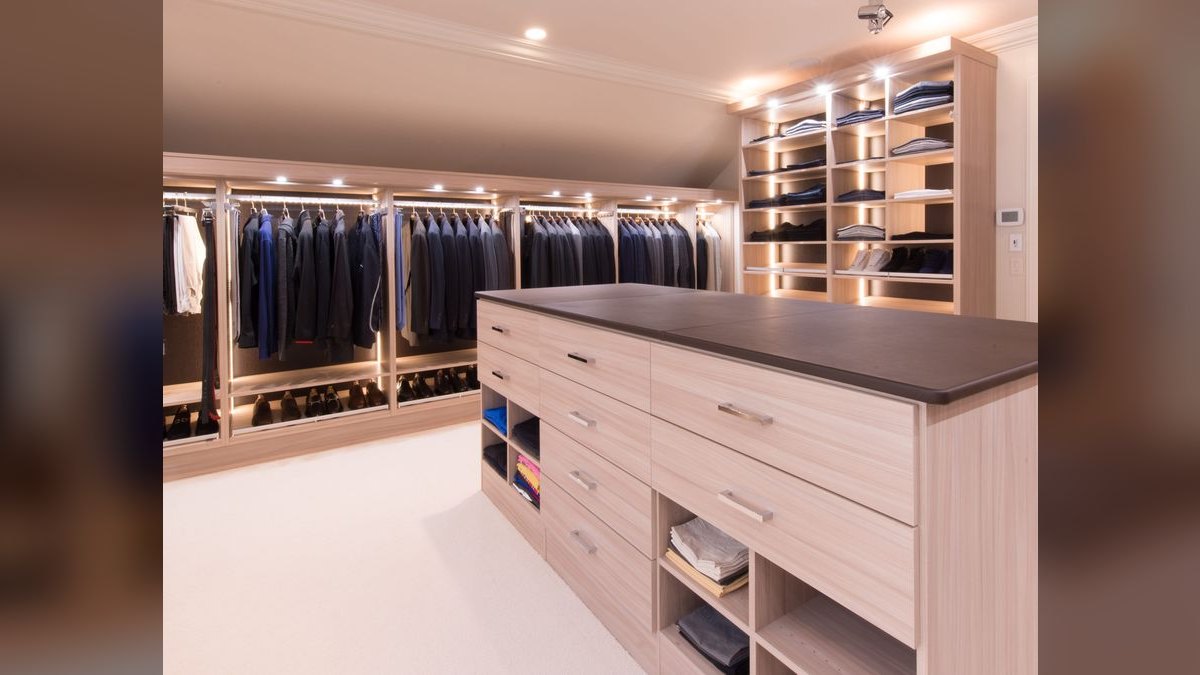
The absentee-owner trap. The most reliable way to lose money here is to buy a territory and hire a general manager to run it while you keep your day job. High-ticket consultative selling with a design component and an installation crew does not tolerate remote management in year one. There is no drive-thru script. Someone with real authority has to price jobs, resolve escalations, and hold the sales team accountable weekly.
Under-pricing your way into a hole. New operators quote soft to win early jobs, then discover their gross margin does not cover overhead. Because closet jobs carry a lead time, you can book two months of underpriced backlog before the P&L tells you. Set a floor margin per job and enforce it from day one, even at the cost of close rate.
Buying the manufacturing model without production experience. Running a fabrication plant means nesting optimization, material yield, scheduling, machine maintenance, and OSHA-grade safety practice. If you have never managed a shop floor, the plant will humble you. A partially utilized plant burns significant fixed cost every month before a single panel ships, and that burn does not pause while you learn.
Material and tariff exposure. Panel goods — melamine, particleboard, plywood — are commodity inputs with real supply and trade-policy exposure. A single-digit percentage increase in raw material cost is survivable if you can pass it through; it is a margin event if your pricing is anchored to a competitor's promotional offer. Showroom-only operators are doubly exposed because they take a plant transfer price they cannot renegotiate.
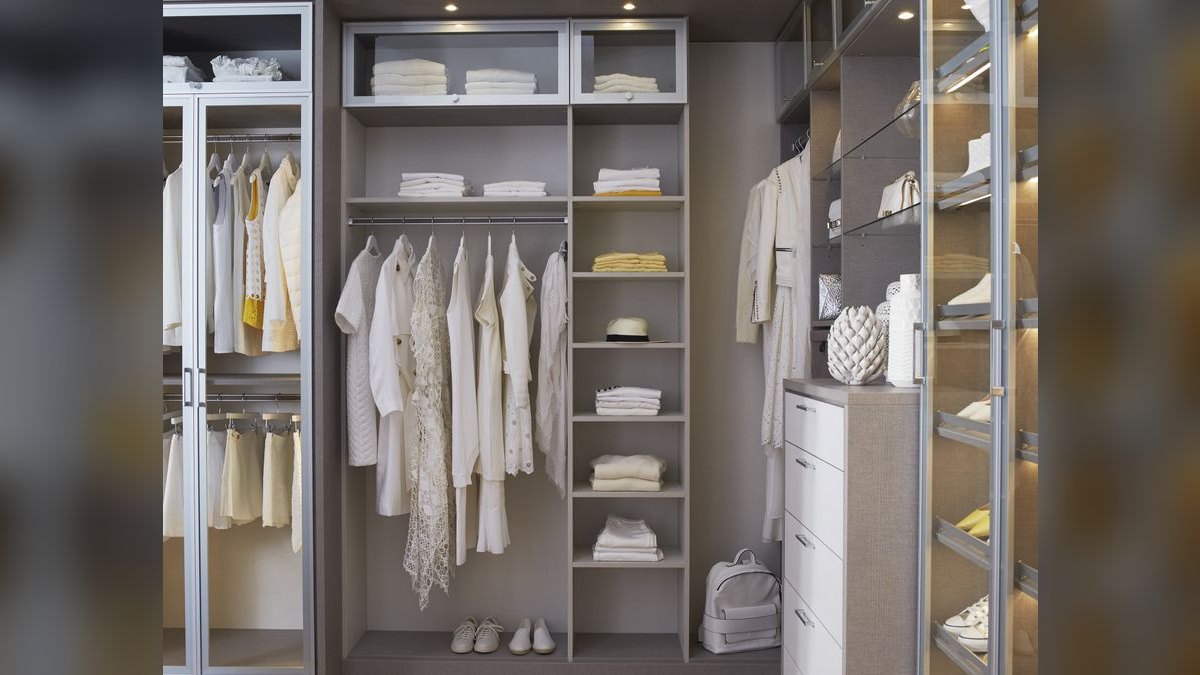
Competitive lead-gen pressure. Lower-capital closet competitors have expanded aggressively and compete hard on digital lead cost and on coupon-driven offers. Your defense is positioning and referral flow, not matching their discount. But understand that in many DMAs you will be the expensive option in a comparison shop, which means your designers must be able to justify a premium in the room.
Territory encroachment and channel edges. Read the territory definition and reservation language closely: what happens with national accounts, builder channels, e-commerce, and adjacent-brand cross-selling within FirstService's portfolio? Ask specifically who owns a lead that comes from a homeowner just outside your boundary, and how multi-unit or builder business is allocated.
Resale liquidity. Your exit is either a sale to another franchisee, a sale to the franchisor, or a wind-down. If corporate has been consolidating territories, your buyer pool is narrower than it looks and your multiple is more negotiated than market-set. Ask existing franchisees what recent transfers actually traded at — not the asking price.
The macro edge case. Demand for premium storage is levered to home equity, home transaction volume, and remodeling sentiment. Renovation spending is cyclical. Model a year where your revenue drops fifteen to twenty percent and confirm you survive it with your debt load. If a single soft year breaks you, you are too levered for a discretionary home-improvement business.
A practical rollout plan

Ninety days of disciplined diligence is cheap insurance against a ten-year agreement.
Weeks 1–2: documents. Request the current FDD plus the two prior years. Read Items 5, 6, 7, 11, 12, 17, 19, and 20 in that order, and trend the Item 19 disclosures across all three years — a flat or declining average with a growing unit count is a different story than a rising one. Have a franchise attorney (not a general business attorney) mark up the agreement, with particular attention to the minimum royalty floor, transfer conditions, renewal terms, personal guarantee, and post-term non-compete.
Weeks 3–4: territory. Pull Census American Community Survey data for the proposed territory: median household income, owner-occupied share, median home value, housing age, and household count. Cross-reference remodeling activity with a reputable index such as Harvard's Joint Center for Housing Studies Leading Indicator of Remodeling Activity. Then physically drive it. Count competing closet, garage, and kitchen showrooms. Check their reviews and their promotional pricing. If the territory fails two of your three demographic tests, no amount of operating skill fixes it.
Weeks 5–6: franchisee calls. Call ten or more existing franchisees from the Item 20 list, deliberately including any who left. Ask five questions: what did year one actually produce versus your plan; what is your current EBITDA margin; what is your designer turnover; what does a lead cost you today; and would you sign again at today's investment level. Multiple hesitant answers on the last question is your signal to stop.
Weeks 7–8: field time. Spend a full day at a top-performing territory at your own expense. Ride along on an in-home consultation and watch a mid-five-figure-annualized designer close a real job. Then spend a day with an install crew. This is the highest-yield diligence money you will spend, because it is the only step that tells you whether you actually want the job you are buying.
Weeks 9–11: the model. Build a five-year monthly model — monthly, not annual, so you see the cash trough. Use conservative revenue, a market-rate salary for whoever does the general-manager work, elevated designer churn, a rate one to two points above your loan quote, and a downside year in year three. Require it to clear your owner-earnings target by year five with a reserve intact.

Weeks 12–13: financing and negotiation. Secure SBA 7(a) pre-approval and a separate working capital line beyond Item 7. Then negotiate. Ask about a royalty ramp in the early quarters, build-out support, extra designer training, and a longer initial territory development window. Franchisors negotiate more than candidates assume, especially on secondary-market territories. Get every concession in the agreement or an addendum — not in an email.
Then compare, honestly. Before signing, price the alternatives side by side on cash-on-cash return, not on brand prestige: a lower-capital closet franchise, a multi-product home-organization brand that bundles garage and office to smooth seasonality, an independent build using a third-party fabrication partner, or the acquisition of an existing California Closets territory with an existing designer bench and lead flow. The acquisition route routinely beats greenfield on time-to-cash-flow, which is usually the variable that determines whether a first-time owner makes it.
Related questions
Is buying an existing territory better than opening a new one?
Usually yes for a first-time owner. An existing territory comes with trained designers, install crews, lead flow, and reviews — which compresses time-to-cash-flow by roughly two years. You pay a multiple of earnings for that, but you skip the cash trough that kills most greenfield operators.
How much does the FirstService parent company matter?
Mainly for lender credibility and operational infrastructure. A publicly traded parent makes SBA underwriting easier and signals system stability. It does not improve your territory demographics, your close rate, or your designer retention — the things that actually determine your outcome.
Do I need a license or trade background to operate?

Requirements vary by state and municipality; installation may require a contractor registration or license depending on scope. Confirm locally before signing. Separately, prior construction or kitchen-and-bath experience is not required by the franchisor but strongly correlates with top-quartile performance.
What is a realistic owner salary in year one?
Plan for little to none beyond a modest draw. Model a market-rate salary as a cost even if you do not take it, so you can see true business profitability. Operators who pay themselves fully in year one usually do it out of the working capital they will need in month fourteen.
How seasonal is custom closet demand?
Meaningfully. Spring and fall renovation cycles and pre-holiday organizing pushes outperform mid-winter. Multi-product brands that bundle garage flooring or home offices smooth this better. Plan cash for the trough months rather than assuming a flat twelfth of annual revenue each month.
FAQ
How much total capital do I actually need?
More than the bottom of the Item 7 range. Take the disclosed total investment for the model you are choosing, budget above its midpoint, then add a separate working capital reserve or credit line sized to cover six or more months of payroll, rent, and marketing with no revenue. Undercapitalization, not demand, is the common cause of failure.
Which model should a first-time franchisee choose?

Showroom-only, in almost every case. It is a smaller check, a shorter payback, and one job — selling and installing — instead of two. Add manufacturing later, if at all, once you have proven demand and volume that justifies the fixed overhead and you have hired someone who has actually run a shop floor.
Is the system-wide average revenue figure trustworthy?
The number itself is audited and disclosed, but it is an average across a system with decades-old multi-showroom territories in it. Averages skew upward. Ask for the distribution, the medians by cohort, and first-year results for units opened in the last three years. Model to that, not to the headline.
What should I ask existing franchisees that they will actually answer?
Cost per lead, designer turnover, current close rate, and whether they would sign again at today's investment. Those four get honest answers because they are operational rather than personal-financial. Revenue questions get deflected; lead-cost questions do not.
How does this compare to other home-improvement franchises?
Structurally it is the same animal as window, kitchen-refacing, garage-system, and bath-remodel dealerships: in-home consultative sale, high ticket, install crew, review-driven referral flow. Compare across that whole category on cash-on-cash return and operating intensity rather than only against other closet brands.
What is the single biggest predictor of success here?
Whether the owner can recruit and keep good designers. Territory quality sets your ceiling; designer retention determines how close you get to it. Everything else — brand, showroom finish, marketing budget — is downstream of having people who can sell a premium job in a homeowner's living room.
Sources
- https://www.ftc.gov/business-guidance/resources/franchise-rule-compliance-guide
- https://www.sba.gov/funding-programs/loans/7a-loans
- https://www.census.gov/programs-surveys/acs
- https://www.jchs.harvard.edu/research-areas/remodeling
- https://www.nahb.org/news-and-economics/housing-economics
- https://www.franchise.org/
- https://www.ftc.gov/business-guidance/industry/franchises-business-opportunities
- https://www.bls.gov/ooh/construction-and-extraction/carpenters.htm
- https://www.firstservice.com/
- https://www.consumerfinance.gov/consumer-tools/mortgages/
Related on PULSE
- Should I open or buy a Closets by Design franchise in 2027?
- How long does it take to open a franchise and break even in 2027?
- Should I open or buy a Tommy Gun's Original Barbershop franchise in 2027?
- What questions should I ask existing franchisees before I buy?
- How do I evaluate a franchise territory before I sign?
This page will be disappearing soon. Save it to your device for $1 — or read it free while it is here.
@Kory-White- · if Venmo asks, the last 4 of my number are 2012
This page is gone.
This one is off the shelf now. $1 keeps it on your phone for good — the whole page, pictures and diagrams included.
 franchiseShould I open or buy a Smoothie King franchise in 2027?
 franchiseShould I open or buy a Servpro franchise in 2027?
 franchiseShould I open or buy a Valvoline Instant Oil Change franchise in 2027?
 franchiseShould I open or buy a Drybar franchise in 2027?
 franchiseShould I open or buy a Bojangles franchise in 2027?
 franchiseShould I open or buy a Jimmy John's franchise in 2027?
 franchiseShould I open or buy a Chipotle franchise in 2027?
 franchiseShould I open or buy a Kona Ice franchise in 2027?
 franchiseShould I open or buy a Taco Bell franchise in 2027?
 franchiseShould I open or buy a Jiffy Lube franchise in 2027?