


Should I open or buy a Closets by Design franchise in 2027?
Quality
Certified
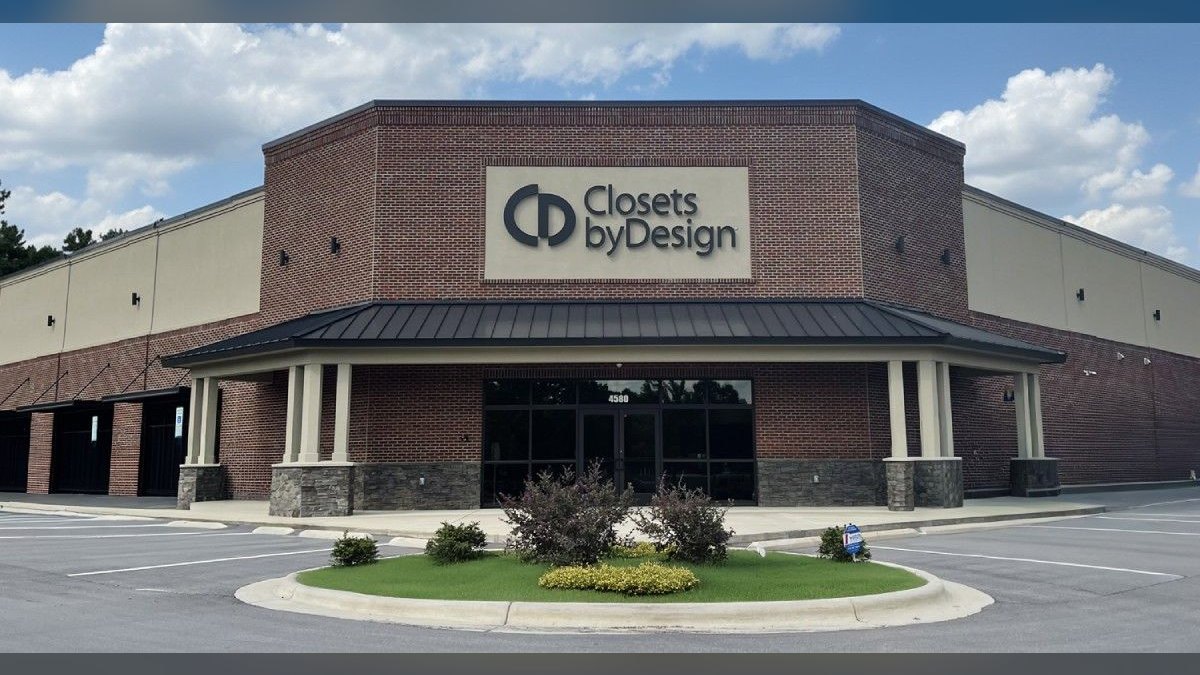
Yes — open or buy a Closets by Design franchise in 2027 if you have $200K liquid plus $500K net worth, can run a showroom + manufacturing + install operation with 8-15 employees, and want to anchor in a metro of 250K+ households. The Item 7 investment runs $154,000-$511,000; the 2024 FDD Item 19 reports $7,221,000 average unit volume across 56 mature franchised businesses. Expect a 24-36 month payback on a fully-ramped unit, conservative Year-1 cash flow of $80K-$180K owner take, and EBITDA margins of 12-18% once you exit the ramp. Probably not — unless you are willing to be a hands-on operator-manager for the first 36 months. This is not a semi-absentee model; it is a mid-market manufacturing business with a B2C sales motion.
The Real Numbers
The 2024 FDD (Item 7) prices the total initial investment at $154,000 on the low end and $511,000 on the high end. The initial franchise/territory fee is the greater of $18,000 or $1,000 per 10,000-household increment in your protected territory — a 250K-household metro lands near $25,000. The continuing royalty is 7.25% of monthly gross revenue or a $3,000 minimum, whichever is higher. The National Promotion and Protection Fund adds 2.25% of gross revenue for brand-level marketing. Local marketing is operator-funded on top of that, typically 6-10% of revenue in Years 1-2 to feed lead flow.
Item 19 (2024 FDD) reports $7,221,000 average annual gross revenue per mature franchised business (the 56 units open 12+ months as of December 31, 2024). The system total was 82 units (76 franchised, 6 corporate), up from 61 franchised businesses in 2023 — reflecting active territory sales through the Gardena, California-headquartered franchisor.
| Line Item | 2027 Estimate (Mid-Range Operator) | Source |
|---|---|---|
| Initial franchise/territory fee | $18,000 - $50,000 | FDD Item 5 |
| Build-out (showroom + production) | $35,000 - $180,000 | FDD Item 7 |
| Manufacturing equipment (CNC, edge banders, dust) | $25,000 - $90,000 | FDD Item 7 |
| Computers, software, vehicles | $15,000 - $45,000 | FDD Item 7 |
| Initial marketing spend (3 mo) | $20,000 - $60,000 | FDD Item 7 |
| Working capital (3 mo) | $40,000 - $85,000 | FDD Item 7 |
| TOTAL INITIAL INVESTMENT | $154,000 - $511,000 | FDD Item 7 |
| Royalty rate | 7.25% of gross (or $3K/mo min) | FDD Item 6 |
| National marketing fund | 2.25% of gross | FDD Item 6 |
| AUV (mature units, FY2024) | $7,221,000 | FDD Item 19 |
| Median unit AUV (estimate) | $3.8M-$4.5M | derived from Item 19 distribution |
| Year-1 ramp revenue (conservative) | $900K - $1.6M | operator interviews + system patterns |
| EBITDA margin (mature unit) | 12% - 18% | industry comp (Sharpsheets analysis) |
| Payback period | 24 - 36 months | net of debt service |
The AUV mean is heavily skewed — the top-quartile operators in metros like Houston, Dallas, Atlanta, Phoenix, and Long Island push $10M-$15M+; the median operator sits closer to $3.8M-$4.5M. Plan on the median, not the mean when underwriting.
Who Wins With This Business
The operators who win with Closets by Design share a specific profile. They are former operations leaders, ex-construction GMs, or second-time franchisees who already understand shop-floor scheduling, install crew management, and B2C sales-cycle mechanics. They take the owner-operator seat for 24-36 months rather than treating this like a passive investment. They anchor in dense metros with $100K+ median household income — the target customer is a homeowner spending $4,000-$12,000 on a master closet, garage system, or home office, and density of qualified leads is the single largest driver of AUV.
Winners also invest aggressively in local digital marketing on top of the 2.25% national fund — typical mature operators run $15K-$40K/month in Google LSA, Meta retargeting, and Yelp. They track design-appointment-to-sold-job conversion weekly (target 45-55% for mature designers) and install-to-revenue cycle time (target 21-28 days). They standardize on the corporate manufacturing process rather than reinventing — the value of the system is the playbook, not creative freedom. Operators who have prior franchise experience (a Servpro, FastSigns, or Floor Coverings International background) typically ramp 30-40% faster than first-timers.
Who Loses With This Business
The operators who lose money with Closets by Design fall into predictable buckets. Semi-absentee buyers are the single largest failure mode — this is a multi-departmental operation (design sales, manufacturing, install, service, AR) and the owner-as-coach model breaks under 36 months. Under-capitalized operators who skim the $154K low-end and try to defer marketing spend, working capital, or a real GM hire stall at $700K-$1.1M annual revenue and never escape the royalty floor pressure.
Small-market operators in sub-150K-household territories hit a hard AUV ceiling around $1.5M-$2M — the math does not work because fixed costs (rent, GM, royalty floor, manufacturing labor) consume 55-60% of gross revenue before you serve a customer. Operators who fight the system — refusing to use corporate's lead-handling scripts, designer-comp model, or CRM/ERP stack — typically underperform by 25-40% versus operators who execute the manual. Recent acquirers who buy an underperforming unit without 3 years of cash to fund a turnaround lose because the seller's customer list and Google reputation are usually the asset and both decay within 90 days.
2027 Market Conditions
The U.S. custom closet category is in a structural tailwind entering 2027. The global custom closets market was estimated at $33.7 billion in 2026 and is projected to compound at 7.2% CAGR through 2035 (Global Growth Insights). The U.S. share is approximately 38-42% of global, anchored by California, Texas, and Florida, which together drive 40%+ of installs because of housing turnover and new-construction velocity. Approximately 14 million U.S. households installed new or upgraded closet systems in 2024, and The Freedonia Group projects home organization product sales reaching $13.5 billion in 2025.
The 2027 macro setup favors operators with capital. Mortgage rates settling into the 6.0-6.5% range unfreezes housing turnover, and every existing-home sale produces a 60-90 day window of remodel spending that closet operators capture. Build-out and labor inflation has stabilized — CNC equipment from Biesse, SCM, and Holzma is back to 2023 list pricing, and install labor is no longer the bottleneck it was in 2022-2024. AI-driven design tools (Closets by Design rolled an internal CAD-to-quote workflow in late 2025) compress design-appointment time from 90 to 55 minutes, which lifts designer capacity 30%. The competitive threat is California Closets (premium-priced, integrated kitchens/bathrooms) on one side and Inspired Closets and The Container Store's Elfa on the other. Closets by Design's middle-market lane ($10-$30/sq ft) remains defensible because of manufacturer-backed standardization that low-end IKEA-style players and high-end custom shops cannot match on unit economics.
The 90-Day Decision Tree
- Days 1-10 — Pull and read the current FDD. Get the 2026 FDD directly from Closets by Design franchise development. Read Items 5, 6, 7, 19, 20, and 21 in full. Cross-reference Item 19's AUV against the distribution table — do not anchor on the mean.
- Days 11-20 — Call 12 existing franchisees from Item 20. Use a structured script: actual Year-1 revenue, designer ramp time, install-cycle days, marketing spend as % of revenue, royalty floor pain points, and would-they-buy-again. Skip the franchisor's curated list — call randomly from the full disclosure.
- Days 21-35 — Territory analysis. Pull U.S. Census 2026 ACS data for your target metro. Filter for households with $100K+ income, owner-occupied, 5+ years in residence. You want 75,000+ qualifying households inside a 45-minute drive of your showroom.
- Days 36-50 — Financial model. Build a 36-month P&L with revenue ramp, royalty + national fund, local marketing at 8%, labor at 28-32% of revenue, COGS at 32-38%, rent at 4-6%, and SG&A. Pressure-test at 60% of corporate's AUV claim.
- Days 51-65 — Capital stack. Confirm SBA 7(a) eligibility with an SBA-preferred lender. Closets by Design is on the SBA Franchise Directory. Typical structure is $200K-$300K SBA loan + $150K-$200K operator equity + working capital line of credit.
- Days 66-75 — Site selection. Industrial-flex space, 6,000-8,000 sq ft, dock-high preferred. Showroom needs street visibility or a destination-retail corridor. $10-$16/sq ft NNN is the 2027 target in mid-tier metros.
- Days 76-85 — Discovery Day and final operator interviews. Visit two top-quartile and two bottom-quartile units. Validate the manufacturing process, designer comp plan, and lead-handling SLA in person.
- Days 86-90 — Sign or walk. Make the binary call. Do not slow-walk this — territory protection only lasts as long as the franchisor leaves it open.
Alternative Plays

If Closets by Design does not pencil for your metro or capital level, consider these adjacent plays before walking away from home organization entirely. California Closets is the premium-tier alternative with a higher Item 7 ($169K-$632K) and stronger brand premium but tighter territory availability. Inspired Closets sits at the mid-tier with lower entry ($138K-$365K) and a more flexible manufacturing model but smaller AUV (~$2.5M-$3.5M mature). More Space Place ($73K-$202K) and Tailored Living ($65K-$185K) are lower-capital alternatives with garage and home-office add-ons that diversify revenue.
Independent operators can launch a closets-and-garage business without a franchise for $80K-$180K using off-the-shelf software (CabinetVision, KCDw, Closet Pro) and a CNC from Thermwood or Laguna, but expect 24-36 months to build local SEO and reputation that the Closets by Design brand and national fund compress to 9-15 months. The roll-up acquisition play — buy 2-3 independent operators in adjacent metros, install shared back-office — is the highest-return path for experienced operators with $1.5M+ deployable but carries integration risk that a franchise resale does not.
FAQ
What is the total investment range to open a Closets by Design franchise? The Item 7 investment estimate in the FDD ranges from $154,000 to $511,000. This covers franchise fee, showroom setup, manufacturing equipment, inventory, and initial working capital. Actual costs depend on territory size, real estate, and build-out requirements.
How much liquid capital and net worth do I need? Franchisor requirements typically call for at least $200,000 in liquid capital and a minimum net worth of $500,000. Lenders may require additional reserves, so having more liquidity can improve financing options.
What is the average revenue for a mature Closets by Design franchise?
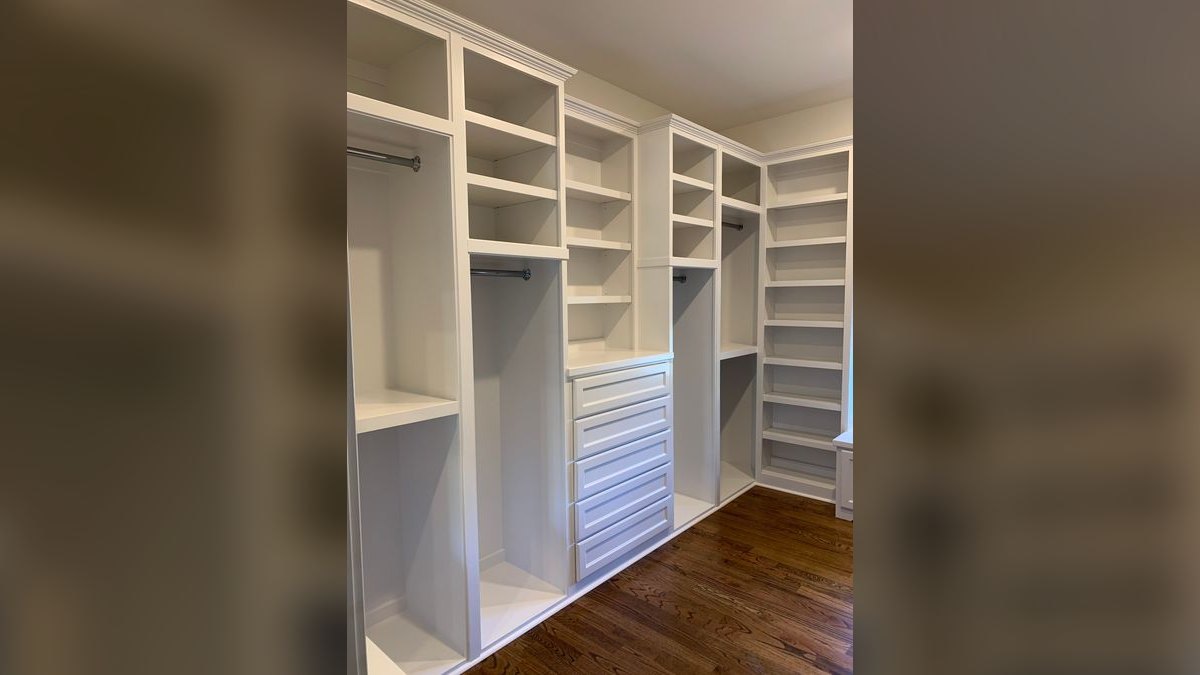
The 2024 FDD Item 19 reports an average unit volume of approximately $7,221,000 across 56 mature franchised businesses. Individual results vary widely by market, local competition, and operator experience.
How long does it take to reach profitability? Most owners see a 24-36 month payback period on a fully-ramped unit. Year-1 cash flow for the owner is typically in the $80,000 to $180,000 range, with EBITDA margins of 12-18% once operations stabilize.
Can I run this franchise semi-absentee or as a passive investor? No—this is a hands-on operator-manager model, especially for the first 36 months. You must be involved in showroom sales, manufacturing oversight, and installation management. Semi-absentee ownership is not realistic.
What market size is needed for a successful location? The franchisor recommends a metropolitan area with at least 250,000 households. A larger population base supports the showroom, manufacturing, and installation team of 8-15 employees needed to generate typical revenue.
Bottom Line
Closets by Design in 2027 is a viable franchise for operators with $200K liquid, $500K net worth, prior multi-department operations experience, and a 36-month full-time commitment. The economics work — $7.2M AUV mean, $3.8M-$4.5M median, 12-18% EBITDA, 24-36 month payback — but only in dense metros with 250K+ qualifying households. The 2027 macro tailwind is real (7.2% category CAGR, housing turnover unlocking, AI-design lifting designer capacity), but execution risk is high and failure modes are predictable: semi-absentee buyers, under-capitalized operators, small-market territories, and franchisees who fight the corporate playbook. If you fit the profile, lock a top-100 metro territory in 2027 before they sell out. If you do not fit the profile, look at Tailored Living, Inspired Closets, or an independent build before forcing a Closets by Design unit that will under-perform.
Sources
- Closets by Design Franchise Review 2026: Costs, Fees, News, Average Revenues and/or Profits — Franchise Chatter
- Closets By Design Franchise FDD, Costs & Fees (2026) — Franchise Payback
- Closets By Design Franchise FDD, Profits & Costs — Sharpsheets
- Closets by Design Franchise (Costs + Fees + FDD) — Franchise Direct
- Closets By Design Franchise Cost and Requirements for 2026 — IFPG
- Start a Closets By Design Franchise in 2026 — Entrepreneur
- Own a Custom Design Franchise Opportunity — Closets by Design (official franchise site)
- Custom Closets Market Size, Share & Forecast 2035 — Global Growth Insights
- Custom Closets Market Growth Analysis with CAGR 7.2% — Industry Research
- Closets By Design VS California Closets: A Complete Comparison — PerfectlyGoodHome
- SBA Franchise Directory — U.S. Small Business Administration
- IBISWorld — Closet & Storage Builders in the US Industry Report
Related on PULSE
This page will be disappearing soon. Save it to your device for $1 — or read it free while it is here.
@Kory-White- · if Venmo asks, the last 4 of my number are 2012
This page is gone.
This one is off the shelf now. $1 keeps it on your phone for good — the whole page, pictures and diagrams included.
 franchiseShould I open or buy an Ace Hardware franchise in 2027?
 franchiseShould I open or buy a Marco's Pizza franchise in 2027?
 franchiseShould I open or buy a Bahama Breeze franchise in 2027?
 franchiseShould I open or buy a Primrose Schools franchise in 2027?
 franchiseShould I open or buy a Subway franchise in 2027?
 franchiseShould I open or buy a UPS Store franchise in 2027?
 franchiseShould I open or buy a Domino's franchise in 2027?
 franchiseShould I open or buy a Bruster's Real Ice Cream franchise in 2027?
 franchiseShould I open or buy a Jimmy John's franchise in 2027?
 franchiseShould I open or buy a Chipotle franchise in 2027?