


Should I open or buy a Cafe Rio Mexican Grill franchise in 2027?
Quality
Certified
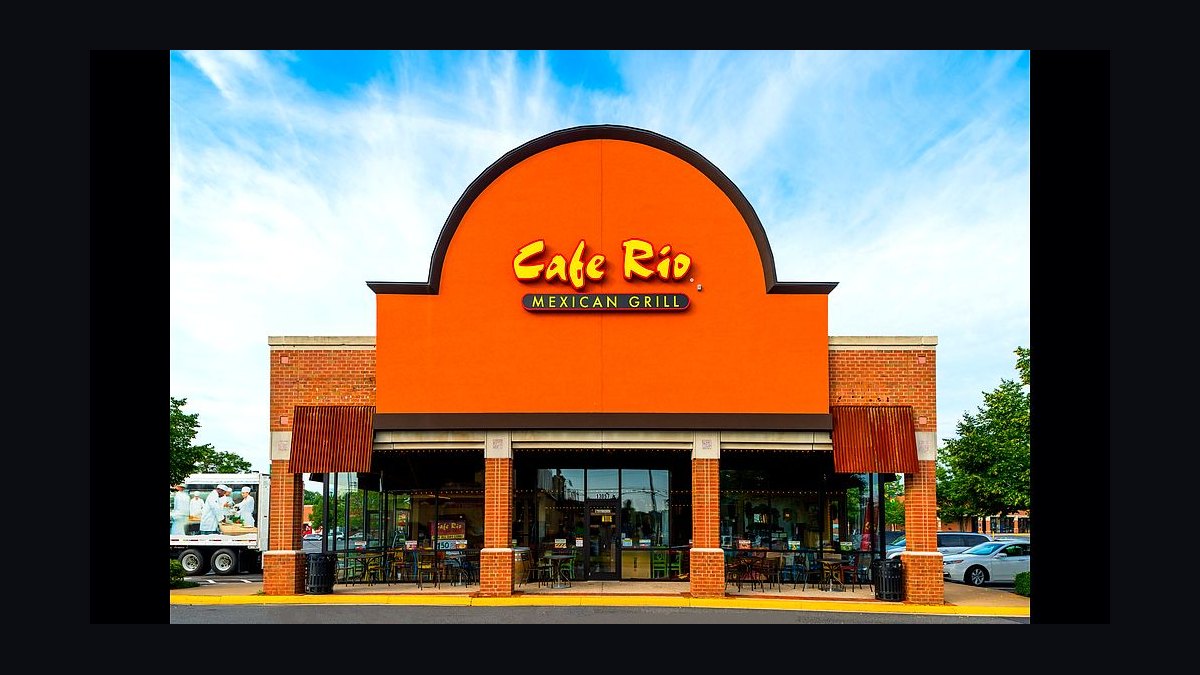
No — you cannot open or buy a Cafe Rio Mexican Grill franchise in 2027. Cafe Rio has remained 100% corporate-owned since its 1997 founding, through three ownership groups, most recently Freeman Spogli & Co. (2017), and files no Franchise Disclosure Document. If you want this menu category, the fundable paths are Qdoba Mexican Eats or Costa Vida.
What it is and why it matters
The question "should I open or buy a Cafe Rio Mexican Grill franchise" presumes a franchise opportunity exists. It does not, and understanding why matters more than any single number in this analysis, because it reroutes your entire search instead of wasting a quarter chasing a dead end.
Cafe Rio was founded in St. George, Utah in 1997 by Steve and Patricia Stanley, built around a sweet-pork, tomatillo-dressing fast-casual Mexican menu that built a cult following across the Mountain West. The company has never franchised. Ownership has changed hands twice through private equity: Saunders Karp & Megrue acquired a majority stake in 2004, and Freeman Spogli & Co. took over in 2017. In both transitions, the buyer kept the chain entirely corporate-run rather than opening a franchise channel — a deliberate strategic choice, not an oversight. As of 2026, Cafe Rio operates roughly 160 company-owned stores concentrated in 11 western states, with system sales exceeding $310 million per the Technomic Top 500 Chain Restaurant Report.
Why would a profitable, well-known brand refuse to franchise for 28 years? Private-equity owners of restaurant chains frequently prefer corporate ownership during a hold period because it keeps 100% of unit-level cash flow, avoids franchise-disclosure litigation exposure, and preserves total control over real estate, supply chain, and brand standards while the company is being groomed for a future sale to a strategic buyer or another PE fund. Freeman Spogli's typical hold pattern for restaurant assets runs 7 to 10 years, and historically its restaurant exits have gone to buyers who also keep the model corporate rather than opening a franchise program. There is no public signal — no FDD registration in any state, no franchise-recruitment page on the corporate site, no franchise broker listings — indicating that will change through 2028.
This matters practically because it reframes the entire decision. If your real goal is "I want to own and open a restaurant in the fresh-Mex, build-your-own-bowl category with a strong brand and proven unit economics," that goal is still achievable — just not through Cafe Rio. Qdoba Mexican Eats and Costa Vida Fresh Mexican Grill both franchise, both compete directly in the same tomatillo-dressing, fresh-ingredient fast-casual Mexican space, and both publish audited financial performance data you can actually underwrite against. Costa Vida in particular was founded by former Cafe Rio operators in Layton, Utah in 2003 specifically to compete with Cafe Rio's menu style, making it the closest thing to a franchised Cafe Rio clone that will ever exist. Recognizing this early — in days, not months — is the single highest-leverage decision in the entire process.
The step-by-step process
Once you accept that Cafe Rio itself is off the table, the realistic path to opening a franchise in this category runs through a defined, time-boxed process rather than open-ended hunting.
Start by closing the loop on Cafe Rio formally rather than assuming: email the company directly and confirm in writing that no FDD is on file with the FTC or any state franchise registration authority. This takes under two weeks and removes any temptation to keep circling back to the brand later. With that settled, pick your real target. Qdoba Mexican Eats offers the highest average unit volume in the category at roughly $1.66 million and the largest franchised footprint outside Chipotle, making it the strongest risk-adjusted pick for an experienced multi-unit operator. Costa Vida is the better choice if you specifically want the sweet-pork-and-tomatillo menu style Cafe Rio is known for, since it was built by ex-Cafe Rio people as a direct competitor.
Next comes the capital and entity stack: forming a holding company plus a state-level operating LLC, retaining a franchise attorney (typically an $8,000–$15,000 flat fee for FDD and Franchise Agreement review), and securing an SBA 7(a) pre-qualification letter, which typically covers 70–85% of total project cost over a 10-year term at roughly Prime plus 2.75–3.25%. You will need to confirm you meet the franchisor's net worth and liquid capital thresholds before going further — Qdoba requires $750,000 net worth and $250,000 liquid capital.
With financing lined up, request the current Franchise Disclosure Document and read it closely, especially Item 3 (litigation history), Item 19 (financial performance representations), Item 20 (outlet counts and franchisee turnover), and Item 21 (audited financials). A franchise CPA should model the specific unit against your local wage and rent inputs rather than relying on system-wide averages. If Item 20 shows outlet decline above roughly 12% year over year, that is a signal to walk rather than negotiate.
Site selection follows: engage a tenant representative experienced in Mexican fast-casual, and target a 2,200–2,800 square foot endcap with daytime population above 25,000 within a 3-mile ring and median household income above $80,000. After a site is identified, attend the franchisor's mandatory Discovery Day and — critically — call franchisees you find independently through the Item 20 outlet list, not the cheerleaders the franchisor hands you, asking what they actually spent, what they actually made in Year 1, and what they would change. Only after that diligence should you sign the Franchise Agreement and wire the initial fee, and only if your unit economics clear at the median AUV in Item 19, not the top quartile.
Costs, timelines, and typical ranges
Because Cafe Rio publishes no FDD, the only honest way to benchmark what opening a franchise in this category actually costs is to use the closest franchised comparables: Qdoba Mexican Eats, Costa Vida, and Moe's Southwest Grill, all competing in the same fresh-Mex fast-casual segment.
Qdoba's 2026 FDD lists a franchise fee of $40,000 (traditional) or $20,000 (non-traditional location), a total initial investment range of $548,100 to $1,294,000, a 5.0% royalty on gross sales, and a 3.0% marketing contribution. Required net worth is $750,000 with $250,000 liquid capital. Average unit volume across the system is $1,661,277, with a median of $1,544,533 — top-quartile units average $2,573,684 while bottom-quartile units average only $969,398, a spread that matters enormously for underwriting. Restaurant-level EBITDA margins run 14–18% at mature units, and top-quartile payback runs 22–30 months.
Costa Vida's investment range runs lower, at roughly $478,500 to $1,156,000, with a $35,000 franchise fee, a 6.0% royalty, and a 2.0% marketing fee — slightly higher royalty but lower marketing spend than Qdoba. Estimated AUV sits around $1.3 million with a 28–36 month payback and 12–16% EBITDA margins. Moe's Southwest Grill sits at the top of the investment range, $758,000 to $2,042,000, reflecting its larger-format stores and multi-unit development requirements (net worth requirement $1,500,000, liquid capital $500,000), with roughly $1.1 million AUV and the longest payback window at 36–48 months.
A modeled Year-1 profit-and-loss on a Qdoba-style unit at the $1.66 million AUV, built out for roughly $850,000 and financed 70% through SBA debt at 11.25% over 10 years, looks like this: food and paper cost around 30% ($498,000), labor and benefits around 27% ($448,200), occupancy and utilities around 11% ($182,600), combined royalty and marketing at 8% ($132,800), and other operating/maintenance costs around 6% ($99,600) — leaving restaurant-level EBITDA near 18%, or roughly $298,800. After debt service of approximately $99,000 per year and a G&A/owner-draw allowance near $60,000, conservative Year-1 free cash flow lands around $139,800.
Beyond the sticker price in Item 7, budget an additional $120,000–$160,000 in working capital above the franchisor's stated range — the published ranges consistently understate the cash needed to survive ramp-up, when sales are below mature-store levels but full staffing and marketing costs are already running.
Where teams get it wrong
The failure modes in this category are predictable and repeat across franchisees, which means they are also avoidable if you know what to watch for before you sign.
The most common mistake is underfunding at the bottom of the range. A first-time owner with $150,000 liquid capital and a dream, financed at 90% leverage, who opens at the bottom-quartile AUV of roughly $969,398, is mathematically underwater from month one: after 30% food cost, 30% labor, 11% occupancy, 8% combined royalty and marketing, and debt service on a heavily financed build, there is no margin left. The franchisor still collects its royalty regardless of whether the franchisee is profitable.

Absentee ownership is the second major failure pattern. Every franchisor in this category requires owner-operator presence in Year 1, and operators who try to run a unit from a different city routinely see labor costs climb to 32–34% of sales within 90 days as scheduling discipline erodes without a present owner.
A third mistake is opening in a market where Cafe Rio itself already dominates mindshare. A Costa Vida opened next to an established Cafe Rio in Salt Lake County, Utah County, or the Las Vegas Valley is fighting a beloved local brand with 17–22% higher unaided brand awareness, and Costa Vida units in those overlapping markets run 15–25% below system-average AUV as a direct result.
Fourth, operators frequently underestimate how illiquid single-unit fast-casual Mexican restaurants are as an exit asset. These units rarely attract strategic buyers at attractive multiples — single-unit EBITDA multiples run 3.5x to 4.5x, and you typically need a four-unit minimum portfolio to clear 5.5x. Anyone planning to open one unit and flip it within three years is working against the structure of the category, not with it.
Finally, teams get the macro environment wrong by ignoring where labor costs are rising fastest. California's AB 1228 fast-food minimum wage, holding at $20/hour through 2026, has pushed average California fresh-Mex labor costs to 30–32% of sales, while Utah, Texas, Florida, and Tennessee remain comparatively attractive at 24–27% labor. Opening in a high-labor-cost state without adjusting your underwriting accordingly is a quiet, compounding error that shows up fully only after 12–18 months of operation.
Decision framework: when to choose what
Choosing between the realistic alternatives comes down to what you actually value: menu authenticity, maximum unit volume, or multi-unit scale.
If what draws you to Cafe Rio specifically is the sweet-pork, tomatillo-dressing menu format, Costa Vida is the direct answer — it was founded by former Cafe Rio operators precisely to replicate that experience under a franchised structure, with a lower entry cost ($478,500–$1,156,000) than Qdoba, though a higher royalty (6% versus 5%) and lower average volume (~$1.3 million versus $1.66 million).
If your priority is maximizing average unit volume and choosing the largest, most established franchised player in fresh-Mex outside Chipotle, Qdoba is the stronger pick. It carries the highest AUV in the category, a 5% royalty plus 3% marketing, and an active ownership group (Butterfly Equity since 2022) investing in remodels and digital ordering — signals of a brand in growth mode rather than harvest mode.
If you have the balance sheet and operational bench to commit to a 5-unit Area Development Agreement, Moe's Southwest Grill becomes viable despite its higher entry cost and longer 36–48 month payback, because multi-unit scale is where fast-casual economics genuinely improve through shared management and purchasing leverage.
Beyond these three, smaller-footprint alternatives exist for operators with a lower capital ceiling: Hot Head Burritos ($303,000–$761,000, ~$850,000 AUV, 5% royalty) and Salsarita's Fresh Mexican Grill ($390,000–$777,000, ~$900,000 AUV) both offer sub-$800,000 entry points concentrated in the Midwest and Southeast respectively. An independent, non-franchised Mexican fast-casual restaurant is also an option for operators who bring a proven chef and marketing engine themselves, since it avoids the combined 8–9% of gross sales that franchise royalty and marketing fees extract — but independents in this category fail at a high rate by month 24 without that operational pedigree already in place.
Whichever brand you choose, the deciding test is the same: does the unit pencil out at the franchise system's median Item 19 AUV, not its top quartile? If the model only works assuming top-quartile performance, that is a sign to keep looking rather than sign.
Related questions
Can I buy an existing corporate Cafe Rio location?
No. Cafe Rio does not sell individual corporate stores to outside operators; all roughly 160 units remain under direct ownership of Freeman Spogli & Co.'s portfolio company, with no public process for acquiring a single unit.
Is Costa Vida actually connected to Cafe Rio?
Not through ownership — Costa Vida is an independent, competing company founded in 2003 in Layton, Utah by former Cafe Rio operators who built a franchised version of a similar sweet-pork, tomatillo-dressing menu concept.
Will Chipotle ever franchise?
No. Chipotle has never franchised and shows no indication of starting; as of Q1 2026 it reported roughly $3.1 million AUV and 16% restaurant-level margins across about 4,000 corporate-owned units, with Chipotlanes driving most new openings.
How much catering revenue can a fresh-Mex franchise expect?
Top-performing Qdoba units report catering attach rates around 14% of total sales, driven by office and hospital HR-team catering and school programs — a meaningful lever beyond walk-in traffic.
FAQ
Can I buy a Cafe Rio franchise in 2027? No — Cafe Rio does not franchise in the United States. The chain has remained 100% corporate-owned since its founding in 1997, through multiple ownership groups. Your only option to operate a Cafe Rio location would be acquiring an existing corporate store, which is not publicly offered.
What is the total investment to open a Cafe Rio? There is no franchise investment figure because Cafe Rio does not franchise. For comparison, a Qdoba franchise requires a total investment of roughly $548,000 to $1.29 million, while Costa Vida units typically range from $478,500 to $1,156,000. These are the closest fundable alternatives.

How much can I expect to earn from a Cafe Rio franchise? Since Cafe Rio is not franchised, there are no franchisee earnings to report. For a Qdoba franchise, average unit volume runs around $1.66 million, with conservative Year-1 cash flow after debt service estimated between $95,000 and $140,000. Actual results vary widely by site and management quality.
How long does it take to break even with a franchise like this? Cafe Rio offers no franchise, so no breakeven timeline applies to it directly. For Qdoba, breakeven typically occurs within 22 to 30 months at top-quartile performance; Costa Vida units may break even in roughly 28 to 36 months depending on build-out cost and local demand.
Are there any franchise opportunities similar to Cafe Rio? Yes — Qdoba Mexican Eats and Costa Vida Fresh Mexican Grill are the closest fast-casual alternatives with active franchise programs. Qdoba requires a $548,000–$1.29 million investment with a 5% royalty and 3% marketing fee; Costa Vida offers a similar tomatillo-dressing menu style at a lower entry cost.
What ongoing fees would I pay with a Qdoba or Costa Vida franchise? Cafe Rio charges no franchise fees since it does not franchise. Qdoba's ongoing fees are a 5% royalty on gross sales plus a 3% marketing contribution. Costa Vida charges roughly a 6% royalty plus a 2% marketing fee — both standard for the fast-casual Mexican segment.
Sources
- https://en.wikipedia.org/wiki/Cafe_Rio
- https://www.caferio.com
- https://www.freemanspogli.com
- https://www.qdoba.com/franchise
- https://www.thefranchisemall.com
- https://www.ibisworld.com
- https://www.sec.gov
- https://www.ers.usda.gov
- https://www.dir.ca.gov
- https://www.sba.gov/funding-programs/loans/7a-loans
Related on PULSE
- Should I open or buy a Pancheros Mexican Grill franchise in 2027?
- Should I open or buy a Salsarita's Fresh Mexican Grill franchise in 2027?
- Best Mexican food franchises to buy in 2027
- Should I open or buy a Just Love Coffee Cafe franchise in 2027?
- Should I open or buy a Sunny Street Cafe franchise in 2027?
This page will be disappearing soon. Save it to your device for $1 — or read it free while it is here.
@Kory-White- · if Venmo asks, the last 4 of my number are 2012
This page is gone.
This one is off the shelf now. $1 keeps it on your phone for good — the whole page, pictures and diagrams included.
 frShould I open or buy a McDonald's franchise in 2027?
 franchiseShould I open or buy a Merry Maids franchise in 2027?
 franchiseShould I open or buy a Massage Envy franchise in 2027?
 franchiseShould I open or buy a Valvoline Instant Oil Change franchise in 2027?
 franchiseShould I open or buy a Chipotle franchise in 2027?
 franchiseShould I open or buy a Kona Ice franchise in 2027?
 franchiseShould I open or buy a Domino's franchise in 2027?
 franchiseShould I open or buy an Ace Hardware franchise in 2027?
 franchiseShould I open or buy a McAlister's Deli franchise in 2027?
 franchiseShould I open or buy a Matco Tools franchise in 2027?