


Should I open or buy a Pita Pit franchise in 2027?
Quality
Certified
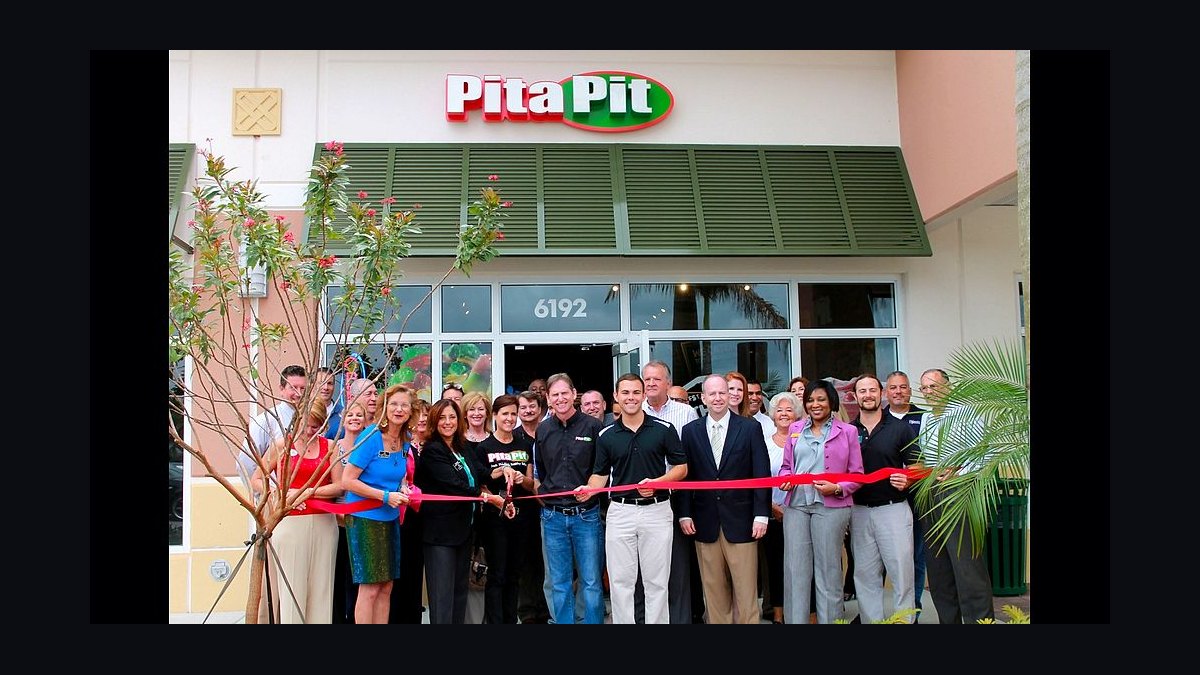
Opening a Pita Pit franchise in 2027 makes sense only in narrow cases: a captive-traffic, non-traditional site (campus, hospital, airport, military base) at subsidized rent, or as a second/third unit for an operator who already runs a fast-casual brand with shared back-office support. A standalone street-front strip-mall unit, run by a first-time owner, is a weak bet against Jersey Mike's, Jimmy John's, or an independent concept.
A Scenario That Shows the Problem
Picture two prospective owners looking at the same Pita Pit territory in early 2027. The first has found a 1,400-square-foot end-cap in a suburban strip center anchored by a grocery store, asking $27/sqft NNN, with a Subway across the parking lot and a Jimmy John's two doors down. The second has been offered a concession spot inside a regional hospital's ground-floor food court, percentage rent only, no direct sandwich competitor within the building. Both are looking at the same franchise fee, the same 6% royalty, the same 2% marketing fund, and roughly the same build-out cost per square foot. Yet these are not the same business. The strip-mall operator is buying into a category where national sub chains fight on price and where Pita Pit's brand recognition outside a handful of regions sits below 20%. The hospital operator is buying into a captive population that walks past the counter every single shift change, with no comparable option nearby and a landlord who only collects when the register rings. This is the fork every 2027 buyer actually faces: the site determines the outcome far more than the operator's effort does, because the underlying unit economics — food cost, labor cost, and occupancy — respond completely differently to captive traffic than to open-market foot traffic. Anyone evaluating whether to open a location has to model the site before modeling anything else, because the brand's own disclosed results split cleanly along exactly this line.
How the Franchise Economics Actually Work
The mechanism that separates a winning Pita Pit unit from a losing one is straightforward once it's laid out, even though most first-time buyers never see it drawn this way. Revenue is set primarily by foot traffic and conversion rate, not by menu quality — a healthier-positioned pita concept converts walk-by traffic at a materially higher rate on a college campus (where students actively seek a lighter lunch option) than in a strip mall where the customer has already chosen "sandwich" and is comparing five brands on price and speed. Once revenue is set, three cost lines eat into it in a fixed order: food cost (29%–33% of sales), labor (28%–34%), and occupancy (8%–14%, but close to zero-base in percentage-rent non-traditional deals). Layered on top, regardless of site, is the franchise's 6% royalty plus 2% marketing assessment — an 8% skim off the top line that never varies with profitability. What's left after all four lines is store-level EBITDA, which operator panels put at a median of roughly 9%, but which non-traditional, multi-unit-backed locations can push to 14%–18% because they compress labor and eliminate the occupancy line almost entirely. That store EBITDA then has to cover debt service on whatever was borrowed to open the doors — typically an SBA 7(a) loan financing 75%–80% of a $350K–$685K build. The owner's actual take-home is what's left after that, and on a median-performing street-front unit, that number is close to zero in Year 1. The mechanism doesn't reward hustle first — it rewards site selection first, then operator discipline on labor, then everything else.

Real Numbers, Ranges, and Benchmarks
The all-in investment to open a Pita Pit unit in 2027 runs $353,000 to $685,000, built from a $15,000–$25,000 initial franchise fee, $120,000–$310,000 in build-out and leasehold improvements, $75,000–$135,000 in equipment and POS, and the remainder in signage, opening inventory, training travel, and three months of working capital. That range is wide because format varies enormously — an inline strip-mall build with a full kitchen costs far more per square foot than a non-traditional kiosk with a simplified line. On the revenue side, the most recent disclosed financial performance data (2022 FDD Item 19) showed median franchised gross sales near $525,000, with a top quartile at $700,000–$1,050,000 and a bottom quartile at $280,000–$380,000. For context, that median sits well below Jersey Mike's $1.1M average unit volume and below Jimmy John's $835,000, though it's roughly comparable to a modest Subway. On a $525,000-revenue unit, the 8% combined royalty and marketing fee costs $42,000 a year before a single operating expense is paid. At a 9% median store EBITDA, that's $47,250 in store cash flow — against $36,000–$48,000 in annual debt service on a typical SBA-financed project, which leaves the owner-operator netting somewhere between $0 and $11,000 in Year 1, assuming they're working the counter themselves rather than paying a manager. Breakeven on a street-front unit runs 28–42 months; top-quartile, non-traditional units can breakeven in 18–24 months. U.S. unit count has contracted from roughly 165 in 2019 to under 90 by the end of 2025, following a 2023 restructuring under owner Allied Restaurant Brands that killed an underperforming sub-brand and refocused growth on non-traditional venues. Commodity trends for 2027 cut both ways: wholesale chicken and beef costs eased through 2026, but fresh produce — central to Pita Pit's build — rose roughly 7% over the same period, and new fast-food minimum wage laws taking effect in California and New York are adding four to six points of labor cost in affected markets.
Trade-Offs and Alternatives
Every prospective owner weighing whether to buy into Pita Pit versus a competing brand is really trading off three things: entry cost, brand strength, and site dependency. Pita Pit's advantage is a lower barrier to open — a smaller franchise fee than Jersey Mike's or McAlister's, and a leaner kitchen than brands that need a full hot line. Its disadvantage is that almost all of its upside depends on landing the right site, because its brand pull in the open market is thin outside college corridors and the Pacific Northwest. Jersey Mike's costs more to open ($237K–$1.05M) and charges a higher combined fee (roughly 11.5%), but its $1.1M average unit volume gives an operator far more room to absorb a mediocre site. Jimmy John's, at $362K–$652K with an $835,000 average unit volume, tends to outperform Pita Pit in suburban inline locations because of its drive-thru-friendly footprint, but it's weaker in captive campus settings where Pita Pit's health positioning wins repeat visits. Capriotti's and Salata sit in similar investment ranges with stronger disclosed unit volumes. An independent, non-franchised pita-and-bowl concept avoids the 8% royalty-and-marketing skim entirely — worth roughly $42,000 a year on a $525,000-revenue unit — but forfeits the brand recognition, supply chain, and training program that make a first-time restaurant opening less likely to fail outright. The honest trade-off is this: Pita Pit is the cheapest ticket into a "healthy fast-casual" positioning, but that cheap ticket only pays off where the site does the heavy lifting the brand itself can't.
Common Pitfalls and How to Avoid Them
The single biggest pitfall is signing a street-front lease at full market rent without first validating the trade area — a 3-mile drive-time study, available through services like Esri or Placer.ai for $1,500–$3,500, should confirm daytime population above 25,000, household income above $65,000, and fewer than three competing sandwich brands within a mile before a lease is even negotiated. A second pitfall is skipping the Item 20 franchisee call list: the FDD requires the franchisor to disclose current and former franchisee contacts, and calling eight to twelve of them about actual gross sales, store-level EBITDA, and whether they'd sign again is the cheapest due diligence available — if fewer than 60% would resign, that's a signal to walk. A third pitfall is treating Pita Pit as a semi-absentee investment; the brand's labor discipline requires daily on-site management, and absentee-owned units run four to seven points worse on labor cost according to operator panels. A fourth pitfall is buying a resale at a peak multiple — the 2023–2024 wave of franchisee exits has produced a glut of listings asking 3.0x–3.5x store EBITDA, when 2.0x–2.5x is the realistic comparable for a brand at this unit-volume tier; paying ask locks in an eight-to-ten-year payback instead of the modeled thirty months. Finally, undercapitalizing working capital is a recurring failure mode — a first-time owner who pays a $55,000 manager salary on top of a $52,000 personal draw, without a strong catering channel to supplement dine-in, can burn through reserves inside eighteen months. Building a catering pipeline before opening — pre-selling to 150–200 local corporate accounts in the weeks before the doors open — is one of the few controllable levers an owner has to shorten the runway to breakeven.
Related questions
How much does it cost to open a Jersey Mike's instead?
Jersey Mike's runs $237,000 to $1.05 million all-in, with roughly an 11.5% combined royalty and marketing fee, but its disclosed average unit volume of $1.1 million gives owners far more cushion against a mediocre site than Pita Pit offers.
What makes a non-traditional franchise location better than a street-front one?
Non-traditional sites (campuses, hospitals, airports) typically pay percentage-of-sales rent instead of a fixed NNN lease, and they come with built-in captive traffic, which together can push store EBITDA five to ten points higher than an identical brand in a strip mall.
Is it worth buying an existing Pita Pit franchise as a resale instead of opening new?
Only at the right multiple. Current resale listings often ask 3.0x–3.5x store EBITDA, but 2.0x–2.5x is the realistic comparable for this unit-volume tier — paying full ask turns a thirty-month payback into eight or ten years.
How does minimum wage legislation affect fast-casual franchise profitability in 2027?
California's $20/hour fast-food minimum and New York's incoming $18.50 rate can add four to six points to a unit's labor line, which is often enough to erase the entire store-level margin on a median-performing location.
FAQ
What is the total investment needed to open a Pita Pit franchise in 2027? The all-in investment typically ranges from $353,000 to $685,000, covering the franchise fee, build-out, equipment, signage, opening inventory, and working capital. Actual cost depends heavily on whether the site is a traditional strip-mall build or a leaner non-traditional format.
How much can I expect to earn in the first year? First-year owner cash flow after debt service on a typical $500,000-revenue street-front unit ranges from roughly negative $15,000 to positive $35,000. Non-traditional, captive-traffic locations tend to land at the higher end of that range or better.
What are the ongoing royalty and marketing fees? Franchisees pay a 6% royalty on gross sales plus a 2% marketing fund contribution, an 8% combined skim off the top line that applies regardless of profitability, deducted on a weekly or monthly basis.
How long does it take to break even? Breakeven on a typical street-front strip-mall unit runs 28 to 42 months. Non-traditional, captive-traffic sites with lower or percentage-based rent can breakeven in as little as 18 to 24 months.
Is Pita Pit a good fit for a first-time franchisee? Generally not, unless the buyer can secure a low-rent, captive-traffic site. First-time owners without prior food-service experience tend to struggle with thin margins and a slower sales ramp in standard retail locations.
What locations work best for opening a Pita Pit unit? The brand performs best in non-traditional venues with subsidized rent and captive traffic — college campuses, hospitals, airports, and military bases — where street-front strip-mall economics typically underperform due to weaker foot traffic and full-price lease terms.
Sources
- https://www.pitapitusa.com
- https://www.franchisechatter.com
- https://www.vettedbiz.com
- https://www.franchisedirect.com
- https://www.entrepreneur.com/franchises
- https://www.sba.gov
- https://www.ers.usda.gov
- https://www.restaurantbusinessonline.com
- https://www.jerseymikesfranchise.com
- https://www.technomic.com
Related on PULSE
This page will be disappearing soon. Save it to your device for $1 — or read it free while it is here.
@Kory-White- · if Venmo asks, the last 4 of my number are 2012
This page is gone.
This one is off the shelf now. $1 keeps it on your phone for good — the whole page, pictures and diagrams included.
 franchiseShould I open or buy a Goddard School franchise in 2027?
 franchiseShould I open or buy a Kona Ice franchise in 2027?
 franchiseShould I open or buy a Dairy Queen franchise in 2027?
 franchiseShould I open or buy a Wingstop franchise in 2027?
 franchiseShould I open or buy a Kumon franchise in 2027?
 franchiseShould I open or buy a Sonic Drive-In franchise in 2027?
 franchiseShould I open or buy a Jimmy John's franchise in 2027?
 franchiseShould I open or buy a UPS Store franchise in 2027?
 franchiseShould I open or buy a Bojangles franchise in 2027?
 franchiseShould I open or buy a Marco's Pizza franchise in 2027?