


Should I open or buy a Capriotti's Sandwich Shop franchise in 2027?
Quality
Certified
Open a Capriotti's in 2027 only if you hold $200K+ liquid against a $500K net worth, can secure a daytime-traffic endcap in a priority growth state, and will work the counter yourself for 18 months. Underwrite on the ~$948K system AUV, never the top-quartile figure, or the deal breaks.
What a Capriotti's actually is, and why the format decides your outcome
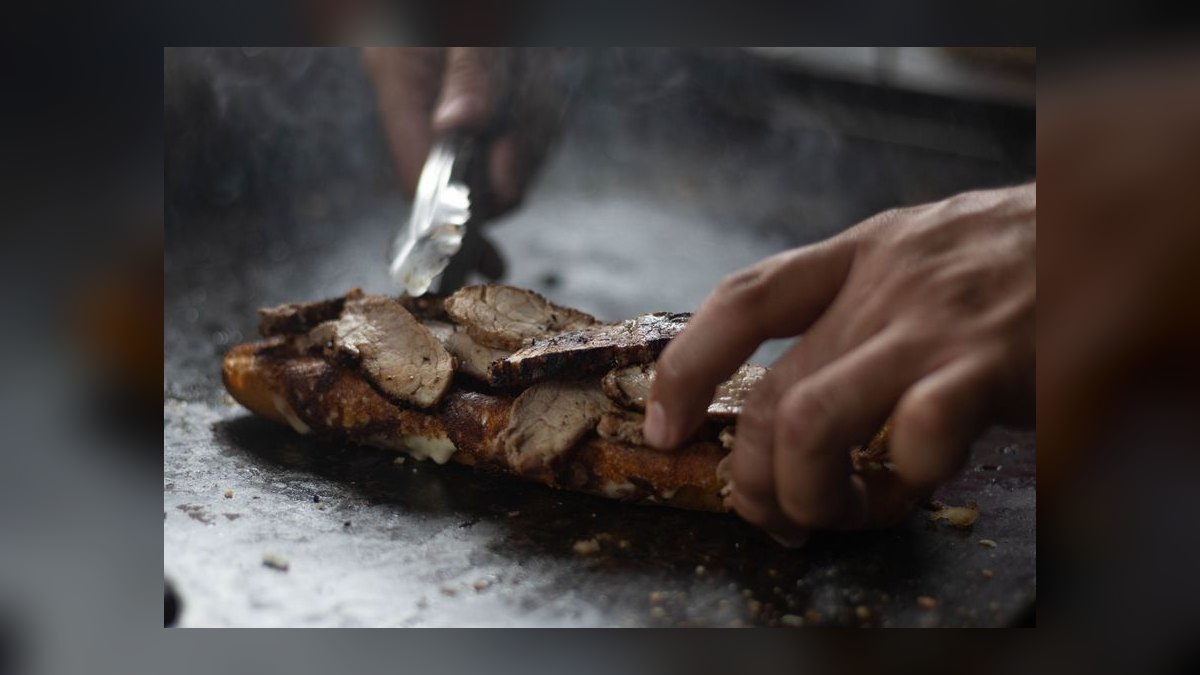
Most people evaluating a sandwich franchise treat the category as interchangeable — bread, meat, cheese, a walk-in cooler, a POS terminal. Capriotti's is not interchangeable, and the difference is operational rather than cosmetic. The brand slow-roasts whole turkeys in-house overnight, hand-pulls them, and builds subs around that product. That single process choice cascades through every part of the business you are about to buy: your labor schedule starts before dawn, your prep station needs more square footage than a cold-cut concept, your food cost floats with turkey breast wholesale pricing rather than with a stable commissary contract, and your quality control depends on a human being present at 5 AM rather than on a delivery truck arriving on time.
That is the honest frame for the buy decision. You are not purchasing a passive royalty-for-brand trade. You are purchasing a scratch-kitchen operation wearing a fast-casual storefront, and the revenue upside exists precisely because the product is harder to replicate than a cold-cut assembly line. Differentiation and operational burden are the same coin here.
The system runs roughly 175+ locations across 33 states as of the mid-2020s, up from about 141 at the end of 2023 — a growth-stage footprint, not a saturated one. That matters more than most first-time buyers realize. In a 175-unit system you can still negotiate a three-to-five unit area development agreement in a top-25 metro. In a 2,000-unit system you take whatever territory scraps remain, usually a secondary suburb with a co-tenancy problem. The trade is that a growth-stage brand has thinner field support, fewer regional operators to lean on, and less consumer brand recall outside its strongholds. Wilmington, Delaware is the origin market; Las Vegas and the Mountain West are where the brand genuinely scaled. Everywhere else, you are paying a franchise fee partly for a name your customers have not heard.
Three formats exist in the disclosure documents: traditional bricks-and-mortar, non-traditional (airports, stadiums, campuses, travel plazas), and virtual kitchen. These are not three price points on one product — they are three different businesses. Traditional carries the full buildout and the full revenue ceiling. Non-traditional trades sovereignty over hours and menu for captive footfall you did not have to earn. Virtual kitchen strips the dining room, the signage, and roughly two-thirds of the capital requirement, but also strips the walk-in discovery traffic and the catering credibility that comes from a customer being able to physically visit the shop that is delivering fifty box lunches to their office. Choosing the format before you have chosen the market is the most common sequencing error in the entire process.
Why this matters beyond Capriotti's specifically: the same format-first-or-market-first question governs every food franchise decision in 2027. Wing brands, bowl concepts, coffee, and better-burger all now sell a virtual or non-traditional tier as an on-ramp. The on-ramp is real, but it is an on-ramp to a different business, not a discount on the one you wanted.
The step-by-step process from inquiry to open door
The path is more standardized than it looks from outside, and knowing the sequence protects you from spending money in the wrong order. The single most expensive mistake in franchise acquisition is paying a franchise fee before you have a site and a conditional lending commitment — that deposit is functionally dead money if either falls through.
Days 1–15 — qualify yourself before anyone qualifies you. Pull a tri-merge credit report. Franchisors in this tier generally want a 680+ FICO, meaningful liquid capital, and net worth well above the cash requirement. Capriotti's publishes a $200,000 liquid and $500,000 net worth threshold on its ownership site. If you are short on liquid, solve it now with a passive equity partner or a home equity line — you cannot willpower your way past a lender's liquidity test, and discovering the gap in month three costs you the site you found in month two.
Days 16–30 — request and actually read the FDD. You are entitled to the Franchise Disclosure Document, delivered within ten business days of a qualified inquiry and at least fourteen days before you sign anything or pay anything. Four items carry disproportionate weight. Item 7 gives the estimated initial investment range. Item 19 gives whatever financial performance representation the franchisor chooses to make — read the footnotes, because the definition of which units are included in an average is where optimism hides. Item 20 gives you unit counts, transfers, terminations, and non-renewals, plus the contact list for current and former franchisees. Item 21 gives audited financials for the franchisor itself, which tells you whether the entity funding your field support is solvent.
Days 31–45 — call franchisees, not the franchisor. Interview eight to ten operators off the Item 20 list. Split them deliberately: three who are three-plus years in, three who opened within the last eighteen months, and at least one former franchisee if the list includes any. Ask about catering as a percentage of mix, actual food cost, actual labor percentage, how long the ramp took, and what field support looked like in months one through six. Ask what they would do differently on site selection. Operators are candid to a degree that surprises first-time buyers, because most of them wish someone had been candid with them.
Days 46–60 — walk sites. Five to seven candidate locations with the brand's real estate representative. This concept prefers endcaps in grocery-anchored or daytime-traffic centers. Pull a daytime population report — Esri, Placer.ai, or Buxton all sell this — and look specifically at daytime employment within a three-mile ring, not residential rooftops. A lunch-dominant sandwich concept in a bedroom community with strong evening traffic is a structurally mismatched business.
Days 61–75 — lending pre-qualification and Discovery Day. SBA 7(a) is the standard instrument for franchise restaurant acquisition. ApplePie Capital, Live Oak Bank, and Benetrends are among the most active lenders in franchise restaurant finance, alongside regional SBA preferred lenders. Get pre-qualified on the full investment amount, not the franchise fee. Attend Discovery Day at headquarters. Both sides should leave with a clear answer.
Days 76–90 — sign or walk. Execute with a confirmed site and a conditional commitment letter in hand, or formally withdraw. There is no shame in withdrawing at day 89; there is real financial pain in signing at day 45 without a site.
Costs, timelines, and what the ranges actually mean
The disclosed initial investment range for a traditional Capriotti's spans roughly $226,601 to $935,000, with an initial franchise fee of $40,000. The virtual kitchen format sits far lower, generally in the low six figures. That traditional range is nearly a fourfold spread, and first-time buyers routinely misread it as a menu when it is actually a description of two different construction scenarios.
The bottom of the range describes a second-generation restaurant space — a shuttered deli, a closed sub shop, a former quick-service unit — where hoods, grease traps, walk-in coolers, floor drains, and three-phase electrical already exist and pass inspection. The top describes ground-up construction or a raw vanilla shell where every one of those systems gets installed from zero. Leasehold improvements are the largest single line item and the largest single lever you control. Taking over a second-generation restaurant space is the most reliable way to cut a buildout budget by roughly a third, and it is worth extending your site search by two months to find one. The catch is that second-gen space carries the previous tenant's failure with it; verify why they closed before you inherit their trade area.
Beyond buildout, the recurring cost stack is what governs whether the business is worth owning. Royalty runs in the 6–7% range of gross sales, with a marketing fund contribution on top in the 2–4% range. Call it 8–11% of every dollar off the top before you have paid for a single pound of turkey. That is a normal fast-casual stack, but it is worth stating plainly because it defines the arithmetic: on a shop doing roughly the system AUV of about $948,000, you are sending somewhere near $75,000–$104,000 a year to the franchisor before food, labor, rent, insurance, or debt service.
Run the rest of the model conservatively. Food cost in a scratch protein concept generally lands higher than in a cold-cut concept, and turkey breast wholesale pricing has been elevated relative to its recent lows, which compresses margin on the hero product specifically. Labor in the priority growth states — Texas, Arizona, Florida, the Carolinas — sits in a materially cheaper band than in Nevada, Colorado, or California, where wage floors push labor toward the high teens or low twenties as a percentage of sales. Rent on an 1,800–2,400 square foot endcap varies more by metro than any other line.
At the system AUV with a low-teens EBITDA margin, you are looking at roughly $96,000–$123,000 of operating cash flow before debt service. Finance $450,000 on a ten-year SBA 7(a) at prevailing rates — the program prices off prime plus a spread, and in a high-prime environment that means annual debt service in the neighborhood of $70,000 — and owner cash flow before your own wage lands closer to $50,000. That is the number that matters, and it is why the owner-operator requirement is not a suggestion. An owner working as general manager replaces a $55,000–$70,000 salaried position. Take that person out of the shop and hire the GM, and a system-AUV unit is roughly break-even.
On timeline: expect four to six months from signature to soft open in a second-generation space with cooperative permitting, and eight to twelve in a ground-up or heavy-permit jurisdiction. Municipal plan review is the variable nobody budgets enough for. Breakeven on cash flow typically arrives somewhere in month 14 to 22 for a traditional shop, later for virtual kitchen because the ramp depends on delivery-platform ranking rather than street visibility.
One more line worth funding: working capital. The disclosed three-month figure is a floor, not a plan. Fund six months. The honeymoon traffic from a grand opening fades around month three, and the shops that fail tend to fail between months eight and fourteen — not because the concept did not work, but because the operator ran out of cash exactly when the business was finding its footing.
Where operators get this wrong
Underwriting on the top-quartile number. The top 25% median AUV of roughly $1.22 million is a real figure describing real shops. It is also a figure describing shops that have been open for years, sit in the brand's strongest markets, and are run by operators on their second or third unit. If your pro forma assumes anything above the system average in year one, you have not built a forecast — you have built a hope, and your lender will hold you to covenants written against it. Underwrite at or below system average, then treat the top quartile as upside.
Buying the brand without buying the daytime population. This is a lunch-dominant concept; the majority of sales cluster between roughly 11 AM and 2 PM. A site with 25,000 cars a day but no office, hospital, campus, or industrial employment inside three miles will underperform a quieter site with 40,000 daytime workers. Traffic counts measure cars. Daytime population measures customers. They are not the same metric and confusing them has ended more restaurant franchises than any product problem.
Ignoring catering as a channel and then wondering where the margin went. Box lunches and party trays carry meaningfully better contribution margins than dine-in because you produce them in a scheduled batch, with known quantities, at a known time, with no host stand and no dining-room labor. Shops that push catering to a quarter or more of mix operate a different business than shops that wait for walk-ins. That push is sales work: cold-calling office managers, hospital department administrators, real estate offices, and law firms. If you do not want to do outbound sales, you have chosen the wrong franchise — and honestly, the wrong industry.
Pioneering a cold market on a normal budget. Being the first unit in a metro where nobody knows the brand means you personally fund awareness that an established market gets for free. Expect a slower ramp — often meaningfully below the system curve for the first eighteen to twenty-four months — and budget an extra six-figure runway for it. Pioneering can be the best deal in the system because territory is cheap and available. It is never the cheapest deal to operate.
Treating absentee ownership as available. It is technically possible and practically expensive. A scratch protein concept has more failure modes than an assembly-line one: the roast schedule, the slicing consistency, the yield off each bird, the prep par levels. Every one of those degrades quietly when nobody who owns equity is in the building. Absentee-run units in this category consistently land below system average, and below system average with debt service is negative.
Skipping the franchisee interviews because Discovery Day felt good. Discovery Day is a sales event run by professionals who are good at their jobs. It is useful and you should attend. It is not diligence. Diligence is eight phone calls to people with no incentive to sell you anything.
Choosing between formats, brands, and the independent path
The decision is not simply yes-or-no on Capriotti's. It is a choice among four or five genuinely different structures, and the right answer depends on which constraint binds hardest for you: capital, time, market knowledge, or appetite for brand risk.
Traditional Capriotti's is the right call when you have the capital, an endcap in a daytime-dense trade area within a priority growth state, and eighteen months of personal availability. You are buying a differentiated product in a growth-stage system with area development territory still available. That last point is the real strategic asset — a system moving from roughly 175 units toward a stated multi-hundred-unit goal has territory today that will not exist in five years.
Virtual kitchen is the right call when you want to validate demand for the brand in your metro before committing to a lease with a personal guarantee. Capital requirement drops by roughly two-thirds. You give up dining room revenue, street visibility, and catering credibility, and you take on dependence on third-party delivery economics, where commissions and platform ranking control your revenue more than your operations do. Treat it as a market test with real cash flow attached, not as a permanent business.
Jersey Mike's is the benchmark comparison and it deserves an honest one. Higher system AUVs, a well-proven playbook, and a strong franchisee bench — but territory in the exact growth states you want is largely developed, and entry pricing runs comparable to or above Capriotti's. Choose it if proven scale matters more to you than greenfield territory. Choose Capriotti's if the reverse is true.
Firehouse Subs, under a large restaurant-brand parent, offers corporate-parent stability and a similar royalty structure at a lower typical AUV. It is the conservative pick: less product differentiation, more institutional support.
Independent deli sidesteps the entire 8–11% royalty-plus-marketing stack. On $200,000–$400,000 you can build a strong independent, and the money that would have gone to royalties instead funds your own marketing and your own margin. The trade is total: no playbook, no supply chain leverage, no brand recall, no site selection support, and no resale multiple built on a franchise agreement. This is the right path only if you already have deep operational and market knowledge — meaning you have run a restaurant in this specific trade area before.
There is also an adjacent path worth naming: buying an existing unit rather than opening one. A resale trades a lower risk profile for a higher purchase price and inherited problems. You get real trailing revenue instead of a projection, existing staff, an established customer base, and immediate cash flow — but you also get the previous owner's deferred maintenance, their reputation, and whatever reason they are selling. Ask for three years of tax returns, not a broker's summary. Verify the trailing twelve months against POS data directly. A resale at a fair multiple of verified cash flow is frequently the better risk-adjusted deal for a first-time franchisee, and it is systematically under-considered because new-unit development is what franchisors actively market.
Related questions
How much can an owner realistically take home in year one?
At the system AUV of roughly $948,000 with a low-teens EBITDA margin, expect roughly $96,000–$123,000 in operating cash flow. Subtract debt service — around $70,000 annually on a $450,000 SBA loan — and owner cash flow lands near $50,000, plus the GM wage you replace by working the shop.
Is the virtual kitchen format a real business or just a trial?
Both, honestly. It generates real cash flow at roughly a third of the capital, but its revenue depends on delivery-platform ranking rather than street traffic, and it forfeits catering credibility. Most operators should treat it as a validated market test that pays for itself, then convert to bricks-and-mortar.
Should I buy an existing location instead of opening a new one?
Frequently yes, for a first-time franchisee. A resale gives verified trailing revenue instead of a projection, trained staff, and immediate cash flow. Demand three years of tax returns and raw POS data, and establish exactly why the seller is exiting before you agree on a multiple.
What kills these shops most often?
Under-capitalization meeting the month-eight traffic fade. Grand opening volume is not run-rate volume. Operators who fund only the disclosed three-month working capital minimum run dry precisely when the business is stabilizing, then cut labor and marketing at the worst possible moment.
Does catering really change the economics?
Materially. Batch-produced box lunches and trays carry higher contribution margins than dine-in because production is scheduled, quantities are known, and dining-room labor is zero. Shops that build catering to a quarter or more of mix consistently outperform walk-in-only shops in the same trade area.
FAQ
What is the total investment range to open a Capriotti's in 2027?
The disclosed initial investment for a traditional location runs roughly $226,601 to $935,000, driven primarily by leasehold improvements and real estate. The initial franchise fee is $40,000. Anniversary and development incentives have periodically reduced that fee — confirm current terms against the FDD in effect when you inquire, not against a marketing page.
How much liquid capital do I actually need?
The published qualification floor is $200,000 liquid against $500,000 net worth. That is the floor to be accepted, not the amount to be comfortable. Operators who clear the minimum by a dollar and then skip working capital reserves are the ones who struggle in months eight through fourteen. Budget meaningfully above the floor.
What is the average unit volume, and can I plan on it?
System AUV sits near $948,000, with top-quartile shops clearing roughly $1.22 million. Plan on the system figure or below for year one. The top quartile is a mature-unit number in strong markets and is not a reasonable year-one assumption for a first location in a new trade area.
How long until the shop breaks even on cash flow?
Typically month 14 to 22 for a traditional bricks-and-mortar unit, longer for virtual kitchen. The largest variables are how fast you build catering, how tight you run labor during the ramp, and whether your rent is proportionate to your realistic volume rather than to your optimistic one.
Do I genuinely have to work in the shop?
Yes, for the first eighteen months at minimum. The scratch protein program has more failure points than an assembly-line concept, and quality drift is invisible until it shows up in declining traffic. Working as GM also replaces a $55,000–$70,000 salary, which is a meaningful share of your early return.
What ongoing fees come off the top?
Royalty in the 6–7% range of gross sales plus a marketing fund contribution in the 2–4% range — roughly 8–11% before any operating expense. That stack is normal for fast casual, but model it explicitly, because it is deducted from gross revenue rather than from profit.
Sources
- https://www.ftc.gov/business-guidance/resources/franchise-rule-compliance-guide
- https://www.sba.gov/funding-programs/loans/7a-loans
- https://www.ams.usda.gov/market-news/poultry
- https://www.ownacapriottis.com/
- https://www.capriottis.com/
- https://www.ibisworld.com/united-states/market-research-reports/sandwich-sub-store-franchises-industry/
- https://www.qsrmagazine.com/reports/qsr-50/
- https://www.franchisetimes.com/
- https://www.bls.gov/oes/current/oes352021.htm
- https://www.census.gov/topics/employment.html
Related on PULSE
- Should I open or buy a Mr. Pickle's Sandwich Shop franchise in 2027?
- Best sandwich and sub franchises to buy in 2027
- Should I open or buy an Earl of Sandwich franchise in 2027?
- Should I open or buy a Potbelly Sandwich franchise in 2027?
- Should I open a independent tire shop in 2027?
- Should I open a independent auto repair shop in 2027?
This page will be disappearing soon. Save it to your device for $1 — or read it free while it is here.
@Kory-White- · if Venmo asks, the last 4 of my number are 2012
This page is gone.
This one is off the shelf now. $1 keeps it on your phone for good — the whole page, pictures and diagrams included.
 franchiseShould I open or buy a Sonic Drive-In franchise in 2027?
 franchiseShould I open or buy a Cinnabon franchise in 2027?
 franchiseShould I open or buy a Bahama Breeze franchise in 2027?
 franchiseShould I open or buy an Anytime Fitness franchise in 2027?
 franchiseShould I open or buy a Dunkin' franchise in 2027?
 franchiseShould I open or buy a Jamba franchise in 2027?
 franchiseShould I open or buy a McAlister's Deli franchise in 2027?
 franchiseShould I open or buy a Cook Out franchise in 2027?
 franchiseShould I open or buy a Taco Bell franchise in 2027?
 franchiseShould I open or buy a Cold Stone Creamery franchise in 2027?