


Should I open or buy a Port of Subs franchise in 2027?
Quality
Certified
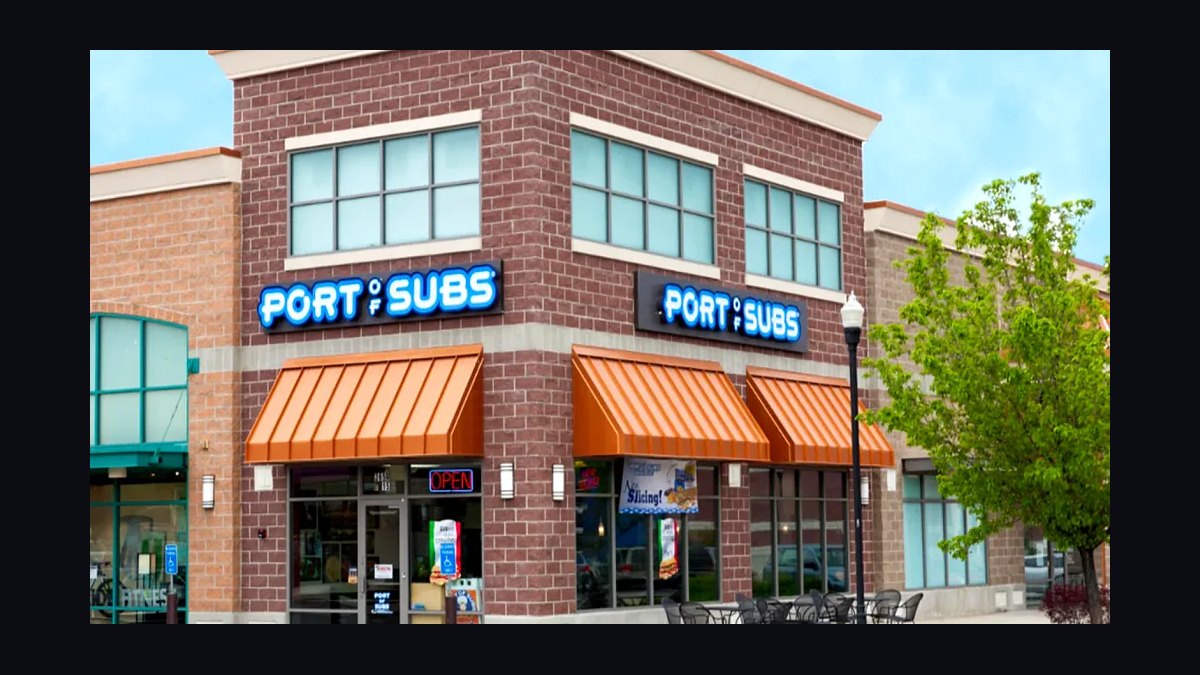
Only if you already run multi-unit QSR sites inside the western footprint and can fund it with equity. Port of Subs charges a $25,000 franchise fee, 6% royalty, and 4% marketing on a $419,895–$856,875 build, publishes no Item 19, and estimated volumes trail national sub brands badly.
A Reno operator runs the actual scenario
Picture a real prospect, because the abstract version of this question always flatters the brand. A 44-year-old operator in Sparks, Nevada has run two Jersey Mike's stores for six years. She clears roughly $130,000 a year in combined owner cash flow, has $640,000 of liquid capital from a partial cash-out refinance, and knows every commercial landlord along the Pyramid Highway corridor. Her Jersey Mike's territory is built out. A broker calls: two Port of Subs locations in Carson City are for sale, and the franchisor is also awarding new territory in northern Nevada.
Her decision looks completely different from that of a 38-year-old software sales manager in Charlotte who has never run a restaurant, has $500,000 from a stock vest, and found Port of Subs on a franchise portal. Same brand, same fee schedule, same FDD — and one of those two people should sign while the other should not get past the discovery call.
The difference is not courage or diligence. It is three structural facts. First, the Sparks operator is inside a footprint where the brand has been running since 1972; Port of Subs in Charlotte is an unknown regional sandwich chain competing against Jimmy John's, Jersey Mike's, Firehouse, Publix subs, and every local deli, with zero borrowed awareness. Second, she is buying existing units with a visible P&L history — she can see actual revenue instead of estimating it, which matters enormously in a system that publishes no Item 19 Financial Performance Representation. Third, she can cap build-out cost, because she knows which second-generation restaurant boxes on her side of town come with usable hoods, grease traps, and three-phase power already installed.
Strip those three advantages away and the same investment turns into a blind bet on a below-average volume brand at full-freight royalty. That is the honest frame for 2027: this is a geography-and-experience question wearing the costume of a brand question. Before you evaluate the sandwiches, evaluate whether you are the Sparks operator or the Charlotte one — and be unsentimental about the answer, because the franchisor's development team will not make that distinction for you.
An adjacent version of this same problem shows up across regional QSR generally — Bojangles outside the Carolinas, Culver's outside the upper Midwest, Whataburger outside Texas. Regional brands convert awareness into traffic cheaply inside their home markets and expensively outside them. The failure pattern is nearly always the same: an operator pays national-brand fees for regional-brand pull in a market where nobody has heard of the sign.
How the franchise economics actually work
The mechanism is simple arithmetic that prospects consistently model wrong, because they think about the investment number and forget the ongoing vig.
Royalty and marketing are charged on gross sales, not profit. Port of Subs takes 6% royalty plus 1% national ad fund plus a 3% local marketing minimum — a combined 10% off the top line before you have paid for a single pound of turkey. On a store doing $600,000 in annual revenue, that is $60,000 leaving the business every year, regardless of whether the store made money. On a store doing $1.4 million, the same 10% is $140,000 — but the fixed costs underneath it (rent, manager salary, insurance, the hood system) barely moved. That is the entire argument in one sentence: fee percentages are flat, but the cost base is largely fixed, so higher-volume brands convert dramatically more of each fee dollar into owner earnings.
Run the store-level stack the way a lender will. On a conservative $525,000 AUV using standard sandwich-shop ratios — roughly 30% food and paper, 30% labor, 10% occupancy, 10% other operating expense, 6% royalty, 4% marketing — you are at 90% of sales consumed, leaving about $52,500 of store-level cash flow before any debt service, before owner compensation if you take a salary, and before the capital reserve you will need when the walk-in compressor dies in year four.
Now layer the debt. SBA 7(a) at 2027-era rates in the 10.5%–11.5% band, amortized over ten years on equipment-and-leasehold-weighted collateral, costs roughly $8,100–$8,400 a month per $600,000 borrowed. That is $97,000–$101,000 a year of debt service against $52,500 of cash flow. The store does not service that loan. It does not come close. Which is why the realistic Port of Subs buyer is writing a large equity check rather than leveraging up — a structural constraint that quietly disqualifies most first-time prospects who are counting on 80% financing to make the deal reachable.
The second mechanism worth understanding is the Regional Developer structure, because it changes the shape of the return entirely. Instead of building stores, a regional developer buys multi-county rights for a reported $169,750–$578,400 range, recruits sub-franchisees inside that territory, and earns a share of the franchise fees and the ongoing royalty stream. The economics stop being restaurant economics and start being license-and-royalty economics — lower operating risk, near-zero food cost exposure, but dependent entirely on your ability to sell franchises in a market where the brand has modest pull. It is a sales business, not a sandwich business, and people conflate the two constantly.
The third mechanism is catering. Party trays are the highest-margin sales in almost every sub system, they arrive in large ticket sizes with predictable labor, and they are the only realistic path from a mid-$500Ks store to something north of $700,000. But catering revenue does not appear because you signed a franchise agreement. It appears because someone in the business is calling hospital administrators, construction superintendents, car dealerships, and school district offices every week. Owners who treat catering as inbound get inbound-sized numbers.
Real numbers, ranges, and benchmarks
Here is the disclosed and estimated picture, with sources kept honest about which is which.
Disclosed by the franchisor (2026 FDD): initial franchise fee $25,000; total initial investment $419,895 to $856,875; royalty 6% of gross; national advertising 1%; local marketing minimum 3%. Inside that investment range, real estate and lease deposits run roughly $8,000–$25,000, leasehold improvements and build-out $200,000–$475,000, equipment and signage $115,000–$190,000, opening inventory $12,000–$18,000, grand-opening marketing $7,500–$15,000, insurance and licensing and training $9,500–$22,000, and three months of working capital $42,895–$86,875.
Not disclosed by the franchisor: unit-level revenue. Port of Subs publishes no Item 19. Third-party analysts including Sharpsheets and VettedBiz model an estimated AUV in the $500,000–$650,000 range with store-level EBITDA margins around 8%–12%, but none of that is franchisor-warranted and you should treat it as a starting hypothesis to be tested against actual franchisee calls, not as a number to underwrite.
The competitive benchmark that decides the question: Jersey Mike's publishes an Item 19 in the $1.4 million AUV neighborhood. Firehouse Subs and Jimmy John's both sit around $1.0 million. Subway, the category's cautionary tale, has shed roughly 6,000 US units since 2018 and runs closer to $490,000. Port of Subs' estimated band sits well below the healthy national field while charging comparable fees. Same toll, roughly half the traffic.
Translate that into the only metric that matters when comparing brands: AUV per dollar invested. A $500,000 Jersey Mike's build producing $1.4 million returns $2.80 of revenue per invested dollar. A $600,000 Port of Subs build producing $600,000 returns $1.00. Even if you assume Port of Subs runs a leaner cost structure and grinds out a better margin percentage, it cannot close a gap that size, because absolute dollars pay rent and absolute dollars service debt.
The build-out variable deserves its own line. The spread between $419,895 and $856,875 is not noise — it is the difference between a deal that can work and one that cannot. That spread is driven almost entirely by whether you land a second-generation restaurant box. A former sandwich shop, bakery, or fast-casual space with an existing hood, grease interceptor, ADA restrooms, and adequate electrical service can cut $150,000–$250,000 out of construction. A raw vanilla shell in a new retail center means running plumbing, cutting a roof penetration for exhaust, and upgrading service — and that is how prospects land at the top of the range. If your first three site options are all raw shells, that is meaningful information about your specific deal, not a detail to sort out later.
Labor and regulatory context in the footprint states: sandwich-line crew in Nevada, Idaho, Utah, Arizona, Oregon, and Washington generally runs in a $16–$22 per hour band depending on metro, while California's fast-food minimum under AB 1228 sits materially higher and compresses margin on the California units specifically. A brand whose modeled margin is already only 8%–12% has very little cushion for a two-dollar hourly move across a 900-labor-hour month.
On ownership and direction: the chain has been owned since 2023 by Area 15 Ventures, a private-equity group chaired by RE/MAX co-founder Dave Liniger, and the growth strategy has leaned on the Regional Developer model rather than corporate-led builds. Unit count sits around 140 across seven western states, concentrated in Nevada with secondary presence in California, Utah, Arizona, Idaho, Oregon, and Washington. Sector-wide, IBISWorld tracks western sandwich-segment same-store sales in the low single digits, which — set against food-away-from-home CPI — implies flat to slightly negative real traffic. You are not underwriting into a rising tide.
Trade-offs against the alternatives
The comparison set is what turns this from a yes/no into a ranked choice.
Jersey Mike's is the default alternative for most prospects: roughly $1.4 million AUV with a published Item 19, an $18,500 franchise fee, 6.5% royalty, 2% marketing, and an investment range that can start well below Port of Subs' floor. Roughly double the volume per invested dollar, plus transparency. The catch is availability — good Jersey Mike's territory is genuinely scarce in many metros, and the franchisor is selective about first-time operators.
Firehouse Subs, under GoTo Foods, runs near $1.0 million AUV with a higher investment range and has been active with development incentives such as fee reductions and royalty abatements for new builds. Those incentives can meaningfully improve early-year cash flow, which is exactly when a new store is most fragile.
Jimmy John's sits around $1.0 million with a lower investment band and higher marketing spend, and delivery-weighted volume that behaves differently from a dine-in-and-catering mix — worth understanding before you assume the models are interchangeable.
Penn Station East Coast Subs offers a grilled-sub differentiator at meaningfully higher volume than Port of Subs, with a notably higher royalty. Capriotti's, Ike's, and Mendocino Farms all play in a higher-AUV, catering-heavy or premium-fast-casual lane with correspondingly higher build costs and tighter site requirements.
The independent option deserves more respect than franchise brokers give it. Building your own regional sandwich brand for $280,000–$450,000 eliminates the franchise fee entirely and — more importantly — eliminates the 10% ongoing drag. An independent doing $420,000 with no royalty and no ad fund keeps roughly $42,000 a year that a franchised store at the same volume hands to the franchisor. Over a ten-year term, that is the price of a second store. What you give up is real: proven recipes, supply-chain purchasing power, an operations playbook, a training system, site-selection support, and a name people already recognize. The question is whether the brand you are considering delivers enough of that to be worth 10% of every dollar forever. For Jersey Mike's inside a strong trade area, plausibly yes. For a regional brand outside its home footprint, that is a much harder case to make.
Buying existing units instead of building new is the option most first-time prospects skip and most experienced operators check first. An existing store comes with a visible revenue history, an established customer base, trained staff, and — critically in a no-Item-19 system — real numbers instead of estimates. You typically pay a multiple of trailing store-level cash flow, and you inherit remaining lease and franchise-agreement terms plus any deferred maintenance. But you skip the twelve-to-eighteen-month ramp that kills undercapitalized new builds, and you can underwrite against something that actually happened.
There is also the do-nothing alternative, which nobody sells you because nobody earns a commission on it. Port of Subs is not territory-constrained in 2027. There is no auction dynamic forcing a decision this quarter. If your diligence produces ambiguous answers, waiting six months and re-running the analysis costs you almost nothing, while signing a ten-year franchise agreement and a ten-year lease into an ambiguous answer costs you a great deal.
Common pitfalls and how to avoid them
Treating the absence of an Item 19 as neutral. It is not neutral. Franchisors with strong unit economics publish them, because publishing is a sales advantage. When a franchisor in a category where three major competitors all disclose chooses not to, the reasonable inference is that the numbers do not help the pitch. Avoid this by building your own Item 19: get the state-by-state unit list from Item 20, call at least a dozen current franchisees across two or more states, and ask three specific questions — actual annual revenue, actual store-level cash flow after royalty, and whether they would sign again knowing what they know now. If fewer than two-thirds say yes, that is your answer.
Underwriting to the base case. Almost every prospect models a base case and calls it conservative. Build three: a downside near $525,000, a base near $625,000, and a catering-driven stretch near $725,000. If the downside case cannot cover debt service plus a modest owner draw, you are not looking at a conservative plan — you are looking at a plan that requires everything to go right in a business where opening delays, a slow first summer, and one bad manager hire are all ordinary events.
Forgetting the second bucket of capital. The FDD's working capital line covers roughly three months. Real ramp for a new sandwich store in a market where the brand is unfamiliar frequently runs longer. Hold six months of full operating expenses outside the project budget, plus post-close liquidity — lenders will typically want to see meaningful reserves after funding, and they are right to.
Assuming catering shows up on its own. It does not. If the base case requires catering to reach target, name the person responsible for outbound catering sales, put hours on their calendar, and build the target account list before you open — hospitals, contractors, dealerships, school districts, real estate offices. If that person is you and you are also expediting the line at noon, be realistic about how many calls actually get made.
Signing the lease before the franchise agreement is settled, or vice versa. These two ten-year commitments need to close in coordination. Prospects who sign a lease to hold a site and then discover a franchisor site-approval problem, or who sign a franchise agreement and then cannot find an approved location, end up paying for an obligation with no matching asset. Use contingencies in both directions and have a franchise attorney — not the broker, not the franchisor's development rep — read both documents.
Skipping the head-to-head FDD comparison. Request the FDDs for the two or three realistic alternatives and run the identical five-year model on each with the same cost ratios. This takes a weekend and is the highest-return diligence work available. Prospects who skip it almost always discover the comparison later, after the money is committed, when the only remaining option is an expensive exit.
Confusing "the food is good" with "the investment is good." Regional chains earn genuine local loyalty, and Port of Subs has fifty-plus years of it in Nevada. Loyalty in the home market is a real asset. It is also non-transferable — it does not travel to a metro where the sign means nothing, and enthusiasm for the product is not a substitute for volume per dollar invested.
Assuming you can exit at will. Resale liquidity tracks brand demand. Units in high-demand national systems attract multiple buyers; units in smaller regional systems, especially outside the core footprint, can sit. Ask your franchise attorney about transfer approval terms and look at how long comparable units have historically taken to sell before you assume a five-year exit is available on schedule.
Related questions
How much liquid capital do I actually need?
Plan on $450,000–$600,000 of equity, not the FDD minimum. That covers the build at a realistic point in the range, three months of disclosed working capital, an additional reserve for a longer ramp, and the post-close liquidity a lender will expect to see after funding.
Does buying an existing store beat opening a new one?
Usually yes for a first-time operator in a system with no Item 19. An existing unit gives you real trailing revenue instead of estimates, trained staff, and no ramp period. You pay a premium for that certainty and inherit deferred maintenance and remaining lease terms.
Is the Regional Developer model actually better?
It has better risk-adjusted return potential but it is a different business. You earn from recruiting sub-franchisees and sharing fee and royalty streams rather than from selling sandwiches. Success depends on your ability to sell franchises in a market with modest brand awareness.
What single factor most changes the outcome?
Build-out cost. The gap between a second-generation restaurant box and a raw shell is often $150,000–$250,000 — larger than several years of store-level cash flow combined. Secure the box before you commit to anything else.
FAQ
What does it cost in total to open a Port of Subs franchise?
The 2026 FDD discloses a total initial investment of $419,895 to $856,875, which includes the $25,000 initial franchise fee, leasehold improvements, equipment, opening inventory, grand-opening marketing, insurance and training, and roughly three months of working capital. Where you land in that range depends overwhelmingly on whether your site is a second-generation restaurant space or a raw shell.
What are the ongoing fees?
Six percent royalty on gross sales, one percent to the national advertising fund, and a three percent local marketing minimum — roughly ten percent of top-line revenue before any operating cost. Those percentages are broadly comparable to national sub competitors, which is precisely the issue when the volume underneath them is lower.
Why does the missing Item 19 matter so much?
Item 19 is the section of the FDD where a franchisor may disclose unit financial performance. It is optional. Jersey Mike's, Firehouse Subs, and Jimmy John's all publish one; Port of Subs does not. That means you cannot underwrite revenue from franchisor data and must build your own picture through franchisee interviews before committing capital.
What revenue should I model?
Third-party analysts estimate an AUV in the $500,000–$650,000 range with 8%–12% store-level margins, but that is modeling, not disclosure. Use it as a hypothesis, then validate it with at least a dozen franchisee calls across multiple states, and stress-test your plan against the low end rather than the midpoint.
Is this a good first franchise?
Generally no. First-time operators are usually better served by a brand that publishes unit economics and delivers materially higher volume per invested dollar. Port of Subs makes the most sense for experienced multi-unit operators already working inside the seven-state western footprint, particularly those buying existing units or taking Regional Developer territory.
How long until it pays back?
At the estimated volume band and a realistic build cost, a conservative payback runs five to seven years, and longer if you land near the top of the investment range without a corresponding volume lift. That is a hold-and-operate timeline, not a quick flip, and it assumes you fund the deal largely with equity rather than debt.
Sources
- https://www.sba.gov/funding-programs/loans/7a-loans
- https://www.ftc.gov/business-guidance/resources/franchise-rule-compliance-guide
- https://www.ibisworld.com/united-states/market-research-reports/sandwich-sub-store-franchises-industry/
- https://www.franchise.org/franchise-information/franchise-business-outlook
- https://www.bls.gov/cpi/
- https://www.qsrmagazine.com/
- https://www.restaurantdive.com/
- https://www.dir.ca.gov/dlse/Fast-Food-Minimum-Wage-FAQ.htm
- https://www.franchisetimes.com/
- https://en.wikipedia.org/wiki/Port_of_Subs
Related on PULSE
- Should I open or buy a Lenny's Grill & Subs franchise in 2027?
- Should I open or buy a Jon Smith Subs franchise in 2027?
- Should I open or buy a Cousins Subs franchise in 2027?
- Should I open or buy a Penn Station East Coast Subs franchise in 2027?
- Should I open or buy a Firehouse Subs franchise in 2027?
This page will be disappearing soon. Save it to your device for $1 — or read it free while it is here.
@Kory-White- · if Venmo asks, the last 4 of my number are 2012
This page is gone.
This one is off the shelf now. $1 keeps it on your phone for good — the whole page, pictures and diagrams included.
 franchiseShould I open or buy an F45 Training franchise in 2027?
 franchiseShould I open or buy a Cold Stone Creamery franchise in 2027?
 franchiseShould I open or buy a Cook Out franchise in 2027?
 franchiseShould I open or buy a Pizza Hut franchise in 2027?
 franchiseShould I open or buy a KinderCare franchise in 2027?
 franchiseShould I open or buy a Goddard School franchise in 2027?
 franchiseShould I open or buy a Hand and Stone Massage franchise in 2027?
 franchiseShould I open or buy a Culver's franchise in 2027?
 franchiseShould I open or buy a Big O Tires franchise in 2027?
 franchiseShould I open or buy a Rita's Italian Ice franchise in 2027?