


Should I open or buy a Cheeburger Cheeburger franchise in 2027?
Quality
Certified
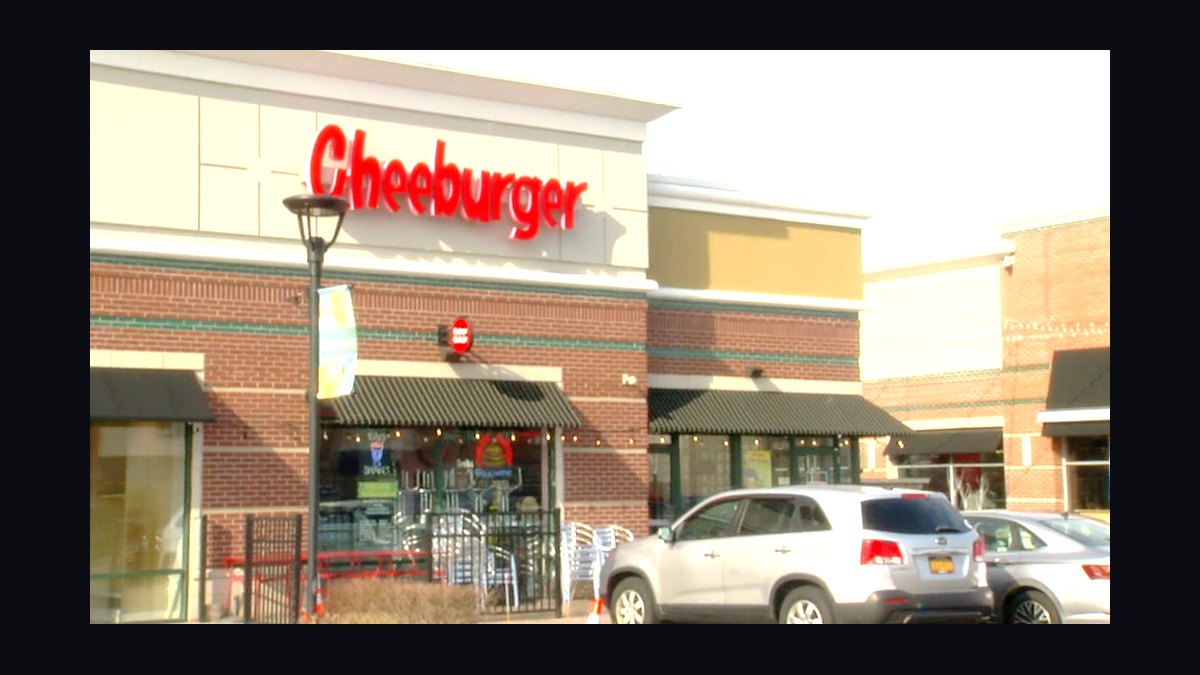
Probably not — unless you already own the building, have deep ties to a nostalgic tourist market (Sanibel, the Outer Banks, a Branson-type strip), and treat this as a branded independent rather than a growing franchise system. Cheeburger Cheeburger has collapsed from a 60-plus unit chain in the mid-2000s to a handful of legacy sit-down units plus airport express counters by late 2026. Realistic 2027 startup totals run $345,000 to $603,000 all-in, with a 5% royalty plus 1% marketing, and breakeven typically 36 to 60 months when it happens at all. Conservative Year-1 owner cash flow on a mid-volume unit ($900K AUV proxy from peer better-burger chains) is $45,000 to $90,000 before debt service. Wayback Burgers, MOOYAH, or BurgerFi offer better-supported alternatives for the same capital.
The Real Numbers
Cheeburger Cheeburger does not currently publish a public Item 19 financial performance representation, and the brand's most recent FDD filings (registered through state agencies including Minnesota, Wisconsin, and California up through 2023) showed a shrinking unit count with limited new openings. Numbers below blend the brand's last published Item 7 ranges, peer better-burger FDDs (Wayback Burgers, MOOYAH, BurgerFi 2025 FDDs), and IBISWorld Single Location Full-Service Restaurants (US) 2026 benchmarks for a 3,000-sqft 1950s-diner-style burger concept.
| Line Item | Specialized Market (airport/mall kiosk) | Major Market (free-standing 2,800-3,500 sqft) |
|---|---|---|
| Initial franchise fee (Item 7) | $22,500 - $24,500 | $30,000 - $35,000 |
| Build-out / leasehold improvements | $95,000 - $145,000 | $180,000 - $285,000 |
| Kitchen + smallwares equipment | $70,000 - $95,000 | $90,000 - $135,000 |
| POS, security, signage | $18,000 - $28,000 | $28,000 - $42,000 |
| Opening inventory | $9,000 - $14,000 | $14,000 - $22,000 |
| Training, travel, grand-opening marketing | $18,000 - $28,000 | $28,000 - $42,000 |
| 3-month working capital | $90,000 - $130,000 | $120,000 - $185,000 |
| TOTAL INITIAL INVESTMENT | $322,500 - $464,500 | $490,000 - $746,000 |
| Royalty % | 5% of gross sales | 5% of gross sales |
| Marketing/brand fund % | 1% of gross sales | 1% of gross sales |
| Term | 10 years | 10 years |
| Renewal fee | 25% of then-current franchise fee | 25% of then-current franchise fee |
Revenue and margin reality (peer-blended, no current Cheeburger Item 19):
| Metric | Year 1 | Year 2 | Year 3 (mature) |
|---|---|---|---|
| Gross revenue (free-standing proxy) | $620K - $850K | $780K - $980K | $850K - $1.05M |
| Food + paper COGS (~30%) | -$210K | -$265K | -$285K |
| Labor (~32% incl. mgmt) | -$224K | -$282K | -$304K |
| Occupancy (rent, CAM, taxes) | -$84K | -$84K | -$87K |
| Royalty + marketing (6%) | -$42K | -$53K | -$57K |
| Other opex (utilities, R&M, insurance) | -$70K | -$78K | -$82K |
| EBITDA | -$10K to $35K | $45K - $115K | $90K - $185K |
| EBITDA margin | -2% to 5% | 6% - 12% | 11% - 18% |
| Cash payback on $550K invested | n/a | n/a | 5.5 - 7 years |
Compare to peer better-burger Item 19s (2025 FDDs):
- Wayback Burgers (Item 19, 2025 FDD): system AUV approximately $835,000, top quartile $1.18M
- MOOYAH (Item 19, 2025 FDD): system AUV approximately $917,000, top quartile $1.32M
- BurgerFi (Item 19, 2024 FDD): corporate-store AUV approximately $1.35M (skewed by urban units)
- Five Guys (no franchising US/Canada in 2026 per Five Guys system FDD summary): historical AUV approximately $1.45M, not relevant for new entrants
- Cheeburger Cheeburger: no Item 19 disclosed, which under FTC rule 16 CFR 436.5(s) means prospective franchisees are not permitted to receive earnings claims from the franchisor or its reps — a meaningful red flag
Who Wins With This Business
Winners share five traits:
- Tourism-corridor location with a captive seasonal audience that values a 1950s-diner photo opportunity more than the lowest price per burger. Sanibel, Cape Cod, the Outer Banks, Mackinac Island, Branson, and Pigeon Forge are the archetype.
- Owned or family-held real estate that pushes occupancy below the 11% industry average toward 6 to 8% of sales. Real estate is where most independent burger operators actually make their money.
- Owner-operator running the floor 50+ hours per week. Better-burger margins do not survive absentee ownership; labor variance of 200 basis points wipes out the EBITDA on a $900K-AUV unit.
- Existing F&B operator (multi-unit ice cream, mini-golf, breakfast) who can co-locate or share labor pools across concepts and amortize a GM across two units.
- Tolerance for a fading brand — comfortable promoting on Instagram and TripAdvisor under the operator's own marketing rather than expecting national pull from the franchisor.
Who Loses With This Business
Anyone treating this as a growth franchise with national brand pull. The brand has lost roughly 90% of its system count since 2010 (Wikipedia/Grokipedia entries; Restaurant Dive 2024 closures coverage; multiple Yelp "CLOSED" listings including Roswell GA, Dothan AL, and dozens of suburban units). Absentee investors expecting a turn-key operator-light asset will lose — better-burger requires hands-on labor management and the franchisor support layer here is thin to nonexistent based on the inactive corporate franchising portal and parked sub-pages as of late 2026.
You also lose if you are:
- A first-time restaurant operator. Better-burger has a 3- to 5-year learning curve on labor scheduling, beef yield, and shake-machine downtime; you want a franchisor that actually trains and audits, and current Cheeburger franchisor support cadence is unverified.
- Operating in a commodity suburban strip where Five Guys, Smashburger, Habit Burger, Shake Shack, MOOYAH, Wayback, and a half-dozen independent smash concepts compete on price and speed. The 1950s-diner sit-down format loses on ticket time in that fight.
- Underfunded. If your liquid working capital reserve is under $130,000 at open, the first soft quarter will force layoffs that gut service quality and accelerate failure.
- Counting on delivery and third-party platforms to backfill weak dine-in. The diner format's signature shakes and customizable burgers travel poorly and lose 30% margin to DoorDash/Uber Eats commissions.
2027 Market Conditions
Better-burger is over-supplied and consolidating. Restaurant Business 2024 reporting on chain closures, Restaurant Dive's "market correction" coverage, and the Technomic Top 500 2025 update all point to the same picture: the 2010-2019 better-burger boom that produced Smashburger, BurgerFi, MOOYAH, Wayback, Habit, and Shake Shack saturated the market, and 2023-2026 closures across BurgerFi (Chapter 11 in 2024), Smashburger (significant unit reductions), and dozens of regional chains signal the segment is past peak. Beef prices are still elevated (USDA ERS forecast: ground beef CPI up 4-6% in 2027), labor costs continue to ratchet up in states raising minimum wage, and Gen Z consumer preference data from Datassential FoodBytes 2026 shows declining interest in heavy red-meat sit-down concepts versus chicken sandwiches and bowls. Cheeburger Cheeburger enters 2027 with no national marketing buy, no documented Item 19, and a brand recognition curve that skews to consumers over 45 — exactly the cohort with declining QSR visit frequency per NPD/Circana Crest 2026 data.
The 90-Day Decision Tree
- Days 1-7: Confirm the brand is actively franchising. Email franchising@cheeburger.com and call the Fort Myers HQ. If you do not get a current FDD within 14 days, stop. No FDD means no legal sale under FTC franchise rule 16 CFR Part 436.
- Days 8-21: Read every page of the FDD. Pay specific attention to Item 3 (litigation), Item 7 (initial investment), Item 19 (financial performance — likely blank, which is itself a finding), Item 20 (system size trend — confirm the unit-count decline), and Item 21 (audited financials).
- Days 22-35: Call every current franchisee listed in Item 20. Ask three questions: (a) gross sales last 12 months, (b) net cash to owner last 12 months, (c) what franchisor support actually showed up. If fewer than 5 franchisees are reachable, walk.
- Days 36-49: Site-select against the tourism filter. Pull Placer.ai or county tourism-board visitation data for your target market. Require 150,000+ annual visitors within 1 mile and average household income $75K+.
- Days 50-63: Build the pro forma at the conservative numbers in the table above. If breakeven slips past month 18, walk.
- Days 64-77: LOI on real estate with a personal-guarantee cap of 24 months and a kick-out clause if franchise registration in your state lapses.
- Days 78-84: SBA 7(a) application. Better-burger is on the SBA franchise registry case-by-case; expect 9-12% rates in 2027 with 10-year amortization on equipment + working capital.
- Days 85-90: Final go/no-go. Three-bucket gate: brand is actively franchising (confirmed in Days 1-7), at least 3 franchisees report positive cash flow (confirmed in Days 22-35), pro forma clears 15% IRR at conservative AUV (confirmed in Days 50-63). Miss any one and walk.
Alternative Plays
- Wayback Burgers — actively franchising, published Item 19, AUV approximately $835K, total investment $285K-$640K, 5% royalty. Better support infrastructure for similar capital.
- MOOYAH Burgers, Fries and Shakes — published Item 19, AUV approximately $917K, total investment $365K-$715K, 6% royalty. Better positioned for suburban strip.
- Hwy 55 Burgers Shakes and Fries — 1950s-diner positioning competitor with stronger Carolinas footprint, total investment approximately $255K-$700K, 5% royalty, more active franchisor.
- Independent 1950s-diner concept — skip the franchise fee and 5% royalty entirely. $200K-$450K all-in, full brand control, all margin to you. The 1950s-diner format is not a protected IP moat.
- Ghost kitchen / virtual burger brand off an existing restaurant — test-market the concept at $15K-$35K before committing seven figures.
- Acquire a closed Cheeburger Cheeburger unit's equipment at auction (multiple locations have liquidated 2023-2026) and open an independent — capture the build-out savings without the royalty burden.
FAQ
What is the realistic total investment to open a Cheeburger Cheeburger in 2027? Expect to spend between $345,000 and $603,000 all-in, including franchise fees, equipment, build-out, and initial inventory. This range assumes a modest 1,200–1,800 square foot location; larger or custom builds can push toward $700,000. No official disclosure document is publicly available, so these figures are based on comparable better-burger franchise costs and industry averages.
How long does it take to break even with a Cheeburger Cheeburger franchise? Breakeven typically falls between 36 and 60 months, if it occurs at all. Many legacy units have struggled due to declining brand awareness and limited corporate support. Operators in high-traffic tourist spots may see faster payback, but 4–5 years is a realistic minimum for most new locations.
What are the ongoing royalty and marketing fees? The franchise charges a 5% royalty on gross sales plus a 1% marketing fee. This is in line with industry averages but offers little national advertising support given the brand’s small footprint. You’ll likely need to fund local marketing yourself, which can add 2–3% of sales.
Can I expect to make a living from a Cheeburger Cheeburger franchise in the first year?
Conservative Year-1 owner cash flow for a mid-volume unit (roughly $900,000 annual sales) ranges from $45,000 to $90,000 before debt service. After loan payments, that could drop to $20,000–$50,000, making it a modest income at best. Higher-volume tourist locations might improve this, but it’s not a reliable primary income for most.
Is Cheeburger Cheeburger still expanding, or is it a dying brand? The chain has shrunk from over 60 units in the mid-2000s to fewer than 10 sit-down locations plus a handful of airport express counters by late 2026. No active franchise development program is evident, and corporate support is minimal. It’s best viewed as a legacy brand with limited growth potential.
What are the best alternatives to Cheeburger Cheeburger for the same investment? Wayback Burgers, MOOYAH, and BurgerFi offer stronger brand recognition, better training, and more robust supply chains for a similar $350,000–$600,000 startup cost. Each has a larger network and proven unit economics, reducing the risk compared to Cheeburger Cheeburger’s uncertain future.
Bottom Line
Cheeburger Cheeburger in 2027 is a brand-licensed independent, not a real franchise system. If you already own a tourism-corridor building, want the 1950s-diner concept, and are comfortable doing 95% of your own marketing and operating support, paying a $30K fee plus 6% of sales for a name and a manual is a defensible micro-decision — but only after a current FDD in hand, franchisee reference calls confirming the franchisor still exists, and a pro forma that survives at $700K AUV. For every other operator, the alternatives (Wayback Burgers, MOOYAH, Hwy 55, or an independent concept) deliver more support, more economics, and less brand-tail risk for the same capital. The conservative call for 9 out of 10 prospects is no.
Sources
- Cheeburger Cheeburger - Wikipedia
- Cheeburger Cheeburger - Grokipedia
- Cheeburger Cheeburger Franchise Costs & Fees - The Franchise Mall
- Cheeburger Cheeburger Franchise Cost & Opportunities - Franchise Help
- Cheeburger Cheeburger Franchise - Cost & Fees - TopFranchise
- Cheeburger Cheeburger Franchise Review - FranchiseGrade
- Cheeburger Cheeburger Restaurants Franchise Cost - Franchise Gator
- Cheeburger Cheeburger - Entrepreneur Franchise Directory
- Restaurant chain closures coverage - Restaurant Business Online
- 2025 Restaurant Closures Market Correction - Restaurant Dive
- List of Every Major Burger Franchise AUV and Costs 2026 - Jack in the Box Franchising
- FTC Franchise Rule 16 CFR Part 436 - Federal Trade Commission
---
Cheeburger Cheeburger review / Cheeburger Cheeburger franchise review / Cheeburger Cheeburger rating / Cheeburger Cheeburger review 2027 / review of Cheeburger Cheeburger franchise
Related on PULSE
This page will be disappearing soon. Save it to your device for $1 — or read it free while it is here.
@Kory-White- · if Venmo asks, the last 4 of my number are 2012
This page is gone.
This one is off the shelf now. $1 keeps it on your phone for good — the whole page, pictures and diagrams included.
 franchiseShould I open or buy a Jimmy John's franchise in 2027?
 franchiseShould I open or buy a Servpro franchise in 2027?
 franchiseShould I open or buy a Valvoline Instant Oil Change franchise in 2027?
 franchiseShould I open or buy a Sonic Drive-In franchise in 2027?
 franchiseShould I open or buy a Crumbl Cookies franchise in 2027?
 franchiseShould I open or buy a Mac Tools franchise in 2027?
 franchiseShould I open or buy a Great Clips franchise in 2027?
 franchiseShould I open or buy a Jiffy Lube franchise in 2027?
 franchiseShould I open or buy a Bojangles franchise in 2027?
 franchiseShould I open or buy an Orangetheory Fitness franchise in 2027?