


Should I open or buy a Marble Slab Creamery franchise in 2027?
Quality
Certified

Only as a co-branded Great American Cookies unit, in a proven high-traffic suburban site, with you working the counter. A single-brand Marble Slab Creamery standalone is the weaker 2027 play — seasonal revenue swings and an 8% royalty-plus-marketing load leave thin margins. Verify every number against the current FDD before signing anything.
The outcome you should expect
Set your expectations against the actual shape of this business, not the brochure. A scoop-shop franchise is a high-gross-margin, low-absolute-dollar business. Your food and paper cost sits in the high-twenties to low-thirties as a percentage of sales, which sounds wonderful until you multiply it by a store doing a few hundred thousand dollars a year. Thirty percent of a small number is still a small number, and the fixed costs — rent, insurance, the minimum staffing you need to keep the doors open on a slow Tuesday in February — do not shrink to match.
The realistic outcome for a well-sited co-branded unit run by a working owner is a store-level cash flow in the low-to-mid five figures in year one, improving into the higher five figures by year two or three as your local marketing compounds and your labor scheduling gets sharper. That is a respectable return on a build in the mid-to-high six figures, but it is not a passive income stream and it is not life-changing money from a single unit. Franchisees who get wealthy in this category do it with three to six units and a shared management layer, not with one store.
The outcome you should *not* expect is that the brand does the demand generation for you. Marble Slab is a recognized name in its markets, but it is not a destination brand that pulls people across town the way a regional cult favorite does. Your traffic comes from the site — the anchor tenant, the parking lot, the movie theater two doors down, the high school three blocks away — plus whatever local presence you build yourself. Two identical buildouts four miles apart routinely differ by a factor of two in revenue, and that gap is almost entirely site and operator, not brand.

Expect a long ramp on the calendar, too. From signed franchise agreement to open door is typically four to eight months once you account for site approval, landlord work letters, permitting in a jurisdiction that does not care about your pro forma, equipment lead times, and training. Budget carrying costs for that entire window. The single most common cash-flow surprise for first-time food franchisees is not that sales came in low — it is that rent started three months before revenue did.
What drives that outcome
Four variables explain nearly all of the variance between a Marble Slab store that works and one that limps: format, site, operator involvement, and seasonality management. Everything else — signage color, POS vendor, the exact mix of mix-ins — is noise by comparison.
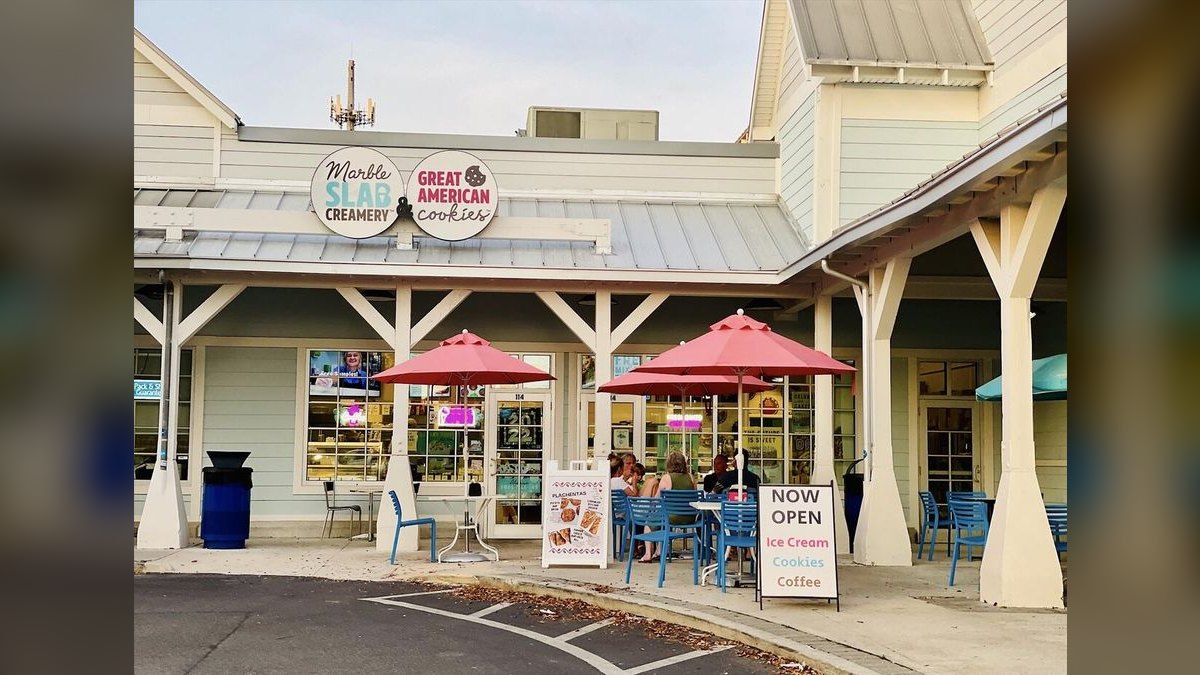
Format. The co-brand with Great American Cookies is the structural advantage, and it is not subtle. Two brands under one lease means one rent line, one utility bill, one POS, one labor pool, and one insurance policy supporting two revenue streams that peak at different times. Cookies sell in the morning and at lunch; ice cream sells after dinner and on weekends. Cookie cakes carry a dramatically higher ticket than a single scoop and they are pre-ordered, which means predictable, schedulable revenue instead of walk-in randomness. Off-premise delivery works far better for a sealed box of cookies than for a hand-mixed cup of ice cream that has to survive a courier. A single-brand ice cream store gives up all of that and keeps every fixed cost.
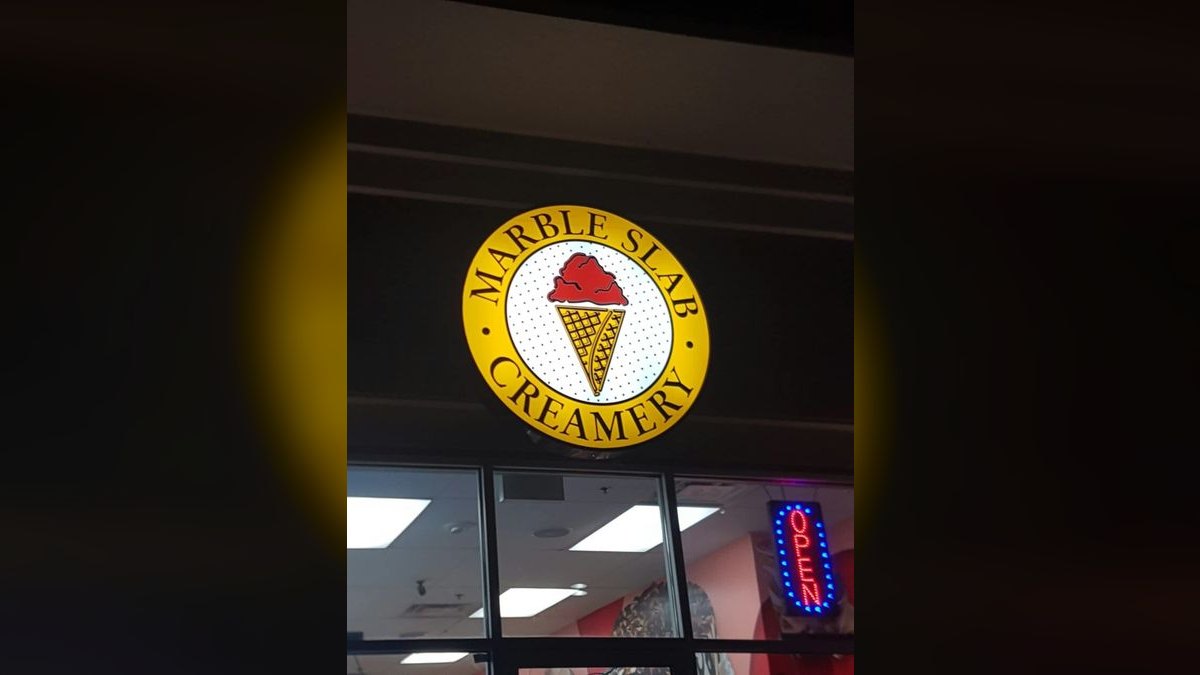
Site. Ice cream is a pure impulse-and-occasion purchase. Nobody plans a trip for it; they see it, or they are already out doing something else. That makes co-tenancy and visibility the whole ballgame. End-caps with clear signage from the road beat inline slots. Centers anchored by a grocery, a mass merchant, or a theater beat centers anchored by a gym and a nail salon. Proximity to youth sports complexes, schools, and family entertainment is worth more than raw population count. Evening and weekend traffic patterns matter more than weekday daytime population — the reverse of what a sandwich shop wants, which is why sites that failed for a lunch concept sometimes work beautifully here and vice versa.
Operator involvement. The gap between an owner-operator and an absentee owner with a hired general manager is roughly the entire profit of a single unit. A manager's salary and payroll taxes on a store with a few hundred thousand in revenue is a several-percentage-point hit to your margin, and it comes straight off the bottom. Worse, dessert retail is a labor-quality business: teenage crews, high turnover, cash handling, portion control, and a product that is visibly worse when the person making it does not care. Absentee ownership in this category is the single most reliable predictor of a failed unit.
Seasonality. In northern markets, winter revenue can fall by roughly half against the summer peak. That is survivable if you planned for it and catastrophic if you did not. The co-brand smooths it — cookies and cookie cakes sell in December, and holiday gifting is a real Q4 lift — which is another reason the dual format dominates the system. Single-brand operators in cold climates are effectively running a seasonal business with twelve months of rent.
Benchmarks and realistic ranges
Do not take any figure — including the ones circulating in franchise-broker content — as fact until you have read it in the current Franchise Disclosure Document. The FDD is the only authoritative source for fees, investment ranges, and any financial performance representation, and it is updated annually. Franchise brokers are paid on placement; their numbers skew optimistic by construction.
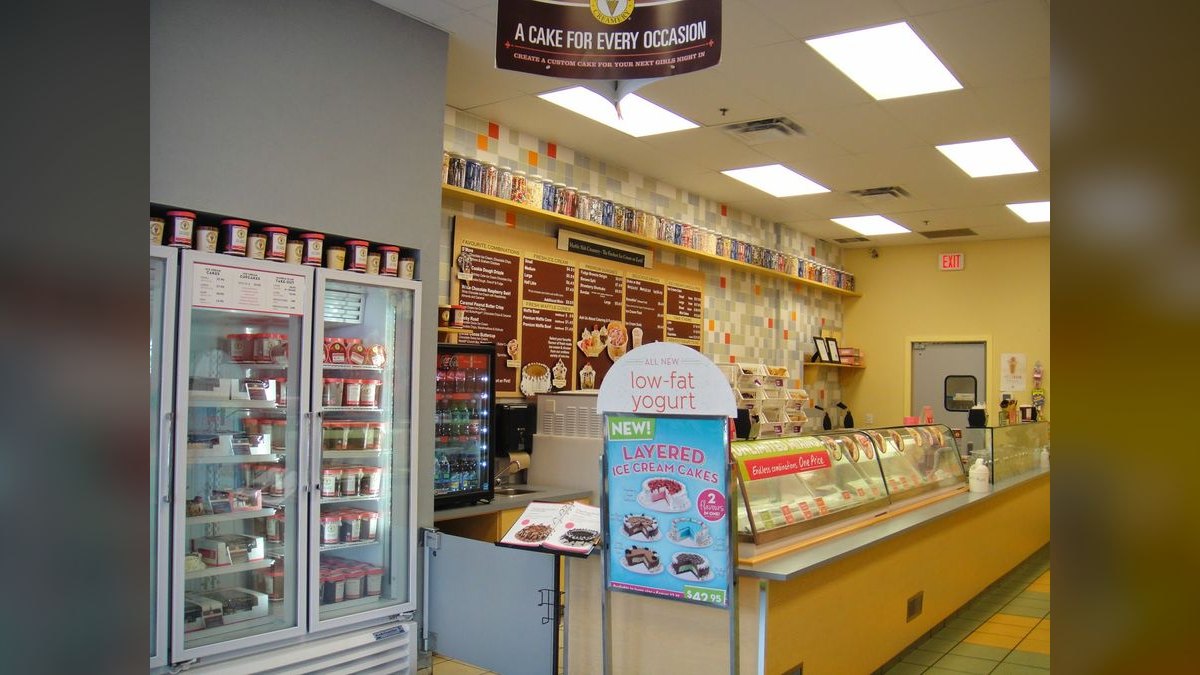
Here is how to build the ranges yourself. Item 5 gives you the initial franchise fee. Item 6 gives you every recurring fee — royalty on gross sales, a national marketing fund contribution, and usually a local advertising minimum on top. Add those three together before you model anything; the combined percentage is the number that matters, and franchisees routinely forget the local minimum. Item 7 gives you the estimated initial investment as a low-to-high range, broken into leasehold improvements, equipment, signage, opening inventory, training and travel, and working capital. Two cautions on Item 7: the working-capital line is almost always thin, and the leasehold-improvement range assumes a reasonably clean space. A grey-shell box with no plumbing stub, no grease interceptor, and an undersized electrical service will blow through the high end of that range before you have hung a sign.
Item 19 is where you spend your real energy. Note what it actually discloses — is it system-wide average revenue, or median? Does it separate co-branded units from single-brand? Does it break out by quartile, by years-in-operation, by region? Does it disclose any cost or profit data at all, or only top-line revenue? A top-line-only Item 19 tells you almost nothing about whether you will make money. Also read the footnotes for how many units are in the reporting group and what percentage of them achieved the stated figure. If most units fall below the average, the average is being pulled up by a handful of outliers and is not a planning number for you.
Then build your own P&L bottom-up rather than top-down. Take a defensible revenue assumption — the lower half of the Item 19 range for a comparable format, not the top quartile. Subtract food and paper. Subtract labor, priced at your local market's actual wage for counter staff, not at federal minimum; wage floors have moved substantially in many states and metros. Subtract your real negotiated rent plus common-area maintenance, taxes, and insurance, which together often add twenty to thirty percent on top of base rent — a lease quoted at a base rate can land meaningfully higher on a gross basis. Subtract the full royalty-plus-marketing-plus-local-advertising load. Subtract utilities, which are not trivial for a store running freezers and dipping cases around the clock. Subtract repairs and maintenance, credit-card processing, and a genuine line for your own replacement cost if you plan to eventually step out.
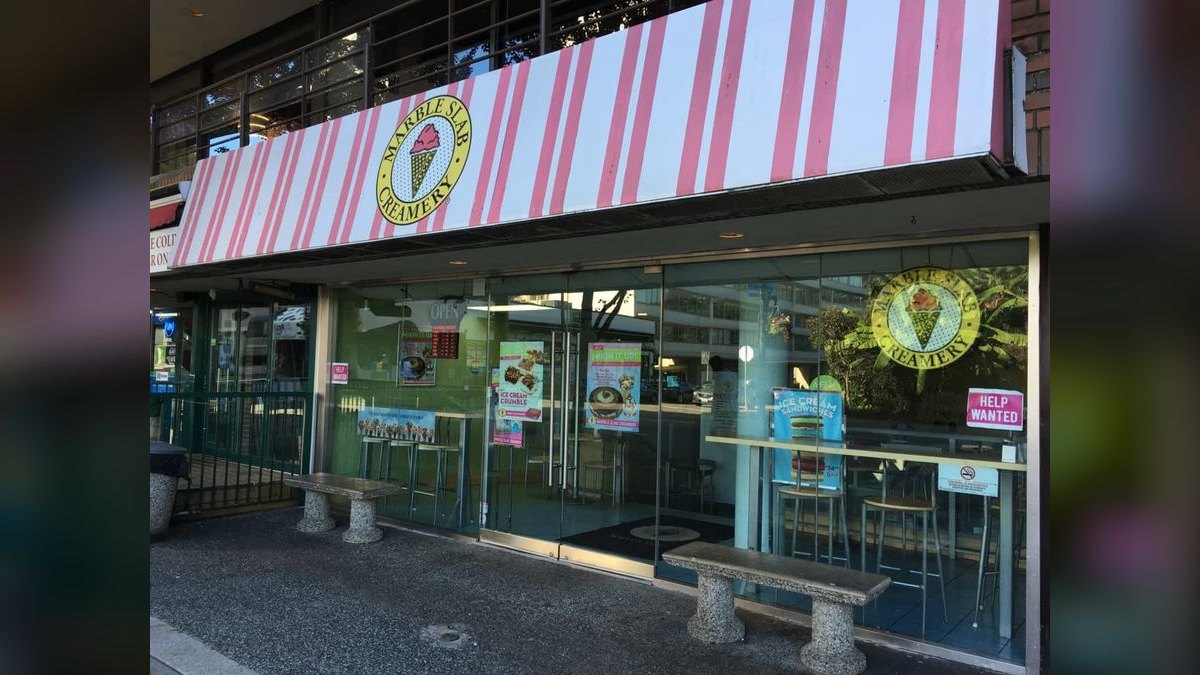
What is left is store-level cash flow, and that is what services your debt. If you are financing through an SBA 7(a) loan, model the debt service explicitly at a rate above today's — variable-rate franchise loans have repriced hard, and a pro forma that only works at a low rate is not a pro forma, it is a wish. A conservative screen: your projected store-level cash flow should cover debt service with at least 1.25x coverage using a below-median revenue assumption. If it only clears at the median, you have no margin for a bad first summer.
Finally, benchmark against the alternative uses of the same capital. Compare the build cost and realistic cash flow of a co-branded dessert unit against a franchised sandwich or coffee concept at similar investment, against a lower-capital mobile or kiosk dessert model, and against simply buying an established independent ice cream shop with a provable P&L at a low multiple of seller's discretionary earnings. That last option deserves more consideration than it usually gets: no royalty drag, existing customer base, and a real operating history instead of a projection. The trade-off is no brand support, no supply chain, and no playbook — which matters enormously if this is your first food business and barely at all if it is your fourth.
Risks, edge cases, and failure modes
The lease outlives the business. A ten-year personally guaranteed lease on a store that is not working is the failure mode that actually ruins people. The franchise agreement can be terminated or transferred; the landlord still wants a hundred and twenty months of rent. Negotiate hard for a sales-based kick-out right — the ability to exit at a defined point if revenue misses a threshold — and cap or shorten the personal guarantee. If the landlord will not move on either, that is information about how confident they are in the site.
Franchisor-level financial stress. Marble Slab sits inside a larger multi-brand franchisor portfolio, and parent-company leverage is a real variable for a franchisee. When a franchisor is servicing heavy debt, development incentives get withdrawn, field support thins out, marketing fund spending gets scrutinized, and supply-chain rebates can be restructured in ways that touch your cost of goods. Read the franchisor's audited financial statements in Item 21 of the FDD. If you are not comfortable reading a balance sheet, pay someone who is. This is not a hypothetical concern in the multi-brand franchising world.
Category competition has intensified. The premium-cookie segment has been reshaped by newer, aggressively expanding chains with much higher average unit volumes, and that pressure lands directly on the cookie half of the co-brand economics that make the dual format attractive. On the ice cream side you are competing with a larger mix-in-format chain, regional favorites with fierce local loyalty, and the grocery freezer aisle, which has gotten very good and very cheap. Your differentiation is the hand-mixed-on-the-slab experience and the in-store occasion. That is a real edge, but it only converts if the store is clean, the staff is engaged, and the location is convenient.
Commodity and wage input volatility. Dairy and cream pricing has been unstable, and food-service wages have risen faster than menu prices in many markets. You have limited pricing power on a five-dollar impulse purchase, which means input inflation compresses your margin rather than passing through. Model a scenario with cost of goods a few points worse and labor a few points worse than your base case. If that scenario goes cash-flow negative, you are underfunded.
Territory and encroachment. Understand exactly what territorial protection you are getting in Item 12, and just as importantly, what you are not. Non-traditional venues, delivery-only ghost kitchens, grocery licensing, and franchisor-owned online channels are frequently carved out of protected areas. A "protected territory" that permits a company-licensed presence inside a nearby stadium or a delivery-only satellite is thinner than it sounds.
Resale traps. Buying an existing unit is often the smarter path — you get a real P&L instead of a projection — but the diligence is different. Verify seller's discretionary earnings against tax returns and merchant-processing statements, not a spreadsheet. Check how many years remain on both the franchise term and the lease, because a short remaining term means an imminent renewal fee and a possible mandatory remodel. Confirm the store is current on all obligations to the franchisor and that transfer approval is realistic. And find out why the seller is selling; "retiring" sometimes means "the anchor tenant just announced it is closing."
Undercapitalization, which is the root cause behind most of the above. The specific pattern: an owner funds the build and opening inventory to the dollar, opens in the fall, hits winter with no reserve, cuts staff hours, service degrades, reviews slide, and the store never recovers to the trajectory it needed. Carry six months of full operating expenses in reserve beyond the Item 7 working-capital figure. If that pushes the deal out of reach, the deal was already out of reach.
A practical rollout plan
Work this in sequence and do not let a franchise developer's timeline compress your diligence. Nothing about a 2027 opening requires you to sign in the next three weeks.
Weeks 1–2 — Get the document and read it yourself. Request the current FDD directly from franchise development. You must receive it at least fourteen calendar days before you sign anything or pay any money. Read Items 5, 6, 7, 11, 12, 17, 19, 20, and 21 personally before you hand it to anyone else. Item 20 includes the outlet tables — openings, closures, terminations, transfers, and non-renewals over the last three years — plus the contact list for current and former franchisees. Closures and transfers trending up while openings trend flat is the clearest early warning a franchise system gives you.
Weeks 2–4 — Call franchisees, especially the ones nobody suggested. Work the Item 20 list yourself. Skip whoever franchise development recommends and call fifteen to twenty operators at random, weighted toward smaller markets and toward anyone who recently sold or closed. Former franchisees are the single most valuable calls you will make. Ask five things: what your actual revenue was last year, what percentage went to labor and to rent, what surprised you in the first ninety days, whether the field support is real, and whether you would sign again today. If a meaningful share say they would not re-sign, stop. That answer is worth more than any spreadsheet.

Weeks 4–6 — Underwrite the site before you fall in love with it. Commission real trade-area analysis rather than eyeballing a parking lot. You want traffic counts at the nearest signalized intersection, household income and family composition within a one- and three-mile ring, evening and weekend traffic patterns specifically, the identity and lease term of the anchor tenant, and the competitive set including grocery. Sit in the parking lot on a Friday at seven and again on a Tuesday at two, and count. If the site fails on evening traffic, no amount of local marketing fixes it.
Weeks 6–8 — Line up financing and structure the entity. Talk to lenders that actively do franchise SBA volume; they know the brand, the typical build, and what the loan committee will accept. Target a down payment you can make without draining your reserve, and stress-test the debt service at a higher rate than quoted. Form an operating entity, keep any real estate in a separate entity, and get a CPA who has done food-service franchises to set up your chart of accounts before you open — retrofitting clean books after a year of shoebox receipts costs more than the CPA does.
Weeks 8–10 — Negotiate the lease as if it were the riskiest document. It is. Push base rent as a percentage of your conservative revenue projection, not as a market rate. Get a tenant-improvement allowance in writing with a defined payment trigger. Get co-tenancy protection tied to the anchor. Get a sales-based kick-out. Cap the personal guarantee in years or dollars. Confirm permitted use covers the full co-brand menu and any future delivery operation. Have a commercial real estate attorney redline it — the landlord's form lease is written entirely for the landlord.

Weeks 10–12 — Franchise attorney, then sign. Hire a lawyer who does franchise work specifically, not your general business attorney. They will tell you which provisions are genuinely negotiable in this system — transfer fees, renewal terms, remodel obligations, the post-term non-compete radius and duration, and any personal guarantee in the franchise agreement itself. Then execute, fund, and start construction with a written schedule and liquidated-damages language for contractor delay.
Months 4–8 — Build, hire, and pre-open. Order long-lead equipment first. Hire your crew four to six weeks out and over-hire by a third, because roughly that many will not last the first month. Spend your opening marketing locally and physically: schools, youth sports leagues, churches, apartment complexes, the businesses in your own center. Set up the cookie-cake pre-order channel before day one — it is bookable revenue you can generate with a phone. Run at least two friends-and-family soft-open sessions to break the equipment and the crew before real customers arrive.
Months 8–14 — Operate to the numbers. Review a weekly P&L against your pro forma, not a monthly one. Watch three lines obsessively: labor as a percentage of sales, waste, and average ticket. Fix your first winter before it arrives — build the Q4 gifting and cookie-cake program in September, not December. And do not sign a second unit until the first one has produced twelve months of audited numbers that beat your model. The multi-unit path is where the returns are, but it only works if unit one is genuinely repeatable.
Related questions
How does Marble Slab compare to Cold Stone Creamery as a franchise?
Cold Stone has a larger system, stronger brand recognition, and generally higher average unit volume in the same mix-in format. Marble Slab's counter-advantage is the Great American Cookies co-brand, which diversifies dayparts under one lease. Compare both FDDs' Item 19 disclosures side by side before choosing.
Is a co-branded store really better, or is that just franchisor marketing?
The logic holds independently: two revenue streams, complementary dayparts, one set of fixed costs. Cookie cakes add pre-ordered, higher-ticket, delivery-friendly revenue that ice cream cannot produce. Confirm it in Item 19 — if co-brand units are broken out separately, the gap should be visible in the data.
Can I finance a dessert franchise with an SBA loan?

Generally yes, if the brand appears on the SBA Franchise Directory. Expect a meaningful down payment, a personal guarantee, a lien on business assets, and often a home equity pledge. Verify current directory status yourself and stress-test the payment at a higher rate than quoted.
Would buying an existing unit beat opening a new one?
Often, yes — you get a real operating history instead of a projection, immediate cash flow, and no construction risk. The trade-offs are inherited problems, remaining term on lease and franchise agreement, and required remodels. Diligence shifts from site selection to verifying earnings against tax returns.
What is a realistic timeline from decision to open door?
Plan nine to fourteen months end to end: two to three months of diligence and financing, one to two months for site approval and lease, then four to eight months for permitting, construction, equipment delivery, and training. Carry rent and interest for the entire pre-revenue window.
FAQ
How much money do I actually need before signing anything?
Take the high end of the FDD's Item 7 initial investment estimate, add six months of full operating expenses as reserve, and add your own living expenses for the pre-revenue period. The lenders will state a minimum liquidity and net worth requirement; treat that as a floor, not a target. Being funded to exactly the Item 7 low end is the most common way first-time franchisees fail.
Is ice cream too seasonal to work as a year-round business?
In warm-weather markets it works year-round with a modest dip. In northern markets, winter revenue can fall by roughly half. The co-brand with Great American Cookies is the standard mitigation because cookies and cookie cakes sell through Q4 and the holidays. A single-brand scoop shop in a cold climate is effectively a seasonal business carrying twelve months of rent — plan the cash flow accordingly.
Can I own this as a passive investment with a hired manager?
Realistically, no, not as a single unit. A general manager's fully loaded cost consumes most or all of a single store's profit at typical volumes, and dessert retail depends heavily on hands-on supervision of a young, high-turnover crew. Passive ownership becomes viable at three or more units, where one manager's cost spreads across multiple revenue streams and you can afford a real operations lead.
What should worry me most in the FDD?
Three things. Item 20's outlet table — rising closures, terminations, and transfers against flat openings is the clearest distress signal a system emits. Item 21's audited financials, which tell you whether the franchisor itself is financially sound. And Item 19's footnotes, which reveal how many units actually achieved the headline figure. If most units fall below the stated average, that average is not your planning number.
How much can I negotiate in a franchise agreement?
Less than in most contracts, but more than zero — and the lease is far more negotiable than the franchise agreement. Franchisors resist changing core economics like royalty rate and territory definition. They will sometimes move on transfer fees, development schedules, the post-term non-compete radius, and personal guarantee scope. A franchise-specialist attorney will know which requests this particular system actually grants.
If I decide against Marble Slab, what are the closest alternatives?
Compare a Cold Stone unit in the same mix-in category, a lower-capital mobile or kiosk dessert concept that eliminates real estate risk, a coffee or bakery franchise with stronger morning revenue, or an established independent ice cream shop bought at a low multiple of seller's discretionary earnings. Run the same bottom-up unit P&L on each rather than comparing brand names.
Sources
- https://www.ftc.gov/business-guidance/resources/franchise-rule-compliance-guide
- https://www.ftc.gov/business-guidance/blog/2022/01/thinking-about-buying-franchise-heres-what-you-need-know
- https://www.sba.gov/funding-programs/loans/7a-loans
- https://www.sba.gov/document/support-sba-franchise-directory
- https://www.marbleslab.com/
- https://www.greatamericancookies.com/
- https://www.fatbrands.com/
- https://www.sec.gov/edgar/searchedgar/companysearch
- https://www.bls.gov/oes/current/oes353023.htm
- https://www.ers.usda.gov/topics/animal-products/dairy/
Related on PULSE
This page will be disappearing soon. Save it to your device for $1 — or read it free while it is here.
@Kory-White- · if Venmo asks, the last 4 of my number are 2012
This page is gone.
This one is off the shelf now. $1 keeps it on your phone for good — the whole page, pictures and diagrams included.
 franchiseShould I open or buy a Primrose Schools franchise in 2027?
 franchiseShould I open or buy a Bruster's Real Ice Cream franchise in 2027?
 franchiseShould I open or buy a Meineke franchise in 2027?
 franchiseShould I open or buy a Mathnasium franchise in 2027?
 franchiseShould I open or buy a Little Caesars franchise in 2027?
 franchiseShould I open or buy a Take 5 Oil Change franchise in 2027?
 franchiseShould I open or buy a Subway franchise in 2027?
 franchiseShould I open or buy a Mac Tools franchise in 2027?
 franchiseShould I open or buy a Merry Maids franchise in 2027?
 franchiseShould I open or buy a Cold Stone Creamery franchise in 2027?