


Should I open or buy a Great American Cookies franchise in 2027?
Quality
Certified
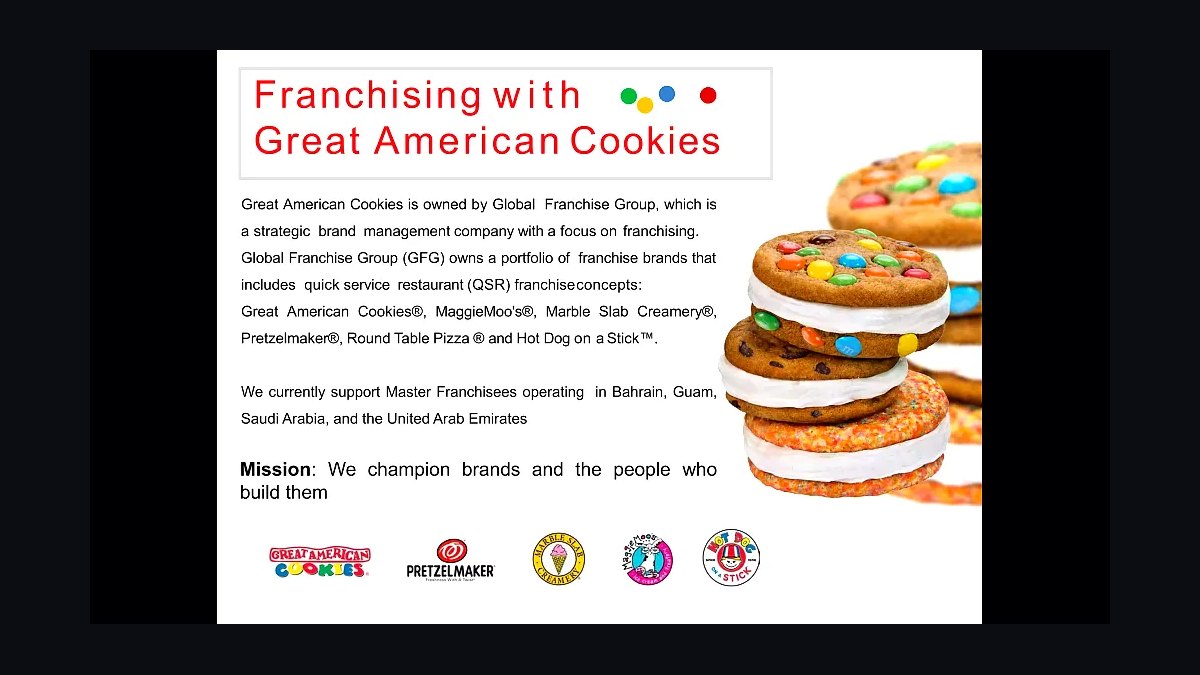
Probably not — unless you can lock a high-traffic A-mall lease at sub-market rent, you have $280K-$460K liquid to absorb FAT Brands' post-bankruptcy supply-chain turbulence, and you accept that mall-dependent dessert kiosks are structurally challenged through 2027. Great American Cookies' $25,000 franchise fee and $148K-$462K total investment look reasonable on paper, but the 88% jump in chocolate chip batter pricing since 2021, the FBG Bid Co. ownership transition post-bankruptcy, and a 6% royalty plus 4% marketing fee stack against an average unit volume of roughly $540,000 make Year-1 cash flow razor-thin. Realistic breakeven runs 28-42 months for traditional mall stores; payback on full investment is 5-7 years. Better operators with this capital are buying two existing locations at distressed multiples rather than building new.
The Real Numbers
Below is the 2026 FDD Item 7 + Item 19 view, cross-referenced with FranchiseChatter, Sharpsheets, VettedBiz, and 1851 Franchise disclosures. Numbers are real, not modeled.
| Line Item | Traditional Mall Store | Non-Traditional | Satellite |
|---|---|---|---|
| Franchise fee (Item 5) | $25,000 | $25,000 | $15,000 |
| Initial build-out + leasehold | $80,000 - $140,000 | $55,000 - $120,000 | $15,000 - $55,000 |
| Equipment package | $45,000 - $75,000 | $35,000 - $65,000 | $10,000 - $40,000 |
| Opening inventory + signage | $8,500 - $14,000 | $7,000 - $12,500 | $3,500 - $8,000 |
| Working capital (3 mo) | $25,000 - $45,000 | $20,000 - $35,000 | $10,000 - $25,000 |
| Item 7 total range | $148,350 - $280,350 | $121,000 - $239,600 | $44,550 - $138,394 |
| Royalty (Item 6) | 6% gross sales | 6% gross sales | 6% gross sales |
| Marketing/brand fund | 4% gross sales | 4% gross sales | 4% gross sales |
| 2024 average unit revenue (Item 19) | $539,902 | ~$410,000 est. | ~$240,000 est. |
| Top-quartile AUV | ~$725,000 | ~$540,000 | ~$320,000 |
| EBITDA margin (mature) | 10% - 14% | 8% - 12% | 6% - 10% |
| Payback period | 5 - 7 years | 4 - 6 years | 3 - 5 years |

Key economics on a $540K AUV traditional store: cost of goods runs 30-34% (cookie dough, batter, icing, paper, packaging — all FAT-mandated commissary supply). Labor at $14-$17/hour blended consumes 22-26%. Mall rent + CAM ranges 12-18% of sales in A-malls. Royalty + marketing burns 10% flat off the top. That leaves a theoretical 12-16% pre-tax margin before debt service, owner draw, and the 8-44% annual ingredient inflation that franchisees formally complained about in the May 2026 FAT Brands bankruptcy filings.
Real Year-1 cash flow on a brand-new traditional store: expect $25,000 to $55,000 net to an absent owner with a strong manager, $60,000-$95,000 if the owner runs the unit hands-on. Breakeven on cash flow typically lands month 14-22; breakeven on total invested capital lands month 28-42.
Who Wins With This Business

Multi-unit operators with existing mall relationships win — they negotiate percentage-of-sales rent caps, share G&A across 3-5 units, and rotate managers. Operators in the Southeast (Texas, Georgia, Alabama, Tennessee, Florida) win because the brand carries 35+ years of regional recognition there, where mall traffic is more durable than the national average. Owners who already run a complementary kiosk (Marble Slab Creamery is the obvious pair — both are FBG Bid Co. portfolio brands) win on shared labor pools and combined-store negotiating leverage.
Cookie cake specialists win. Cookie cakes carry 65-75% gross margin versus 55-62% on standard cookies, and Great American built the cookie-cake gifting occasion before Crumbl existed. Operators who aggressively pre-sell cookie cakes for birthdays, graduations, and corporate gifting via DoorDash + ezCater + local-school PTA contracts can push AUV to $700K+. Sub-franchisors and area developers with rights to 15+ units win on reduced per-unit franchise fees (typically $15K vs. $25K) and layered royalty splits with the franchisor.

Finally, operators acquiring an existing closing-down location at 2.0-2.8x SDE win versus the 5.5-6.5x effective multiple on a brand-new build. Resale FDD Item 20 lists are the place to start.
Who Loses With This Business
First-time franchisees with $200K total liquidity lose. The Item 7 ceiling is $280K for a traditional store, and mall landlords increasingly require 12-month rent reserves — leaving you under-capitalized by month 6 when the commissary supply price hike letter lands. Operators relying on B-mall or C-mall sites lose because March 2026 indoor mall traffic was already down 1.1% year-over-year, and tertiary malls are declining 4-7% annually. Great American's model breaks below $350,000 AUV.
Absentee owners without a strong manager lose. Cookie production is labor-intensive (bake schedule every 90 minutes, cookie-cake decorating to order), and labor cost overruns of 4-6 percentage points wipe out the entire owner margin. Operators expecting Crumbl-style social media virality lose — Great American's brand is legacy gifting, not TikTok-driven hype, and trying to compete on novelty flavors against a brand spending $30M+ annually on creator content is a losing battle.
California, Pacific Northwest, and Northeast urban operators lose disproportionately because mall traffic in those regions is structurally declining faster and labor + occupancy costs are 30-45% higher than the FDD modeled averages. Anyone who borrows more than 60% of the Item 7 total loses — debt service on $200K at 10.5% SBA rates consumes $2,700/month, which is essentially the entire Year-1 owner take-home on a struggling unit.
2027 Market Conditions
Three forces define the 2027 operating environment for Great American Cookies franchisees.
First, post-bankruptcy ownership instability. FBG Bid Co. completed its $595M debt-to-equity acquisition of the Great American Cookies brand out of FAT Brands' January 2026 Chapter 11. Sale closed Q4 2026; new ownership is debt-light but still rebuilding vendor trust after franchisee lawsuits over 88% batter price inflation 2021-2024. Supply chain is normalizing but system support staff turnover through the transition slowed new-store openings to ~12-18 in 2026 versus 25-35 in pre-bankruptcy years.
Second, the cookie category is mature and crowded. Crumbl has 1,000+ U.S. units with $1.1M AUV (now plateauing), Insomnia Cookies runs 225+ college-town late-night delivery units at $800K AUV, Chip City is scaling artisanal-NYC, and Nestlé Toll House Café offers menu diversification. Great American's $540K AUV is below all major competitors because the mall-kiosk format caps daypart revenue — no breakfast, limited dinner, no delivery-first economics.
Third, mall foot traffic bifurcation continues. A-malls (top 250 by sales/sqft) held +4.5% growth in early 2026, but B-malls were flat and C-malls declined 6-9%. Site selection is now the entire game. The brand's 370-store U.S. footprint is heavily Southeast-weighted, which is also the strongest regional mall market — a real durable advantage if you stay in-footprint.
The 90-Day Decision Tree
- Days 1-10: Pull the current FDD. Request the 2026 FDD from FBG Bid Co. directly — do NOT rely on third-party summaries. Read Item 7, Item 19, Item 20 (3-year unit churn), and Item 21 (audited financials of franchisor) line-by-line.
- Days 11-20: Validate Item 19. Call 12 existing franchisees from the Item 20 list — prioritize ones who've been operating 3-7 years (long enough to know the truth, recent enough to be relevant). Ask specifically: 2024 + 2025 actual gross sales, current commissary pricing, rent as % of sales, hours worked, would-they-do-it-again.
- Days 21-35: Site selection. Tour 15+ mall sites in your target trade area. Reject any B/C-mall site regardless of rent concession. Pull foot-traffic data from Placer.ai or GrowthFactor for each shortlisted location. Minimum threshold: 6M+ annual mall visits.
- Days 36-50: Build a real P&L. Use $425K AUV as your conservative Year-1 modeling assumption — NOT the $540K system average. Stress-test at $350K and $600K. If $350K doesn't survive month 18, walk.
- Days 51-65: Financing. Apply for SBA 7(a) at 50-55% LTV, NOT 75%+. Pre-bank a 6-month operating reserve outside the loan. Personal guarantee is unavoidable — accept it or walk.
- Days 66-75: Resale check. Search BizBuySell, Franchise Gator, and VettedBiz for existing Great American Cookies locations for sale. A profitable existing unit at 2.5x SDE beats a brand-new build at 5.5x effective multiple.
- Days 76-85: Sign the FDD and lease in parallel. Negotiate percentage-rent caps at 12% of sales, 5-year initial term with two 5-year options, and co-tenancy clauses tied to anchor-tenant occupancy.
- Days 86-90: Commit or kill. If three or more flags surfaced (Item 19 below $400K in your trade area, hostile franchisee references, sub-A mall, debt service over 35% of EBITDA), kill it. Better deals come every quarter.
Alternative Plays

Buy an existing Great American Cookies unit at distressed multiple. Resale market 2026-2027 is favorable for buyers; post-bankruptcy retiree-franchisees are exiting at 2.0-2.8x SDE versus historical 3.5-4.5x. Margin of safety is materially better than greenfield builds.
Buy a Marble Slab Creamery + Great American Cookies co-branded unit. FBG Bid Co. owns both brands; co-branded units share labor, rent, and management at roughly 1.4x the cost of a single brand, with AUV running 1.7-1.9x. Best math in the FAT/FBG portfolio.
Open a non-mall Great American Cookies satellite in a strip-center pad next to a high-traffic grocery anchor. Lower rent (6-10% of sales vs. 12-18%) offsets the 20-25% AUV deficit versus mall stores. Works in the Southeast specifically.

Skip Great American Cookies entirely and pursue a Nestlé Toll House Café ($300K-$575K, broader menu, less commissary lock-in) or an Insomnia Cookies area-development deal in a college market you know intimately. Different unit economics, different risks — but worth modeling head-to-head.
Run an independent specialty-cookie shop with direct-from-supplier ingredients (no 6% royalty, no 4% marketing fee, no commissary mandate). Higher operational lift, but EBITDA margins of 18-24% are reachable if you can build local brand equity. Chip City and Levain Bakery prove the independent path scales.
FAQ
What is the total investment range for a Great American Cookies franchise? The total investment typically falls between $148,000 and $462,000. This range includes the $25,000 franchise fee, equipment, build-out, and initial inventory. Actual costs depend on location size, mall requirements, and lease terms.
How long does it take to break even and see a return?
Realistic breakeven for a traditional mall store is 28 to 42 months. Full payback on the total investment usually takes 5 to 7 years. These timelines can stretch if sales underperform or supply chain costs rise.
What are the ongoing royalty and marketing fees? You pay a 6% royalty on gross sales plus a 4% marketing fee. That combined 10% fee stack is standard for mall-based dessert franchises but can squeeze margins, especially in lower-volume locations.
How has ingredient pricing affected franchise profitability? Chocolate chip batter pricing has increased roughly 80% to 90% since 2021. This cost pressure, combined with other supply chain issues, has made profit margins thinner than in prior years. Operators often need to adjust pricing or sourcing to maintain cash flow.
Is a mall location still viable in 2027? Mall-dependent dessert kiosks face structural challenges due to shifting foot traffic patterns. High-traffic A-malls with sub-market rent can work, but many operators find that non-mall or co-branded locations offer more stable sales. Success heavily depends on lease terms and local traffic.
Can I buy an existing franchise instead of building new? Yes, buying two existing locations at distressed multiples is often a better use of capital. Existing units may have lower upfront costs and proven sales history. This approach can reduce risk compared to building from scratch, especially given current market uncertainties.
Bottom Line
Great American Cookies is a 35-year-old brand with real Southeast equity trading inside a structurally challenged mall-kiosk format following a 2026 franchisor bankruptcy. The math works only at A-mall sites in the Southeast, only with $300K+ liquid, only if you accept 5-7 year payback, and only if you buy existing distressed units rather than building new. Most prospects who run a real diligence process should walk away — not because the brand is broken, but because the alternatives (existing-unit acquisition at 2.5x SDE, co-branded Marble Slab + GAC units, or sitting out the cookie category entirely) carry materially better risk-adjusted returns. If you must buy, buy an existing profitable unit from a retiring franchisee in Texas, Georgia, or Florida — and negotiate hard on the multiple.
Sources
- Great American Cookies Franchise FDD 2026, FAT Brands / FBG Bid Co. disclosure document
- Sharpsheets - Great American Cookies Franchise FDD, Profits & Costs 2025
- VettedBiz - Great American Cookies Franchise Insights: FDD, Costs & Fees
- FranchiseChatter - FDD Talk: How Much Does a Great American Cookies Franchise Make
- 1851 Franchise - Great American Cookies Franchise Deep Dive: Costs, Fees, Profit and Data
- Restaurant Business Online - Franchisees push their claims in the Fat Brands bankruptcy
- QSR Magazine - FAT Brands Split Up in Nearly $1 Billion Bankruptcy Sales Process
- Restaurant Dive - 3 reasons Fat Brands filed for Chapter 11
- GrowthFactor - Mall Foot Traffic Data: 2026 Trends & Analysis
- VetMyFranchise - Crumbl vs Insomnia vs Toll House Cookie Franchise Comparison 2026
- NRN - Great American Cookies expands into Illinois with two new locations
- FAT Brands - Great American Cookies brand page
Related on PULSE
- Should I open or buy an American Family Care franchise in 2027?
- Should I open or buy a Great Steak franchise in 2027?
- Should I open or buy a Great Clips franchise in 2027?
- Should I open or buy an Insomnia Cookies franchise in 2027?
- Should I open or buy a Crave Cookies franchise in 2027?
- Should I open a Crumbl Cookies franchise in 2027?
This page will be disappearing soon. Save it to your device for $1 — or read it free while it is here.
@Kory-White- · if Venmo asks, the last 4 of my number are 2012
This page is gone.
This one is off the shelf now. $1 keeps it on your phone for good — the whole page, pictures and diagrams included.
 franchiseShould I open or buy a Mac Tools franchise in 2027?
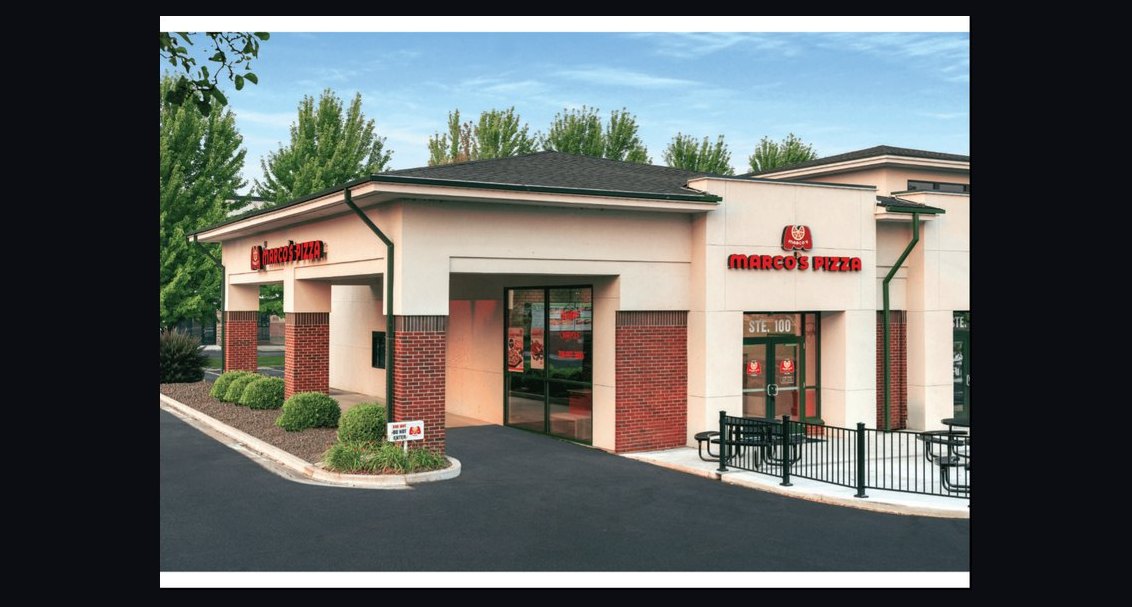 franchiseShould I open or buy a Marco's Pizza franchise in 2027?
 franchiseShould I open or buy a Hand and Stone Massage franchise in 2027?
 franchiseShould I open or buy a Merry Maids franchise in 2027?
 franchiseShould I open or buy a Dunkin' franchise in 2027?
 franchiseShould I open or buy a Mathnasium franchise in 2027?
 franchiseShould I open or buy a Whataburger franchise in 2027?
 franchiseShould I open or buy a Taco Bell franchise in 2027?
 franchiseShould I open or buy a Rita's Italian Ice franchise in 2027?
 franchiseShould I open or buy a UPS Store franchise in 2027?