


Should I open or buy a Playa Bowls franchise in 2027?
Quality
Certified
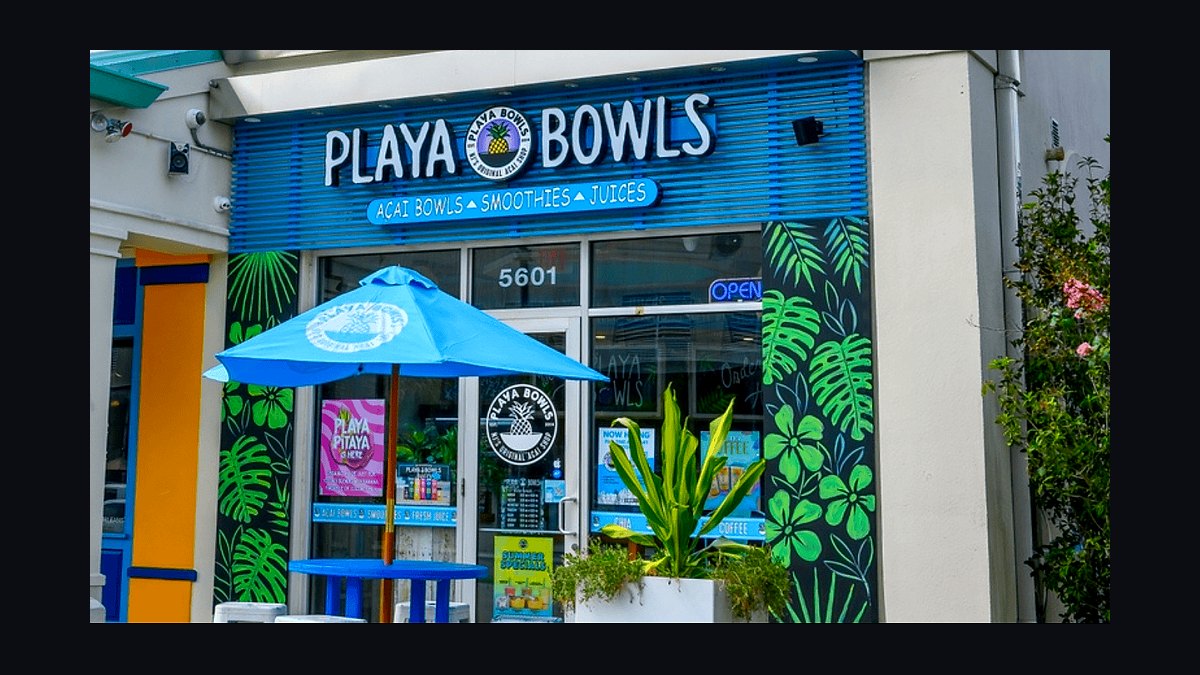
Open a Playa Bowls franchise in 2027 only if you have roughly $500K liquid net worth, real QSR operating experience, and a beach, college, or affluent-suburb site with heavy morning traffic. Buying an existing unit with a visible trailing P&L is usually the better risk-adjusted entry for a first-time operator.
Build new versus buy an existing unit
The single decision that matters most in 2027 is not whether Playa Bowls is a good brand — the Item 19 disclosure and the system's growth answer that reasonably well — but whether you enter through a ground-up build or through a transfer of an operating store. These are two different businesses wearing the same logo, and confusing them is the most common mistake a first-time franchisee makes.
A ground-up build means you sign the franchise agreement, pay the initial franchise fee (roughly $35,000 for a single unit in recent disclosure documents), then go find real estate, negotiate a lease, hire a general contractor, survive a permitting process, buy equipment, hire and train a crew, and open into a market that has never heard of you at that address. Every one of those steps is a place to lose money you'll never recover. The upside is that you control the site, the lease terms, the build quality, and the opening date. You also start with a clean labor culture rather than inheriting someone else's, which matters more than most buyers expect — a demoralized crew is harder to fix than a bad floor plan.
A resale means you buy an existing store from an operator who wants out. You inherit their lease (subject to landlord consent), their equipment at whatever condition it's in, their staff, their local reputation, and — critically — their trailing thirty-six months of profit and loss statements. You skip construction risk entirely. You skip the ramp period where a new store is doing sixty percent of its eventual volume while paying one hundred percent of its rent. And you get to underwrite a real number instead of a projection.
The catch is that good stores rarely sell cheap and struggling stores sell for a reason. Franchise resales in food service generally trade somewhere in the range of two-and-a-half to three-and-a-half times seller's discretionary earnings, which means a store throwing off $150,000 of SDE might list somewhere between $375,000 and $525,000, plus you'll typically owe a transfer fee to the franchisor and you'll need to satisfy their approval process just like a new candidate would. Your total cash requirement can land close to what a modest build costs — but the money buys certainty rather than optionality.
There's a third path that deserves mention because it competes for the same capital: converting or opening an independent bowl shop. You keep the eight percent of gross sales that would otherwise leave as royalty and brand fund contribution, and you can build for meaningfully less because you're not held to a franchisor's design standards. What you give up is the supply chain, the recipe consistency, the recruiting halo, the national marketing spend, and the fact that a Playa Bowls sign generates walk-in traffic on day one that an unknown name spends two years earning. For most first-time operators that trade is bad. For an experienced restaurateur who already owns two profitable concepts in the same town, it can be excellent.
How to decide between them
Work the decision as a sequence of gates rather than a single judgment call. Each gate kills the deal or passes it forward, and the order matters — you want the cheapest, fastest disqualifiers first so you're not spending legal fees on a deal that a five-minute credit check would have ended.
Gate one is capitalization. If you cannot fund the full high end of the investment range plus six months of operating reserve without touching money you need to live on, you are not ready for either path. Under-capitalization is the single most reliable predictor of franchise failure across every brand and category — the store doesn't die because the concept failed, it dies in month eleven because the owner ran out of cash before the store reached maturity and started making decisions from panic.
Gate two is your own operating profile. Are you going to be behind the counter, or are you hiring a general manager and checking a dashboard? Owner-operated food service consistently outperforms absentee ownership by a wide margin, and the gap is largest in high-transaction, low-ticket concepts where a hundred small decisions a day compound. If you're absentee by necessity, you need to underwrite the cost of a strong GM — a real salary plus incentive, not a shift-lead's wage — into your pro forma before you look at any site.
Gate three is trade area. This is where most of the variance in outcomes actually lives. The brand's economics are strongest where three things overlap: daytime population density, discretionary income, and a demographic that treats a bowl as a normal purchase rather than a splurge. Beach towns, large college campuses, and affluent suburbs with real morning foot traffic hit all three. A generic strip center anchored by a grocery store and a nail salon usually hits none of them, no matter what the drive-time demographic report says.
Gate four is the specific deal in front of you. For a build, that means the lease — occupancy cost as a percentage of forecast revenue is the number that will either quietly kill you or quietly carry you for ten years. For a resale, it means the quality of the seller's books and the reason they're selling. A seller who is retiring, relocating, or consolidating into fewer units is telling you something different than a seller who "wants to focus on other opportunities."
Run the gates in that order and most deals die early and cheaply, which is the point. The deals that survive all four gates are the ones worth spending money to diligence properly.
The numbers behind each path

Start with the disclosed figures, because they're the only ones that carry legal weight. The Franchise Disclosure Document's Item 7 lays out the estimated initial investment range, and for Playa Bowls that range in recent filings runs from roughly $256,000 at the low end to approximately $1.04 million at the high end. That spread is not noise — it's the difference between a small in-line space in a low-cost market and a freestanding building with a drive-thru in an expensive one. The company has publicly targeted keeping typical builds under about $500,000, and that's a reasonable planning number for an in-line store.
Item 19 is where the revenue picture lives. Recent disclosure reported average gross revenue of roughly $1.29 million across 166 reporting outlets, with top-quartile units substantially higher — around $1.9 million — and franchisee earnings for mid-tier reporters landing in a band roughly between $148,000 and $185,000. Two things about that: first, an average across reporting outlets is not a promise about your store, and Item 19 says so explicitly. Second, the gap between the average and the top quartile is your site-selection premium made visible. Same brand, same menu, same training — the difference is almost entirely trade area and operator quality.
Recurring fees take six percent of gross sales as royalty plus roughly two percent for the national brand fund, so eight percent off the top before you've paid for a single container of açaí. Build your model with that as an immovable line and everything else as a variable you manage.
Here is how a conservative single-unit pro forma actually assembles. Underwrite revenue below the system average — call it $1.0 to $1.1 million — because a new store ramps and because you want the deal to work at a number you're confident you can hit rather than a number you hope for. Food cost in this category typically runs around thirty to thirty-two percent, and açaí purée is a commodity with real price volatility tied to Brazilian harvest conditions, so treat that line as something that can move against you by several points in a bad year. Labor lands somewhere near twenty-eight to thirty percent in higher-wage Northeast markets and lower elsewhere. Occupancy is your lease. Royalty and brand fund are the fixed eight percent.
Stack those and a well-run store at a conservative volume tends to land in the low-to-mid teens as an EBITDA margin, which on $1.0 to $1.1 million produces somewhere around $120,000 to $170,000 of operator cash flow before debt service. That's consistent with the earnings band franchisees have reported, which is a good sign — when your bottom-up model and the disclosed top-down data agree, you've probably built the model honestly.
Now compare that against a resale. If you pay a multiple of SDE for a store already producing that cash flow, you're buying the number rather than betting on it. The interesting arithmetic: a build that costs $450,000 and takes eight months to open, then eighteen months to mature, has you roughly two-and-a-half years from signature to steady-state cash flow. A resale at $500,000 that closes in ninety days has you generating owner earnings in quarter one. Over a five-year hold, the resale's earlier cash flow often more than compensates for the premium you paid — and it does so with a fraction of the variance.
The financing picture shapes both. SBA 7(a) lending is the standard vehicle for franchise acquisition and build-out in the United States, and franchise brands that appear on the SBA's franchise directory streamline that process considerably. Practically, lenders want to see meaningful liquid injection, a credit score comfortably in the high-600s or better, and either relevant industry experience or a credible management plan. Franchise-specialist lenders exist alongside conventional banks and often move faster on brands they already have exposure to, though they price for that convenience.
One more number worth holding: your debt service coverage. If the store's projected cash flow doesn't cover the loan payment with real cushion at your conservative revenue assumption — not at the system average, at your conservative number — the deal is too tight. Lenders will often approve deals that are tighter than you should personally accept, because their downside is collateralized and yours isn't.
What the category looks like going into 2027
The açaí and superfood bowl segment has been one of the genuine growth stories in quick-service food, and understanding why matters because it tells you whether the tailwind persists. The category sits at the intersection of three durable consumer shifts: demand for food that reads as healthy without requiring effort, the migration of breakfast and mid-morning eating occasions out of the home, and a generational preference for customizable, photographable food. None of those look likely to reverse by 2027.
That said, growth attracts competition, and the competitive set has thickened considerably. Playa Bowls is the largest franchised player, but Vitality Bowls, SoBol, Frutta Bowls, and Everbowl all franchise into overlapping territory, and each has a different angle — allergen-conscious preparation, Northeast density, lower-capital entry, and so on. Beyond the franchised brands sits a long tail of independent shops, and in beach markets specifically the independents are formidable: a local operator with a good location, a decent recipe, and no royalty burden can undercut you on price and still make more money per bowl.
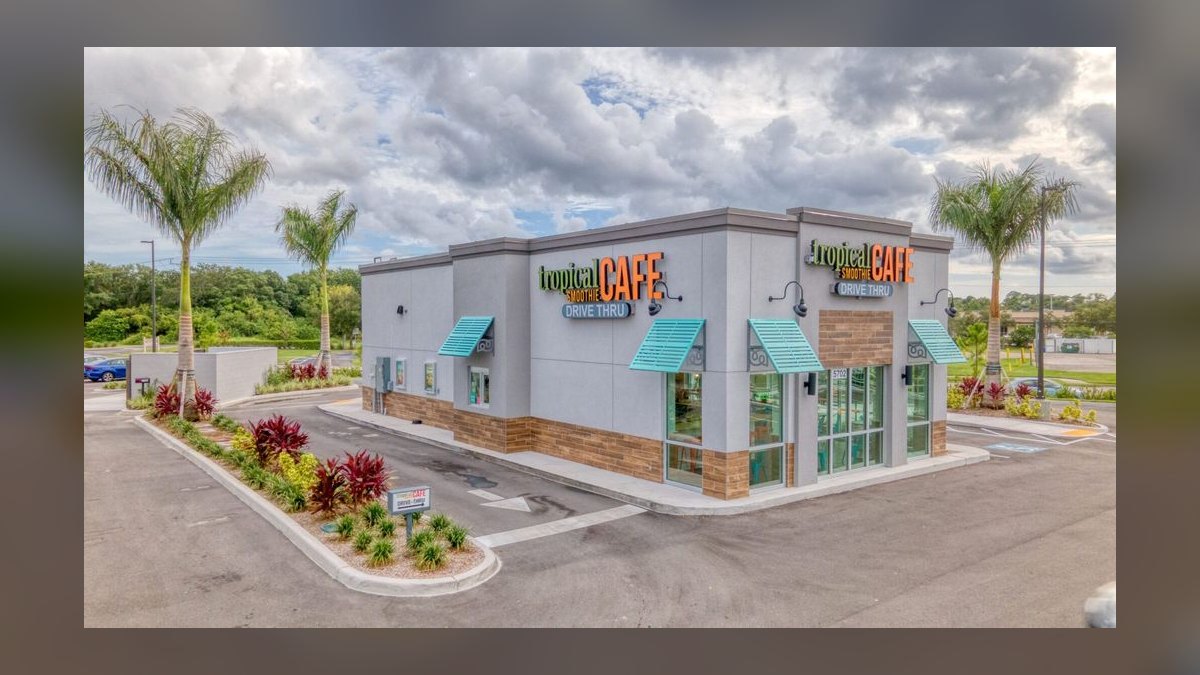
There's also a flanking threat worth taking seriously, and it's the one franchise buyers systematically underweight. Adjacent formats are absorbing the same occasion. Smoothie chains have added bowls to their menus. Coffee shops have added them. Grocery prepared-food counters sell them. Even convenience-store fresh programs have moved in this direction in some regions. You are not just competing with the shop across the street with a similar sign — you're competing for a mid-morning snack occasion that a dozen different formats now serve competently.
Cost-side pressures deserve equal attention. Açaí purée pricing is exposed to Brazilian agricultural conditions, freight, and currency, and it has moved materially in recent years. Fresh fruit — bananas, strawberries, mangoes, blueberries — carries its own volatility and its own spoilage risk, which is a real operational cost in a business where a slow Tuesday means throwing product away. Labor costs in the coastal Northeast markets where the brand is strongest have risen faster than the national average, and minimum wage schedules in several of those states continue to step up. Your model needs headroom for all three moving at once, because they historically have.
The seasonality question is the one that separates operators who did their homework from those who didn't. In a Northeast beach market, a store can do a disproportionate share of its annual revenue between Memorial Day and Labor Day. That's not automatically bad — plenty of profitable businesses are seasonal — but it changes everything about how you manage cash. You bank summer profit to carry winter losses, you staff around a peak that triples your headcount, and you need a genuine cold-weather strategy: hot drinks, oatmeal, warm bowls, catering, campus partnerships, whatever fits your specific trade area. Operators who assume the summer number annualizes are the ones who run out of money in February.
College markets have a parallel rhythm. A store adjacent to a large campus lives and dies by the academic calendar, which means summer — the beach store's peak — is the campus store's trough. Some multi-unit operators deliberately build portfolios that blend the two, so the calendar smooths out at the portfolio level even though no individual store is smooth. That's a sophisticated play and a genuinely good reason to think in units-of-three rather than units-of-one from the start.
Sequencing the deal from first call to open sign
Treat this as a ninety-day process for the decision and a longer runway for execution. Compressing the decision phase is where people get hurt; compressing the execution phase is mostly impossible because permits move at the speed of municipalities.
Days one through fifteen are about money and self-assessment. Build a personal financial statement, confirm your liquidity honestly, and get pre-qualified with at least two lenders — one conventional SBA lender and one franchise specialist — so you know your real borrowing capacity before you fall in love with a site. Simultaneously, be honest about your role. Write down how many hours per week you will actually be in the store for the first year. If that number is under forty, budget a real general manager.
Days sixteen through thirty are market work. Identify three candidate trade areas and pull demographic data for each: daytime population, median household income, age distribution, and — most usefully — actual observation. Sit in each candidate location at eight in the morning, at noon, and at five in the afternoon, on a weekday and again on a Saturday. Count people. Note what they're carrying. The report tells you what the neighborhood is on paper; the parking lot tells you what it is in practice.
Days thirty-one through forty-five are the disclosure document. Request the FDD through the brand's franchise development channel; federal rules require you receive it at least fourteen calendar days before you sign anything or pay any money, and that waiting period is a feature, not a formality. The document runs several hundred pages across twenty-three items. Read all of it, but concentrate on Item 7 for investment, Item 11 for what training and support you actually receive, Item 12 for territory protection, Item 19 for financial performance representations, Item 20 for the unit counts including closures and transfers, and Item 21 for the franchisor's audited financials. Item 20 is the most underread and most revealing item in any FDD — the year-over-year pattern of openings, closures, terminations, and transfers tells you the system's real health more honestly than any brochure.

Days forty-six through sixty are validation calls. Item 20 gives you a franchisee contact list. Call fifteen to twenty operators, and weight your calls toward stores in their third and fourth year rather than newly opened units, because year-one operators are still in the honeymoon and haven't hit their first equipment failure or their first bad winter. Ask specific questions: what did you actually do in revenue last year, what's your real food cost, what's your labor percentage, what surprised you most, what would you do differently, and would you sign again knowing what you know. Listen for answers that repeat across calls — a complaint one person has is that person's problem, a complaint eleven people have is a system characteristic.
Days sixty-one through seventy-five are real estate. Engage a broker with franchise experience specifically, not a generalist retail broker, because the difference shows up in lease language you won't notice until year four. For an in-line store you're typically looking at a footprint in the range of fourteen hundred to eighteen hundred square feet. Negotiate hard on tenant improvement allowance, co-tenancy protection, exclusivity for your category within the center, and assignment rights — that last one is what lets you sell the store later, and buyers who ignore it discover the problem at exactly the wrong moment.
Days seventy-six through ninety are the decision. Sign only if your debt service is comfortable against conservative revenue, you hold reserve capital beyond the high end of the investment range, and the clear majority of your validation calls would sign again. If any of those fail, walk. The cost of walking away from a deal is a few thousand dollars in diligence expense. The cost of signing a bad one is years.
After opening, the execution priorities compress into a short list: staff your morning daypart properly because that's where the volume is, hold food cost discipline through portion control and waste tracking, build local partnerships with gyms, schools, and teams rather than relying on national marketing to fill your specific store, and protect your online rating obsessively because in a discretionary category the review score is the storefront.
Scaling beyond the first unit

Most of the durable money in franchising is made by multi-unit operators, and the reasons are structural rather than motivational. A single-unit owner carries the full weight of general management overhead on one revenue line. A three-unit operator spreads a district manager, a bookkeeper, a marketing budget, and their own salary across three, and each incremental store adds revenue faster than it adds overhead. Franchisors know this, which is why area development agreements typically come with reduced per-unit fees and why the brands actively recruit operators who want three to five stores rather than one.
The sequencing that works is roughly this: open unit one, run it yourself for twelve to eighteen months until you genuinely understand the economics and have developed at least one manager who could run it without you, then open unit two within a drivable radius. The radius matters — multi-unit economics depend on you being able to visit all your stores in a day. Operators who take a territory two states away because it was available almost always regret it.
The financing gets easier as you scale, not harder, provided the first store performs. A lender looking at your second unit is underwriting an operator with a demonstrated P&L rather than a career-changer with a business plan, and that changes both the approval odds and the pricing. Some operators use the first store's cash flow and the equity built in it to fund the second, which is slower but keeps leverage sane.
There's also a portfolio-construction angle worth thinking about early, and it connects back to the seasonality problem. If your first store is a beach location that peaks in July, your second store might sensibly be a campus or year-round suburban location that peaks in October and March. You're not just adding revenue, you're smoothing it, and smoother revenue supports more debt and a higher eventual sale multiple. The operators who exit well tend to have built portfolios that a buyer can underwrite as a stable business rather than as a collection of seasonal bets.
Exit deserves a thought at the beginning rather than the end. Franchise stores sell as multiples of cash flow, and the things that raise the multiple are the boring ones: clean books, a long lease with assignment rights, a management team that stays after you leave, and a documented operating system. Build for that from day one and you're building an asset. Skip it and you're buying yourself a job with a franchise agreement attached — which is a legitimate choice, but it should be a deliberate one.
Related questions
Is buying a resale always better than building new?

No. A resale is better when the books are clean, the lease is long and assignable, and the seller's reason for exiting is benign. A poorly run store in a bad trade area is not a bargain at any price — you inherit the location, and location is the thing you cannot fix.
How much does the franchisor's approval process actually gate the deal?
Meaningfully. Brands screen for liquidity, net worth, credit, and operating experience, and they can decline a candidate or a site. A resale also requires franchisor consent to transfer. Assume approval takes weeks, not days, and don't sign a purchase agreement without a franchisor-approval contingency.
What happens to my store if a competitor opens nearby?
Your FDD's territory item defines whatever protection you have, and it's often narrower than buyers assume. Read Item 12 carefully. In dense markets, protection may amount to a small radius, and non-traditional locations like campuses or airports are frequently carved out entirely.
Can I run this business while keeping my day job?
Rarely well, in year one. High-transaction food service with a young hourly crew demands daily presence. If you must stay employed, budget a fully compensated general manager into your pro forma before you evaluate any deal — and expect the store's ceiling to be lower than an owner-operated one.
Does the seasonality make this a bad business?
Not inherently — it makes it a cash-management business. Seasonal stores can be very profitable if you bank the peak to fund the trough, staff flexibly, and build a genuine off-season offer. The failures are operators who annualized their summer numbers and spent accordingly.
FAQ
What is the total investment to open a Playa Bowls franchise?
Recent Franchise Disclosure Documents put the estimated initial investment range at roughly $256,000 to $1.04 million, covering the initial franchise fee, leasehold improvements, equipment, opening inventory, initial marketing, and a period of working capital. Where you land in that range depends overwhelmingly on market, square footage, and whether the space needs a full build or arrives with usable infrastructure. Plan on the high end and be pleasantly surprised.
How much cash do I need on hand to qualify?
Franchisors in this category generally look for candidates with several hundred thousand dollars in liquid assets and a net worth around $500,000 or more, and Playa Bowls sits in that band. Beyond the brand's own screen, apply your own: fund the full investment range plus six months of operating expenses. Running out of working capital before the store matures is the most common way a fundamentally sound location fails.
What do franchisees actually earn?
The brand's Item 19 disclosure has reported average gross revenue around $1.29 million across reporting outlets, with top-quartile stores considerably higher and mid-tier franchisee earnings in a band roughly between $148,000 and $185,000. Those are disclosed averages, not projections for your store — the variance between a strong trade area with an owner behind the counter and a weak one with absentee management is enormous.
How long until the store pays back?
For a well-sited build under roughly $500,000, operators commonly describe payback in the range of eighteen to thirty months once the store reaches maturity, with faster returns in high-density beach and campus markets and slower ones in suburban sites without strong morning traffic. A resale shortens that clock because you skip both construction and the ramp, though you paid for that head start in the purchase price.
What ongoing fees do I pay?
Expect roughly six percent of gross sales as royalty plus about two percent toward the national brand fund — eight percent off the top, before any store-level cost. Local marketing spend, technology fees, and required supplier arrangements sit on top of that. Model the eight percent as fixed and immovable, because it is, and make sure your unit economics work with it rather than assuming you'll grow past it.
Where does this concept work best?
Beach towns, large college campuses, and affluent suburbs with genuine morning and midday foot traffic. The common thread is daytime density plus discretionary income plus a customer base that treats a bowl as routine rather than a treat. Generic strip centers without a traffic driver are where these stores struggle, regardless of how attractive the rent looks on paper.
Sources
- https://www.ftc.gov/business-guidance/resources/franchise-rule-compliance-guide
- https://www.sba.gov/funding-programs/loans/7a-loans
- https://www.franchise.org/
- https://www.entrepreneur.com/franchises/directory
- https://www.ibisworld.com/united-states/market-research-reports/juice-smoothie-bars-industry/
- https://www.bls.gov/oes/current/oes_nat.htm
- https://www.restaurantbusinessonline.com/
- https://www.nrn.com/
- https://www.franchisetimes.com/
- https://www.bizbuysell.com/
Related on PULSE
- Should I open or buy a Nautical Bowls franchise in 2027?
- Should I open or buy an Acai bowl franchise — Vitality Bowls — in 2027?
- Should I open or buy a Tropical Smoothie Cafe alternative — Frutta Bowls — franchise in 2027?
- Should I open or buy a Tropical Smoothie Cafe franchise in 2027?
- Should I open or buy a Smoothie King franchise in 2027?
This page will be disappearing soon. Save it to your device for $1 — or read it free while it is here.
@Kory-White- · if Venmo asks, the last 4 of my number are 2012
This page is gone.
This one is off the shelf now. $1 keeps it on your phone for good — the whole page, pictures and diagrams included.
 franchiseShould I open or buy a Planet Fitness franchise in 2027?
 franchiseShould I open or buy a Servpro franchise in 2027?
 franchiseShould I open or buy a Panera Bread franchise in 2027?
 franchiseShould I open or buy a Crumbl Cookies franchise in 2027?
 franchiseShould I open or buy a Chipotle franchise in 2027?
 franchiseShould I open or buy a Jiffy Lube franchise in 2027?
 franchiseShould I open or buy a Bojangles franchise in 2027?
 franchiseShould I open or buy a Cold Stone Creamery franchise in 2027?
 frShould I open or buy a McDonald's franchise in 2027?
 franchiseShould I open or buy a Jamba franchise in 2027?