


Should I open or buy an L&L Hawaiian Barbecue franchise in 2027?
Quality
Certified
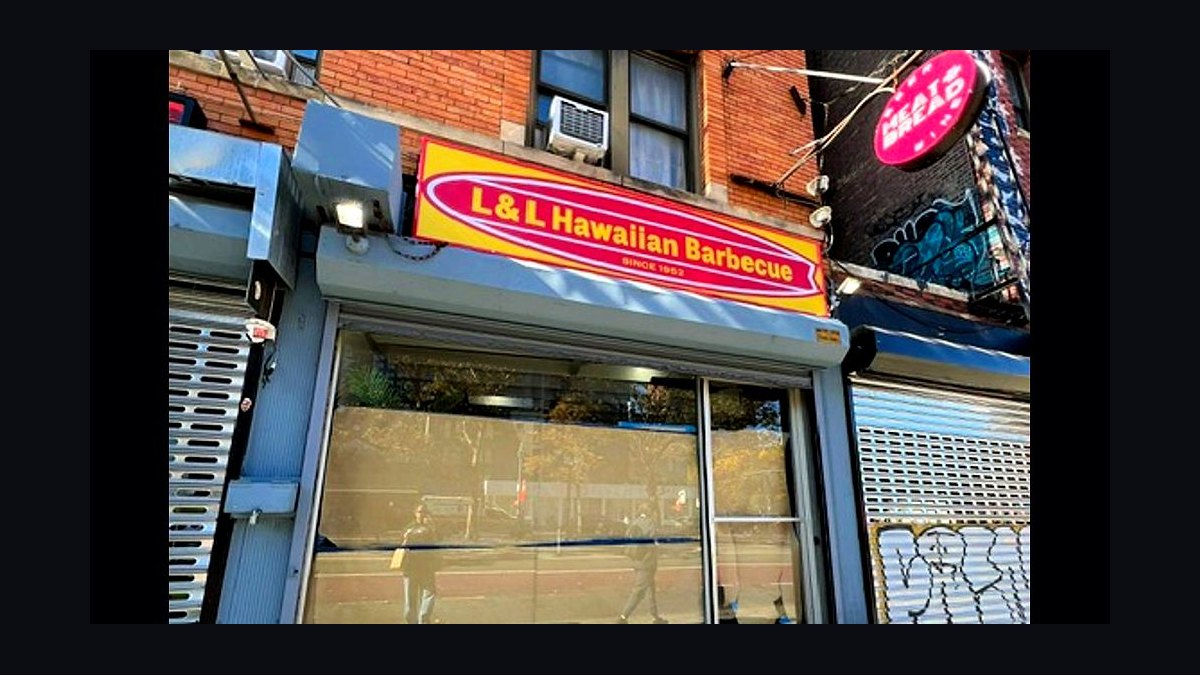
Buy or open an L&L Hawaiian Barbecue franchise in 2027 only if you have roughly $200K liquid, will personally run the line for two years, and can secure a lunch-heavy site near offices, hospitals, or military bases. System average unit volume near $821,000 supports $95K–$135K owner take-home. Absentee ownership fails here.
The outcome you should expect
Set your expectations against the system average, not the best store you visited. L&L's Financial Performance Representation puts franchised average unit volume near $821,000. That number is the honest planning anchor. Below it sits a long tail of $600K–$700K stores in weak trade areas; above it sits a smaller group of $1M+ units clustered near military installations, hospital campuses, and dense daytime office cores.
Run the math forward from $821K. Cost of goods lands at 30–33% — short-grain calrose rice, SPAM, and Asian-protein inputs move more than commodity QSR beef and chicken, so budget the top of that band in your first pro-forma. Labor runs 26–30% with a two-person line at peak. Occupancy takes 8–11%. Royalty and marketing take 6–7% combined (5% royalty, 1–2% marketing fund). Other operating expenses — utilities, repairs, credit card fees, supplies — consume 8–10%.
What survives is store-level EBITDA of roughly $95,000 to $145,000, and where you land inside that band depends almost entirely on one variable: whether you draw a manager's salary or work the line yourself. That single decision is worth 18–25 percentage points of realized owner margin. An owner who works 50–60 hours weekly in Year 1 keeps the general manager's loaded cost — call it $65K–$70K — inside the business. An owner who hires that role out at $821K AUV is left with $25K–$55K pre-tax on a $450K cash investment. That is a sub-6% cash-on-cash return on an illiquid, operationally intensive asset. A passive index fund beats it after risk adjustment, and it isn't close.

So the realistic outcome for a competent owner-operator on a decent site: breakeven at month 14–22, Year-1 owner take-home of $95K–$135K, and Year-2 cash of $135K–$195K once the owner-operator add-back stabilizes. Full cash-on-cash payback arrives in 3.5 to 5 years. Strong lunch sites compress that to the low end. Suburban dinner-dependent strips push past it or never get there.
One framing that helps: this is a job that comes with an appreciating asset attached, not an investment that comes with a job attached. Franchise buyers who internalize that ordering do well. The ones who invert it — who bought a "business" and discovered a shift — are the ones who list the store on BizBuySell at month 20.
What drives that outcome
Three variables explain most of the variance between a $650K store and a $1.05M store, and only one of them is inside the four walls.
Daypart concentration is the first driver. L&L's check average sits at $14–$17 and the demand curve spikes hard between 11:30am and 1:30pm. The plate lunch is a lunch format — protein-dense, portion-heavy, priced for a working person paying with their own money. A site with 30,000+ daytime population inside five miles will fill that window. A site whose population arrives home at 6pm will not, and no amount of operational excellence recovers the gap. Sites without office, healthcare, industrial, or institutional daytime traffic routinely land 25–40% below the AUV pro-forma. This is the single most common way a well-run L&L still loses money.

Cultural adjacency is the second. Locations near military installations — Joint Base Lewis-McChord, Schofield Barracks, Camp Pendleton, Fort Bragg — consistently outperform system AUV by 15–30%. Service members and military families carry the plate-lunch habit with them across duty stations, and that creates a pre-built customer base a brand-new suburban store has to manufacture over 18 months. Large Pacific Islander, Filipino, Japanese, and Korean populations produce the same effect. The brand's roughly 60% concentration in Hawaii and California isn't an accident of history; it's the demand map.
Operator hours are the third. Not skill — hours. The L&L labor model is tight enough that the difference between an owner expediting the line at noon and an owner checking a dashboard from home is measurable in food cost, ticket times, and repeat rate within one quarter.
The fourth driver is optional and badly underused: catering. Corporate tray orders, military unit events, youth sports teams, and church functions add $80,000–$140,000 in incremental annual revenue at better margins than walk-in QSR, because the labor is scheduled rather than reactive and the food cost is identical. Most L&L franchisees run catering as an inbound accident rather than an outbound program. An operator with a $2,000 tray-menu one-pager and a list of 40 local HR managers can move the needle more cheaply than any facade remodel.
Benchmarks and realistic ranges

The 2027 Franchise Disclosure Document, Item 7, puts total initial investment for a single traditional inline restaurant between $200,000 and $600,000, with a $30,000 initial franchise fee and a 1,200–1,800 sq ft footprint. Franchise-research aggregators publish a wider $208K–$840K band that folds in coastal California and Hawaii build-outs. For a mainland strip-center conversion — the realistic 2027 deal — plan on $400,000 to $500,000 all-in.
| Line item | Low | High | Note |
|---|---|---|---|
| Initial franchise fee | $30,000 | $30,000 | Single unit; multi-unit packs negotiable |
| Leasehold improvements & build-out | $80,000 | $325,000 | Conversion lowest, ground-up highest |
| Kitchen equipment package | $55,000 | $110,000 | Char-broiler, rice cookers, woks, hood |
| Smallwares, POS, signage | $15,000 | $35,000 | Toast or NCR Aloha typical |
| Initial inventory | $8,000 | $15,000 | Rice, SPAM, proteins |
| Training & opening assistance | $5,000 | $10,000 | Per FDD Item 8 |
| Working capital, 3 months | $30,000 | $75,000 | Payroll-heaviest line |
| Insurance, deposits, legal | $7,000 | $15,000 | GL, workers' comp, BOP |
| Grand opening marketing | $5,000 | $15,000 | On top of the ongoing 1% |
| Total (FDD Item 7) | $200,000 | $600,000 | Mid-case $400K–$450K |
Now benchmark that against the category. The $821,000 system AUV sits materially below the roughly $1,132,000 food-and-beverage QSR benchmark that industry researchers track. That gap is real and you should not talk yourself out of it. What partially offsets it is the entry price: L&L's build-out and equipment load is a fraction of what a drive-thru-format Hawaiian competitor demands, and the 5% royalty is at or below segment norm.
Compare the field directly. Hawaiian Bros Island Grill runs roughly $2.1M AUV on a $1.2M–$2.0M investment, with about 53% of revenue through the drive-thru — a far better revenue line on three to four times the capital, and a franchisor that screens hard for prior multi-unit experience. Mo' Bettahs sits between the two at roughly $1.4M AUV and $800K–$1.4M investment, with real Mountain West density. Pokeworks is the closest comparable on capital — $350K–$650K investment, roughly $700K AUV — with a healthier-skewing menu and overlapping lunch demographics. Ono Hawaiian BBQ is economically similar to L&L but California-concentrated with limited franchising activity.
Step one category over and the pattern holds: Bonchon (roughly $350K–$1.5M investment, ~$1.4M AUV) and The Halal Guys (roughly $500K–$800K, ~$1.6M AUV) both deliver higher AUVs at moderately higher capital, serving the same ethnic-protein-over-rice consumer behavior. If your thesis is "portion-heavy ethnic lunch format," L&L is not the only expression of it, and running the return-on-invested-capital comparison honestly before you sign is worth more than any amount of post-signing optimization.
Return math, stated plainly: at $450K invested and $120K of owner cash flow, you are at roughly 27% cash-on-cash — genuinely good — but that figure includes your labor. Subtract a market salary for the hours you work and the pure return on capital drops toward 10–14%. Both numbers are true. Lenders will quote you the first; underwrite yourself with the second.
Risks, edge cases, and failure modes
Under-capitalization is the number one killer. Operators who open with less than $50,000 in post-opening working capital reserve fail disproportionately in months 7–14. The pattern is consistent: grand-opening buzz produces three months of inflated revenue, the operator reads it as the run rate, then volume normalizes 20–30% lower in month four while the true lunch-peak labor cost becomes visible. Without reserve, the operator cuts labor at exactly the wrong hour, service degrades in the only daypart that matters, and the decline compounds.

Mall in-line and food-court sites are a structural trap in 2027. Mall traffic continues declining 4–6% annually, and a food-court L&L has no drive-thru, no catering loading access, and no control over the anchor mix that generates its traffic. The rent looks reasonable per square foot. The revenue per square foot does not follow.
California's cost structure deserves its own line. The state's $20/hour fast-food minimum wage under AB 1228 pushed L&L operators there to raise entree prices roughly 6.5% in 2026 and another 3% in early 2027. Add short-grain calrose rice up 18% year-over-year on drought and import constraints, plus processed-pork inputs up 9%, and California unit economics compress meaningfully versus Texas, Washington, Tennessee, Indiana, or Maryland. This is the strongest 2027 argument for a mainland non-California site even though California is where the brand's density and consumer awareness are highest.
Recipe execution is a real operational risk, not a formality. Chicken katsu, kalua pork, and loco moco are not commoditized QSR proteins with idiot-proof timers. The brand audits recipe adherence. First-time restaurant operators with no kitchen background and no familiarity with Hawaiian food underestimate how much of the guest verdict rides on rice texture and katsu crispness — two things that fail quietly and are hard to diagnose from a P&L.

Buying an existing store carries its own edge cases. A resale removes construction risk and gives you a real trailing P&L instead of a pro-forma, which is a substantial advantage. But interrogate why it's selling. Ask for three years of tax returns, not seller-prepared statements. Check the remaining franchise-agreement term — buying a unit with four years left means a renewal negotiation and likely a remodel requirement lands on you, not the seller. Verify the lease term matches or exceeds the franchise term; a store with a two-year lease tail is a hostage negotiation waiting to happen. Confirm the transfer fee and whether corporate requires you to complete full initial training. And pull the equipment age — a $55K–$110K kitchen package that's nine years old is a capital call, not an asset.
Financing structure can quietly sink an otherwise sound deal. Most workable L&L deals run SBA 7(a) at $300,000–$400,000 on ten-year amortization at prime plus a spread, an equipment lease of $80,000–$120,000, and $80,000–$150,000 of owner cash. Avoid 401(k) ROBS structures unless you have parallel income — a single-unit L&L is too thin to absorb ROBS plan-administration overhead on top of debt service. And stress-test the debt service against a $700K revenue year, not an $821K one. If the deal only clears at system average, it isn't a deal; it's a coin flip.
Finally, the absentee fantasy. Investors who treat L&L as a park-your-money franchise underperform their projections by 20–35% with striking regularity. There is no configuration of this brand's economics at current AUV that supports a passive single unit. If passive is the requirement, the honest answer is a different asset class.
A practical rollout plan
Ninety days is enough to reach a defensible yes or no. Sequence matters more than speed.
Days 1–15 — financial self-assessment. Confirm liquid cash of at least $200,000 (SBA equity injection on a $400K project runs 20–30%), net worth above $500,000, and a post-close working capital reserve of $50,000 that you will not touch. If any of the three is a stretch, stop here. The franchisor's discovery-day team probes Year-2 personal cash burn, and under-capitalized applicants get declined anyway.
Days 16–30 — geography and site reality check. Pull a five-mile daytime population report. You want 30,000+ daytime population, median household income above $65K, and at least one of: military base, hospital campus, university, or major office park within two miles. Then do the physical test — drive the site at 11:45am on a Tuesday and count cars in the lot. Under 40 at peak, walk. Do this before you fall in love with the pro-forma; site enthusiasm is the hardest bias to unwind later.
Days 31–45 — FDD deep dive. Request the 2027 FDD and read Items 7, 19, and 20 in full. Then call at least twelve existing franchisees from the Item 20 list, deliberately split across top performers, mid-pack, and recent transfers or closures. The closures teach more than the winners. Three questions carry the call: Did your store hit the $821K AUV? What was Year-1 EBITDA after paying yourself? Would you sign again knowing what you know now?
Days 46–60 — financing structure. Line up SBA 7(a), the equipment lease, and your cash contribution. Several national and regional SBA lenders maintain active franchise lending desks; get two competing term sheets rather than accepting the first.
Days 61–75 — sign the LOI on the site, not the franchise agreement. Negotiate the lease first. Landlords concede more to an operator whose brand hasn't yet formally approved the site, because the deal still looks uncertain to them. Target $28–$42 per sq ft NNN on a 1,400–1,600 sq ft conversion. Reject anything above $48 PSF NNN outside a coastal urban core.

Days 76–90 — decision gate. Site, financing, franchisee references, and a trade-area-specific AUV pro-forma all have to clear. Four pillars, no partial credit. All four clear: sign and submit the $30,000 fee. One is shaky: kill it and look at Hawaiian Bros, Mo' Bettahs, or Pokeworks — or at an existing resale in a proven trade area.
Past opening, two milestones matter more than the rest. Month four is when grand-opening volume normalizes — reforecast the whole year against that month, not against your opening quarter, and adjust labor scheduling to the real curve. Month six is when you launch catering, once the line is stable enough to absorb tray orders without hurting the lunch rush.
The multi-unit question comes later and follows a clear pattern: operators running three to six locations inside a 25-mile radius gain commissary efficiency, shared management, and supplier leverage worth 3–4 points of blended margin, with blended margins of 16–18% reported at that scale. The regional-supervisor structure across four to five stores is what makes it work. Do not start down that road until unit one has run twelve stable months post-normalization.
Related questions
Is buying an existing L&L store safer than opening new?
Usually yes. A resale gives you trailing financials instead of a pro-forma and eliminates construction risk. The trade-offs are remaining franchise-agreement term, lease tail, equipment age, and inherited local reputation. Demand tax returns, not seller statements, and price the capital calls in.
Can I run an L&L franchise while keeping my day job?
No. The economics assume you work the line, and the brand expects owner-operation in the early years. A hired general manager costs $65K–$70K loaded, which at $821K AUV leaves $25K–$55K pre-tax on a $450K investment — a sub-6% return.
How does L&L compare to Hawaiian Bros on returns?
Hawaiian Bros posts roughly $2.1M AUV against $1.2M–$2.0M investment; L&L posts about $821K against $400K–$500K. Hawaiian Bros wins on absolute revenue and drive-thru leverage; L&L wins on entry capital and accessibility for first-time operators.
What is the best trade area for a new L&L in 2027?
Mainland non-California markets with 30,000+ daytime population inside five miles, anchored by a military base, hospital campus, or dense office park. Washington, Texas, Tennessee, Indiana, and Maryland have all seen recent openings and carry lower wage and input pressure than California.
How much revenue does catering realistically add?
A deliberately worked catering program adds roughly $80,000–$140,000 annually at better margins than walk-in, because labor is scheduled rather than reactive. It requires outbound effort — a tray menu, local HR and unit-event contacts, and consistent follow-up — not an inbound-only posture.
FAQ
What is the total investment needed to open an L&L Hawaiian Barbecue franchise?
FDD Item 7 puts the range at $200,000 to $600,000 for a single traditional inline restaurant, including the $30,000 franchise fee, build-out, equipment, and working capital. For a mainland strip-center conversion in 2027, plan on $400,000 to $500,000 all-in, with at least $200,000 of that liquid.
How long until the store breaks even?
Breakeven typically lands between month 14 and month 22. Owner-operators can expect $95,000 to $135,000 of take-home in Year 1, rising toward $135,000–$195,000 in Year 2 once the owner add-back stabilizes. Full cash-on-cash payback runs 3.5 to 5 years, faster on strong lunch-daypart sites.
Can I be an absentee owner?
Practically, no. At $821,000 average unit volume, a $65K–$70K loaded general-manager cost leaves $25,000–$55,000 pre-tax on a $450,000 investment. That is under 6% cash-on-cash for an illiquid, operationally demanding asset. Every credible path to strong returns here runs through the owner working the line.
What ongoing fees does the franchisor charge?
A 5% royalty on net sales plus a 1–2% marketing fund contribution covering national and local co-op advertising — roughly 6–7% combined. That load is at or below QSR segment norm and is one reason the lower AUV still supports workable owner economics at this investment level.
Which locations perform best?
High-traffic strip-center end-caps with strong daytime population: office parks, hospital campuses, universities, industrial corridors, and especially military installations, where units routinely run 15–30% above system average. Mall in-line and food-court sites have underperformed as mall traffic declines 4–6% annually. Suburban dinner-dependent strips fall well short of pro-forma.
How much revenue can a single unit generate?
System franchised average unit volume is approximately $821,000, but the spread is wide. Strong military-adjacent and dense-daytime locations exceed $1,000,000; weak trade areas struggle to reach $600,000. Underwrite your specific site's daytime population and competition rather than assuming the system average.
Sources
- https://www.qsrmagazine.com/
- https://www.restaurantbusinessonline.com/
- https://www.franchisetimes.com/
- https://www.ftc.gov/business-guidance/resources/franchise-rule-compliance-guide
- https://www.sba.gov/funding-programs/loans/7a-loans
- https://www.bls.gov/iag/tgs/iag722.htm
- https://www.ibisworld.com/united-states/market-research-reports/fast-food-restaurants-industry/
- https://www.nrn.com/
- https://www.dir.ca.gov/dlse/Fast-Food-Minimum-Wage-FAQ.htm
- https://www.ers.usda.gov/topics/crops/rice/
Related on PULSE
- Should I open or buy a Mo' Bettahs Hawaiian Style Food franchise in 2027?
- Should I open or buy an Ono Hawaiian BBQ franchise in 2027?
- Should I open or buy a Dickey's Barbecue Pit franchise in 2027?
- Should I open or buy a Pokeworks franchise in 2027?
- Should I open or buy a Bonchon franchise in 2027?
This page will be disappearing soon. Save it to your device for $1 — or read it free while it is here.
@Kory-White- · if Venmo asks, the last 4 of my number are 2012
This page is gone.
This one is off the shelf now. $1 keeps it on your phone for good — the whole page, pictures and diagrams included.
 franchiseShould I open or buy a Chipotle franchise in 2027?
 franchiseShould I open or buy a Mathnasium franchise in 2027?
 franchiseShould I open or buy a Merry Maids franchise in 2027?
 franchiseShould I open or buy a Wingstop franchise in 2027?
 franchiseShould I open or buy a Kona Ice franchise in 2027?
 franchiseShould I open or buy an Ace Hardware franchise in 2027?
 franchiseShould I open or buy a Little Caesars franchise in 2027?
 franchiseShould I open or buy a Primrose Schools franchise in 2027?
 franchiseShould I open or buy a UPS Store franchise in 2027?
 franchiseShould I open or buy a Bahama Breeze franchise in 2027?