


Should I open or buy a Pollo Campero franchise in 2027?
Quality
Certified
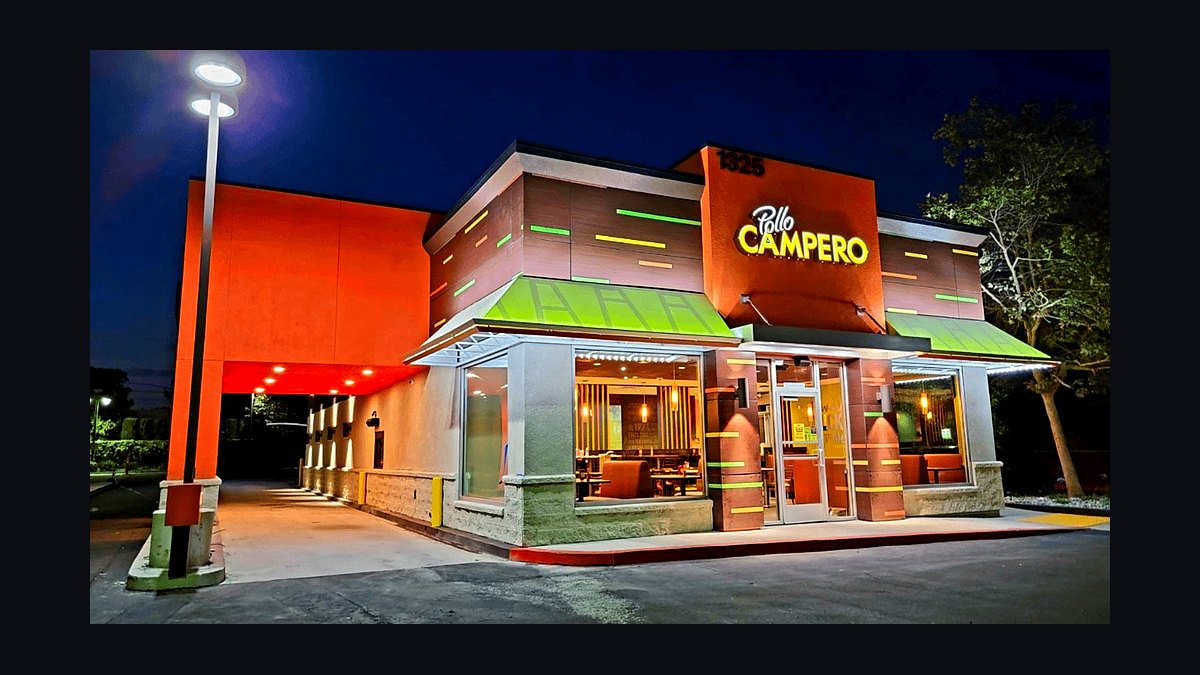
Only if you bring multi-unit QSR operating experience, roughly $1.45M–$3.75M in total project capital, and a trade area with real Latino density. Pollo Campero is a heavily corporate-owned system with few franchised units, so franchisee precedent is thin. Undercapitalized first-timers in non-adjacent suburbs should pass.
A Guatemalan chicken chain, a strip-mall endcap, and $2.2 million you can't get back
Picture the decision as it actually arrives. You are a two-unit operator — maybe a Wingstop and a Jersey Mike's, maybe a pair of El Pollo Locos in the Inland Empire — and a development rep from a Latin-American chicken brand emails you about protected territory in a market you already understand. The brand is Pollo Campero. You have eaten there. Your employees have eaten there. Your customers' grandparents have eaten the original in Guatemala City. That familiarity is exactly what makes this decision dangerous, because affection for a brand is not underwriting.
Here is the shape of the commitment. You will sign a franchise agreement with a term measured in decades of your working life, put down an initial franchise fee, then spend somewhere between one and a half and nearly four million dollars getting one building open. Most of that is real estate and equipment, and almost none of it is recoverable if the unit underperforms. A pressure fryer bank and a rotisserie line do not resell at cost. A ten-year lease on a freestanding pad with a drive-thru does not unwind because your average unit volume came in under plan.
Now layer on the structural fact that separates this from a Subway or a Wingstop decision: the overwhelming majority of Pollo Campero's U.S. restaurants are company-operated, not franchised. In a system that is 90% franchised, you can call thirty franchisees, triangulate their numbers, and build a defensible pro forma from lived experience. In a system where corporate runs most of the estate and the franchised count is small, your Item 20 call list is short, the operators on it may be unusually sophisticated multi-unit groups whose economics do not generalize to you, and much of the performance data you are underwriting against reflects company-operated stores run by people with a corporate G&A structure behind them and no royalty draw.
That is not automatically disqualifying. Corporate-heavy systems can be excellent bets — it often means the franchisor has skin in the game, real operating knowledge, and a proven prototype rather than a slide deck. Chick-fil-A famously refuses to franchise in the conventional sense at all. But it changes what diligence has to look like. You are not validating a franchise; you are validating whether a corporate operating model transfers to an owner-operator with 10% of gross going out the door in royalty and marketing before you pay rent.
The scenario resolves one of three ways. One: you are the right operator in the right trade area, you underwrite conservatively, you hit a volume in the brand's demonstrated range, and you own a durable cash-flowing asset in a category that is genuinely growing. Two: you are the right operator in the wrong trade area, you open into a suburb with no cultural pull, you do 60–70% of plan, and you spend three years feeding a unit that never gets to daylight. Three: you are the wrong operator anywhere — a passive investor, a first-timer, someone who wired the money before hiring a general manager — and the build complexity eats you before the market ever gets a vote. Most of this page is about telling those three apart before you sign.
How the money actually moves through a Campero unit
Franchise math confuses people because the headlines quote the wrong number. Nobody's return comes from "average unit volume." It comes from what's left after six sequential subtractions, in a fixed order, and the order matters because each one is taken off a different base.
Start with gross sales. From gross, the franchisor takes royalty and the brand fund — in this system, a royalty plus a marketing contribution, together in the neighborhood of ten points of top line. That is off the top, weekly, whether or not you made money that week. This is the single most underestimated line for operators coming out of independent restaurants: a ten-point pre-tax, pre-rent, pre-everything draw on revenue is a structurally different business than the independent taqueria down the street.
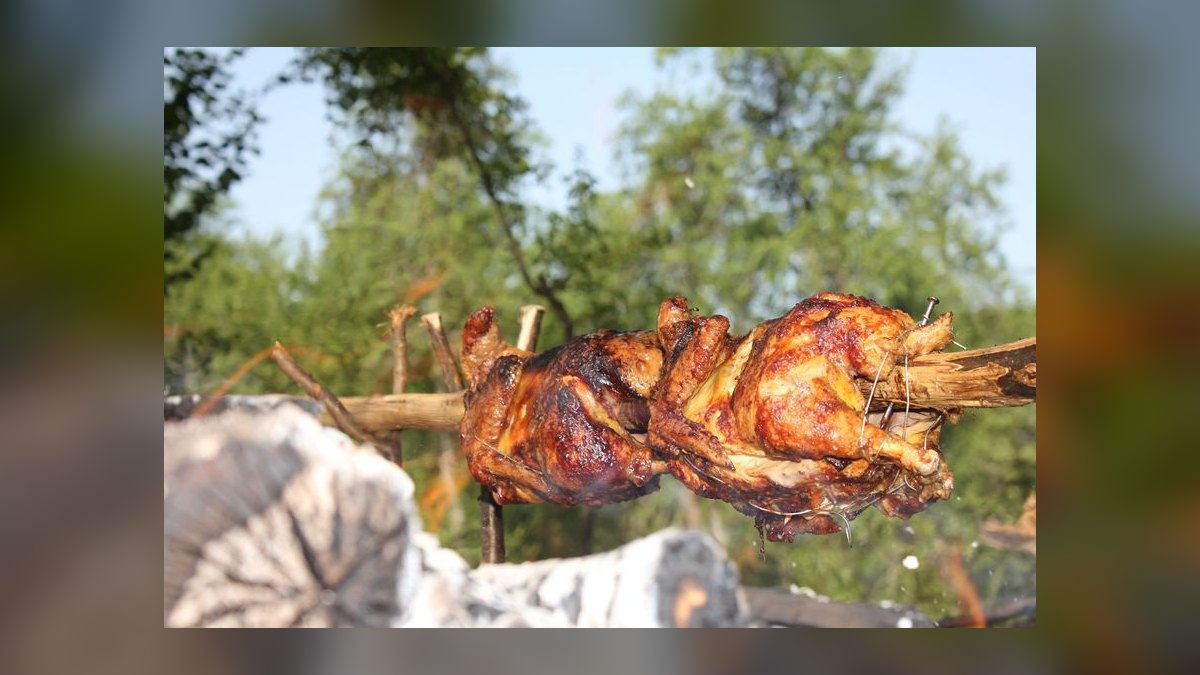
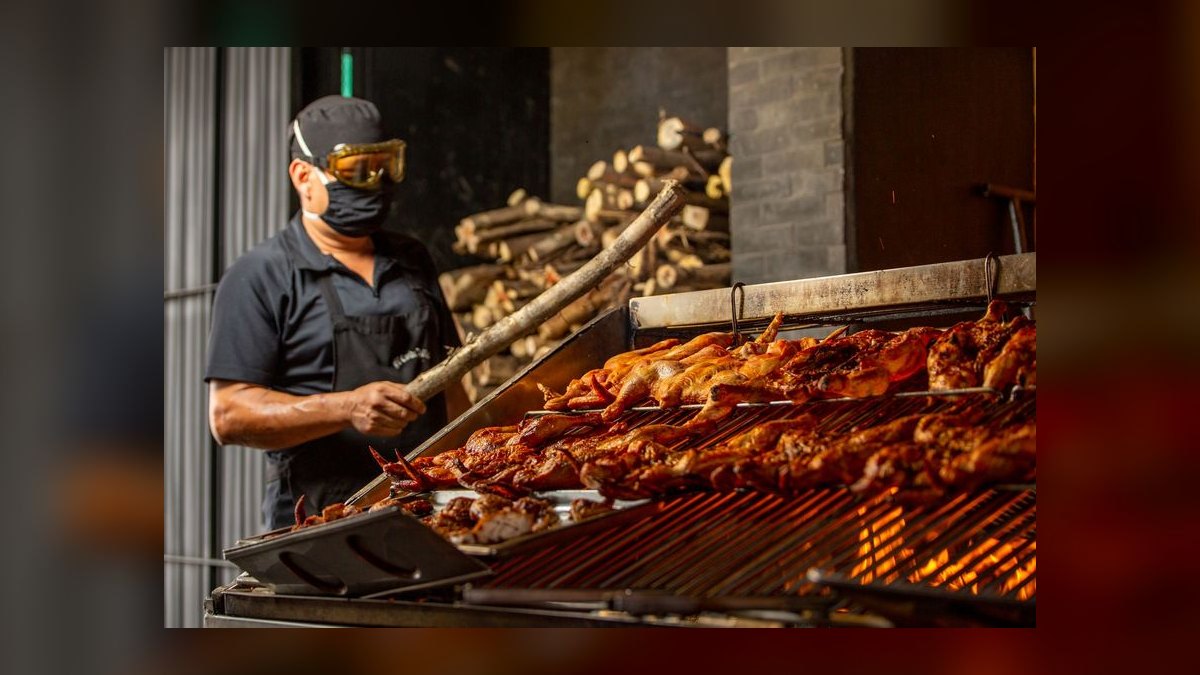
Next, cost of goods. Chicken-forward concepts live and die on the broiler market, and Campero's menu is chicken-dominant with a scratch-marination protocol — meaning your food cost has both a commodity exposure and a prep-labor exposure that a purely fried-and-frozen concept doesn't carry. Fast-casual chicken concepts typically run food cost in the high twenties to low thirties as a percentage of sales; a marination-and-rotisserie skew tends to push toward the higher end of that band because you are buying bone-in and whole-bird product and paying labor to handle it.
Then labor. Not just crew wages — the fully loaded number including payroll taxes, workers' comp, and management salaries. A unit doing high-single-digit-millions in volume can absorb a strong GM; a unit doing under two million cannot absorb a GM, two assistant managers, and four shift leads without labor climbing into the low thirties as a percent of sales. This is the number that separates operators. The difference between 28% and 33% labor on a $2M unit is $100,000 a year — roughly the entire difference between an attractive deal and a job you paid two million dollars to own.
Then occupancy. Rent, CAM, taxes, insurance. The disciplined rule in this segment is to keep total occupancy in the range of seven to nine percent of realistic — not optimistic — projected volume. If you underwrite rent against a best-case AUV and open at 70% of it, occupancy quietly becomes twelve percent of sales and there is no operational fix. You cannot cut your way out of a bad lease.
Then controllables and other operating expenses: utilities (rotisserie and fryer-heavy kitchens are energy hogs), repairs and maintenance, supplies, credit card fees, third-party delivery commissions. Delivery deserves its own note. Marketplace commissions in the twenty-to-thirty-percent range mean a delivery-heavy sales mix looks like growth on the top line and like margin compression on the bottom. Many operators discover in year two that a third of their "sales growth" carried a fraction of their blended contribution margin.
What survives all six subtractions is restaurant-level EBITDA — sometimes called store-level cash flow or four-wall EBITDA. In fast-casual chicken, a healthy unit lands somewhere in the mid-teens as a percentage of sales; strong operators in strong locations do better, and struggling units drop to single digits fast. Note what restaurant-level EBITDA excludes: your debt service, your corporate overhead if you're multi-unit, and any distributions to partners. A unit throwing off 15% on $2M is $300,000 of four-wall cash flow — but if $1.5M of the build was financed on a ten-year SBA note, a meaningful slice of that is going to principal and interest before you see a dollar.
The last box is the one to internalize. Cash-on-cash return is measured against *your equity*, not against total project cost. If you put in 25% equity on a $2.2M project — call it $550,000 — and the unit distributes $150,000 after debt service, that is a strong return on capital even though it is a modest number relative to the $2.2M headline. Conversely, an all-cash build with no leverage looks safer and returns less. Whether leverage is your friend depends entirely on whether the unit hits volume, which is another way of saying: leverage amplifies your site-selection decision, it does not substitute for it.
The numbers you should be underwriting against
The single most important document in this process is the Franchise Disclosure Document, and specifically three items inside it.
Item 7 — Estimated Initial Investment. This is the range: low end for a conversion or inline endcap, high end for a freestanding building with a drive-thru in an expensive market. For Campero the disclosed spread is unusually wide — roughly $1.45M to $3.75M — precisely because the brand permits several formats. Do not average the range. Price *your* format in *your* market with a real GC bid. A drive-thru pad in coastal California and an inline conversion in a Texas secondary market are different businesses that happen to share a logo.
Inside Item 7, look hard at the working capital line. Franchisors typically disclose three months of reserve. Three months is not enough for a scratch-prep concept with a long stabilization curve. Underwrite six to nine months of full operating burn — payroll, rent, debt service, and food — on top of the build. If the disclosed working capital reserve is a few hundred thousand, plan on adding meaningfully to it. The most common way a well-located restaurant dies is not bad sales; it's adequate sales arriving four months after the cash ran out.
Item 19 — Financial Performance Representations. Read this like a lawyer, because it was written by one. Ask, in order: Which units are included? Company-operated only, franchised only, or both? Are underperformers excluded, or units open less than a full year? Is the figure a mean or a median — and if it's a mean, is a handful of flagship high-volume stores dragging it upward? What is the *distribution*? A system average of $1.9M with a top quartile at $2.4M tells you the top quartile exists; it does not tell you that you are in it. Underwrite to the median or below. If Item 19 reports quartiles, build your base case on the second quartile and your downside on the bottom.
Also note whether Item 19 gives you anything below the sales line. Many FDDs disclose revenue and nothing else — no food cost, no labor, no four-wall margin. If that's the case, every margin assumption in your model is yours to defend, not the franchisor's. That's what the Item 20 franchisee calls are for.
Item 20 — Outlets and Franchisee Information. This is where the corporate-heavy structure bites. Item 20 gives you the count of company-owned versus franchised units, openings, closures, transfers, and terminations over the last three years, plus contact information for current and recently departed franchisees. In a system with a small franchised base, that list is short — call *all* of them, not five. And call the departed ones especially; franchisors are required to list former franchisees, and those conversations are the most honest you will have in this entire process.
Specific questions worth asking every operator you reach: What did months seven through twelve look like after the opening honeymoon faded? What's your actual food cost percentage, not your target? What did the build cost versus the Item 7 estimate? How responsive is field support when a rotisserie goes down on a Saturday? Would you sign again? And the one that gets the truest answer: what do you wish you'd negotiated differently?
Benchmarks for sanity-checking. The chicken segment overall has been among the strongest performers in restaurants for several years, which is both the reason to be interested and the reason to be careful. Strong category performance attracts capital, capital builds units, and units cannibalize. When you evaluate a trade area, count the chicken seats going in over the next twenty-four months, not the ones open today. A site that looks uncontested at signing can have a Raising Cane's, a Dave's Hot Chicken, and a remodeled Popeyes within a mile and a half by the time you open — because everyone else read the same category report you did.
For the rent test, run it backward: take a conservative volume, multiply by 8%, divide by twelve, and that is your maximum monthly occupancy. If the landlord's ask exceeds it, the site is not a negotiation — it's a pass, and you should have two other LOIs live so that walking is credible.
For the payback test, be honest about what "payback" means. Payback on total project cost including real estate is a very different figure from payback on your equity check. Most franchise marketing quotes something closer to the latter and lets you hear the former.
What else you could do with two million dollars
Every franchise decision is a comparison, never an absolute. The relevant question is not "is Pollo Campero good?" but "is this the best risk-adjusted use of my capital, my operating attention, and my next decade?" Several genuinely different answers deserve a seat at the table.
Buy an existing unit instead of building one. This is the most underrated alternative in franchising and the one first-timers ignore. An operating restaurant with three years of history has something no new build has: actual sales data, a trained crew, an established customer base, and a lease with known terms. Established small restaurants generally trade on a multiple of seller's discretionary earnings, and the multiple is typically low-single-digit. You skip construction risk, permitting delay, and the entire ramp period. You pay for it in the form of buying someone else's decisions — their site, their equipment age, their reputation in the neighborhood. Franchisors also have transfer approval rights and often charge a transfer fee, so the deal is never purely between you and the seller. But if your worry is execution risk on a complex build, resale is the direct answer to that worry.
Go with a lower-capital format in the same category. Wing- and tender-focused concepts built for off-premise pickup and delivery need a fraction of the square footage and none of the drive-thru pad. Build costs in the mid-six figures rather than the low millions change everything about the risk profile: you can be wrong about a site and survive it, and you can build three units for the price of one Campero. The trade-off is lower AUV ceilings and, usually, a more crowded competitive set. Capital-light is not the same as risk-light — a small box in a bad location still fails — but the failure is survivable.
Pick a direct competitor with a deeper franchise bench. El Pollo Loco occupies adjacent positioning in Latin-inflected chicken and, as a public company, discloses unit economics quarterly in a way no private franchisor is required to. That transparency has real value during underwriting. Korean fried chicken and Nashville hot concepts are expanding aggressively with different capital profiles. None of these is obviously better than Campero; the point is that the brand's cultural distinctiveness — its genuine advantage — has to be weighed against the practical advantage of systems where hundreds of franchisees have already proven the model transfers.
Stay in your existing brand and add units. The boring answer is frequently the right one. You already know the P&L, the vendors, the field consultant, and the recruiting pipeline. Adding a fourth unit of a concept you operate well usually beats adding a first unit of a concept you operate badly, and the general-and-administrative leverage — one bookkeeper, one district manager, one recruiting funnel across more stores — is real money. Diversification across brands sounds prudent and often just means two half-attention businesses.
Operate for someone else first. If you lack multi-unit depth, the highest-return move may be taking eighteen months as a general manager or district manager inside a comparable concept before you risk your own capital. It costs you time and pays you a salary. The alternative — learning restaurant operations on your own two-million-dollar unit — costs vastly more and pays you nothing.
Deploy into real estate rather than operations. Some would-be franchisees actually want the yield, not the job. Owning the pad and leasing it to an operator is a fundamentally different asset with a fundamentally different risk profile. If your honest motivation is passive income, franchise ownership in a scratch-prep concept is close to the worst available vehicle. Say that out loud before you sign anything.
Where these deals actually break
The failures are boringly repetitive, which is good news — repetitive failures are avoidable failures.
Site selected for cultural affinity instead of trade-area math. Campero's competitive moat is authenticity with Latin-American communities, and that is real. But "there are Latino families here" is not a site analysis. The disciplined version pulls census tract data for population density, household income, and Hispanic-origin share within a three-mile ring, layers daytime population (workplace, not just residential), checks traffic counts and ingress/egress quality, and then walks the site at 12:30pm on a Tuesday and 6:30pm on a Friday. Sites fail on left-turn access and pylon-sign visibility far more often than on demographics. And the inverse error is just as common: assuming a heavily Latino trade area guarantees volume when the same neighborhood already supports four beloved independent pollo asado restaurants that have owned those customers for twenty years.
Underwriting to the top quartile. Every prospective franchisee believes they'll be an above-average operator. Statistically, half won't be. Build your base case on median performance, your downside on bottom-quartile, and only let the top-quartile case inform how much you're willing to *stretch on rent* — never how much you're willing to *borrow*. If the deal only works at the high case, it is not a deal.
Financing the build and forgetting the ramp. SBA 7(a) loans are the standard instrument for restaurant builds and often include interest-only or deferred-payment periods during construction. Operators celebrate the deferral and then get hit with full amortization starting the month after opening — which is precisely the period when sales are unstable and working capital is thinnest. Model the debt service beginning at full payment from month one of operations regardless of what the deferral gives you, and hold the difference in reserve.
The absentee fantasy. A rotisserie-and-marination kitchen with high-touch prep is not a manage-from-the-laptop business, at least not in years one through three. Concepts with heavy scratch prep have more ways to go wrong daily — hold times, yield on whole-bird product, marination timing, fryer oil management — and each one shows up in either food cost or guest experience. If you cannot be physically present most days for the first eighteen months, you need a general manager whose track record is proven at your target volume, and you need to pay that person like the asset they are. Budget for it before you sign, not after your first bad quarter.
Signing single-unit when you want multi-unit, or the reverse. Area development agreements come with schedules, and schedules come with defaults. Committing to open five units in four years feels great at Discovery Day and looks very different when unit one takes eighteen months to stabilize and the clock on unit two is already running. Conversely, signing single-unit in a market you believe in means watching someone else take the adjacent territory. Decide which risk you'd rather carry, and negotiate the development schedule with a realistic construction-and-permitting timeline built in — not the franchisor's optimistic one.
Skipping the franchise attorney. Use a lawyer who does franchise work specifically, not your general business counsel. Registration-state timing rules, the fourteen-day FDD review period, personal guaranty scope, transfer and renewal terms, post-term non-competes, and territory definitions are all genuinely negotiable at the margins for a credible multi-unit candidate — and completely non-negotiable if you don't know to ask. The fee is a rounding error against the project cost.
Treating the opening bump as the run rate. New restaurants get a curiosity surge, and it fades. The honest read on a unit's health is months seven through twelve, not weeks one through six. Plan cash, staffing, and your own expectations around the trough, and treat any operator who quotes you opening-week numbers as either inexperienced or selling.
Related questions
How many Pollo Campero locations are actually franchised?
A small minority. The system is predominantly company-operated in the U.S., which is exactly why Item 20 of the FDD matters so much here — verify the current company-owned versus franchised split in the most recent registered FDD rather than relying on any secondhand count.
Can I get an SBA loan for a Pollo Campero franchise?
Generally yes if the brand is listed on the SBA Franchise Directory and you meet credit, equity injection, and collateral requirements. Expect to inject roughly 20–30% equity, sign a personal guaranty, and pledge available collateral including personal real estate.
Is it cheaper to buy an existing unit than build new?
Often, and it's usually less risky. Resales trade on a multiple of seller's discretionary earnings and come with proven sales history, an existing crew, and no construction risk. You still need franchisor transfer approval and should budget for deferred maintenance and equipment refresh.
What net worth do I need to qualify?
Franchisors set minimums in the FDD and on the application. For a build in this cost range, expect a net worth requirement in the high six figures with a substantial liquid component. Meeting the minimum qualifies you to apply — it does not mean the deal is safely capitalized.
How long from signing to opening?
Realistically twelve to twenty-four months for a new build, driven by site control, entitlement, permitting, and construction. Conversions and inline spaces run faster. Any timeline that assumes permitting goes smoothly is a timeline that will slip.
FAQ
How much does it cost to open a Pollo Campero franchise?
The FDD's Item 7 discloses a wide range — roughly $1.45 million to $3.75 million — because the brand permits inline, endcap, freestanding, and conversion formats. Your actual number depends on format, market, and whether you're buying or leasing real estate. Get a general contractor bid on your specific site rather than budgeting to the range midpoint.
What are the ongoing fees?
A royalty on gross sales plus a contribution to the national and local marketing fund, together roughly ten percent of top line in this system. Confirm the exact percentages and payment cadence in the current FDD, and remember these come off gross revenue before any of your operating costs.
Is a corporate-heavy franchise system a red flag?
Not inherently — it often signals the franchisor believes in the concept enough to own units. But it does mean less franchisee precedent, a shorter Item 20 call list, and Item 19 data that may reflect company-operated economics without a royalty burden. It raises your diligence obligation rather than disqualifying the opportunity.
Do I need restaurant experience to be approved?
Approval and success are different bars. Franchisors in this segment strongly prefer multi-unit QSR operators, and for a build of this complexity that preference is well-founded. If you lack that background, either hire a proven general manager before you sign or spend eighteen months operating inside a comparable concept first.
How long until the unit pays back?
Be precise about which payback you mean. Payback on your equity injection is much faster than payback on total project cost, and both depend on hitting volume. Model a conservative case where stabilization takes longer than promised, and make sure you can survive that case without a capital call.
What's the single biggest predictor of failure?
Undercapitalization, followed closely by a site chosen for the wrong reasons. Most restaurants that close were not doomed by their concept; they ran out of cash during a longer-than-modeled ramp. Fund six to nine months of full operating burn beyond the build, and the odds shift materially in your favor.
Sources
- https://www.ftc.gov/business-guidance/resources/franchise-rule-compliance-guide
- https://www.sba.gov/funding-programs/loans/7a-loans
- https://www.sba.gov/document/support-sba-franchise-directory
- https://www.census.gov/programs-surveys/acs
- https://www.bls.gov/iag/tgs/iag722.htm
- https://www.usda.gov/oce/commodity/wasde
- https://www.restaurantbusinessonline.com/
- https://www.qsrmagazine.com/
- https://restaurantdive.com/
- https://www.nrn.com/
Related on PULSE
This page will be disappearing soon. Save it to your device for $1 — or read it free while it is here.
@Kory-White- · if Venmo asks, the last 4 of my number are 2012
This page is gone.
This one is off the shelf now. $1 keeps it on your phone for good — the whole page, pictures and diagrams included.
 franchiseShould I open or buy a Cook Out franchise in 2027?
 franchiseShould I open or buy a Cinnabon franchise in 2027?
 franchiseShould I open or buy a Papa John's franchise in 2027?
 franchiseShould I open or buy a KinderCare franchise in 2027?
 franchiseShould I open or buy a McAlister's Deli franchise in 2027?
 franchiseShould I open or buy a UPS Store franchise in 2027?
 franchiseShould I open or buy an Anytime Fitness franchise in 2027?
 franchiseShould I open or buy a Sonic Drive-In franchise in 2027?
 franchiseShould I open or buy a Little Caesars franchise in 2027?
 franchiseShould I open or buy a Kona Ice franchise in 2027?