


Should I open or buy a Salata Salad Kitchen franchise in 2027?
Quality
Certified
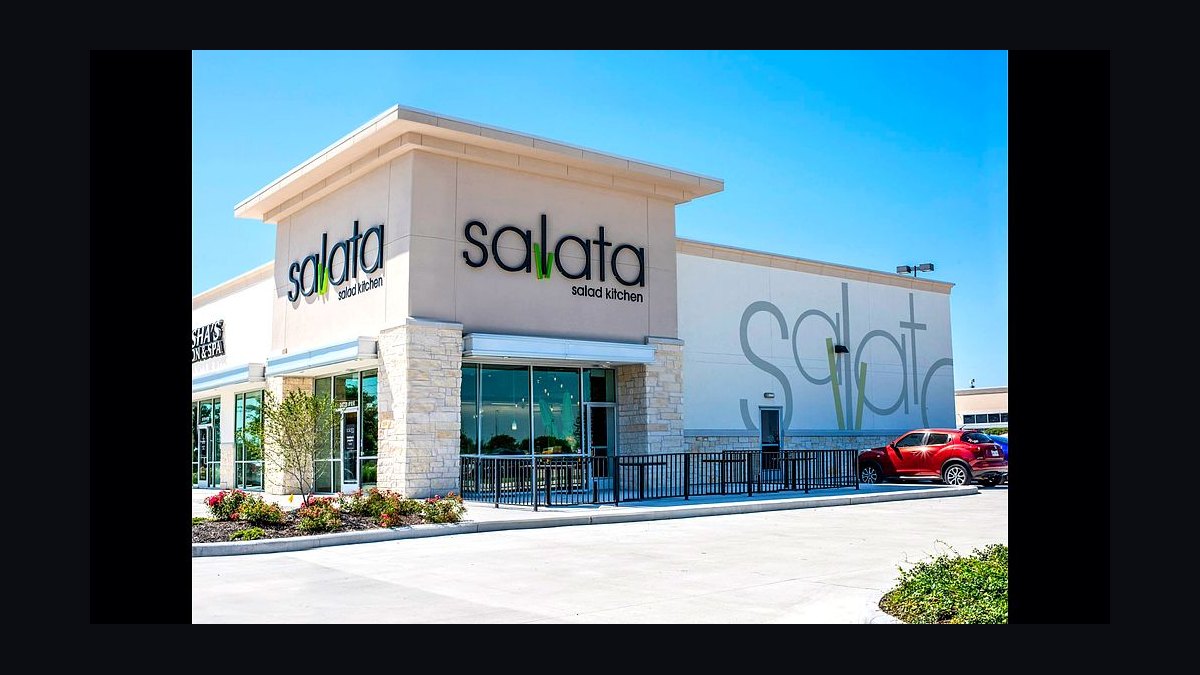
Probably not — unless you already operate two or more restaurants in a Sunbelt market, have $700K-$1M of liquid capital beyond your home equity, and treat Salata as a multi-unit development play rather than a single-store retirement income. Salata Salad Kitchen charges a $40,000 franchise fee, a 5% royalty, and a 2% marketing fee against a real-world build-out of $522,000 to $968,500 (FDD Item 7, 2026). System-average unit volume hovers near $1.05M, with top-quartile stores doing $1.2M-$1.4M. Realistic Year-1 owner cash flow at average AUV after debt service: $70K-$110K. Breakeven on equipment typically arrives at month 14-22; full payback runs 5-7 years. The math works if you can hit AUV; it does not work as a passive single-unit.
The Real Numbers
Salata's 2026 Franchise Disclosure Document (filed with state regulators April 2026) discloses the following ranges. These are real FDD numbers, not marketing site estimates.
| Line Item | Low | High | Notes |
|---|---|---|---|
| Initial franchise fee (Item 5) | $40,000 | $40,000 | Single unit; multi-unit dev fee $10K/add'l unit |
| Real estate / rent deposit | $9,000 | $35,000 | 2,400-2,800 sq ft endcap or in-line |
| Leasehold improvements | $280,000 | $510,000 | Build-out: salad bar, line, HVAC, plumbing |
| Furniture, fixtures, equipment | $115,000 | $175,000 | Salad bar wells, refrigeration, POS, ovens |
| Signage | $12,000 | $30,000 | Exterior + interior brand package |
| Smallwares, opening inventory | $14,000 | $22,000 | Bowls, utensils, produce starter |
| Training travel + grand opening | $14,000 | $32,000 | 6-week training program at Houston HQ |
| Insurance, permits, professional | $8,500 | $24,500 | LLC, FDD review, liquor (where applicable) |
| Working capital (3 months) | $30,000 | $100,000 | Payroll, rent, COGS before breakeven |
| TOTAL INITIAL INVESTMENT | $522,000 | $968,500 | Item 7, 2026 FDD |
Ongoing fees:
- Royalty: 5.0% of gross sales (Item 6)
- Brand marketing fund: 2.0% of gross sales
- Local marketing minimum: 1.0% of gross sales
- Technology fee: ~$450/month per unit

Item 19 financial performance (2026 FDD, fiscal year 2025 data for 78 reporting franchised units open the full year):
| Metric | System Average | Top Quartile | Bottom Quartile |
|---|---|---|---|
| Average Unit Volume (AUV) | $1,052,400 | $1,287,600 | $812,300 |
| Food cost % of sales | 31.4% | 29.8% | 33.6% |
| Labor % of sales | 28.7% | 26.1% | 31.9% |
| Occupancy % of sales | 8.2% | 7.1% | 10.4% |
| Store-level EBITDA margin | 14.5% | 18.2% | 9.8% |
| Store-level EBITDA $ | $152,600 | $234,300 | $79,600 |
Payback math at system-average AUV and a $745K all-in investment, financed 70% at 9.5% SBA 7(a) over 10 years: annual debt service ~$81K, free cash to owner ~$71K Year 1, ramping to ~$95K-$115K by Year 3 once the loan amortization curve flattens. Cash-on-cash on $223K equity: ~32% by Year 3 if you hit AUV. Full payback of equity: year 5.5.
Compare to public peers (for sanity-check): CAVA AUV ~$2.6M, Sweetgreen ~$2.9M, Just Salad ~$2.2M per their 2025 annual reports. Salata's AUV is roughly 40% of CAVA's — which is exactly why the investment is also ~40% lower than a CAVA franchise (CAVA does not franchise; the comparison is conceptual). The unit economics are honest; they just aren't lottery tickets.
Who Wins With This Business
Multi-unit Sunbelt operators with 2-5 existing restaurant locations in adjacent categories (QSR, fast-casual, coffee). These owners already have a commissary, a regional manager bench, and a payroll department. Adding a Salata is incremental overhead, not a new business. Texas-based developers specifically — Salata's home market is Houston, supply chain density is highest there, and brand awareness halves your launch marketing burn.
Healthcare and corporate-campus real estate owners — Salata's daypart skews 60% lunch, 25% dinner, 15% catering. Hospital cafeterias, university food halls, and Class A office towers are the strongest sites in the system. If you own or control such real estate, the same store inside your building can do $1.4M+ AUV, putting you firmly in the top decile.
Operators with a real catering arm. Salata's B2B catering platform (Salata Catering) accounts for 18-24% of revenue at top-quartile stores vs. <8% at the bottom. If you can hire a dedicated catering sales rep and tap corporate accounts, the margin uplift is enormous because catering food cost runs 26% vs. 32% retail.
Owners willing to be on-site 50+ hours/week for 18-24 months. This is not absentee-friendly. The franchisor does not approve passive investors; Item 15 requires an operating principal on premises.
Who Loses With This Business
Single-unit first-time franchisees with all their capital tied into one store. The math collapses if you land at bottom-quartile AUV ($812K). At that level, store EBITDA is $79K, debt service eats $81K, and you are working 60-hour weeks for negative cash flow.
Operators in low-density, non-Sunbelt markets. Salata has opened and closed in Chicago, Atlanta exurbs, and parts of California where the fast-casual salad price point ($13-$16 a bowl) didn't clear against local income or against entrenched competition from Sweetgreen, CAVA, and regional chains.
Anyone counting on Year-1 distributions to live on. Ramp is 9-14 months to mature-store AUV. Plan for $0 owner draw for the first 12 months and a modest salary line ($60K-$80K) baked into the labor budget.
Buyers who can't underwrite the lease. Endcap rent on a 2,600 sq ft Sunbelt suburban site runs $32-$48 NNN per sq ft. That's $85K-$125K/year in rent alone before CAM. Bad real estate kills the deal before food cost does.
Investors expecting franchisor-funded marketing rescue. The 2% brand fund covers digital, app, loyalty — not local launch. Your grand-opening burn is on you ($30K-$60K typical).
2027 Market Conditions
Fast-casual salad is consolidating, not exploding. Sweetgreen (260+ units, $2.9M AUV) is rolling out Infinite Kitchen automation which is taking 7% margin and 10% check uplift, raising the bar for non-automated competitors. CAVA (480+ units by late 2026) is the Mediterranean-bowl benchmark — different category, same customer. Just Salad (~75 units) operates a hybrid model. Salad and Go (drive-thru) has paused expansion after closing ~30 units in 2025.
Salata's 2027 positioning: It is the only franchised salad-bar concept with 80+ units and a real Item 19 that a single operator can actually buy into (Sweetgreen and CAVA are corporate-only). The company took 19 years to reach 100 units and is now signaling intent to triple to 300 by 2030. That implies 40+ openings/year — aggressive but achievable in the Sunbelt where they have density.
Risk factors for 2027:
- GLP-1 weight-loss drugs (Wegovy, Mounjaro, Zepbound) have measurably reduced QSR ticket sizes; salad chains have so far benefited (Sweetgreen up 9% same-store 2025) but the category could fragment.
- Labor inflation in Texas/Florida is running 4-6% annually; the 28.7% labor ratio is under pressure.
- Produce volatility — drought and tariff effects on Mexican-sourced romaine, tomatoes, avocados directly hit food cost.
- Sunbelt rent has stabilized at 8-10% above 2024 levels, no longer climbing rapidly.
Bottom line for the market: The category is healthy but mature. Salata is not the next CAVA, but it is not Subway-in-decline either. It is a plausible $1M-unit franchise that requires real operating chops.
The 90-Day Decision Tree
- Days 1-7: Pull the 2026 FDD directly from Salata (
franchise.salata.com). Read Items 7, 19, 20, 21 cover to cover. Flag every footnote on Item 19 — pay attention to how many units reported, how long open, geography.
- Days 8-14: Build the validation list. Item 20 lists every current and former franchisee with contact info. Call at minimum 10 current operators and all closed-unit former operators. Ask the four questions: AUV, hours worked, royalty experience, would-you-do-it-again.
- Days 15-30: Site survey. Engage a commercial real estate broker who has done at least 3 fast-casual deals in your target metro. Identify 5 candidate sites with traffic counts >20K vehicles/day, daytime population >50K within 3 miles, and median HHI >$75K.
- Days 31-45: Financial modeling. Build a 5-year P&L with three scenarios (bottom quartile, average, top quartile). Stress-test at food cost 34%, labor 30%, sales -15% from plan. If any scenario produces negative cash flow >18 months, the deal is too thin.
- Days 46-60: SBA pre-qualification. Approach 3 SBA 7(a) lenders (Live Oak, Huntington, Byline) with the model. Get term sheets showing rate, amortization, personal guaranty, collateral requirements. Don't sign yet.
- Days 61-75: Discovery Day in Houston. Salata flies you to HQ. Tour the training kitchen, meet the executive team. Use this to validate the supply chain story, marketing tech, and franchisee support staffing ratio (target: 1 field consultant per 12 franchisees max).
- Days 76-90: Decision and franchise agreement. Have a franchise attorney (Mario Herman, Lawley, or Marks Gray are standard) redline the FA. Negotiate personal guarantee cap, territory protection radius, transfer terms. Sign or walk.
Alternative Plays
- Saladworks franchise — older brand, 100+ units, lower AUV (~$780K), lower investment ($385K-$615K). Better for smaller-market operators; less Sunbelt density than Salata.
- Tropical Smoothie Cafe — adjacent healthy fast-casual, 1,400+ units, AUV ~$1.05M, investment $327K-$711K. Much larger system, more proven, lower territorial risk.
- Crisp & Green — Midwest-anchored salad chain, ~40 units, growing fast, AUV ~$1.1M. Better fit if you're north of the Sunbelt.
- Independent salad concept in a corporate-campus food hall — skip the royalty entirely. Sub-$300K build, 10-12% margin instead of 14.5%, but you keep the brand equity.
- Wait and watch Salata for 24 months. If they hit 150 units with stable AUV, the system is real and worth the buy-in. If AUV slides below $950K or the unit count stalls, the thesis is broken.
FAQ
What is the total investment needed to open a Salata franchise in 2027? The total initial investment typically ranges from $522,000 to $968,500, as outlined in the 2026 FDD Item 7. This includes the $40,000 franchise fee, build-out costs, equipment, and initial inventory. You should have $700K-$1M in liquid capital beyond home equity to qualify and operate comfortably.
How much can I expect to earn in the first year? Realistic Year-1 owner cash flow after debt service is $70,000 to $110,000, based on system-average unit volume near $1.05M. Top-quartile stores may reach $1.2M-$1.4M in sales, but first-year earnings are often lower as you cover startup costs and build a customer base.
How long does it take to break even and see full payback? Breakeven on equipment typically occurs between month 14 and month 22. Full payback on your total investment usually takes 5 to 7 years, assuming you hit average unit volumes. This timeline can vary based on location, local competition, and operational efficiency.
What are the ongoing fees I’ll pay to Salata? You’ll pay a 5% royalty on gross sales and a 2% marketing fee, both ongoing. There’s also the initial $40,000 franchise fee. These fees are standard in the fast-casual segment and are deducted from your revenue before calculating owner profit.
Is this a good option for a single-unit, passive investment? No — the math does not work well for a single-unit passive investment. Realistic owner cash flow of $70K-$110K per year, combined with the hands-on nature of restaurant operations, means you’ll likely need to be actively involved. It’s better suited as a multi-unit development play for experienced operators.
What markets or conditions make this franchise more viable? Salata performs best in Sunbelt markets with warm climates and high foot traffic. Success is more likely if you already operate two or more restaurants, have strong local real estate knowledge, and can commit to opening multiple units to spread overhead and increase brand presence.
Bottom Line
Salata Salad Kitchen is a competent, real franchise — not a fantasy. The $1.05M AUV is honestly reported in Item 19, the 14.5% store EBITDA margin holds across the system, and the $522K-$968K investment range is defensible against comparable healthy fast-casual concepts. But it is not a passive investment, not a single-unit retirement play, and not a category-leader on AUV (Sweetgreen and CAVA out-earn it 2.5x). Buy it if you are a Sunbelt multi-unit operator with $700K+ liquid, a catering-friendly site, and the operational discipline to be on the floor for 18-24 months. Don't buy it if any of those is missing. The system will likely have 150-180 units by 2030; the window to lock favorable territory is 2027-2028 before that density arrives.
Sources
- Salata Franchising LLC, 2026 Franchise Disclosure Document (Items 5, 6, 7, 19, 20, 21), filed April 2026
- Salata Salad Kitchen Franchise Insights — VettedBiz
- Cost to Start a Salata Salad Kitchen Franchise in 2026 — ClearValue Lending
- Salata Investment Overview — franchise.salata.com
- Salata Salad Kitchen — Entrepreneur Franchise Directory
- How Salata plans to triple its store count — Restaurant Dive
- Salata Salad Kitchen — Wikipedia
- What CAVA, Sweetgreen, and Just Salad are doing right — Nation's Restaurant News
- Salad Franchise Profit Margins: Complete 2026 Guide — Breadless
- IBISWorld, "Salad Restaurants in the US" industry report, 2026 update
- International Franchise Association (IFA), 2026 Franchise Business Outlook
- US Bureau of Labor Statistics, Limited-Service Restaurants (NAICS 7225) labor cost data, Q1 2026
Related on PULSE
- Should I open or buy a Salata franchise in 2027?
- Should I open or buy a Kitchen Solvers franchise in 2027?
- Should I open or buy a Champps Kitchen + Bar franchise in 2027?
- Should I open or buy a Chicken Salad Chick franchise in 2027?
- Should I open or buy a Kitchen Tune-Up franchise in 2027?
- Should I open or buy a Salad and Go franchise in 2027?
This page will be disappearing soon. Save it to your device for $1 — or read it free while it is here.
@Kory-White- · if Venmo asks, the last 4 of my number are 2012
This page is gone.
This one is off the shelf now. $1 keeps it on your phone for good — the whole page, pictures and diagrams included.
 franchiseShould I open or buy a Crumbl Cookies franchise in 2027?
 franchiseShould I open or buy a Great Clips franchise in 2027?
 franchiseShould I open or buy a Jeremiah's Italian Ice franchise in 2027?
 franchiseShould I open or buy a Panera Bread franchise in 2027?
 franchiseShould I open or buy a Kumon franchise in 2027?
 franchiseShould I open or buy a Valvoline Instant Oil Change franchise in 2027?
 franchiseShould I open or buy a Matco Tools franchise in 2027?
 franchiseShould I open or buy a Little Caesars franchise in 2027?
 franchiseShould I open or buy a Servpro franchise in 2027?
 franchiseShould I open or buy a Bahama Breeze franchise in 2027?