


Should I open or buy a CARSTAR collision franchise in 2027?
Quality
Certified

Buy or convert — don't build from scratch. Converting an existing collision shop to CARSTAR runs roughly $23,500 to $165,300 and can reach breakeven inside a year, while a ground-up build costs $300,000 to $800,000 and takes two to three years. The franchise buys insurance program access, not margin. First-time operators should pass.
The outcome you should expect
Set your expectations against the actual mechanics of the business rather than the brochure. CARSTAR is owned by Driven Brands and operates as the largest franchised collision network in North America, with roughly 766 locations across 48 U.S. states and 10 Canadian provinces as of early 2026. The brand's 2025 Franchise Disclosure Document reports an average unit volume of about $2,137,047 — the highest reported figure in franchised collision. That number is what recruiters lead with, and it is the number that misleads more prospects than any other line in the document.
The AUV is gross revenue, not owner earnings, and it pools mature legacy locations with recently opened ones. Work it down honestly. On $2.1 million in revenue, the 5.5% royalty takes roughly $117,000 and the 2% marketing fund takes about $43,000 before you have paid for a single gallon of clearcoat. Parts typically consume 35–40% of revenue, technician labor around 30%, paint and materials near 12%, and occupancy 6–8%. Then subtract the insurance drag most first-time buyers never model: severity caps, supplement pushback, and negotiated concessions that commonly eat another 3–6% of gross. What lands in the operator's pocket at a single-store CARSTAR is typically $160,000 to $290,000 pre-tax — a genuinely respectable owner-operator income, and nothing like the 15–20% EBITDA that multi-shop operators command or that consolidators pay premiums to acquire.
So the honest outcome, stated plainly: a converted CARSTAR is a solid owner-operator job with an equity kicker at exit, generating 10–14% EBITDA. A ground-up CARSTAR is a two-to-three-year capital project that generates 8–12% EBITDA once stabilized, and negative to modest cash flow in Year 1. Neither is a passive investment, and the gap between those two paths is the single most important decision in the whole evaluation.
The strategic reason to sign is narrower than the marketing suggests, and it is worth stating in one sentence: you are buying accelerated access to insurance Direct Repair Programs. Roughly 90% of collision revenue in a typical DRP-oriented shop flows through carriers — State Farm, Progressive, Allstate, GEICO, USAA, Nationwide, Farmers — and those carriers increasingly favor scaled networks over one-off independents. An independent shop that starts cold typically waits 18 to 36 months for its first meaningful DRP, and plenty never earn one. A CARSTAR conversion can plug into national agreements in a fraction of that time. That compression of time-to-DRP is the product. The royalty is the price. Whether the trade is worth it depends entirely on whether you could have earned those relationships yourself.

There is a corollary worth internalizing before you go further. Because the franchise's value is concentrated in carrier access, its value evaporates in markets where carrier volume is already spoken for. If Caliber, Gerber, Crash Champions, and Classic Collision have locked up the DRP allocations in your metro, CARSTAR cannot conjure claims that the carriers have already routed elsewhere. The brand does not create demand; it routes existing demand toward shops that meet performance standards. Evaluate your market's unclaimed carrier volume before you evaluate the brand.
What drives that outcome
Five variables move the needle far more than anything on the franchisor's pro forma, and they interact.
Entry path. Conversion versus ground-up is not a 3x cost difference — it is a different business. In a conversion you retain trained technicians, an existing frame rack and paint booth, a customer base, and whatever local carrier relationships you already hold. Your incremental spend is a franchise fee in the $10,000–$20,000 range, signage, a paint refresh, brand-standard compliance items, and working capital. A ground-up build adds $180,000–$420,000 of leasehold and construction plus $140,000–$260,000 of equipment, and worse, it adds an eighteen-month ramp during which fixed costs run at full rate against partial throughput.
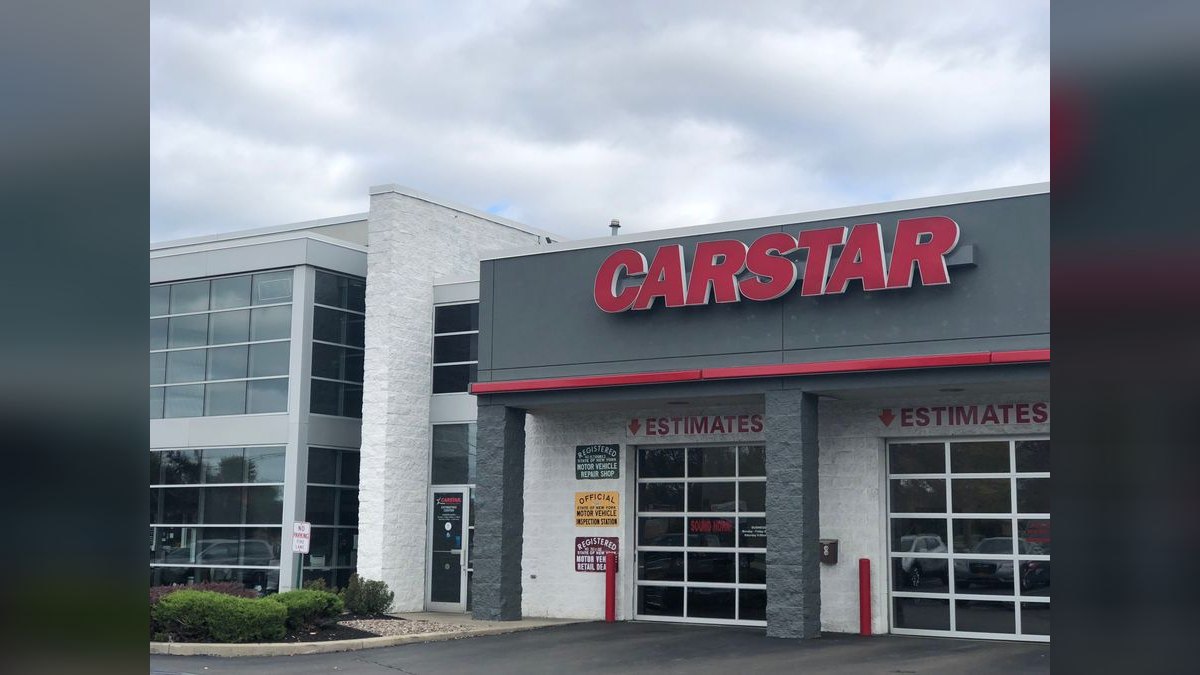
Carrier mix in your trade area. Pull state-level personal auto market-share data before you do anything else. If the top three carriers in your county are not among the majors that CARSTAR holds national agreements with, the franchise's central benefit is muted and you are paying 7.5% of gross for signage and a call center.
Technician supply. This is the binding constraint in 2027, not capital and not demand. Industry workforce research consistently projects large unfilled counts across collision and mechanical technician roles, and the apprentice pipeline is not replacing retirements. A shop paying $95,000-plus for a journeyman technician with real benefits keeps its crew; a shop clinging to a low flat-rate structure loses people to MSOs every quarter. Every hour of unstaffed capacity converts directly into cycle-time misses, which convert into carrier scorecard penalties, which convert into reduced claim assignment.
Working capital timing. Carriers commonly pay 45 to 75 days after repair completion. Parts vendors and payroll do not wait. Undercapitalized conversions fail on this arithmetic alone, which is why the FDD's $200,000 liquid and $500,000 net worth requirements should be read as floors rather than targets.
Repair complexity. ADAS calibration, aluminum and mixed-material structures, and EV battery-adjacent damage push severity upward and total-loss declarations with it. That cuts both ways: higher severity per repair raises ticket size, but more totaled vehicles shrink repairable volume. OEM certification programs are the hedge — and the $45,000–$120,000 per-certification cost of scanners, jigs, and welders is precisely the barrier that independents struggle to clear and franchise buying power helps absorb.
Read that chain in one direction: capital and background determine your entry path, market carrier density determines whether the brand is worth its royalty, and staffing plus working capital determine whether you can actually hold the scorecard performance that keeps claims flowing. Break any link and the AUV in the FDD becomes irrelevant to you.
Benchmarks and realistic ranges
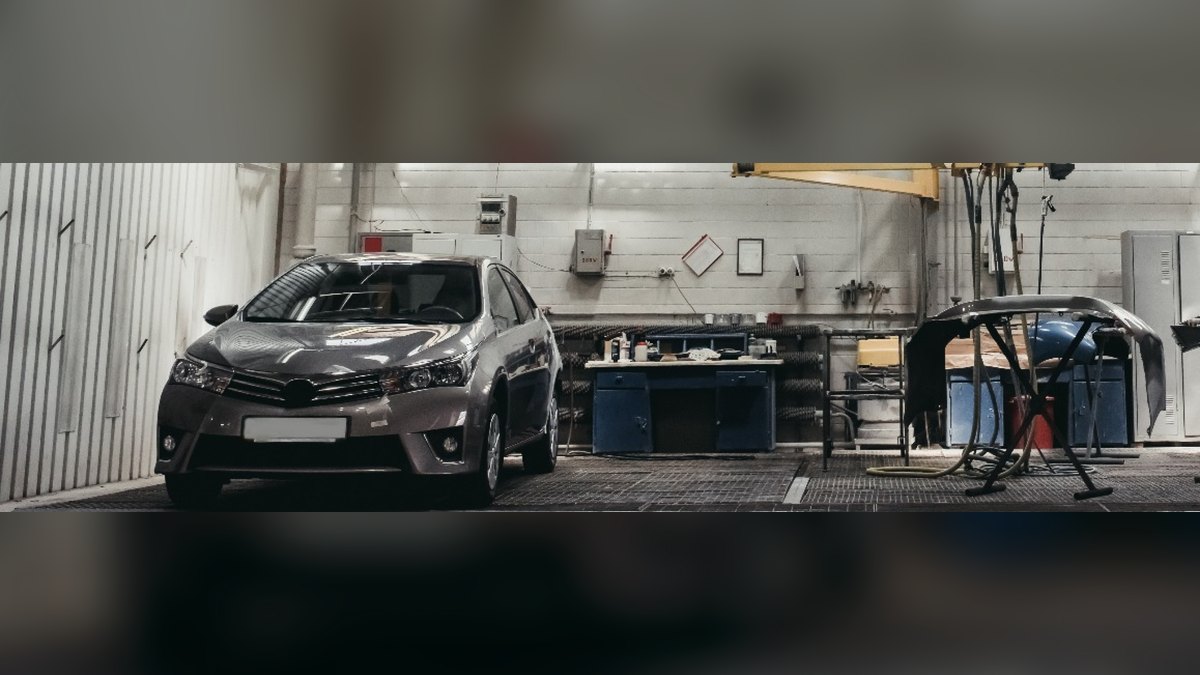
Here is what to underwrite against.
Initial investment. Conversion: roughly $23,500 to $165,300 all-in, depending on how far your facility sits from brand standards and how much working capital you carry. Ground-up: roughly $298,200 to $804,300. Franchise fee sits near $10,000–$20,000 for conversions and around $20,000 for new builds. Initial training and travel typically runs $3,500 to $8,000.
Ongoing fees. 5.5% royalty on gross sales plus a 2.0% marketing fund contribution. On $2 million of revenue that is $150,000 a year, every year, senior to your own draw. Term is ten years, renewable.
Revenue. System AUV around $2.13 million, top-quartile above $2.26 million. Underwrite Year 1 at $1.4 million, not the AUV. If the deal only works at system average in its first year, it does not work.
Margin. Conversions typically land 10–14% operator EBITDA; ground-up builds 8–12% until stabilized. Multi-shop operators running three or more stores routinely reach 14–17% because they spread estimators, centralize accounting, negotiate paint at the portfolio level with the major refinish suppliers, and hold more carrier leverage.
Cash flow and payback. A healthy conversion doing $1.6–$2.4 million commonly produces $180,000–$320,000 of Year-1 owner cash flow with breakeven at 9 to 14 months. A ground-up build runs negative to roughly $80,000 in Year 1 and clears debt service in 24 to 36 months.
Labor rates. Posted retail door rates in the $72–$95 per hour band remain achievable, but negotiated program rates commonly land $58–$74 in most markets. Model at program rate for the DRP share of your mix, not at posted rate. Getting this wrong overstates gross profit by several points across the whole year.
Technician cost. Budget $72,000–$95,000 for a competent body technician, higher for certified structural and aluminum work, plus healthcare and retirement match if you intend to retain anyone.
Resale. Established CARSTAR locations trade in a wide band depending on AUV, lease terms, and DRP portfolio. Independent shops around $1.2 million revenue with two solid carrier programs commonly transact at 3.5–4.5x EBITDA. Larger, cleaner platforms with $1.8 million-plus revenue and 13%-plus EBITDA attract consolidator interest at meaningfully higher multiples. This asymmetry is the most under-discussed fact in the whole category: the exit multiple rewards scale and clean financials far more than it rewards brand affiliation.
Model stress test. Build a three-statement model at $1.4 million Year-1 revenue, 38% gross margin, 7.5% combined royalty and marketing, roughly $28,000 per month in fixed operating costs, and a $75,000 owner draw. Then run a six-month, 15% revenue decline. If the model cannot survive that, the deal is too tight — because repair volume genuinely does swing that hard when deductibles rise and claim frequency falls.
Risks, edge cases, and failure modes
The inexperience failure. First-time operators with no collision background are the most reliable failure case in this category. Body shops are production businesses with a skilled-labor bottleneck and a customer who is not the person paying. If you cannot read a severity report, defend a supplement, or manage a technician's flat-rate expectations, you will miss cycle-time targets, land on a carrier performance improvement plan, and watch assignment volume fall within a quarter. The mitigation is straightforward and unglamorous: buy an operating shop with its management team intact, or partner with a working general manager who owns real equity.

The undercapitalization failure. Working capital below roughly $120,000 kills conversions on payment timing alone. Three slow weeks against 60-day carrier terms and you are choosing between parts and payroll.
The saturated-market failure. Caliber, Gerber, Crash Champions, and Classic Collision have effectively locked up carrier allocation in a number of large metros. A franchise agreement does not entitle you to volume the carriers have already routed. Do the market work before the brand work.
The absentee failure. This business is not absentee-ownable at a single-store level. The daily production meeting, the parts-procurement discipline, and the supplement-defense habit all decay without an owner present. Operators who show up materially outperform those who do not, and the gap widens as the shop grows.
The rescue fantasy. Franchisors negotiate national agreements; they do not fight your individual battle with a regional claims manager. Carriers can and do deflag individual locations for performance while the national relationship stays healthy. Your scorecard is yours.
Territory and transfer language. Two Item 17 provisions decide what happens when things go well or badly: territory exclusivity, and transfer rights. Negotiate both with a franchise attorney — a specialist, not your general business counsel — and budget $3,500 to $6,500 for the review. The transfer clause determines whether you can sell to a consolidator on your timetable or must first offer the location back into the system. That single clause can swing exit proceeds more than a year of operating improvement.

Macro pressure. Repair volume has been under real strain, with estimated volumes down roughly 10% year-over-year through early 2026 as higher deductibles suppress small claims, premium increases dampen claim frequency, and rising total-loss declarations pull vehicles out of the repairable pool entirely. Collision M&A slowed noticeably in 2025 — fewer deals, longer timelines, softer multiples. Underwrite for a soft market, not the 2021–2022 conditions the older comparables reflect.
Adjacent risk worth naming. The same forces that squeeze collision squeeze the neighboring aftermarket segments — glass, calibration, mechanical service, and paint-only cosmetic work. If you are diversifying across automotive service formats to hedge, understand that carrier behavior and technician scarcity are common factors across all of them, so the hedge is thinner than it looks on paper.
A practical rollout plan
Ninety days is enough to reach a defensible decision if you sequence it properly.
Days 1–14 — Get the document. Request the current CARSTAR FDD from the franchisor, or pull it free from a registration state's regulator. Read Items 5, 7, 17, 19, 20, and 21 in full. Item 20 gives you the franchisee roster and, critically, the turnover table — closures, transfers, and terminations by year. That table tells you more about system health than Item 19 ever will.
Days 15–30 — Validate carrier density. Identify the top three personal auto carriers by market share in your trade area. Count the DRP-participating shops already operating there. If the majors are absent from your top three, or if every one of them already has three well-run network shops within ten miles, the core benefit is muted.

Days 31–45 — Call eight franchisees. Use the Item 20 list and call operators you were not steered toward, including at least two who left the system. Ask actual gross margin, whether DRP access materialized on the promised timeline, what the royalty feels like in a soft quarter, whether they run a single store or a group, and whether they would sign again. Two clear "no" answers from single-store operators is your signal to stop.
Days 46–60 — Tour three stores unannounced. Drive to active locations within a few hundred miles. Count work-in-progress vehicles in the lot, look at how the technicians carry themselves, check signage condition and cleanliness. Ask the general manager, not the owner, about cycle-time pressure.
Days 61–75 — Build the conservative model. Use the stress-test assumptions above. Model the DRP share of revenue at program labor rates and the customer-pay share at posted rates separately; blending them hides the problem.
Days 76–82 — Discovery Day. Meet the field performance managers and the DRP support team, not just recruiting. Ask specifically how carrier escalations get handled and who owns them.
Days 83–88 — Attorney review. Franchise counsel on Item 17, territory, transfer, and renewal conditions.
Days 89–90 — Decide. Sign, or pivot to an independent acquisition.
Alternatives worth pricing before you sign
Run the franchise against its real competition, which is not another franchise.
Stay independent and buy. A well-run independent doing about $1.2 million with two carrier programs commonly sells at 3.5–4.5x EBITDA. You keep the 7.5% you would have paid in royalty and marketing — roughly $150,000 a year at $2 million revenue — and you can still sell to a consolidator later, often at a higher multiple than you bought at, if you build the revenue and clean up the financials.

Sibling brands. Driven Brands also operates Fix Auto USA, a lighter-touch collision franchise with a slightly lower royalty and similar carrier access, and Maaco, which is a different business entirely — cosmetic and paint-focused, more customer-pay, far less carrier dependence. If what you actually dislike is insurance accountability, Maaco's model addresses that directly while trading away the severity and ticket size that collision provides.
Buying groups and certification networks. Independent networks and buying groups offer OEM certification support, refinish purchasing discounts, and limited referral flow for annual dues that are a rounding error next to a 5.5% royalty. Weaker brand, better unit economics, and no ten-year term.
Build to sell rather than franchise to grow. If you already run a strong independent above $1.8 million with 13%-plus EBITDA, the highest-return move in 2027 may be preparing that business for sale to a consolidator rather than adding a royalty to it. Clean books, assignable leases, documented carrier scorecards, and a management team that survives your departure are what move the multiple. Franchise affiliation is not, by itself, a multiple driver at exit.
Adjacent formats. Some operators find better risk-adjusted returns in calibration-only, glass, or fleet-dedicated repair operations, where technician requirements are narrower and carrier concentration is lower. These are smaller revenue lines, but they carry less capital intensity and less scorecard exposure — worth pricing if you want automotive exposure without insurance dependence.
Related questions
Is a CARSTAR conversion better than starting an independent shop from scratch?
For an existing shop owner, usually yes — conversion costs a fraction of a new build and compresses time-to-DRP from years to months. For someone with no facility and no crew, buying an operating independent is generally the lower-risk entry.
How much of my revenue will come from insurance?

In a DRP-oriented collision shop, roughly 90% of revenue flows through carriers. That means carriers effectively set your labor rate, cycle-time targets, and parts sourcing. Customer-pay and fleet work are the main levers for reducing that concentration.
Can I run a CARSTAR location absentee?
Not well at a single store. Production discipline, supplement defense, and technician retention all degrade without an owner or an equity-holding general manager on site daily. Multi-unit operators substitute strong store-level management, not absence.
What is the biggest hidden cost people miss?
Working capital against 45-to-75-day carrier payment terms. Parts and payroll bill weekly. Undercapitalized operators fail on timing, not on demand.
Does the franchise improve my exit multiple?
Not directly. Exit multiples in collision track revenue scale, EBITDA quality, lease assignability, and carrier scorecards. Brand affiliation matters less than clean financials and a management team that stays after closing.
FAQ
What is the total investment range for a CARSTAR franchise?
Converting an existing collision shop typically runs $23,500 to $165,300 depending on facility condition and working capital. A ground-up build runs roughly $298,200 to $804,300, including $180,000–$420,000 of leasehold work and $140,000–$260,000 of equipment. Qualification floors are $200,000 liquid and $500,000 net worth.

How long until the business breaks even?
Conversions commonly reach breakeven in 9 to 14 months because equipment, crew, and customer base carry over. Ground-up builds typically need 24 to 36 months to clear debt service, since fixed costs run at full rate during an extended ramp period.
What margins should I actually plan for?
Plan for 10–14% operator EBITDA on a conversion and 8–12% on a new build. Multi-shop operators reach 14–17% through shared overhead, portfolio purchasing, and stronger carrier leverage. The 5.5% royalty, 2% marketing fund, and program-rate concessions account for most of the gap.
Do I need prior body shop experience?
Strongly recommended. Operators with collision or insurance-adjuster backgrounds handle severity reports, supplements, and scorecard pressure competently. Without that background, buy an operating shop with its management intact or bring in an equity-holding general manager who has run production before.
Why is the reported average unit volume so much higher than my projections should be?
Because it is gross revenue across the whole system, including mature locations, not first-year revenue for a new one. Underwrite Year 1 at roughly $1.4 million and treat anything above that as upside rather than baseline.
Is 2027 a good time to enter collision at all?
It is a buyer's market for assets and a hard market for operators. Repair volume has softened, total-loss rates have risen, and M&A multiples have compressed — which lowers acquisition prices but also lowers the volume you inherit. Enter with conservative assumptions and enough capital to sit through a soft year.
Sources
- https://www.carstar.com/franchise/
- https://www.drivenbrands.com/
- https://www.ibisworld.com/united-states/industry/car-body-shops/1096/
- https://www.bls.gov/ooh/installation-maintenance-and-repair/automotive-body-and-glass-repairers.htm
- https://www.ftc.gov/business-guidance/resources/franchise-rule-compliance-guide
- https://www.repairerdrivennews.com/
- https://www.bodyshopbusiness.com/
- https://www.ambest.com/
- https://www.franchise.org/
- https://www.techforce.org/
Related on PULSE
This page will be disappearing soon. Save it to your device for $1 — or read it free while it is here.
@Kory-White- · if Venmo asks, the last 4 of my number are 2012
This page is gone.
This one is off the shelf now. $1 keeps it on your phone for good — the whole page, pictures and diagrams included.
 franchiseShould I open or buy a Great Clips franchise in 2027?
 franchiseShould I open or buy a Jimmy John's franchise in 2027?
 franchiseShould I open or buy a Valvoline Instant Oil Change franchise in 2027?
 franchiseShould I open or buy a Cinnabon franchise in 2027?
 franchiseShould I open or buy a Marco's Pizza franchise in 2027?
 franchiseShould I open or buy a Matco Tools franchise in 2027?
 franchiseShould I open or buy a Servpro franchise in 2027?
 franchiseShould I open or buy a Crumbl Cookies franchise in 2027?
 franchiseShould I open or buy a Bahama Breeze franchise in 2027?
 franchiseShould I open or buy a Kumon franchise in 2027?