


Should I open or buy a Maaco (re-do) franchise in 2027?
Quality
Certified
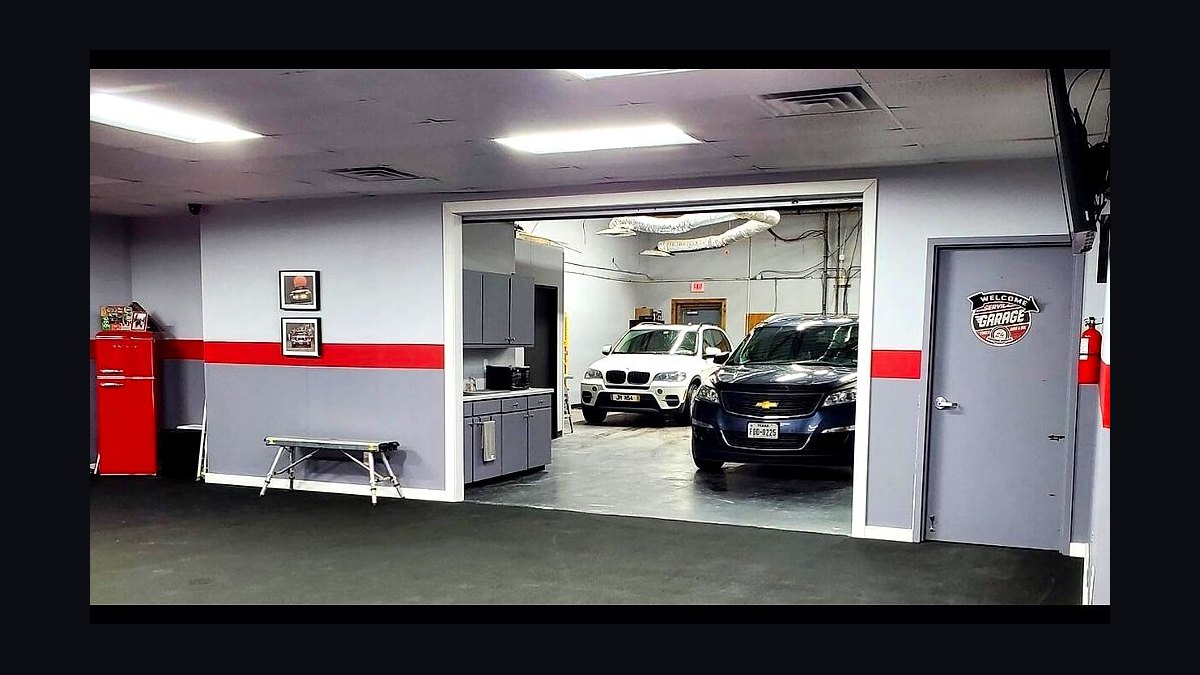
Buy or open a Maaco franchise in 2027 only if you have roughly $400,000 in liquid capital, real production or auto-body management experience, and patience for a four-to-five-year payback. It is a labor-intensive paint and collision shop, not passive income. Absentee, under-capitalized owners fail here consistently.
A shop bay in Tampa, and the spreadsheet that decides it
Picture a specific decision, because the abstract version of this question is useless. A 47-year-old former collision center manager in the Tampa metro has $520,000 liquid after selling a rental property, a wife who does the books for a landscaping company, and eighteen years of experience writing estimates. He is looking at two paths: a 9,400 square-foot industrial building on a light-industrial parcel near a busy arterial road, zoned M1, with an existing paint booth left behind by a body shop that closed in 2024 — or a resale Maaco two counties north doing about $1.1 million a year under an owner who wants out.
Those two options are not the same business. The build-out path means he controls the layout, the booth, the workflow, and the DRP applications from day one — and he eats six to nine months of rent, payroll, and permits before the first ticket clears. The resale path means revenue on day one, a staff already trained, and a customer file — but he inherits the previous owner's reputation, their rework rate, their OSHA and EPA history, and whatever reason the seller is actually leaving. In collision, a $1.1 million center in a market that should support $1.6 million is usually not a real-estate problem. It is a management problem, and management problems transfer with the keys.
The reason this scenario frames the decision better than a fee table is that Maaco's economics are dominated by two variables that no franchise disclosure document can hand you: estimating accuracy and labor stability. Everything else — the franchise fee, the royalty, the ad fund, the software subscription — is arithmetic you can do in an afternoon. Whether your painters stay, whether your estimates land within a few percent of actual hours, and whether your local insurance adjusters trust your shop, is the whole game. A first-time owner with no shop-floor background and $250,000 of borrowed money is buying a job they do not know how to do, in a business where the learning curve gets paid for in rework and in bays that sit idle.
The honest framing: if the Tampa manager buys, he is buying a brand, a supply chain, and a management system on top of a skill he already owns. That is a reasonable trade for a royalty. If a software sales director with the same $520,000 buys the same shop, they are buying all four things at once — brand, supply chain, system, and the craft — and paying tuition on the craft in real dollars for two years. Same investment, radically different expected outcome. That asymmetry is the single most important thing to understand before you read another number.
How a Maaco actually converts a car into revenue
The mechanism matters because it tells you where the money leaks. A Maaco center makes money by moving vehicles through a fixed sequence of constrained stations, and the constraint is almost always the paint booth. Every hour the booth sits empty is unrecoverable capacity, and every hour it runs on a job that was under-estimated is capacity sold below cost.
The sequence runs roughly like this. A vehicle arrives — either walk-in retail (someone who wants a whole-car respray on a ten-year-old sedan) or insurance-referred collision work (a claim with an adjuster attached). An estimator writes the job, typically inside the industry-standard estimating platform, producing a line-item breakdown of labor hours, parts, paint materials, and sublet work like glass or ADAS calibration. That estimate becomes the contract. Then the car moves to disassembly, body repair or panel replacement, prep and masking, primer, the booth, bake, reassembly, detail, and quality control. Then it either delivers clean, or it comes back — and a comeback consumes booth time twice while generating revenue once.
That is why the estimator is the highest-leverage employee in the building, above the painter. A painter who is 10% slow costs you hours. An estimator who is 10% light on every job costs you margin on every job, permanently, and you will not see it in the top line — only in the gap between the revenue you booked and the profit that never showed up.
Two upstream and downstream effects are worth naming, because they are where 2027 differs from 2017. Upstream, insurance carriers increasingly control scope through direct repair programs — a shop on a carrier's DRP list gets steady referral volume in exchange for accepting negotiated labor rates, cycle-time targets, and audit rights. That trade is usually worth taking for volume stability, but it caps your rate. Downstream, advanced driver-assistance systems mean that a bumper cover replacement is no longer just a bumper cover: cameras and radar sensors mounted behind it need recalibration, which either requires equipment and training you own, or a sublet relationship with someone who does. Sublet is fine at low volume and a margin sink at high volume.
The franchise layer sits on top of this mechanism in three concrete ways: brand-driven inbound calls (Maaco has decades of consumer awareness in the whole-car-repaint niche, which is genuinely hard to build independently), a national vendor program for paint, materials, and equipment at volume pricing a single shop cannot negotiate, and a standardized operating and estimating system so a new owner is not inventing workflow from zero. What it does not do is manage your people, write your estimates, or keep your booth full. Those stay yours.
Real numbers, ranges, and how to sanity-check them
Do not take any single published figure at face value, including favorable ones. Here is how to build a defensible model.
The capital stack. Franchise investment ranges published in a franchise disclosure document are wide for a reason: the low end assumes a nearly turnkey conversion of an existing body shop with a usable booth, and the high end assumes a ground-up build in an expensive metro. For a collision and paint operation in the 8,000–12,000 square-foot range, the components you must price locally are the paint booth and air handling (the largest single equipment line, and the one with the longest lead time), compressed air, lifts, frame or measuring equipment, mixing room build-out, ventilation and fire-suppression to code, and the office and customer-facing front end. Get three real quotes on the booth before you sign anything. Booth pricing and installation lead times swing more than any other line item, and a booth that arrives eleven weeks late is eleven weeks of rent and salaried payroll against zero revenue.
Rent and site. Light-industrial NNN rent in most U.S. metros runs materially higher in 2027 than pre-2020 comparables, and the specific constraint is not price — it is permittability. You need industrial zoning that allows spray painting, air-permit eligibility for volatile organic compound emissions under your state's program, adequate three-phase power, and a landlord willing to sign off on a booth installation and the associated roof penetrations. In practice this eliminates most available industrial vacancies in a given submarket. Budget six months of site search and expect to lose at least one deal at the permit stage.
Working capital, and why the published minimum is the wrong number. Whatever the disclosure document lists for working capital, model your own from the ramp curve: monthly fixed nut (rent, base payroll, insurance, software, utilities, loan service) multiplied by the months until you cover it. In collision, a new center typically ramps over six to twelve months as DRP applications process, local reputation builds, and the crew's throughput improves. If your fixed nut is $45,000 a month and your realistic ramp is nine months at an average of 60% coverage, you need roughly $160,000 of working capital just to survive to breakeven — before any cushion for a booth delay or a slow permit. This is the line where under-capitalized owners die, and it is almost always the line they cut to make the deal fit.

The revenue side. Average unit volume figures disclosed in franchise documents are systemwide averages that blend mature high-performers with new and struggling centers. Read the Item 19 financial performance representation with three questions: what population is included (all centers, or only those open two-plus years?), is it gross receipts or net revenue, and what is the distribution — the median and the quartile breaks matter far more than the mean, because a handful of $2 million-plus centers pull the average above what a typical operator will see. If only the average is disclosed, assume you land below it in years one and two.
Ongoing fees. Model royalty and the national advertising contribution as a combined percentage of gross, and note that advertising funds are often structured as "the greater of a fixed weekly amount or a percentage" — which means at low volume you pay a fixed cost that is a very high effective percentage. A shop doing $12,000 a week pays a dramatically different effective ad rate than one doing $35,000. Introductory royalty discounts in the first six months are real but temporary; never build a pro forma on the promotional rate.
Labor, the largest operating line. Body technicians, painters, prep techs, and estimators in this trade command wages that have risen sharply, and turnover in collision repair is high relative to most retail franchising. Assume you will replace at least one key production employee in year one and that each replacement costs you roughly a month of that station's productivity. Model overtime honestly: booth capacity is fixed, and the way shops catch up on a backlog is Saturdays.
Benchmarks to demand from real franchisees, not from marketing. When you call existing owners — and you must call at least five, deliberately including low performers, not just the referrals handed to you — ask for these specific ratios: gross profit percentage on labor versus parts versus paint materials; paint material cost as a percentage of paint labor revenue; DRP mix as a percentage of total revenue; average repair order value; comeback and rework rate as a percentage of jobs; effective labor rate actually realized versus posted; and months to positive cash flow. Six honest answers to those questions are worth more than every published statistic combined.
Trade-offs, and the four other doors in this hallway
Every franchise decision is really a comparison against the alternatives you did not take. Here is the honest field.
Buy an existing Maaco resale. You get revenue on day one, trained staff, and established local insurance relationships. Price is typically negotiated as a multiple of earnings, and the diligence burden is real: pull the last three years of tax returns and estimating-system reports, reconcile them against each other, audit the comeback rate, and interview the production manager privately. The critical question is why the seller is selling. Retirement and relocation are fine. Burnout in a shop doing well below market potential means you are buying a turnaround, which is a different skill than buying a business.
Open a new Maaco from scratch. You control layout, equipment, and culture, and you get territory selection. You pay for it in six to twelve months of pre-revenue burn and full exposure to permit and construction risk. Better fit for someone with deep operational skill and a specific site they believe in.
Go independent in the same trade. No franchise fee, no royalty, no advertising contribution — meaningfully more margin per dollar of revenue, at least on paper. You give up brand-driven inbound volume, which in the whole-car-repaint category is genuinely significant, plus vendor pricing, plus a proven system. Independents who succeed usually already have a local reputation or a book of DRP relationships from a prior role. First-timers who go independent to save the royalty frequently discover the royalty was the cheapest part of the package.
Adjacent, lighter-capital automotive plays. Paint protection film, ceramic coating, detailing, and appearance-services businesses run at a fraction of the capital because they need no paint booth, no air permit, and a much smaller footprint. Ceiling on revenue per location is lower, but so is the hole you can fall into. Similarly, quick-lube and general-maintenance franchises have shorter ramps and simpler labor models, and multi-brand operators sometimes co-locate maintenance and collision brands to share overhead, staff, and a single parking lot — a structure that can meaningfully improve margins for an operator with the bandwidth to run two P&Ls.
The comparison that actually decides it is not Maaco versus a detailing franchise versus independent. It is Maaco versus your best alternative use of $400,000 and five years of your labor. If you could earn a good salary managing someone else's collision center with zero capital at risk, the franchise has to beat that by enough to compensate for the risk and the personal guarantee on the loan. Many owner-operators do clear that bar. Plenty do not, and the ones who do not usually knew the math and hoped the market would be kind.
Common pitfalls and how to avoid them
Thinning working capital to make the deal close. The single most common failure. You find the site, the booth quote comes in high, and the easy adjustment is to shave the cash reserve because "we'll be profitable by month four." You will not be. Countermeasure: write your working capital figure down before you shop for a site, treat it as untouchable, and if the deal only works by cutting it, the deal does not work.
Believing the systemwide average applies to you in year one. New centers underperform mature ones — always. Countermeasure: build your base-case pro forma at roughly 60–70% of the disclosed systemwide average for year one, and require that the deal still survive at that level. If it only pencils at the average, you have built a hope, not a model.
Absentee or semi-absentee ownership. Marketing language around "semi-absentee" opportunities is where a lot of capital goes to die in production businesses. Estimating slips, rework climbs, adjusters stop trusting the shop, and the good technicians leave first. Countermeasure: either commit to being on the floor for the first two years, or hire a proven general manager from the trade at a real market salary plus a profit share, and model that salary in your pro forma from day one — not as a year-three upgrade.
Underestimating the compliance load. Spray painting triggers environmental air-permit requirements, hazardous-waste handling and manifesting, respiratory-protection programs, fit testing, hazard communication, and periodic inspections. None of it is unmanageable; all of it is paperwork with deadlines and fines attached. Countermeasure: budget for an environmental-health-and-safety consultant for the first year and get the permit path confirmed in writing before you sign the lease, not after.
Skipping the low performers during franchisee validation. The list you are handed will steer you toward happy owners. Countermeasure: pull the full franchisee list from the disclosure document, sort by geography, and cold-call ten owners including any recent transfers or closures listed in Item 20. Ask former franchisees why they left. That single set of calls is the highest-return diligence you will do, and it costs nothing but a few uncomfortable afternoons.
Ignoring the ADAS and EV certification curve. Vehicle repair complexity keeps rising. Shops without calibration capability or manufacturer certifications increasingly lose work to dealer body shops and certified networks. Countermeasure: treat certification and calibration equipment as a planned year-two capital expenditure line, not a surprise, and ask the franchisor specifically what brand-level support, vendor pricing, or training pathway exists for it — then verify that answer with three existing franchisees.
Signing before a lawyer reads the agreement. The franchise agreement governs territory, transfer rights, renewal terms, personal guarantees, and what happens if you want out. Countermeasure: pay a franchise attorney — one who does this specific work, not your general business lawyer — to read the agreement and the disclosure document. It is a four-figure expense against a six-to-seven-figure commitment.
Choosing the metro emotionally. People buy where they live. Sometimes that market cannot support the revenue the model requires. Countermeasure: evaluate at least three submarkets on vehicle counts, claim density, competitor saturation, and industrial-space availability before you let convenience decide, and be honest about whether you would relocate for materially better economics.
Related questions
Is it better to buy an existing Maaco or open a new one?
A resale gives you day-one revenue, trained staff, and existing insurance relationships; a new build gives you site control and no inherited reputation. If the resale's numbers are healthy and the seller is genuinely retiring, buy the resale. If it is underperforming badly, price it as a turnaround.
How much liquid capital do I really need?
More than the disclosure document's minimum. Model your monthly fixed costs times your realistic ramp period, add a cushion for booth delays and permit slippage, and treat the result as untouchable. Under-capitalization, not weak demand, is what closes most new collision centers.
Can I run a Maaco while keeping my day job?
Realistically no, not in year one. Estimating accuracy and labor management drive the entire margin structure, and both degrade fast without an owner or a strong paid general manager present daily. If you cannot be on-site, budget a market-rate GM into your pro forma from month one.
Does the royalty make independents more profitable?
Per dollar of revenue, yes. In total dollars, often no — the brand's inbound call volume, vendor pricing, and operating system typically outweigh the royalty for a first-time owner. Independents who beat franchisees usually bring an existing local reputation or DRP book with them.
What single metric best predicts whether a center will succeed?
Estimating accuracy — the gap between hours booked and hours actually consumed. It quietly determines gross margin on every job, does not show up in the top line, and separates a strong center from a busy one that never makes money.
FAQ
How long is the ramp to breakeven for a new collision and paint center?
Plan for six to twelve months to cover monthly fixed costs and longer to recover the full investment. The ramp is driven by how quickly direct repair program applications are approved, how fast local reputation builds, and how quickly your crew's throughput reaches design capacity. Model the slow case, not the brochure case.
What is the biggest hidden cost people miss?
The gap between when you start paying rent and salaried payroll and when the booth is permitted, installed, and producing. Construction and permit delays are normal, not exceptional, and every week of delay is full fixed cost against zero revenue. Second place: paint material cost as a percentage of paint labor revenue, which quietly erodes margin when mixing discipline is loose.
Do I need automotive experience to open a Maaco franchise?
You do not need it to be approved, but the economics strongly favor operators who have it. Without a production background, budget for an experienced general manager at a real market salary and accept that your first two years are partly tuition. The franchise system provides training and a workflow; it does not provide craft judgment.
How much does the advertising contribution actually cost me?
Read the structure carefully. When the contribution is "the greater of a fixed weekly amount or a percentage of gross," a low-volume center pays a punishing effective rate while a high-volume center pays the stated percentage. Model it at your realistic year-one revenue, not at the systemwide average, and you will see the real number.
What should I ask existing franchisees that the disclosure document will not tell me?
Gross profit percentage split across labor, parts, and paint materials; direct repair program mix; average repair order value; comeback and rework rate; effective labor rate realized versus posted; months to positive cash flow; and what they would do differently. Deliberately include low performers and recent transfers — the complaints are more informative than the praise.
Is collision repair a growing or shrinking business heading into the 2030s?
Repair complexity and average repair cost keep rising, which supports revenue per job even as safety technology reduces some crash frequency. The margin is consolidating toward shops with calibration capability and manufacturer certifications. Plan to invest in certification, or plan to lose that work to certified networks and dealer body shops.
Sources
- https://www.ftc.gov/business-guidance/resources/consumers-guide-buying-franchise
- https://www.sba.gov/funding-programs/loans/7a-loans
- https://www.bls.gov/ooh/installation-maintenance-and-repair/automotive-body-and-glass-repairers.htm
- https://www.epa.gov/stationary-sources-air-pollution/national-emission-standards-hazardous-air-pollutants-paint-stripping
- https://www.osha.gov/respiratory-protection
- https://www.i-car.com/
- https://www.drivenbrands.com/
- https://www.maaco.com/franchise/
- https://www.iihs.org/topics/advanced-driver-assistance
- https://www.franchise.org/
Related on PULSE
- Should I open or buy a Title Boxing Club (re-do) franchise in 2027?
- Should I open or buy a Burn Boot Camp (re-do) franchise in 2027?
- Should I open or buy a StretchLab (re-do) franchise in 2027?
- Should I open or buy a Sylvan Learning (re-do) franchise in 2027?
- Should I open or buy an Aqua-Tots (re-do) franchise in 2027?
- Should I open or buy a Goldfish Swim School (re-do) franchise in 2027?
This page will be disappearing soon. Save it to your device for $1 — or read it free while it is here.
@Kory-White- · if Venmo asks, the last 4 of my number are 2012
This page is gone.
This one is off the shelf now. $1 keeps it on your phone for good — the whole page, pictures and diagrams included.
 franchiseShould I open or buy a Smoothie King franchise in 2027?
 franchiseShould I open or buy a Bojangles franchise in 2027?
 franchiseShould I open or buy a UPS Store franchise in 2027?
 franchiseShould I open or buy a Subway franchise in 2027?
 franchiseShould I open or buy a Sonic Drive-In franchise in 2027?
 franchiseShould I open or buy a Rita's Italian Ice franchise in 2027?
 franchiseShould I open or buy a Bahama Breeze franchise in 2027?
 franchiseShould I open or buy a Drybar franchise in 2027?
 franchiseShould I open or buy a Merry Maids franchise in 2027?
 franchiseShould I open or buy a Jamba franchise in 2027?