


Should I open or buy a Glow Tan franchise in 2027?
Quality
Certified
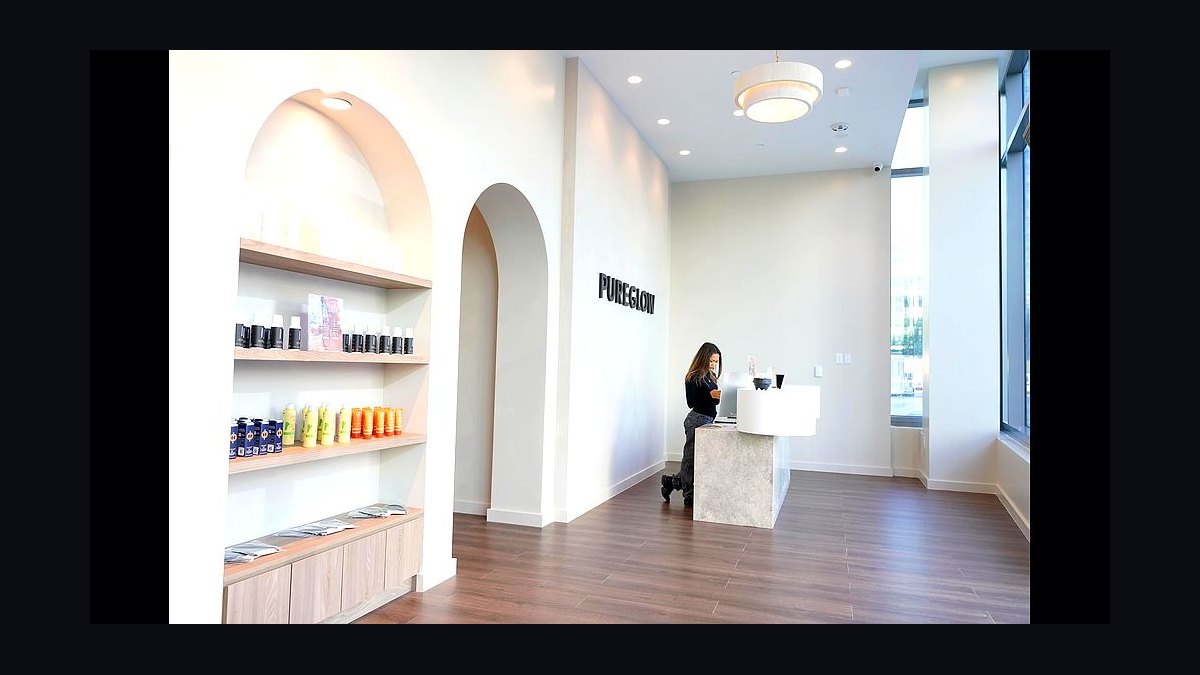
Probably not as a first venture. Buying a Glow Tan–style franchise in 2027 realistically costs $640K–$1.5M all-in, drags roughly 9–12% of revenue in royalty plus marketing, and takes 22–34 months to break even. Open one only if you already run multi-unit retail, control good real estate, and hold $250K–$400K liquid.
The outcome you should expect
Strip away the brochure language and the honest expected outcome of a 2027 tanning-studio franchise looks like this: a total initial investment somewhere between $640,000 and $1,500,000 depending on brand and box size, an average unit volume in the low-to-mid $500Ks once mature, a Year-1 cash flow that lands anywhere from negative $40,000 to positive $60,000, and a cash-on-cash payback stretching four-and-a-half to seven years. That is not a catastrophic outcome. It is also not the outcome most people picture when they imagine owning a tanning salon.
The two public comparables you would actually evaluate frame the range. Glo Tanning's disclosed initial investment sits around $757,000 to $1,478,000 with an average gross revenue near $523,530 across reporting units. Palm Beach Tan's disclosed range runs roughly $639,000 to $1,000,970 with average unit volume near $542,093, against a tanning sub-sector average closer to $462,523. Both brands sit above the sub-sector average, which is the real argument for paying a franchise fee at all. Both also carry ongoing fees — a royalty in the 4–6.5% band and marketing loads of 3% to 5.5% — that consume roughly $60,000 of a $525,000 top line before rent, payroll, or product cost.
The second-order outcome matters more than the first. What you are actually buying is a membership annuity, not a room full of beds. Mature units in this category derive the large majority of revenue from recurring EFT memberships in the $39–$99/month range, and the units that hit their numbers are the ones that built a membership base before opening day, not after. If you cannot see yourself running a subscription business — churn cohorts, dunning on failed cards, win-back campaigns, seasonal pause policies — the operational reality will not match the fantasy.
There is a third outcome worth naming, because it is the most common one nobody underwrites: the sale. A meaningful share of single-unit operators in this category exit within seven years, and a large fraction of those exits clear less than the original invested capital. When you model this deal, model the exit at 2.1–2.8x seller's discretionary earnings, not at a multiple of revenue. A studio doing $525,000 in revenue with $110,000 of SDE is a $230,000–$310,000 business on the open market. Compare that against your $850,000 of invested capital and the picture clarifies fast.
The adjacent read is also instructive. Operators who ran the same math on neighboring boxes — red-light and recovery studios, infrared sauna concepts, pure sunless studios — frequently landed on a different answer with the same real estate, the same landlord, and the same demographic profile. Same 2,000 square feet, different equipment mix, materially different regulatory exposure. Hold that thought; it reappears in the alternatives.
What drives that outcome
Four variables move the answer more than anything else, and three of them are decided before you sign anything.

Total invested capital. Every $100,000 you shave off the build cuts roughly nine months off payback. That is the single highest-leverage number in the deal. The lever is not negotiation with the franchisor — franchise fees are near-fixed at $30,000–$49,500 — it is the build itself and the equipment stack. Tanning and red-light equipment alone runs $185,000–$470,000 new. Secondary-market equipment from brokers commonly trades at 40–55% off MSRP, and beds are durable capital goods with a serviceable aftermarket. A landlord tenant-improvement allowance of $25–$45/sq ft on a 2,000 sq ft box is another $50,000–$90,000 of the same lever, and it is negotiable in a way the FDD is not.
Fee load. A 6% royalty plus a 5.5% combined marketing fee is 11.5% of gross revenue, permanently, at maturity. On $525,000 that is roughly $60,000 a year, or about $420,000 over a seven-year hold. That number should be compared directly against what the brand actually delivers: national ad presence, a functioning membership CRM and EFT billing stack, supplier pricing on lotions and lamps, a site-selection team, and a lease-negotiation desk. Some brands earn it. The test is whether validator franchisees say the marketing fund produces measurable traffic in *their* market, not nationally.
Service mix. UV is the shrinking part of a flat category. Sunless is growing several times faster, red-light therapy faster still, and infrared recovery is in the same growth band. A concept that is 80%+ UV in 2027 is selling into a demographic that has been moving away from it, while carrying regulatory exposure that sunless simply does not have. A mix weighted roughly 45% UV, 35% sunless, 20% recovery hedges the category risk and lifts blended contribution margin, because sunless and red-light are the higher-margin services in the box.
Pre-sale. The gap between operators who hit Item 19 averages and operators who run far below them correlates most tightly with membership pre-sale. Selling several hundred memberships before the doors open converts the brutal first six months from a cash burn into a ramp. It costs a leasing-office table, a local gym partnership, a mall kiosk, and 60 days of hustle.
The diagram is deliberately a gate sequence rather than a scorecard. These conditions are not additive — they are multiplicative. Strong capital with a bad site fails. A great site with a UV-only concept fails slower but still fails. Failing any single gate is a stop, not a deduction.
Benchmarks and realistic ranges
Here is the underwriting sheet, drawn from the disclosed ranges of the two closest public comparables plus independent-operator data for the same NAICS category.
| Line item | Franchised (higher-cost comp) | Franchised (lower-cost comp) | Independent build |
|---|---|---|---|
| Franchise fee | $49,500 | $30,000 | $0 |
| Build-out, 1,800–2,400 sq ft | $310K–$640K | $295K–$510K | $180K–$360K |
| Tanning + red-light equipment | $240K–$470K | $185K–$325K | $140K–$260K |
| Spray booth | $18K–$32K | $16K–$28K | $16K–$28K |
| Opening inventory + retail | $22K–$45K | $18K–$36K | $14K–$30K |
| Working capital, 6 months | $80K–$140K | $65K–$110K | $60K–$120K |
| Signage, POS, training, deposits | $37.5K–$101.5K | $30K–$61K | $30K–$80K |
| Total initial investment | $757K–$1,478K | $639K–$1,001K | $440K–$878K |
| Royalty | 6.5% | 4% → 5% → 6% by year 3 | 0% |
| Marketing fee | 3.0% | 5.5% combined | Self-funded |
| Average unit revenue | ~$523,530 | ~$542,093 | $310K–$520K |
| Mature EBITDA margin | 14–22% | 16–24% | 12–19% |
| Cash-on-cash payback | 4.5–7 years | 4–6 years | 3.5–5 years |
Read the bottom three rows together. The independent column shows lower revenue *and* faster payback, because it removes both the fee drag and roughly $200,000–$400,000 of invested capital. That trade — brand recognition and systems in exchange for nine to eleven points of margin — is the actual decision, and it is a genuinely close call for an experienced operator and a genuinely bad one for a novice who has never built a membership funnel.

Operating benchmarks to underwrite against. Rent should land at or below roughly 8.5% of revenue; north of that, the fee load plus occupancy squeezes the model past the point where good operations can rescue it. In a $525,000 unit that means about $44,000 of annual rent, which on 2,000 square feet is roughly $22/sq ft NNN — comfortable in a suburban strip center, impossible in a premium lifestyle center. Payroll typically runs 22–28% of revenue for a studio staffed with a manager and four to six part-time associates. Product COGS on lotion and retail sits in the 30–40% range against retail revenue, and retail should contribute meaningfully — a studio with negligible lotion sales is leaving one of its best margin lines on the table.
Ramp benchmarks. A realistic curve is a soft open around month six with roughly $20K–$25K in monthly recurring revenue and a couple hundred members, $32K–$45K MRR and 425–650 members by month twelve, and a run rate near the Item 19 average with breakeven crossed somewhere in months 22–34. If your pro forma shows breakeven at month 12, you have built a bull case and labeled it a base case.
Financing benchmarks. SBA 7(a) and 504 remain the standard capital stack — 10 to 25 year amortization, floating at a spread over prime. Underwriting for this category tightened over the past two years, and approval rates for tanning concepts have fallen. Plan for a larger equity injection than the brochure suggests, and plan for the lender to want the equipment appraised.
Scenario discipline. Build the 36-month model three ways: bear at roughly 30% below the disclosed average, base at the disclosed average, bull at 25% above. If bear-case Year-2 cash flow is below zero, the deal does not clear. That single rule kills most of the deals that later show up on the distressed market.
Risks, edge cases, and failure modes
Regulatory compression on the UV side. Nearly two dozen states prohibit indoor UV tanning for minors, and additional state bills periodically propose extending age restrictions further. Any P&L weighted heavily toward UV carries a legislative tail risk that is asymmetric — the rules only ever move one direction. Sunless and red-light carry none of it. This is not a reason to avoid the category; it is a reason to weight the mix.
Over-storing. The typical tanning DMA carries more competing locations than it did before the last industry contraction. Competitor density within 1.5 miles is a harder constraint than demographics — a perfect income and age profile with a Palm Beach Tan across the parking lot is a worse site than a mediocre profile with clear air. Drive the trade area yourself at 6pm on a Tuesday in March. Count cars, not just addresses.
Undercapitalization. The most predictable failure mode in this category is an operator who funds the build and not the ramp. Breakeven at month 22–34 means 22–34 months of negative or thin cash flow, and the operators who sell into distress overwhelmingly do so around month 18 — right before the model would have turned. Post-opening liquidity reserve of $150,000, uncommitted and unpledged to construction, is the difference between the two outcomes. Treat it as part of Item 7 even though the FDD does not.
Insurance and utility creep. Commercial property and liability premiums for tanning operators rose sharply through 2026, and this is an electricity-intensive business — high-pressure beds draw serious load, and a hot-summer utility spike lands exactly when volume is highest. Model insurance and utilities with escalators, not as flat lines.
Item 19 opacity. When a franchisor publishes an average unit volume but declines to publish the full performance distribution, that is a diligence red flag, not a neutral disclosure choice. An average of $523,530 is consistent with a tight cluster and also consistent with a handful of strong flagship units carrying a long tail of weak ones. The distribution is what you need. If the franchisor will not publish it, you must reconstruct it through validator calls.
The validator-call failure mode. Most buyers call four or five franchisees, all from the front of the Item 20 list, and hear what they expect to hear. Call at least a dozen per brand, including terminated and transferred operators. Ask three questions: what was actual Year-1 revenue against Item 19, how long to breakeven, and would you buy this franchise again. A "would not buy again" rate above roughly 15% is a hard stop. So is a year-over-year unit termination rate above roughly 4%.
Fragmented decisions. Signing the franchise agreement in January, the lease in April, and locking the build in July is how operators overpay. Each decision quietly removes leverage from the next one. Once you have signed the franchise agreement, the landlord knows you must open somewhere; once you have signed the lease, the general contractor knows you must build. Sequence them into a single week or keep them all conditional on each other.
Adjacent-category substitution risk. The same customer who buys a tanning membership is also being sold recovery, sauna, cold plunge, cryo, and med-spa services out of similar retail boxes at similar price points. Wallet share for "personal wellness recurring spend" is contested by concepts with better regulatory profiles and higher average unit volumes. That competitive pressure comes from outside the tanning category entirely, and it will not show up in a tanning-category market study.
A practical rollout plan

If you clear the gates and decide to proceed, run a disciplined 90-day diligence sprint before a dollar leaves your account, then a staged build.
Days 1–10 — pull the documents. Request current FDDs directly from every franchisor on your list. Read Item 7 (investment), Item 11 (franchisor obligations — what you actually get for the marketing fee), Item 19 (financial performance), Item 20 (unit counts, transfers, terminations, and the franchisee contact list), and Item 21 (audited financials). Build a side-by-side. Franchisor Item 21 financials matter more than people realize: a franchisor with thin equity cannot fund the support you are paying for.
Days 11–25 — validator calls. Twelve-plus per brand. Take notes verbatim. Ask specifically about ramp, marketing-fund effectiveness in their market, equipment downtime and lamp replacement cycles, and how the franchisor handled their worst month.
Days 26–45 — site work. Pull demographic data on every candidate site. Target median household income around $75,000+, a meaningful 24–44 female share, daytime population above roughly 18,000 within three miles, and no direct competitor inside 1.5 miles. Get the traffic count from the municipality, not the broker's flyer.
Days 46–60 — model it. Bear, base, bull, 36 months, monthly granularity. Include the membership cohort curve explicitly: new joins, churn rate, and freeze/pause seasonality. Tanning is seasonal — the winter-through-spring build is the revenue engine and late summer is the trough. A model that runs on flat monthly revenue is wrong on both the peak and the valley.
Days 61–75 — capital stack. Lock SBA financing and confirm the $150,000 post-opening reserve is real, liquid, and not double-counted against construction draws. Get the equipment quote in writing with delivery dates; lead times on beds and booths can push an opening a full season.
Days 76–90 — decide. LOI on the box, the lease, and the franchise agreement together. If any leg is shaky, kill it and restart at Day 1 in the next market. Walking is a legitimate outcome of a well-run diligence process, not a failure of it.
Alternatives worth pricing before you commit. Build independently at $440K–$878K and keep nine to eleven points of margin, trading brand pull for capital efficiency. Acquire a distressed existing salon at roughly 2.1–2.8x SDE — buying revenue is almost always cheaper than building it. Run a pure sunless studio at a materially lower entry cost, growing into the demographic instead of fighting it. Or repurpose the same retail box entirely into red-light and recovery, where average unit volumes run higher and UV regulation does not apply. And keep "walk" on the list — the opportunity cost of $400,000 liquid against a seven-year payback is a real, quantifiable alternative, not an absence of one.
Related questions
Is buying an existing tanning salon better than opening a new one?
Usually yes on risk-adjusted return. Acquiring at 2.1–2.8x SDE buys proven revenue, an existing membership base, and installed equipment at a fraction of ground-up cost. The trade-off is inheriting deferred maintenance, aging beds, and whatever reputation the prior operator built.
How much of a tanning studio's revenue comes from memberships?
In mature units, recurring EFT memberships typically drive the substantial majority of revenue — commonly cited in the 65–78% range — with retail lotion sales and single-session walk-ins making up the balance. Membership count, not foot traffic, is the metric to manage weekly.
Does a franchise brand actually help in a small market?
Less than in a metro. National marketing spend has little reach in a town of 30,000, where word of mouth and a good local Facebook presence do most of the work. Small markets are where independent builds most often outperform franchised ones on return.
What is the biggest single mistake first-time owners make?
Opening without a pre-sold membership base. Operators who skip pre-sale routinely run far below system averages in Year 1 and burn the reserve that was supposed to carry them to breakeven at month 24.
Should the concept include red-light therapy and sauna?
Yes, in most 2027 builds. Both are higher-margin than UV, carry no age-restriction exposure, and pull a broader demographic into the same box. They also make the studio saleable to a buyer who does not want a UV-only asset.
FAQ
What total investment should I plan for?
Using the closest disclosed comparables, budget $640,000 to $1,500,000 all-in depending on brand, box size, and equipment mix. Liquid cash requirement is typically $250,000 to $400,000, plus a separate $150,000 post-opening reserve that most buyers forget to fund. An independent build of the same concept lands closer to $440,000–$878,000.
How long until I break even and get my money back?
Breakeven typically arrives between month 22 and month 34. Cash-on-cash payback — cumulative cash flow equaling initial investment — runs four to seven years, faster on the lower-cost builds. Year-1 cash flow realistically ranges from negative $40,000 to positive $60,000, which is why the reserve matters.
What do the ongoing fees actually cost me?
Expect a royalty in the 4–6.5% band plus marketing fees of 3–5.5%, combining to roughly 9–12% of gross revenue at maturity. On a $525,000 unit that is about $60,000 annually, taken off the top before rent, payroll, or product cost. Over a seven-year hold, roughly $420,000.
Is the category growing?
The overall tanning category is close to flat, growing under 1% annually, but the mix is fracturing. UV is contracting while sunless, red-light therapy, and infrared recovery grow several times faster. Any viable new build in 2027 has to be weighted toward the growing sub-segments rather than the shrinking one.
Can I open one with no retail or franchise experience?
You can, but the data argues against it. This is a membership-retention business with a 24-to-34-month ramp, seasonal revenue, and a meaningful fixed-fee load. First-time operators putting their entire net worth into a single seven-figure build are the population that shows up on the distressed-sale market around month 18.
What kind of site should I be looking for?
A 1,800–2,400 square foot endcap in a grocery-anchored center, median household income around $75,000+, strong daytime population within three miles, high car count, and no direct competitor within 1.5 miles. Rent at or below roughly 8.5% of projected revenue is the constraint that keeps the model solvent.
Sources
- https://www.ibisworld.com/united-states/market-research-reports/tanning-salons-industry/
- https://www.ftc.gov/business-guidance/resources/franchise-rule-compliance-guide
- https://www.sba.gov/funding-programs/loans/7a-loans
- https://www.sba.gov/funding-programs/loans/504-loans
- https://www.bizbuysell.com/insight-report/
- https://www.fda.gov/radiation-emitting-products/tanning/tanning-products
- https://www.cdc.gov/skin-cancer/risk-factors/indoor-tanning.html
- https://www.franchise.org/
- https://www.census.gov/programs-surveys/economic-census.html
- https://www.bls.gov/oes/current/naics4_812100.htm
Related on PULSE
This page will be disappearing soon. Save it to your device for $1 — or read it free while it is here.
@Kory-White- · if Venmo asks, the last 4 of my number are 2012
This page is gone.
This one is off the shelf now. $1 keeps it on your phone for good — the whole page, pictures and diagrams included.
 franchiseShould I open or buy a Kona Ice franchise in 2027?
 franchiseShould I open or buy a Planet Fitness franchise in 2027?
 franchiseShould I open or buy a KinderCare franchise in 2027?
 franchiseShould I open or buy a Bojangles franchise in 2027?
 franchiseShould I open or buy a Smoothie King franchise in 2027?
 franchiseShould I open or buy a Firehouse Subs franchise in 2027?
 franchiseShould I open or buy a Meineke franchise in 2027?
 franchiseShould I open or buy a Wendy's franchise in 2027?
 franchiseShould I open or buy a Drybar franchise in 2027?
 franchiseShould I open or buy a Domino's franchise in 2027?