


Should I open or buy an Elements Massage franchise in 2027?
Quality
Certified
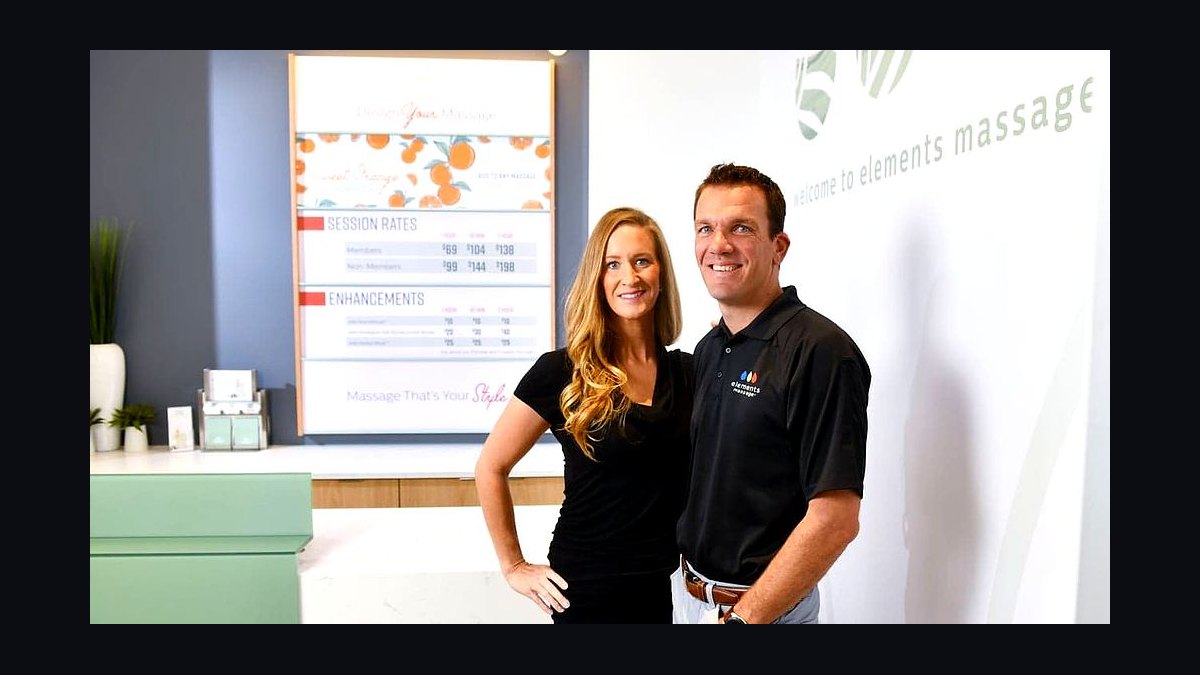
Only if you can commit $650K–$750K in liquid capital, an owner-operator's schedule for eighteen months, and a suburban trade area above $90K median household income with fewer than two competing membership chains within three miles. Otherwise, buying a seasoned existing studio with 400-plus active members beats opening a new Elements Massage franchise from scratch.
Opening new versus buying an existing studio
The question hides two very different businesses wearing the same sign. Opening a new Elements location means you sign a franchise agreement, pay the $40,000 initial fee, choose a site subject to franchisor approval, and then spend roughly sixteen weeks and $285,000–$405,000 turning raw retail shell into eight to ten treatment rooms. Total initial investment per the 2026 Item 7 disclosure lands between roughly $515,000 and $730,000. Everything after the ribbon-cutting is a membership-acquisition race: you are trying to convert an empty appointment grid into six hundred recurring members before your working capital runs out.
Buying an existing studio inverts the risk profile entirely. You are purchasing a revenue stream that already exists — a member file, a therapist roster, a lease with known terms, a Google review history, and a trailing profit-and-loss statement you can actually diligence. The seller wants a multiple of seller's discretionary earnings. In service-franchise resale markets, that multiple commonly sits in the low-to-mid single digits, and a distressed studio can transfer for well under replacement cost. The tradeoff is that you inherit whatever is broken: a burned-out therapist team, a member base that has been discount-conditioned into $59 pricing it will resist leaving, deferred maintenance on tables and HVAC, or a location that was never right in the first place.
There is a third path most prospects never seriously price, and it deserves a seat at the table: buying a profitable independent membership studio and skipping the franchise system entirely. You forfeit the brand, the training curriculum, the negotiated vendor pricing, and the booking-and-membership technology stack. In exchange you keep the six percent royalty and the two percent brand fund — eight points of gross revenue that, on a studio doing $900,000, is roughly $72,000 a year that stays in your pocket forever. Whether that trade is smart depends almost entirely on whether you already know how to run a service business. Franchise systems sell competence to people who lack it. If you have it, you are paying rent on something you already own.
A fourth variation is worth naming because it changes the math more than anything else on this list: buying or opening more than one unit. Single-unit ownership in this category is structurally disadvantaged. Your general manager's salary, your bookkeeping, your regional marketing spend, and your own attention all amortize across exactly one P&L. Multi-unit operators spread a district manager across two or three studios, negotiate better local media, cross-schedule therapists to cover call-outs, and reach the same absolute cash flow with meaningfully less per-unit fragility. Most franchisors will quietly tell you the same thing: the healthiest operators in the system are rarely the ones with a single location.
The decision framework, in order of what kills deals fastest
Run the disqualifiers first. Capital, trade area, and lifestyle tolerance are the three gates that eliminate most candidates, and each is cheap to test relative to the cost of discovering it after signing.
Capital comes first because it is binary. You need the Item 7 range plus a working-capital cushion that the Item 7 range does not fully contemplate. Months four through nine are the burn window — build-out is paid, rent is due, therapists are on payroll, and membership count is still climbing toward critical mass. Budget an additional cushion beyond the disclosed estimate specifically for that stretch. Lenders in this category typically look for a credit score in the high 600s or better, meaningful liquid reserves, and a net worth well above the project cost. If SBA 7(a) financing is your plan, price it at current rates rather than the rates you remember from three years ago; debt service on four hundred to five hundred fifty thousand dollars at double-digit interest is a real monthly line item that has to clear before you take a dollar.
Trade area is second because it is the variable you cannot fix later. The demographic profile that works is unglamorous and specific: dense suburban population within a three-mile radius, median household income comfortably above the national figure, a high concentration of dual-income households, and — critically — not already carved up by two or three competing membership chains. Massage Envy, Hand & Stone, and MassageLuXe all sell essentially the same recurring-membership proposition. When three of them share a five-mile radius, the marginal customer has already been acquired by someone else, and your cost per membership climbs from a healthy double-digit figure into a range that quietly makes the unit economics impossible. No amount of operational excellence rescues a bad site.
Lifestyle tolerance is third and the one people lie to themselves about. There is no functioning semi-absentee version of this business in year one, whatever the recruiting deck implies. You will be in the studio interviewing therapists, covering the front desk when someone no-shows, calling members who are about to cancel, and rebuilding the schedule grid when a key therapist leaves. Owners who visit weekly and delegate the rest fail at a substantially higher rate than owners who are physically present. If you cannot give it fifty-plus hours a week for the first year and a half, buy an existing studio with a functioning GM already in seat, or pass.

mermaid flowchart LR A[Weeks 1-2 self qualification] --> B[Weeks 3-4 score five trade areas] B --> C[Weeks 5-6 franchise attorney reads FDD] C --> D[Weeks 7-8 call 15-20 franchisees incl former] D --> E[Weeks 9-10 discovery day as evaluator] E --> F{Validation clears?} F -->|No| G[Walk or pivot to acquisition] F -->|Yes| H[Weeks 11-13 financing and site lock] H --> I[Sign agreement and begin build] I --> J[16 week build with 8 week pre-sale overlap] J --> K[Recruit therapists ahead of demand] K --> L[Soft open then grand open] L --> M[Month 6 checkpoint on active members] M --> N[Month 18 breakeven and payback tracking] </parameter> </invoke>
The month-six checkpoint in that diagram is the one to take seriously. Membership count at six months is the earliest reliable predictor of whether the studio reaches sustainable volume. A studio well behind plan at that point does not usually drift back on its own — it requires a deliberate intervention in marketing, in pricing, or in the therapist roster, and the intervention works far better in month seven than in month fifteen.
Related questions
Is buying an existing Elements studio safer than opening a new one?
Usually, yes — you buy proven revenue, an existing member file, and a trained roster instead of an empty grid. The risk shifts from execution to diligence: verify member counts, churn, therapist tenure, lease terms, and equipment condition before agreeing to any multiple of earnings.
How many locations do I need to make this worth doing?

Two or three units is where the economics genuinely improve. A shared general manager, pooled marketing, cross-covered therapist schedules, and one bookkeeping function spread fixed overhead across more revenue, compressing payback meaningfully versus single-unit ownership.
What single metric predicts studio failure earliest?
Therapist turnover. Members bond with individual therapists, so departures drag membership cancellations behind them on a roughly ninety-day lag. Turnover above the system norm is a leading indicator of revenue decline before it ever appears in the monthly numbers.
Can I run this while keeping a full-time job?
Not in year one of a new build. An acquisition with a competent general manager already in seat is the only realistic version, and even then expect substantial weekly involvement in hiring, membership retention, and local marketing decisions.
What happens if a competing chain opens nearby after I sign?
Your protected territory in the franchise agreement covers same-brand encroachment only, not competitors. Model your trade area assuming a rival membership chain arrives within three years, and choose sites with enough population density to support two operators.
FAQ
How much liquid capital do I realistically need?
Plan for the full disclosed investment range plus a separate working-capital reserve for months four through nine, when build-out is paid but membership revenue has not yet reached critical mass. Practically that means several hundred thousand dollars in liquid funds beyond financing, along with a net worth and credit profile that clears typical SBA lending standards.
When does a new studio break even?

Most reach operating breakeven during their second year, with the timing driven almost entirely by how quickly active membership climbs. Studios that hit strong membership counts by month six get there fastest; studios still well behind plan at that checkpoint usually need a deliberate intervention rather than more patience.
What are the ongoing fees?
A six percent royalty on gross revenue, a two percent contribution to the brand marketing fund, and a required local advertising minimum on top of that. Together those represent roughly eight percent of gross before any operating expense is paid, which is why average unit volume has to clear a meaningful threshold before owner cash flow becomes attractive.
Why does therapist pay matter so much?
Licensed massage therapist compensation runs roughly forty to forty-five percent of gross revenue, making it the single largest line on the statement. Effective hourly rates have risen substantially as demand outpaced the licensing pipeline, so owners who refuse to pay competitively lose their roster to nearby competitors and watch the appointment grid collapse within a quarter.
How does Elements compare with Hand & Stone or Massage Envy?
Hand & Stone typically posts higher unit volumes on the strength of its facial-services overlay, at the cost of higher build-out and a second licensed discipline to manage. Massage Envy brings the largest footprint and the most brand recognition, alongside the challenges of a mature system. Elements sits between them on scale with a comparatively simple single-service operating model.
Is there a version of this that works for a passive investor?
Not honestly. Owner-operated studios materially outperform absentee ones, and the gap traces directly to hiring, retention, and local marketing decisions that require presence. Investors seeking passive exposure to the category are generally better served buying an established multi-unit operation with proven management already in place.
Sources
- https://www.ftc.gov/business-guidance/resources/consumers-guide-buying-franchise
- https://www.franchise.org/
- https://www.bls.gov/ooh/healthcare/massage-therapists.htm
- https://www.sba.gov/funding-programs/loans/7a-loans
- https://www.ibisworld.com/united-states/market-research-reports/massage-services-industry/
- https://globalwellnessinstitute.org/industry-research/
- https://www.amtamassage.org/
- https://www.ftc.gov/legal-library/browse/rules/franchise-rule
- https://www.census.gov/programs-surveys/acs
Related on PULSE
This page will be disappearing soon. Save it to your device for $1 — or read it free while it is here.
@Kory-White- · if Venmo asks, the last 4 of my number are 2012
This page is gone.
This one is off the shelf now. $1 keeps it on your phone for good — the whole page, pictures and diagrams included.
 franchiseShould I open or buy a Cook Out franchise in 2027?
 franchiseShould I open or buy an Orangetheory Fitness franchise in 2027?
 franchiseShould I open or buy a Mac Tools franchise in 2027?
 franchiseShould I open or buy a Cold Stone Creamery franchise in 2027?
 franchiseShould I open or buy a McAlister's Deli franchise in 2027?
 franchiseShould I open or buy a Merry Maids franchise in 2027?
 franchiseShould I open or buy a Dunkin' franchise in 2027?
 franchiseShould I open or buy a Chipotle franchise in 2027?
 franchiseShould I open or buy a Marco's Pizza franchise in 2027?
 franchiseShould I open or buy a Jamba franchise in 2027?