


Should I open or buy a Cost Cutters franchise in 2027?
Quality
Certified

Probably not as a first business. A single Cost Cutters unit costs roughly $176K–$323K all-in, generates $247K–$279K in average revenue, and returns only $30K–$42K in pre-tax cash flow — a job, not a return. Payback runs 10–12 years inside a shrinking Regis system. Buy an existing unit or pick a higher-volume concept instead.
What a Cost Cutters franchise actually is, and why the label matters
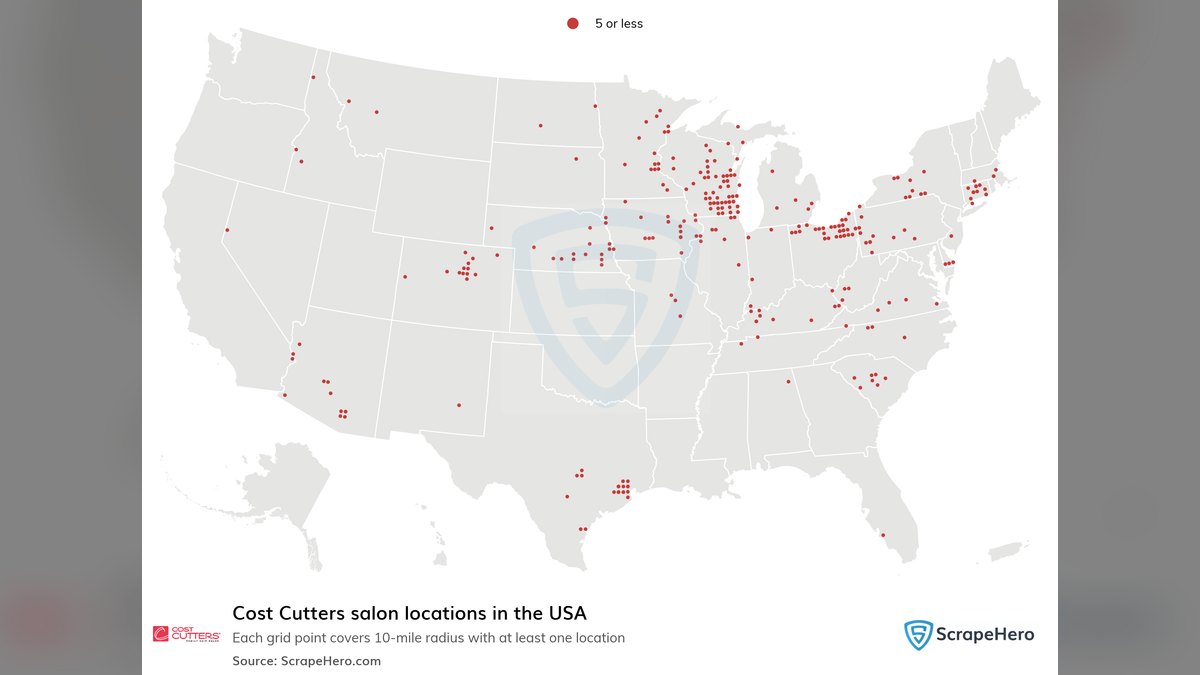
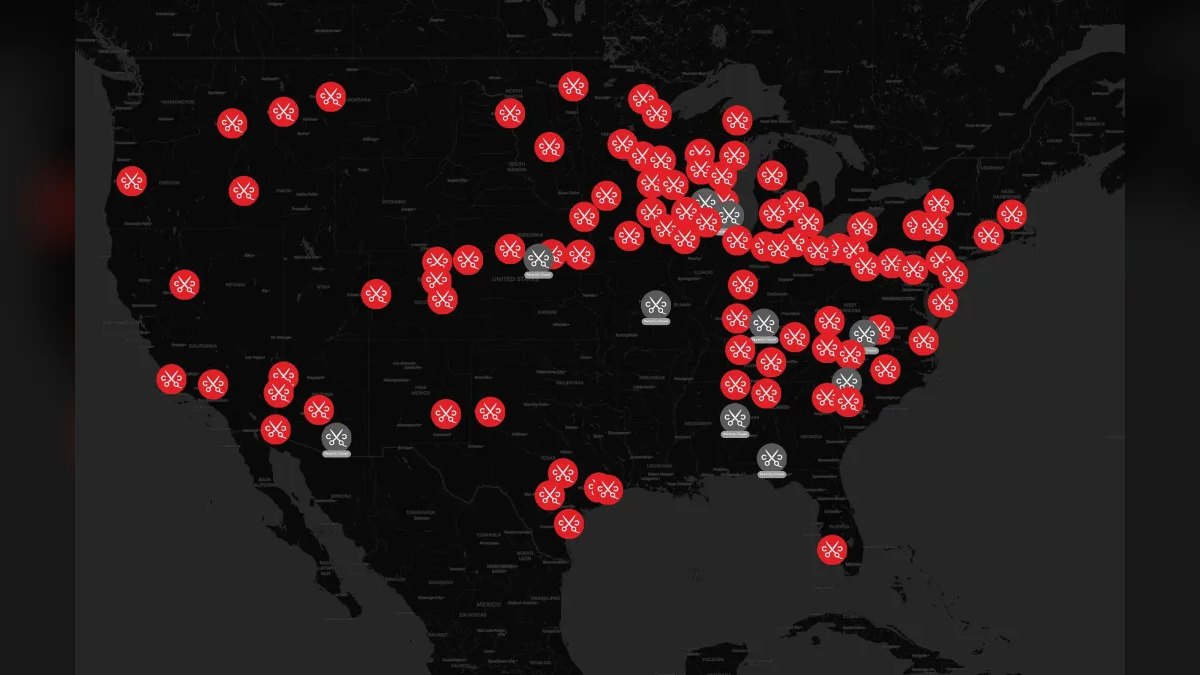
Cost Cutters is a value-segment hair-care brand owned by Regis Corporation, the same parent behind Supercuts, SmartStyle, and several other salon banners. That ownership fact is not trivia — it shapes everything downstream. When you sign a Cost Cutters agreement you are not buying into a standalone concept with a dedicated growth team; you are buying one banner inside a multi-brand portfolio that has spent the last several fiscal years shrinking on purpose. Regis moved to a fully franchised model, sold or closed its company-owned salons, and has been letting underperforming legacy locations roll off lease rather than renewing them. The company disclosed roughly 150 net franchise closures across its system in the first nine months of fiscal 2026, following heavier closure counts in the two prior fiscal years. You should read that as a deliberate portfolio cleanup, not a collapse — but either way, you are buying into a system whose unit count is contracting, not expanding.
Why does the label matter to your economics? Because a franchise's value to a franchisee is basically three things: a brand customers recognize, a supply and systems advantage you couldn't build alone, and an ad fund with enough scale to actually move traffic. A contracting system weakens all three. Fewer units means less absolute ad-fund dollars for national and regional media. Fewer units means less negotiating leverage with color and product vendors. And in the value-haircut category specifically, brand recognition is worth far less than in, say, quick-service food, because customers pick a salon on drive-time and wait-time, not on the sign. Somebody choosing between Cost Cutters and the independent two doors down is comparing "is there a chair open right now" and "is it $22 or $30," not brand heritage.
The service model is walk-in-forward, appointment-friendly, family-oriented. The average ticket sits in the low-to-mid $20s, meaningfully below the independent salon average, and the revenue mix is overwhelmingly service with a thin retail attachment. That mix is the core structural problem: haircuts are a labor-passthrough business. Every dollar of revenue requires a licensed human to be standing there when the customer walks in. There is no operating leverage the way there is in a business with product margin, franchise-wide pricing power, or fixed-cost absorption. You cannot serve 20% more customers without paying for 20% more chair hours, and you cannot raise price much without losing the exact value-seeking customer the brand was built to capture.
The comparison that clarifies it: a franchise like Sport Clips runs a higher ticket with a sports-bar experience layer and clears meaningfully higher average unit volume on similar or somewhat higher capital. A suite-rental concept like Sola Salons flips the model entirely — you become a landlord collecting weekly rent from independent stylists and never touch labor, turnover, or client retention. Cost Cutters sits in the hardest spot: full operating responsibility, full labor exposure, value pricing, and a royalty stack on top.
The step-by-step process from inquiry to open doors
The path from "I'm curious" to a salon that is actually open follows a predictable sequence, and the discipline is in treating each stage as a gate you can fail rather than a form to fill out.
Stage one — inquiry and qualification. You submit interest to Regis franchise development. They screen on liquid capital and net worth. Published requirements sit around $250K–$350K liquid and $1.0M–$1.2M net worth. If you are borrowing the liquid portion, say so now; discovering at underwriting that your "liquid" was a HELOC on a house whose value dropped is how deals die at week ten.
Stage two — the Franchise Disclosure Document. Federal rule requires the franchisor to give you the FDD at least 14 calendar days before you sign anything or pay any money. Read Item 5 (fees), Item 6 (ongoing royalty and ad fund), Item 7 (total investment range), Item 19 (financial performance representations), Item 20 (outlet counts, transfers, terminations, and the franchisee contact list), and Item 21 (audited financials). Item 20 is where the truth about a contracting system lives — it shows openings, closures, terminations, and non-renewals year by year. If closures exceed openings for multiple consecutive years, that is the single most important number on the page.
Stage three — franchisee validation. Call franchisees off the Item 20 list. Not five. Fifteen, minimum, and include at least three from the terminated/transferred list if contact info is available. Ask the same three questions every time so you can compare answers: what is your actual annual revenue, what is your stylist turnover rate, and would you buy another unit today at today's terms. That last question is the single highest-signal data point in franchise diligence. If fewer than half say yes, you have your answer.
Stage four — territory and site. Value haircut is a drive-time business. The trade area is roughly a three-to-five-minute drive in dense suburbs, a bit wider in exurbs. You need co-tenancy that generates repeat weekly traffic — a grocery anchor is the classic. You need visible signage from the road and easy in-and-out parking. A location tucked behind a building on the wrong side of a divided highway will underperform a mediocre location with great visibility, every time.
Stage five — lease and build. Negotiate the lease with the same seriousness as the franchise agreement. Push for tenant improvement allowance, a rent abatement period covering build-out plus ramp, a co-tenancy clause tied to the anchor, and an exclusivity clause preventing the landlord from leasing to a competing hair concept in the same center. Build-out for a value salon typically runs eight to fourteen weeks depending on permitting, and permitting is the variable that blows schedules — plumbing for shampoo bowls triggers inspections that a dry retail suite would not.
Stage six — hiring and training. Start recruiting stylists before the build finishes. In a tight cosmetology labor market, you cannot open with an empty roster and expect to fill it in week two. Attend local cosmetology school graduations. Offer a guaranteed hourly floor for the first 90 days so a new hire is not gambling on your walk-in volume.
Stage seven — grand opening and ramp. Expect a slow first quarter. A new value salon builds its book one customer at a time; there is no reservation backlog like a restaurant opening. Budget working capital assuming you do not hit run-rate revenue until month six to nine.
Costs, timelines, and the ranges that decide the deal
The published total investment range for a single unit is roughly $176,000 to $323,000. That spread is wide for a reason, and understanding which end you land on is most of the underwriting work.
The initial franchise fee occupies a band from roughly $39,500 to $99,500 depending on market, development commitment, and whether you are taking a single unit or signing a multi-unit development agreement. Additional units beyond a threshold typically carry a reduced per-unit fee. Build-out and equipment is the largest single line — shampoo bowls and plumbing, styling stations, mirrors, flooring, HVAC modifications, signage, point-of-sale hardware, and the initial product inventory. In a second-generation salon space where the plumbing already exists, you can land near the bottom of the range. In raw vanilla shell in a high-cost construction market, you will find the top.
Working capital is the line first-timers systematically underfund. Thirty to fifty thousand dollars sounds like plenty until you are three months in at half of projected revenue, still paying full rent and a full stylist roster because you cannot staff a salon at 40% coverage and expect walk-ins to wait. Budget six months of full fixed costs beyond the build number, not three.
On the ongoing side: royalty starts around 4% of gross and steps up to roughly 6% after the first year, with a weekly minimum. The brand or ad fund fee runs another 4%. So after year one you are sending roughly a tenth of every dollar of revenue to the franchisor before you have paid a stylist, a landlord, or yourself.
Here is where the arithmetic gets uncomfortable. Take a unit at the brand's average revenue of roughly $250,000. Stylist labor at value salons now consumes something like 45–50% of revenue — that ratio has expanded several points since 2023 as wages climbed and the cosmetologist labor pool stayed flat. Call it $120,000. Rent and CAM in a suburban strip center at 9–12% of revenue is $22,000–$30,000. Product cost of goods, 7–10%, is another $20,000. Royalty and ad fund combined at 10% is $25,000. Remaining operating expenses — insurance, utilities, POS fees, credit card processing, supplies, repairs, local marketing — take 8–12%, call it $25,000. Add it up and you are left with something in the $30,000–$40,000 range as pre-tax operating profit.
Now subtract what you would have to pay a manager to run the salon if you weren't there — realistically $55,000–$70,000 in most markets. The unit is negative. That is the whole thesis in one line: at average revenue, a single Cost Cutters is not a business that throws off cash to an absentee owner. It is a job that pays somewhat less than the market rate for the job, plus whatever equity value accrues.

Timelines: expect four to nine months from signed agreement to open doors, depending on site availability and permitting. Expect breakeven — meaning the unit covers all costs including debt service — somewhere in year three to four. Expect full recovery of invested capital in the ten-to-twelve-year band at average performance. Those numbers improve materially if you are a licensed cosmetologist working the chair, because you reclaim a large slice of that labor line as personal income rather than paying it out.
Financing changes the picture again. A typical SBA 7(a) on a $300K project amortized over ten years at prevailing rates runs somewhere near $3,800–$4,200 a month, or roughly $46,000–$50,000 annually in debt service. Compare that against the $30,000–$40,000 in operating profit and the gap is obvious. SBA lenders underwrite to a debt service coverage ratio of 1.25x; a unit at average brand revenue does not clear that on its own. Which means either you inject more equity, you personally guarantee and subsidize from other income, or you buy at a revenue level well above the brand average.
Where prospective owners get this wrong
Treating the brand average as your forecast. Item 19 averages are pulled from units open a full year, which structurally excludes the ones that failed early. Averages also hide distribution. If the brand average is $250K, the bottom third is materially below that — likely in the $150K–$180K band — and those units are underwater at a full-cost build. Model your deal at the bottom-third number and see whether it survives. If it only works at the average, you have built a plan that fails half the time.
Underwriting on revenue instead of contribution. New owners fixate on top-line because it's the number the franchisor leads with. But in labor-passthrough businesses, the only number that matters is what's left after variable cost. A salon doing $300K at 52% labor is worse off than one doing $240K at 44%. Ask franchisees for their labor percentage, not their revenue.
Assuming absentee ownership works. It very rarely does in this category. Value salons run on stylist retention and stylist retention runs on the owner's relationship with the staff. Turnover in the value segment is brutal — well over half the roster annually is normal, and it can approach full replacement. Every departure costs you the client book that stylist carried, plus recruiting time, plus training ramp. A hired manager without ownership stakes does not fight that fight the way an owner does, and the manager's salary eats the entire margin anyway.
Ignoring the independent competitor. The majority of U.S. hair salon revenue still flows to independents and chair-renters, not to chains. An independent operator two doors down pays no royalty and no ad fund — a 10% structural cost advantage they can convert directly into lower price, higher stylist pay, or both. In a market where independents have established client books going back a decade, the franchise brand premium is close to zero and you are competing with a 10-point cost handicap.
Signing a lease longer than the ramp can support. A ten-year lease with personal guarantee on a unit that might not clear breakeven until year four is a large asymmetric bet. Negotiate a break option, a co-tenancy out, or at minimum a burn-down on the personal guarantee after a performance period.
Skipping the renewal-terms conversation. Franchise agreements in this category typically run ten years with a renewal option at then-current terms. "Then-current" means the royalty you renew into is whatever the franchisor charges new franchisees in 2037, not what you signed in 2027. Negotiate a cap in writing before you sign, when you have leverage. After you have signed, you have none.
Buying into a territory that is already served. If there is a Great Clips, a Supercuts, and two independents within your three-minute drive time, the market is not short of chairs. Value haircut demand is fairly fixed per household; you are not creating demand, you are splitting it. New entry into a saturated trade area is how a well-run operator still ends up in the bottom third.
Decision framework: when to open, when to buy, when to walk
The decision is not binary between "Cost Cutters" and "nothing." It is a fork with four real branches, and the right branch depends almost entirely on what you bring to the table.
Branch one — you already operate salons. If you run three or more units in this category under any banner, adding a Cost Cutters can work, because your incremental unit carries near-zero incremental general and administrative cost. Your payroll processing, recruiting pipeline, supply relationships, and district manager already exist. The marginal unit only has to cover its own four walls, which moves the effective margin up several hundred basis points. This is the strongest version of the yes case.
Branch two — you are a licensed stylist who will work the chair. If you are behind the chair 30-plus hours a week, you are simultaneously the owner and the highest-productivity employee. You reclaim a large chunk of the labor line as personal income, and combined wage-plus-profit can land in a genuinely respectable range on a single unit. The trade-off is honest: you have bought yourself a demanding job with capital risk attached. But it is a job with equity, and the equity is real if you build a transferable client book and a stable roster.
Branch three — buy an existing unit rather than build. Profitable existing salons in this category trade at low multiples of seller's discretionary earnings — commonly in the two-to-three-times band. That means you can often acquire a unit already producing cash for meaningfully less than the cost of a new build, with a proven revenue history, an existing client book, a trained roster, and no ramp period. The diligence shifts: you are now underwriting why the seller is leaving, whether the top stylists will stay post-close, and whether the lease has enough term left. But structurally, buying cash flow beats building it in a business with a ten-plus-year payback on new construction.
Branch four — pick a different concept entirely. If your goal is return on capital rather than owning a salon specifically, the adjacent options are stronger. A higher-ticket haircut concept clears materially better unit volume on comparable capital. A suite-rental model converts you from operator to landlord — you collect weekly rent from independent stylists, carry no stylist labor, no turnover exposure, and no client-retention risk, at the cost of upside if the location booms. An independent salon skips the initial fee and the ongoing 10% royalty-and-ad stack, which is roughly $25,000 a year you keep, in exchange for building your own brand, systems, and marketing from zero — which for an experienced operator is often the better trade.
There is also a low-capital entry worth naming: mobile or in-home barbering. Five to fifteen thousand dollars all-in, very high margins because there is no rent and no roster, and it builds the client book and cash reserve that can fund a real location later without a personal guarantee on a $300K build.
Adjacent moves that change the answer

The question "should I open a Cost Cutters" is often standing in for a broader one: how do I put $250K to work in a small business I can actually run? Widening the frame changes what a reasonable answer looks like.
Stack services on the same footprint. A value salon's fixed cost is the rent and the buildout. Anything that raises revenue per square foot without raising rent improves the whole model. Retail attachment is the obvious lever — product sales at strong units run several points higher as a share of revenue than at weak ones, and product carries far better margin than a haircut. The difference is almost entirely training: stylists who are taught to recommend, and who are compensated on it, sell product; stylists who are not, don't. Adding $15K–$30K of high-margin retail to a unit is a meaningful percentage change to owner cash flow at these margins.
Extend hours rather than adding units. Value salons frequently under-utilize early morning and late evening. If your fixed costs are already paid by the daytime block, incremental evening hours are close to pure contribution — provided you can staff them without paying a premium that eats the gain. This is the cheapest capacity expansion available and it requires zero capital.

Think about the exit before the entrance. Small service businesses trade on seller's discretionary earnings, and the multiple is driven by how transferable the business is. A salon where the owner cuts hair and holds the client relationships is worth less at sale than one with a stable manager, documented systems, and a roster whose books belong to the salon rather than to individuals. If you build for exit from day one — systems, retention programs, an assistant manager — you are building a multiple, not just a paycheck.
Watch the labor market above everything else. Cosmetologist employment is projected to grow very slowly, wages have climbed sharply since 2023, and the labor share of revenue at value salons has expanded several points as a result. That trend is the single largest threat to franchisee margin in this category, and it is not brand-specific — it hits Great Clips, Supercuts, and independents alike. A model that assumes labor holds at today's percentage is optimistic. Model a further two-point expansion and see if the deal still works.
Consider the recession case honestly. Value haircut is one of the few retail categories with a plausible countercyclical story: when budgets tighten, some customers trade down from a $40 independent to a $24 chain. Value chains have historically picked up modest same-store gains in downturns. But the effect is measured in low single digits, not in transformation, and it partly offsets against reduced visit frequency — people stretch six weeks to eight. Do not build a thesis on trade-down; treat it as a small cushion.
Look upstream at the landlord relationship. In strip-center retail, the anchor tenant drives your traffic. If the grocery anchor's lease expires in year four of your ten-year term and doesn't renew, your walk-in volume can drop by a third through no fault of your own. Pull the center's tenant roster and lease expiration schedule during diligence. Ask the leasing agent directly. A co-tenancy clause that lets you reduce rent or exit if the anchor goes dark is worth more than a few thousand dollars of TI allowance.
Related questions
How much does it cost to open a Cost Cutters franchise?
Total investment runs roughly $176,000 to $323,000 for a single unit, including an initial franchise fee of about $39,500 to $99,500, build-out, equipment, opening inventory, and working capital. Second-generation salon space with existing plumbing lands near the bottom of that range.
What are the ongoing fees?

Royalty starts around 4% of gross revenue for the first year, then steps up to roughly 6% with a weekly minimum. A brand or ad fund fee adds another 4%. Combined, roughly 10% of every revenue dollar goes to the franchisor after year one.
Is buying an existing salon better than building new?
Usually, yes. Profitable existing units in this category commonly trade around two to three times seller's discretionary earnings — often less than a new build's cost — and come with proven revenue, an existing client book, and no six-to-nine-month ramp period.
Can I run a Cost Cutters as an absentee owner?
Rarely successfully. A hired manager costs $55,000–$70,000, which consumes most or all of a single unit's operating profit. The business runs on stylist retention, and retention tracks owner presence. Absentee units cluster in the bottom performance tier.
What is the biggest risk in this category?
Stylist labor. Labor already consumes 45–50% of revenue at typical value units, wages have risen sharply since 2023, and cosmetologist employment growth is projected to stay near flat. Any further expansion in labor share comes straight out of owner cash flow.
FAQ
How long until a new Cost Cutters unit breaks even?
Most owner-operators reach breakeven in year three to four, assuming a normal six-to-nine-month ramp to run-rate revenue. Full recovery of the initial investment typically takes ten to twelve years at average brand performance. Those timelines compress substantially if you are a licensed stylist working the chair, because you reclaim labor cost as income, and compress further if you buy an existing profitable unit instead of building new.
How much cash flow does a single unit actually produce?

At average revenue of roughly $247,000–$279,000 and an operating margin in the 12–15% band, pre-tax cash flow lands around $30,000–$42,000 annually. Critically, that figure assumes you are running the salon yourself. Subtract a market-rate manager salary and a single unit at average revenue is roughly breakeven to negative, which is why multi-unit or owner-operator structures are the only ones that reliably work.
Is the Cost Cutters system growing or shrinking?
Shrinking. Regis has been closing more franchise locations than it opens, with roughly 150 net closures across its system in the first nine months of fiscal 2026 following larger counts in the prior two fiscal years. Management has signaled continued net closures. Verify current-year figures yourself in FDD Item 20 and Regis's most recent SEC filings before signing anything.
What financial requirements does Regis set for franchisees?
Published requirements sit around $250,000–$350,000 in liquid capital and $1.0–$1.2 million in net worth. Those figures move, and franchisors sometimes flex them for multi-unit developers or existing operators. Confirm the current numbers in Item 5 of the FDD you receive, not from third-party summaries, and expect a personal guarantee on both the franchise agreement and the lease.
Should a first-time business owner using SBA debt do this deal?
Generally no. A $300K SBA 7(a) carries roughly $46,000–$50,000 in annual debt service, which exceeds typical single-unit operating profit at average revenue. Lenders underwrite to 1.25x debt service coverage, and a unit at brand-average revenue does not clear that threshold on its own. If your model only works at above-average revenue in year one, it is not a model — it is a hope.
What should I ask current franchisees before signing?
Three questions, asked identically to at least fifteen franchisees from the Item 20 contact list: what is your actual annual revenue, what is your stylist labor as a percentage of revenue, and would you buy another unit today at today's terms. The third question carries the most signal. If a clear majority will not say yes, treat that as a decision, not a data point.
Sources
- https://www.ftc.gov/business-guidance/resources/consumers-guide-buying-franchise
- https://www.sba.gov/funding-programs/loans/7a-loans
- https://www.bls.gov/ooh/personal-care-and-service/barbers-hairstylists-and-cosmetologists.htm
- https://www.regiscorp.com/
- https://www.sec.gov/cgi-bin/browse-edgar?action=getcompany&company=regis+corporation&type=10-K
- https://www.franchise.org/
- https://www.ibisworld.com/united-states/market-research-reports/hair-nail-salons-industry/
- https://www.bizbuysell.com/
- https://www.nfib.com/
- https://www.score.org/
Related on PULSE
- Should I open or buy a Cookie Cutters Haircuts for Kids franchise in 2027?
- How long does it take to open a franchise and break even in 2027?
- Should I open or buy a Tommy Gun's Original Barbershop franchise in 2027?
- What should I look for in an FDD before signing a franchise agreement?
- Is it better to buy an existing franchise resale or open a new location?
This page will be disappearing soon. Save it to your device for $1 — or read it free while it is here.
@Kory-White- · if Venmo asks, the last 4 of my number are 2012
This page is gone.
This one is off the shelf now. $1 keeps it on your phone for good — the whole page, pictures and diagrams included.
 franchiseShould I open or buy a Kumon franchise in 2027?
 franchiseShould I open or buy a UPS Store franchise in 2027?
 frShould I open or buy a McDonald's franchise in 2027?
 franchiseShould I open or buy an Anytime Fitness franchise in 2027?
 franchiseShould I open or buy a Panera Bread franchise in 2027?
 franchiseShould I open or buy a McAlister's Deli franchise in 2027?
 franchiseShould I open or buy a Big O Tires franchise in 2027?
 franchiseShould I open or buy an Auntie Anne's franchise in 2027?
 franchiseShould I open or buy a Crumbl Cookies franchise in 2027?
 franchiseShould I open or buy a Merry Maids franchise in 2027?