


Should I open or buy a Fantastic Sams franchise in 2027?
Quality
Certified
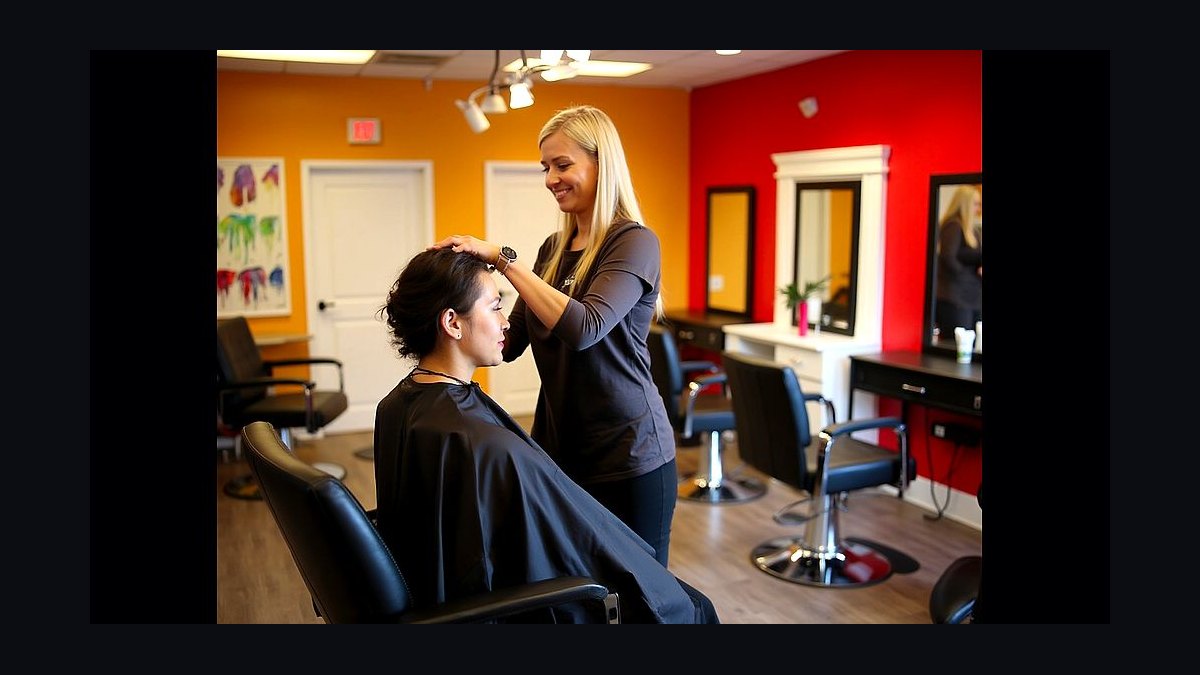
Probably not — unless you are an experienced multi-unit hair-salon operator buying 3+ existing Fantastic Sams locations at a discount from an exiting franchisee, with a plan to re-brand or wring out cost. As a single-unit new-build in 2027, Fantastic Sams is a hard no. The system has shed ~33% of its units since 2022 (614 down to ~512), opened just 7 new salons against 60 closures in 2024, and 2024 Item 19 average gross sales of $323,244 across 363 reporting salons leave roughly $15-35K in owner cash flow against a $172K-$462K all-in investment — a 6-12 year payback before any tax. Breakeven Year 2-3 is realistic only if you self-cut behind the chair. Conservative Year-1 cash flow: -$8K to +$22K.
The Real Numbers
Real 2026 FDD Item 7 ranges and the most recent Item 19 disclosure. Fantastic Sams' Item 19 is average gross sales only — no profit breakdown — so the EBITDA line below is modeled from IBISWorld hair-salons margins (10-14%) and public Regis Corporation salon-level data.
| Line Item | Low | High | Source / Notes |
|---|---|---|---|
| Initial franchise fee | $40,000 | $40,000 | FDD Item 5, single salon |
| Build-out & leasehold | $60,000 | $185,000 | FDD Item 7, 1,000-1,500 sq ft |
| Salon equipment & fixtures | $25,000 | $60,000 | Chairs, shampoo bowls, dryers |
| Signage | $6,500 | $18,000 | Exterior + interior |
| Initial inventory | $8,000 | $14,000 | Retail + back-bar product |
| Training & travel | $3,000 | $7,500 | 2-week required training |
| Insurance, licenses, deposits | $4,000 | $11,500 | Workers' comp + GL |
| 3 months working capital | $25,000 | $86,000 | Payroll + rent reserve |
| Total initial investment | $171,500 | $462,000 | 2026 FDD Item 7 |
| Royalty (% gross) | 6.0% | 6.0% | Weekly, on gross sales |
| National ad fund | $7,617/yr | $7,617/yr | Fixed $146.49/week — regressive at low volume |
| Average gross sales (2024 Item 19) | $323,244 | $323,244 | 363 reporting franchised salons |
| Royalty + ad expense | ~$27,000 | ~$27,000 | 6% royalty + fixed ad |
| Modeled EBITDA margin | 5% | 12% | Hair-cut chain benchmark |
| Modeled owner EBITDA (avg unit) | $16,000 | $39,000 | Below most QSR / fitness floors |
| Payback period | 6 years | 12+ years | At median unit economics |
Critical context: the $146.49/week fixed ad fee is a structural drag on weaker stores — a salon doing $220K pays the same dollar ad fee as one doing $450K, so the fee is 3.5% of revenue for the laggard and 1.7% for the leader. Closures cluster in the laggard cohort, which is why the system contraction is real.
Who Wins With This Business
The winners are narrow and specific in 2027:
- Existing licensed cosmetologists who will cut hair behind the chair themselves for the first 2-3 years, eliminating one stylist payroll line (~$45K/yr fully loaded) and turning the modeled $16K EBITDA into a realistic $55-70K owner take.
- Multi-unit resale buyers acquiring 3-6 salons in a single market from a retiring franchisee at 1.5-2.0x SDE, gaining instant scale, shared regional manager, and bulk vendor pricing.
- Operators in secondary and tertiary markets (population 30K-150K) where Sport Clips and Great Clips have not saturated and where the $25-32 average ticket is still defensible.
- Conversion buyers — independent salon owners with an aging book of business who want the operations playbook, scheduling tech, and training pipeline without giving up their existing chair stylists.
- Real estate owners who already control suitable strip-center space and avoid the $60K-$185K build-out that crushes new-build returns.
Who Loses With This Business
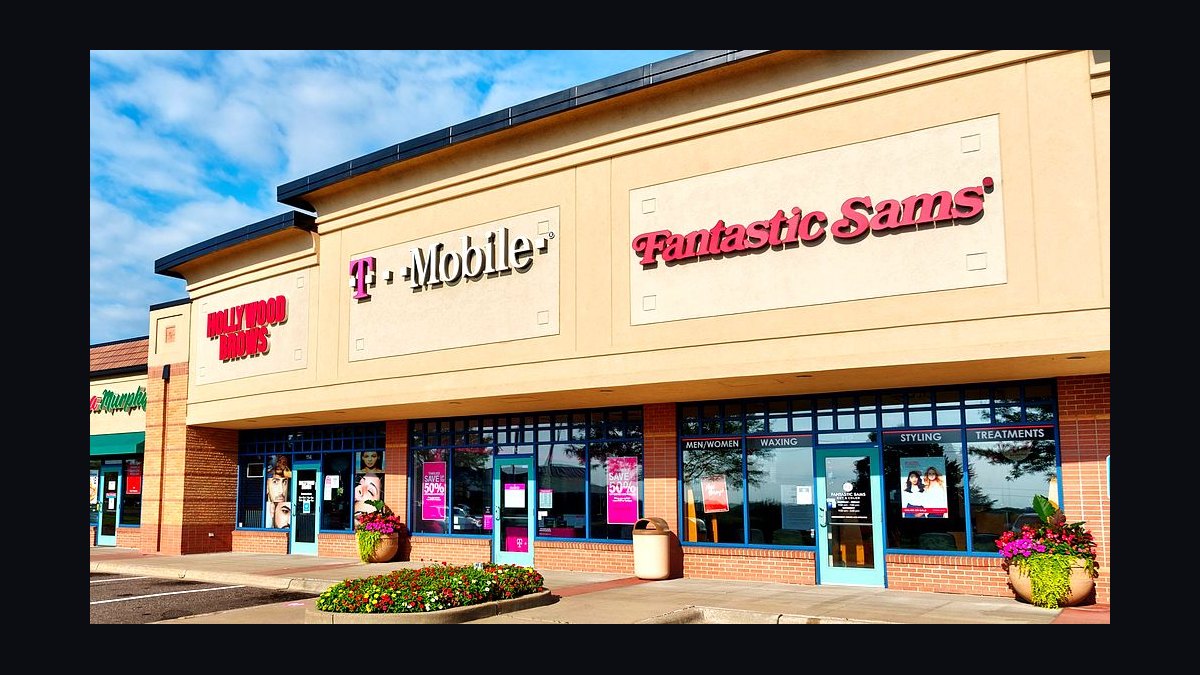
- First-time, absentee owners with no salon-floor experience. The chain depends on stylist retention; without an operator on-site, turnover destroys the unit. Modeled Year-1 cash flow is negative $5K to negative $25K.
- Anyone borrowing 80%+ of the investment at 2027 SBA 7(a) rates near 10.5-11.25%. Debt service alone runs $32-46K/yr on a $360K loan, larger than the modeled EBITDA at median unit volume.
- Buyers expecting brand pull in major metros where Sport Clips, Great Clips, Supercuts, and Roosters already saturate the strip-center comp set. Fantastic Sams' national ad spend on a fixed $146.49/week-per-unit basis generates roughly $3.9M/yr — versus Great Clips' estimated $60M+ — so walk-in lift from brand is minimal.
- Operators expecting an Item 19 with profit data. Fantastic Sams discloses gross sales only, not unit-level EBITDA. You are flying blind on the most important number.
- Buyers without a 5-year lease at sub-$24/sqft. Rent over 9% of gross sales mathematically pushes the unit to breakeven or worse.
2027 Market Conditions
The hair-salon services market in North America is roughly $21.1B in 2026 (custommarketinsights). Franchise-based salons hold ~58% share, with the top 10 chains controlling 41% of franchise revenue. Inside that pie, Fantastic Sams sits in the lower-mid tier — behind Great Clips (~4,400 units), Sport Clips (~1,900), Supercuts (~2,000), and Roosters/Hair Cuttery. Industry growth is 3.2-4.1% CAGR (IBISWorld), but value-cut chains are losing share to membership models (Sport Clips MVP, Floyd's 99) and to booth-rent independents.
Three 2027 headwinds compound for the Fantastic Sams franchisee:
- Stylist labor shortage — BLS reports cosmetology school enrollment down ~22% from 2019, pushing wages up 8-12%/yr. The franchise's value-tier ticket can't absorb this fast enough.
- Multi-unit consolidation — multi-unit ownership now drives 35.2% of franchise agreement revenue and is growing 7.1% CAGR. Single-unit operators are getting outbid for real estate.
- System contraction signal — 60 closures vs 7 openings in 2024 is the most negative new/closed ratio in the personal-services franchise category Pulse RevOps tracks.
The 90-Day Decision Tree
- Days 1-10 — Request the current 2026 FDD directly from Fantastic Sams franchise development. Read Item 19 line by line — confirm the $323,244 average is unchanged; ask for the median (almost always lower than the mean in contracting systems) and the bottom-quartile number.
- Days 11-20 — Pull the Items 20 list of existing franchisees who closed in the last 36 months. Call 10-15 of them. The questions: rent at close, gross sales at close, stylist retention in final year, royalty + ad as % of revenue, what they would have done differently.
- Days 21-30 — Validate territory with 3rd-party comp data: Placer.ai foot-traffic for the 3-mile radius, Census income $50K-$95K bracket density, and competing salon count within 1 mile (target <4 chain competitors).
- Days 31-45 — Get 3 commercial real estate quotes for 1,000-1,400 sq ft second-generation salon space. Walk only if rent ≤8.5% of pro-forma gross sales (target $24-32/sqft NNN inclusive).
- Days 46-60 — Build a 5-year P&L with bottom-quartile Item 19 revenue ($210K-$240K) as the base case, not the mean. If the base case shows positive owner take, proceed. If not, walk.
- Days 61-75 — Compare 3 acquisition targets: (a) new-build, (b) 1 existing single salon for sale, (c) 2-3 salon resale package. Existing resale at <2.0x SDE almost always wins the IRR analysis.
- Days 76-90 — Final go/no-go: secure SBA 7(a) preapproval, sign the FDD acknowledgment, execute the lease, or decline and redirect capital to alternatives below.
Alternative Plays
If the Fantastic Sams math doesn't clear, redeploy the same $200K-$450K into these 2027 alternatives with better risk-adjusted returns:
- Sport Clips franchise — higher ticket ($28-38 + MVP upsell), better Item 19 transparency, stronger national ad spend on % basis. Total investment $255K-$478K, average gross sales ~$475K.
- Phenix Salon Suites / Sola Salons — booth-rental real-estate play. Owner is a landlord, not an operator. $650K-$1.4M investment, EBITDA margins 35-45%, no stylist payroll. Better fit for absentee capital.
- Acquire 1-2 independent salons in your market off the SBA-Marketplace or BizBuySell at 1.8-2.5x SDE, keep the existing client book, skip the royalty entirely.
- Floyd's 99 Barbershop franchise — male-focused, $30-45 avg ticket, smaller unit count (~120 units) but expanding. Total investment $390K-$680K.
- Self-fund a single non-franchise salon with the same $250K — no royalty, no ad fee, no system rules — and pocket the 9% of gross Fantastic Sams would have taken.
FAQ

What is the typical investment range for a Fantastic Sams franchise in 2027? The all-in investment for a new single-unit Fantastic Sams franchise typically falls between $172,000 and $462,000. This range covers franchise fees, build-out, equipment, and initial working capital, though actual costs can vary by location and lease terms.
How much can a Fantastic Sams owner expect to earn in the first year? Based on recent system averages, conservative Year-1 cash flow for a new owner ranges from -$8,000 to +$22,000. Most single-unit operators should plan for little to no profit in the first year, with breakeven possible by Year 2-3 only if the owner works behind the chair.
Why are Fantastic Sams locations closing faster than they open? The system has lost about one-third of its units since 2022, dropping from 614 to roughly 512 salons. In 2024 alone, only 7 new salons opened against 60 closures, reflecting declining brand momentum and challenging economics for individual franchisees.
What is the realistic payback period for a Fantastic Sams franchise? Given average gross sales of $323,244 and estimated owner cash flow of $15,000 to $35,000 per year, the payback period on a $172,000–$462,000 investment ranges from 6 to 12 years before taxes. This is long compared to many other franchise opportunities.
Is buying an existing Fantastic Sams location a better option than opening a new one? It can be, but only if you are an experienced multi-unit operator purchasing 3 or more existing salons at a discount from an exiting franchisee. The strategy typically involves rebranding or cutting costs, rather than operating under the Fantastic Sams name long-term.
Does Fantastic Sams provide financing or support for new franchisees in 2027? The brand offers some training and ongoing support, but does not typically provide direct financing. Most new franchisees rely on SBA loans, personal savings, or third-party lenders. Recent system trends suggest corporate support may be limited given the shrinking network.
Bottom Line
For first-time, single-unit, new-build buyers in 2027, Fantastic Sams is the wrong franchise. The system is contracting at 10%+ annually, Item 19 discloses only gross sales (no profit data), the $146.49/week fixed ad fee is regressive against weaker units, and average unit economics generate 6-12 year payback at median performance. The path that does work is the multi-unit resale roll-up at sub-2.0x SDE — buy 3-6 distressed locations from an exiting franchisee, install a regional manager, and harvest cash flow for 5-7 years before a strategic sale. Every other entry mode underperforms simpler alternatives — Sport Clips for operators, Phenix Salon Suites for absentee capital, or acquiring an independent salon for franchise-fee-free ownership. The franchise fee is not the obstacle. The system trajectory is.
Sources
- Fantastic Sams Franchise Cost: $40K Fee, $172K–$462K Total — FDD & Funding 2026, Peersense
- Fantastic Sams Franchise — FDD, Fees & Cost (2026), FranchiseOverview
- Fantastic Sams Franchise Cost, Fees, Profit & Data for 2026, 1851 Franchise
- Fantastic Sams Franchise Insights: FDD, Costs & Fees, VettedBiz
- Fantastic Sam's Franchise FDD, Profits & Costs (2025), Sharpsheets
- Fantastic Sams Hair Salons Franchise (FDD), Franchise Direct
- Hair Salons in the US Industry Analysis 2025, IBISWorld
- North America Hair Salon Market Outlook to 2030, Ken Research
- Hair Salon Service Market Size & Share Report 2024-2032, GMI Insights
- Fantastic Sams Multi-Unit Franchise Ownership, FantasticSamsFranchise.com
- Fantastic Sams Franchise Analysis, FranchiseLens
- US Bureau of Labor Statistics — Barbers, Hairstylists, and Cosmetologists Occupational Outlook
Related on PULSE
This page will be disappearing soon. Save it to your device for $1 — or read it free while it is here.
@Kory-White- · if Venmo asks, the last 4 of my number are 2012
This page is gone.
This one is off the shelf now. $1 keeps it on your phone for good — the whole page, pictures and diagrams included.
 franchiseShould I open or buy a Valvoline Instant Oil Change franchise in 2027?
 franchiseShould I open or buy a Stanley Steemer franchise in 2027?
 franchiseShould I open or buy a Marco's Pizza franchise in 2027?
 franchiseShould I open or buy a Firehouse Subs franchise in 2027?
 franchiseShould I open or buy a Matco Tools franchise in 2027?
 franchiseShould I open or buy a Culver's franchise in 2027?
 franchiseShould I open or buy a Great Clips franchise in 2027?
 franchiseShould I open or buy a Roto-Rooter franchise in 2027?
 franchiseShould I open or buy a Kumon franchise in 2027?
 franchiseShould I open or buy a Domino's franchise in 2027?